
Preventing aquatic invasive species
Learn how we're preventing the introduction and spread of aquatic invasive species and what you can do to help.
In this section
- Reducing risks
- Pathways of introduction and spread
- What you can do to help
- Clean, drain, dry and decontaminate
- Don’t let it loose
Reducing risks
Aquatic invasive species can be introduced accidentally or intentionally into Canadian waters by human activities. They can establish themselves in our waters and spread rapidly when they don't face natural predators or competitors. In recent years, the introduction and spread of aquatic invasive species has been much more rapid because of a variety of reasons, including increased international shipping, online shopping and travel.
Prevention is the most efficient and cost-effective method of dealing with aquatic invasive species. Managing the pathways of introduction can prevent species from entering our waters and spreading to other waterbodies.
Fisheries and Oceans Canada collaborates with partners across Canada to prevent the introduction, establishment and spread of aquatic invasive species in our waterways.
Under the federal Aquatic Invasive Species Regulations, it is illegal to introduce an aquatic species into a body of water where it is not native, unless authorized under federal, provincial or territorial law.
Pathways of introduction and spread
Pathways are a means by which aquatic invasive species are introduced. Pathways allow aquatic invasive species to move across barriers that previously would have been impassable. Once introduced, aquatic invasive species may spread and/or be introduced to another location via other pathways.
Follow the law and prevent the introduction and spread of aquatic invasive species by making sure to stop their movement through pathways associated with three mechanisms which are described in the sections below:
- movement of a commodity
- movement of a vector
- spread
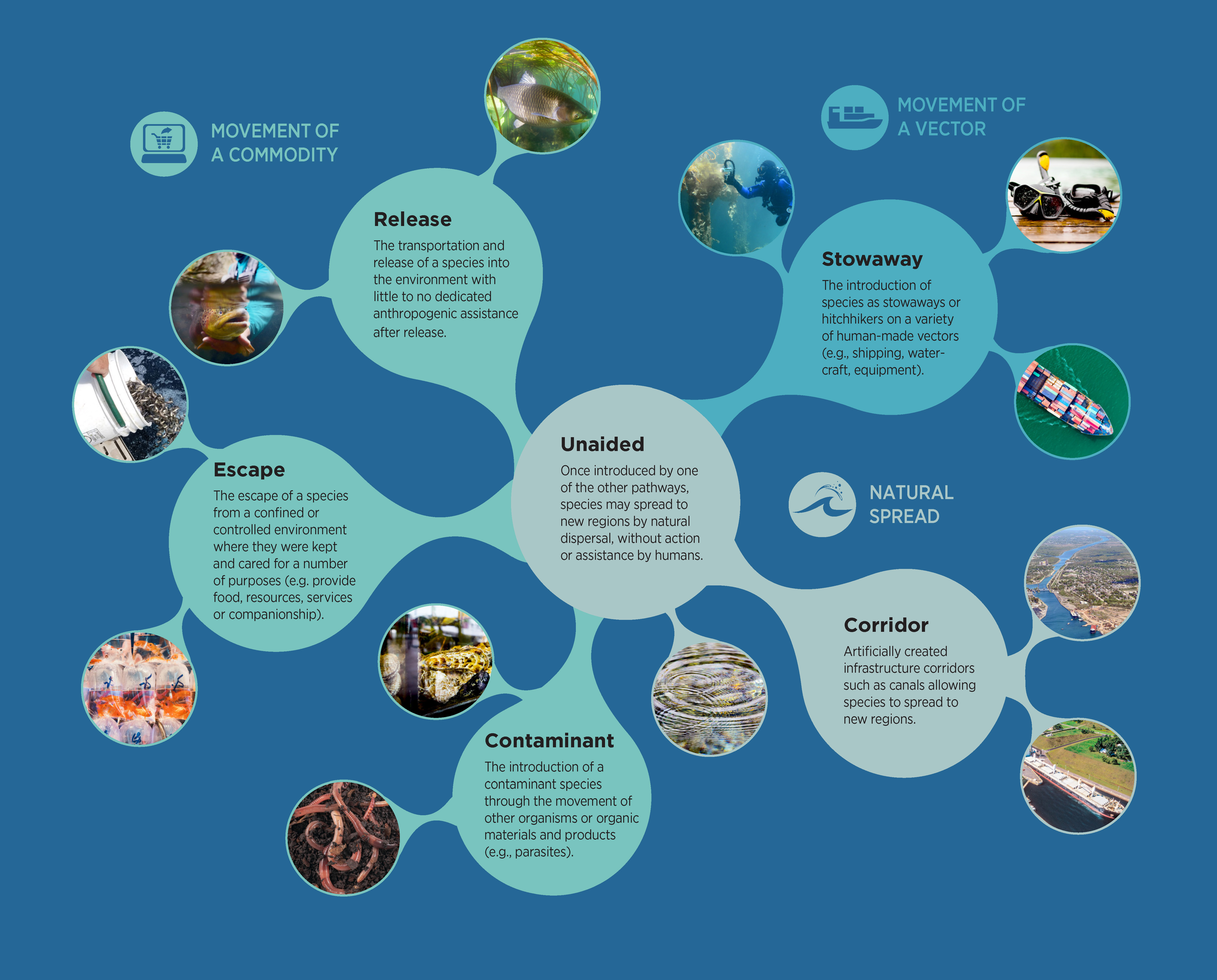
Mechanisms for aquatic invasive species introduction and pathways.
Long description
Movement of a commodity:
- An image of a Grass Carp in vegetated water and an image of a person holding a fish and releasing it into water. Both images are connected to a text bubble that says:
- Release. The transportation and release of a species into the environment with little to no dedicated anthropogenic assistance after release.
- An image of a hand dumping a bucket into water and an image of bags of goldfish. Both images are connected to a text bubble that says:
- Escape. The escape of a species from a confined or controlled environment where they were kept and cared for a number of purposes (e.g. provide food, resources, services or companionship).
- An image of a live shellfish in a water tank and an image of earthworms in soil. Both images are connected to a text bubble that says:
- Contaminant. The introduction of a contaminant species through the movement of other organisms or organic materials and products (e.g. parasites).
Movement of a vector:
- An image of a person scuba diving and looking at a pillar covered with invasive tunicates, an image of wet water equipment on a table and an image of a ship carrying cargo. All 3 images are connected to a text bubble that says:
- Stowaway. The introduction of species as stowaways or hitchhikers on a variety of human-made vectors (e.g. shipping, watercraft, equipment).
Spread:
- An image of a water ripple connected to a text bubble that says:
- Unaided. Once introduced by one of the other pathways, species may spread to new regions by natural dispersal without action or assistance by humans.
- An image of a long water canal and an image of a canal with a boat passing through. Both images are connected to a text bubble that says:
- Corridor. Artificially created infrastructure corridors such as canals allowing species to spread to new regions.
Movement of a commodity
Movement of a commodity refers to aquatic invasive species being spread by the movement of goods (either moved as a commodity itself or attached to other goods as contaminants).
Release pathway
The release pathway is defined by the transportation and intentional release of a species into the environment with little to no dedicated human assistance after release. For example: the unauthorized release of a sport fish into a waterbody to be angled for later.
Escape pathway
The escape pathway means the escape of a species from a confined or controlled environment where they were kept and raised for a number of purposes (e.g., to provide food, resources, services or companionship). For example: individuals unlawfully dumping their unwanted pets or bait into a waterbody.
Contaminant pathway
The contaminant pathway relates to the introduction of a contaminant species through the movement of other organisms or organic materials and products. For example: the movement of aquarium algae that is unknowingly contaminated or infested with invasive mussels.
Read about invasive mussels in moss ball products.
Movement of a vector
Movement of vector refers to the spread of aquatic invasive species from being attached to carriers or conveyances such as transporting vessels or equipment and media.
Stowaway pathway
The stowaway pathway corresponds to the introduction and spread of species as stowaways or hitchhikers on a variety of human-made vectors (e.g., shipping vessels, watercraft, equipment, etc.). For example: the overland movement of an aquatic plant caught on a boat propeller from one waterbody to another.
Aquatic invasive species can attach themselves to any object that comes in contact with water from infested waterbodies. They can then hide and be unintentionally introduced into new waterbodies where the species is not yet introduced. It is important for everyone to be aware of the risks associated with the movement of vectors from one location to another to meet requirements of the AIS Regulations. It is important to clean, drain, dry and decontaminate your watercraft and equipment.
Spread
This refers to when aquatic invasive species are spread from a neighbouring region without human-mediated means.
Corridor pathway
The corridor pathway is when artificially made infrastructure allows species to spread to new regions. For example: the movement of an invasive fish into a new body of water through an artificial shipping canal.
Unaided pathway
An unaided pathway occurs when aquatic invasive species have spread from one region to another by natural dispersal, without human intervention or assistance. For example: the escape of water garden plants followed by natural dispersal to new regions through natural seed dispersion.
Pathways and recommended subcategories, including mechanisms for introduction of aquatic invasive species
These pathways and subcategories were adapted from the United Nations’ Convention on Biological Diversity.
Mechanism for introduction: Movement of commodity
- Pathway: Release
- Subcategory:
- Biological control agents
- Stabilization and barriers
- Fishery in the wild
- Aesthetic release
- Conservation in the wild
- Other release
- Subcategory:
- Pathway: Escape
- Subcategory:
- Aquaculture
- Botanical gardens/zoos and aquariums
- Pets
- Horticulture
- Ornamental
- Academia/research
- Live food
- Live bait
- Other escape
- Subcategory:
- Pathway: Contaminant
- Subcategory:
- Nursery material contaminant
- Bait contaminant
- Food contaminant
- Contaminant of animals
- Parasite of animals
- Contaminant of plants
- Parasite of plants
- Seed contaminant
- Habitat material contaminant
- Other contaminant
- Subcategory:
Mechanism for introduction: Movement of a vector
- Pathway: Stowaway
- Subcategory:
- Fishing equipment
- Container and bulk cargo
- Hydroplane and water bombers
- Watercraft (excluding ballast water or hull fouling) smaller than 24 metres
- Ballast water
- Biofouling
- Machinery and equipment
- Offshore energy platforms
- People and luggage (e.g., tourism)
- Packing material
- Land vehicles and boat trailers
- Other stowaway
- Subcategory:
Mechanism for introduction: Spread
- Pathway: Corridor
- Subcategory:
- Canals, artificial waterways and irrigation systems
- Stormwater drains and retention ponds
- Subcategory:
- Pathway: Unaided
- Subcategory:
- Natural dispersal
- Subcategory:
What you can do to help
Everyone must respect federal, provincial and territorial laws to prevent the introduction of aquatic invasive species and limit their spread before they become a bigger problem.
General measures to prevent the introduction and spread of aquatic invasive species include:
- learning about them, including how they may spread and how to recognize them
- contacting us to report a sighting
- cleaning, draining and drying any watercraft and equipment used in the water before storing it or moving it to a different body of water
- never moving species, organisms, water or objects from one body of water to another
- do not let loose any aquatic plants or animals such as bait or pets into municipal wastewater systems, man-made ponds (e.g., stormwater ponds) or bodies of water, don’t let it loose!
Also, see the Aquatic Invasive Species Prevention Fund for funding to help prevent the introduction and spread of aquatic invasive species.
- Date modified: