
Parrot’s Feather (Myriophyllum aquaticum)
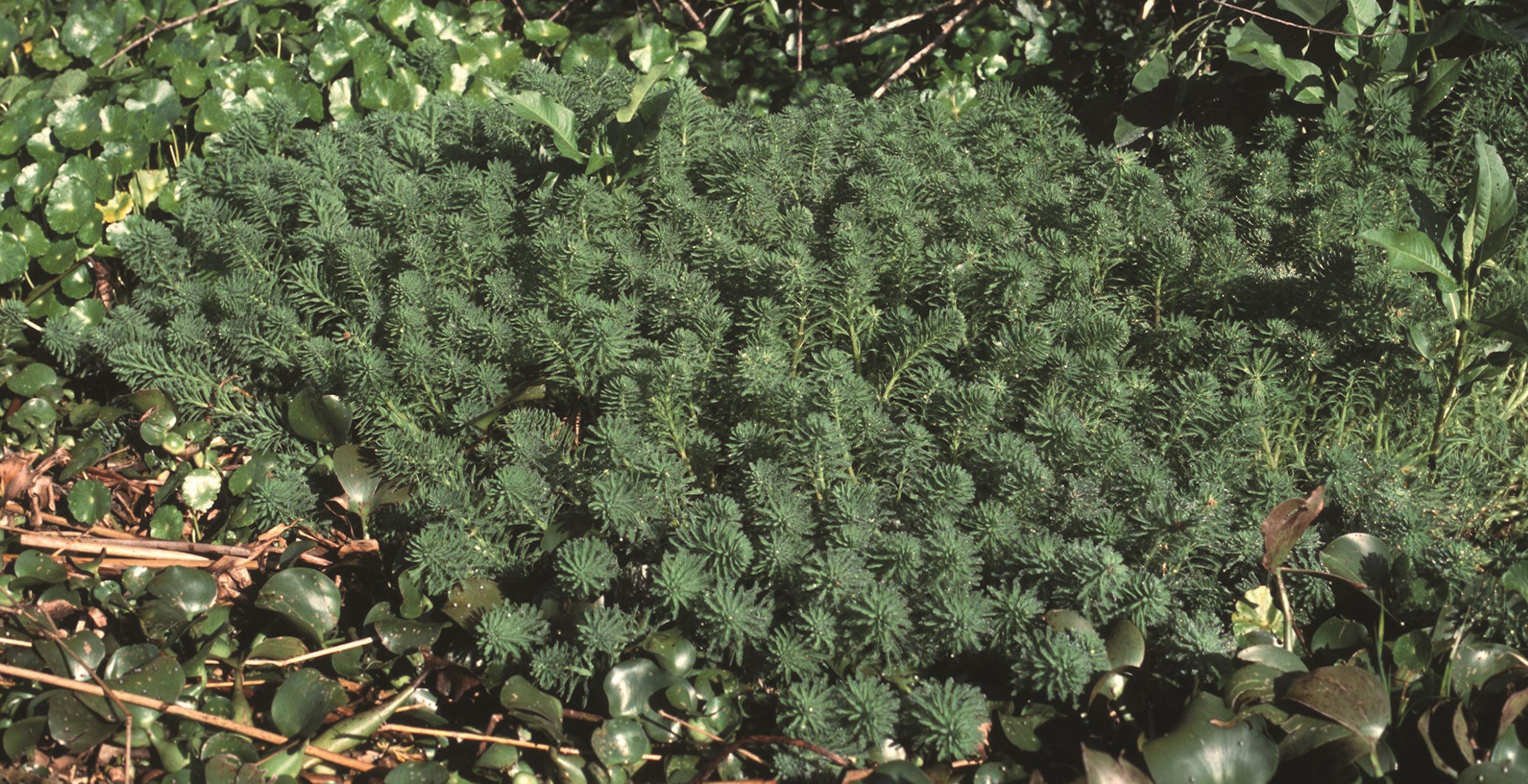
If you think you have seen Parrot’s Feather, use the Identifying features and similar species section to verify.
Report it
If you think you have found an aquatic invasive species:
- take photos
- note:
- the exact location (GPS coordinates)
- the observation date
- identifying features
- contact us to report it
On this page
- Identifying features and similar species
- Origin and current distribution
- Habitat
- Pathways of introduction and spread
- Impacts
- Government action
- What can you do
- Related links
Identifying features and similar species
Identifying features of the Parrot’s Feather
- can be submerged or emergent (has both types of leaves)
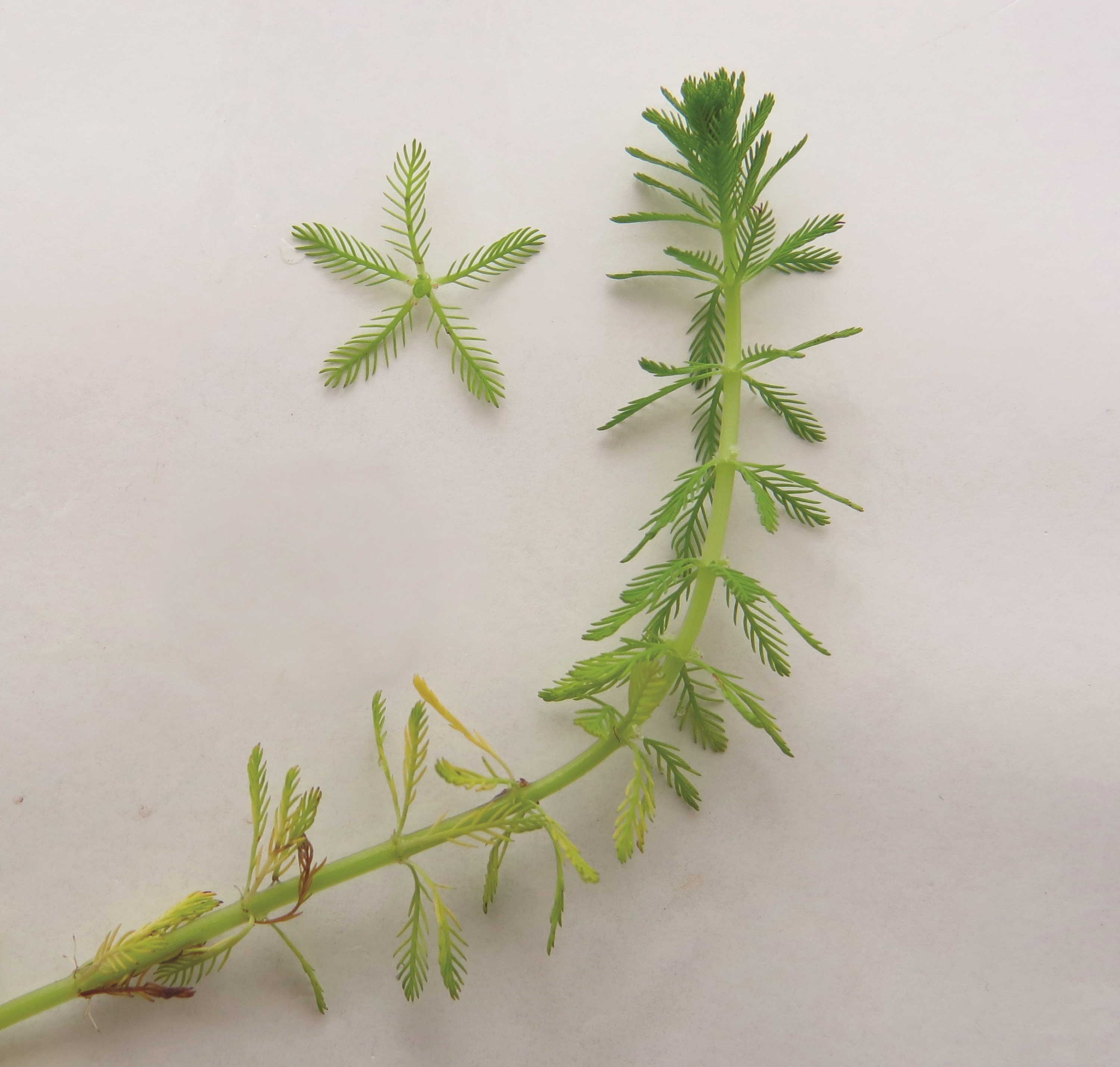
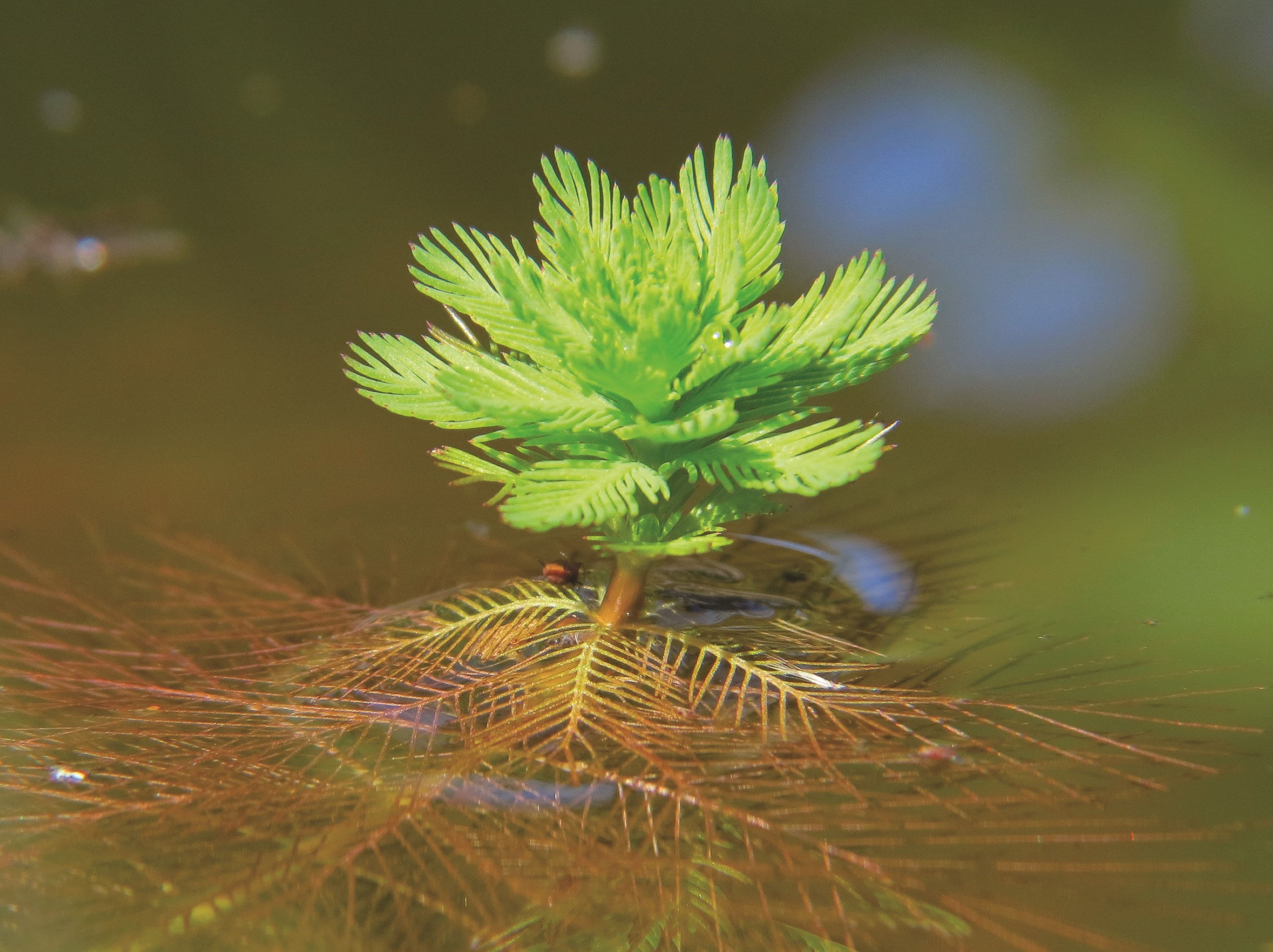
- sturdy, waxy leaves with 10-18 pairs of leaflets (small leaf segments that together form a compound leaf) with emergent parts resembling small conifers that can grow up to 30 cm above the water surface
- 4-6 symmetrical leaves per whorl (often 4)
- reddish-brown submerged leaves and bright green emerging leaves
- blooming between July and September
Similar species
Parrot’s Feather is distinguished mainly by its robust, waxy leaves, made up of 10 to 18 pairs of leaflets, the emerging parts of which resemble small conifers that can grow up to 30 cm above the surface of the water. However, identification of this species remains difficult and is often reserved for experts.
Parrot’s Feather can be confused with two other invasive species, Carolina Fanwort and Eurasian Water-Milfoil.
In addition, Parrot’s Feather can resemble several native aquatic plants, that are naturally present in our bodies of water, including:
- Common Bladderwort
- Hornworts
- Native Water-Mifoils
These species are naturally found in Quebec and Ontario, but they may also be found in other parts of Canada.
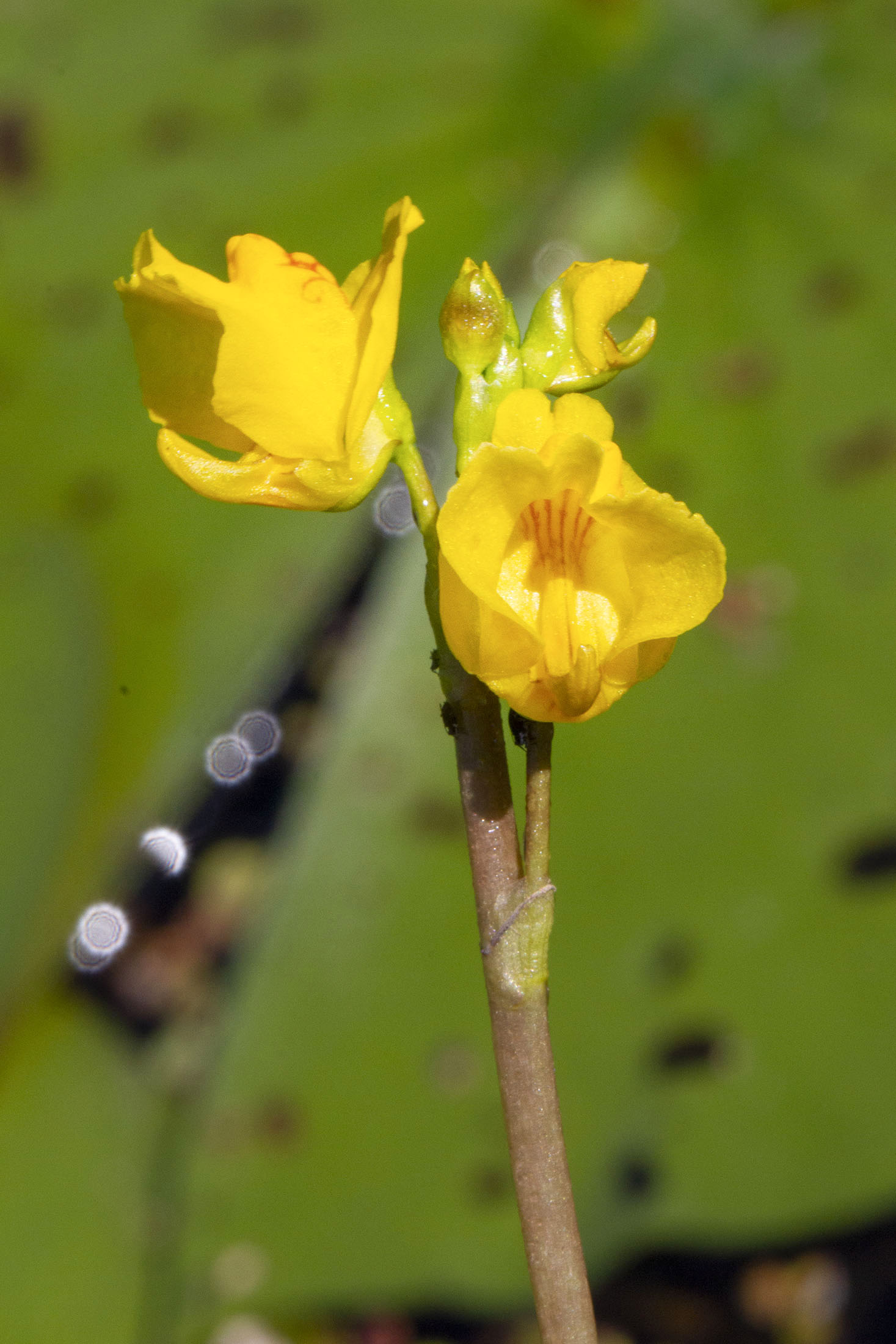
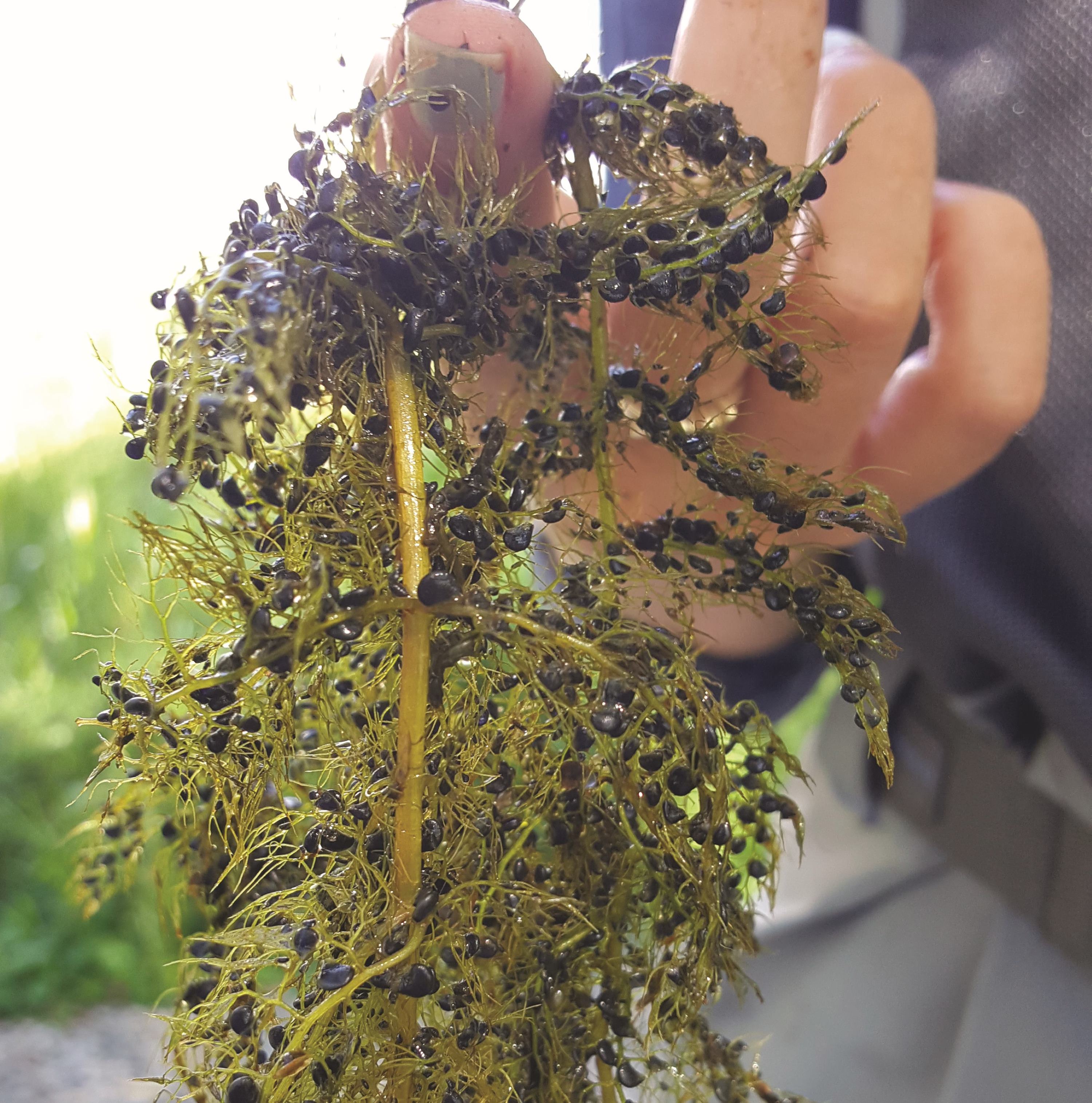
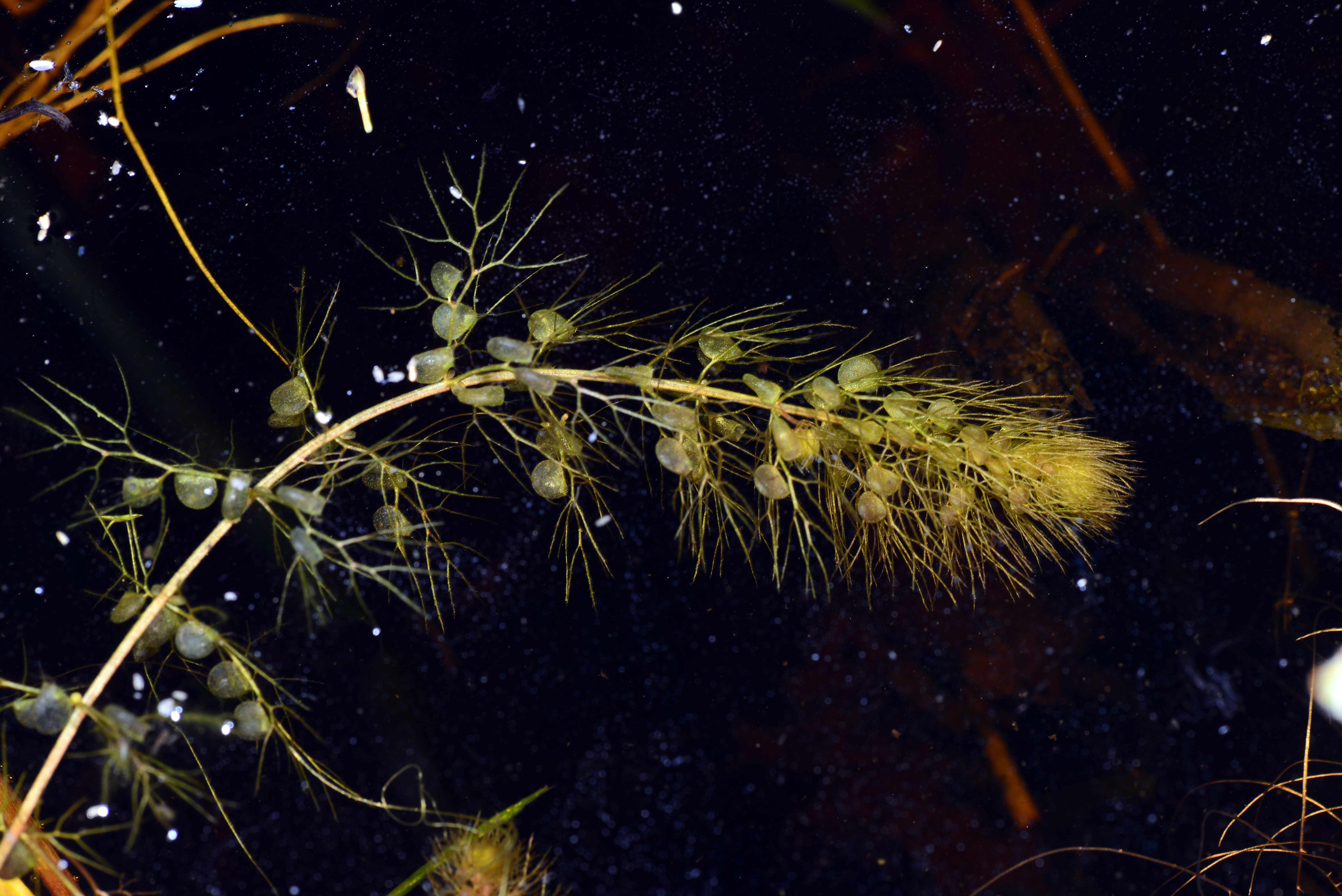
Common Bladderwort (Utricularia vulgaris)
Common Bladderwort can be distinguished from Parrot’s Feather by its yellow flowers and emerging fruits, as well as the presence of modified leaves in the form of small sacs or beads (utricles) on the submerged parts of the plant, which allow it to float and catch insects, small crustaceans or aquatic larvae.
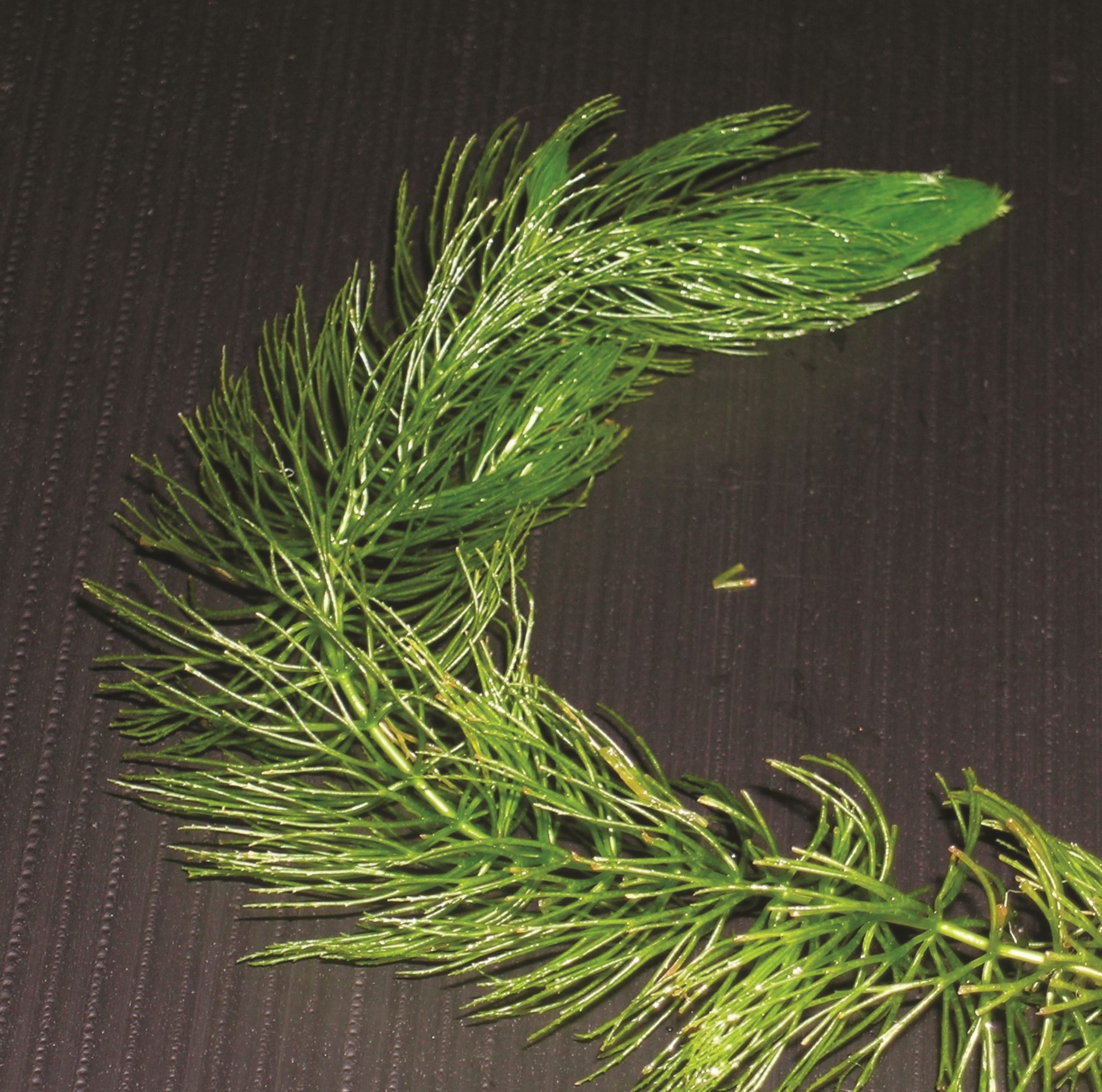
Hornworts (Ceratophyllum spp.)
Hornworts can be distinguished from Parrot’s Feather by its whorled leaves, which are arranged around a point on the stem and subdivided with spines on the margin and small fruits at the base. In addition, their leaves are rigid and retain their shape out of the water.

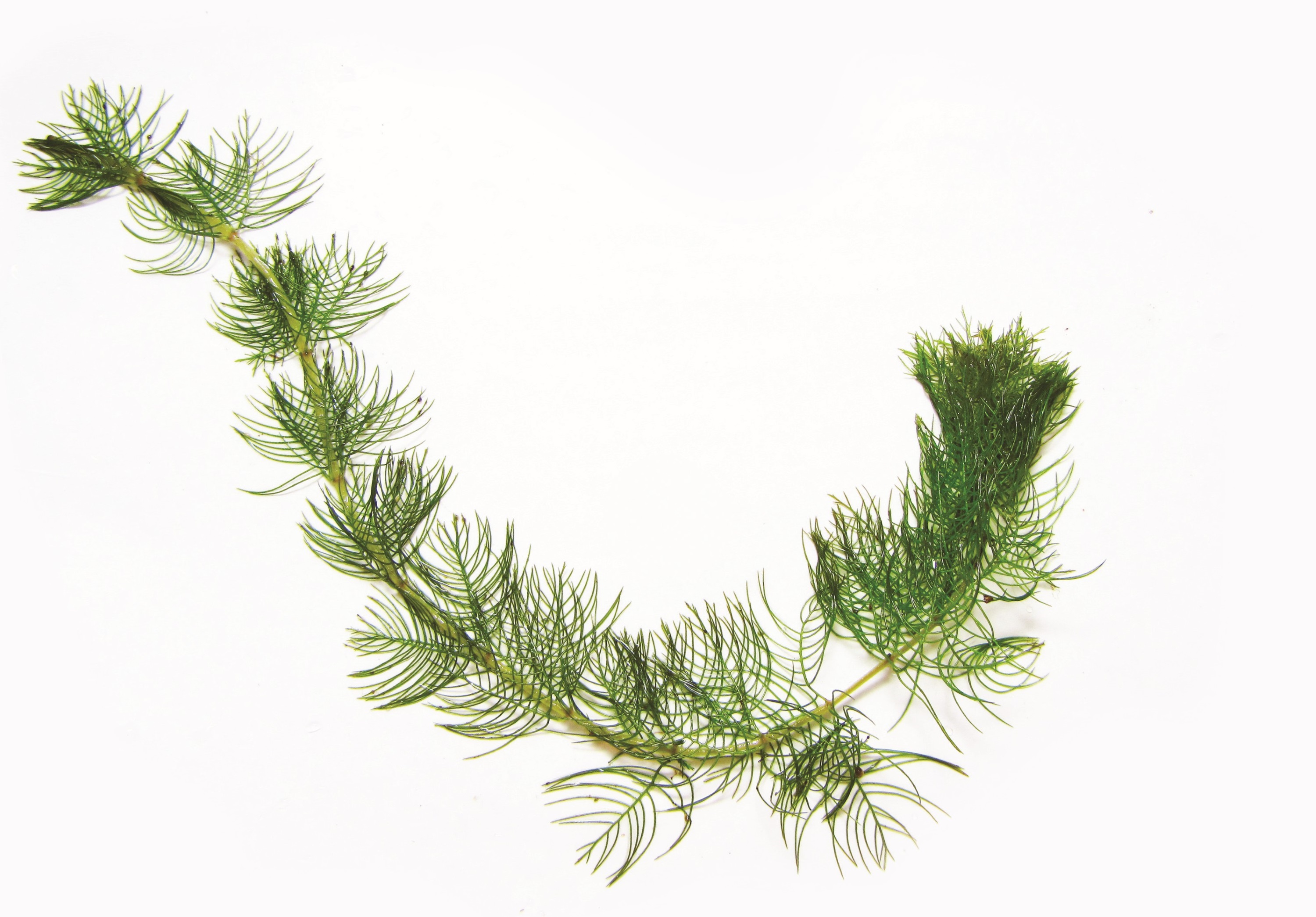
Native Water-Milfoil (Myriophyllum spp.)
It is possible to distinguish Parrot’s Feather from native Water-Milfoils that occur naturally in our bodies of water. However, this can generally only be done by experts. They will look to see whether:
- the type of flowers and their locations
- count the number of leaves in whorls (grouped around a point on the stem)
- the number of pairs of leaflets (small compound leaves) that look like feathers
If you think you have seen Parrot’s Feather or another AIS, contact us to report it.
Origin and current distribution
Parrot’s Feather, also known as Brazilian Water-Milfoil, is thought to have been introduced to the United States around 1890 as an aquarium and water garden plant. Parrot’s Feather has been observed in eastern Ontario since 2006 and in at least 26 states in the United States.
Habitat
Parrot’s Feather generally grows in calm areas of rivers and streams, and in the shallow waters of ponds, marshes, canals and lakes. This perennial plant can be both submerged and emergent. It grows at depths of around 1.3 m and takes root on muddy banks.
Pathways of introduction and spread
Introduced to the United States around 1890 as an aquarium and water garden plant, this plant can multiply by fragmentation and has spread rapidly through various human activities such as aquariums, recreational fishing, and water sports. What's more, like other invasive aquatic plant species, it can establish and spread naturally with currents.
Impacts
Ecological impacts
Observed in the United States and in an isolated pond in eastern Ontario (2006), Parrot’s Feather is under surveillance elsewhere in Canada. The dense mats of vegetation produced when the Parrot’s Feather establishes itself in a body of water can create a number of negative ecological impacts in the affected bodies of water, such as the modification of submerged native plant communities through competition, the potential negative effects on fish populations through alteration of their spawning grounds, and the negative effects on recreational uses such as swimming, fishing and boating.
Socioeconomic impacts
By interfering with recreational activities, the presence of large colonies of Parrot’s Feather in a body of water can adversely affect the value of riverside properties and harm tourism. The costs associated with controlling and eradicating the plant can also be high.
For more information on the impacts of invasive plants, consult the threats to the environment, the economy, and society.
Government action
Prevention and management
Preventing its introduction and spread is the best way to control this invasive plant.
There are various ways to control invasive aquatic plants:
- physical or mechanical removal (by hand, with tools or machinery)
- dewatering (lowering water level)
- tarping (covering with opaque material to limit growth)
- herbicide application
Control measures vary depending on the species, so you must take precautions before attempting to control an AIS to avoid it spreading further. If you wish to undertake a project to control aquatic invasive species, contact the department to ensure that you meet the requirements of the laws and regulations protecting aquatic environments in your region.
What can you do
Once an AIS has become established in a lake or watercourse, it is difficult and costly to control and almost impossible to eradicate. Preventing its introduction and spread is the best way to combat it. Simple but effective actions can make a difference to protecting water bodies:
- learn to recognize AIS and report their presence
- always clean, drain and dry your watercraft and gear after leaving a body of water. Follow the cleaning steps described on Clean, Drain, Dry and Decontaminate
- avoid boating through beds of invasive aquatic plants so as not to contribute to their spread. Buoys can be installed (PDF, 987 KB) to mark the main AIS beds and restrict traffic
- don’t let loose any plant remains, water, or organisms from your water garden or aquarium into the natural environment
Learn more about preventing aquatic invasive species.


Related links
- Identification booklet of freshwater invasive plant species in Quebec
- Fact sheets to identify invasive aquatic plants and distinguish them from similar species : Parrot's Feather (PDF 144 KB) (French only)
- Parrot’s Feather – Invasive Species Centre
- Field Guide to Aquatic Invasive Species for British Columbia (PDF, 6 MB)
Page details
- Date modified: