
Identification booklet of freshwater invasive plants in Quebec

Aquatic invaders
To stop the proliferation of aquatic invasive species and thus protect our ecosystems, it is essential that all users of water bodies be on the lookout. The purpose of this booklet is to raise awareness about several species that have invaded freshwater habitats in Quebec. It also contains species that are not yet present, but could invade our lakes and rivers. It will help you recognize them and tell you what to do to prevent their spread and settlement in our water bodies.
Like everywhere else in the world, Quebec is struggling with animal and plant species that invade our fresh waters. Native to Asia, Europe, Africa or even America, they harm native species (species originally from the region) and often, in the absence of natural predators, grow and multiply to the point where it becomes impossible to control and get rid of them. This booklet focuses on invasive plant species.
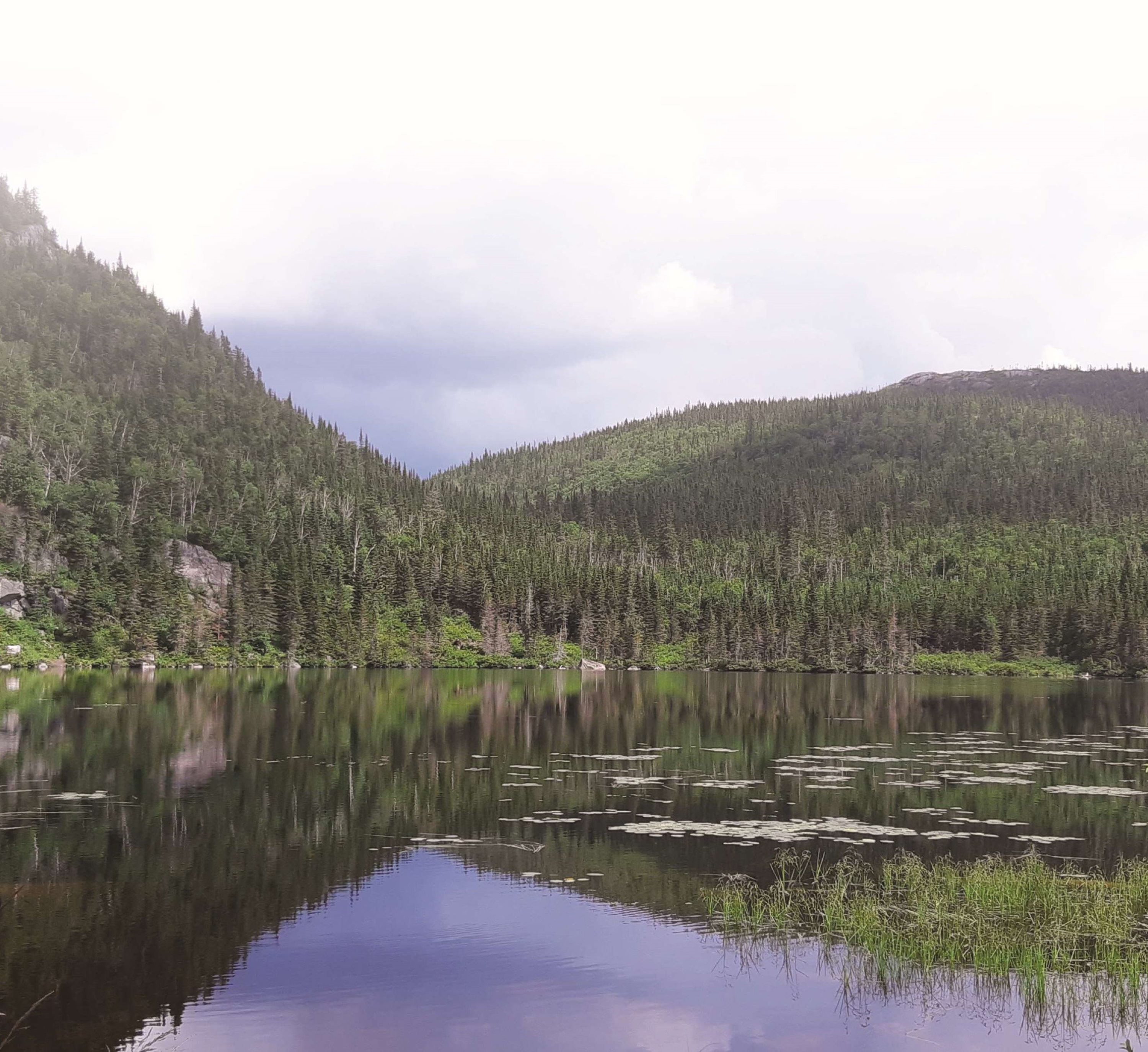
Example of a body of water that can contain aquatic invasive species.
Pathways of invasion
It is often through human intervention that species leave their original environment to invade new ones. Many pathways contribute to the introduction and spread of aquatic invasive species (AIS) in our waters:
- ballast waters from ocean-going vessels
- boats and equipment associated with watersports and recreational fishing
- aquaculture, aquarium trade (animals and plants in aquariums) and other commercial sales of live species resulting in accidental or intentional introductions
Once introduced, species can become established and spread naturally:
- by migration
- with currents
- because of floods caused by rains
- by clinging to aquatic fauna and flora

Ocean-going vessel that can be a pathway of invasion for aquatic invasive species. Photo credit: J. Hill DFO.
Threats to the environment, the economy and society
Aquatic invasive species have impacts on native species because they:
- have few or no natural predators
- compete with native species for food and space, potentially causing them to become extinct
- contribute to the degradation of ecosystems by affecting water quality, and by transporting diseases or parasites
Some invasive species have serious economic impacts because they affect:
- recreational, commercial and indigenous fishing, as well as aquaculture, causing a decline in native species of interest
- aquaculture, causing a decline in native species of interest
- infrastructures by causing damages resulting in high costs associated with their control, and with cleaning and repair of affected facilities, such as:
- irrigation canals
- water treatment plants
- power plants
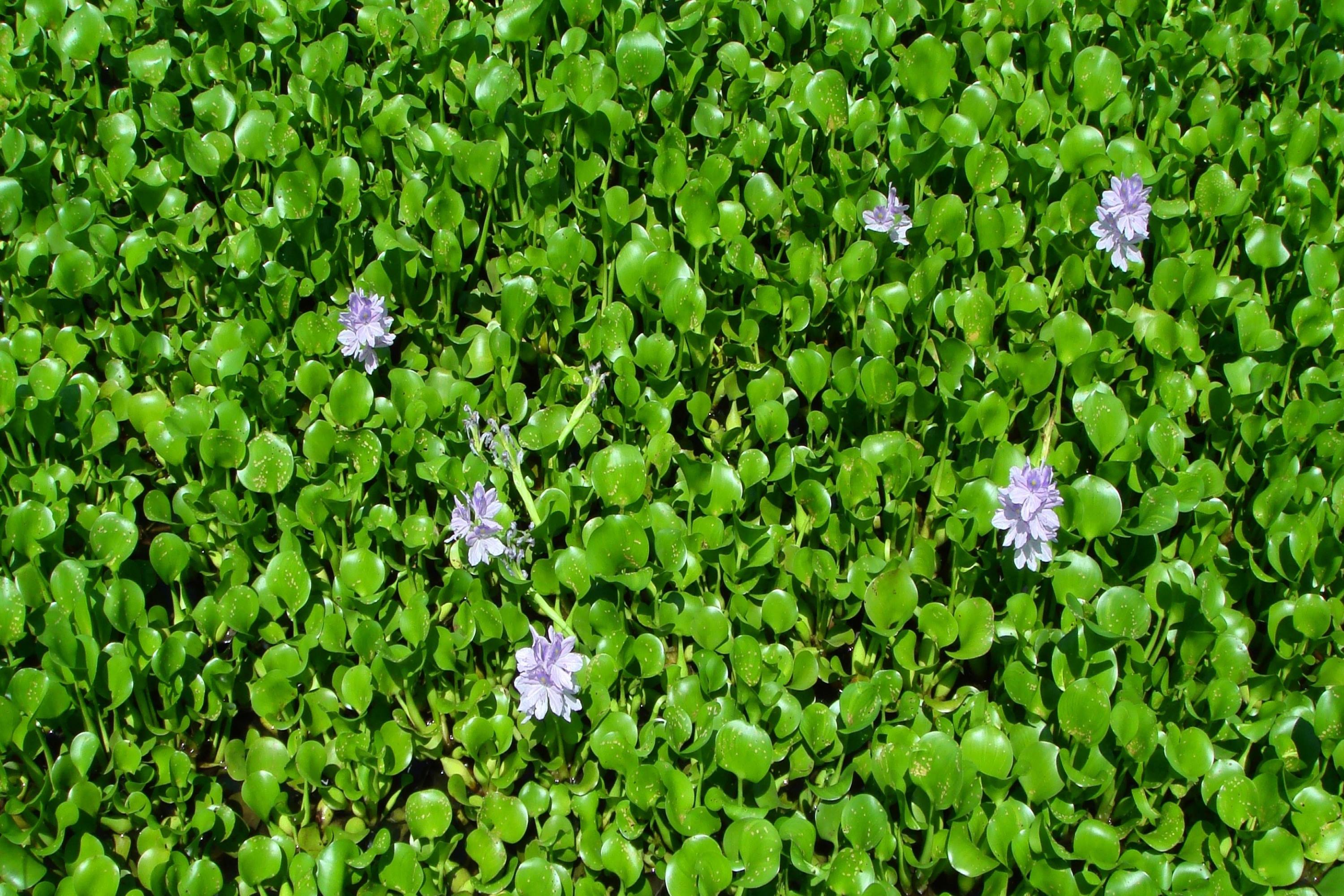
Surface of a waterbody invaded by a colony of Water Hyacinth, an invasive aquatic plant. Photo credit: Katherine Parys USDA-ARS Bugwood.org.
Focus on an invader
The Water Chestnut is an example of an invasive species that has had a significant impact since it was introduced in Boston, Massachusetts in the 1870s as an ornamental plant. In Quebec, it was first discovered in 1998 in the Rivière du Sud, in the Montérégie region, and it then spread to the Outaouais and Lanaudière regions.
- with its floating, rosette-shaped leaves, the species can cover the shallow areas of water bodies in just a few years, greatly reducing light penetration and killing submerged plants
- the reduced growth of submerged plants leads to a significant decrease in the dissolved oxygen level in the water, creating an area that fish avoid, which then decreases biodiversity
- the species is difficult to control because it produces large numbers of hard, spiny nuts which sink to the bottom; these nuts can remain viable for several years
- by covering the surface of water bodies with a dense mat, the species greatly interferes with human activities, such as boating, swimming and sport fishing. Furthermore, its spiny nuts accumulate on the bottom of lakes and can hurt swimmers' feet
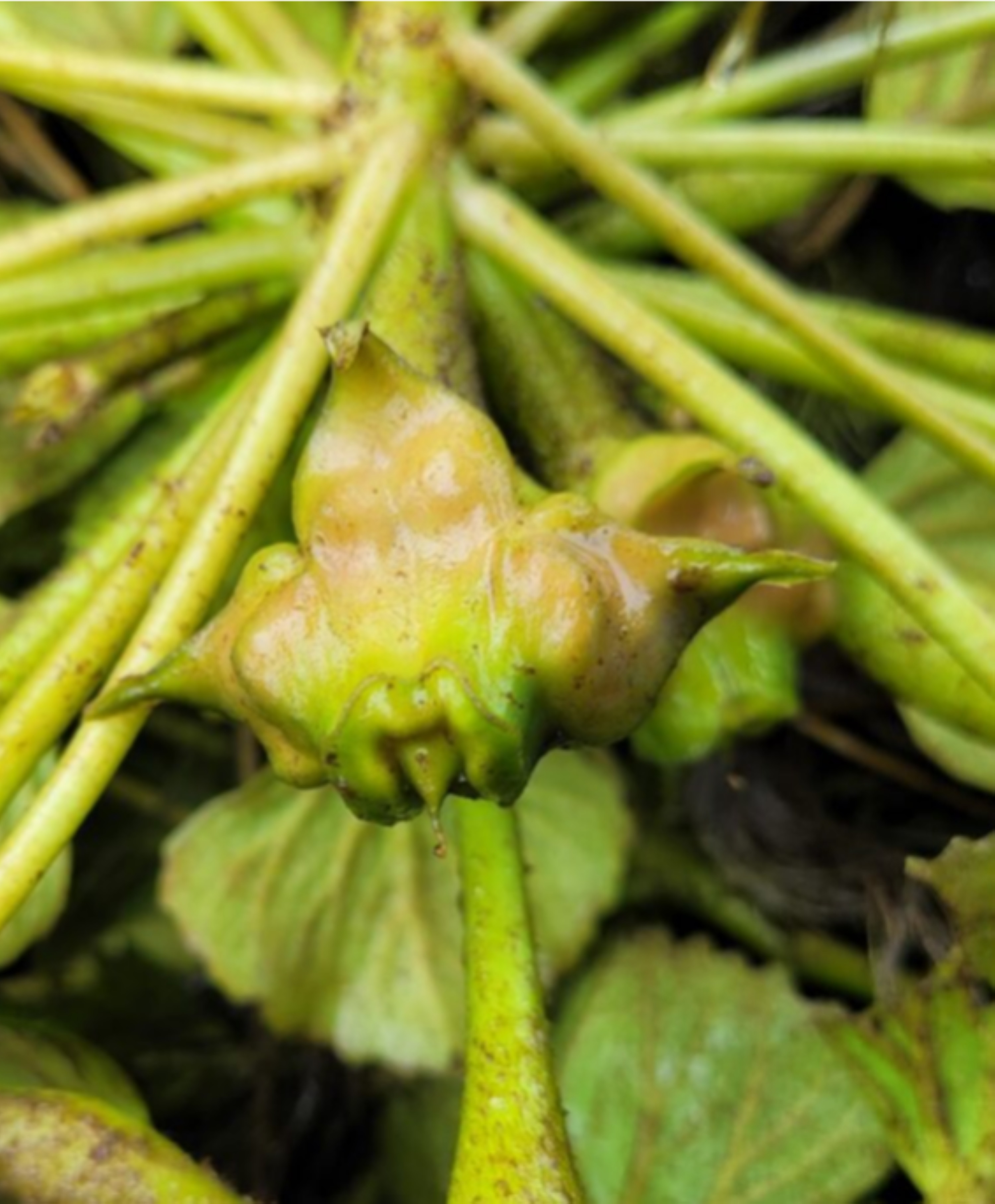
Spiny fruit of the Water chestnut. Photo credit: Organisme de bassin versant Corporation de l'Aménagement de la Rivière l'Assomption.
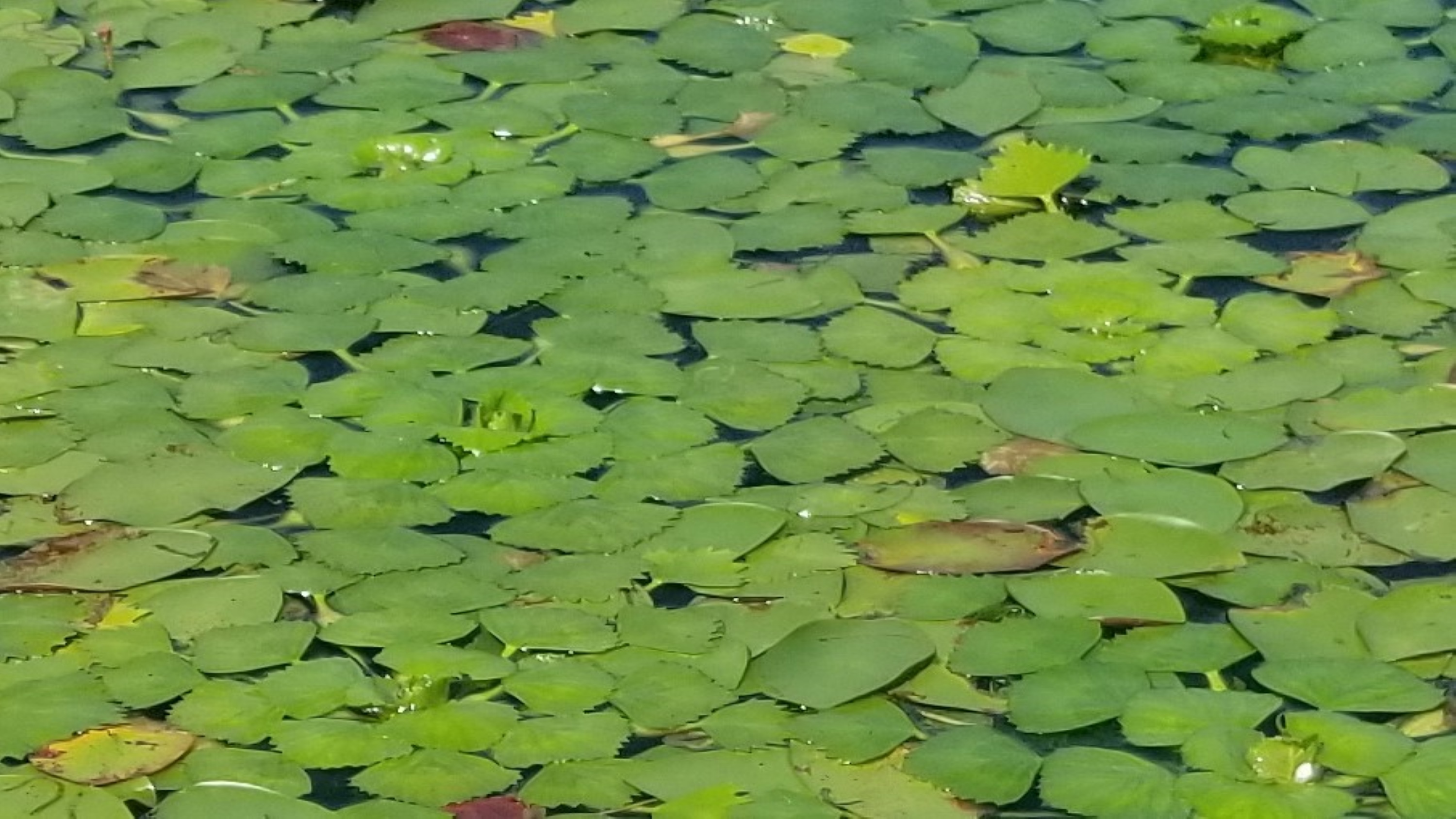
Body of water invaded by the water chestnut. Photo credit: Organisme de bassin versant Corporation de l'Aménagement de la Rivière l'Assomption.
What you can do
How to stop the spread of aquatic invasive species?
To avoid the spread of AIS between different bodies of water, it is important to respect the following basic precautionary rules:
Watersports and recreational fishing
- Before leaving a body of water, empty all the water that is in your boat or your equipment, such as:
- livewells
- engine
- hold
- coolers
- When exiting the water, inspect your boat, trailer and equipment used, completely remove any deposits or residues of aquatic plants, mud and organisms visible to the naked eye and dispose of them in a garbage can or a place far away from the water.
- At more than 30 m from any body of water, thoroughly wash and dry your boat, trailer and any equipment that has come into contact with water. When possible, use hot water under high pressure to maximize washing efficiency.
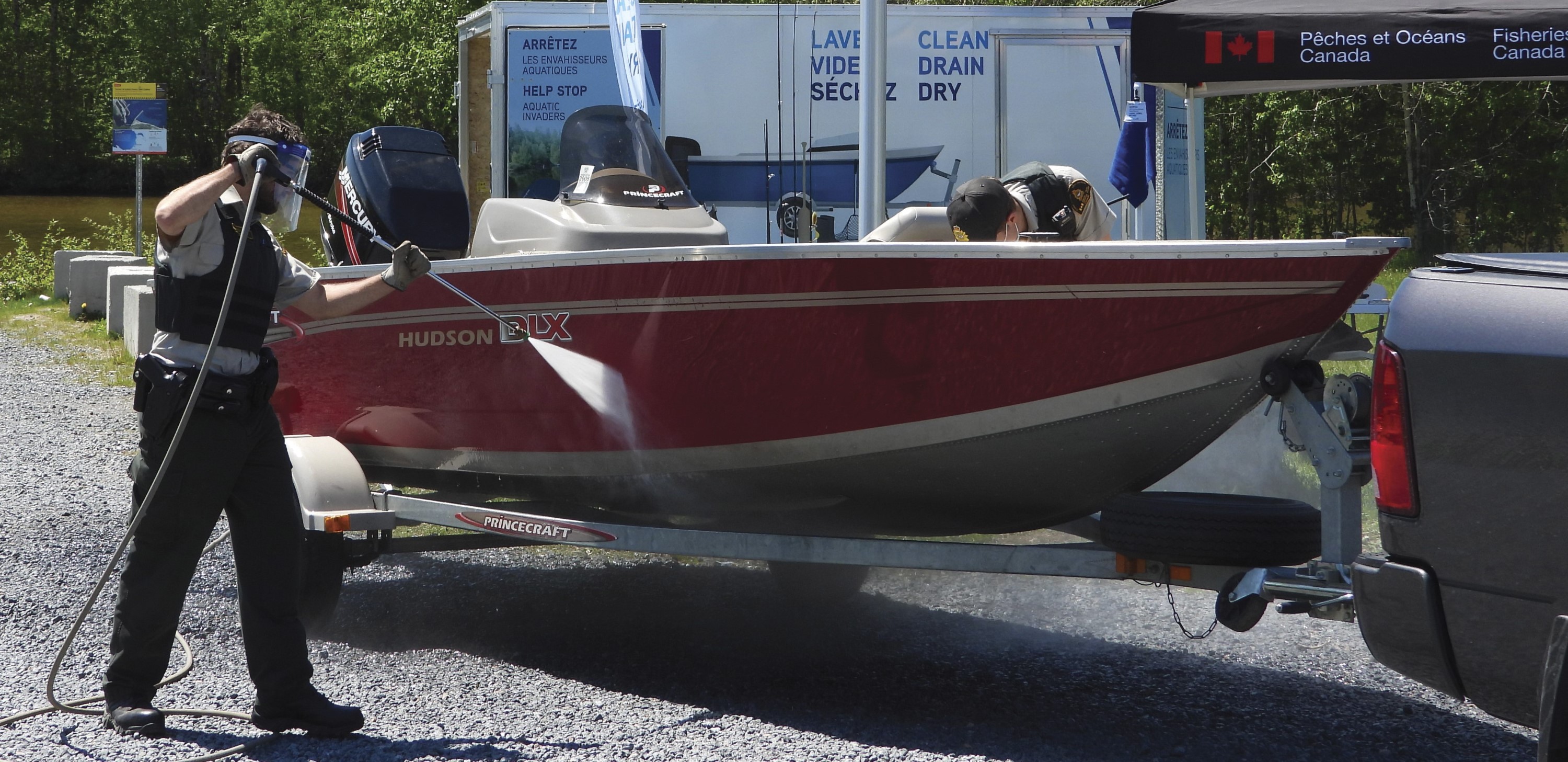
Fishery officers of Fisheries and Oceans Canada (DFO) washing a boat coming out of a river with high pressure hot water.

“Clean, drain, dry” pictogram of Fisheries and Oceans Canada (DFO)
Aquarium and water garden animals and plants
- never release animals or empty the water from fish tanks and water gardens into streams, drains, ditches or sewers. Empty it on dry land, away from any body of water
- when you want to dispose of an aquatic animal or plant:
- donate them to:
- a public institution or organization
- pet shops
- schools
- museums
- aquariums
- zoological garden
- another hobbyist
- aquarium clubs
- associations
- a public institution or organization
- if none of these solutions work, consider throwing out the plant far away from any body of water or euthanizing the animal. You can contact your veterinarian to inquire about recommended methods of euthanasia
- donate them to:
Control of an invasive species in the wild
- before attempting to control an AIS in the wild, get in touch with Fisheries and Oceans Canada. Use the contact information on the back cover of this booklet
- control measures vary depending on the species, so you must take precautions before attempting to control an AIS in order to avoid it spreading further

“Stop aquatic invasive species – Don't let it loose” pictogram of Fisheries and Oceans Canada (DFO)
Aquatic invasive plant species in Quebec
Emerging plants
Water Soldier
(Stratiotes aloides)
Characteristics
- emerging plant that looks like the head of a pineapple or an aloe
- submerged at the start of the season, but emerges during summer (growing season)
- narrow, pointed, rigid emerged leaves, edged with spines, about 40 cm and forming large rosettes
- narrow, soft submerged leaves measuring less than 60 cm
- white flowers with 3 petals that form fleshy berries between 1 cm and 3.5 cm (rarely seen in Quebec and Ontario)
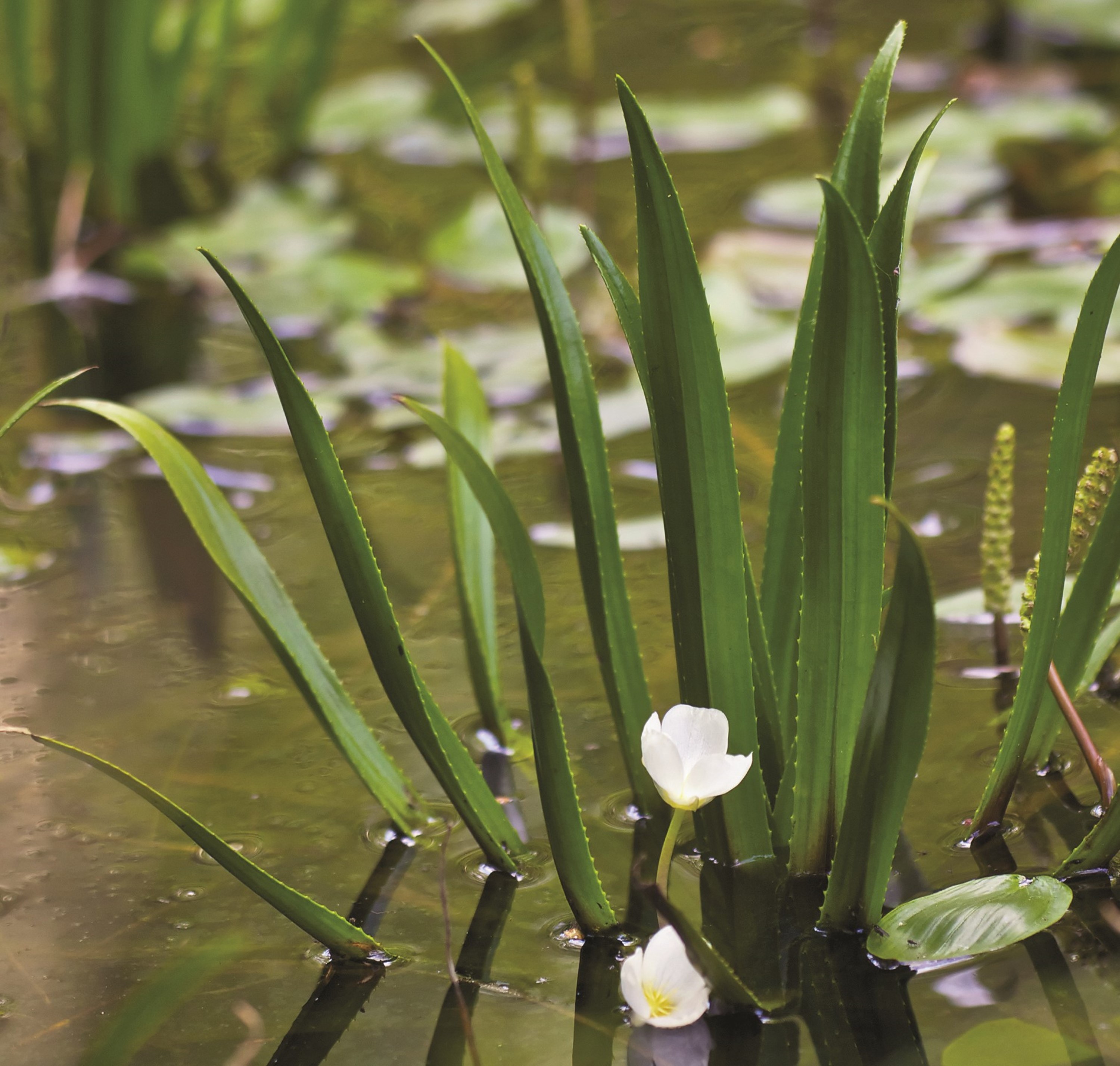
Pointed leaves of a flowering Water Solider plant emerging from water. Photo credit: Jörg Hempel.
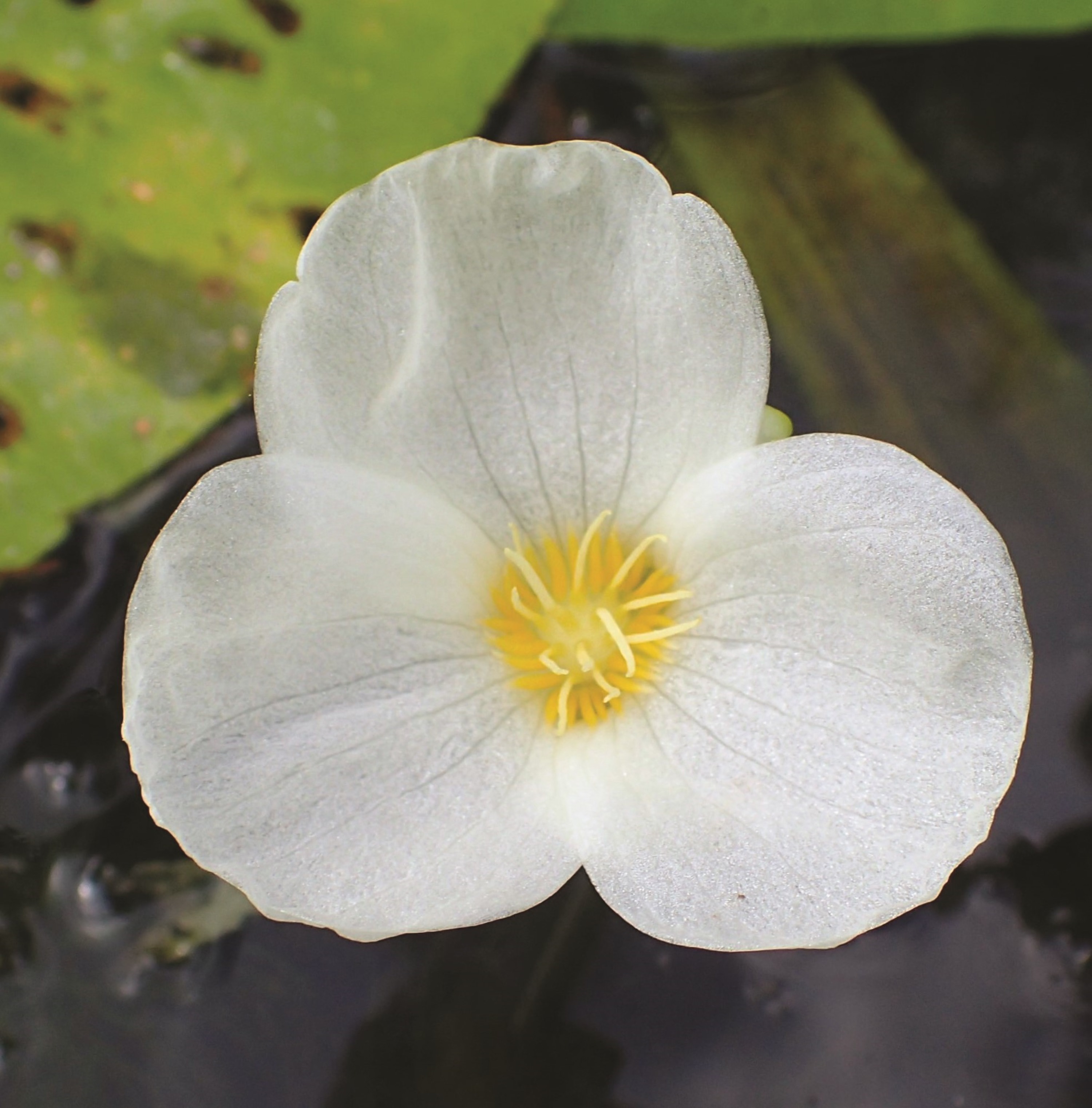
Flower of the Water Soldier. Photo credit: Krzysztof Ziarnek Kenraiz.
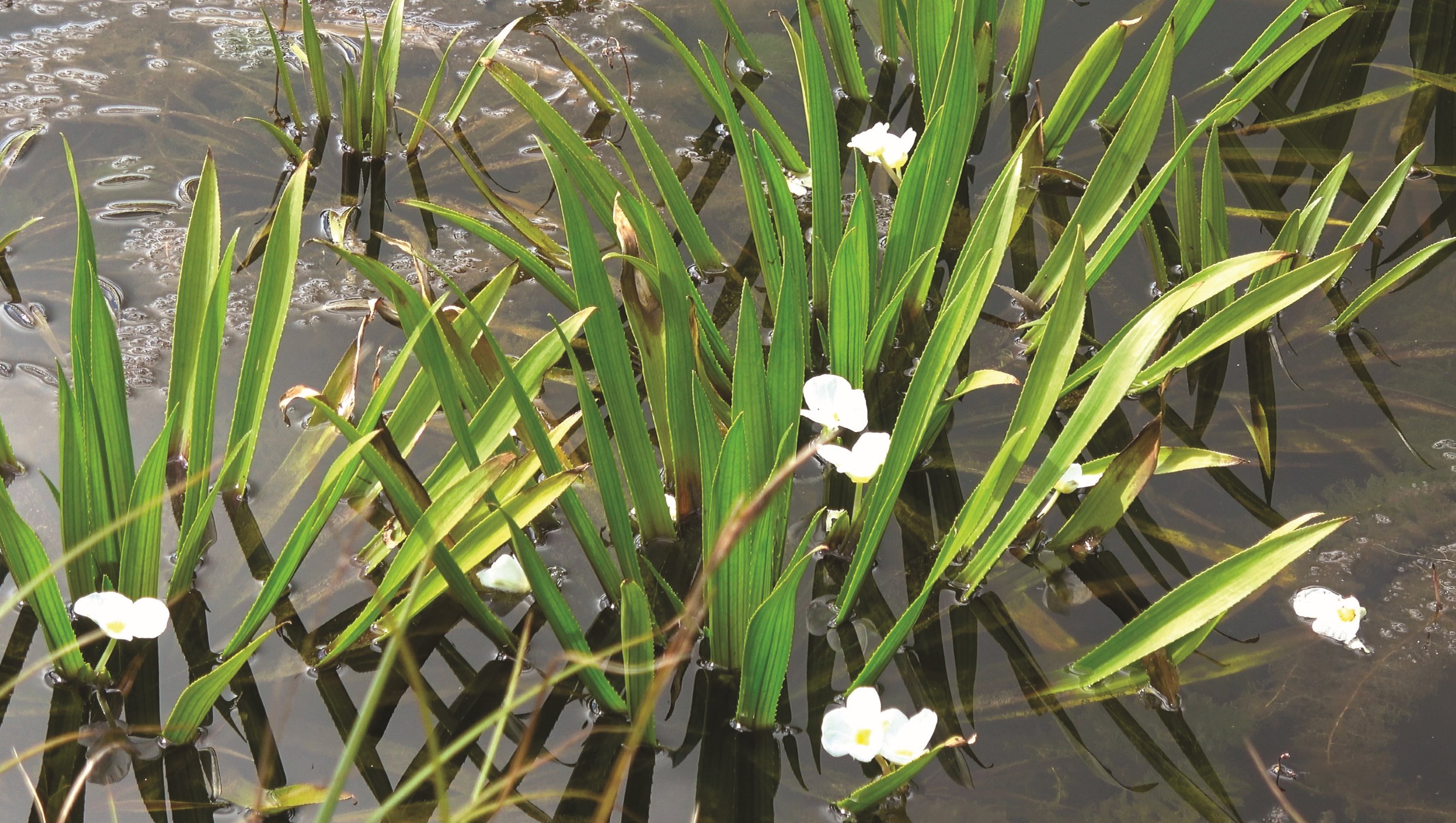
Water Soldier plants on the surface of a water body. Photo credit: Kommentator1989.
Origin
Water Soldier, also known as Water Aloe, is an invasive perennial plant native to Europe and northwestern Asia. It was first seen in North America in 2008 on the Trent River in Ontario. The likely source of its introduction into the wild is its sale as an ornamental plant for water gardens. In Quebec, Water Soldier was detected upstream of Montreal in the Ottawa River (Carillon Bay) in 2018.
Habitat
Water Soldier usually establish itself in still, shallow waters such as:
- sheltered bays
- ponds
- ditches
- canals
It can be found, rooted or not, on muddy bottoms covered with organic deposits down to depths of 5 m. When mature, they produce runners (miniature plants) which spawn other plants, forming very dense floating mats that multiply rapidly.
Similar species
Water Soldier resemble some native aquatic plants, such as Burreed (Sparganium spp.) and Arrowheads (Sagittaria spp.). However, the jagged, sharp edges on the leaves of Water Soldier make it quite easy to distinguish it from other plants.
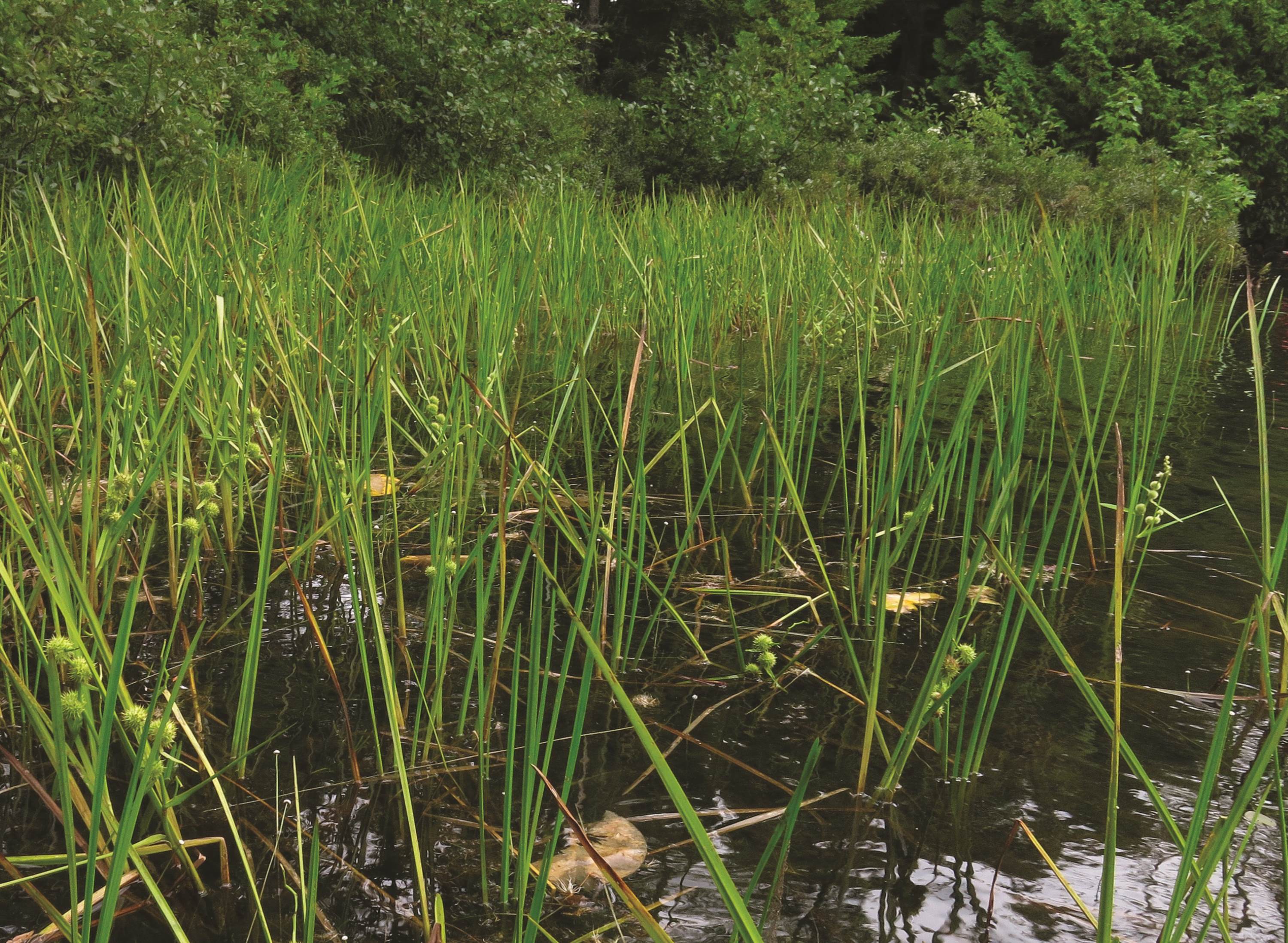
Similar species: American Burreed stems emerging from the water. Photo credit: Marilee Lovit.
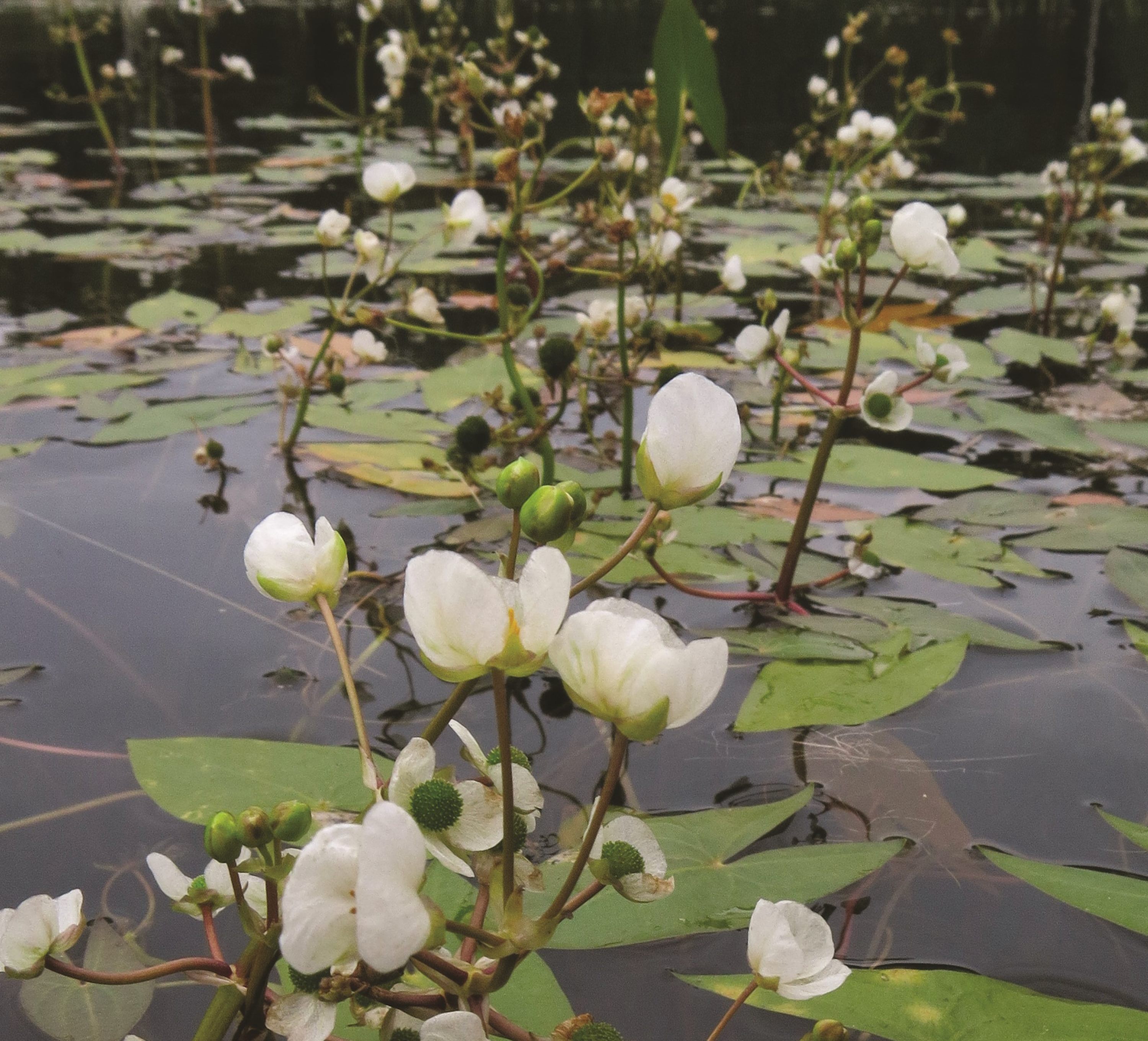
Similar species: Large floating leaves and flowering stems of the Northern Arrowhead. Photo credit: Marilee Lovit.
Floating plants
European Frog-Bit
(Hydrocharis morsus-ranae)
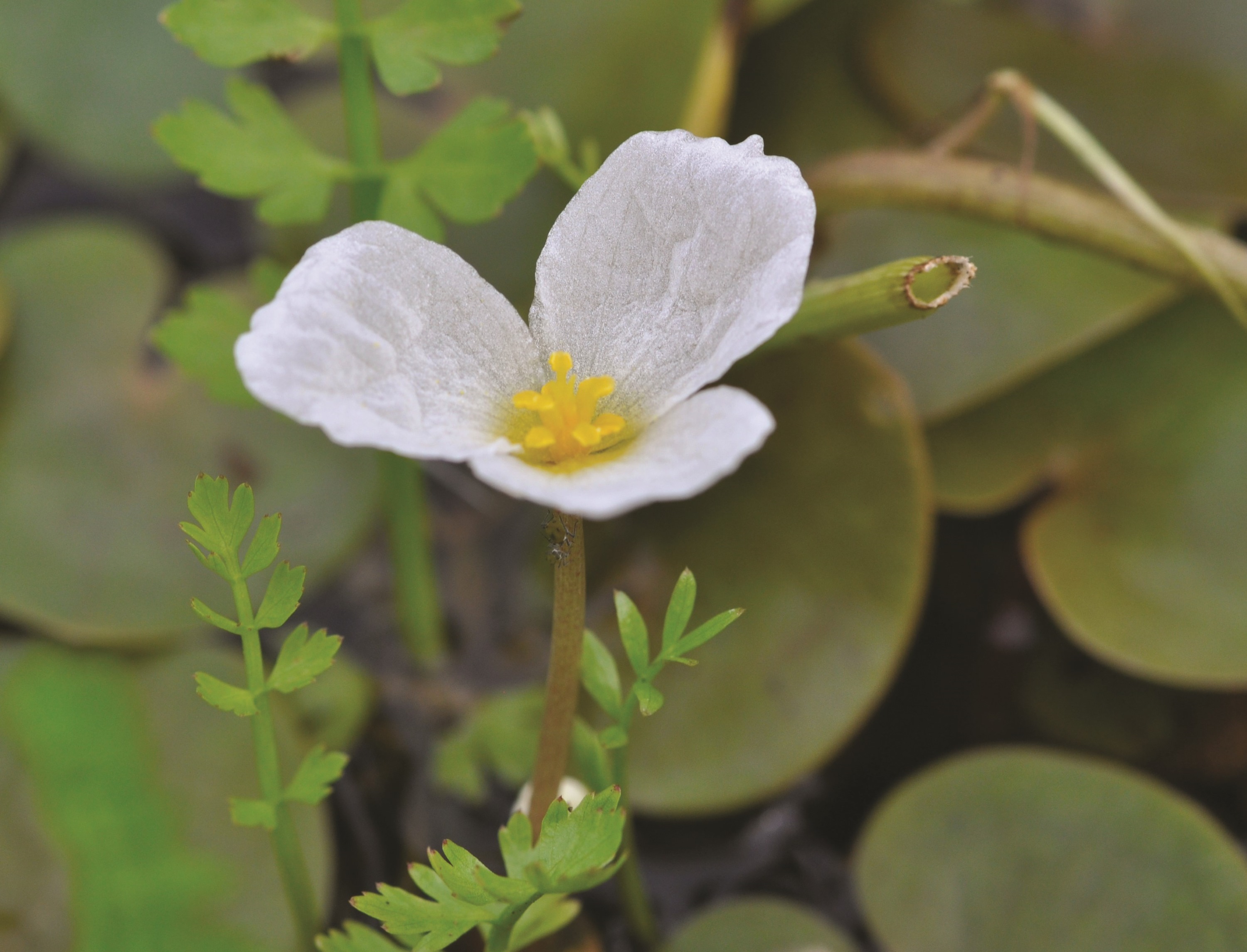
Flower of the European Frog-Bit. Photo credit: Aiwok.
Characteristics
- non-rooted floating plant
- heart or bean-shaped leaves of 1.5 cm to 6.5 cm
- leaves arranged in rosettes connected by runners (long stems) below the surface of the water
- underside of leaves are purple and covered with a spongy layer
- flowers are composed of 3 pinkish-white petals and a yellow centre
Origin
European Frog-Bit, also known as Common Frog-Bit, is native to Europe and parts of Africa and Asia. It is a perennial plant that was introduced to North America in the early 1930s for use as an ornamental plant in water gardens. In Canada, this small plant was introduced in 1932 to experimental ponds in Ottawa. It was also found in the Rideau Canal in 1939, and has since spread in the Ottawa and St. Lawrence rivers as well as many other regions in Quebec. It is also present in lakes Ontario and Erie.
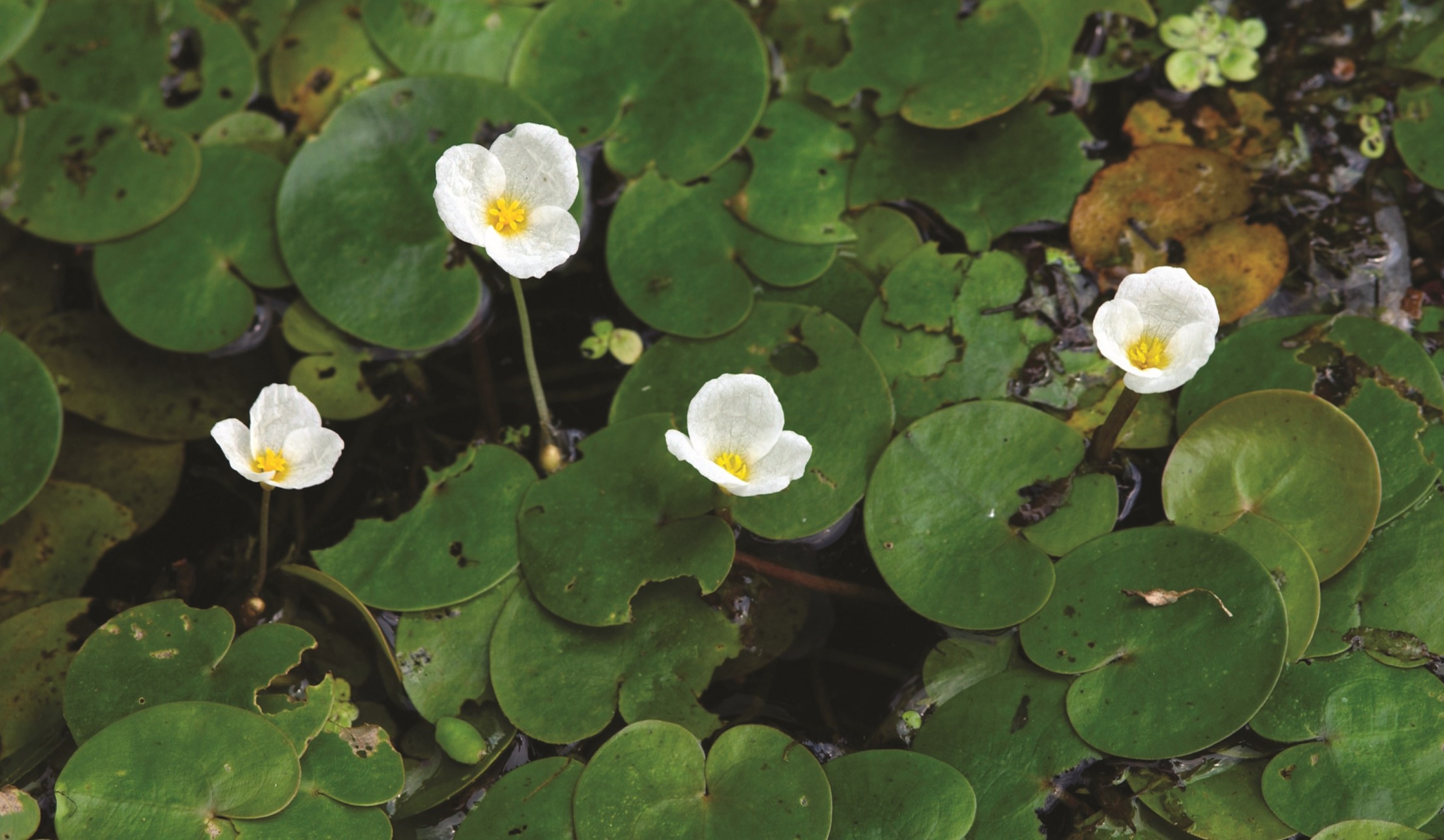
European Frog-Bit in bloom on the surface of a water body. Photo credit: Michigan Sea Grant.
Habitat
European Frog-Bit lives in calm, nutrient-rich waters. It is found in:
- shallow sections of lakes and rivers
- ponds
- marshes
- ditches
This plant grows quickly to form dense floating mats. Thanks to its buds that sink to the bottom in late fall and rise to the surface at the end of winter, new plants are formed in the spring.
Similar species
European Frog-Bit resembles several other plants native to Canada, including various species of Water Lilies (Nuphar spp.). Nevertheless, it is possible to differentiate these plants by the shape and size of their leaves and flowers. Unlike European Frog-Bit, Water Lilies have bigger oval leaves that are 7 cm to 40 cm as well as yellow flowers with 5 to 6 smooth-edged petals.
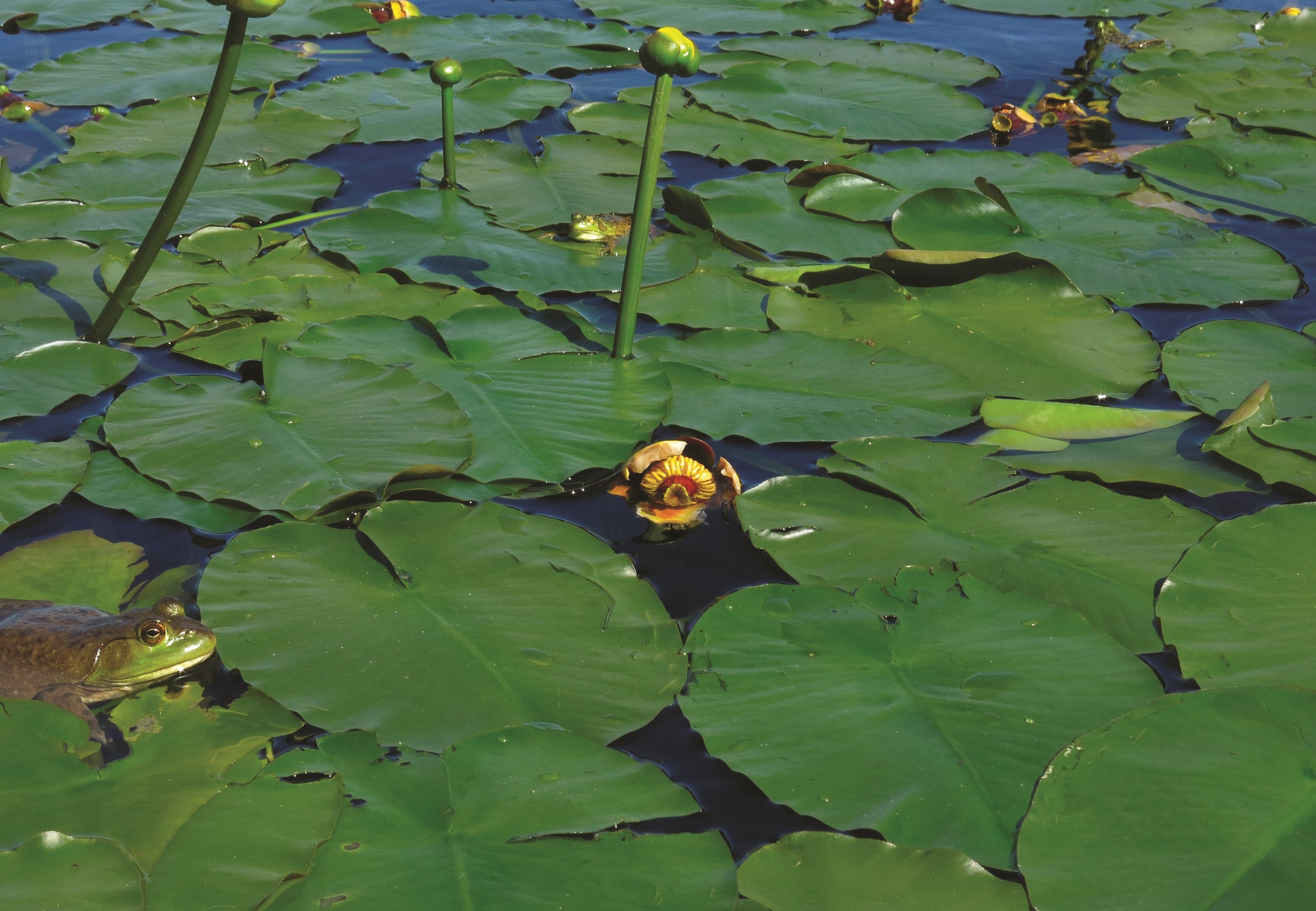
Similar species: Large rounded leaves of Yellow Pond-Lily on the surface of a water body. Photo credit: Marilee Lovit.
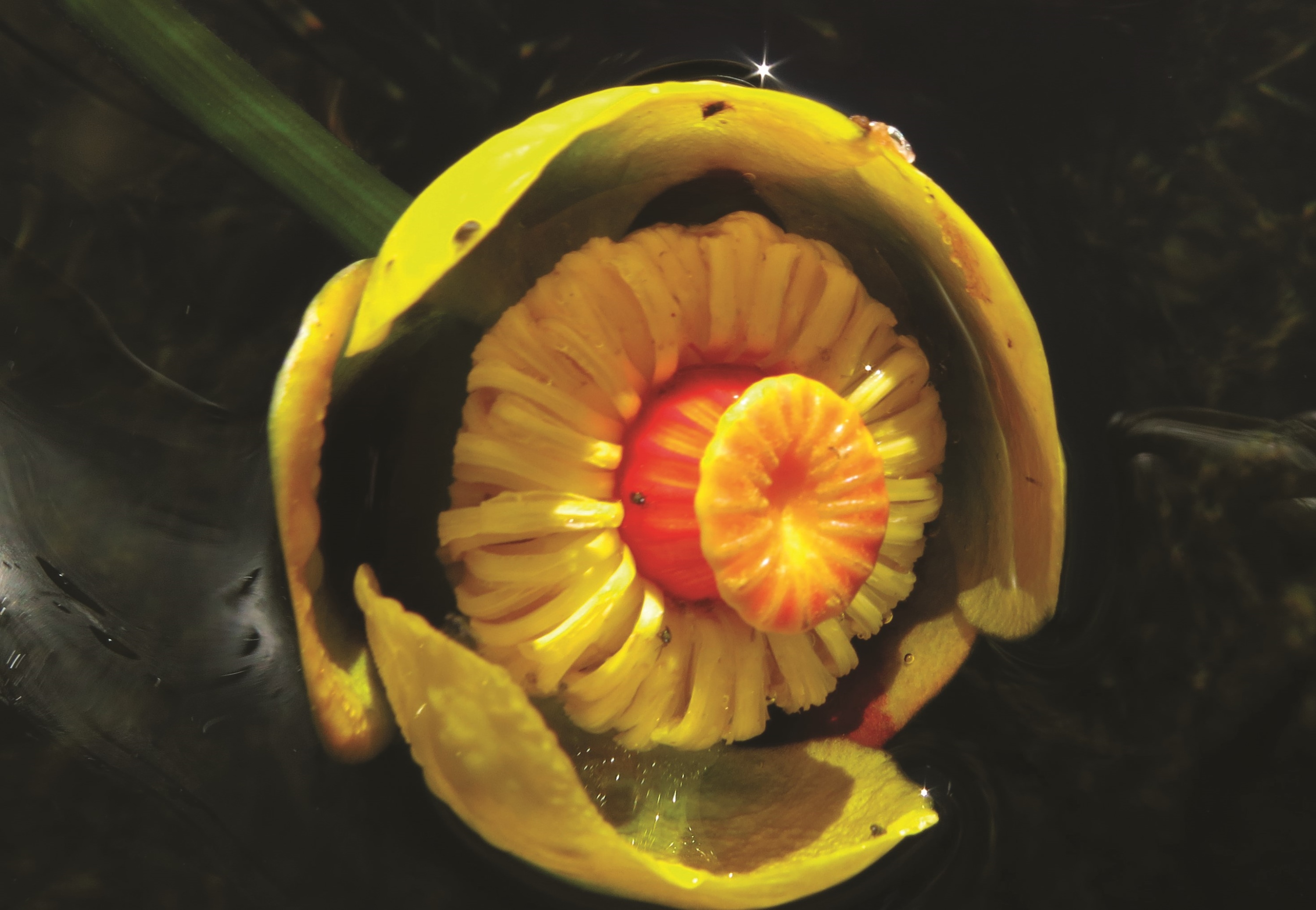
Similar species: Round yellow flower of the Yellow Pond-Lily. Photo credit: Marilee Lovit.
Water Chestnut
(Trapa natans)
Characteristics
- floating plant, gathered in dense rosettes that can reach up to 30 cm
- triangular or fan-shaped leaves of 1 cm to 3 cm with jagged edges
- leaf petioles up to 15 cm with a spongy, swollen part (helps the plant to float)
- small white flowers (less than 1 cm) with 4 petals, present in July
- fruits resembling nuts, between 3 cm and 4 cm, with 4 spines
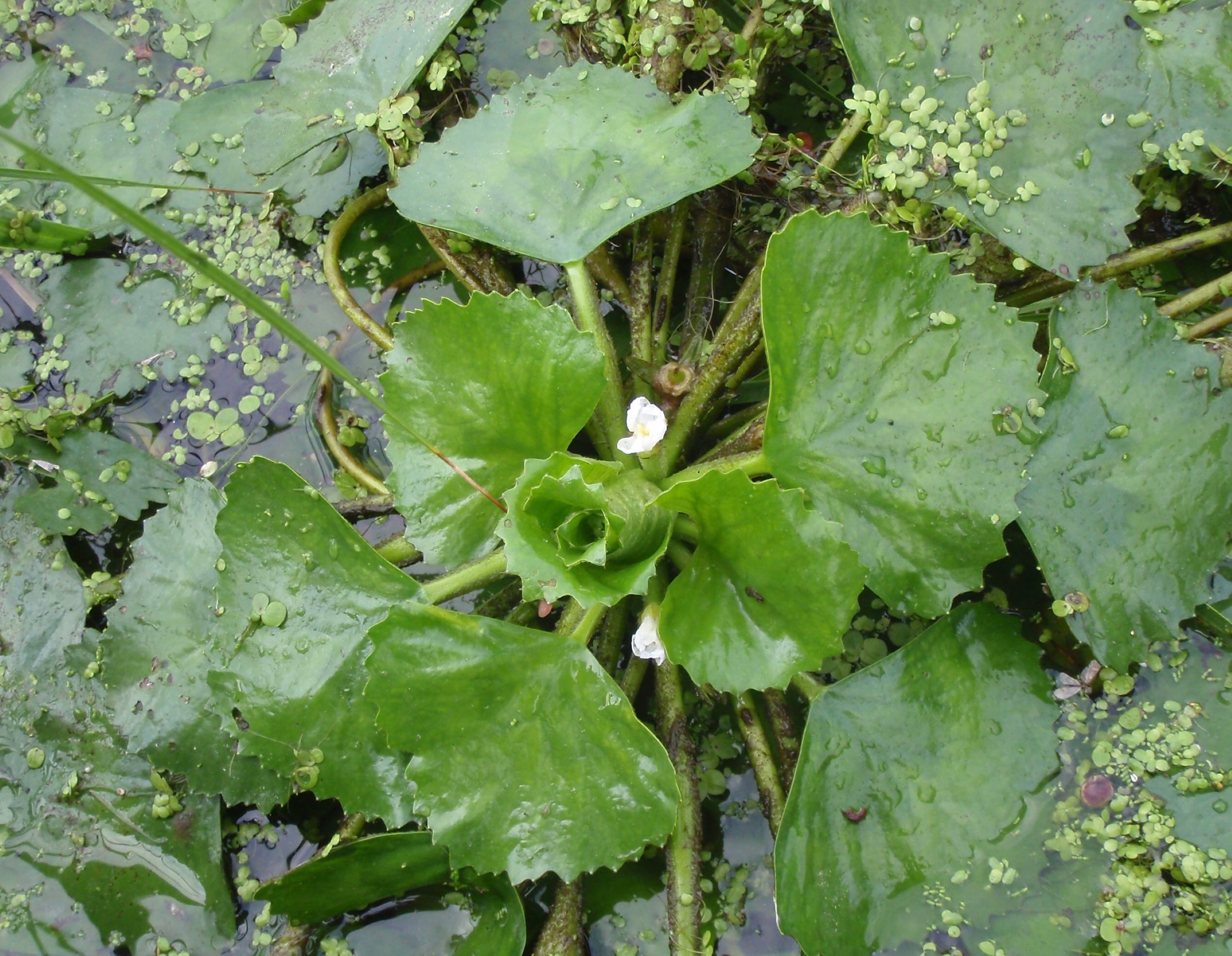
Blooming water chestnut rosette. Photo credit: Ministère de l'Environnement, de la Lutte contre les changements climatiques, de la Faune et des Parcs du Québec.
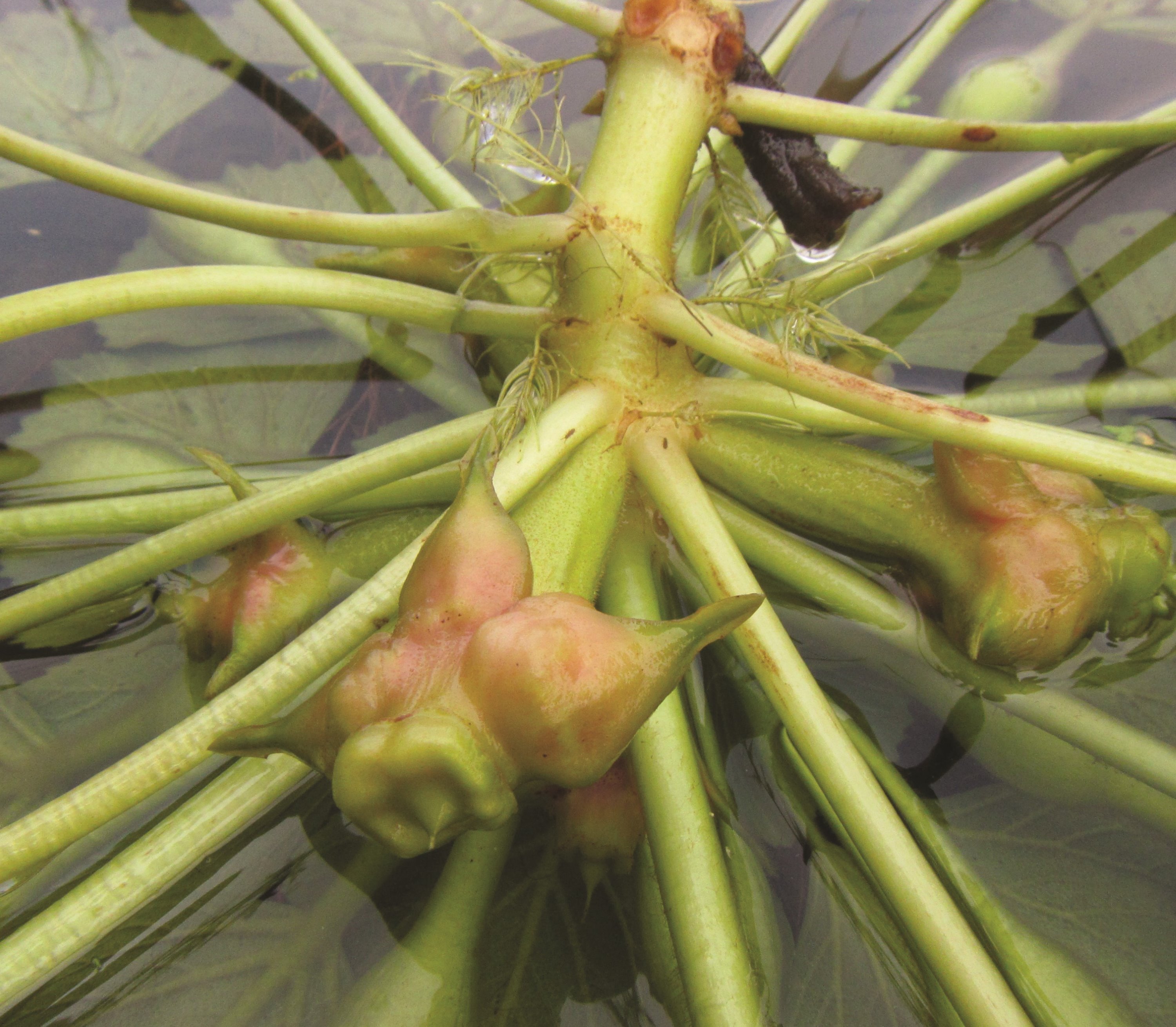
Spiny fruit of the water chestnut. Photo credit: Paul Skawinski, Aquatic Plants of the Upper Midwest.
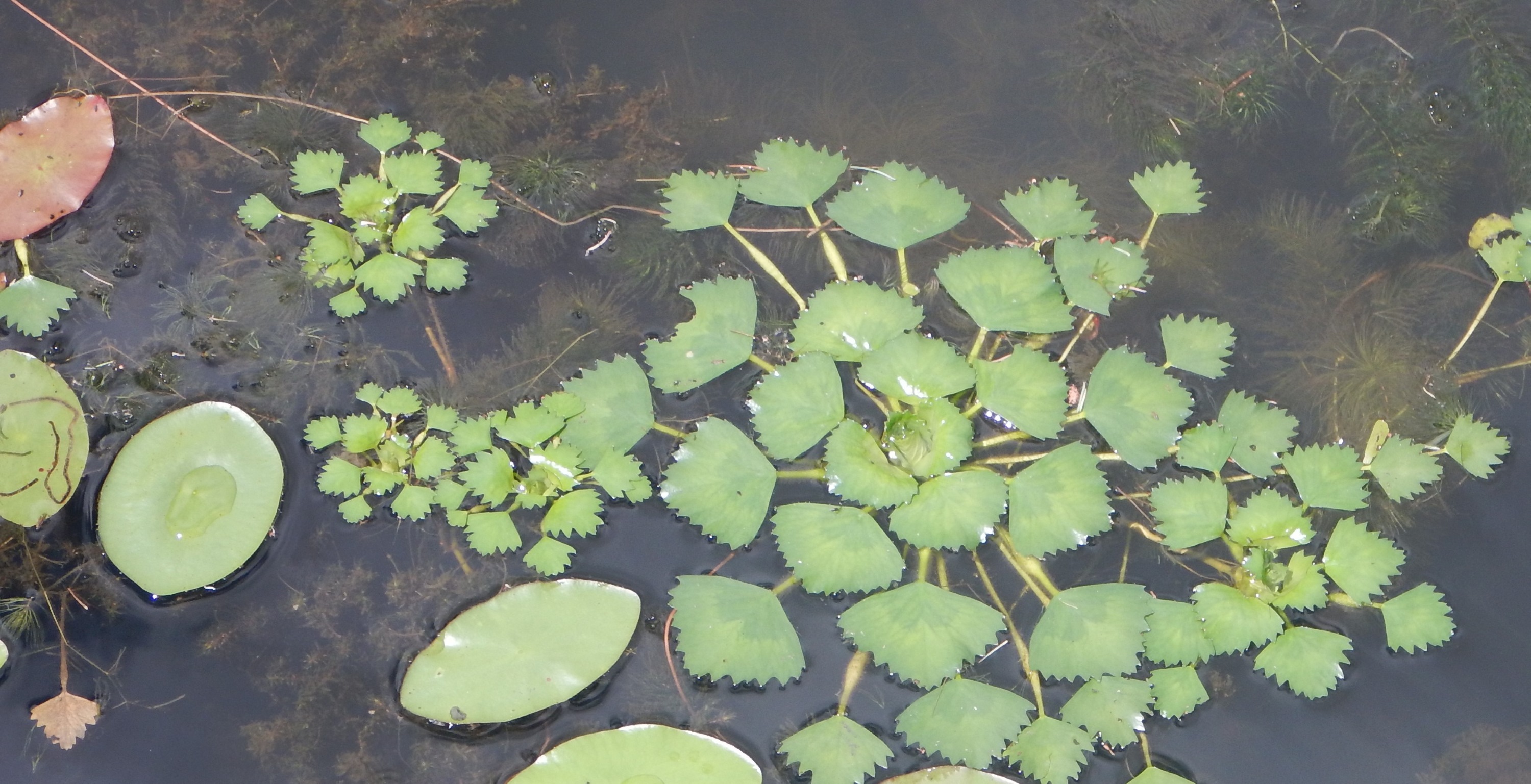
Water chestnut rosettes on the surface of a water body. Photo credit: Organisme de bassin versant Corporation de l'Aménagement de la Rivière l'Assomption.
Origin
Water Chestnut comes from the warm temperate regions of Europe, Asia and Africa. It was first introduced as an ornamental plant for water gardens in the United States in the late 1870s. It has since spread through accidental or intentional introductions, watersports, recreational fishing, and animals to several states in the northeastern United States, Ontario and Quebec. It was first observed in Quebec in 1998 in Montérégie region before reaching the multiple regions in the south of the province.
Habitat
Water Chestnut grows in calm, sunny and nutrient-rich waters, such as lakes, marshes or canals. It is found in depths up to 5m to 6m. It often takes root in muddy bottoms, but can also adapt to coarser bottoms (e.g. gravel). It produces nuts, which sink to the bottom in late summer, when ripe. These contain several seeds that retain their germination potential for several years.
Similar species
Water Chestnut is unlike any native plant found in eastern Canada.
Water Hyacinth
(Eichhornia crassipes)
Characteristics
- floating plant that forms rosettes on the surface of the water
- thick, satiny leaves, oval, about 10 cm
- stems of 8 cm to 15 cm
- flowers with 6 blue-violet petals, forming clusters of 4 to 15 flowers (July to August)
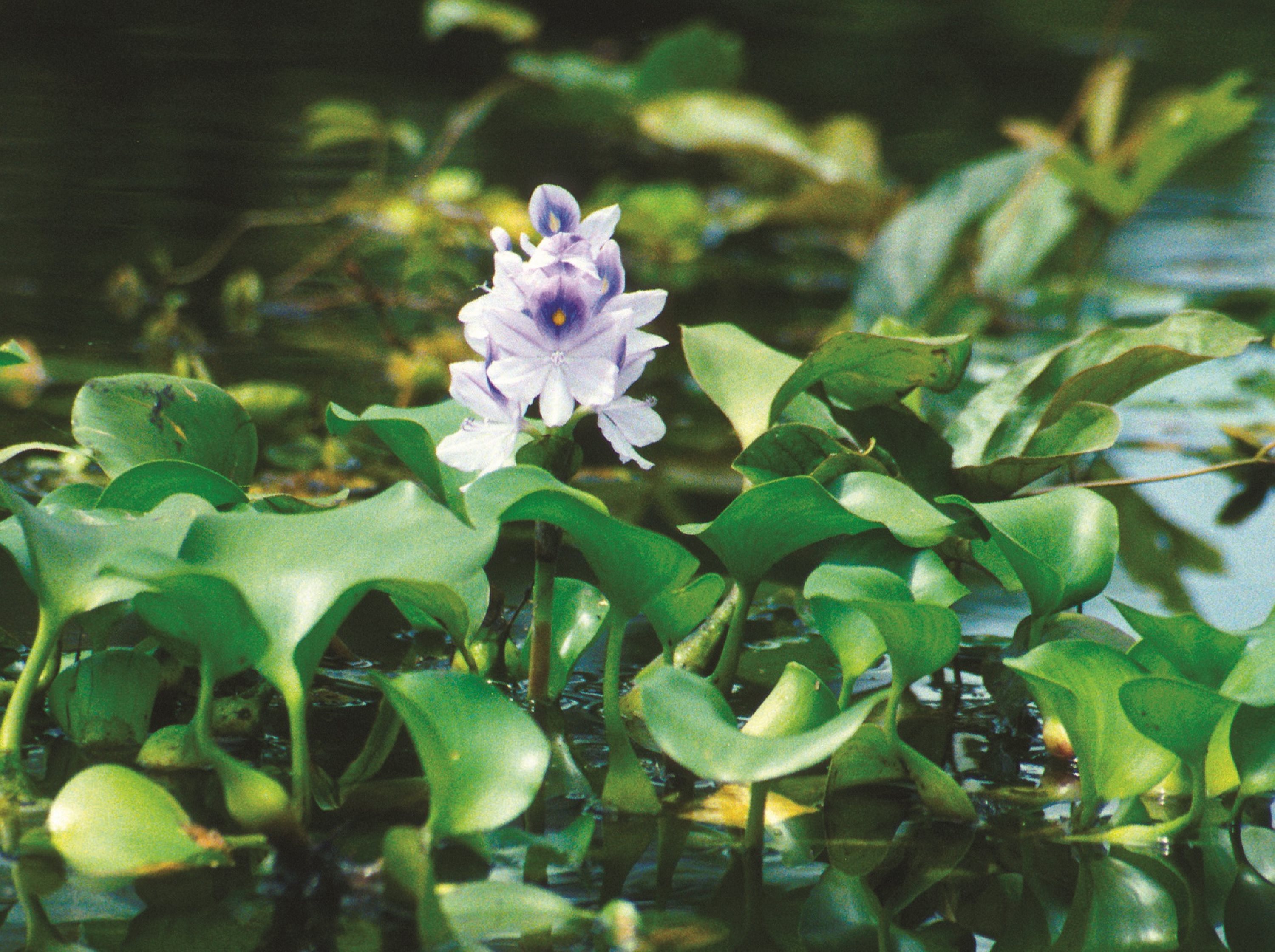
Water Hyacinth blooming on the surface of a water body. Photo credit: Ted D. Center USDA Agricultural Research Service Bugwood.org.
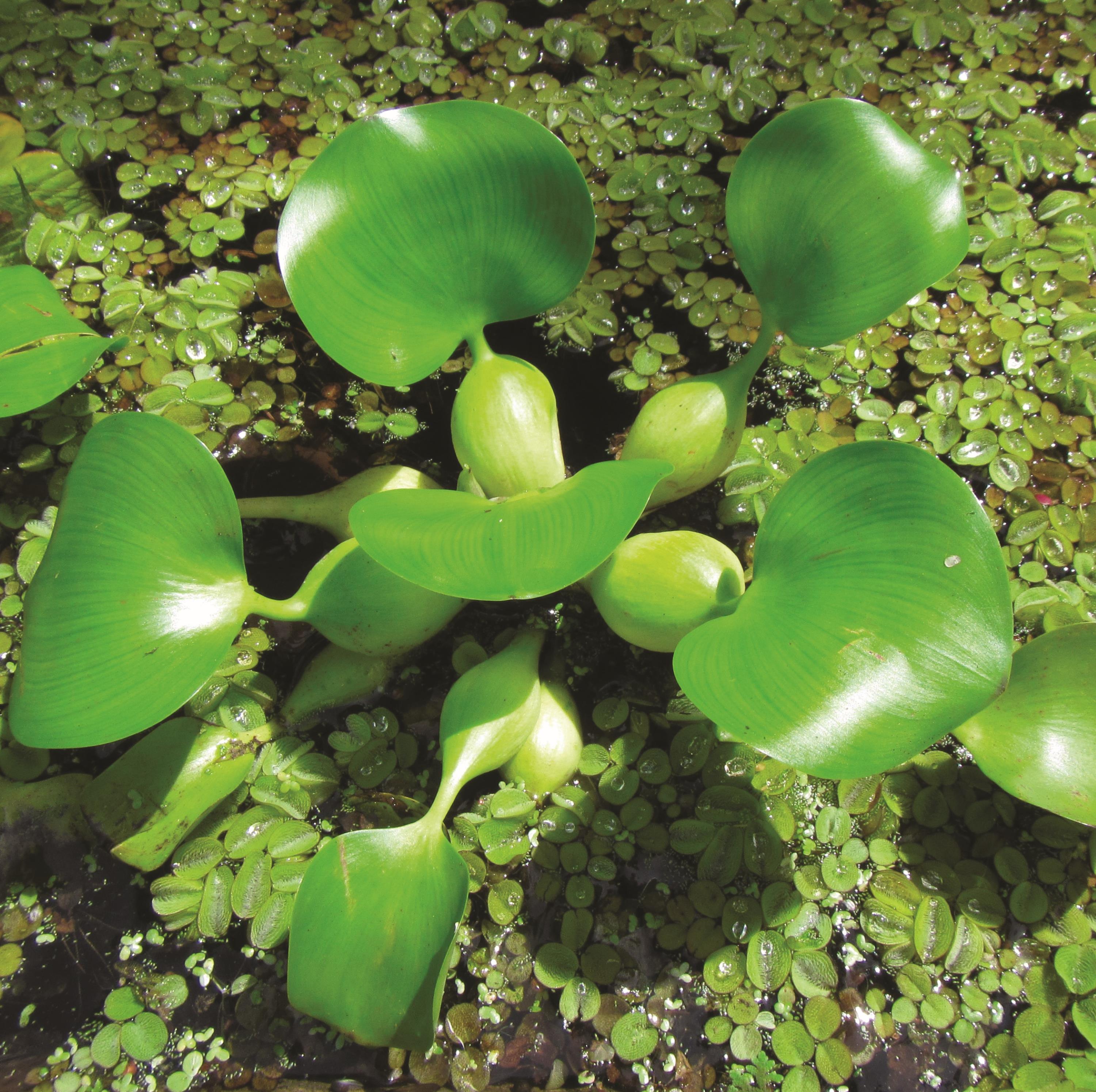
Oval leaves of the Water Hyacinth. Photo credit: Paul Skawinski, Aquatic Plants of the Upper Midwest.
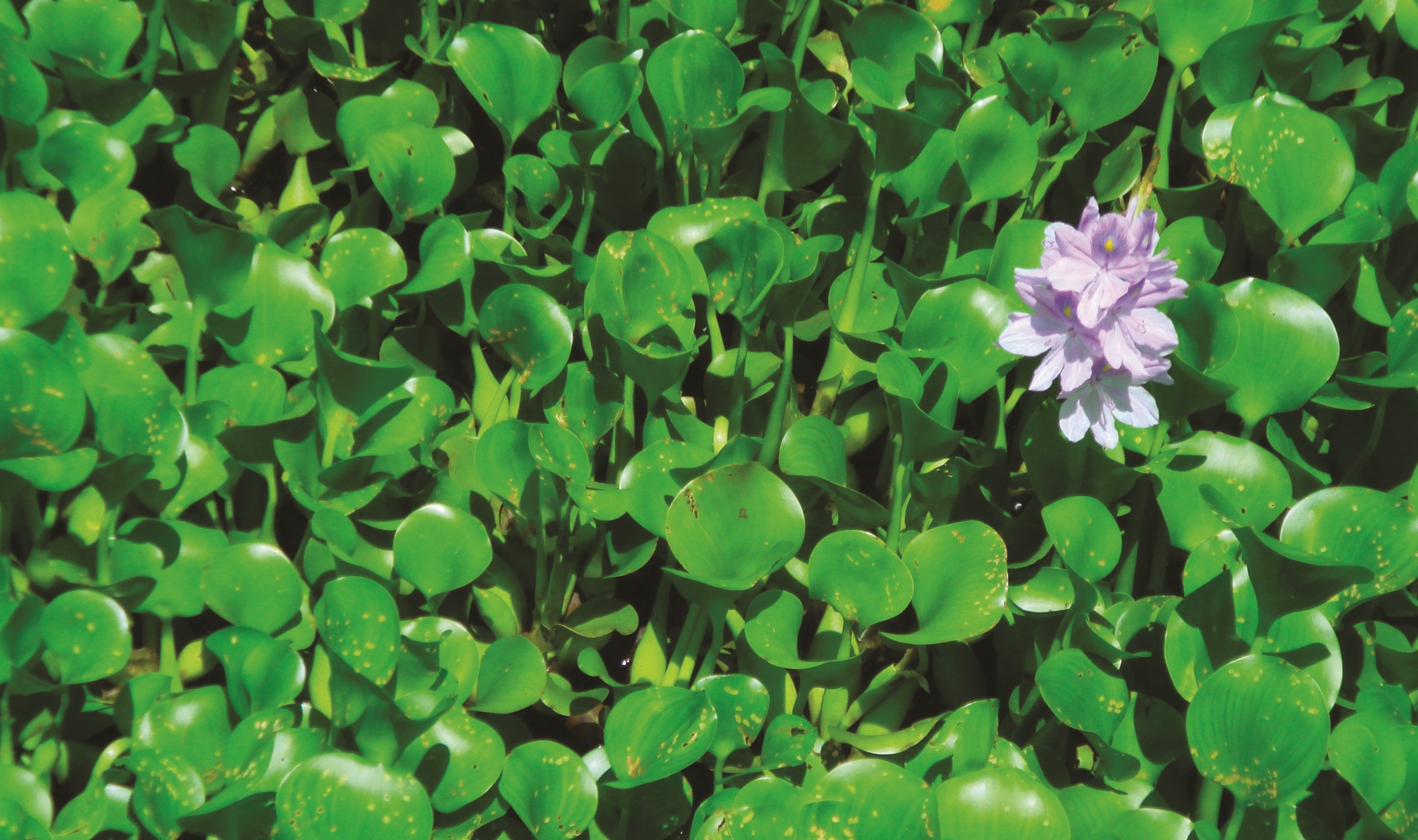
Blooming Water Hyacinth colony invading the surface of a body of water. Photo credit: Katherine Parys USDA-ARS Bugwood.org.
Origin
Water Hyacinth is an invasive perennial plant native to southern Brazil. It was first observed in North America when it was imported to New Orleans in 1884. It is now found in several U.S. states, where it is sold as an ornamental plant for ponds and water gardens. In Ontario, its presence has been reported in the Windsor-Essex region (southwest of Lake Erie). In Quebec, this species has been observed a few times in the wild since 2020. However, it is not considered established.
Habitat
Water Hyacinth grows in the calm, shallow waters of ponds, marshes, small streams, and lake shores. Under good conditions, with optimal sun, it can double its population in a week, forming dense floating mats. This plant is easily spread by wind and currents, as its connected rosettes are rarely held back by roots.
Similar species
Water Hyacinth does not resemble any aquatic plant native to eastern Canada.
Water Lettuce
(Pistia stratiotes)
Characteristics
- floating plant that forms rosettes
- thick and grooved leaves, with rounded tips, up to 20 cm
- short white hairs on the leaves
- three small flowers that range from white to pale green (summer or beginning of autumn)
- small green fruits that turn brown when ripe
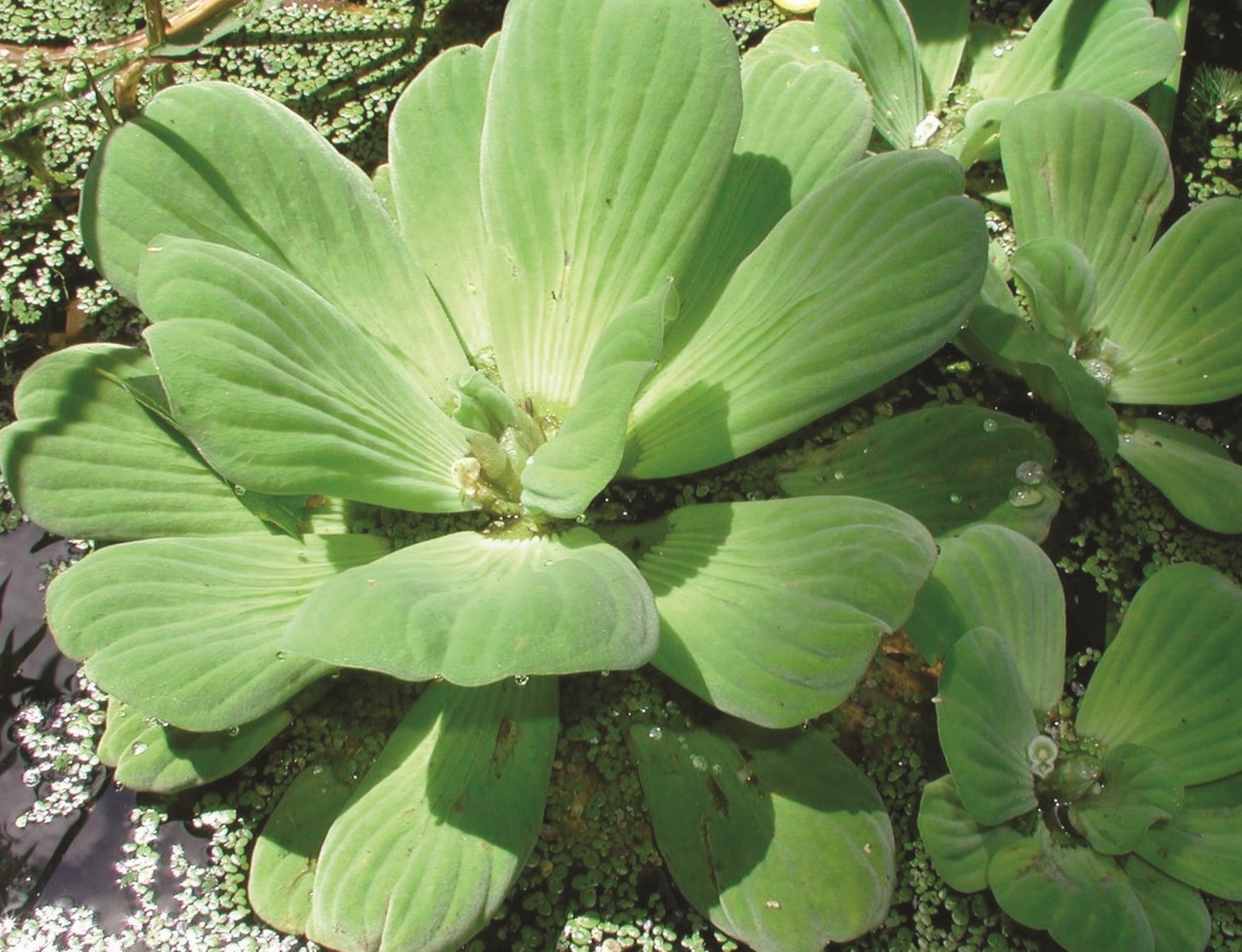
Water Lettuce rosette on the surface of a water body. Photo credit: Leslie J. Mehrhoff University of Connecticut Bugwood.org.
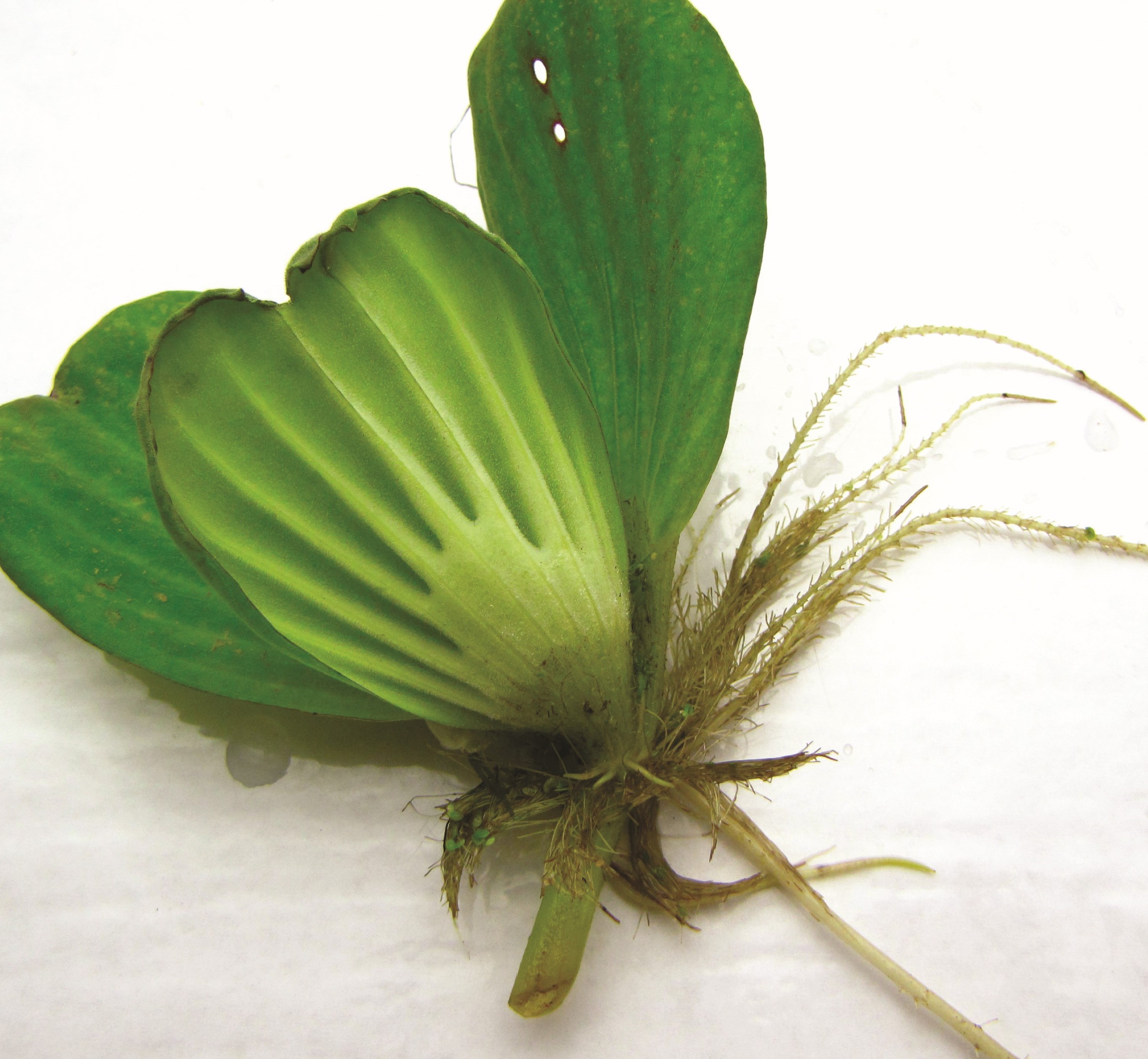
Bottom view of a Water Lettuce rosette. Photo credit: Paul Skawinski, Aquatic Plants of the Upper Midwest.
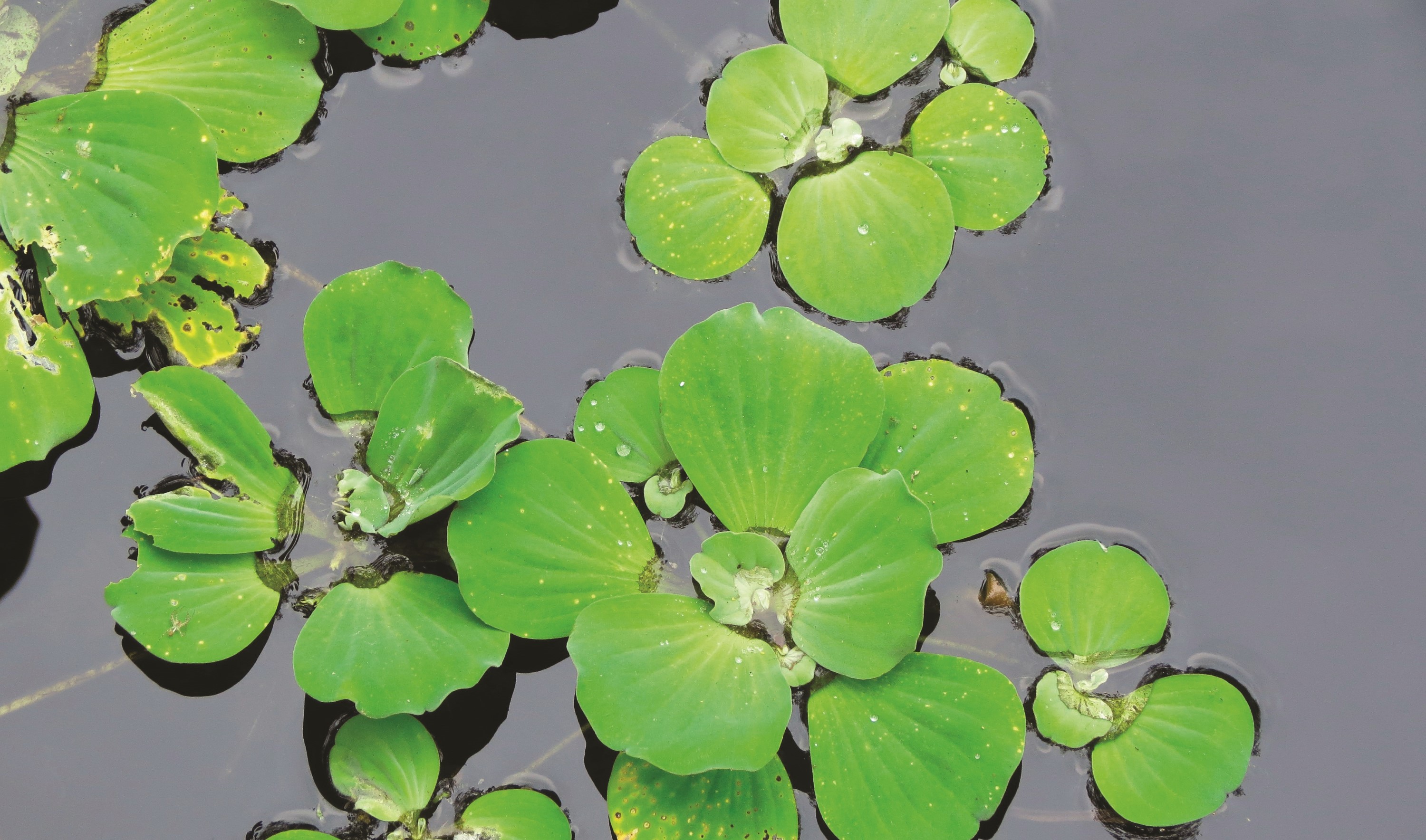
Water lettuce rosettes on the surface of a water body. Photo credit: Paul Skawinski, Aquatic Plants of the Upper Midwest.
Origin
Water Lettuce is an invasive perennial plant that likely originated from the tropics and subtropics. It has been introduced to areas outside of its native range through the ballast waters of ocean-going vessels and was subsequently spread by water gardens and the aquarium trade. In North America, it was first recorded in Florida in the 18th century. In Canada, it was found in 2010 in Ontario (Detroit River and Lake St. Clair). In Quebec, plants of Water lettuce have been observed a few times in Lac des Deux-Montagnes (2019) and in Rivière des Mille-Îles (2021), but the species is not yet established.
Habitat
Water Lettuce is sensitive to cold and grows best in full sun and in calm, shallow waters near lakes and small streams, ponds and marshes. Due to its ability to rapidly multiply, it is often seen covering an entire lake from one shore to the other in a short period of time.
Similar species
Water Lettuce does not resemble any aquatic plant native to eastern Canada.
Yellow Floating-Heart
(Nymphoides peltata)
Characteristics
- plant with floating leaves, rooted at the bottom
- heart or rounded shaped floating leaves of 3 cm to 10 cm
- leaves attached to short petioles that connect to long branching stems
- tops of the leaves green and the undersides purple
- flowers of 3 cm to 4 cm, formed of five bright yellow petals with a fringed border
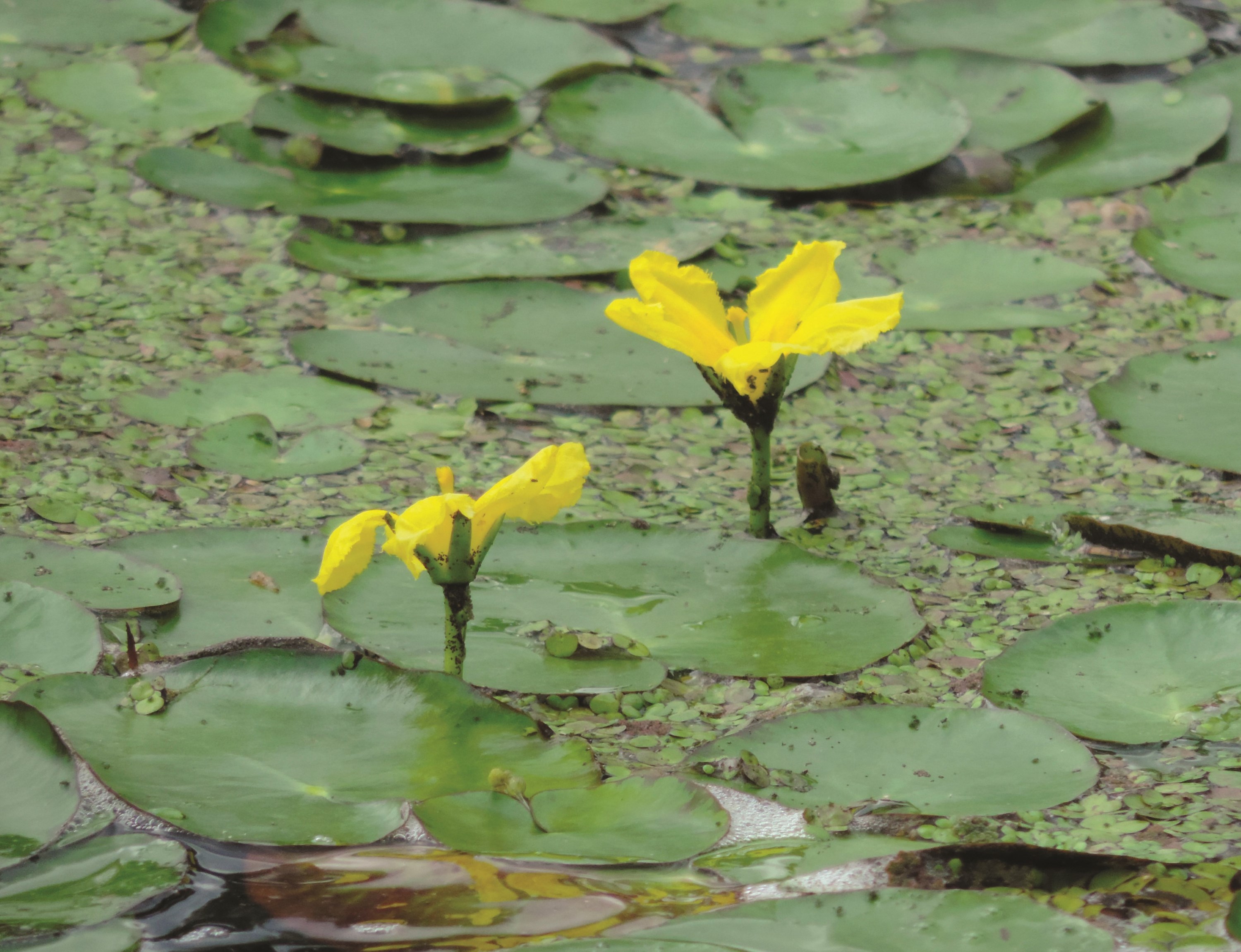
Flowers and leaves of the Yellow Floating-Heart. Photo credit: Krzysztof Ziarnek Kenraiz

Fringed flower of the Yellow Floating-Heart. Photo credit: Réginald Hulhoven
Origin
Yellow Floating-Heart, also known as Fringed Water Lily, is a perennial plant native to Asia and Europe. It was introduced to North America at the end of the 19th century for use as an ornamental plant in water gardens. It can now be found in several bodies of water in the United States and in eastern Canada. In Ontario, its presence has been noted at several locations in the south of the province. Its presence has been scarcely documented in Quebec, with only two reports in ornamental gardens in Montreal (2012) and Sherbrooke (2018).
Habitat
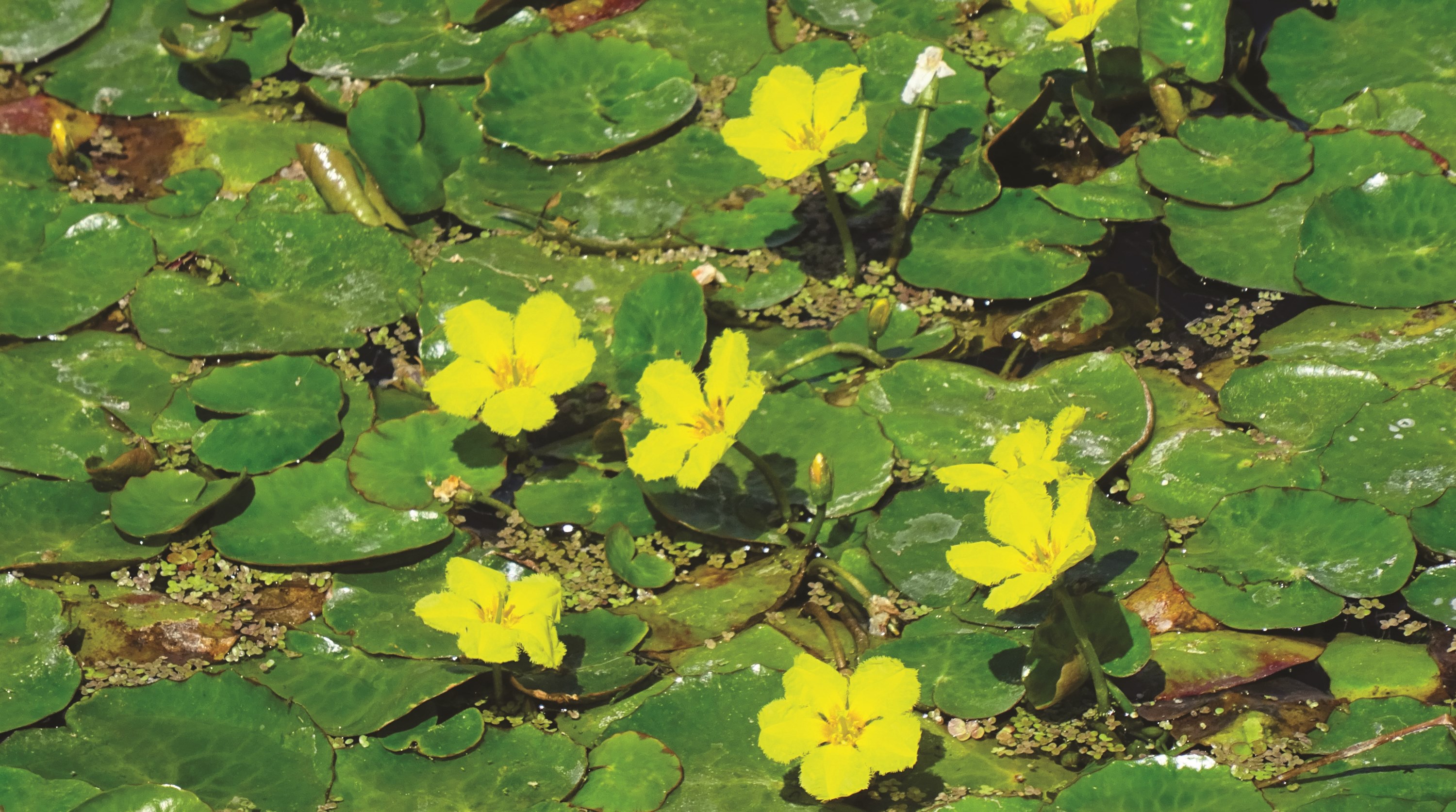
Flowering Yellow Floating-Heart plants on the surface of a water body. Photo credit: Gouwenaar.
Yellow Floating-Heart is commonly found in calm, nutrient-rich bodies of water, such as:
- ponds
- marshes
- ditches
- shallow sections of lakes and rivers
It can establish itself as deep as 4 m and reproduce by scattering seeds that float and cling to aquatic fauna or boats. This plant also multiplies by rooting fragments of its stems.
Similar species
Yellow Floating-Heart resembles several plants native to Canada, including Little Floating-Heart (Nymphoides cordata). These 2 plants can be differentiated by the size of their leaves and the size and colour of their flowers. Little Floating-Heart has cordate leaves which are 5 cm to 7 cm and small white flowers, less than 1.5 cm.
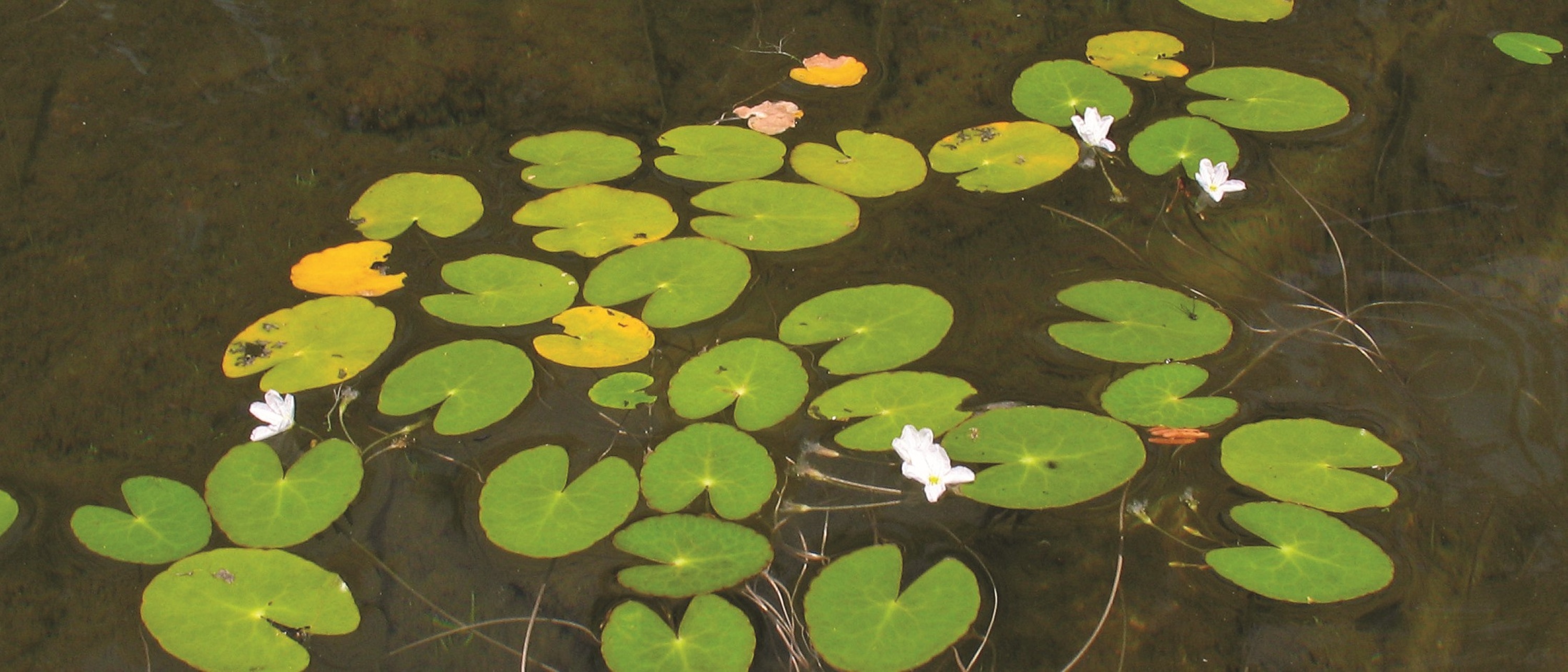
Similar species: Rounded floating leaves and white flowers of Little Floating Heart. Photo credit: Marilee Lovit.
Submerged plants
Carolina Fanwort
(Cabomba caroliniana)
Characteristics
- submerged plant that takes root at the bottom
- submerged, fine, fan-shaped leaves, each 5 cm to 6 cm wide
- occasionally has small floating leaves, oblong, up to 1.3 cm in length
- small solitary flowers between 0.6 cm and 1.5 cm that are white or pale-yellow (sometimes purple or pink), formed of three petals (end of spring or beginning of autumn)
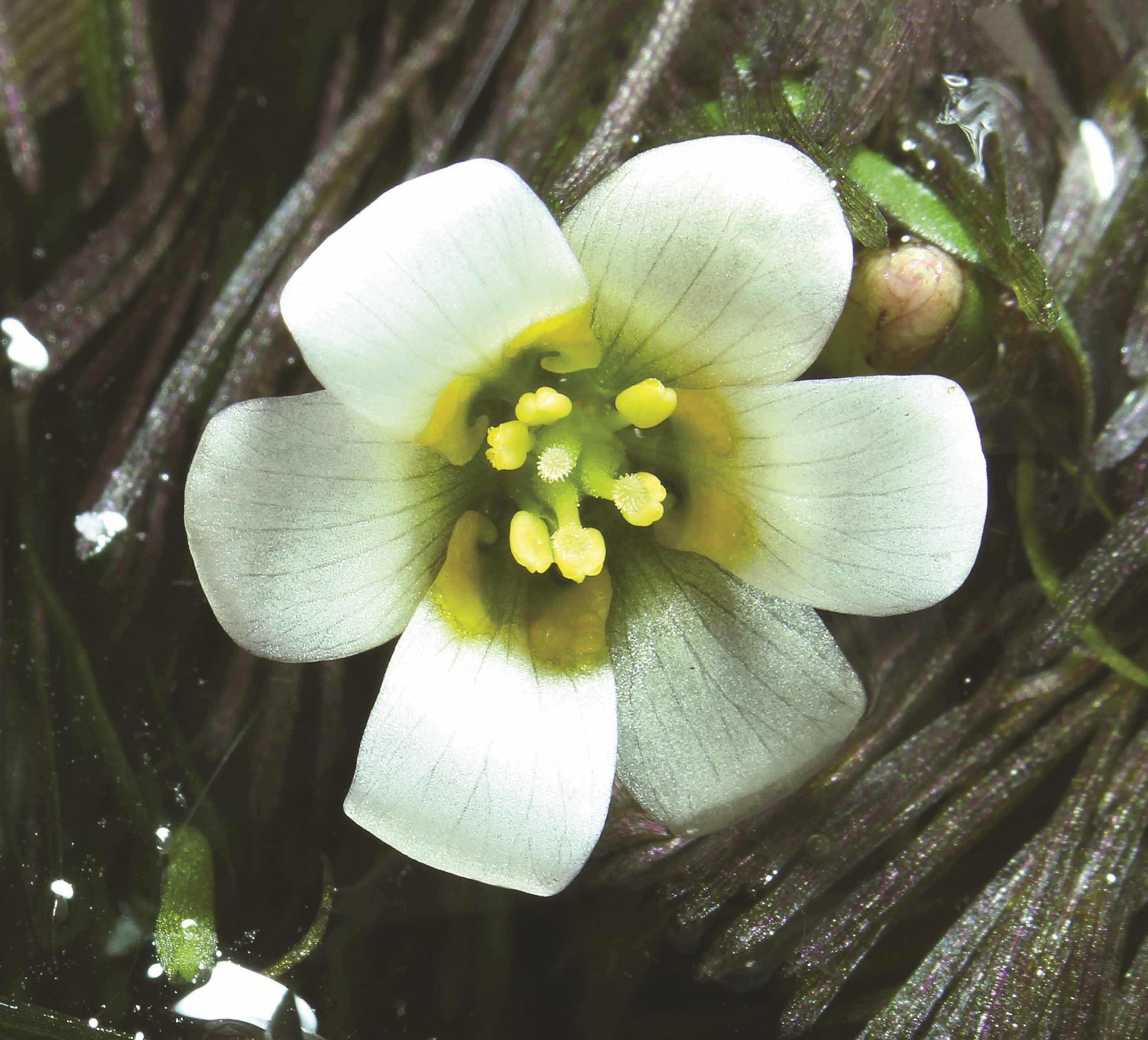
Flower of the Carolina Fanwort. Photo credit: Paul Skawinski, Aquatic Plants of the Upper Midwest
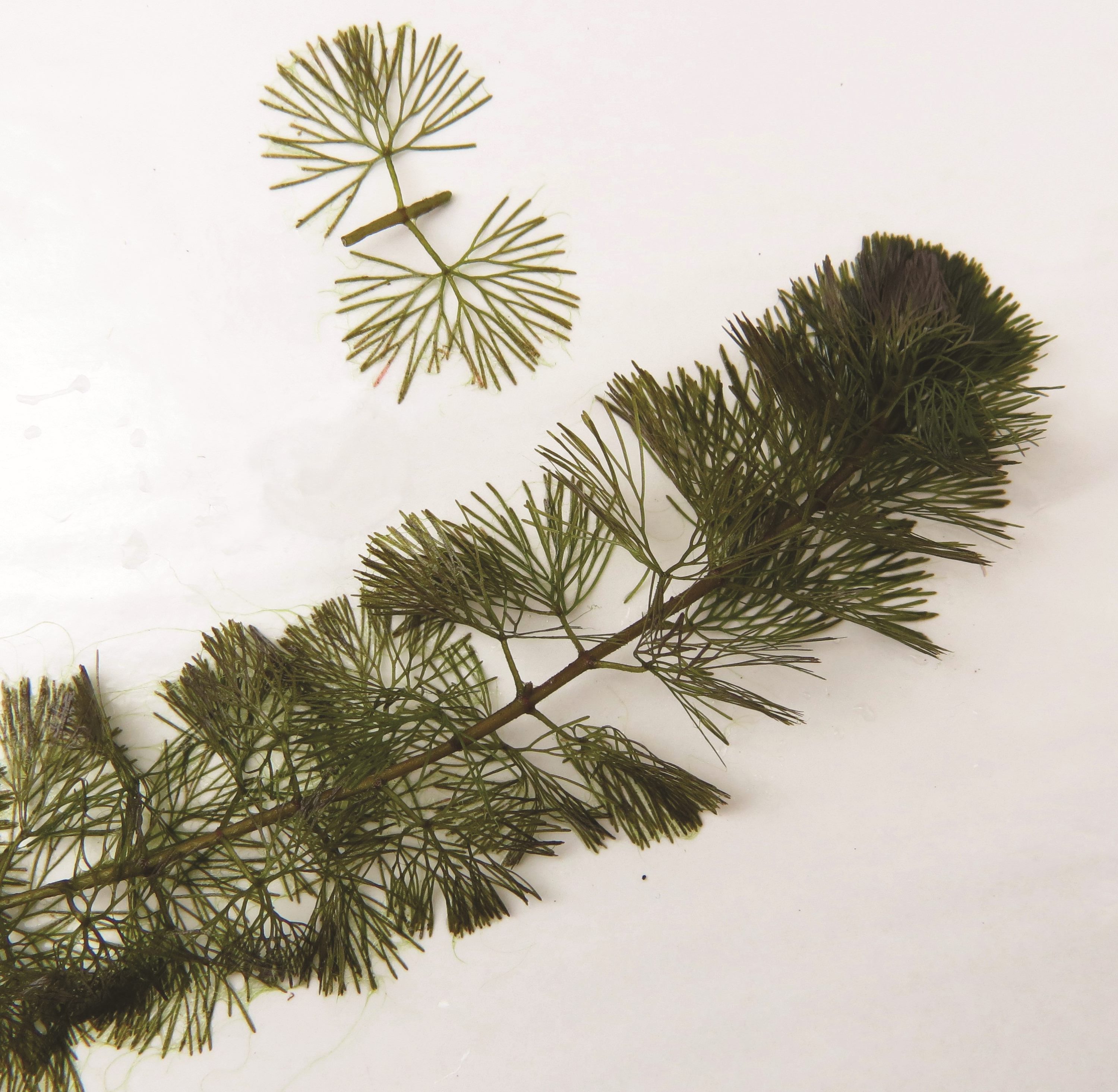
Stem and fan-shaped leaves of the Carolina Fanworth. Photo credit: Paul Skawinski, Aquatic Plants of the Upper Midwest
Origin
Carolina Fanwort, also known as Fanwort, comes from the southeastern United States and parts of South America. Popular within the aquarium trade, its introduction into the wild is most likely due to the release of aquarium plants and its dissemination is likely due to watersports. First reported in 1991 in central Ontario (Kasshabog Lake and Crowe River), it has since spread in the northeastern United States. Carolina Fanwort has not yet been reported in Quebec.
Habitat
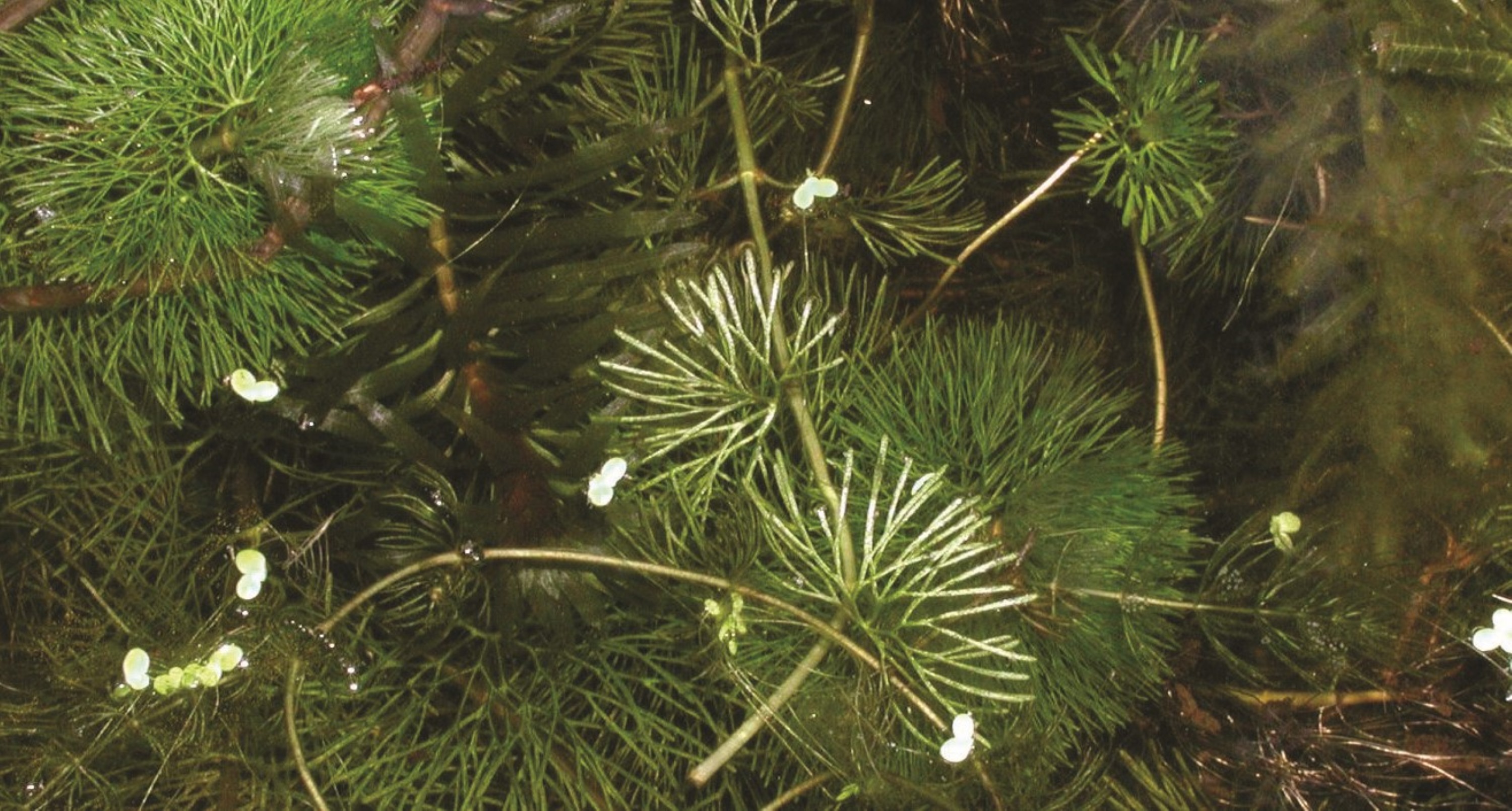
Carolina Fanwort plants on the surface of a water body. Photo credit: Leslie J. Mehrhoff University of Connecticut Bugwood.org
Carolina Fanwort thrives in the slow or still waters of small rivers, ditches, ponds, and lakes, in depths of less than 3 m. This plant has the ability to quickly grow and form dense mats below or on the surface of the water. It multiplies by fragmentation of stems or rhizomes (modified stems that are underground or horizontal) which grow into new plants. Tolerant to the cold waters of Canadian winters, it stays green all year round.
Similar species
Carolina Fanwort resembles several native aquatic plants, including Common Bladderwort (Utricularia vulgaris), White Water Buttercup (Ranunculus aquatilis) and Beck's Water-Marigold (Bidens beckii).
These species can be differentiated from Carolina Fanwort by their leaves. The leaves of Common Bladderwort contain small bags (utricles). White Water Buttercup has small, submerged leaves that are subdivided like tree branches that grow to be 1 cm to 2 cm. The leaves of Beck's Water-Marigold are finely divided into numerous threadlike segments forming fans 3 cm to 5 cm.
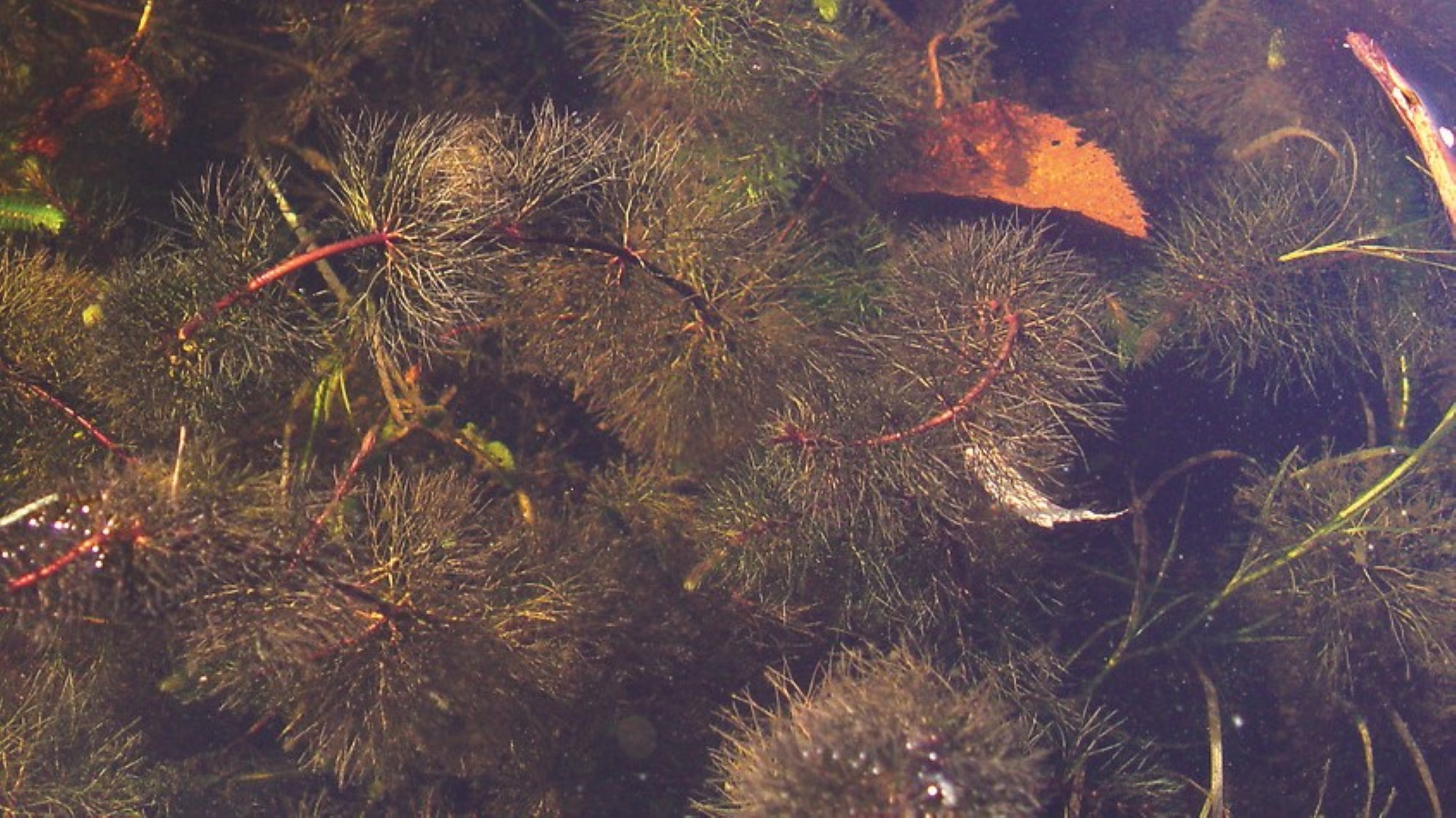
Similar species: Submerged leaf stems of Beck's Water Marigold. Photo credit: Donald Cameron
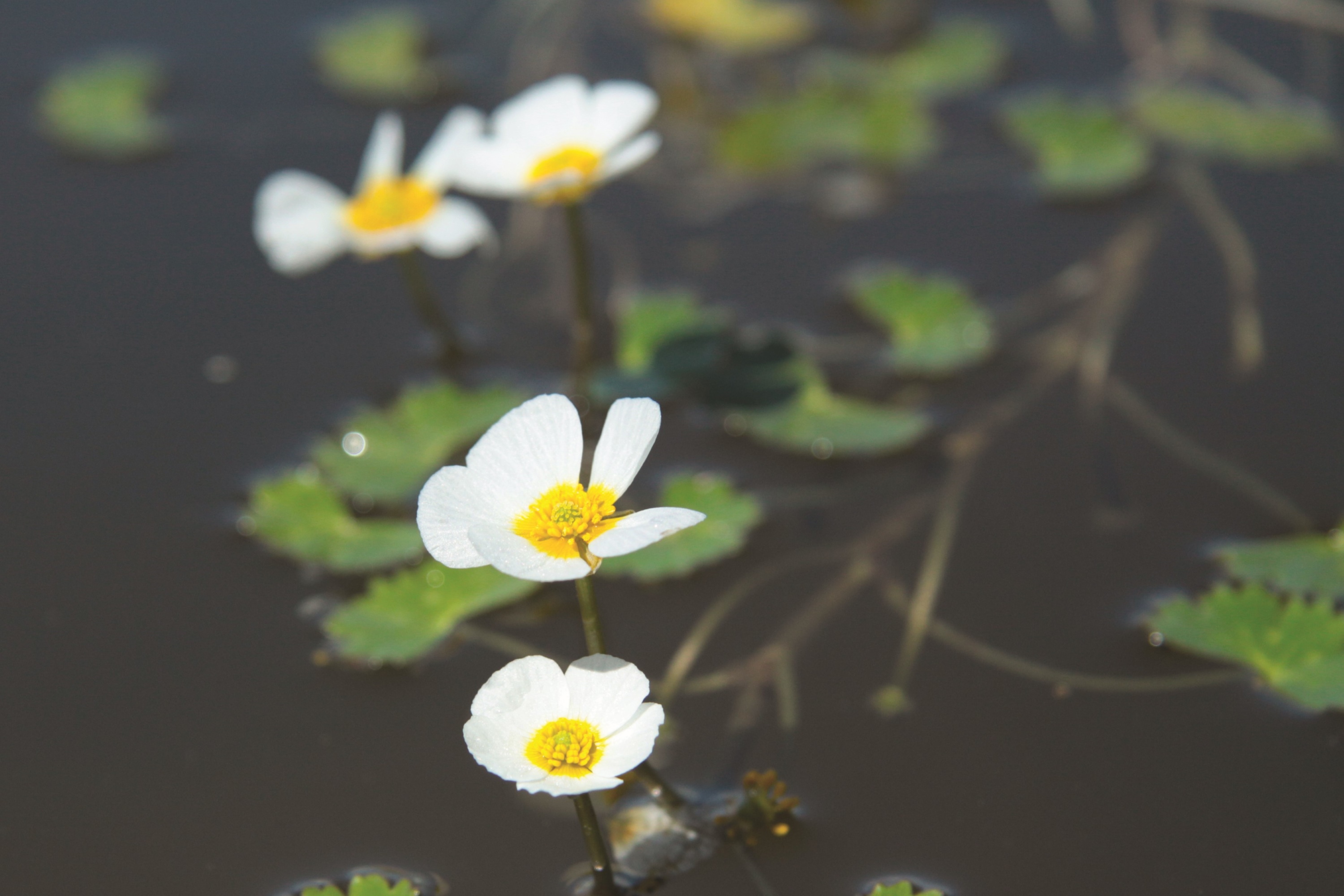
Similar species: Floating flowers and leaves of White Water Buttercup. Photo credit: Petr Brož
Curly-Leaved Pondweed
(Potamogeton crispus)
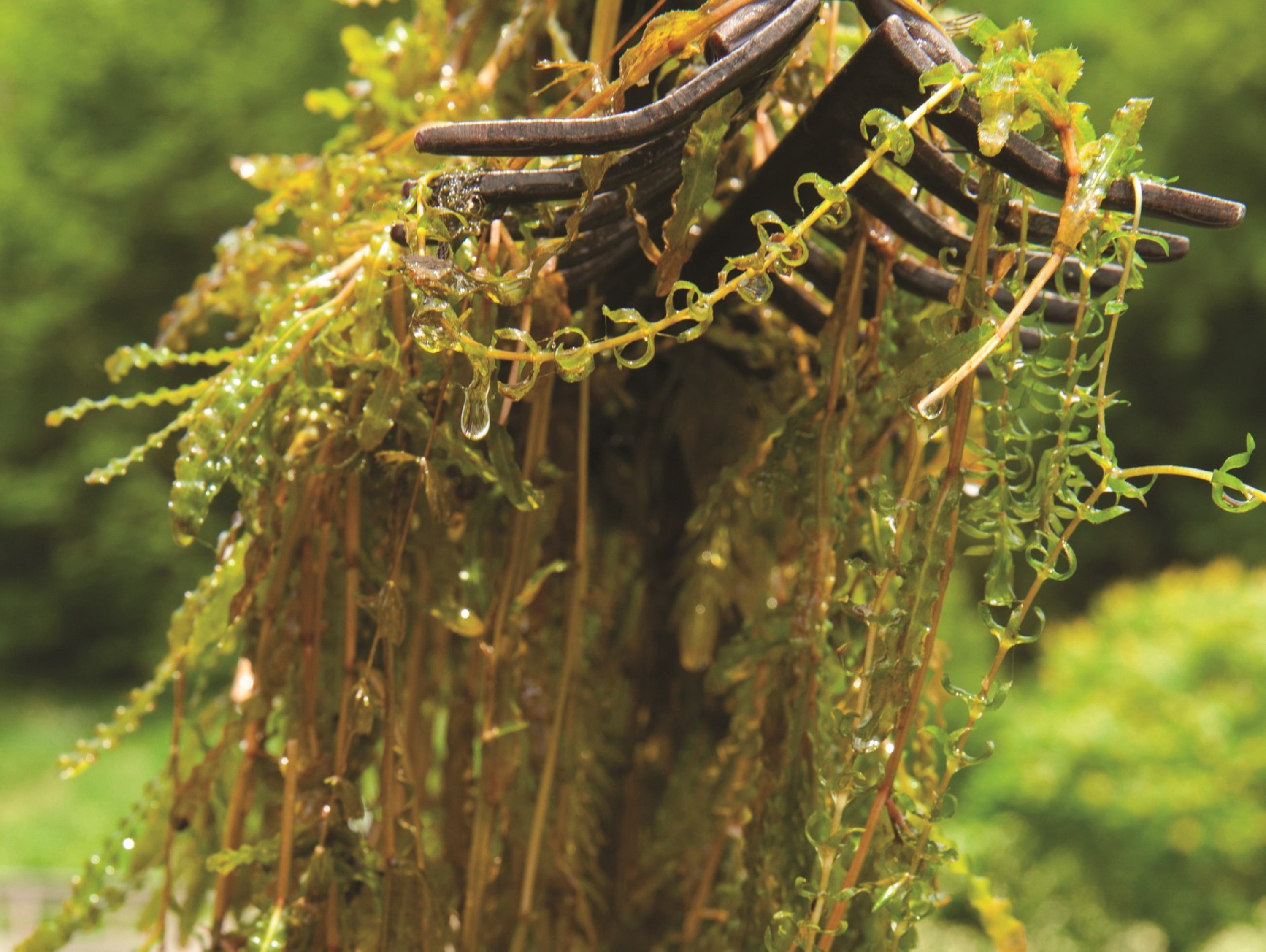
Curly-Leaved Pondweed. Photo credit: Minnesota Aquatic Invasive Species Research Center
Characteristics
- submerged plant taking root in the bottom, forms dense colonies
- rigid submerged leaves, 4 cm to 10 cm long and 1 cm wide
- wavy, finely serrated, slightly sharp leaves that look like lasagna noodles
- small green flowers and fruits arranged on an emergent spike (May to October)
Origin
Native to Europe, Asia, Africa and Australia, Curly-Leaved Pondweed (or Curly-Leaf Pondweed) is a perennial aquatic plant. Its introduction to North America through the aquarium industry dates back to the beginning or the middle of the 19th century. In Quebec, it was first detected in the Richelieu River in 1932. Curly-Leaved Pondweed spreads from one body of water to another by currents, watersports and recreational fishing. Spreading by the fragmentation of its stems, it has invaded several bodies of water in Quebec since the 1950s.
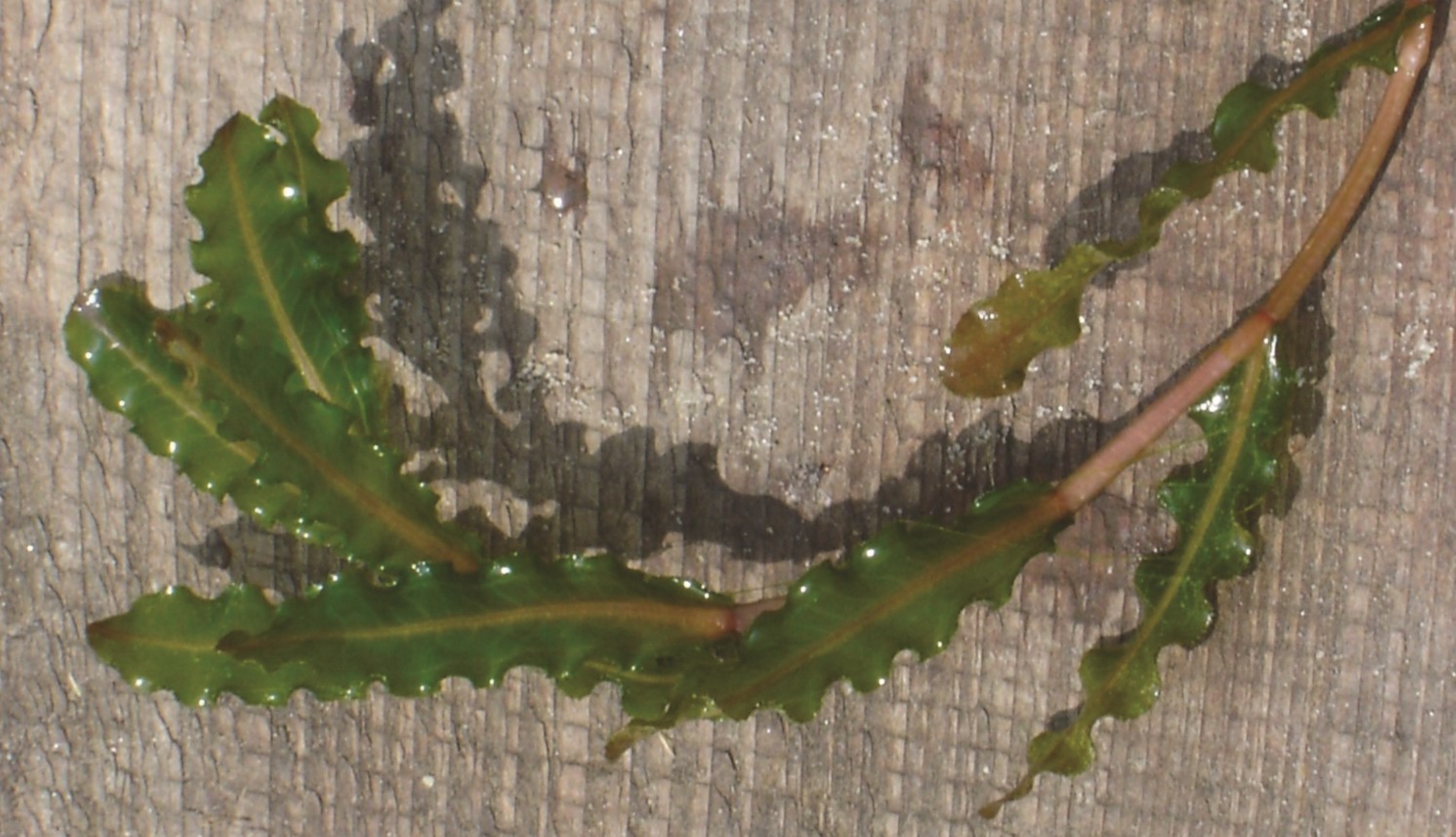
Stem and curly leaves of the Curly-Leaved Pondweed. Photo credit: Krauses Laichkraut
Habitat
Curly-Leaved Pondweed can establish itself in both fresh and brackish waters. It can take root in fine sand, silt, and clay bottoms at depths of up to 4 m. It is often found in still waters with low levels of oxygen. Even if the visible parts of the plant are gone by the end of the summer, the roots can survive in the bottom. This plant is also very resistant to cold.
Similar species
Curly-Leaved Pondweed is quite easily differentiated from the native Pondweeds that inhabit our waters thanks to its wavy leaves. Additionally, unlike many Pondweed species which have 2 types of leaves, submerged and floating, Curly-Leaved Pondweed only has 1 type (submerged).
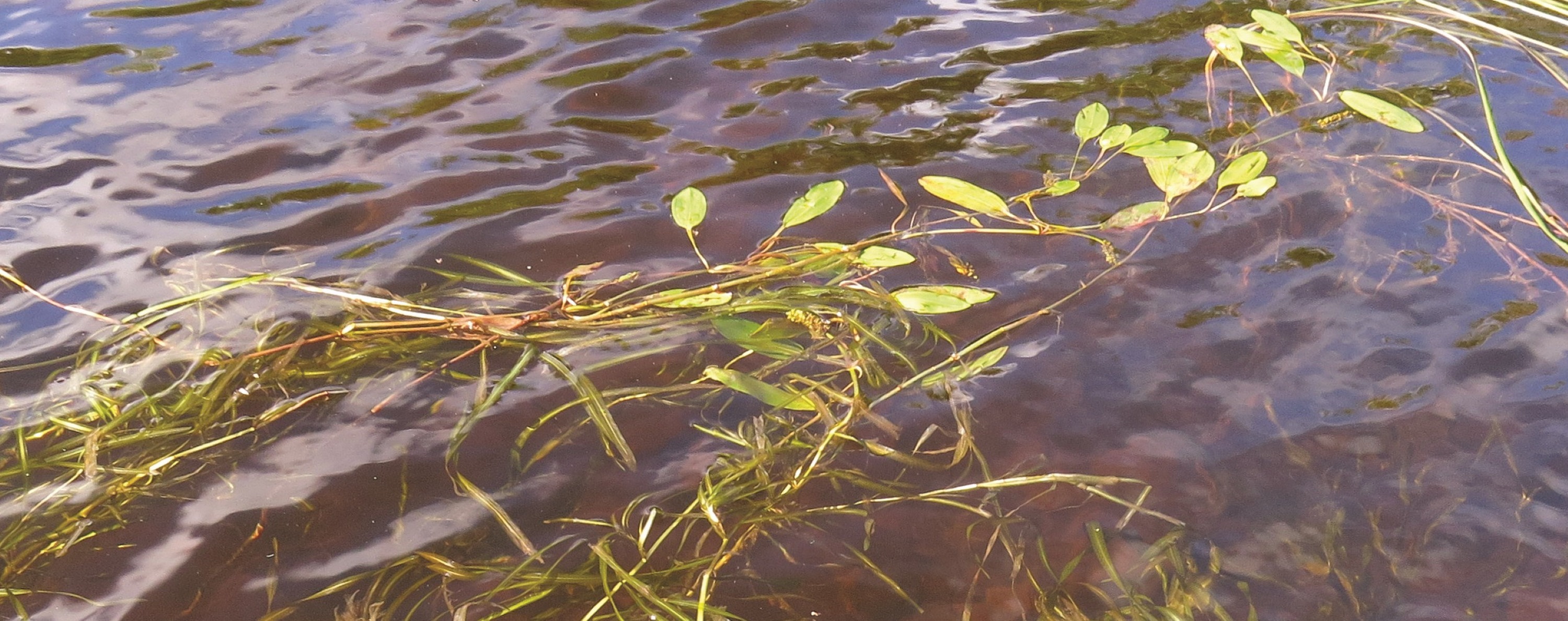
Similar species: Ribbon-Leaved Pondweed. Photo credit: Marilee Lovit
Eurasian Water-Milfoil
(Myriophyllum spicatum)
Characteristics
- submerged plant, rooted to the bottom that forms dense grass beds with spikes of small flowers (late July-early August)
- three to 6 leaves per whorl (often four), composed of 12 to 24 pairs of leaflets (similar to feathers)
- often blunt leaf tips, forming a straight line
- limp leaves when the stems are out of the water
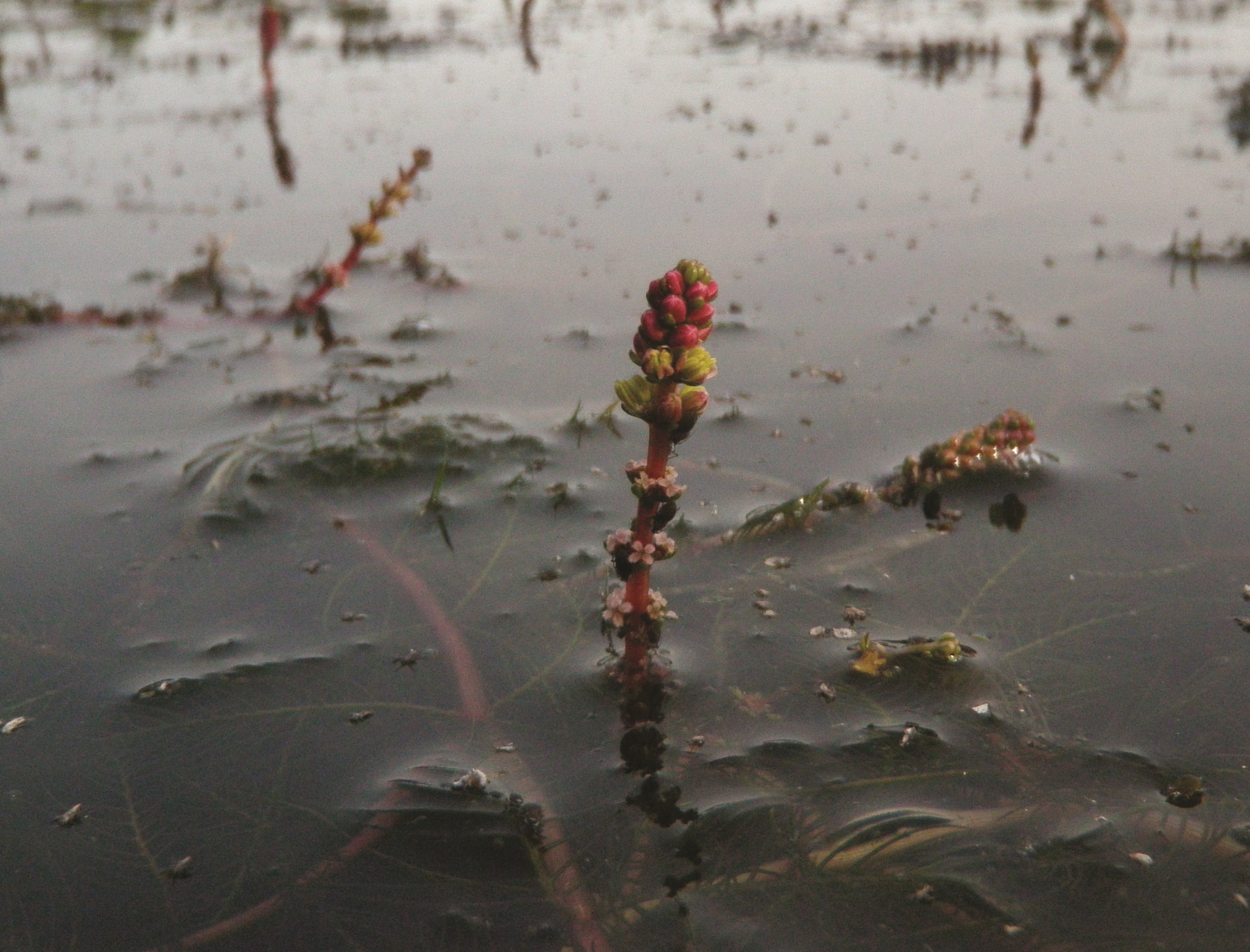
Emergent spikes of small flowers from the Eurasian water-milfoil. Photo credit: I. Simard, Ministère de l'Environnement, de la Lutte contre les changements climatiques, de la Faune et des Parcs du Québec
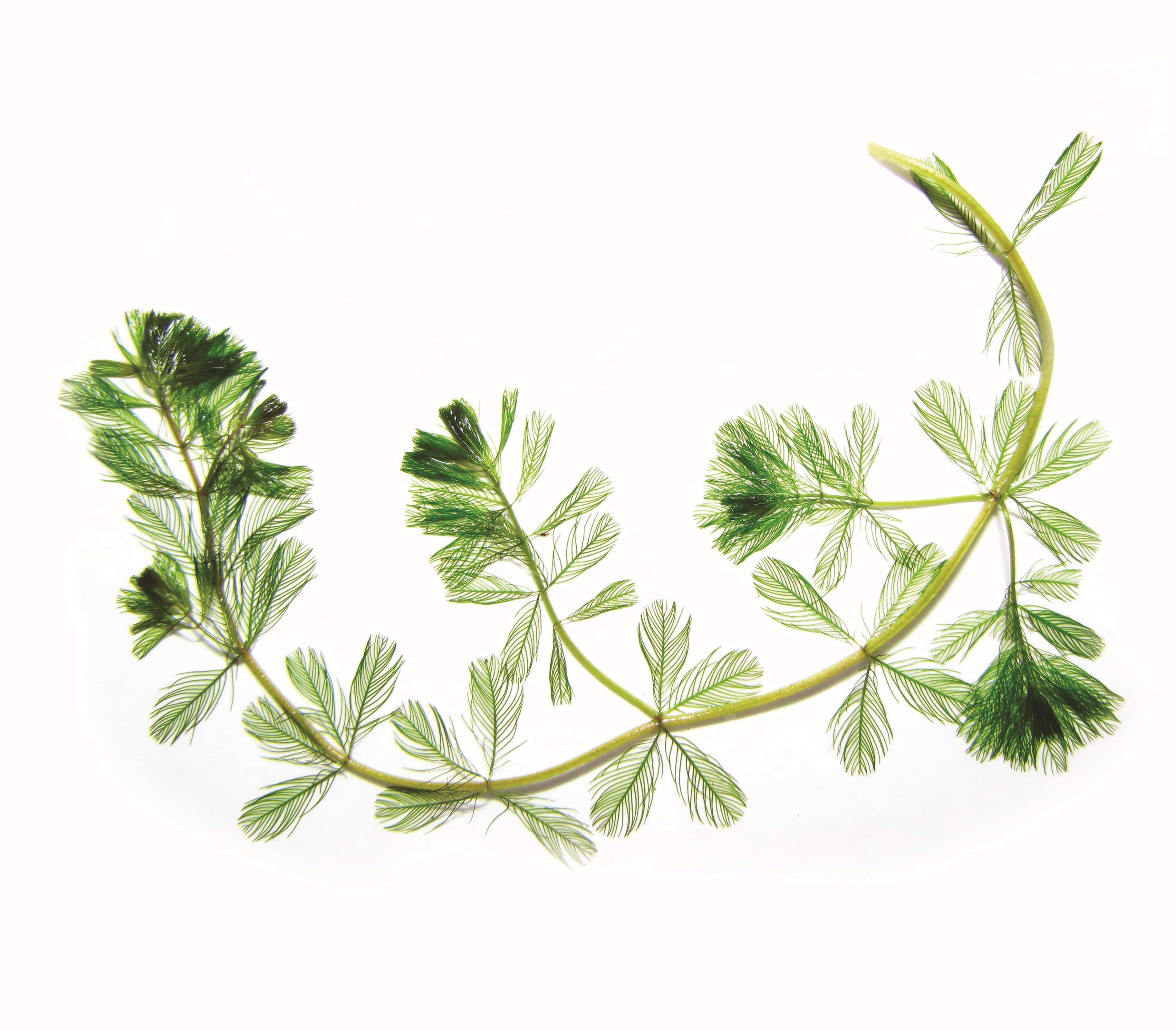
Eurasian water-milfoil stem. Photo credit: Paul Skawinski, Aquatic Plants of the Upper Midwest
Origin
Eurasian Water-Milfoil is a species from Europe and Asia that was likely introduced to the East Coast of the United States in 1860 in the ballast waters of ocean-going vessels. Additional introductions also likely occurred via the aquarium industry. Since this plant can multiply through fragmentation, it was subsequently spread through various activities such as recreational fishing and watersports. First reported in Lake Saint-Pierre in 1958, Eurasian Water-Milfoil is now found in more than 200 bodies of water in Quebec, including the Abitibi, Bas-Saint-Laurent and Côte-Nord regions. It is also present in southern Ontario and in the United States.
Habitat
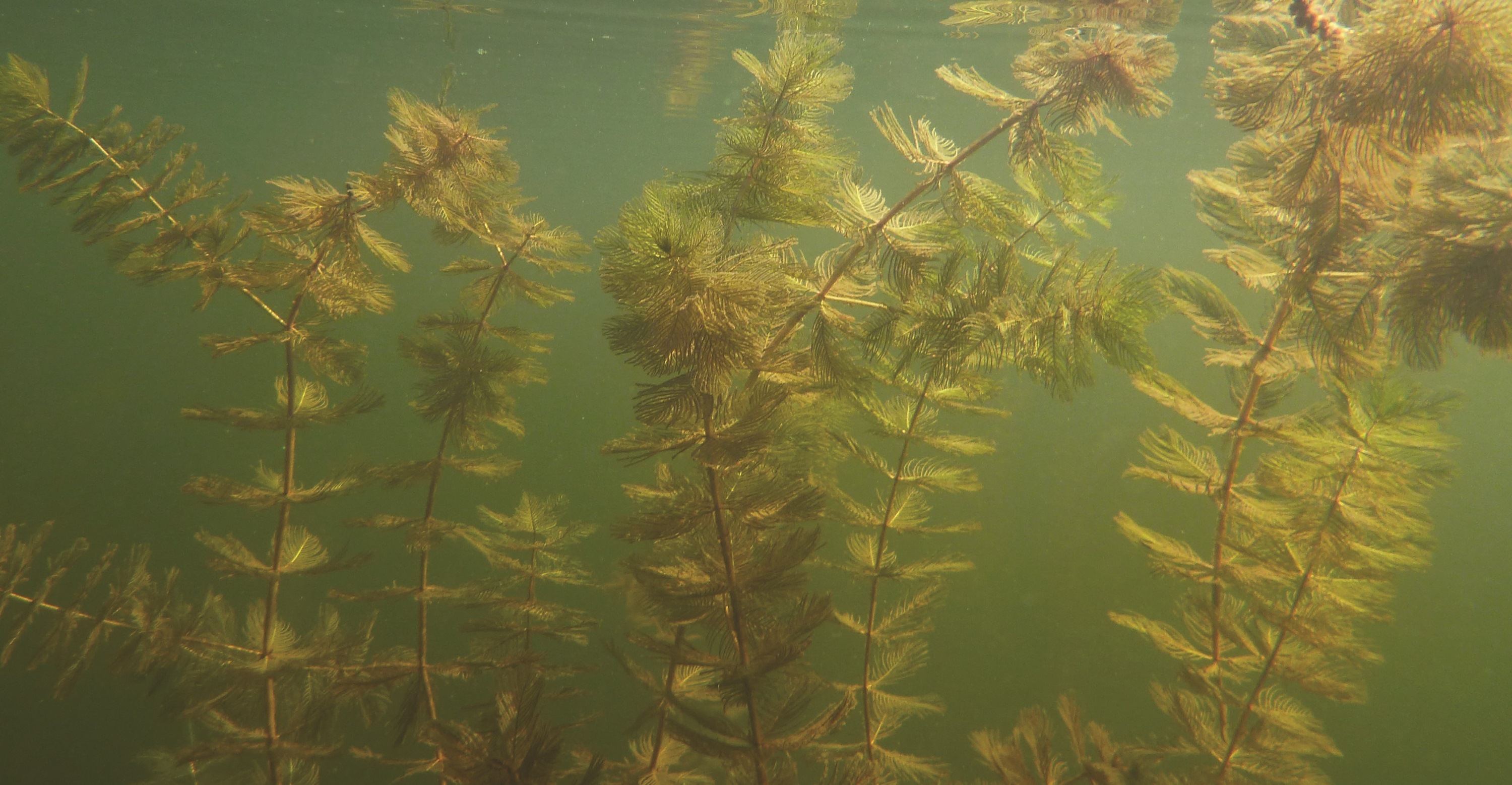
Submerged Eurasian Watermilfoil plants. Photo credit: Ministère de l'Environnement, de la Lutte contre les changements climatiques, de la Faune et des Parcs du Québec
Eurasian Water-Milfoil is a perennial plant that grows in the shallow waters of ponds, marshes, ditches, canals, and lakes, as well as in calm areas of rivers and streams. It is most often found in depths between 1 m and 4 m, but it can take root in sediments (gravel, sand, silt and plant debris) up to 10 m deep.
Similar species
Eurasian Water-Milfoil can be confused with the Parrot's Feather (Myriophyllum aquaticum) and with several native species, including 6 species of Water-Milfoil (Myriophyllum spp.), Bladderworts (Utricularia spp. - carnivorous plants) and Hornworts (Ceratophyllum spp.). They can be differentiated by the shape of their leaves, but usually, only experts can do it.

Similar species: Common Hornwort stems on shoreline, its stiff leaves retain their shape out of the water. Photo credit: Stefan.lefnaer
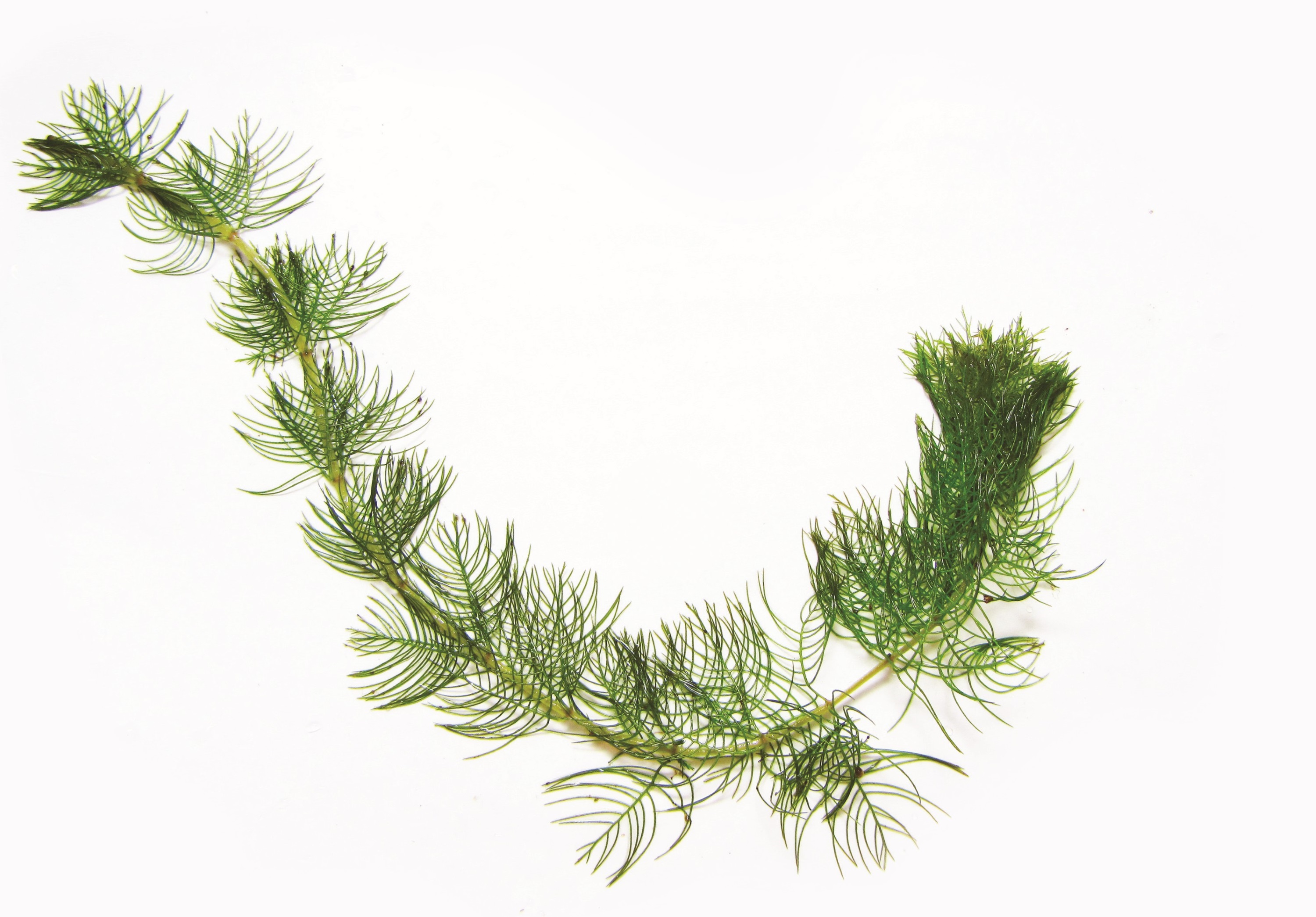
Similar Species: Siberian watermilfoil leaf stalk, one of 6 native milfoil species. Photo credit: Paul Skawinski, Aquatic Plants of the Upper Midwest
Parrot's Feather
(Myriophyllum aquaticum)
Characteristics
- can be submerged or emerged (has both types of leaves)
- sturdy, waxy leaves with 10 to 18 pairs of leaflets with emergent parts resembling small conifers that can grow up to 30 cm above the water surface
- four to 6 symmetrical leaves per whorl (often 4)
- reddish-brown submerged leaves and bright green emerging leaves
- blooming between July and September
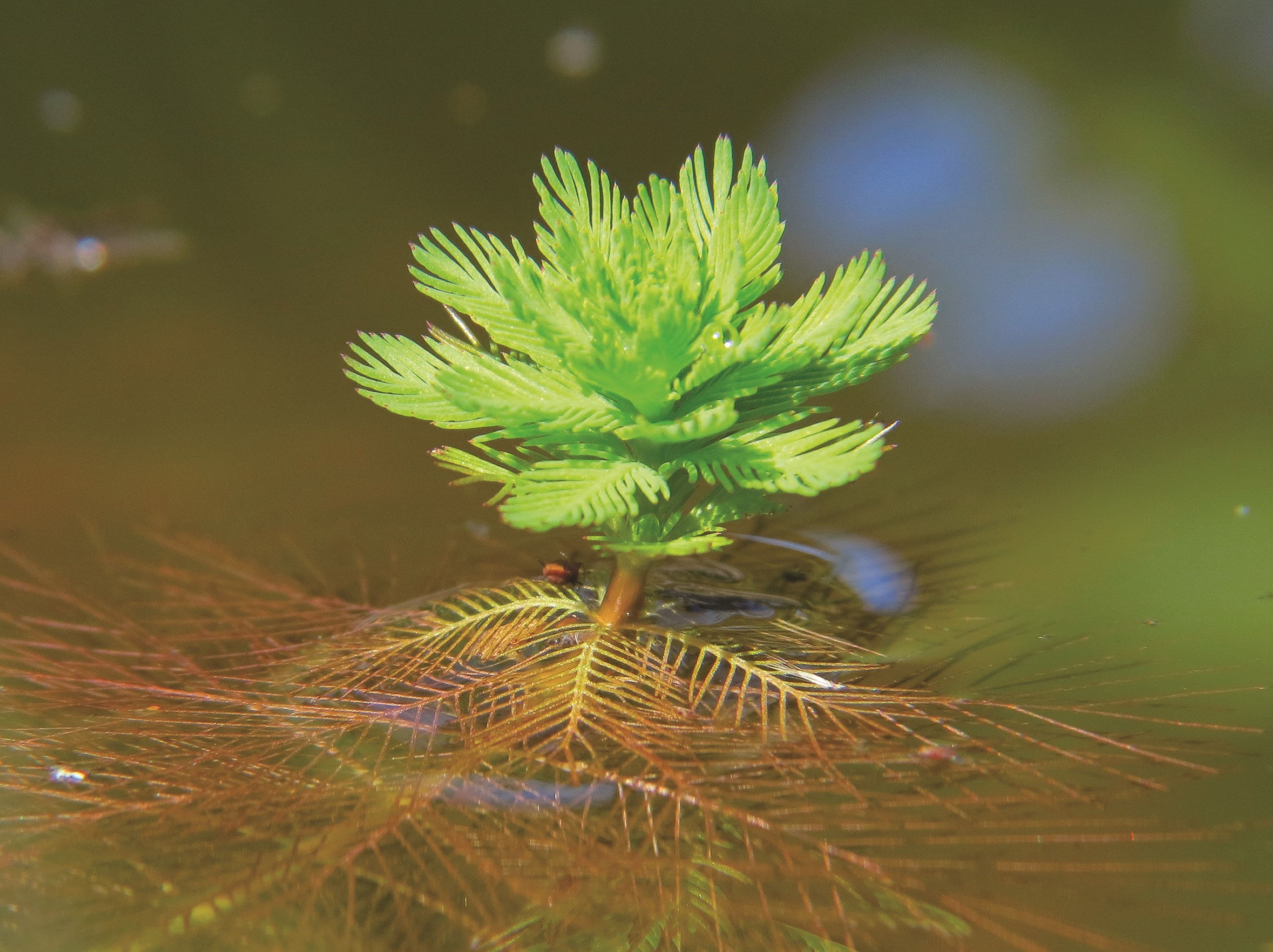
Emerged part of aquatic milfoil stem which looks like a small conifer. Photo credit: Paul Skawinski, Aquatic Plants of the Upper Midwest
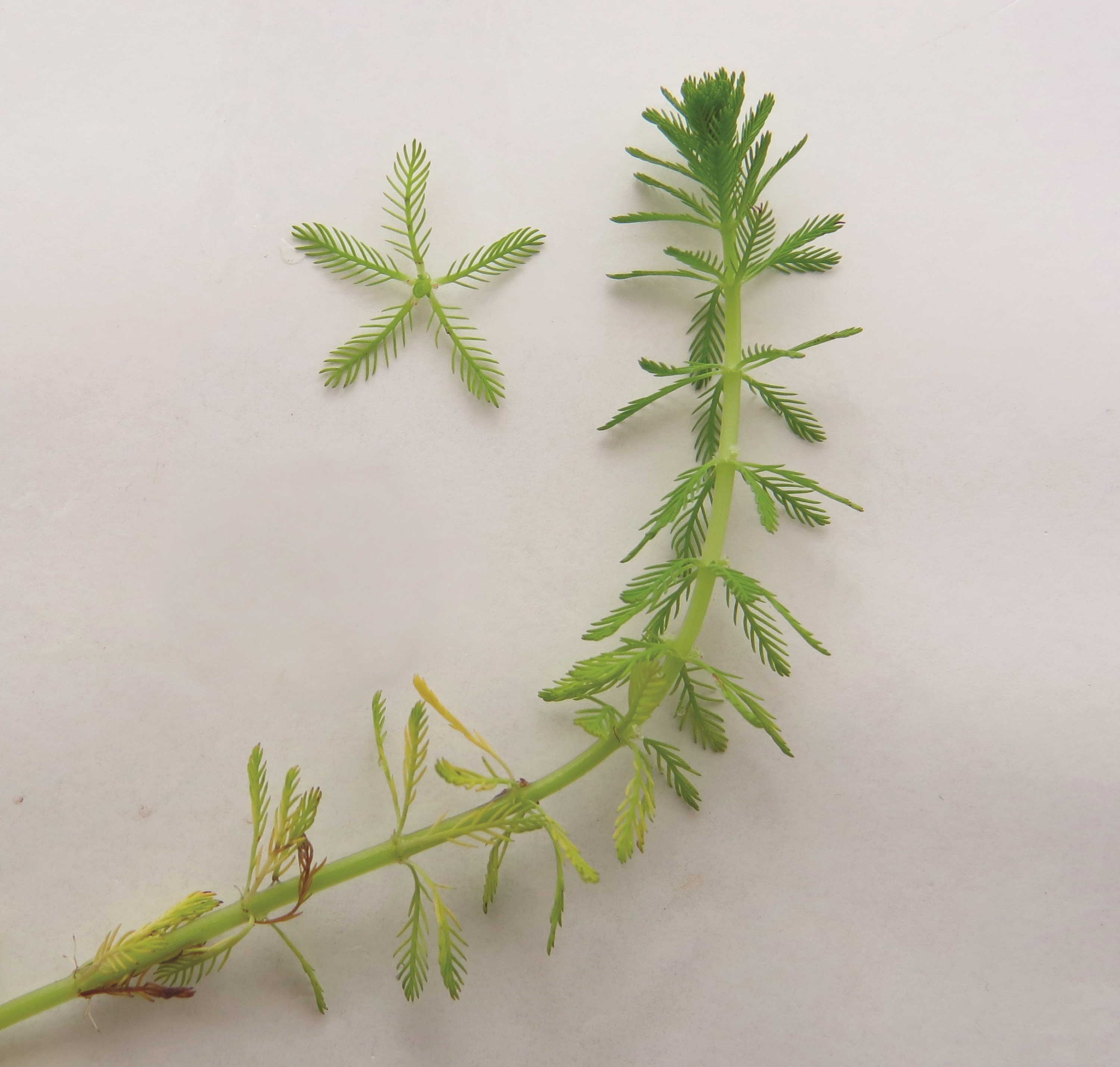
Parrot's Feather stem and whorl of leaves. Photo credit: Paul Skawinski, Aquatic Plants of the Upper Midwest
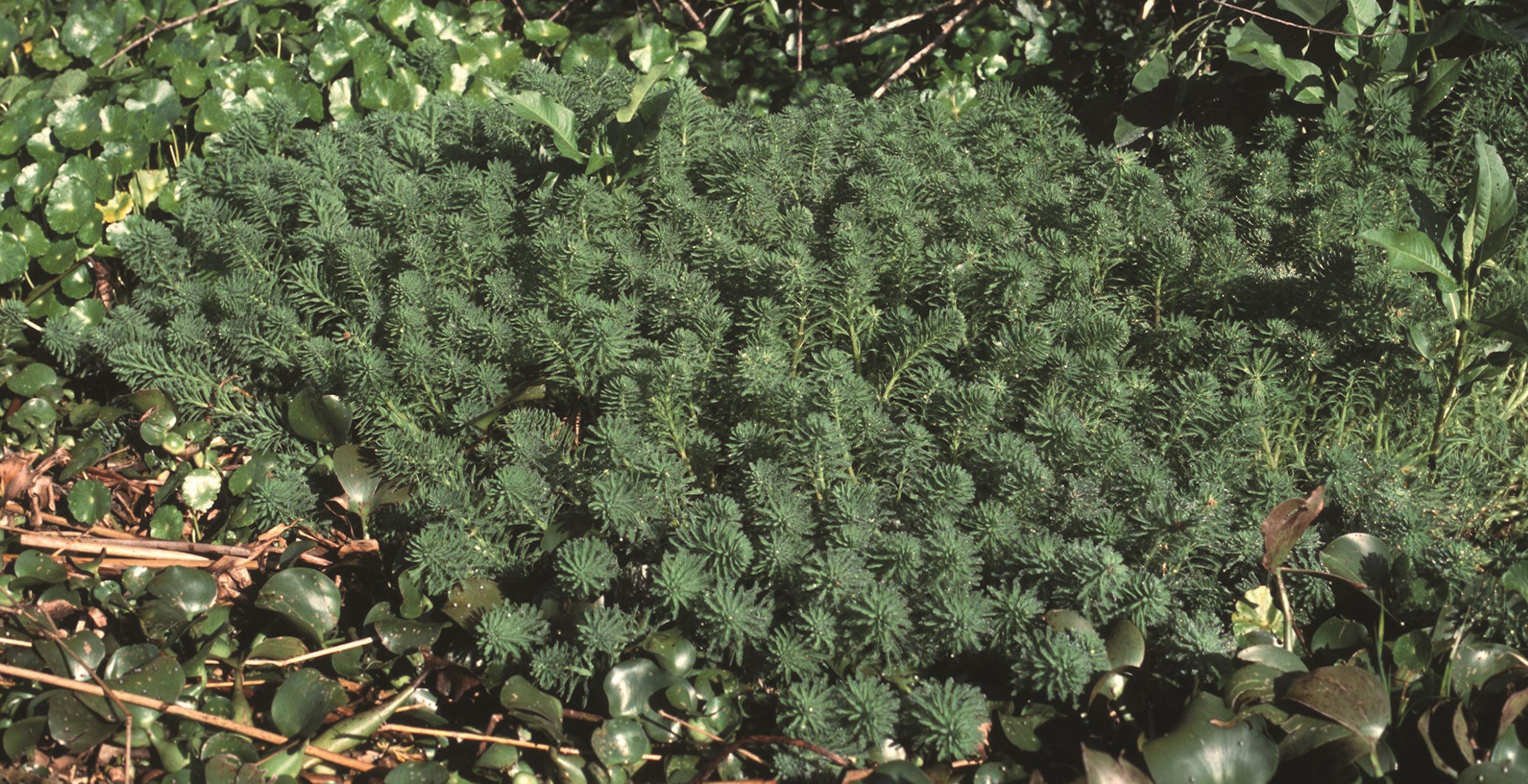
Parrot's Feather plants on the surface of a water body. Photo credit: Alison Fox University of Florida Bugwood.org
Origin
Parrot's Feather is a South American species also known as Brazilian Water-Milfoil. This perennial plant is believed to have been first introduced to the United States around 1890 as an aquarium and water garden plant. Due to its ability to multiply by fragmentation, it was subsequently spread by recreational fishing and watersports. Parrot's Feather was observed in eastern Ontario in 2006 and is now present in at least 26 States in the United States. It has not yet been reported in Quebec.
Habitat
Parrot's Feather usually grows in calm areas of rivers and streams as well as in the shallow waters of ponds, marshes, canals, and lakes. It is found in depths of around 1.3 m and takes root on muddy banks.
Similar species
Parrot’s Feather can easily be confused with Eurasian Water-Milfoil (Myriophyllum spicatum) and several native species, including 6 species of Water-Milfoil (Myriophyllum spp.), Bladderworts (Utricularia spp. - carnivorous plants) and Hornworts (Ceratophyllum spp.). It is possible to differentiate them by their leaves, but usually, only experts can do it.
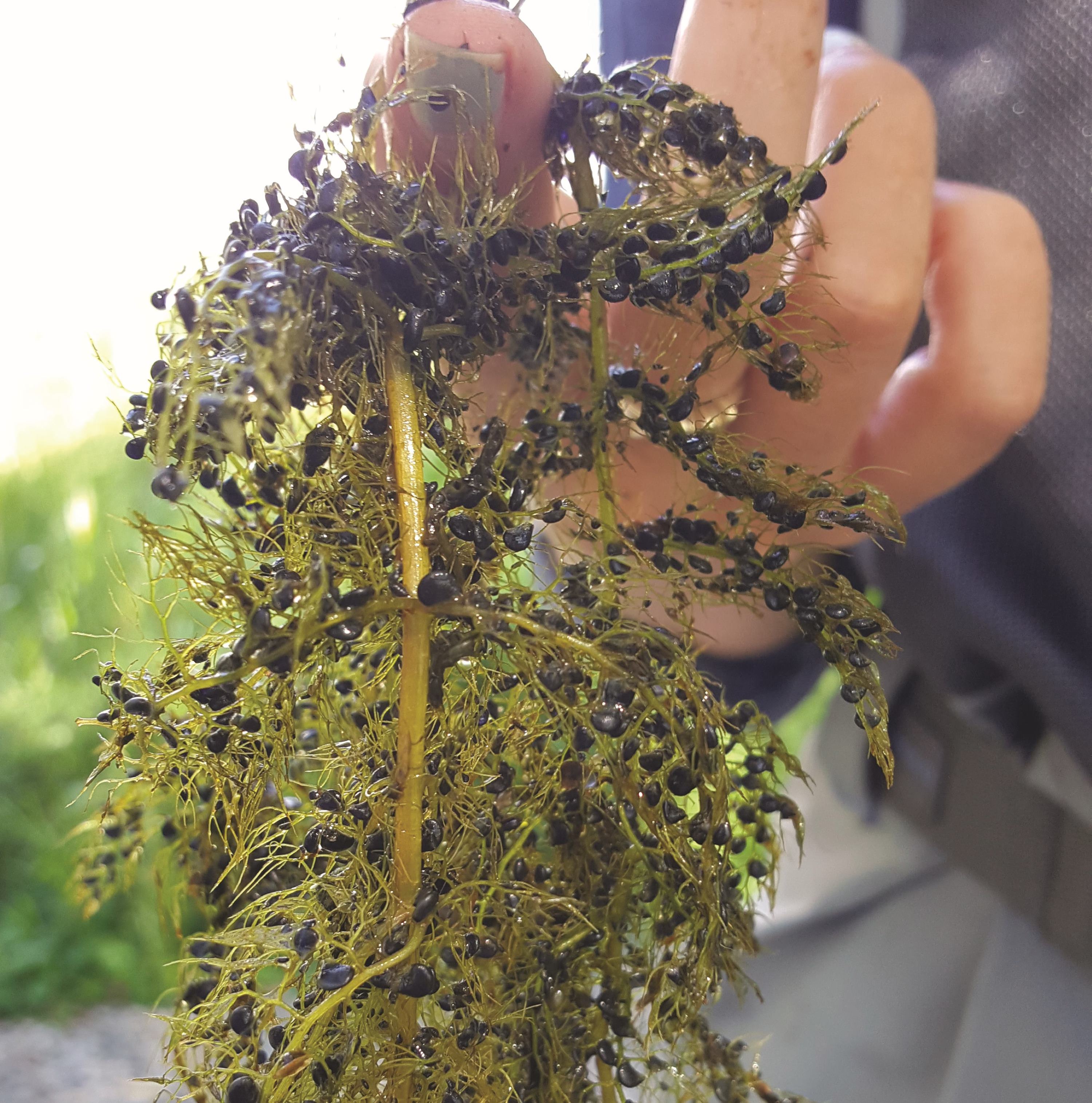
Similar Species: Common Bladderwort stems with modified leaves (black beads) that act as floats and insect traps. Photo credit: Ministère de l'Environnement, de la Lutte contre les changements climatiques, de la Faune et des Parcs du Québec
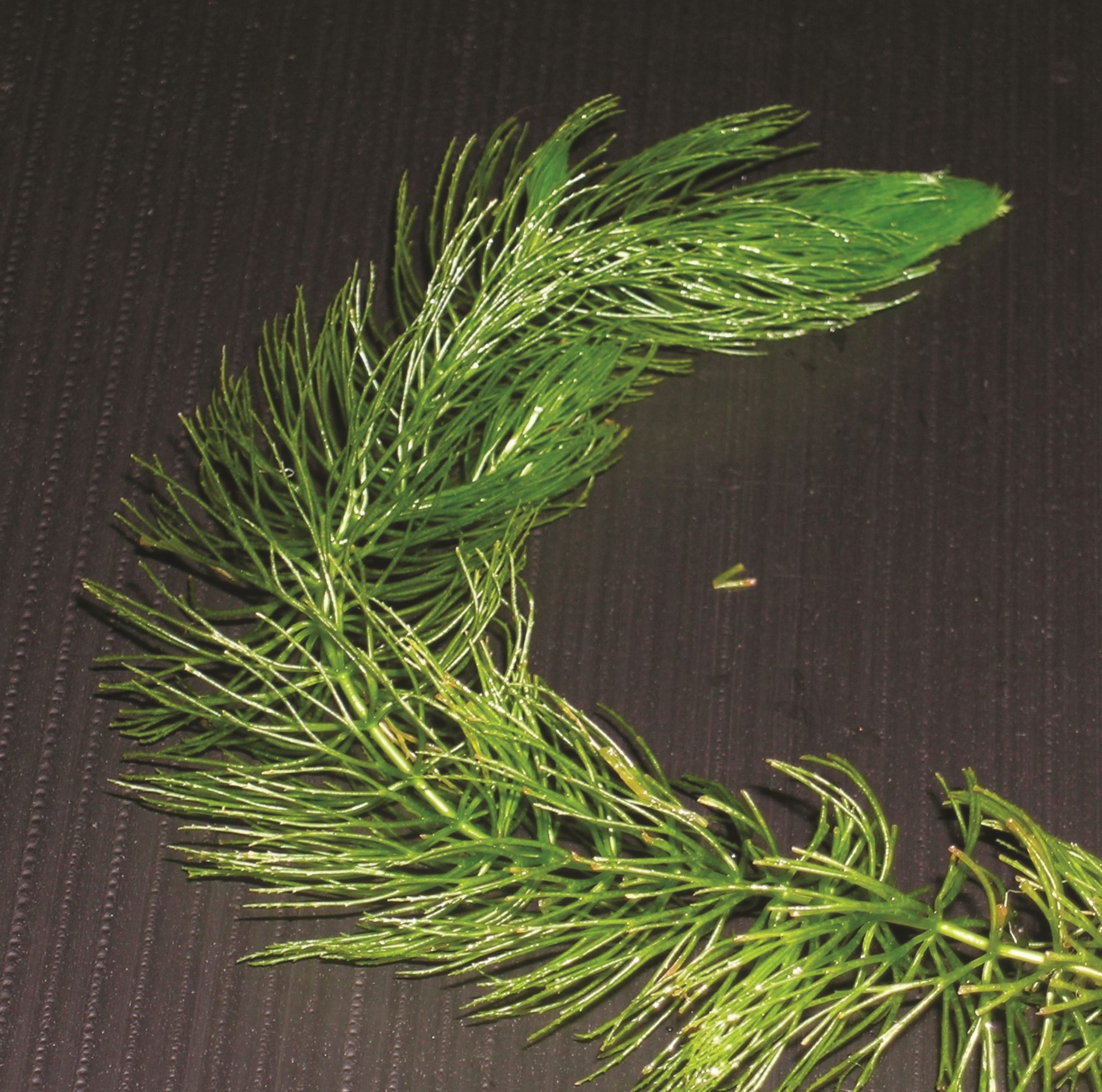
Similar species: Common Hornwort stem, its rigid leaves retain their shape out of the water. Photo credit: S. Tanaka
Clean Drain Dry: More information

'Clean, drain, dry – Help stop aquatic invaders' pictogram of Fisheries and Oceans Canada (DFO)
Fisheries and Oceans Canada
© His Majesty the King in Right of Canada, 2024
Fs23-726/2024E-PDF
978-0-660-68777-3
March 2024
Cette publication est également disponible en français.
Report: What to do if you find aquatic invasive species?
- Try to identify them
- Take pictures, note the location (GPS coordinates), number of individuals (if possible) and observation date
- Report any aquatic invasive species sightings to Fisheries and Oceans Canada:
Page details
- Date modified: