
Yellow Floating-Heart (Nymphoides peltate)
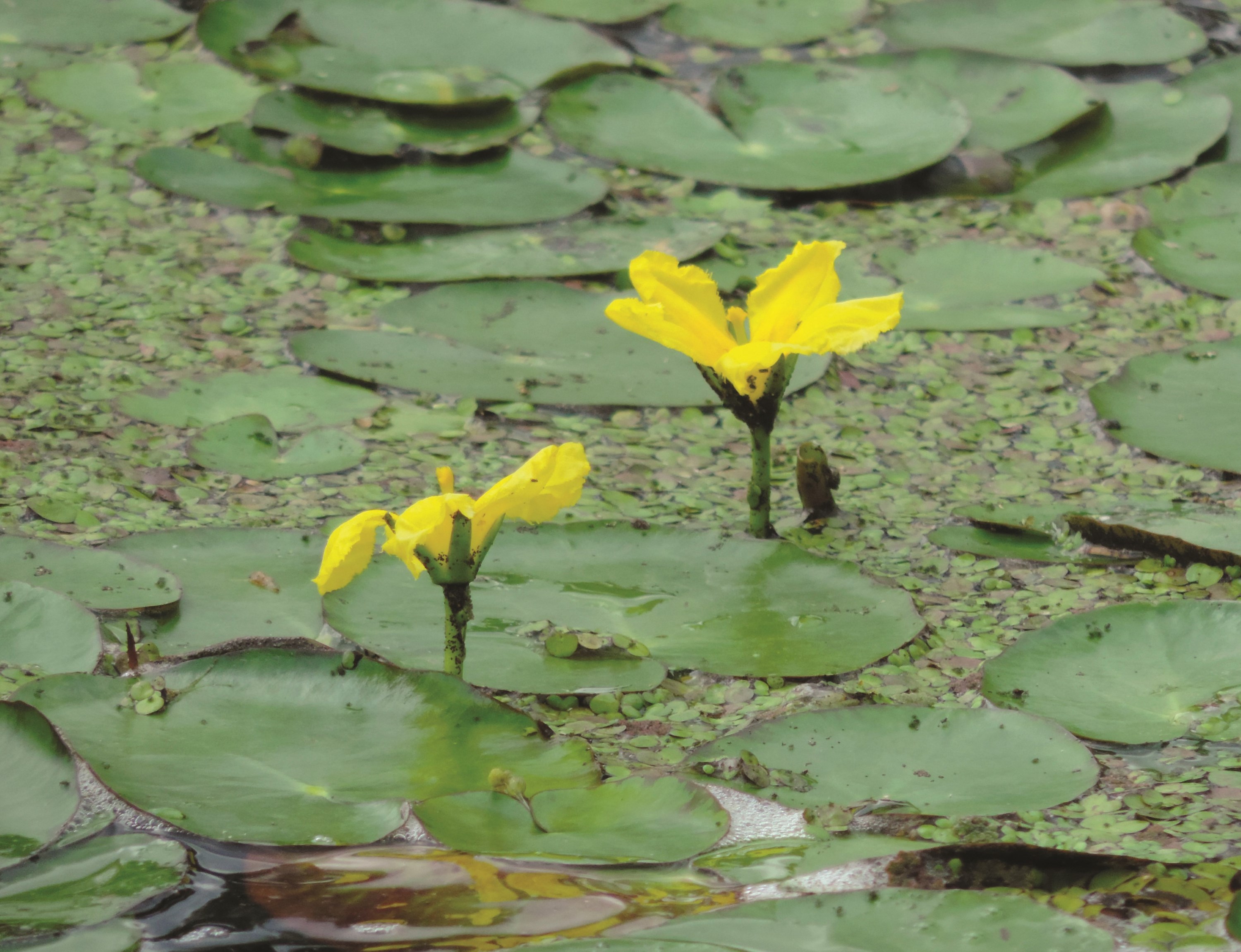
If you think you have seen Yellow Floating-Heart, use the Identifying features and similar species section to verify.
Report it
If you think you have found an aquatic invasive species:
- take photos
- note:
- the exact location (GPS coordinates)
- the observation date
- identifying features
- contact us to report it
On this page
- Identifying features and similar species
- Origin and current distribution
- Habitat
- Pathways of introduction and spread
- Impacts
- Government action
- What can you do
- Related links
Identifying features and similar species
Identifying features of the Yellow Floating-Heart
- plant with floating leaves which are rooted in sediment and can grow underwater at depths up to 4 m
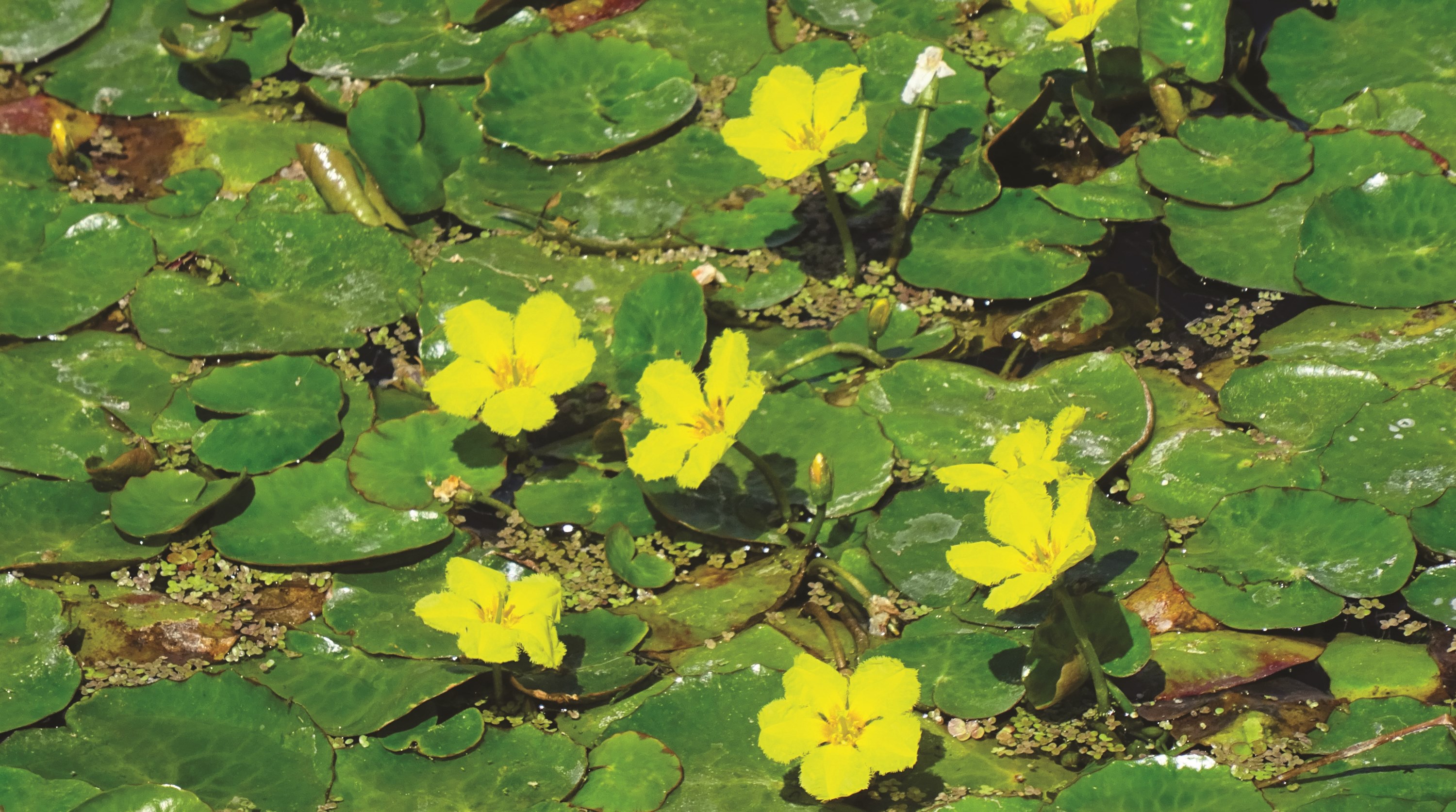
- heart or rounded shaped floating leaves, 3 to 10 cm in diameter
- leaves attached to short petioles which connect to long branching stems underwater that can grow up to 1 m in length
- tops of the leaves green and the undersides purple
- flowers 3 to 4 cm in diameter, formed of 5 bright yellow petals with a fringed border

Similar species
Yellow Floating-Heart is differentiated from similar species by its bright yellow, five-petaled flowers with fringed edges. In addition, its 10 cm heart-shaped leaves are rooted to the bottom of water bodies.
It is possible to confuse Yellow Floating-Heart with other invasive species, such as European Frog-Bit.
In addition, Yellow Floating-Heart can resemble several native aquatic plants, including:
- Little Floating-Heart
- Native Water-Lilies
These species are naturally found in Quebec and Ontario, but they may also be found in other parts of Canada.
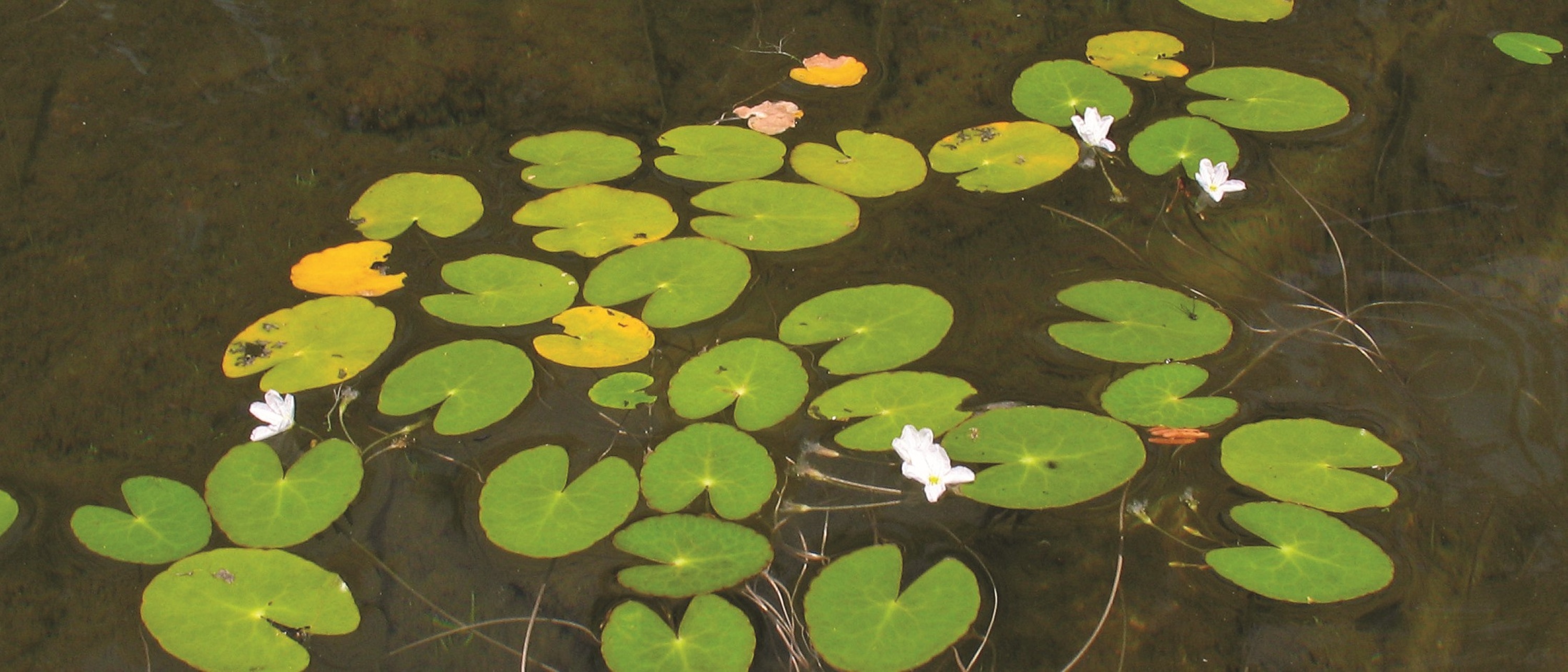
Little Floating-Heart (Nymphoides cordata)
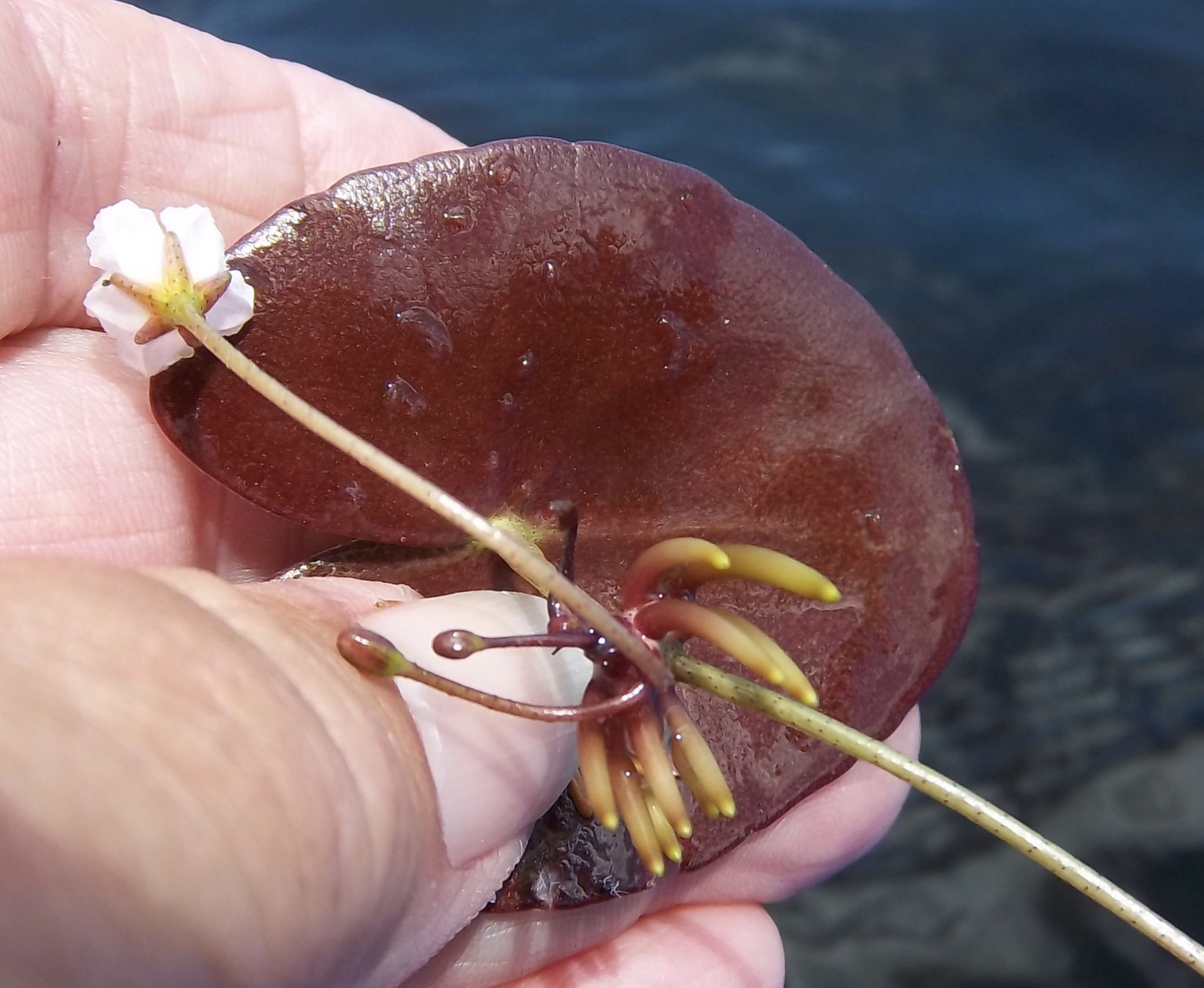
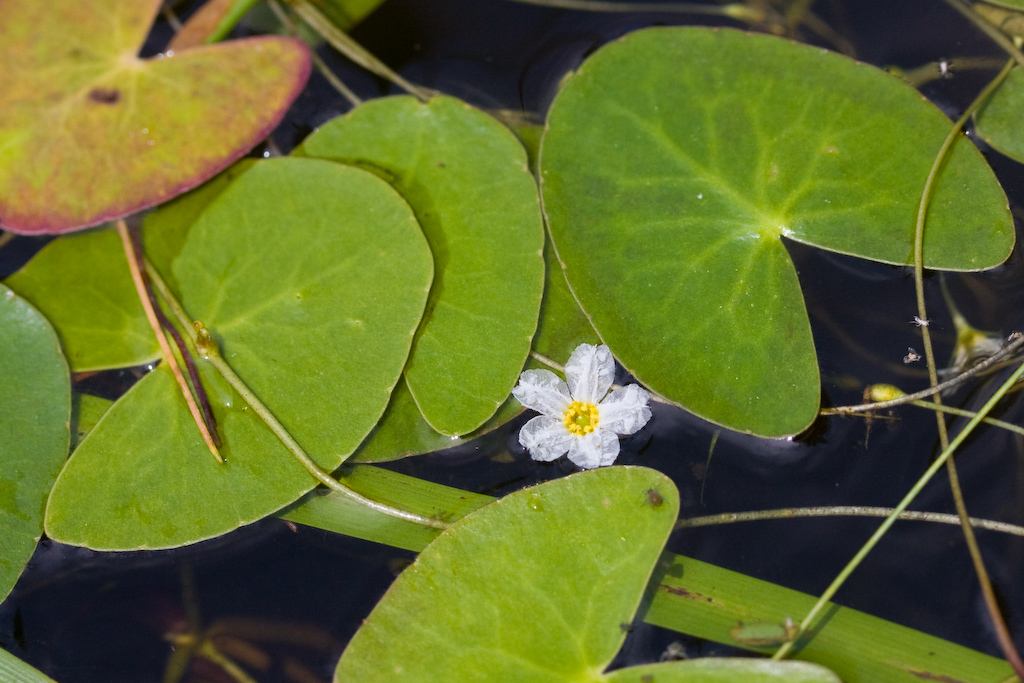
Little Floating-Heart is distinguished from the Yellow Floating-Heart mainly by its emerging white 5-petaled flowers and the small banana-like tubers growing from its stem. In addition, this plant is rooted in sediments.
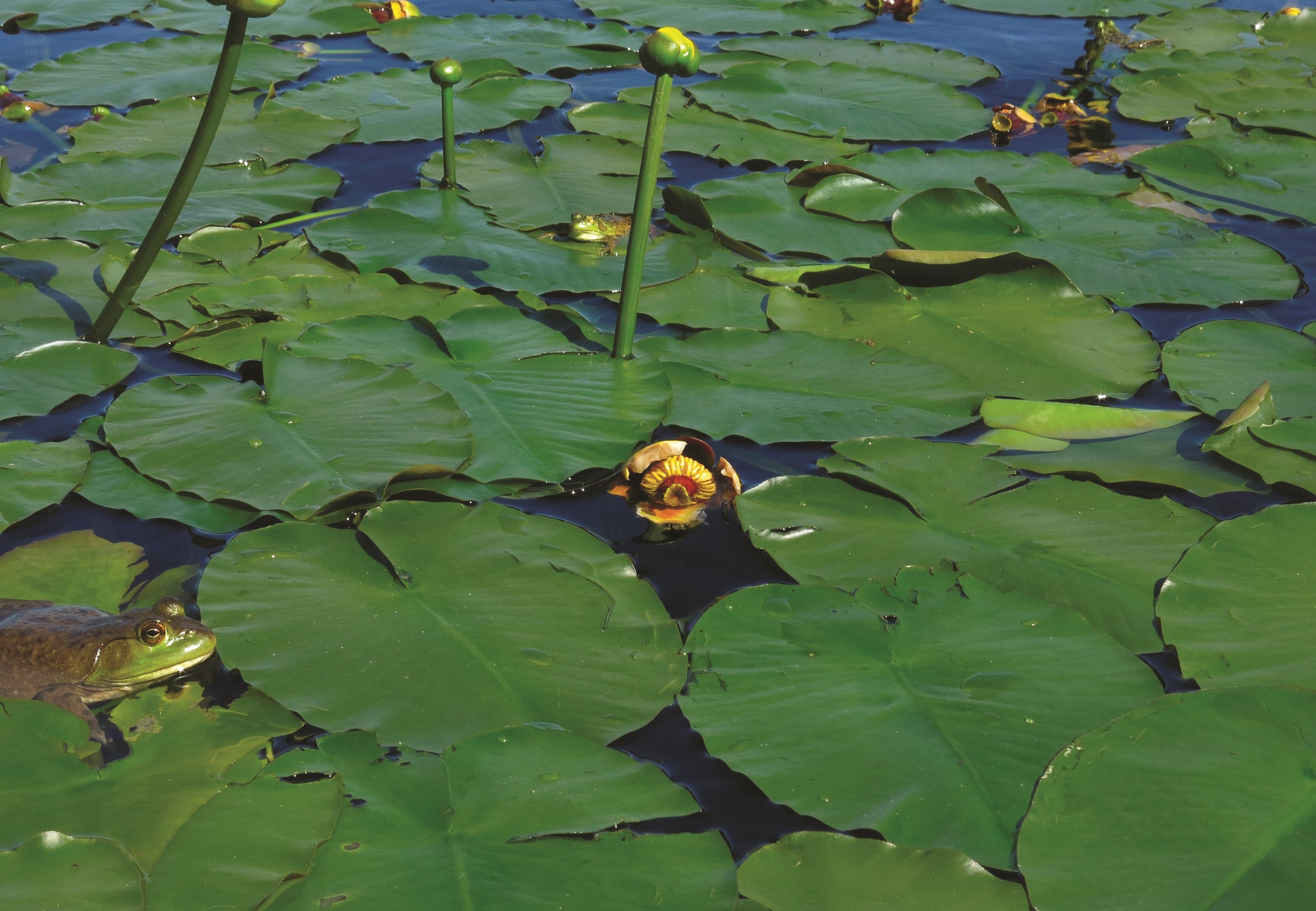
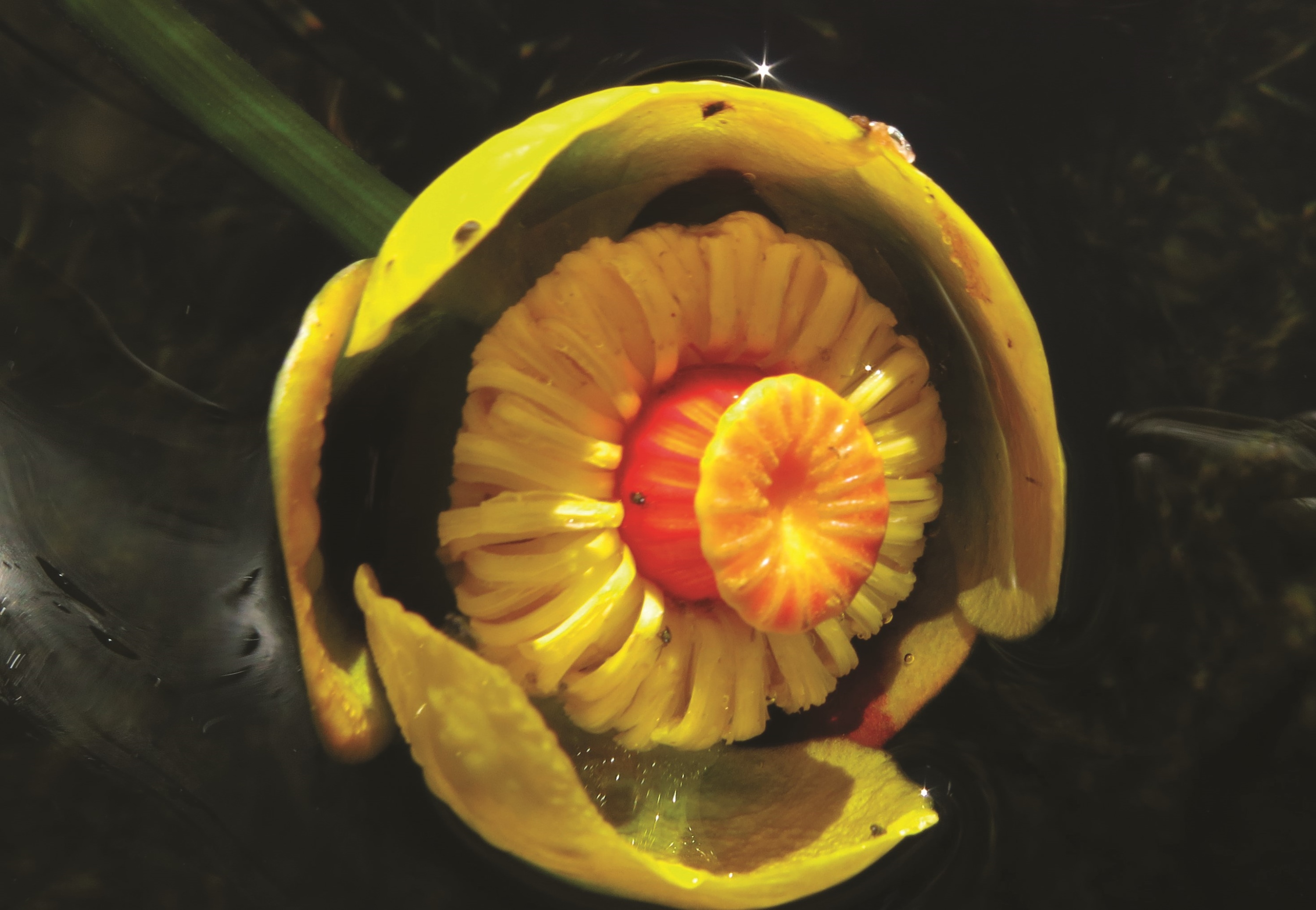
Native Water-Lilies (Nuphar spp.)
Yellow Floating-Heart can easily be mistaken for Water-Lilies, which are also floating plants. In Canada, there are at least five species of native Water-Lilies which only have yellow flowers. Yellow Pond-Lily can be distinguished from Yellow Floating-Heart mainly by their oval leaves, 7 to 40 cm long, D-shaped stems and their yellow ball-shaped flowers, with 5 to 6 petals.
If you think you have seen Yellow Floating-Heart or another AIS, contact us to report it.
Origin and current distribution
Yellow Floating-Heart is a perennial plant native to Asia and Europe.
It was introduced to North America at the end of the 19th century for use as an ornamental plant in water gardens. The plant is now found in many water bodies in the United States and Canada, including Newfoundland, Nova Scotia, Quebec, Ontario, Alberta and British-Colombia.
Habitat
Yellow Floating-Heart is generally found in calm, nutrient-rich bodies of water, such as ponds, marshes, ditches and shallow sections of lakes and rivers. It can root and establish itself at depths of up to 4 m and reproduce by floating seeds that cling to aquatic life or boats. This plant also multiplies by fragmentation.
Pathways of introduction and spread
The introduction of the Yellow Floating-Heart to Canada seems to have originated in water gardens. Once introduced into the environment, it can establish and propagate itself through floating seeds and rhizome fragmentation. It can be spread by currents, dispersed by rainfall causing flooding, and cling to wildlife or other aquatic plants.
Impacts
Ecological impacts
Once introduced in a body of water, Yellow Floating-Heart proliferates, creating dense mats of floating vegetation. They harm aquatic ecosystems by shading out native plants, damaging fish habitats and creating stagnant water. It can cause a drop in oxygen levels, altering water quality and harming aquatic fauna.
Socioeconomic impacts
By interfering with recreational activities such as boating, fishing and swimming, the presence of Yellow Floating-Heart mats in a body of water can adversely affect the value of riverside properties and harm tourism. Also, the costs associated with controlling and eradicating the plant can be high.
For more information on the impacts of invasive plants, consult the threats to the environment, the economy, and society.
Government action
Prevention and management
Preventing its introduction and spread is the best way to control this invasive plant.
There are various ways to control invasive aquatic plants:
- physical or mechanical removal (by hand, with tools or machinery)
- dewatering (lowering water level)
- tarping (covering with opaque material to limit growth)
- herbicide application
Control measures vary depending on the species, so you must take precautions before attempting to control an AIS to avoid it spreading further. If you wish to undertake a project to control aquatic invasive species, contact the department to ensure that you meet the requirements of the laws and regulations protecting aquatic environments in your region.
What can you do
Once an AIS has become established in a lake or watercourse, it is difficult and costly to control and almost impossible to eradicate. Preventing its introduction and spread is the best way to combat it. Simple but effective actions can make a difference to protecting water bodies:
- learn to recognize AIS and report their presence
- always clean, drain and dry your watercraft and gear after leaving a body of water. Follow the cleaning steps described on Clean, Drain, Dry and Decontaminate
- avoid boating through beds of invasive aquatic plants so as not to contribute to their spread. Buoys can be installed (PDF, 987 KB) to mark the main AIS beds and restrict traffic
- don’t let loose any plant remains, water, or organisms from your water garden or aquarium into the natural environment
Learn more about preventing aquatic invasive species.


Related links
- Identification booklet of freshwater invasive plant species in Quebec
- Fact sheets to identify invasive aquatic plants and distinguish them from similar species : Yellow Floating Heart (PDF, 233 KB) (French only)
- Yellow Floating Heart – Invasive Species Centre
- Yellow Floating Heart - Alberta Invasive Species Council
- Field Guide to Aquatic Invasive Species for British Columbia (PDF, 6 MB)
Page details
- Date modified: