
Integrated Fisheries Management Plan for Lobster (Homarus americanus) in Area 17 (subareas 17A and 17B)
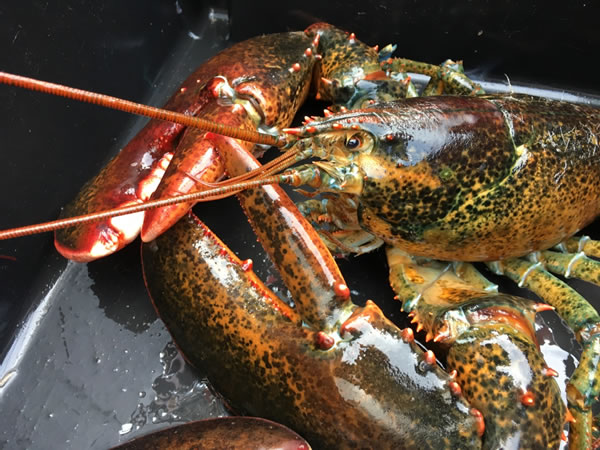
Quebec Region
Source: DFO Science, Quebec Region
Foreword
The purpose of this integrated fisheries management plan (IFMP) is to identify the principal objectives and requirements for the lobster fishery in Area 17 as well as the management measures that will be used to achieve these objectives. This document also serves to communicate basic information on this fishery and its management to Fisheries and Oceans Canada (DFO) staff, legislated co-management boards and other stakeholders. This IFMP provides a common understanding of the basic “rules” for the sustainable management of the fisheries resource.
The IFMP is an evergreen document developed by DFO in consultation with the fishing industry and First Nations, which will be updated periodically.
This IFMP is not a legally binding instrument which can form the basis of a legal challenge. It can be modified at any time and does not fetter the Minister’s discretionary powers set out in the Fisheries Act. The Minister can, for reasons of conservation or any other valid reasons, modify any provision of the IFMP in accordance with the powers granted pursuant to the Fisheries Act.
Where DFO is responsible for implementing obligations under land claims agreements or from Supreme Court judgments in relation to Aboriginal rights, the IFMP will be implemented in a manner consistent with these obligations. In the event that the IFMP is inconsistent with obligations under land claims agreements, the provisions of the latter will prevail to the extent of the inconsistency.
Maryse Lemire
Regional Director, Fisheries Management
Quebec Region
Table of contents
- Foreword
- Table of contents
- List of figures
- Abbreviations and acronyms
- Overview of the fishery
- Stock assessment, scientific knowledge and traditional knowledge
- Economic, social and cultural importance of the fishery
- Management Issues
- Objectives
- Access and allocations
- Management measures for the duration of the plan
- Shared stewardship arrangements
- Compliance plan
- Performance review
- Glossary
- Bibliography
- Footnotes
- Appendix 1: Enforcement measures for duration of the plan
- Appendix 2: Post-season review
- Appendix 3: Department contacts
- Appendix 4: Safety at sea
- Appendix 5: Major changes to management measures since 1986
- Appendix 6: Distribution of fishing effort in LFA 17 from 2019 to 2022
- Appendix 7: Long descriptions of figures and tables
List of figures
- Figure 1. Annual lobster landings between 1984 and 2022
- Figure 2. Map of the main lobster fishing areas and subareas in the Estuary and Gulf of St. Lawrence
- Figure 3. Canadian and U.S. lobster catches in thousands of tonnes (2010–2021p)
- Figure 4: Lobster landings in Canada (in tonnes) by region (2010–2022p)
- Figure 5. Lobster landings in Quebec (in tonnes), by geographic sector (2013–2022p)
- Figure 6. Lobster landings in Quebec (in millions of $), by geographic sector and average landed prices in Quebec (in $/lb) (2013–2022p)
- Figure 7. Lobster landings in Quebec (in tonnes) by week and by geographic sector in 2022p 26
- Figure 8. Landed price for lobster by week in Quebec (in $/lb), by geographic sector in 2022p
- Figure 9. Breakdown of the volume of lobster caught in Area 17, by landing location, 2013–2022p (in tonnes)
- Figure 10. Average landed value of lobster in Area 17 (in millions of $), by landing location and average landed price (in $/lb) (2013–2022p)
- Table 1. Matrix of the proportions of landed volume from Area 17, by harvesters’ area of residence and by landing location, average for period from 2013 to 2022p
- Figure 11. Average landed value ($) per licence in Area 17, 2013–2022p
- Figure 12. Sales by Quebec buyers/processors by type of product, 2013–2021p (in $M)
- Figure 13. Quebec lobster exports by market, 2013–2022p (in $M)
- Figure 14. Annual average wholesale price for 1 ½ lb lobster on the U.S. market (in $/lb) and U.S.-Canadian exchange rate, 2000–2022
- Figure 15. Coral and sponge conservation areas and lobster fishing areas in the Estuary and Gulf of St. Lawrence
- Table 2. Main types of violations in the area 17 lobster fishery from 2021 to 2022.
Abbreviations and acromyms
- C&P - Conservation and Protection
- CAFSAC - Canadian Atlantic Fisheries Scientific Advisory Committee
- CHP - Conservation harvesting plan
- CL - Carapace length
- COSEWIC - Committee on the Status of Endangered Wildlife in Canada
- CPUE - Catch per unit effort
- CSAS - Canadian Science Advisory Secretariat
- CSSP - Canadian Shellfish Sanitation Program
- DFO - Department of Fisheries and Oceans
- FM - Fisheries management
- FSC - Food, social and ceremonial
- IFMP - Integrated fisheries management plan
- LFA - Lobster fishing area
- MLS - Minimum legal size
- T - Tonnes
- MMPA - Marine Mammals Protection Act
- NAFO - Northwest Atlantic Fisheries Organization
- OECM - Other Effective Area-Based Conservation Measure
- RFMB - Regional Fisheries Management Branch
- RHQ - Regional Headquarters
- RMAIA - Resource Management, Aquaculture and Indigenous Affairs
- SARA - Species at Risk Act
- TAC - Total allowable catch
- VMS - Vessel monitoring system
1 Overview of the fishery
The integrated fisheries management plan (IFMP) for Anticosti Island lobster, lobster fishing area (LFA) 17, provides an overall picture of the fishery. The history of this fishery is characterized by different development phases. This overview also describes the fishery’s current characteristics, such as the type of fishery, participants, fishing locations, fishery characteristics, governance and approval process.
1.1 Historical context
The history of lobster harvesting in North America began more than 10,000 years ago, when the ancestors of the Mi’kmaw people settled in coastal areas around Gaspé and the Maritime provinces east of the Saint John River, in what became the traditional territory of the Mi’kmaw, or Mi’gma’gi (Canadian Encyclopedia 2022)Footnote 1. Mi’kmaq oral tradition, archeological finds and the accounts of the early European explorers confirm that lobster (“jakej” in Mi’kmaw) was part of this First Nation’s diet.
Anticosti Island has had several names which correspond to traditional Indigenous variantsFootnote 2(Commission de toponymie – Gouvernement du Québec 2012). It was first occupied sporadically by First Nations from either side of the St. Lawrence River. The Mi’kmaq and Innu hunted bear there in the spring and also carried out fishing. When Jacques Cartier was exploring the region, he originally mistook the island for a peninsula, but later named it Île de l’Assomption (Marsh 2006). It was given the name Anticosti Island by cartographer Samuel de Champlain in the early 1600s. The island, located at the juncture of the St. Lawrence Estuary and the Gulf of St. Lawrence, is 225 km long and 56 km wide, with an area of 8,160 km2 and a coastline length of 520 km. The island was settled relatively late in its history owing to its remoteness, northern location, extensive rocky tidal flats, small number of safe anchorages and harbours for navigation, and its bad reputation, the result of numerous shipwrecks (Cahier de géographique du Québec 1979). Mariners have nicknamed it Île aux Naufrages (island of shipwrecks) as it has very little natural shelter for ships (aside from Baie de Gamache and Baie du Renard). The island has a relatively flat topography and is surrounded by a formidable ring of breakers, stretching 2.3 km from shore at low tide (Le bulletin des amis des phares. Spécial Anticosti 2017).
In 1881, the community on the island consisted of 230 residents (all French speaking), with their ancestral roots in Newfoundland, Saint-Pierre-et-Miquelon or the Magdalen Islands. Fishing was the main occupation at that time, providing residents with a supply of cod, halibut, haddock, and oil. It appears that, between 1881 and 1895, residents were not yet involved in commercial salmon and lobster production (Hamelin and Dumont 1979), although a few initiatives existed, for example, a lobster canning venture in 1895, in Baie des Homards near Caouis (Huard l’Abbé V.-A. 1897). In 1895, Henri Menier, a wealthy chocolatier, purchased Anticosti Island from a British logging company and handed its management over to his friend George Martin-Zédé, who had previously explored the island and extolled its virtues to the entrepreneur (Piche 2010). From that point on, the island began to experience real growth. The village of Port-Menier was founded and numerous facilities and services emerged between 1895 and 1926. This included the construction of the port, which would allow the development and marketing of lobster in canned format. Footnote 3
The first data on Anticosti lobster landings are from 1890. The Second World War (1939 to 1945) slowed down landings, with fishing prohibited between 1938 and 1941 (Canadian Atlantic Fisheries Scientific Advisory Committee [CAFSAC] 1988). According to Gauthier in 1988 (CAFSAC 1988), since fishing conditions were particularly difficult on Anticosti Island, the authorized fishing effort was not completely expended and reporting of landings was inconsistent. Following a certain increase in the mid-1980s, landings showed a more definite uptrend as of 2011 (Figure 1).
With regard to changes in management measures in Area 17, the minimum legal size (MLS), introduced in 1957, was increased from 64 mm to 76 mm between 1953 and 1957, and then to 80 mm in 2000 and finally to 83 mm in 2003. These increases were implemented under conservation plans with the aim of doubling egg production per recruit from the 1995 level (Stock Status Report C4-05, DFO Science 2000).
Before 1990, no distinction was made between areas 17A and 17B (Figure 2); management subareas were not defined until the same year. The creation of the two subareas coincided with the issuance of an exploratory licence in subarea 17A in 1990. This licence became permanent in 2000, increasing to 16 the total number of licences issued for Area 17. The purpose was to secure the lobster supply for Anticosti Island and adjust management based on changes in local needs. The distribution of fishing effort in Area 17 from 2019 to 2022 is shown in Appendix 6.

Figure 1. Annual lobster landings between 1984 and 2022
Description
Figure 1
- 1984: 22 t
- 1985: 42 t
- 1986: 53 t
- 1987: 110 t
- 1988: 65 t
- 1989: 97 t
- 1990: 65 t
- 1991: 83 t
- 1992: 86 t
- 1993: 106 t
- 1994: 165 t
- 1995: 131 t
- 1996: 153 t
- 1997: 183 t
- 1998: 128 t
- 1999: 167 t
- 2000: 148 t
- 2001: 139 t
- 2002: 135 t
- 2003: 114 t
- 2004: 96 t
- 2005: 125 t
- 2006: 115 t
- 2007: 131 t
- 2008: 157 t
- 2009: 174 t
- 2010: 205 t
- 2011: 174 t
- 2012: 244 t
- 2013: 306 t
- 2014: 452 t
- 2015: 504 t
- 2016: 564 t
- 2017: 766 t
- 2018: 791 t
- 2019: 910 t
- 2020: 871 t
- 2021: 1,120 t
- 2022: 902 t
1.2 Participants
The number of participants in the fishery has been stable for a number of years. There is one active licence in subarea 17Footnote 4 and 15 active licences in subarea 17B. In subarea 17B, First Nations hold four communal commercial licences: three are held by the Innu on the North Shore and one by the Mi’kmaq. All licences have been activeFootnote 5 since 2019. Licences for subarea 17B are divided equally among North Shore (5), Gaspé Peninsula (5) and Magdalen Islands (5) residents.
1.3 Fishing locations
Lobster fishing area 17 (Figure 2) overlaps part of the Estuary and Gulf of St. Lawrence. The line separating the Estuary and the Gulf extends from Cap des Rosiers, at the eastern tip of the Gaspé Peninsula, and the western point of Anticosti Island, and then to the mouth of the Saint-Jean River, on the North Shore.
Subarea 17B harvesters, who come from the North Shore, the Gaspé Peninsula or the Magdalen Islands, have several different types of living arrangements during the fishing season. Some spend the night at Pointe de l’île on Anticosti Island and use small motor launches to get to their boats every day, since the eastern part of the island does not have port infrastructure. Other harvesters prefer to live on board their boats, an option that seems to be increasingly popular due to the fact that, in inclement weather, it can be difficult to reach fishing boats in a small motor launch from the coast. Others sleep on their boats while fishing but come ashore every two weeks to land their catches, purchase supplies and see their families.

Figure 2. Map of the main lobster fishing areas and subareas in the Estuary and Gulf of St. Lawrence.2
Source: Department of Fisheries and Oceans (DFO), Quebec Region.
Description
Figure 2
The map shows lobster fishing areas and subareas from 15 to 27.Geographic details: Each area and subarea consists of points numbered 1 to 79. Each of these points, listed on the right side of the map, corresponds to a latitude and longitude, expressed in degree minute second.
- The North Shore is divided by subareas 18A to 18H, which run along the coast from Tadoussac to the vicinity of Natashquan, and areas and subareas 18i, 16 and 15, which run from Natashquan to Blanc-Sablon.
- The Gaspé Peninsula is surrounded by areas 19A, 19B, 19C, 20A, 20B, 21A, and 21B.
- Anticosti Island is in the center of area 17, fragmented into subareas 17A and 17B. Most of it is subarea 17B, with the exception of a small portion to the southwest which is area 17A.
- The Magdalen Islands are in the center of area 22.
- Areas 23 to 27 run along the coasts of the Maritime provinces, bypassing the tip of Cape Breton.
Text and orientation: A box at the bottom left of the map makes an important mention, specifying that the map has no official value, and to refer to the Fisheries and Oceans website of the Quebec Region before using it. Another box in the bottom left of the map is a close-up of areas 21A and 21B, which are not identified on the main map.
1.4 Fishery characteristics
The lobster fishing season in Area 17 runs for 11 weeks, beginning in spring and ending in summer. Two different sizes of lobster traps are authorized, their numbers varying depending on the subarea and the type of trap. A trap setting period was accorded in the past to accommodate harvesters owing to the remoteness of subarea 17B. This arrangement allows harvesters to leave unbaited lobster traps on the lobstering grounds before the season begins (without catching lobster). The lobster fishery is a limited entry fishery. It is managed by controlling fishing effort (number of licences, number and size of traps and length of fishing season) and by implementing escape measures, the return of berried females to the water, and the minimum legal size (MLS). Subarea 17A differs in this respect because it is also managed through the application of a total allowable catch (TAC). Only one harvester, an Anticosti Island resident, has a licence to fish in this subarea. Catches must be landed at the Port-Menier dock, to supply Island residents and firms as a priority. Only the remaining quantities of these catches may be sold outside of Anticosti Island.
This management measure differs from those used in the Quebec Region’s other lobster fishing areas, where the fishery is managed exclusively by controlling fishing effort (e.g. subarea 17B). The method used to manage subarea 17A is reassessed annually and may be reviewed or revoked at the end of each fishing season.
Management measures and methods of monitoring fishing activities are announced in conservation harvesting plans (CHPs) and in Notices to Fish Harvesters published on the DFO Quebec Region website.
The only lobster fishery that takes place in LFA 17 is a commercial one, and Indigenous peoples do not carry out food, social and ceremonial (FSC) fishing in LFA 17.
1.4.1. Special characteristics of landings
In subarea 17B, lobstering takes place mainly around the eastern tip of Anticosti Island. Since there is no market on the island and the freshness of the lobster cannot be guaranteed when shipped from the island, each 17B harvester must look after transporting their own product. Harvesters can use their primary vessel or an auxiliary fishing vessel (while complying with licence conditions) to carry out fishing or to transport their catch to a designated port of landing. The two vessels may not participate in fishing activities simultaneously. In addition, a transport vessel, or packer, can be used to transport the lobster to the port of landing, provided it has a licence for this purpose. Table 2 in Section 3 shows the distribution of landings by landing location and harvesters’ area of residence (North Shore, Gaspé Peninsula and the Magdalen Islands).
Only one harvester, an Anticosti Island resident, has a licence to fish in subarea 17A. Catches must be landed at the Port-Menier dock, to supply island residents and firms on a priority basis.
1.5 Governance
The federal department Fisheries and Oceans Canada governs fishing activities, which are first and foremost subject to the Fisheries Act and its regulations, specifically, the Atlantic Fishery Regulations, 1985 and the Fishery (General) Regulations. The Species at Risk Act, which was passed in 2002, sets out rules for endangered and threatened species.
The Government of Canada is committed to achieving reconciliation with Indigenous peoples through a renewed nation-to-nation, government-to-government, and Inuit-Crown relationship based on recognition of rights, respect, co-operation, and partnership as the foundation for transformative change. Indigenous peoples have a special constitutional relationship with the Crown. This relationship, including existing Aboriginal and treaty rights, is recognized and affirmed in section 35 of the CONSTITUTION ACTS, 1867 TO 1982 (justice.gc.ca). Section 35 contains a full box of rights and holds the promise that Indigenous nations will become partners in Confederation on the basis of a fair and just reconciliation between Indigenous peoples and the Crown. The government recognizes that Indigenous perspectives and rights must be integrated into all aspects of this relationship (Source: Principles respecting the Government of Canada's relationship with Indigenous peoples). These changes should be reflected in the governance structure adopted for fisheries management discussions and recommendations.
In 2015, subarea 17B harvesters formed an association, Association des homardiers de la sous-zone 17B, with the objective of facilitating discussions and information sharing between harvesters and the Department. In addition, association members have an opportunity to give their views on various topics at advisory committee meetings.
1.6 Approval process
The development and coordination of the IFMP is handled by the Resource Management, Aquaculture and Indigenous Affairs (RMAIA) Branch in Quebec City. The document drafting and consultation process involves the entire Fisheries Management program in Quebec City, Sept-Îles, Gaspé and the Magdalen Islands; Strategic Services; the Regional Science Branch; harvesters’ associations; First Nations; the processing industry; and the Government of Quebec. The final draft of the IFMP is approved by the Regional Fisheries Management Branch, and then by Regional Headquarters (RHQ), for publication on DFO’s national website. The approved IFMP is disseminated to fishery stakeholders and to the general public. The Regional Fisheries Management Branch approves the annual management measures, which are publicized through Notices to Fish Harvesters and ensure implementation of the IFMP.
2 Stock assessment, scientific knowledge and traditional knowledge
2.1 Biological synopsis
The American lobster (Homarus americanus) occurs along the west coast of the Atlantic Ocean, from Labrador to Cape Hatteras. Adult lobsters prefer rocky substrates that provide shelter, but they can also be found on sandy and even muddy bottoms. Commercial concentrations are generally found at depths of less than 35 m, primarily in the northern part of the species’ range. Lobsters tend to undertake seasonal migrations toward shallower, warmer waters in the spring and early summer, and toward deeper, less turbulent waters in the fall.
On the North Shore (LFA 15, 16 and 18) and around Anticosti Island (LFA 17), female lobsters reach maturity at sizes exceeding a carapace length (CL) of 90 mm, according to a study published in 1988. Elsewhere in Quebec, in the more southerly regions, females reach sexual maturity at a smaller size (79 to 84 mm). In any given region, males mature at a smaller size than females. Females generally have a two-year reproductive cycle, spawning one year and moulting the next. Females spawning for the first time (i.e. primiparous) can produce nearly 8,000 eggs, while larger females (≥127 mm CL, i.e. jumbo size) can lay up to 35,000 eggs. Once released, the eggs remain attached to the female’s swimmerets, where they stay for 9 to 12 months, before hatching into planktonic larvae the following summer.
There are some differences between primiparous females and multiparous females (i.e. those having previously laid eggs). Besides having higher fecundity, some jumbo females can spawn for two consecutive years before moulting. In addition, some multiparous females have been observed to lay eggs earlier in the season, with hatching also occurring earlier, as well as producing larger larvae at emergence than those produced by primiparous females. Once the eggs hatch into planktonic larvae, they remain in this planktonic stage for a period of 3 to 10 weeks, depending on water temperature, and go through three developmental stages before undergoing metamorphosis. After metamorphosis, the post-larval lobsters (stage IV), which now resemble adult lobsters, leave surface waters to settle on the sea floor, where they begin the benthic phase.
Lobster survival from the larval phase until the early benthic stage is influenced by predation; in addition, hydrodynamic factors determine whether larvae are affected by advection or are retained near areas favourable for benthic settlement. During the first few years of benthic life and until they reach approximately 40 mm, lobsters lead a cryptic existence, meaning that they live hidden in habitats that provide plenty of shelters. In more southerly regions of the Gulf of St. Lawrence, including the Magdalen Islands, lobsters are estimated to reach minimum legal size (83 mm) at an age of around 7 to 8 years, after moulting about 16 times since their benthic settlement, and are recruited to the fishery in the following year.
Lobster enter the commercial fishery at an older age in more northerly areas of the Gulf of St. Lawrence, due to a greater moult size and lower moult frequency in colder waters.
2.2 Ecosystem interactions
The juvenile and early benthic stages of lobsters are vulnerable to predation by striped bass, cunner, taugog and sculpins, particularly on bare substrates or substrates with little or no shelter. In coastal waters, the vulnerability of lobsters to predation tends to decline rapidly as their size increases. This is explained by the scarcity of large, mobile predators near the coast. When they reach adult size, hard-shell lobsters are, on the whole, no longer vulnerable to predators. Past examinations of harp and grey seal stomach contents have shown that crustaceans generally make up only a small part of these species’ diet, and lobster is virtually absent.
Lobsters are predators, mainly of other crustaceans, molluscs, polychaetes and echinoderms. In particular, lobsters live in close association with rock crab across their range, feeding abundantly on the latter throughout their life. When given a choice of prey, lobsters show a distinct preference for rock crab, which can be explained by the nutritional quality of this prey species. Rock crab is therefore a key resource for lobster.
During the last 20 years, the surface waters in the Gulf of St. Lawrence have become increasingly warm in spring, summer and fall. The water temperature in spring when the fishery opens has a direct impact on catch rates; warmer temperatures generate higher catch rates. Harvesters want an earlier opening of the fishery during warmer springs.
Higher water temperatures can also accelerate lobster embryonic and larval development and promote quicker growth during the first two to three years of benthic life, which can increase stock productivity. The warmer temperatures associated with climate change can promote embryonic and larval development and accelerate moulting, potentially resulting in increased stock productivity. The impact of warming could be more pronounced in historically colder portions of the species’ range, such as along the North Shore or around Anticosti Island. However, excessive warming could also encourage the development of disease in lobsters, either directly or through related physico-chemical changes in the water (oxygen and pH).
2.3 Aboriginal traditional knowledge and traditional ecological knowledge
Traditional Indigenous knowledge about this fishery is a potential source of information. When Indigenous organizations are able to share their traditional biological and ecological knowledge, DFO can take this information into consideration in its management frameworks.
Over the past few years, First Nations have been carrying out scientific projects located in areas outside of LFA 17 to increase knowledge about lobster in the Gaspé and North Shore regions.
2.4 Stock status assessment
Until 2005, stock status assessments were conducted on an annual basis, which made it possible to closely monitor the impact of an increase in the minimum legal size on lobster populations. Lobster stock assessments are now done every three years, and the resulting publications can be found on the Canadian Science Advisory Secretariat (CSAS) website (dfo-mpo.gc.ca). Stock status in the North Shore and Anticosti regions is assessed for LFAs 15, 16, 18 and subarea 17B only.
The assessment is based on a review of abundance indicators above all and, to a lesser extent, on demographic and environmental indicators. For each indicator, the data from the past three years are examined. Since no fishery-independent surveys or at-sea sampling have been conducted for these stocks since 2004, fishing pressure and productivity (reproduction and recruitment) cannot be assessed. Abundance indicators include landings recorded on processors’ purchase slips and catch rates for commercial-size lobster obtained from at-sea sampling (1993 to 2004) or dockside sampling (since 2005), as well as logbooks completed daily by fishers. These logbooks were first completed on a voluntary basis but have been mandatory in subarea 17B since 2004 and in LFAs 15 and 16 since 2007. For subarea 17B, dockside sampling of commercial catches has taken place since 1998 at landing ports on the North Shore and Gaspé Peninsula and since 2015 in the Magdalen Islands.
Sampling to assess demographic indicators is limited to commercial-size lobster on Anticosti Island. Size structures in this area are wide ranging, and the average size of commercial-size lobster is stable.
From an ecosystem-scale perspective, temperature indicators were considered in the 2022 stock assessment but additional work is required to integrate them into the assessment. Small rock crab is an essential prey item for lobster. However, at the time of the 2022 assessment, no data were available for the North Shore and Anticosti Island.
2.5 Stock scenarios
Abundance indicators (landings and CPUE) show a strong upward trend on the North Shore and Anticosti Island. Lobster populations in these regions seem to be in good condition. Nonetheless, these populations could be vulnerable to overharvesting, given that the legal size of lobster is smaller than their size at sexual maturity and given their slow growth.
In this context, the industry would like to see an increase in fishing effort in these regions. It is important to rapidly develop or update the biological knowledge needed in order to adequately respond to their demands while ensuring sustainable management of these stocks.
2.6 Research
Working groups within the industry, scientists and First Nations are conducting research and actively addressing scientific priorities in order to document various aspects that govern and influence lobster dynamics, in several areas of research:
- Ecosystems and climate change (temperature, salinity and prey)
- Knowledge enhancement (lobster biology and phenology)
- Establishment of recruitment indicators
- Improvement of monitoring and sampling methods (instruments for data acquisition)
3 Economic, social and cultural importance of the fishery
3.1 Portrait of lobster market
Canada and the United States account for all American lobsterFootnote6(Homarus americanus) landings worldwideFootnote 7. Between 2010 and 2021pFootnote 8, the quantities of lobster landed increased by about 40%, from 121,000 tonnes in 2010 to 169,000 tonnes in 2021p (Figure 3). Canada’s share of lobster landings is on the rise. Between 2010 and 2013, Canadian landings made up 54% of total landings, on average, while, more recently (2019 to 2021p), the proportion has risen to 64%.

Figure 3. Canadian and U.S. lobster catches in thousands of tonnes (2010 to 2021p)
Source: DFO and NOAA (2023)
Compilation: Strategic Services, DFO, Quebec Region
Description
Figure 3
- 2010
- Canada: 67 t
- USA: 53 t
- 2011
- Canada: 67 t
- USA: 57 t
- 2012
- Canada: 75 t
- USA: 68 t
- 2013
- Canada: 75 t
- USA: 68 t
- 2014
- Canada: 93 t
- USA: 67 t
- 2015
- Canada: 91 t
- USA: 67 t
- 2016
- Canada: 91 t
- USA: 72 t
- 2017
- Canada: 98 t
- USA: 62 t
- 2018
- Canada: 99 t
- USA: 67 t
- 2019
- Canada: 107 t
- USA: 58 t
- 2020
- Canada: 94 t
- USA: 55 t
- 2021
- Canada: 108 t
- USA: 61 t
Lobster landings in all the Atlantic regions have increased since 2010 (Figure 4). Between 2010 and 2021p, landings almost doubled in the Gulf and Newfoundland, while Quebec landings were 2.5 times higher. An upward trend was also observed in the Maritimes (+30% since 2010), where recorded landings have exceeded 50,000 tonnes almost every year since 2014. In 2021, Quebec was the third most important region in terms of landed volume, with landings of 11,033 tonnes (10%), coming behind the Maritimes (50,942 tonnes, 47%) and the Gulf (40,769 tonnes, 38%), but ahead of Newfoundland (4,984 tonnes, 5%).

Figure 4. Lobster landings in Canada (in tonnes) by region (2010 to 2022p)
Source: DFO (2023)
Compilation: Strategic Services, DFO, Quebec Region
Description
Figure 4
- 2010
- Newfoundland: 2,597 t
- Québec: 4,409 t
- Maritimes: 39,310 t
- Gulf: 20,961 t
- 2011
- Newfoundland: 1,934 t
- Québec: 3,989 t
- Maritimes: 41,844 t
- Gulf: 19,212 t
- 2012
- Newfoundland: 2,123 t
- Québec: 3,987 t
- Maritimes: 45,170 t
- Gulf: 23,510 t
- 2013
- Newfoundland: 2,200 t
- Québec: 4,287 t
- Maritimes: 41,523 t
- Gulf: 26,676 t
- 2014
- Newfoundland: 2,138 t
- Québec: 5,353 t
- Maritimes: 56,920 t
- Gulf: 28,367 t
- 2015
- Newfoundland: 2,751 t
- Québec: 5,900 t
- Maritimes: 54,584 t
- Gulf: 27,640 t
- 2016
- Newfoundland: 2,880 t
- Québec: 5,183 t
- Maritimes: 55,486 t
- Gulf: 27,571 t
- 2017
- Newfoundland: 2,913 t
- Québec: 7,668 t
- Maritimes: 54,104 t
- Gulf: 33,269 t
- 2018
- Newfoundland: 3,395 t
- Québec: 8,135 t
- Maritimes: 51,815 t
- Gulf: 35,460 t
- 2019
- Newfoundland: 4,464 t
- Québec: 9,684 t
- Maritimes: 54,223 t
- Gulf: 38,871 t
- 2020
- Newfoundland: 4,453 t
- Québec: 10,309 t
- Maritimes: 44,471 t
- Gulf: 35,050 t
- 2021
- Newfoundland: 4,984 t
- Québec: 11,033 t
- Maritimes: 50,942 t
- Gulf: 40,769 t
In Quebec, lobster landings increased by 180%, from 4,287 tonnes to 11,984 tonnes, between 2013 and 2022p. All geographic sectors recorded increases during this period (Figure 5). In the last 10 years, the Magdalen Islands accounted for 56% of landings (Area 22); Gaspé–Lower St. Lawrence, 31% (areas 19, 20 and 21); and Anticosti, 9% (Area 17). The proportion of lobster caught along the North Shore (areas 15, 16 and 18) increased significantly over the last decade, from less than 1% in 2013 to 5% in 2022p. Lobster catches on the North Shore increased 15-fold during this period, from 39 tonnes in 2013 to 566 tonnes in 2022p.

Figure 5. Lobster landings in Quebec (in tonnes), by geographic sector (2013 to 2022p)
Source: DFO (2023)
Compilation: Strategic Services, DFO, Quebec Region
Description
Figure 5
- 2013
- Anticosti: 306 t
- North Shore: 39 t
- Gaspé Area: 1,233 t
- Magdalen Islands: 2,709 t
- 2014
- Anticosti: 452 t
- North Shore: 52 t
- Gaspé Area: 1,536 t
- Magdalen Islands: 3,313 t
- 2015
- Anticosti: 504 t
- North Shore: 83 t
- Gaspé Area: 1,828 t
- Magdalen Islands: 3,486 t
- 2016
- Anticosti: 564 t
- North Shore: 134 t
- Gaspé Area: 1,926 t
- Magdalen Islands: 2,558 t
- 2017
- Anticosti: 766 t
- North Shore: 200 t
- Gaspé Area: 2,486 t
- Magdalen Islands: 4,216 t
- 2018
- Anticosti: 791 t
- North Shore: 285 t
- Gaspé Area: 2,303 t
- Magdalen Islands: 4,757 t
- 2019
- Anticosti: 910 t
- North Shore: 385 t
- Gaspé Area: 3,027 t
- Magdalen Islands: 5,363 t
- 2020
- Anticosti: 871 t
- North Shore: 378 t
- Gaspé Area: 2,965 t
- Magdalen Islands: 6,095 t
- 2021
- Anticosti: 1,120 t
- North Shore: 608 t
- Gaspé Area: 3,867 t
- Magdalen Islands: 5,438 t
- 2022
- Anticosti: 902 t
- North Shore: 566 t
- Gaspé Area: 3,802 t
- Magdalen Islands: 6,715 t
Landed value also increased considerably during the study period, from $39 million in 2013 to $210 million in 2022p, a 438% increase (Figure 6), and reached consecutive peaks in 2021 and 2022. The landed price also reached a record $8.52/lb in 2021. In 2022p, the price fell by 6.6% to $7.95/lb, which was still 40% higher than the average price from 2013 to 2020.

Figure 6. Lobster landings in Quebec (in tonnes), by geographic sector (2013 to 2022p)
Source: DFO (2023)
Compilation: Strategic Services, DFO, Quebec Region
Description
Figure 6
- 2013
- Anticosti: $2,704,584.20
- North Shore: $310,972.18
- Gaspé Area: $12,020,294.55
- Magdalen Islands: $24,267,383.97
- 2014
- Anticosti: $4,227,519.33
- North Shore: $448,723.85
- Gaspé Area: $15,412,478.63
- Magdalen Islands: $31,018,401.73
- 2015
- Anticosti: $6,254,129.71
- North Shore: $903,568.25
- Gaspé Area: $22,204,993.85
- Magdalen Islands: $44,588,317.52
- 2016
- Anticosti: $8,477,652.61
- North Shore: $1,746,277.03
- Gaspé Area: $27,476,221.85
- Magdalen Islands: $38,603,214.31
- 2017
- Anticosti: $11,766,894.83
- North Shore: $2,636,969.10
- Gaspé Area: $38,283,703.79
- Magdalen Islands: $64,381,133.53
- 2018
- Anticosti: $11,719,747.24
- North Shore: $3,792,546.51
- Gaspé Area: $33,119,171.58
- Magdalen Islands: $67,999,830.77
- 2019
- Anticosti: $13,493,207.66
- North Shore: $5,044,815.53
- Gaspé Area: $45,043,732.47
- Magdalen Islands: $78,597,953.86
- 2020
- Anticosti: $9,860,667.60
- North Shore: $3,964,662.59
- Gaspé Area: $33,645,821.61
- Magdalen Islands: $67,074,021.34
- 2021
- Anticosti: $22,189,763.43
- North Shore: $11,724,372.48
- Gaspé Area: $71,153,545.92
- Magdalen Islands: $102,157,647.61
- 2022
- Anticosti: $15,698,589.34
- North Shore: $9,394,402.03
- Gaspé Area: $66,472,636.86
- Magdalen Islands: $118,470,609.64
In Quebec, the lobster fishing season is 10 weeks long, except in the Magdalen Islands where the season lasts only nine weeks. Figure 7 shows landings by week of the fishery and by geographic sector in 2022p. Lobster landings take place mainly between May and July. The majority of landings in the Magdalen Islands and the Gaspé-Lower St. Lawrence sector are made during May and June. On Anticosti Island and on the North Shore, landings are more spread out compared to more southerly areas.

Figure 7. Lobster landings in Quebec (in tonnes) by week and by geographic sector in 2022p
Source: DFO (2023)
Compilation: Strategic Services, DFO, Quebec Region
Description
Figure 7
- Week of May 1, 2022
- Anticosti: 20 t
- North Shore: 1 t
- Gaspé Area: 266 t
- Week of May 8, 2022
- Anticosti: 48 t
- North Shore: 4 t
- Gaspé Area: 382 t
- Magdalen Islands: 976 t
- Week of May 15, 2022
- Anticosti: 63 t
- North Shore: 7 t
- Gaspé Area: 397 t
- Magdalen Islands: 876 t
- Week of May 22, 2022
- Anticosti: 119 t
- North Shore: 31 t
- Gaspé Area: 329 t
- Magdalen Islands: 819 t
- Week of May 29, 2022
- Anticosti: 86 t
- North Shore: 62 t
- Gaspé Area: 472 t
- Magdalen Islands: 687 t
- Week of June 5, 2022
- Anticosti: 85 t
- North Shore: 54 t
- Gaspé Area: 423 t
- Magdalen Islands: 778 t
- Week of June 12, 2022
- Anticosti: 151 t
- North Shore: 84 t
- Gaspé Area: 419 t
- Magdalen Islands: 699 t
- Week of June 19, 2022
- Anticosti: 69 t
- North Shore: 74 t
- Gaspé Area: 400 t
- Magdalen Islands: 644 t
- Week of June 26, 2022
- Anticosti: 73 t
- North Shore: 74 t
- Gaspé Area: 361 t
- Magdalen Islands: 695 t
- Week of July 3, 2022
- Anticosti: 89 t
- North Shore: 43 t
- Gaspé Area: 99 t
- Magdalen Islands: 541 t
- Week of July 10, 2022
- Anticosti: 47 t
- North Shore: 38 t
- Gaspé Area: 81 t
- Week of July 17, 2022
- Anticosti: 51 t
- North Shore: 35 t
- Gaspé Area: 9 t
- Week of July 24, 2022
- North Shore: 40 t
- Week of July 31, 2022
- North Shore: 17 t
The landed price for lobster fluctuates within a given fishing season and varies according to where the product is landed (Figure 8). For example, at the start of the 2022p season (early May), the price (in $/lb) exceeded $8.00/lb. It then fell to around $7.35/lb in mid-June, when the supply of American lobster is at its peak. In general, prices on the North Shore are a little lower than in other areas, primarily due to its remoteness and distance from the main markets (Lower North Shore) and the lower landed volume, which does not allow the same economies of scale.

Figure 8. Landed price for lobster by week in Quebec (in $/lb), by geographic sector in 2022p
Source: DFO (2023)
Compilation: Strategic Services, DFO, Quebec Region
Description
Figure 8
- Week of May 1, 2022
- Anticosti: $8.91
- Gaspé Area: $8.00
- Week of May 8, 2022
- Anticosti: $8.91
- North Shore: $9.22
- Gaspé Area: $8.91
- Magdalen Islands: $8.90
- Week of May 15, 2022
- Anticosti: $8.56
- North Shore: $8.39
- Gaspé Area: $8.54
- Magdalen Islands: $8.55
- Week of May 22, 2022
- Anticosti: $8.39
- North Shore: $7.96
- Gaspé Area: $8.33
- Magdalen Islands: $8.30
- Week of May 29, 2022
- Anticosti: $7.88
- North Shore: $7.96
- Gaspé Area: $7.87
- Magdalen Islands: $7.85
- Week of June 5, 2022
- Anticosti: $7.82
- North Shore: $7.72
- Gaspé Area: $7.79
- Magdalen Islands: $7.80
- Week of June 12, 2022
- Anticosti: $7.49
- North Shore: $7.28
- Gaspé Area: $7.48
- Magdalen Islands: $7.45
- Week of June 19, 2022
- Anticosti: $7.39
- North Shore: $7.29
- Gaspé Area: $7.37
- Magdalen Islands: $7.34
- Week of June 26, 2022
- Anticosti: $7.53
- North Shore: $7.45
- Gaspé Area: $7.31
- Magdalen Islands: $7.53
- Week of July 3, 2022
- Anticosti: $7.65
- North Shore: $7.51
- Gaspé Area: $7.73
- Magdalen Islands: $7.66
- Week of July 10, 2022
- Anticosti: $7.70
- North Shore: $7.52
- Gaspé Area: $7.85
- Week of July 17, 2022
- Anticosti: $7.71
- North Shore: $7.47
- Gaspé Area: $8.11
- Week of July 24, 2022
- North Shore: $7.36
- Week of July 31, 2022
- North Shore: $7.41
3.2 Importance of the lobster fishery in Area 17
Lobster fishing area 17 is divided into two subareas: 17A and 17B. Area 17A, on the southwest side of Anticosti Island, has only one harvester, who lands their catch on the island to supply the local market. Area 17B, which covers the rest of the island, has 15 harvesters, who account for the majority (99%) of landings. These harvesters, who work mainly around the eastern tip of the island, land all their catch off the island. In general, two thirds of the catch is landed in ports in the Gaspé-Lower St. Lawrence region, one quarter in the Magdalen Islands, and the rest on the North Shore (~10%). The volume of lobster caught in LFA 17 has tripled since 2013 (Figure 9)

Figure 9. Breakdown of the volume of lobster caught in Area 17, by landing location, 2013 to 2022p (in tonnes)
Source: DFO (2023)
Compilation: Strategic Services, DFO, Quebec Region
Description
Figure 9
- 2013
- North Shore: 40 t
- Gaspé Area: 185 t
- Magdalen Islands: 80 t
- 2014
- North Shore: 61 t
- Gaspé Area: 258 t
- Magdalen Islands: 134 t
- 2015
- North Shore: 67 t
- Gaspé Area: 295 t
- Magdalen Islands: 141 t
- 2016
- North Shore: 58 t
- Gaspé Area: 360 t
- Magdalen Islands: 146 t
- 2017
- North Shore: 72 t
- Gaspé Area: 503 t
- Magdalen Islands: 191 t
- 2018
- North Shore: 145 t
- Gaspé Area: 436 t
- Magdalen Islands: 211 t
- 2019
- North Shore: 109 t
- Gaspé Area: 556 t
- Magdalen Islands: 245 t
- 2020
- North Shore: 47 t
- Gaspé Area: 706 t
- Magdalen Islands: 118 t
- 2021
- North Shore: 131 t
- Gaspé Area: 853 t
- Magdalen Islands: 137 t
- 2022
- North Shore: 92 t
- Gaspé Area: 539 t
- Magdalen Islands: 271 t
The landed price obtained by lobster harvesters in Area 17Footnote 9 rose sharply between 2013 and 2022, from $4.01/lb to $7.89/lb, or 97% in nine years. Since landed volumes and landed prices have increased significantly since 2013, the landed value has obviously also shown strong gains during this period. The $15.7 million worth of lobster caught on Anticosti Island in 2022p is almost six times the landed value in 2013 (Figure 10).
Table 1 shows a matrix of the average proportions (2013 to 2022p period) of landed volume by landing location and by harvesters’ area of residence. Although 66% of landings occur in the Gaspé-Lower St. Lawrence region, only 34% of harvesters reside there.

Figure 10. Average landed value of lobster in Area 17 (in millions of $), by landing location and average landed price (in $/lb) (2013 to 2022p)
Source: DFO (2023)
Compilation: Strategic Services, DFO, Quebec Region
Description
Figure 10
- 2013
- Average price: $4.01
- Landings:
- North Shore: less than $1M
- Gaspé Area: $1.7M
- Magdalen Islands: $1M
- Total: $2.7M
- 2014
- Average price: $4.24
- Landings:
- North Shore: $600,000
- Gaspé Area: $2.4M
- Magdalen Islands: $1.2M
- Total: $4.2M
- 2015
- Average price: $5.63
- Landings:
- North Shore: $800,000
- Gaspé Area: $3.7M
- Magdalen Islands: $1.8M
- Total: $6.3M
- 2016
- Average price: $6.82
- Landings:
- North Shore: $800,000
- Gaspé Area: $5.4M
- Magdalen Islands: $2.3M
- Total: $8.5M
- 2017
- Average price: $6.97
- Landings:
- North Shore: $1M
- Gaspé Area: $7.8M
- Magdalen Islands: $2.9M
- Total: $11.8M
- 2018
- Average price: $6.72
- Landings:
- North Shore: $2.2M
- Gaspé Area: $6.5M
- Magdalen Islands: $3.1M
- Total: $11.7M
- 2019
- Average price: $6.73
- Landings:
- North Shore: $1.6M
- Gaspé Area: $8.3M
- Magdalen Islands: $3.6M
- Total: $13.5M
- 2020
- Average price: $5.14
- Landings:
- North Shore: $500,000
- Gaspé Area: $8.1M
- Magdalen Islands: $1.3M
- Total: $9.9M
- 2021
- Average price: $8.98
- Landings:
- North Shore: $2.6M
- Gaspé Area: $17M
- Magdalen Islands: $2.6M
- Total: $22.2M
- 2022
- Average price: $7.89
- Landings:
- North Shore: $1.6M
- Gaspé Area: $9.3M
- Magdalen Islands: $4.8M
- Total: $15.7M
Table 1 shows a matrix of the average proportions (2013 to 2022p period) of landed volume by landing location and by harvesters’ area of residence. Although 66% of landings occur in the Gaspé-Lower St. Lawrence region, only 34% of harvesters reside there.
| Landing location | North Shore | Gaspé Area | Magdalen Islands | Total |
|---|---|---|---|---|
| North Shore | 11% | 11% | ||
| Gaspé Area | 20% | 34% | 12% | 66% |
| Magdalen Islands | 23% | 23% | ||
| Total | 31% | 34% | 35% | 100% |
Source: DFO (2023)
Compilation: Strategic Services, DFO, Quebec Region
Description
Table 1
- Landing Location: North Shore
- Harvesters’ Area of residence
- North Shore: 11%
- Gaspé-Lower St. Lawrence: empty
- Magdalen Islands: empty
- Total: 11%
- Harvesters’ Area of residence
- Landing Location: Gaspé-Lower St. Lawrence
- Harvesters’ Area of residence
- North Shore: 20%
- Gaspé-Lower St. Lawrence: 34%
- Magdalen Islands: 12%
- Total: 66%
- Harvesters’ Area of residence
- Landing Location: Magdalen Islands
- Harvesters’ Area of residence
- North Shore: empty
- Gaspé-Lower St. Lawrence: empty
- Magdalen Islands: 23%
- Total: 23%
- Harvesters’ Area of residence
- Total of all landing locations
- Harvesters’ Area of residence
- North Shore: 31%
- Gaspé-Lower St. Lawrence: 34%
- Magdalen Islands: 35%
- Total: 100%
- Harvesters’ Area of residence
While the number of harvesters has remained relatively stable in recent years (around 15 annually), the average landed value per licence has increased considerably (Figure 11). This value was $180,306 in 2013 and rose to $1,046,573 in 2022p, which is almost six times greater. The average landed value per licence peaked at $1,479,318 in 2021.

Figure 11. Average landed value ($) per licence in Area 17, 2013 to 2022p
Source: DFO (2023)
Compilation: Strategic Services, DFO, Quebec Region
Description
Figure 11
- 2013: $180,305.61
- 2014: $301,965.67
- 2015: $446,723.55
- 2016: $565,176.84
- 2017: $784,459.66
- 2018: $781,316.48
- 2019: $899,547.18
- 2020: $657,377.84
- 2021: $1,479,317.56
- 2022: $1,046,572.62
3.3 Exporting and processing of lobster
In recent years, roughly 40 buyers and/or processors have been purchasing lobster in Quebec (Figure 12), with around 10 of them getting their supplies from Area 17 harvesters. The sales of Quebec processors have grown sharply in the last decade, from $105 million in 2013 to $286 million in 2021, with this lobster mainly destined for the Canadian and U.S. markets. As shown in Figure 10, this involves both fresh and processed lobster. Since over 95% of lobster caught in Quebec is sold on the fresh market, this means that most of the lobster processed in Quebec plants comes from outside the province, consisting primarily of soft-shelled lobster bought from plants in the Maritime provinces or the United States. Over the last three years, fresh lobster has accounted for approximately 70% of the lobster sold by Quebec plants, whereas processed lobster has accounted for 30%.

Figure 12. Sales by Quebec buyers/processors by type of product, 2013–2021p (in $M)
Source: DFO (2023)
Compilation: Strategic Services, DFO, Quebec Region
Description
Figure 12
- 2013:
- Fresh Lobster: $64,187,012.75 (38 buyers)
- Processed Lobster: $41,235,713.74 (11 buyers)
- Total: $105M, 41 Plants
- 2014:
- Fresh Lobster: $67,384,236 (37 buyers)
- Processed Lobster: $72,100,862 (12 buyers)
- Total: $139M, 39 Plants
- 2015:
- Fresh Lobster: $90,699,281.99 (36 buyers)
- Processed Lobster: $82,200,107.83 (9 buyers)
- Total: $173M, 38 Plants
- 2016:
- Fresh Lobster: $90,699,281.99 (40 buyers)
- Processed Lobster: $98,919,991.32 (10 buyers)
- Total: $189M, 42 Plants
- 2017:
- Fresh Lobster: $147,456,822.12 (33 buyers)
- Processed Lobster: $89,540,001.50 (9 buyers)
- Total: $237M, 34 Plants
- 2018:
- Fresh Lobster: $141,155,366.11 (36 buyers)
- Processed Lobster: $90,659,885.09 (9 buyers)
- Total: $232M, 36 Plants
- 2019:
- Fresh Lobster: $167,557,127.24 (38 buyers)
- Processed Lobster: $67,631,858.90 (9 buyers)
- Total: $235M, 40 Plants
- 2020:
- Fresh Lobster: $114,957,172.59 (34 buyers)
- Processed Lobster: $57,756,425.00 (9 buyers)
- Total: $173M, 35 Plants
- 2021:
- Fresh Lobster: $201,619,627.66 (19 buyers)
- Processed Lobster: $83,943,694.11 (23 buyers)
- Total: $286M, 36 Plants
Year after year, more than 85% of Quebec lobster exports have gone to the United States (Figure 13). In 2022 (preliminary data), exports to the U.S. amounted to $97 million (86%), out of total exports of $113 million. Europe is the second largest market at $8 million (7%), followed by South Korea ($3.6 million, 3%), Japan ($2 million, 2%) and China ($1 million, 1%). After a difficult year in 2020 (the first year of the pandemic), exports soared to record levels in 2021 before returning to more normal levels in 2022p.

Figure 13. Quebec lobster exports by market, 2013–2022p (in $M)
Source: DFO (2023)
Compilation: Strategic Services, DFO, Quebec Region
Description
Figure 13
- 2013:
- Other Countries: $751,280
- China: $1,661,517
- USA: $51,457,838
- Europe: $1,374,015
- Total: $55M
- 2014:
- Other Countries: $2,159,920
- China: $3,542,086
- South Korea: $3,750
- USA: $70,315,482
- Europe: $3,560,117
- Japan: $401,568
- Total: $80M
- 2015:
- Other Countries: $924,039
- China: $982,098
- South Korea: $160,151
- USA: $91,492,987
- Europe: $1,959,745
- Japan: $481,441
- Total: $96M
- 2016:
- Other Countries: $786,410
- China: $1,322,636
- South Korea: $343,601
- USA: $88,995,678
- Europe: $6,772,653
- Japan: $82,565
- Total: $98M
- 2017:
- Other Countries: $1,060,565
- China: $2,439,976
- South Korea: $950,758
- USA: $106,702,920
- Europe: $3,664,404
- Japan: $32,039
- Total: $117M
- 2018:
- Other Countries: $1,339,527
- China: $1,408,248
- South Korea: $1,863,417
- USA: $102,396,232
- Europe: $5,155,742
- Japan: $711,235
- Total: $113M
- 2019:
- Other Countries: $1,344,730
- China: $2,784,036
- South Korea: $6,001,800
- USA: $99,978,526
- Europe: $5,592,549
- Japan: $2,654,453
- Total: $118M
- 2020:
- Other Countries: $1,405,165
- China: $1,684,108
- South Korea: $1,417,872
- USA: $71,956,741
- Europe: $3,722,352
- Japan: $2,654,453
- Total: $80M
- 2021:
- Other Countries: $1,608,774
- China: $2,296,376
- South Korea: $4,007,864
- USA: $144,891,398
- Europe: $4,575,101
- Total: $157M
- 2022:
- Other Countries: $970,510
- China: $1,313,572
- South Korea: $3,644,370
- USA: $97,291,552
- Europe: $7,644,051
- Japan: $2,017,170
- Total: $113M
3.4 Price and exchange rate
With the United States being the main destination for lobster landed in Canada, it comes as no surprise that the U.S. market has a strong influence on the prices that Canadian harvesters and processors receive for their lobster. The U.S.-Canadian exchange rate greatly impacts the price obtained in Canada. As Figure 14 shows, a strong U.S. dollar (or a weak Canadian dollar), like that seen in the early 2000s, leads to an increase in the price obtained on the U.S. market, when converted into Canadian dollars. By contrast, when the Canadian dollar grows stronger against the U.S. dollar (from 2008 to 2013, for example), the reverse effect occurs.
Between 2013 and 2017, the price of lobster in U.S. dollars increased by 42% (US$5.32 to US$7.57) while the price in Canadian dollars rose by 88% (CAN$5.43 to CAN$10.19). Meanwhile the value of the U.S. dollar increased from CAN$1.03 to CAN$1.35. All other things being equal, a strong U.S. dollar helps increase revenues for Canadian exporters.

Figure 14. Annual average wholesale price for 1 ½ lb lobster on the U.S. market (in $/lb) and U.S.-
Source: DFO and Urner Barry (2023)
Compilation: Strategic Services, DFO, Quebec Region
Description
Figure 14
- 2000:
- Canadian dollar: $8.03
- American dollar: $5.40
- Exchange rate: $1.49
- 2001:
- Canadian dollar: $8.61
- American dollar: $5.61
- Exchange rate: $1.53
- 2002:
- Canadian dollar: $8.41
- American dollar: $5.54
- Exchange rate: $1.54
- 2003:
- Canadian dollar: $8.25
- American dollar: $6.03
- Exchange rate: $1.37
- 2004:
- Canadian dollar: $8.30
- American dollar: $6.07
- Exchange rate: $1.37
- 2005:
- Canadian dollar: $8.42
- American dollar: $6.75
- Exchange rate: $1.25
- 2006:
- Canadian dollar: $7.65
- American dollar: $6.89
- Exchange rate: $1.11
- 2007:
- Canadian dollar: $8.26
- American dollar: $7.65
- Exchange rate: $1.08
- 2008:
- Canadian dollar: $6.64
- American dollar: $6.64
- Exchange rate: $1.01
- 2009:
- Canadian dollar: $5.90
- American dollar: $5.21
- Exchange rate: $1.04
- 2010:
- Canadian dollar: $5.51
- American dollar: $5.33
- Exchange rate: $1.04
- 2011:
- Canadian dollar: $6.17
- American dollar: $6.37
- Exchange rate: $0.97
- 2012:
- Canadian dollar: $6.29
- American dollar: $6.20
- Exchange rate: $1.02
- 2013:
- Canadian dollar: $5.43
- American dollar: $5.32
- Exchange rate: $1.03
- 2014:
- Canadian dollar: $6.05
- American dollar: $5.57
- Exchange rate: $1.09
- 2015:
- Canadian dollar: $8.38
- American dollar: $6.83
- Exchange rate: $1.23
- 2016:
- Canadian dollar: $9.21
- American dollar: $7.13
- Exchange rate: $1.29
- 2017:
- Canadian dollar: $10.19
- American dollar: $7.57
- Exchange rate: $1.35
- 2018:
- Canadian dollar: $9.34
- American dollar: $7.18
- Exchange rate: $1.30
- 2019:
- Canadian dollar: $9.38
- American dollar: $7.01
- Exchange rate: $1.34
- 2020:
- Canadian dollar: $8.48
- American dollar: $6.15
- Exchange rate: $1.38
- 2021:
- Canadian dollar: $11.34
- American dollar: $9.31
- Exchange rate: $1.22
- 2022:
- Canadian dollar: $11.83
- American dollar: $9.22
- Exchange rate: $1.28
4 Management issues
This section provides an overview of key management questions and issues specific to the lobster fishery in LFA 17. The main issues were identified on the basis of reports from advisory committees, meetings with the fishing industry and First Nations, and the legislation, policies and initiatives described below:
- The Sustainable Fisheries Framework, which includes a number of frameworks and policies for the conservation and sustainable use of resources as well as the various related policies, is available on the Fisheries and Oceans Canada website: Sustainable Fisheries Framework (dfo-mpo.gc.ca). The effects of fishing on the ecosystem must be taken into account under new policies introduced as part of the Sustainable Fisheries Framework, including the Policy for Managing the Impacts of Fishing on Sensitive Benthic Areas and the Policy on Managing Bycatch. Therefore, potentially harmful effects of fishing on the ecosystem must be identified and mitigated.
- Habitat protection is provided for under the Fisheries Act, making it possible to limit the impact of various fishing activities on species and habitats and to respond to the concerns of resource users and stakeholders. The Department promotes responsible fishing to reduce bycatch and mitigate effects on habitat and on species at risk governed by the Species at Risk Act. In that regard, in August 2019, the Government of Canada surpassed its target of protecting 10% of Canada’s marine and coastal areas by 2020. This target reflects Canada’s commitments under the United Nations Convention on Biological Diversity, specifically the Aichi targets, collectively referred to as Canada’s “marine conservation targets.” Nationally, the Government of Canada has also committed to protecting 25% of marine and coastal areas by 2025 and is working towards protecting 30% by 2030.
For more information on the background and drivers for Canada’s marine conservation targets, see Meeting Canada’s Marine Conservation Targets (dfo-mpo.gc.ca). To meet these targets, Canada is establishing marine protected areas and other effective area-based conservation measuresFootnote 10 in consultation with industry stakeholders, non-governmental organizations and other interested parties.
Specific management measures established for lobster have been identified to contribute to Canada’s marine conservation targets. More information on management measures and associated conservation targets can be found in this IFMP in Sections 7.5 Habitat protection measures and 7.6 Biodiversity protection measures. - To protect biodiversity in Canada, DFO relies on the Species at Risk Act, among other things. Recovery strategies for species at risk aim to achieve certain objectives in relation to commercial fisheries. For more information on aquatic species at risk and their recovery plans, see Aquatic Species at Risk (dfo-mpo.gc.ca). The Committee on the Status of Endangered Wildlife in Canada (COSEWIC) was created in 1977 as an independent body to advise the Department of Environment and Climate Change. By drawing on scientific knowledge, Aboriginal traditional knowledge and community knowledge, the committee assesses the national status of species considered critically endangered in Canada and worldwide.
- The Aboriginal Fisheries Strategy (AFS) was launched by Fisheries and Oceans Canada in 1992, in response to the Supreme Court of Canada’s decision in Sparrow. The AFS applies in regions where DFO manages the fishery and where land claims settlements have not already put a fisheries management regime in place. Its purpose is to foster the inclusion of First Nations in fisheries management. In addition, since 1999, Fisheries and Oceans Canada has launched several programs to respond to the Marshall decisions; through the Marshall Response Initiative, 34 Indigenous communities have entered into agreements for assets and training to help increase and expand their participation in commercial fisheries. Investments made between 2000 and 2007 provided the First Nations with commercial fishing licences, fishing vessels and gear, and training, all in support of increasing Indigenous participation in commercial fishing. The Marshall Response Initiative ended on March 31, 2007, and was followed by other initiatives: the Atlantic Integrated Commercial Fisheries Initiative (AICFI), which helps to build management and governance skills through training and support for First Nations, and the Northern Integrated Commercial Fisheries Initiative (NICFI), which supports communal commercial fishing enterprises and the development of aquaculture operations. Further to the Marshall decisions, DFO received a mandate in 2017 to negotiate Rights Reconciliation Agreements (RRAs) with Mi’kmaq and Wolastoqiyik First Nations to
Marshall Response Initiative ended on March 31, 2007, and was followed by other initiatives: the Atlantic Integrated Commercial Fisheries Initiative (AICFI), which helps to build management and governance skills through training and support for First Nations, and the Northern Integrated Commercial Fisheries Initiative (NICFI), which supports communal commercial fishing enterprises and the development of aquaculture operations. Further to the Marshall decisions, DFO received a mandate in 2017 to negotiate Rights Reconciliation Agreements (RRAs) with Mi’kmaq and Wolastoqiyik First Nations to- provide for a moderate livelihood
- define how we can work together to manage the fishery collaboratively. Agreements were signed with the four Mi’kmaq and Wolastoqiyik First Nations of Quebec
To identify management issues and objectives specific to the lobster fishery in Area 17, discussions were held with industry on six themes:
- Sustainable harvesting of lobster
- Habitat and ecosystem
- Fishery compliance
- Economic prosperity
- Increasing the participation of First Nations and developing their capacity
- Governance
4.1 Sustainable harvesting
Stocks are assessed on the basis of abundance and demographic indicators. These data come mainly from landings recorded on processors’ purchase slips and catch rates obtained from at-sea and dockside sampling, as well as harvesters’ logbooks. Demographic indicators are extracted from the analyses of lobster size structures (subarea 17B). However, these data do not provide any information about the non-commercial fraction of the stock or about reproduction and recruitment. Current scientific knowledge is insufficient to develop new stock status indicators or a precautionary approach. Knowledge about lobster in LFA 17 should be expanded and updated for purposes of conservation and sustainable use of fishery resources. A notable issue is raised in Section 3.2 Importance of the lobster fishery in Area 17 showing an increase in lobster catches since 2013, which suggests economic potential but depends on the reassessment of lobster stocks and ecosystem components around Anticosti Island.
The Department receives requests for new access to the lobster fishery in LFA 17 each year. DFO processes these requests and responds in accordance with existing policies, frameworks and scientific advice.
4.2 Habitat and ecosystem
The compliance of lobster harvesters is essential in marine protected areas and other effective area-based conservation measures, notably the prohibition on using bottom-contact gear in coral and sponge conservation areas (Figure 15). However, the impact of a trap placed on the seabed must be considered in relation to that of a trawl, bearing in mind that lobster fishing is mainly carried out at depths of less than 35 m.
Gear can affect the ecosystem during fishing and when gear is lost or abandoned. Specifically, entanglement in lobster fishing equipment (ropes) can have consequences, especially for some marine mammals. Some management measures are already in place, but these will be improved and new ones developed (such as gear with low breaking strength [LBS] components) to limit the effects on the habitat and the ecosystem. For example, on-demand gear trials began in 2018 in the Gulf of St. Lawrence and, since then, testing of all types of whale-safe gear has expanded to include the lobster and snow crab fisheries in Atlantic Canada and Quebec. DFO is preparing a five-year whale-safe gear strategy that will be developed in collaboration with the fishing industry, Indigenous groups and experts.
4.3 Fishery compliance
The level of compliance with management measures depends on industry buy-in, as well as monitoring by fishery officers. The intensity of fishing activities in a relatively large area requires a significant investment of human and financial resources by DFO. Moreover, the remoteness of LFA 17 poses a monitoring challenge. DFO wishes to monitor compliance to ensure that the management measures it proposes are respected. Orderly fishing is also a matter of raising awareness and engaging fishers, buyers, processors and fishmongers, as well as the general public.
4.4 Economic prosperity
In a maritime sector such as Anticosti Island, the lobster fishery is growing steadily, with the increase in landings seen in recent years sustaining jobs and boosting economic spin-offs.
The lobster fishing industry remains in good health, and businesses are seeing their revenues increase, making them less accessible to the next generation.
In an environment where markets are increasingly competitive and consumers more selective in their purchases, eco-certification could be an attractive option for the industry.
4.5 Participation of First Nations and development of their capacity
The Mi’kmaq and Wolastoqiyik First Nations of the Gaspé and the Innu of the Côte-Nord are committed to developing their autonomy and capacity in the lobster fishery, which acts as a financial lever for the communities.
4.6 Governance
Canada is committed to renewing its relationship with First Nations, Inuit and Métis peoples, and to making meaningful progress towards reconciliation and self-determination. DFO has a key role to play in the transformation of Canada’s relationship with Indigenous peoples. DFO’s Reconciliation Strategy,Footnote 11 launched in 2019, proposes long-term objectives to which this fishery management plan for lobster in Quebec can contribute.
Current lobster fishery governance entails a structure and management mechanism to ensure that DFO, First Nations and industry jointly develop management measures that factor in the economic realities of the different areas. Advisory committees are the main structure in place to ensure sound governance of the lobster fishery. In addition, separate committees may be established to address specific issues. In addition, regular exchanges take place between DFO and its partners before, during and after the fishing season to ensure sound, effective and collaborative management for the conservation and sustainable use of fishery resources.
5 Objectives
The issues and objectives identified, based on 5 of the 6 themes, are categorized and discussed in this section.
5.1 Ensure the sustainability of the lobster fishery
The sharp increase in landings in recent years seems to be the result of a new strategy, fishing effort and an abundant resource. Obtaining the best information and more fishery-independent data is essential to support management and science processes and thus assist in the implementation of a precautionary approach as part of a sustainable fisheries management strategy, whose objectives include the following:
- 5.1.1 Develop an action plan in consultation with harvesters’ associations and Indigenous peoples to identify projects that can generate new scientific data
- 5.1.2 Identify new stock status indicators
- 5.1.3 Monitor environmental and ecosystem conditions
5.2 Protect habitat and the ecosystem
The objectives that the industry and DFO have set to minimize the impacts of the fishery on the habitat and ecosystem are as follows:
- 5.2.1 Contribute to species-at-risk recovery strategies, including the one for the North Atlantic Right Whale, by maintaining and, where necessary, adjusting conservation measures to reduce the impact of the lobster fishery on species at risk
- 5.2.2 Comply with management measures implemented to reduce the impact of the lobster fishery in protected marine and coastal areas
5.3 Increase fishery compliance
No issues have been yet identified.
5.4 Promote the economic prosperity of the fishery
Currently, scientific knowledge relating to stock status needs to be expanded to guarantee and ensure economic prosperity and resource sustainability. Consequently, no issues have yet been identified.
5.5 Promote the active participation of First Nations in the lobster fishery and development of their capacity
No issues have been discussed at advisory committee meetings. Nevertheless, the collection of data on Aboriginal traditional knowledge and traditional ecological knowledge must be maintained. It is also important to encourage partnership, communication and awareness raising with First Nations. Finally, it would be appropriate to facilitate access to information on fishing licences available on the market, to promote a prosperous and sustainable fishery that acts as a financial lever for communities.
5.6 Improve Governance
The participation of the fishing industry in the decision-making process is important to ensure sound governance of the fishery. The involvement of First Nations in the fisheries management cycle as well as exchanges and collaboration between Indigenous and non-Indigenous fishers are required to promote sound governance. The governance structure makes it possible for working groups consisting of industry members and DFO representatives to be established in order to handle specific issues as needed.
The specific governance objectives in the LFA 17 lobster fishery are as follows:
- 5.6.1 Ensure First Nations’ involvement in decision making at the different stages of the fisheries management cycle.Footnote 12
- 5.6.2 Promote and maintain ongoing communication with harvesters’ associations and Indigenous peoples to foster their participation in decision making.
6 Access and allocations
The Minister can, for reasons of conservation or for any other valid reasons, modify access, allocations and sharing arrangements as outlined in this IFMP in accordance with the powers granted pursuant to the Fisheries Act.
Access to the lobster fishery is limited and is allocated through licences issued under section 7 of the Fisheries Act and section 4 of the Aboriginal Communal Fishing Licences Regulations. Policies governing the registration of harvesters, fishing businesses and fishing vessels, as well as the issuance of commercial fishing licences in Canadian fisheries waters in the Atlantic Ocean and the NAFO Convention Area, are outlined in the Commercial Fisheries Licensing Policy for Eastern Canada, at Commercial Fisheries Licensing Policy for Eastern Canada (dfo-mpo.gc.ca). Licences may be obtained by going to Online Licensing (dfo-mpo.gc.ca).
More information on other fisheries policies and frameworks can be found on DFO’s national website, at Fisheries Policies, Reports, and Publications (dfo-mpo.gc.ca).
Section 1.3 shows the number of active licences in the LFA 17 lobster fishery by area and subarea.
There are no plans to issue aquaculture licences for the species in lobster fishing areas.
6.1 Quotas and allocations
As indicated in Section 1.4 Fishery characteristics, the lobster fishery is managed by controlling effort rather than quotas. However, subarea 17A is different in that it is subject to a total allowable catch (TAC). This measure is re-evaluated annually and may be amended or simply revoked.
7 Management measures for the duration of the plan
Management measures are established to control the lobster fishery in LFA 17. The main management measures are set out for a three-year period in the conservation harvesting plan (CHP): LOBSTER - AREAS 15, 16, 17 AND 18 - CONSERVATION HARVESTING PLAN - SEASONS 2023 TO 2025 (dfo-mpo.gc.ca).
Conditions of licence for the lobster fishery are issued prior to the fishing season and are in line with the CHP. These conditions of licence, issued under section 22 of the Fishery (General) Regulations and section 4 of the Aboriginal Communal Fishing Licences Regulations may vary from year to year on the basis of management decisions. Conditions of licence serve to further define and operationalize the existing management measures.
7.1 Species at Risk Act (SARA)
Under SARA, it is an offence to kill, harm, harass, capture, take, possess, collect, buy, sell or trade an individual, or any part or derivative of an individual of a wildlife species that is listed as Extirpated, Endangered or Threatened. The species at risk found in the Estuary or Gulf of St. Lawrence that are likely to be captured in the lobster fishery include the Spotted Wolffish, Northern Wolffish and Leatherback Sea Turtle. Other species may be added to the list of species at risk during the year.
However, under subsection 83(4) of SARA, the recovery strategies for the above-mentioned species at risk allow fishers to engage in commercial fishing activities subject to certain conditions. All incidental catches of such species must be returned to the water immediately in the location where they were caught, in a manner that causes them the least harm if still alive. Information on catches of species at risk must be recorded in the “Species at Risk” section of the logbook. In addition, all interactions with species at risk, including Striped Bass (St. Lawrence Estuary population), North Atlantic Right Whale, Blue Whale (Atlantic population), Beluga Whale (St. Lawrence Estuary population) and White Shark, must be recorded in this section.
7.2 Allocation and management regime
The fishery is managed by controlling the fishing effort (number of traps, length of fishing season, frequency of hauls). Subarea 17A is also managed by means of a total allowable catch (TAC). The TAC is established annually, as is the number of traps authorized in the conditions of licence.
7.3 Fishing area and season
Subarea 17A includes the entire area between the Port-Menier wharf and the Rivière du Brick, whereas subarea 17B extends from east of the Rivière du Brick to Port-Menier wharf (Figure 2). The coordinates of these fishing areas are detailed in the conditions of licence and on the available fishing area maps.
The fishing season lasts 11 weeks and generally runs from late April or early May to late July. The opening and closing dates are established in consultation with the industry, taking into account spring weather conditions (ice breakup) and the species’ biology, for example, lobster moulting in summer.
7.4 Control and monitoring of removals
In this fishery, removals are controlled and monitored through the following regulated elements: fishing vessel length, characteristics of lobsters caught, close times for lobster fishing, and the number and characteristics of fishing gear.
Pursuant to the Commercial Fisheries Licensing Policy for Eastern Canada, 1996, lobster harvesters are authorized to use vessels with a length overall of less than 15.24 metres (50 feet).
Any lobster below the minimum legal size (MLS) of 83 mm must be returned to the water.
Furthermore, as stipulated in the Atlantic Fishery Regulations, 1985, it is prohibited for any person to have in their possession egg-bearing female lobsters. In the event that such lobsters are caught and brought to the surface, they must be returned to the water in the location where they were taken, in a manner that causes the least harm if they are still alive. The lobster fishery is conducted using regulation-size traps and the number of traps is limited. Two trap sizes are authorized: standard traps and larger ones. Information on the fishing gear used (size and maximum number of traps) is summarized in the conservation harvesting plan.
Lobster traps are highly selective and equipped with escape vents that are designed to ensure that the retention and mortality of undersized lobster and non-target species are maintained at low levels. A trap may be equipped with a rectangular escape vent that is at least 47 mm high by 127 mm long or 2 circular vents with a minimum diameter of 65 mm.
Since 2020, harvesters have been required to complete a DFO-approved electronic logbook on each day fished with information about fishing activities, including the date, position of the last trap hauled in, number of traps hauled in, total amount of lobster caught, total amount of male rock crabs retained, and bycatch by species.
Licence holders are required to have an active vessel monitoring system (VMS) approved by Fisheries and Oceans Canada for lobster fishing in the area concerned. Each licence holder must register their approved VMS with DFO before beginning fishing activities, and data must be transmitted every 15 minutes.
7.5 Habitat protection measures
In 2017, fishery closures were implemented as part of the Coral and Sponge Conservation Strategy for Eastern Canada (Figure 14). The area covered by these closures contributed about 0.149% of the marine conservation target (10%) set for 2020. The purpose of the strategy is to protect cold-water coral and sponge species, as well as their communities and their habitats, in the Atlantic region, including the Estuary and Gulf of St. Lawrence. In this context, 11 important coral and sponge concentration areas were selected. The use of bottom-contact fishing gear or gear designed to make contact with the seabed, including the lobster traps used by lobster fishers, has been prohibited in these areas since December 15, 2017. Some of these coral and sponge concentration areas are found in subarea 17B. These areas also qualify as “other effective area-based conservation measures” (OECM) and thus contribute to national marine conservation targets. More details on each of these areas is available on the DFO website: Coral and Sponge Conservation Measures in the Estuary and Gulf of St. Lawrence (dfo-mpo.gc.ca)

Figure 15. Coral and sponge conservation areas and lobster fishing areas in the Estuary and Gulf of St. Lawrence
Source: DFO, Quebec Region
Description
Figure 15.
The entire region depicted stretches from southern Quebec to northern Nova Scotia and Prince Edward Island, covering a large portion of the Gulf of St. Lawrence and its surrounding islands. The coral and sponge conservation areas are shown on the map, showing their precise location. These areas are strategically distributed in the Gulf of St. Lawrence and its estuary, covering coastal regions and deeper areas.
- Anticosti-East: Located east of Anticosti Island, its surface area is 939 km2.
- Anticosti-South-East: Located southeast of Anticosti Island, it is slightly further south than the Anticosti-East area. Its surface area is 845 km2.
- Beaugé Bank: Located in the northeastern Gulf of Newfoundland and Labrador. Its surface area is 215 km2.
- Bennett Bank: This area is found further inland in the Gulf, north of Prince Edward Island and south of Anticosti Island. Its surface area is 821 km2.
- Parent Bank: Located at the mouth of the Gulf, it is west of Anticosti Island. Its surface area is 530 km2.
- Gulf-Centre: This central area extends into the middle of the Gulf of St. Lawrence, encompassing deep waters. Its surface area is 1,284 km2.
- Gulf-East: This area is located north of Nova Scotia. Its surface area is 423 km2.
- Honguedo-East: Located north of the Gaspé Peninsula and south of Anticosti Island, its surface area is 2,338 km2.
- Honguedo-West: This area is west of East-Honguedo. It is located in the north of the Gaspé Peninsula, between Mont-Louis and Rivière-au-Renard. Its surface area is 496 km2.
- Jacques-Cartier: This area is located northwest of Anticosti Island. Its surface area is 346 km2.
- Magdalen Shallows Slope: Located in the southeastern region of the Gulf, north of the Magdalen Islands. Its surface area is 335 km2.
Legend: The legend on the right-hand side details the size of each conservation area. The total areas of coral and sponge conversation is 8,571 km2.
Geographic Details: (species-specific) Lines indicate the boundary areas for the lobster fishery. A bathymetry indicates the depth of the water.
Text and orientation: The map includes direction arrows and geographic coordinates. It is also annotated with place names and Maritimes landmarks.
7.6 Biodiversity protection measures
Since 2017, the Government of Canada has put in place additional management measures to protect marine mammals, including the endangered North Atlantic Right Whale, from entanglement in fishing gear and collisions with vessels. These measures are based on the best available scientific data and can be adapted if necessary to take account of future developments related to preventing interactions. They are detailed in the CHPs for lobster and include a reduction in the quantity of rope floating on the water surface, marking of fishing gear, additional identification of buoys and reporting of lost fishing gear. Work is currently being carried out on fishing gear (see Section 4.2 Habitat and ecosystem), including the addition of weak links to the ropes used to attach lobster traps to buoys, in order to test the equipment’s effectiveness and safety in real-life conditions during fishing activities.
To minimize ghost fishing by lost traps, part of the netting of each trap must be made of biodegradable material. In addition, since 2018, harvesters have been required to report interactions with marine mammals using the prescribed form. This measure stems from the adoption of regulations by the United States under its Marine Mammals Protection Act (MMPA).
A closure protocol is one of several additional protection measures that were put in place in 2018 for the North Atlantic Right Whale. This measure can be adjusted as necessary to ensure that the protection for these whales is effective. Up-to-date information on closure protocols can be found in the Notices to Fish Harvesters section of the DFO Quebec Region website: Notices to Fish Harvesters (dfo-mpo.gc.ca).
8 Shared stewardship arrangements
The Regional Fisheries Management Program is responsible for the management of the lobster fishery in LFA 17.
Stock assessments are based on scientific activities. An assessment of the lobster stocks in subareas 17A and 17B is carried out every three years. The last assessment took place in 2019. The stock assessment is followed by a peer review meeting, which, through a rigorous process, provides quality scientific advice and information, and facilitates discussions among various fishery stakeholders to support the provision of sound science advice for the science advisory report. The science advisory report features the outlook for each fishing area along with recommendations on the characteristics of the projected removals in subsequent seasons. These recommendations are reviewed at advisory committee meetings between harvesters’ associations, harvesters, Indigenous groups and DFO in order to obtain input from the industry and First Nations. These consultations are coordinated by the DFO North Shore area office. DFO takes the recommendations made by the industry and First Nations at these meetings into consideration in its decision making on fisheries management measures.
Workshops may also be held during the period between stock assessments when industry needs to be consulted on a new management measure. Final recommendations are submitted to the Regional Fisheries Management Branch (RFMB) (or, in some cases, to Regional Headquarters [RHQ]).
Consultation sessions resulting from other initiatives by DFO or other departments or governments may take place as required, such as the planning of the marine protected area network. Stewardship of these initiatives is promoted through consultations with stakeholders who want to take part in discussions on the management of resources or marine activities that affect them.
9 Compliance plan
9.1 Conservation and Protection Program description
The Conservation and Protection (C&P) Program promotes and maintains compliance with legislation, regulations and management measures implemented to achieve the conservation and sustainable use of Canada’s aquatic resources and the protection of species at risk, fish habitat, oceans and marine protected areas (e.g. corals and sponges).
The program is delivered through a balanced regulatory management and enforcement approach, including:
- promotion of compliance with legislation and regulations through education, awareness raising and shared stewardship
- monitoring, control and surveillance activities
- management of major cases / special investigations related to complex compliance issues
- the program’s compliance and enforcement capacity
Fishery monitoring is supported by the Fishery Monitoring Policy. It encompasses all field and office activities that enable regulators and other organizations to collect information on a fishery and its catches. The policy applies to all wild-capture Canadian fisheries and marine mammal harvests in Canadian waters managed under the Fisheries Act. This policy is part of the Department’s Sustainable Fisheries Framework (SFF) suite of policies and is guided by the legal and policy framework designed to deliver the management of Canada’s fisheries and oceans resources, including the Fisheries Act, the Oceans Act, the Species at Risk Act and associated regulations. The legislation and regulations provide the authority to apply this policy.
9.2 Regional Compliance Program delivery
The C&P program is responsible, in whole or in part, for compliance and enforcement activities in all regional fisheries under federal jurisdiction. More specifically, the Conservation and Protection Branch, Quebec Region, DFO, is responsible for managing marine fisheries, including the Canadian Shellfish Sanitation Program (CSSP), at-sea activities in marine protected areas and the protection of marine mammals. It is also responsible for monitoring aquatic invasive species, and for monitoring and protecting fish habitat and species at risk.
The monitoring efforts directed at a fishery may vary from one year to another. The Conservation and Protection Branch must focus on priorities. As a result, the time allocated to monitoring the lobster fishery in Area 17 will be based to a large extent on an assessment of risk to the resource.
9.3 Compliance strategy
Dockside and at-sea monitoring as well as monitoring on flats and at any other fishing or shellfish harvesting location is carried out on a regular basis to ensure compliance. Fishery officers conduct regular patrols at docks before, during and after the fishing season. They are available to inform fishers about the regulations, licence conditions and fishing gear and to answer any questions about the lobster fishery. Fishing gear is checked for compliance. Catch data and management measures are analyzed to ensure fishers are complying with the applicable measures.
Dockside checks make up the bulk of compliance activities conducted by fishery officers in the lobster fishery in Area 17. The difficulty of accessing this area complicates the work of fishery officers called on to conduct at-sea monitoring activities. Dockside monitoring of catches involves checking for the possession of berried females or undersize lobsters, while at-sea monitoring focuses on verifying the compliance of fishing gear, including the number of traps, tags used and escape vents.
Compliance of electronic logbooks and the VMS is verified during and after the fishing season as part of analyses and investigations. Aerial patrols are conducted primarily before the start of the season and at the end of the season. Compliance is also monitored with buyers and processors.
9.4 Consultations
C&P helps prepare for and attends meetings of the lobster fishing advisory committee and takes part in the development and implementation of management measures. Occasional discussions and work meetings are also held between DFO, representatives of the various fishing groups and First Nations to address points of interest or resolve specific problems.
C&P engages in informal discussions with all fishery, industry and community stakeholders to promote resource conservation.
At the advisory committee meeting, C&P reports on monitoring operations in previous seasons and highlights topics of interest for discussion. Committee members then have the opportunity to comment on the level of monitoring, the various management measures in place or any other points raised.
9.5 Compliance performance
Monitoring efforts are typically shown as hours of work spent in the various fishing areas, number of at-sea interventions, number of boardings of vessels carrying out fishing, and number of violations in relation to the total number of interventions during the season.
C&P has also put in place a compliance follow-up program for the various fishing fleets. Elements related to all types of contraventions of regulations are calculated and are used to generate a fleet compliance index.
9.6 Current Conservation and Protection Program priorities
A more targeted approach is being adopted in dockside and at-sea monitoring by taking into account complaints received and fishers’ history. Meetings are planned with new fishers to go over important points of the regulations and licence conditions. The purpose of this campaign is to raise awareness among the general public and promote accountability and empowerment in relation to the poaching of marine resources, including lobster, and to encourage the reporting of illegal activities. Alleged cases of poaching that are considered to be major are prioritized.
9.7 Compliance issues
Ensuring compliance with legislation and regulations is an ongoing challenge in all fisheries. Fishery officers tailor their compliance activities according to the number and type of offences that are committed in the lobster fishery. Awareness interventions are carried out to promote compliance with the existing management measures.
Landings of sublegal size lobster and berried females, compliance of fishing gear and the amount of gear used are other areas of concern for C&P in the commercial fishery.
Subarea 17B is unique in that fishers are allowed to set unbaited traps a few days before the lobster season officially begins. C&P conducts checks during this period to ensure compliance with this condition.
10 Performance review
This section of the IFMP identifies the indicators that will be used to assess progress towards achieving the objectives set out and numbered in Section 5, which were developed in consultation with industry. The following is a proposed list of qualitative and quantitative indicators. Progress towards achieving the objectives based on the performance indicators is updated every three years when the results of the stock assessment become available.
10.1 Ensure the sustainability of the lobster fishery
Issue 1: Current scientific knowledge is insufficient to allow the development of new stock status indicators and a precautionary approach.
- Specific objective: 5.1.1 Develop an action plan in consultation with the harvesters’ association and Indigenous peoples to identify projects that can generate new scientific data.
- Performance indicator:
- An action plan has been implemented to acquire new data and identify new stock status indicators.
- Performance indicator:
- Specific objective: 5.1.2 Identify new stock status indicators.
- Performance indicators:
- Fishers are using thermographs.
- Data collection and analysis are taking place.
- Effects on the lobster stock are identified.
- Performance indicators:
Issue 2: The remoteness of the fishing area complicates scientific research.
- Specific objective: 5.1.3 Monitor environmental and ecosystem conditions.
- Performance indicator:
- Acquisition of data to monitor environmental conditions in order to increase our knowledge and better understand and anticipate the effects of conditions on stocks.
- Performance indicator:
10.2 Protect Habitat and the Ecosystem
Issue 3: Reduce the Impact of Fishing on Species at Risk
- Specific objective: 5.2.1 Contribute to species-at-risk recovery strategies, including the one for the North Atlantic Right Whale, by maintaining and, where necessary, adjusting;
- Performance indicators:
- Conservation measures are implemented, as required;
- No instances of non-compliance with the conservation measures put in place.
- Performance indicators:
Issue 4: Compliance with marine protected areas and other effective area-based conservation measures (OECMs).
- Specific objective: 5.2.2 Compliance with marine protected areas and other effective area-based conservation measures (OECMs).
- Performance indicators:
- Contribute to compliance with the prohibition on fishing in closure areas intended to protect corals and sponges.
- Performance indicators:
10.3 Increase fishery compliance
No objectives have been set
10.4 Promote the economic prosperity of the fishery
No objectives have been set
10.5 Promote the active participation of First Nations in the lobster fishery and development of their capacity
No objectives have been set
10.6 Improve governance
Issue 5: Support First Nations' Participation in the Lobster Fishery and the Development of Their Capacity
- Specific objective: 6.6.1 Promote and maintain ongoing communication with associations and Indigenous peoples to foster their participation in decision making.
- Performance indicators:
- Terms of reference are established for the advisory committee;
- Relevant information is relayed to advisory committee members in a timely manner;
- Sustained participation of Indigenous peoples at all stages of the fisheries management cycle.
- Performance indicators:
Issue 6: Improve the Reconciliation Process with Indigenous Peoples
- Specific objective: 6.6.2 Ensure First Nations' involvement in decision making at the different stages of the fisheries management cycle.
- Performance indicators:
- Terms of reference are established for the advisory committee;
- Relevant information is relayed to advisory committee members in a timely manner;
- Sustained participation of Indigenous peoples at all stages of the fisheries management cycle.
- Performance indicators:
Glossary
Abundance: Number of individuals in a stock or a population.
Biodegradable panel: A portion of a lobster trap that is constructed of a material that will degrade over a relatively short period to allow lobsters and other fish to escape from lost traps.
Bycatch: Juveniles of the target species or other individuals not targeted by the main fishery that are incidentally captured during fishing activity.
Carapace size: The distance from the rear of the eye socket to the end of the carapace. Size limits for lobsters are based on carapace size (also known as cephalothorax length).
Catch per unit effort (CPUE): The quantity of lobster caught for a given fishing effort.
Communal licence: Licence issued to First Nations organizations pursuant to the Aboriginal Communal Fishing Licences Regulations for participation in the commercial fishery or the food, social and ceremonial fishery.
Conservation harvesting plan (CHP): A harvesting plan that stipulates management measures and certain terms and conditions for regulating fishing activities.
Dockside monitoring program (DMP): A monitoring program conducted by a company that has been designated by the Department, which verifies the species composition and landed weight of all fish landed from a commercial fishing vessel.
Fishing effort: Quantity of effort using a given fishing gear over a particular period.
Fishing mortality: Death caused by fishing, often represented by the mathematical symbol F.
Food, social and ceremonial (FSC) fishery: A fishery conducted by Indigenous groups for food, social and ceremonial purposes in accordance with rights affirmed by the Supreme Court of Canada in the Sparrow decision (1990).
Ghost fishing: A situation in which fishing gear lost or abandoned at sea continues to catch and kill marine species.
Landings: Quantity of a species caught and landed.
Limited entry: A fishery management policy under which no new licences are issued, so as to limit fishing effort and to support the economic viability of businesses.
Lobster fishing area (LFA): A management area created by regulation for the purposes of supporting the management of the lobster fishery in a given geographic area.
Population: Group of individuals of the same species, forming a breeding unit and sharing a habitat.
Quota: Portion of the total allowable catch that a unit such as a vessel class, fleet, region or country is permitted to take from a stock in a given period.
Recruitment: Number of individuals becoming part of the exploitable stock (i.e. that can be caught in a fishery).
Shared stewardship: An approach to fisheries management whereby participants are involved in fisheries management decision-making processes at appropriate levels, contribute specialized knowledge and experience, and share in accountability for outcomes.
Size at the onset of maturity: Size of an animal when it reaches sexual maturity and has the capacity to reproduce (measured in carapace length for lobsters).
Stock: Describes a population of individuals of one species found in a particular area and serves as a unit for fisheries management (e.g. NAFO area 4R herring).
Stock assessment: Scientific evaluation of the status of a species belonging to a given stock within a particular area, over a given period.
Tonne: Metric tonne (i.e. 1,000 kg or 2,204.6 lb).
Bibliography
Combes, Paul. 1896. Exploration de l’île Anticosti. 40 p.
Canadian Atlantic Fisheries Scientific Advisory Committee (CAFSAC). 1988. Conseils pour la gestion du stock de homard de l’île d’Anticosti. Advisory document 88/15.
Canadian Atlantic Fisheries Scientific Advisory Committee (CAFSAC). 1988. Conseils pour la gestion du stock de homard de l’île d’Anticosti. CAFSAC advisory document 88/36 (by D. Gauthier).
Hamelin, L.-E. and Dumont, B. 1979. Anticosti : l’aspect régional du peuplement. Cahiers de géographie du Québec, 23 (60), 435–449.
LOBSTER – AREAS 15, 16, 17 AND 18 – CONSERVATION HARVESTING PLAN – SEASONS 2023 TO 2025. Fisheries and Oceans Canada. 2023.
Huard l’Abbé V.-A., AM. 1897. Labrador et Anticosti. Journal de voyage – histoire – topographie – pêcheurs canadiens et acadiens – indiens montagnais. Montreal. 538 p. Bibliothèque et Archives nationales du Québec.
Le bulletin des amis des phares. Spécial Anticosti. 2017.
Department of Fisheries and Oceans Canada (DFO). 1986. Economic Services Division. Lobster Management Plan Quebec Region. 19 p.
Department of Fisheries and Oceans Canada (DFO). Economic Services Division. 1987. Lobster Management Plan Quebec Region.
Department of Fisheries and Oceans Canada (DFO). 1988. Conseils pour la gestion du stock de homard de l’Ile d’Anticosti (1988).
Department of Fisheries and Oceans Canada (DFO). 1988. Economic Services Division. Lobster Management Plan Quebec Region – Lobster Areas 15 to 22.
Department of Fisheries and Oceans Canada (DFO). 1990. Economic Services Division. Lobster Management Plan Quebec Region – Lobster Areas 15 to 22.
Department of Fisheries and Oceans Canada (DFO). 1991. Management Plan – Areas 15 to 22, May 1991.
Department of Fisheries and Oceans Canada (DFO). 1993. État des principales pêcheries de homard du Québec ; les Îles-de-la-Madeleine et la Gaspésie (Dallaire 93/35).
Department of Fisheries and Oceans Canada (DFO). 1999. État des stocks de homard des eaux côtières du Québec en 1999 (15 to 22).
Department of Fisheries and Oceans Canada (DFO). 2004. Science Advisory Report. Lobster on the North Shore (LFA 15, 16 and 18) and around Anticosti Island (LFA 17) in 2004. DFO Canadian Science Advisory Secretariat. Science Advisory Report 2005/004.
Department of Fisheries and Oceans Canada (DFO). 2009. Assessment of the Lobster Populations of the North Shore (LFAs 15, 16 and 18) and Anticosti Island (LFA 17) in 2008.
Department of Fisheries and Oceans Canada (DFO), Canadian Hydrographic Service. 2011. Sailing Directions, ATL 110 – St. Lawrence River – Cap Whittle/Cap Gaspé to Les Escoumins and Anticosti Island. Third edition, Ottawa. 103 p.
Department of Fisheries and Oceans Canada (DFO). 2016. 2015 Lobster stock assessment on the North Shore (LFAs 15, 16 and 18) and at Anticosti Island (LFA 17), Quebec area. DFO Canadian Science Advisory Secretariat. Science Advisory Report 2016/044.
Department of Fisheries and Oceans Canada (DFO). 2019. Assessment of lobster (Homarus americanus) on the North Shore (LFAs 15, 16 and 18) and at Anticosti Island (LFA 17), Quebec, in 2018. DFO Canadian Science Advisory Secretariat. Science Advisory Report 2019/059.
Piche, Geneviève. 2010. Un couvent dans un village de bois : les Sœurs de la Charité de Québec sur l’Île d’Anticosti, 1925–1973. Master’s thesis. Department of History, Faculty of Arts and Humanities, University of Sherbrooke.
Stock Status Report (2001). Fisheries and Oceans Canada.
Appendix 1: Enforcement measures for duration of the plan
| Type of infraction | 2021 Infractions | 2021 Warnings | 2022 Infractions | 2022 Warnings |
|---|---|---|---|---|
| Operator or vessel not designated in licence | 2 | 1 | ||
| Traps on board during closed periods | 1 | |||
| Possession of lobster during the close period | 1 | |||
| Conditions of licence (Non-Functioning Vessel Tracking System [VMS]) | 1 | 1 | ||
| Conditions of licence (Unidentified traps on board fishing vessels) | 1 | |||
| Conditions of licence (Lobster less than 83 mm) | 2 | |||
| Conditions of Licence (Female V-Notch) | 1 |
Description
Table 2
- Year 2021
- Operator or vessel not designated in licence
- 2 infractions
- 1 warning
- Conditions of licence (Non-Functioning Vessel Tracking System [VMS])
- 1 warning
- Operator or vessel not designated in licence
- Year 2022
- Traps on board during closed periods
- 1 infraction
- Possession of lobster during the close period
- 1 infraction
- Conditions of licence (Non-Functioning Vessel Tracking System [VMS])
- 1 warning
- Conditions of licence (Unidentified traps on board fishing vessels)
- 1 infraction
- Conditions of licence (Lobster less than 83 mm)
- 2 warnings
- Conditions of Licence (Female V-Notch)
- 1 warning
- Traps on board during closed periods
Appendix 2: Post-season review
The following table shows the progress that has been made towards achieving the management objectives based on performance indicators. The results will follow.
Research documents, science advisory reports and science responses shown in the results are published in the Canadian Science Advisory Secretariat (CSAS) section of the DFO website at: Canadian Science Advisory Secretariat (CSAS).
Theme 1: Ensure sustainable harvesting
Issue 1: Current scientific knowledge is insufficient to allow the development of new stock status indicators and a precautionary approach.
- Specific objective: 5.1.1 Develop an action plan in consultation with the harvesters’ association and Indigenous peoples to identify projects that can generate new scientific data.
- Performance indicators:
- An action plan has been implemented to acquire new data and identify new stock status indicators.
- Results:
- To follow
- Performance indicators:
- Specific objective: 5.1.2 Identify new stock status indicators.
- Performance indicators:
- Fishers are using thermographs;
- Data collection and analysis are taking place;
- Effects on the lobster stock are identified.
- Results:
- To follow
- Performance indicators:
Theme 2: Protect habitat and the ecosystem
Issue 2: Protection of species at risk.
- Specific objective: 5.2.1 Contribute to species-at-risk recovery strategies, including the one for the North Atlantic Right Whale, by maintaining and, where necessary, adjusting conservation measures to reduce the impact of the lobster fishery on species at risk.
- Performance indicators:
- Conservation measures are implemented, as required.
- Results:
- To follow
- Performance indicators:
Issue 3: Compliance with marine protected areas and other effective area-based conservation measures (OECMs).
- Specific objective: 5.2.2 Comply with management measures implemented to reduce the impact of the lobster fishery in protected marine areas.
- Performance indicators:
- No instances of non-compliance by lobster fishers in areas protected under current legislation and regulations.
- Results:
- To follow
- Performance indicators:
Issue 4: The remoteness of the fishing area complicates scientific research.
- Specific objective: 5.2.3 Monitor environmental and ecosystem conditions.
- Performance indicators:
- Capacity for research on lobster stocks is strengthened with a view to reducing vulnerability to climate change.
- Results:
- To follow
- Performance indicators:
Theme 3: Increase fishery compliance
No items have been identified for this theme.
Theme 4: Promote the economic prosperity of the fishery
No items have been identified for this theme.
Theme 5: Promote the active participation of First Nations in the lobster fishery and the development of their capacity
No items have been identified for this theme.
Theme 6: Improve governance
Issue 5: Support First Nations’ participation in the lobster fishery and the development of their capacities.
- Specific objective: 5.6.1 Foster First Nations’ participation in decision making in the various stages of the fisheries management cycle.
- Performance indicators:
- Terms of reference are established for the advisory committee;
- Relevant information is relayed to advisory committee members in a timely manner.
- Results:
- To follow
- Performance indicators:
Issue 6: Continued reconciliation with Indigenous peoples.
- Specific objective: 5.6.2 Promote and maintain ongoing communication with associations and Indigenous peoples to foster their participation in decision making.
- Performance indicators:
- Sustained participation of Indigenous peoples in the stages of the fisheries management cycle is achieved.
- Results:
- To follow
- Performance indicators:
Appendix 3: Department contacts
Jean Picard:
- Sector: Resource, Aquaculture and Indigenous Affairs Management
- Phone: (418) 806-4943
- Fax: (418) 648-7981
- Email address: Jean.Picard@dfo-mpo.gc.ca
André Drapeau:
- Sector: Resource Management – Sustainable Fisheries
- Phone: (418) 648-5885
- Fax: (418) 648-7981
- Email address: andre.drapeau@dfo-mpo.gc.ca
Florence Boucher Boisclair:
- Sector: Resource and Aquaculture Management
- Phone: 418-931-8354
- Fax: (418) 648-7981
- Email address: florence.boucher-boisclair@dfo-mpo.gc.ca
Érick St-Laurent:
- Sector: Gaspésie–Lower St. Lawrence
- Phone: (418) 368-6818
- Fax: (418) 368-4349
- Email address: Érick.St-Laurent@dfo-mpo.gc.ca
Andrew Rowsell:
- Sector: North Shore
- Phone: (418) 409-5380
- Fax: (418) 962-1044
- Email address: Andrew.Rowsell@dfo-mpo.gc.ca
Cédric Arseneau:
- Sector: Magdalen Islands
- Phone: (418) 986-2095
- Fax: 418-986-5353
- Email address: Cedric.Arseneau@dfo-mpo.gc.ca
Patrice Bellefleur:
- Sector: Indigenous Affairs
- Phone: (418) 648-7870
- Email address: patrice.bellefleur@dfo-mpo.gc.ca
Yves Richard:
- Sector: Conservation and Protection
- Phone: (418) 572-3807
- Fax: (418) 648-7981
- Email address: Yves.Richard@dfo-mpo.gc.ca
Judy Doré:
- Sector: Statistics, Policies and Licensing
- Phone: (418) 953-1761
- Fax: (418) 648-7981
- Email address: Judy.Dore@dfo-mpo.gc.ca
Pascale Fortin:
- Sector: Communications
- Phone: (418) 580-2352
- Fax: (418) 648-7718
- Email address: Pascale.Fortin@dfo-mpo.gc.ca
Dominic Boula:
- Sector: Species Advisor
- Fax: (418) 648-7981
- Email address: dominic.boula@dfo-mpo.gc.ca
Denyse Hébert:
- Sector: Magdalen Islands
- Phone: (418) 986-2390
- Fax: (418) 986-5353
- Email address: denyse.hebert@dfo-mpo.gc.ca
Yolaine Croussette:
- Sector: North Shore
- Phone: (418) 350-0168
- Fax: (418) 962-1044
- Email address: Yolaine.Croussette@dfo-mpo.gc.ca
Benoît Bruneau:
- Sector: Science
- Phone: (418) 509-9851
- Fax: 418-775-0679
- Email address: Benoit.Bruneau@dfo-mpo.gc.ca
Ali Magassouba:
- Sector: Strategic Services
- Phone: (418) 580-1726
- Fax: (418) 649-8003
- Email address: Ali.Magassouba@dfo-mpo.gc.ca
Appendix 4: Safety at sea
Vessel owners and captains have a duty to ensure the safety of their crews and vessels. When vessel owners, captains, and crews follow safety rules and adopt sound practices, they save lives, prevent vessels from being damaged, and protect the environment. All fishing vessels must be seaworthy and maintained in accordance with Transport Canada (TC) regulations.
In the federal government, TC is responsible for navigation, ship safety regulations and inspections; the Canadian Coast Guard (CCG) for marine emergency response and rescue, and DFO for fisheries resource management. In Quebec, the Commission des normes, de l’équité, de la santé, et de la sécurité au travail (CNESST) is responsible for preventing work accidents and illness on board fishing vessels. These organizations all work together to promote a culture of safety at sea and environmental protection with the Quebec fishing community.
The Comité permanent sur la sécurité des bateaux de pêche du Québec, which comprises all the organizations involved in safety at sea, provides an annual forum for discussion and information on all matters relating to fishing vessel safety, such as the design, construction, maintenance, operation, and inspection of fishing vessels, as well as the training and certification of fishers. Any other topic of interest involving fishing vessel safety and environmental protection can be raised and discussed. Fishers can also address safety issues related to the species management plan (e.g. fishery openings) at advisory committee meetings held by DFO.
It is important to note that before setting out on a fishing trip, the vessel owner, captain, or operator must ensure that the fishing vessel is fit for safe operation. Critical factors for a safe trip include vessel seaworthiness and stability, having the required safety equipment in good working order, crew training, and knowledge of current and forecast weather conditions.
Appendix 5: Major changes to management measures since 1986
| Year | Minimum Legal Size (mm) | Details of changes in management measures |
|---|---|---|
| 1986Footnote 14 | 76 mm |
|
| 1989Footnote 15 | - |
|
| 1990 | - |
|
| 1995 | - |
|
| 1997 | - |
|
| 2000 | 80 mm |
|
| 2001 | - |
|
| 2003 | 83 mm |
|
| 2004 | - |
|
| 2005 | - |
|
| 2018 | - |
|
Description
Table 3
- Year 1986
- 15 licences (maximum reached)
- 300 traps
- Area 17: no distinction between 17A and 17B
- Vessel length overall less than 50 ft (15.2 m)
- Year 1989
- Use of escape mechanisms for non-commercial lobster (less than 76 mm) will become mandatory (1989 management plan, lobster, LFAs 15 to 22)
- Quebec fishers must have one (1) opening of at least 43 mm by 127 mm in the exterior walls of the parlour of each trap (1989 management plan, lobster, LFAs 15 to 22)
- Year 1990
- LFA 17 subdivided into 17A and 17B
- One exploratory licence in subarea 17A, and 15 licences in 17B
- Year 1995
- Trap equivalence policy introduced in Quebec after decline in catches in 1992
- Year 1997
- Escape vents and biodegradable escape panels mandatory
- Year 2000
- Exploratory licence in 17A made permanent following request by the Municipalité de Port-Menier. Licence can only be transferred to a permanent resident of Anticosti Island
- Complete (100%) dockside monitoring program (DMP) for the 15 fishers in 17B
- Year 2001
- Pilot project allowing the setting of unbaited traps two days before the beginning of the fishing season in subarea 17B
- Hail-in system for 17B (discontinued in 2015)
- Year 2003
- Mandatory escape vent opening of 47 mm
- Year 2004
- Mandatory logbook since 2004
- Year 2005
- Area 17A: The year’s TAC is set at 4,536 kg
- Year 2018
- Area 17A: Increase in TAC to 6,804 kg
Appendix 6: Distribution of fishing effort in LFA 17 from 2019 to 2022

Description
Figure 16
Geographical details: In the center of the map is Anticosti Island. The top of the map represents a part of the North Shore coast.
- Anticosti Island is in the center of area 17, fragmented into subareas 17A and 17B. Most of the map consists of subarea 17B, which covers both ends of the island, and only a small portion to the southwest is subarea 17A.
- The simplified fishing effort is shown in color on the map, surrounding the southeastern end of the island.
Text and orientation: A box at the bottom left of the map makes an important mention, specifying that the map has no legal value and not to use it for navigation.
- Date modified: