
Rudd
Scardinius erythrophthalmus
Report it
If you think you have found an aquatic invasive species:
- take photos
- note:
- the exact location (GPS coordinates)
- the observation date
- identifying features
- contact us to report it
Learn about the Rudd, including their identifying features, distribution, habitat, spread, similar species, impacts and our response.
On this page
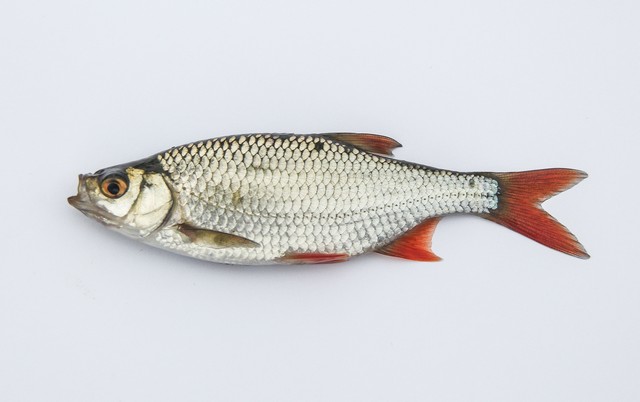
Rudd (Photo credit: Peter van der Sluijs)
Identifying features
- between 15 cm and 25 cm in length, and up to 50 cm
- small, upturned mouth
- red brown to bright red fins
- golden greenish back, golden-yellow sides and whitish belly completely covered with scales
If you think you have seen a Rudd, report it.
Where is the species invasive
The Rudd was first observed in the United States in the late 1880s and is believed to have been accidentally introduced to North America through live bait and aquaculture. In Canada, it was first observed in 1990 in the St. Lawrence River in Ontario. In the following years, it was reported in lakes Saint-Pierre, Champlain, Ontario, Erie, and Michigan.
Distribution
The Rudd, also known as the Pearl Roach or Redeye, is native to the Azov, Caspian, and Black Seas region, in central Europe.
Habitat
The Rudd lives in calm waters with thick aquatic vegetation such as ponds, lakes, and rivers. It can adapt to various environmental conditions by changing its diet according to available resources. Since it only tolerates water temperatures between 10°C and 22°C, cold winter temperatures are probably a limiting factor for its establishment in Canadian waters.
Similar species
The Rudd closely resembles the Golden Shiner (Notemigonus crysoleucas) at first glance; however, the Golden Shiner is much smaller (between 8 cm and 12 cm, sometimes up to 23 cm). It has no scales on its belly and its fins are usually greenish yellow, and can be bright orange during breeding season (May to August).
Golden Shiner
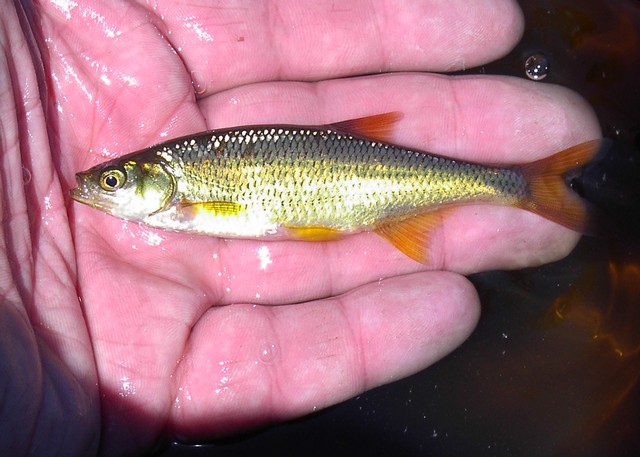
Photo credit: Ontario Freshwater Fishes Life History Database, R. J. Eakins
Impacts
Ecological impacts
The Rudd compete with native fish for food and habitat. Adults consume copious amounts of aquatic vegetation on the edges of shore. This can disrupt eggs and juvenile rearing habitat for several native fish species like the Yellow Perch, the Muskellunge and the Northern Pike. In addition, the Rudd not only disturbs aquatic vegetation by feeding, it increases plant detritus in the water, which can increase in the growth of algae, reduce dissolved oxygen, and increase the turbidity of the water degrading its quality.
It is also known that the Rudd can breed with native species, in particular the Yellow Minnow. This hybridization depletes the genetic makeup of these species and may impact the various species (Walleye, Sunfish, Pickerel, Heron, Merganser and Belted Kingfisher) that prey upon the Yellow Minnow.
Socio-economics impacts
In bodies of water where native sport fish species are present, such as the Yellow Perch, the Muskellunge and the Northern Pike, the introduction of the Rudd could have negative impacts on the sport fishing industry by affecting the development of these species.
Response
The Identification Booklet of Freshwater Invasive Species in Quebec from DFO is available to make the detection of the Rudd easier.
The best way to protect water bodies from this invader is to never release them in the natural environment, and to not use them as live bait. Since the use and trade of live fish for bait is the first pathway of introduction of the Rudd into new environments, many provinces have banned its use as live bait. Don't let it loose and follow the procedures described on the DFO Aquatic Invasive Species Prevention page.
Photo gallery
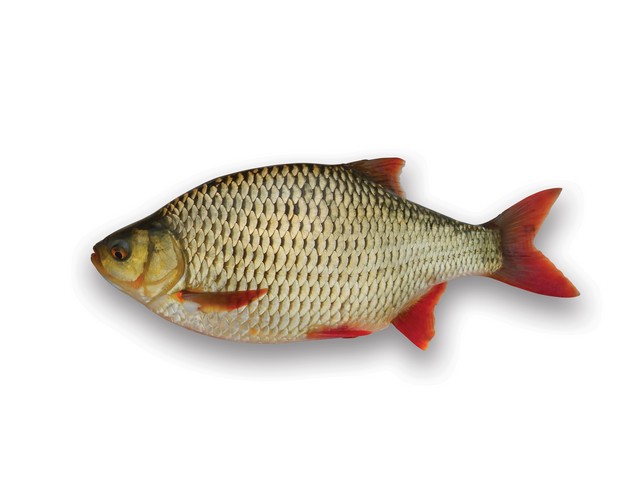
Rudd (Photo credit: Robin Gáspárdy, Fisheries and Oceans Canada)
Related links
- Rudd identification photos and characteristics
- Science Advice on the Potential of Introducing Live Organisms by the Aquarium, Water Garden, and Live Food Trades in Canada (PDF, 1192 KB)
- Date modified: