
Notre Dame Bay European Green Crab mitigation project
This project in Newfoundland and Labrador is working to reduce the European Green Crab population in areas of Notre Dame Bay and investigate its spread into Bonavista Bay through increased trapping efforts, public outreach, and community engagement.
Project proponent: Indian Bay Ecosystem Corporation
Location: Notre Dame and Bonavista Bays, Newfoundland and Labrador
Funding: $210,200 from 2025 to 2027
On this page
Overview
European Green Crab, a highly invasive aquatic species, threatens marine ecosystems. With support from the Aquatic Invasive Species Prevention Fund, Indian Bay Ecosystem Corporation (IBEC) is trapping European Green Crab to reduce their population in Notre Dame Bay. Their project also aims to help find new sightings of European Green Crab in Bonavista Bay and give the public tools to help them learn to identify European Green Crab, understand the damage they cause, and prevent their spread. Local communities are learning to help protect nearby marine environments and support future trapping efforts.
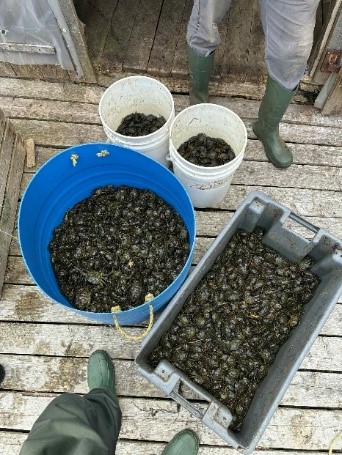
European Green Crabs captured during trapping activities.
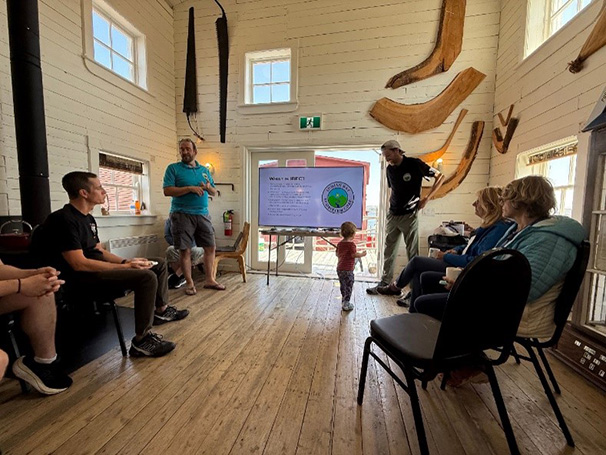
Visitors attending an aquatic invasive species presentation delivered by IBEC.
Benefits
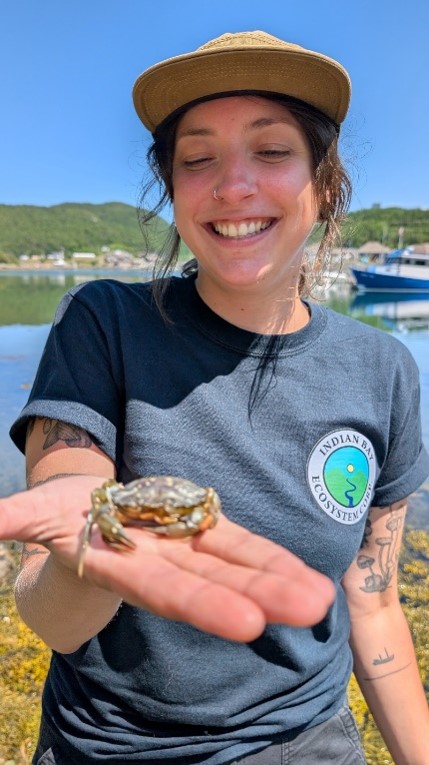
An IBEC staff member showcasing a captured European Green Crab.
In the first year, IBEC has made progress in controlling the European Green Crab population in Notre Dame Bay, expanding early detection efforts into Bonavista Bay, and raising public awareness in both areas.
The first year of the project resulted in the following key impacts:
- removed 3,330 European Green Crabs from Notre Dame Bay
- detected and removed 176 European Green Crabs from areas of Bonavista Bay
- hosted 6 public education and outreach events in local communities
- created 4 positions and provided on-the-job training opportunities
- worked with 5 local partners and 1 Indigenous group to share information and coordinate efforts
- shared prevention messages from Fisheries and Oceans Canada’s national campaigns like Clean, Drain, Dry and Don’t Let it Loose, to help people stop the spread of aquatic invasive species
Next steps
With the first year complete, a clearer picture of where European Green Crabs are concentrated has been determined and this is where trapping will be prioritized in the second year of the project. This work has laid a strong foundation for expanded mitigation, education, and outreach as the project continues.
Related links
- Date modified: