
Integrated Fisheries Management Plan: Toad Crab (Hyas araneus and Hyas coarctatus) Newfoundland and Labrador Region
Effective July 2025
Foreword
The purpose of this Integrated Fisheries Management Plan (IFMP) is to identify the main objectives and requirements for the Toad crab fishery in Newfoundland and Labrador, as well as the management measures that will be used to achieve these objectives. This document also serves to communicate basic information on the fishery and its management to Fisheries and Oceans Canada (DFO) staff, legislated co-management boards and committees, and other stakeholders. This IFMP provides a common understanding of the basic “rules” for the sustainable management of the fisheries resource.
This IFMP is not a legally binding instrument which can form the basis of a legal challenge. The IFMP can be modified at any time and does not fetter the discretionary powers of the Minister of Fisheries, Oceans and the Canadian Coast Guard (the “Minister”) set out in the Fisheries Act. The Minister can, for reasons of conservation or for any other valid reason, modify any provision of the IFMP in accordance with the powers granted pursuant to the Fisheries Act.
Where DFO is responsible for implementing obligations under land claims agreements, the IFMP will be implemented in a manner consistent with these obligations. In the event that an IFMP is inconsistent with obligations under land claim agreements, the provisions of land claims agreements will prevail to the extent of the inconsistency.
As with any policy, the Minister retains the discretion to make exceptions to, or to change, this policy at any time. It is however, DFO’s expectation and intention to follow the management process set out in this IFMP with a view to contributing to increased certainty and direction for the Toad crab fishery in Newfoundland and Labrador.
This IFMP will be in effect until it is replaced. While the elements of this plan will remain in effect, quotas for example, are subject to annual review and may be adjusted based on updated science information. This could include changes to the harvesting cap as well as adjustments to annexes and website listings.
William McGillivray
Regional Director General
Newfoundland and Labrador Region
On this page
- 1 Overview of the fishery
- 2 Stock assessment, science and traditional knowledge
- 3 Economic, social and cultural importance of the fishery
- 4 Management issues
- 5 Objectives
- 6 Access and allocation
- 7 Management measures for the duration of the plan
- 8 Shared stewardship arrangements
- 9 Compliance plan
- 10 Performance review
- 11 Glossary of terms
- Appendix 1: Safety at sea
- Appendix 2: Toad Crab landings (t) by NAFO Division in NL Region for 1998 to 2023 period
- Appendix 3: Departmental contacts
1 Overview of the fishery
1.1 History of the fishery
In the 1990s, DFO solicited applications from core fish harvesters in Newfoundland and Labrador wishing to participate in a resource assessment of Toad crab under the New Emerging Fisheries Policy. Over a five-year period, an exploratory fishery and two surveys were conducted by the Industry Development Division of DFO in the Bonavista and Notre Dame Bay area to gather sufficient data to evaluate the potential of a commercial fishery.
In 1999, 101 Toad crab exploratory licences were issued, primarily in the Notre Dame Bay and Bonavista Bay areas, with lower numbers in Trinity Bay, Southern Shore, and St. Anthony areas. Fifty-three additional licences were issued between 1999 and 2006, for a total of 154 licences.
In 2007, DFO approved the transition of the fishery from emerging to commercial status. The harvesting cap was set to 25,000 pounds for each of the 154 licence holders. In 2017, DFO approved an increase in the harvesting cap, and since that time, licence holders have been authorized to harvest 35,000 pounds annually. This harvesting cap remains in place.
In the exploratory stage, from 1999 to 2006, landings averaged 864 tonnes annually with a high of 1,245 tonnes in 2003. Landings steadily declined from 421 tonnes in 2007 to 76 tonnes in 2015. There was a slight increase in Toad crab from 2016 to 2019, due to a decline in snow crab, with average landings of approximately 300 tonnes. The fishery opened late in 2020 with only 5 tonnes landed. Since then, the market for Toad crab has declined with the fishery opening only in 2022 with 18 tonnes landed.
1.2 Type of fishery
The Toad crab fishery is a commercial fishery. Access to experimental licences for scientific and/or educational purposes is also available through an application process. There is no recreational fishery or Indigenous Food, Social and Ceremonial (FSC) fishery for Toad crab in the DFO Newfoundland and Labrador region.
1.3 Participants
There are presently 154 commercial Toad crab licences (refer to Table 1), and only those fish harvesters who held a licence in the previous year will be eligible for renewal of that licence in the current year.
An advisory meeting was held in July 2017 and harvesters in attendance supported the issuance of new licences, particularly in areas with limited or no licences. More recently, fishing activity has declined, and the issuance of new Toad crab licences is not supported at this time.
| NAFO Division | Crab Management Area | Number of licences |
|---|---|---|
| 2J | 2 | 11 |
| 3K | 3A | 23 |
| 3B | 8 | |
| 3C | 16 | |
| 3D | 37 | |
| 3L | 5A | 22 |
| 6A | 2 | |
| 6C | 1 | |
| 4R | 12G | 1 |
| 13 | 33 | |
| Total licences | 154 | |
1.4 Location of the fishery
The management areas are based on inshore Snow crab management areas. If new or sufficient information becomes available in the future, the existing management areas may be modified.
The Toad crab fishery takes place in 10 Crab Management Areas (CMAs):
- 02
- 03A
- 3B
- 3C
- 3D
- 5A
- 6A
- 6C
- 12G
- 13
The fishery is concentrated inshore in water depths between 20 and 40 fathoms.
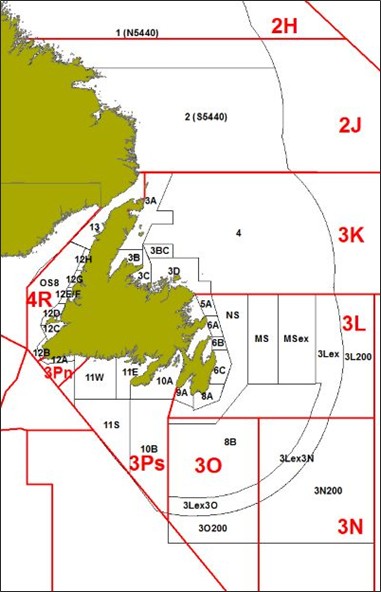
Figure 1: Crab Management Areas in Newfoundland and Labrador Region
Long description
Map illustrating the Northwest Atlantic Fisheries Organization (NAFO) divisions and Crab Management Areas (CMAs) surrounding Newfoundland and Labrador. The primary NAFO divisions represented include 2HJ, 3K, 3LNO, 3Ps, 4R3Pn. These divisions are further subdivided into specific CMAs, which are categorized by inshore, nearshore, midshore, and offshore fishing zones. Toad crab is harvested within inshore management areas.
1.5 Fishery characteristics
The Toad crab fishing season is typically between May and October and is managed using a harvest cap of 35,000 pounds per individual licence holder. Only male Toad crab can be retained.
Toad crab harvesters are permitted to use a maximum of 150 conical, baited traps, with a minimum legal mesh size of 70 mm. The regulated minimum legal mesh size of traps allows small crab, both female and undersize males, to escape. Any under-sized crab that are in the traps are returned to the sea by the harvester.
Toad crab is managed by prohibiting the capture of all females and males below 70 mm carapace width (CW). Primarily, this is achieved by regulating the size of the mesh in crab traps. This management strategy aims to ensure that the total harvest will have a low impact on the reproductive potential of the Toad crab resource in which females, undersize males and unharvested legal-sized males are deemed sufficient to safeguard Toad crab reproduction.
1.6 Governance
The Newfoundland and Labrador Toad crab fishery is governed by the Fisheries Act, regulations made pursuant to the act, and departmental policies. The key regulations and policies that apply include, but are not limited to:
- Aboriginal Communal Fishing Licences Regulations
- Atlantic Fishery Regulations 1985
- Fishery (General) Regulations
- Fisheries Licencing Policy of Newfoundland and Labrador Region
- Commercial Fisheries Licencing Policy for Eastern Canada, 1996
The Fisheries Licencing Policy of Newfoundland and Labrador Region provides details on the various licensing policies that govern the commercial fishing industry in the Newfoundland and Labrador Region. DFO should be consulted for all purposes of interpreting and applying this document.
1.7 Approval process
This IFMP for Toad crab is approved by the DFO Regional Director General, Newfoundland and Labrador. The intent is to manage the fishery based on the measures outlined in this IFMP unless there are conservation issues.
Stakeholders seeking new management measures should table their requests through their representative for consideration as part of the advisory meeting process.
2 Stock assessment, science and traditional knowledge
A primary goal of the DFO Science Branch is to provide high-quality knowledge, products and scientific advice on Canadian aquatic ecosystems and living resources with a vision of safe, healthy, productive waters and aquatic ecosystems. DFO conducts research activities both independently and in collaboration with other organizations.
A scientific monitoring program for Toad crab began on inshore snow crab trap surveys and offshore multi-species trawl surveys throughout Northwest Atlantic Fisheries Organization (NAFO) Divisions in the NL Region in 2016. This monitoring program is presently able to provide information on items such as basic biology, estimates of maturity size, and distribution.
2.1 Biological characteristics
There are two Toad crab species in NL Region; both species are cold-water, arctic/sub-arctic species distributed in northern portions of the Atlantic and Pacific oceans. In the Northwest Atlantic, Hyas (H.) araneus can be found from central Labrador in the north to the Gulf of Maine in the south, with a dense concentration on the Grand Bank off southeast Newfoundland. H. coarctatus is found ranging from Hudson Bay, in the north, to the Gulf of Maine, in the south. Both species have carapaces that are proportionally longer than wide, with H. araneus characterized by a triangular-shaped dorsal view and H. coarctatus exhibiting a pear-shaped dorsal view with distinct depressions occurring about one-third of the way down from the rostrum. Both species are sexually dimorphic in expression of maximum size, with males achieving larger sizes than females. Maximum size for male specimens of H. araneus in NL waters has been observed at about 100 mm CW while for H. coarctatus maximum observed size in males is about 90 mm CW. For females, maximum observed size of H. araneus is about 50 mm CW and about 60 mm CW for H. coarctatus.
Egg release appears to occur during spring and most mature females appear to be on an annual spawning schedule. Both sexes undergo a terminal molt during which morphometric maturity occurs. For both species, preliminary observations suggest females may first become morphometrically mature at about 20 mm CW with the majority of individuals maturing by about 40 mm CW. For males, preliminary observations suggest that morphometric maturity occurs over a size range of 45 to 75 mm CW for most individuals of both species.
2.2 Ecosystem interactions
Both species are stenothermic, normally found in waters ranging from -1 to 2.5°C. The vertical distribution is also restricted in NL waters, with few specimens captured outside depths ranging from about 50 to 300 m. Both species have been demonstrated to be preyed upon by cod and other large finfish species in NL.
2.3 Indigenous traditional knowledge
Indigenous traditional knowledge and traditional ecological knowledge from Indigenous groups in the form of observations and comments from Indigenous groups are considered in science advisory processes and management decisions when provided.
2.4 Stock assessment process
The Toad crab resource in Newfoundland and Labrador has not yet been assessed through a science peer-review process.
2.5 Precautionary approach
The Precautionary Approach (PA) in fisheries management is about being cautious when scientific knowledge is uncertain and not using the absence of adequate scientific information as a reason to postpone or fail to take action to avoid serious harm to fish stocks or their ecosystems. This approach is widely accepted as an essential part of sustainable fisheries management. Applying the PA to fisheries management decisions entails establishing a harvest strategy that:
- identifies 3 stock status zones (healthy, cautious, and critical) according to upper stock reference points and limit reference points
- sets the removal rate at which fish may be harvested within each stock status zone
adjusts the removal rate according to fish stock status variations (i.e. spawning stock biomass or another index/metric relevant to population productivity) based on decision rules
Currently, there is no PA Framework for Toad crab. Due to the absence of a stock assessment, the department is exercising caution by limiting the number of licences available, implementing harvest caps, and restricting catch to large males.
Based upon available information, the 70 mm CW minimum legal-size sufficiently protects all females from fishery harvest as well as the majority of mature males in the population.
3 Economic, social and cultural importance of the fishery
3.1 Socio-economic profile
Toad crab landings and landed value varied over the 2007 to 2023 period (Figure 2). In 2007, landed round weight was about 421 tonnes, with a landed value of approximately $329,000. In 2010, landings declined to about 155 tonnes, with an approximate landed value of $121,000. By 2016, landed weight and landed value were rebounding, and in 2018, the landed round weight and landed value peaked at about 423 tonnes and $467,000, respectively. However, in 2019, landed round weight decreased to about 257 tonnes, with a landed value of approximately $283,000. Note that there was no directed fishery in 2021 and 2023. Due to low participation levels and in compliance with privacy guidelines, landings and landed value are not displayed for 2011 to 2015, 2020 and 2022.
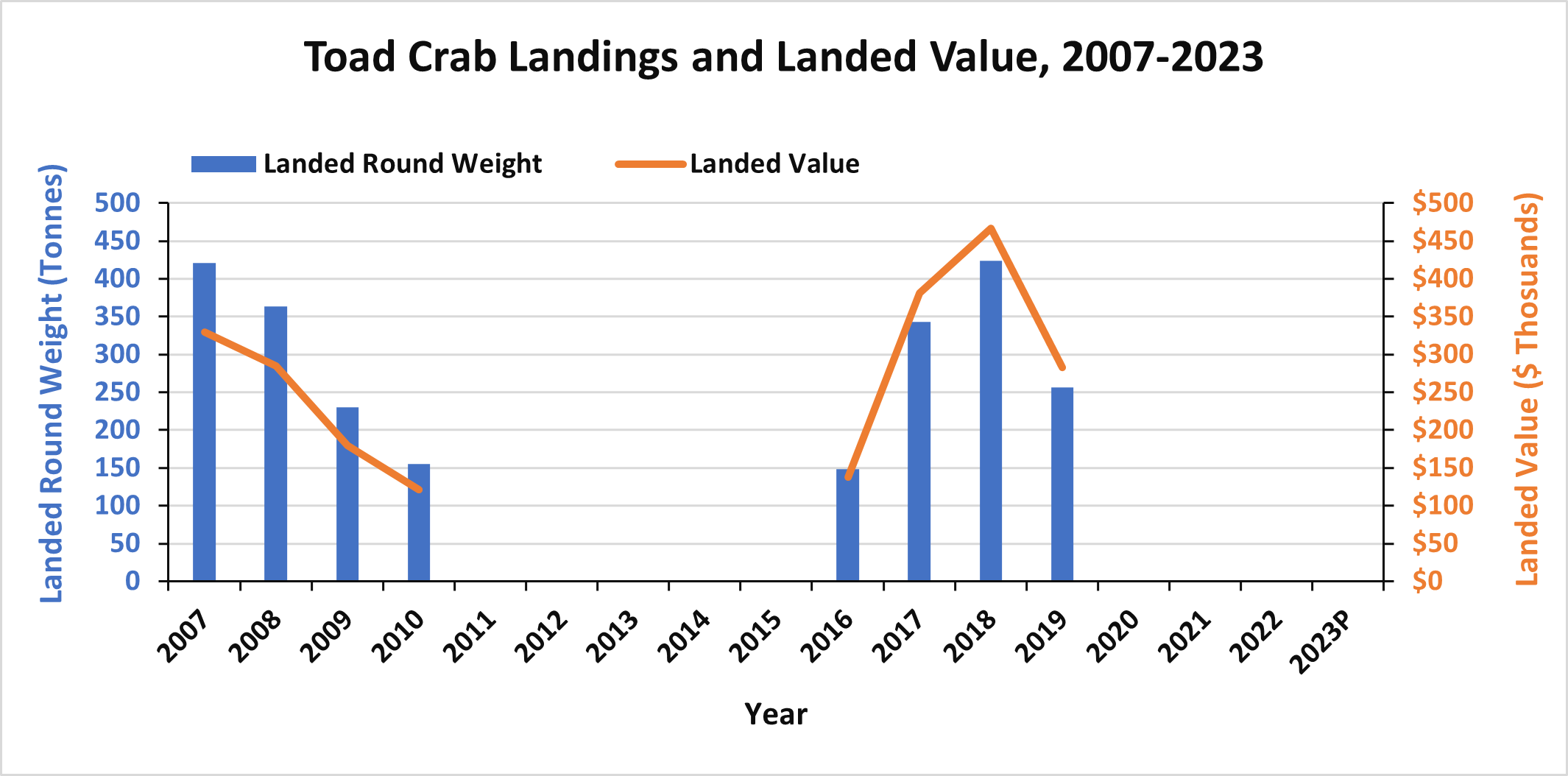
Figure 2: Toad Crab Landings and Landed Value, 2007 to 2023
- Note: Landings and landed value are not displayed for 2011 to 2015, 2020 and 2022 due to privacy guidelines, and 2021 and 2023 due to no directed fishery.
- Note: P=Preliminary. Data is preliminary and subject to revision.
Long description
| Year | Landed round weight (Tonnes) | Landed value ($ thousands) |
|---|---|---|
| 2007 | 421 | 329 |
| 2008 | 363 | 285 |
| 2009 | 231 | 180 |
| 2010 | 155 | 121 |
| 2011 | * | * |
| 2012 | * | * |
| 2013 | * | * |
| 2014 | * | * |
| 2015 | * | * |
| 2016 | 149 | 138 |
| 2017 | 343 | 381 |
| 2018 | 423 | 467 |
| 2019 | 257 | 283 |
| 2020 | * | * |
| 2021 | ** | ** |
| 2022 | * | * |
| 2023 | ** | ** |
** Footnote 2
On average, from 2007 to 2010, there were about 61 enterprises active annually. Between 2016 and 2019, active enterprises declined to approximately 36 per year. Toad crab has been largely harvested by enterprises homeported in 3K and 3L, operating from vessels less than 40’.
3.2 Dependence on Toad crab
In 2022, 7 fishing enterprises had Toad crab landings. On average, these enterprises depended on Toad crab for about 2% of their total landed value (all species). Snow crab was the predominant species for these enterprises, accounting for about 69% of their total landed value. Cod was the next most significant species, accounting for about 16% of total landed value. Lobster, Greenland halibut, and squid comprised about 8%, 4% and 1%, respectively. There are a small number of companies processing toad crab in the Newfoundland and Labrador Region.
4 Management issues
4.1 Science uncertainty
Although data on relative abundance and morphometric attributes has been collected on various inshore and offshore surveys, no formal analysis has been conducted to investigate sustainable exploitation rates, mortality, and the impact of the fishery on benthic ecosystems. In the absence of this information, a cautious approach to future expansion is recommended until a peer-review stock assessment takes place.
4.2 Bycatch and incidental catch
In general, fishing methods, techniques, and gear types are not perfect in the selection of one species while fishing. In many fisheries it is not possible to direct for one species without incidentally capturing others, and/or to avoid the capture of juveniles or other undesired individuals of the target species. Bycatch is catch retained onboard of any species other than a directed species, and incidental catch is considered catch that is immediately returned to the water.
As specified in licence conditions, retention of bycatch of any other species is not permitted in the Toad crab fishery, and any incidental catch must be returned to the water. Recognizing that bycatch and incidental catch is often unavoidable and with growing concerns about long-term sustainability of fisheries and ocean health, Canada signed on to the United Nations Code of Conduct for Responsible Fisheries in 1995, which called on signatories to adopt measures to minimize bycatch, and ‘to the extent practicable, the development and use of selective, environmentally safe and cost effective fishing gear and techniques’.
Fishing gear and harvesting practices have evolved to improve the selectivity of fishing, and efforts have been made to maximize the potential for survival of catch that is returned to the water. Nevertheless, some amount of incidental fishing mortality remains. For this reason, bycatch in Canadian waters needs to be systematically addressed in all fisheries management plans. At the same time, increasing demand from markets for evidence that seafood comes from sustainable fisheries is bringing more attention to the management of bycatch in major fisheries.
Under the Sustainable Fisheries Framework, DFO has created the Policy for Managing Bycatch. This policy is national and applies to commercial, recreational, and Indigenous fisheries managed or licensed by DFO under the Fisheries Act. This policy has two objectives. First, to ensure that Canadian fisheries are managed in a manner that supports the sustainable harvesting of aquatic species and that minimizes the risk of fisheries causing serious or irreversible harm to bycatch species. Second, to account for total catch, including retained bycatch and non-retained incidental catch. This policy will be implemented over time through Integrated Management Plans.
This policy does not apply to any catch that harvesters are licensed to direct for and that is retained. This includes any species that harvesters are licensed to direct for on a given trip regardless of whether or not they did so. This policy also does not apply to any catch that licence holders are authorized to direct for in catch-and-release fisheries. Also not covered by this policy is bycatch of corals, sponges, marine plants, and other benthic organisms. These are considered to be better protected under habitat-related policies, which, in Canada, is the Policy for Managing the Impact of Fishing on Sensitive Benthic Areas. The management of the retained, targeted catch is guided by A Fishery Decision-Making Framework Incorporating the Precautionary Approach.
4.3 Habitat considerations
DFO seeks to conserve and protect fish and fish habitat through application of the Fisheries Act and the Species at Risk Act. The fish and fish habitat protection provisions of the Fisheries Act provide a holistic approach to conserving and protecting fish and fish habitat, supported by policies and programs that provide for the long-term sustainability of freshwater and marine resources. A key fish and fish habitat provision of the Fisheries Act is subsection 34.4(2), which prohibits the carrying on of any work, undertaking or activity, other than fishing, that results in the death of fish, without an authorization from the Minister. Another key fish and fish habitat provision of the Fisheries Act is subsection 35(1), which prohibits the carrying on of any work, undertaking or activity that results in harmful alteration, disruption or destruction of fish habitat, without an authorization from the Minister.
Works, undertakings, or activities taking place in or near water may harmfully impact fish or fish habitat. The Fish and Fish Habitat Protection Program works with proponents to assess the risk of proposed projects and provides advice and guidance on how to avoid and mitigate harmful impacts, specifically the death of fish and the harmful alteration, disruption or destruction of fish habitat, and ensures compliance with the Fisheries Act and the Species at Risk Act. Advice is provided by issuing Letters of Advice and Fisheries Act Authorizations. Compliance/conformity to conditions of the authorization/advice is assessed through project monitoring. Information related to how and when DFO reviews projects near the water is available: Projects Near Water
Based on current knowledge, no significant concerns exist as Toad crab habitat is not being significantly affected by human activities, such as industrial activities, or by commercial fishing in areas around Newfoundland and Labrador. The DFO Fish and Fish Habitat Protection Program will continue to review proposals for works, undertakings or activities that could affect Toad crab habitat, or other species, so as to avoid, mitigate, and if necessary, consider authorizations and offsetting for potential impacts.
4.4 Marine mammal interactions
Preventive, mitigation and response measures have been put in place to reduce marine mammal incidents. Newfoundland and Labrador region has a contract with a marine mammal response group to respond to strandings, entanglements and entrapments. As of 2018, it is mandatory for all harvesters to report marine mammal incidents. Mandatory reporting of lost gear, sequential numbering of buoys and measures reducing the amount rope on the water surface, were also implemented in 2018. Gear marking for fixed gear was implemented in 2020. In February 2020, new gear modification measures to reduce harm to whales from entanglement were announced.
Whalesafe gear is intended to reduce the risk of entanglement to large whales, while supporting sustainable fisheries. Whalesafe gear includes “on-demand” gear systems (sometimes called ropeless gear, pop-up gear or rope/buoy on demand), and low breaking-strength (LBS) devices. On-demand gear trials began in 2018 in the southern Gulf of St. Lawrence and since then, trials for all types of whalesafe gear have expanded to lobster and snow crab fisheries in Atlantic Canada and Quebec. DFO is preparing a five-year Whalesafe Gear Strategy that will be developed in collaboration with the fishing industry, Indigenous groups, and other experts.
The United States (US) is implementing the import provisions of the Marine Mammal Protection Act following court ruling. The import rule requires countries exporting fish and fish products to the US to demonstrate that they have regulatory measures in place that are comparable in effectiveness to those of the US for prohibiting intentional marine mammal mortality and reducing incidental marine mammal mortality and serious injury in commercial fisheries. Fisheries that fail to demonstrate such comparability measures to the US by December 31, 2025, will be prohibited from entering the US market starting after that date. Canada is currently working towards demonstrating appropriate measures are in place in all Canadian fisheries.
4.5 Species at risk
Several marine species are considered to be at risk within Canadian waters as a result of human activity. To prevent extinction and promote recovery of species considered to be extirpated, endangered, threatened or of special concern, the Species at Risk Act (SARA) and associated measures were adopted in 2002. This legislation includes prohibitions that protect endangered, threatened, and extirpated species, their residences, and their critical habitats. There are requirements to develop and implement a recovery strategy, action plan, or management plan for any species listed under SARA. Fishing and other activities that may impact species protected under SARA can proceed through the use of permits or agreements under Section 73 and 74 or through exemptions under Section 83(4). The SARA public registry is available online.
The following SARA-listed species occur in NL waters:
- Northern Wolffish (Anarhichas denticulatus) – Threatened
- Spotted Wolffish (Anarhichas minor) – Threatened
- Atlantic Wolffish (Anarhichas lupus) – Special Concern
- White Shark (Carcharodon carcharias) – Endangered
- Leatherback Sea Turtle (Dermochelys coriacea) – Endangered
- Loggerhead Sea Turtle (Caretta caretta) – Endangered
- Beluga whale (Delphinapterus leucas) – Endangered
- Blue whale (Balaenoptera musculus) – Endangered
- Fin whale (Balaenoptera physalus) – Special Concern
- North Atlantic Right Whale (Eubalaena glacialis) – Endangered.
- Sowerby’s Beaked Whale (Mesoplodon bidens) – Special Concern
- Northern Bottlenose Whale (Hyperoodon ampullatus) – Endangered
In accordance with the recovery strategies for the Northern wolffish (Anarchichas denticulatus), Spotted wolffish (Anarchichas minor), Leatherback sea turtle (Dermochelys coriacea), the licence holder is permitted to carry out commercial fishing activities authorized under the Fisheries Act that may incidentally kill, harm, harass, capture or take the Northern wolffish and/or Spotted wolffish as per subsection 83(4) of the Species at Risk Act, and the license holder is permitted to carry out commercial fishing activities authorized under the Fisheries Act that are known to incidentally capture Leatherback sea turtles.
Having met the conditions of sections 73(2) to (6.1) of SARA for White shark, licence holders are permitted to carry out commercial fishing activities authorized under the Fisheries Act that may incidentally kill, harm, harass, or capture this species.
Licence holders are required to return Northern wolffish, Spotted wolffish, Leatherback sea turtle or White shark to the place from which it was taken, and where it is alive, in a manner that causes the least harm. Licence holders are also required to report in their logbook any interaction with these species.
The Committee on the Status of Endangered Wildlife in Canada (COSEWIC) is in an independent advisory body to the Minister of Environment and Climate Change that meet twice annually to assess the status of species at risk of extinction. There are several marine species which occur in Toad crab fishing areas that have been assessed as endangered, threatened or of special concern by COSEWIC, but which are not yet listed under SARA. Should additional species be listed under SARA, there will be a need to address potential impacts to these new species. Industry will be consulted as required to develop any necessary strategies to mitigate these impacts.
4.6 Marine conservation initiatives
As of January 2025, the Government of Canada has formally protected 15.54% of Canada’s marine and coastal areas. The Government of Canada has further committed domestically to protecting 25% by 2025 and working towards 30% by 2030.
To meet marine conservation targets, DFO is establishing Marine Protected Areas (MPAs) and marine refuges (OECMs), in consultation with industry, non-governmental organizations, and other interested parties. An overview of these tools, including a description of the role of fisheries management measures that qualify as “other measures” is available: Other effective area-based conservation measures (OECM)
Depending on the conservation objectives of these areas, fishing activities may be restricted or prohibited entirely. There is relatively little overlap currently between the Toad crab fishery and areas recognized as formally protected under Canada’s marine conservation initiative.
Most of the marine conservation areas established to date around NL, such as the Laurentian Channel MPA, in which all commercial fishing is prohibited, and Marine Refuges such as the Northeast Newfoundland Slope Closure, in which all bottom fishing activities are prohibited, are in offshore areas where Toad crab fishing does not occur. Inshore, there is the Eastport Marine Protected Area in which commercial fishing, including Toad crab, is prohibited. Information on these marine conservation initiatives and Canada’s marine conservation targets is available: Targets, achievements and reports. Other protected areas may be established in the future.
4.7 Aquatic invasive species (AIS)
Eight aquatic invasive species (AIS) have been identified as present in various parts of NL coastal waters. These include:
- European green crab
- 3 species of tunicates
- vase
- goldenstar
- violet
- Coffin box bryozoan
- Orange ripple bryozoan
- Japanese skeleton shrimp
- Oyster thief
Several of these species can be detrimental to commercial fish habitat as they can displace kelp beds and seagrasses, among other effects. It is extremely important to prevent their spread and movement to new locations since the species are not yet distributed throughout all areas of coastal Newfoundland and Labrador. Under the Aquatic Invasive Species Regulations it is prohibited for any person to introduce an aquatic species into a particular region or body of water frequented by fish where it is not indigenous unless authorized to do so under federal or provincial law.
Best practices to prevent the introduction and spread of AIS include:
- being aware of which AIS are present or absent in the waters frequented/fished. Take precautions, such as cleaning, draining, and drying, with respect to vessel traffic and gear movement between areas to prevent introductions and spread
- routine vessel maintenance (i.e. cleaning the hull and using antifouling paint to prevent biofouling)
- cleaning and airing dry gear and ropes to prevent movement between areas by gear.
- avoiding transportation of water from one location to another
- recognizing and reporting any AIS to DFO for early detection. Please telephone toll-free: 1-855-862-1815, or email: NLAIS-EAETNL.MPO@dfo-mpo.gc.ca
More information and maps of known occurrence of aquatic invasive species in Newfoundland and Labrador: Identify an aquatic invasive species
4.8 Catch monitoring
Robust fishery monitoring information is essential for stock assessment and to effectively implement management measures, including quotas, bycatch limits, and closed areas. Logbooks, DMP, ASO and VMS are required in the Toad crab fishery. Fishery monitoring information is also needed to support the long-term sustainable use of fish resources, and to support market access for Canadian fish products.
In 2019, the Fishery Monitoring Policy was introduced. The objectives of this policy are to have dependable, timely and accessible fishery information necessary to:
- help ensure that Canadian fisheries are managed to support the sustainable harvest of aquatic species
- to carry out enforcement activities to ensure compliance with the Fisheries Act, the Oceans Act, the Species at Risk Actand their associated regulations
- to apply a common set of procedural steps to establish fishery monitoring requirements across fisheries, to ensure consistent application of the policy
5 Objectives
DFO strives to manage the Toad crab fishery based on the principles of stock conservation and sustainable harvest, ecosystem health and sustainability, and stewardship. Using the following short- and long-term objectives as guideposts, various management measures have been implemented, or are being developed, that will maximize the benefit of this resource.
5.1 Conservation and sustainable harvest
Conservation and the long-term sustainability of the Toad crab stock is an important objective for DFO. The department seeks to provide benefits for all stakeholders in the short and long term. DFO will work with all stakeholders to ensure this objective is achieved and that the Toad crab stock supports an economically viable and self-reliant fishery. Specifically:
- to promote the sustainable utilization of Toad crab resources
- to mitigate the impacts on other species, habitat, and the ecosystem where Toad crab fishing occurs, protecting biodiversity and ecosystem structure and function
- within specified resource management constraints, to promote a harvest level that stabilizes industry infrastructure and meets marketing requirements, in the pursuit of economic viability objectives for the Toad crab sector
- to promote fishing practices that avoid or mitigate impact on sensitive habitat and species
- to ensure that reliable and adequate information is collected for management and science
5.2 Ecosystem health and sustainability
Ecosystem health is essential for effective fisheries management. The sustainability of Toad crab as a species within the food web, as both a prey and a predator species, will strengthen the long-term health of the ecosystem.
Ongoing ecosystem-based research and science advice helps to inform the sustainable management of the Toad crab fishery.
6 Access and allocation
At this time, access is considered to be limited and allocations are considered to be stable. However the Minister can, for reasons of conservation or for any other valid reasons, modify access, allocations, and sharing arrangements as outlined in this IFMP in accordance with the powers granted pursuant to the Fisheries Act.
There are currently 154 commercial licences issued for Toad crab. Participation is restricted to existing Toad crab licence holders.
The Toad crab fishery is managed using the existing inshore Snow crab management areas.
6.1 Quotas and allocations
The Toad crab fishery is made up of 10 crab management areas. Each licenced harvester is authorized to harvest a quota of 35,000 pounds. See appendix 2 for total landings from 1998 to 2023 by NAFO Division.
6.2 Communal commercial fisheries
Indigenous fishing policy in Canada is guided by a vision of supporting healthy and prosperous Indigenous communities through building and supporting strong, stable relationships; working in a way that upholds the honour of the Crown; and facilitating Indigenous participation in fisheries and aquaculture and associated economic opportunities.
As per the Principles respecting the Government of Canada's relationship with Indigenous peoples, the Government of Canada is committed to achieving reconciliation with Indigenous peoples through a renewed, nation-to-nation, government-to-government, and Inuit-Crown relationship based on recognition of rights, respect, co-operation, and partnership as the foundation for transformative change.
Fisheries and Oceans Canada supports the participation of adjacent Indigenous organizations in commercial fisheries. The Aboriginal Fisheries Strategy (AFS) is designed to encourage Indigenous involvement in commercial fisheries and related economic opportunities. The Allocation Transfer Program (ATP) component of the AFS has been the primary instrument used to voluntarily retire licences from commercial harvesters and subsequently reissue them to Indigenous groups on a communal basis. Indigenous groups also self-fund the acquisition of communal commercial fishing licences.
A subsequent program, Aboriginal Aquatic Resource and Oceans Management (AAROM) Program, was designed for Indigenous groups to collaboratively develop capacity and expertise to facilitate their participation in aquatic resource and oceans management.
All communal commercial licences issued to Indigenous organizations are done so under the authority of the Aboriginal Communal Fishing Licenses Regulations.
Currently, there are no communal commercial licences issued for Toad crab.
6.3 Licensing
The Fisheries Licensing Policy for Newfoundland and Labrador (NL Licensing Policy) provides details on the various licensing policies that govern the commercial fishing industry in Newfoundland and Labrador Region. The policy was developed to provide fish harvesters, Indigenous organizations, and the Canadian public with a clear and consistent statement regarding the DFO policy respecting commercial fishing enterprises, the registration of vessels, and the issuance of recreational and commercial fishing licences in the Newfoundland and Labrador Region. The policy is updated on an ongoing basis. It is further supplemented by various complementary policies:
- the Commercial Fisheries Licensing policy for Eastern Canada
- the Policy on Issuing Licences to Companies
On December 9, 2020, the Government of Canada published amendments to the Atlantic Fishery Regulations, 1985 and the Maritime Provinces Fishery Regulations in Canada Gazette, Part II, all of which came into force by April 1, 2021. These amendments replaced the Preserving the Independence of the Inshore Fleet in Canada’s Atlantic Fishery policy (PIIFCAF) and are now referred to as the Inshore Regulations.
The amended regulations prohibit licence holders from transferring the use and control of the rights and privileges conferred under the licence to any third party; restrict the issuance of inshore licences to licence holders who have not transferred use or control of the rights and privileges conferred under the licence; and prohibit anyone other than the licence holder from using and controlling the rights and privileges associated with a licence.
The NL Regional Licensing policy sets out requirements and eligibility criteria established by the Minister of Fisheries, Oceans, and the Canadian Coast Guard with respect to the licensing of commercial fishing and communal commercial fishing in the Newfoundland and Labrador Region. Communal commercial licences issued to Indigenous organizations are managed under the authority of the Aboriginal Communal Fishing Licences Regulations (ACFLR). The Minister retains complete discretion to make an exception to these provisions.
The NL Licensing Policy is built on the following principles, as outlined in the Commercial Fisheries Licensing Policy for Eastern Canada (CFLP EC or Eastern Canada Policy):
- be consistent with DFO's core mandate
- achieve a balance between capacity and the resource
- encourage environmentally sustainable harvesting
- foster greater economic viability of the fishery sector
- facilitate industry self-reliance
- develop a greater degree of partnership with a professional group of harvesters
- streamline administration of licensing
Fisheries and Oceans Canada (DFO) Resource Management and Indigenous Fisheries should be consulted for all purposes of interpreting and applying licensing policies. Participants in the Newfoundland and Labrador Region commercial fisheries who are not satisfied with licensing decisions made by DFO have the opportunity to request a licensing appeal.
Reasons for requesting a licensing decision appeal must relate to:
- an incorrect application of licensing policies
- extenuating circumstances
- a change in policy
All licences are issued through the National Online Licensing System (NOLS). The licence outlines the specific licence conditions under which the harvester is permitted to fish, including fishing area, season dates, fishing restrictions, gear type specifications, and harvest limits. The NOLS system is also used for paying licence fees, renewing vessel registration, submitting licence requests such as vessel transfers, and printing licences and licence conditions.
The Toad crab fishery is a limited-entry fishery. Only fish harvesters who held a licence in the previous year will be eligible for renewal of that licence in the current year. However, an eligible fish harvester can acquire a Toad crab licence by receiving one through reissuance from an existing licence holder.
The recipient of a Toad crab licence must be a resident of, or have a homeport in, the NAFO Division of the licence. Reissuance of a licence is permitted between:
- Independent Core to Independent Core harvesters
- Professional Level I or Professional Level II to Independent Core (apprentice licences are not eligible for reissuance)
- Independent Core to Professional Level II as part of a complete Core enterprise (Professional Level II fish harvester must be independent)
7 Management measures for the duration of the plan
7.1 Harvest cap
A harvesting cap is a maximum quantity of Toad crab that each licence holder can harvest annually. The maximum amount of Toad crab authorized to be harvested in 2023, per licence holder, is 35,000 pounds round weight.
7.2 Possession size
The minimum possession size of Toad crab is 70 mm from side to side at the widest point of the carapace.
7.3 Fishing season
The Toad crab fishing season is normally May 8 to October 31. There are a number of factors DFO considers when establishing the season for the Toad crab fishery, including fish harvester safety (Appendix 1 – Safety at Sea) and stakeholder perspectives.
Fishery openings and closings are communicated through DFO’s Notice to Fish Harvesters system. Fishery opening and closing dates/times may be adjusted due to weather conditions. To the extent practicable, these decisions are taken in consultation with industry. Openings will occur at 0600 hours whenever possible in the interest of safety at sea.
7.4 Fishing area
Fishing for Toad crab is authorized in Crab Management Areas (CMA) within NAFO Divisions 2J, 3KL, and 4R (refer to Table 1). Licence holders are authorized to fish within one CMA that is associated with their homeport. There are currently no licences in NAFO subdivision 3Ps (Figure 1).
7.5 Fishing gear
Licence holders are authorized to use 150 Toad crab pots. Each pot must have the following measurements:
- maximum diameter at the top of the pot shall be 54 cm
- maximum diameter at the bottom of the pot shall be 108 cm
- maximum height of the pot shall be 46 cm
- mesh size shall be 49 mm or greater
7.6 Dockside Monitoring Program
The Dockside Monitoring Program (DMP) provides independent third-party verification of landings. The program supports fisheries management by providing accurate and timely harvest data, including the weight and species landed. All Toad crab landings in NL region are subject to 100% DMP, as a condition of licence.
It is the responsibility of licence holders to ensure their catch is monitored by a DFO certified dockside monitoring company. Specific procedures for the monitoring of catch weights at dockside have been developed through consultation with industry and DMP companies. DFO’s accepted method of verification of landings at dockside is a direct weight-out using certified weight scales. The cost for this monitoring is the responsibility of the licence holder.
7.7 Vessel Monitoring System
The National Vessel Monitoring System (VMS) is a satellite-based, positional tracking system used to monitor the location of vessels and their movement. The data is received in near real-time and contributes to improved compliance with fisheries regulations, safety at sea, science, and marine security. Licence conditions specify requirements for carrying a DFO approved VMS unit on fishing vessels.
7.8 At Sea-Observer Program
The At–Sea Observer (ASO) Program was designed to collect independent fisheries data for science, resource management and compliance for deterrence purposes. This important component of fishery management provides information and an at-sea presence while fisheries are active. At-Sea Observers observe, record and report detailed biological and fishery data, such as fishing effort and all catch data, fishing gear type, and fishing location.
The fishing industry are responsible for the payment of fees to cover at-sea observer coverage. Fishers are required to carry an ASO at the request of DFO. Licence conditions are not valid unless a letter of arrangement from the observer company is attached confirming payment of observer fees. All harvesters will contribute to the overall observer coverage for the Toad crab fishery. The ASO requirement is a condition of licence.
7.9 Logbooks
Completing a logbook is mandatory under Section 61 of the Fisheries Act. Fish harvesters are required to record information about fishing catch and effort and submit this data as specified in the conditions of licence. Logbooks can be obtained from an approved logbook supplier. Information documented in a logbook includes:
- location
- date
- time
- sets
- gear type
- weight of fish caught
- by-catch
In 2018, marine mammal mitigation measures became mandatory, and all interactions must be reported. As well, information must be included on anything else the harvester thinks may be useful to DFO. Failure to submit a logbook may result in enforcement action.
7.10 Species at Risk Act (SARA) requirements
Refer to Section 4.5 for more information about mandatory release of species at risk and reporting of interactions.
8 Shared stewardship arrangements
There are no formal shared stewardship arrangements in the Toad crab fishery. However, as noted throughout the IFMP, DFO officials work closely with the harvesting and processing sectors in all aspects of fisheries management, science, and conservation and protection.
9 Compliance plan
9.1 Current compliance issues
Compliance issues in this fishery include:
- retention of undersized Toad crab
- fishing during closed time
9.2 Program description
The deployment of Conservation and Protection (C&P) resources in the fishery is conducted in accordance with management plan objectives, as well as in response to emerging issues. The mix of enforcement options available and over-riding conservation objectives determine the level and type of enforcement activity.
Work plans at the regional, area and detachment levels are designed to establish priorities based on management objectives and conservation concerns. The monitoring and evaluation elements of enforcement work plans facilitate in-season adjustments should conservation concerns and/or significant occurrences of non-compliance emerge.
9.3 Compliance performance
The C&P program promotes and maintains compliance with legislation, regulations and management measures implemented to achieve the conservation and sustainable use of Canada’s aquatic resources and the protection of species at risk, fish habitat, and oceans.
The program is delivered through a balanced regulatory management and enforcement approach. Specifically, through the following Pillars.
Pillar 1: Education and shared stewardship
C&P officers actively participate in consultation processes with the fishing industry and Indigenous groups to address compliance issues. Informal meetings with stakeholders also occur on an ad-hoc basis to resolve in-season matters, in addition to regular interaction with fish harvesters. The consultative process may include C&P membership on local fisheries management planning committees, which are comprised of fish harvesters, representatives from the provincial and federal governments, and other community groups with an interest in fishery conservation issues.
Fishery officers also visit local schools and educational institutions to present and discuss fisheries conservation issues and use this information as part of the C&P planning process.
Pillar 2: Monitoring, control, and surveillance
C&P promotes compliance with management measures governing the fishery through:
- routine patrols
- dockside inspections
- at-sea inspections
- aerial surveillance
- Vessel Monitoring System (VMS) review
- at-sea observer deployments
- National Fisheries Intelligence Service (NFIS)
Patrols by vehicle, vessel and fixed-wing aircraft are conducted in accordance with operational plans which are developed based on available intelligence.
Each C&P detachment ensures that monitoring and inspections of fish landing activity are carried out on a routine basis. Where a vessel is selected for comprehensive inspection, C&P ensures that catch composition, weight verification and size variation sampling is conducted. C&P also ensures that surveillance flights are conducted on a routine basis.
The VMS system provides real-time data on the location of vessels within portions of this fleet. C&P uses this resource to help determine where the enterprise is fishing, the port of destination and the estimated time of arrival to port. VMS data will also be relied upon for future analysis and comparisons of fishing activity.
At-sea observers are randomly deployed to observe, record and report aspects of the fishing activity. The resulting data is used to compare catch composition of vessels on observed trips vs. non-observed trips. When it is applicable to the fishery, C&P also reviews quota monitoring reports to ensure individual quotas are not exceeded.
C&P supplies best-known available local information to the National Fisheries Intelligence Service for processing and uses this intelligence to combat all types of illegal fishing activity.
C&P conducts post-season analysis sessions to review issues encountered during the previous season and to make recommendations on improving management measures. The initial sessions are conducted at the area level, followed by a regional session with other DFO sectors.
Pillar 3: Major case
C&P recognizes the need to focus attention on high-risk illegal activities that pose significant threat to the achievement of conservation objectives, which usually cannot be addressed through education or routine monitoring. Some individuals, usually motivated by financial gain, persist through various complex and well-coordinated means in hiding illegal activities which put Canada’s aquatic resources at risk.
C&P will focus on high-risk illegal activities that pose significant conservation threats. Detailed analysis of licence holders and possibly companies will be completed using:
- fishery profiling
- targeting of high-risk violators
- conducting forensic investigations
- accessing the resources of the National Fisheries Intelligence Service (NFIS)
Targeting of high-risk violators, and/or processing facilities, will also be a primary focus should intelligence gathered warrant such action. Any resulting operations will be conducted in conjunction with NFIS staff, additional field staff and area resources as required.
9.4 Compliance strategy
C&P has developed an operational plan that outlines monitoring and compliance activities that will be carried out by C&P personnel in all management areas. The plan provides guidance for C&P, promotes effective monitoring of the fishery, and enables C&P personnel to effectively maintain compliance with management measures governing this fishery. The objective of the plan is to collect information for ensuring compliance and conducting investigations.
Sources of information used by C&P to fulfil this objective include:
- NFIS
- vessel positioning data
- officer inspection data
- fishing logs
- DMP records
- at-sea observer records
- purchase transactions
10 Performance review
A review of the objectives during the planning cycle is an integral part of assessing the performance of the fishery. For fisheries management, the advisory meeting with industry is an opportunity to review both short and long-term objectives. The last advisory for Toad crab was held in 2017. In addition to the advisory meeting , DFO and industry representatives have an on-going dialogue on the fishery on a year-round basis. These informal discussions provide opportunities to review objectives and identify issues for discussion at the advisory meeting.
DFO NL Region completes an annual internal post-season review with participation from Resource Management, Conservation and Protection, and Science staff. Regional headquarters and area-based staff participate in this process to identify local, area, and regional fishery performance issues. DFO undertakes every effort to outline steps to address the issues, including assigning responsibility and setting timelines for completion. Those items not resolved during the post-season review are carried forward to the following year to be addressed.
The performance review outlines the activities and controls that are used in achieving
fisheries management objectives. The specific strategies that are used to
achieve fisheries management objectives are identified below.
Conservation and sustainable harvest
Objectives:
- to conserve the Toad crab resource to provide commercial sustainability to fish harvesters
- to mitigate the impacts on other species, habitat, and the ecosystem where Toad crab fishing occurs, protecting biodiversity and ecosystem structure and function
- to promote the development of sustainable fishing practices
- to employ effective monitoring and surveillance tools and mechanisms that ensure compliance with conservation measures and provide scientists with appropriate information and basic data required to manage the Toad crab fishery
Management strategies:
- fishing season
- quota monitoring
- limited access
- closed areas
- prohibit the use of monofilament netting material
- minimum size possession limit
- adequate level of at-sea observer coverage
Benefits to stakeholders
Objectives:
- to promote the continued development of a commercially viable and self-sustaining fishery
- to provide fish harvesters with increased opportunity to develop long-term business stability
- to promote a co-management approach, providing stakeholders with an effective sharing of responsibility, accountability and decision making, within the constraints of the Fisheries Act
Management strategies:
- consult with stakeholders and monitor activity
- evergreen management plans
- establish an effective consultative process for stakeholders to participate in the decision-making process
- organize and participate in advisory meetings
- improve management of fishery through co-management
11 Glossary of terms
Aquatic Invasive Species (AIS): aquatic invasive species are fish, invertebrate or plant species that have been introduced into a new aquatic environment, outside of their natural range. Once introduced, aquatic invasive species populations can grow quickly because they do not have natural predators in their new environment. As a result, they can outcompete and harm native species. They can even alter habitats to make them inhospitable for the native species. This is especially concerning for species at risk
Area/Subarea: an area defined by the Convention on Future Multilateral Cooperation in the
Northwest Atlantic Fisheries by NAFO, and as described in the Atlantic Fishery Regulations,
Biomass: total weight of all individuals in a stock or a population
By-catch: the unintentional catch of one species when the target is another species
Communal Commercial Licence: licence issued to Aboriginal organizations pursuant to the Aboriginal Communal Fishing Licences Regulations for participation in the general commercial fishery
Fishing effort: quantity of effort using a given fishing gear over a given period of time
Food, Social and Ceremonial (FSC): a fishery conducted by Indigenous harvestersfor food, social and ceremonial purposes
Landings: quantity of a species caught and landed
Marine refuges: a marine refuge is a Fisheries Act closure that meets the other effective area-based conservation measures (OECM) criteria established by the department and is used to provide marine conservation in cases where the primary activity that poses a risk to an important species and habitat is fishing
Mesh size: size of the mesh of a net. Different fisheries have different minimum mesh size regulations
Observer coverage: carrying a certified at-sea observer onboard a fishing vessel for a specific period of time to verify the amount of fish caught, the area in which it was caught and the method by which it was caught
Pelagic: fish that lives in the water column or close to the surface
Population: group of individuals of the same species, forming a breeding unit, and sharing a habitat
Precautionary Approach (PA): set of agreed cost-effective measures and actions, including future courses of action, which ensures prudent foresight, reduces or avoids risk to the resource, the environment, and the people, to the extent possible, taking explicitly into account existing uncertainties and the potential consequences of being wrong
Quota: portion of the Total Allowable Catch that a fleet, vessel class, association, country, etc. is permitted to take from a stock in a given period of time
Species at Risk Act (SARA): a federal law enabling the Government to take action to prevent wildlife species from becoming extinct and secure the necessary actions for their recovery. It provides the legal protection of wildlife species and the conservation of their biological diversity
Spawning stock: sexually mature individuals in a stock
Stock: a population of individuals of one species found in a particular area, and used as a unit for fisheries management, e.g. NAFO area 4R Herring
Stock assessment: scientific evaluation of the status of a fish stock within a particular area in a given time period
Traditional ecological knowledge: a cumulative body of knowledge and beliefs, handed down through generations by cultural transmission, about the relationship of living beings (including humans) with one another and with their environment
Appendix 1: Safety at sea
Vessel owners and masters have a duty to ensure the safety of their crew and vessel. Adherence to safety regulations and good practices by owners, masters and crew of fishing vessels will help save lives, protect the vessel from damage and protect the environment. All fishing vessels must be in a seaworthy condition and maintained as required by Transport Canada (TC) and other applicable agencies. Vessels subject to inspection should have a certificate of inspection valid for the area of intended operation.
In the federal government Safety at Sea is a shared responsibility, DFO and TC have established a framework for cooperation to address this through a Memorandum of Understanding (MOU) that develops safety goals, allows for the exchange of vessel information and the promotion of a safety culture among commercial fish harvesters. TC has the responsibility for regulating shipping, navigation, and vessel and marine personnel safety. DFO has responsibility for the management of fisheries resources with the Canadian Coast Guard (CCG) responsible for emergency response. In NL, the provincial Workplace Health, Safety and Compensation Commission (WHSCC) has jurisdiction over health and safety issues in the workplace.
All vessels, greater than 10 hp, are required to be registered with TC under the Canada Shipping Act, 2001 as TC is responsible for regulations and enforcement related to the safety of all vessels and marine personnel. All vessels used for commercial fishing are required to be registered with DFO under the Fisheries Act and the Atlantic Fishery Regulations, 1985 as DFO is responsible for the proper management and control of fisheries and the conservation and protection of fish and fish habitat.
Before leaving on a voyage the owner, master or operator must ensure that the fishing vessel is capable of safely making the passage. Critical factors for a safe voyage include:
- the seaworthiness of the vessel
- vessel stability
- having the required safety equipment in good working order
- crew training
- knowledge of current and forecasted weather conditions
Useful publications include TC TP 10038 Small Fishing Vessel Safety Manual which can be obtained from TC or printed from their website.
Fishing vessel safety includes three priority areas:
- vessel stability
- emergency drills
- cold water immersion
Fishing vessel stability
Vessel stability is paramount for safety. Care must be given to the stowage and securing of all cargo, skiffs, equipment, fuel containers and supplies, and also to correct ballasting. Fish harvesters must be familiar with their vessel’s centre of gravity, the effect of free surface liquids on stability, loose water or fish on deck, loading and unloading operations and the vessel’s freeboard. Fish harvesters should know the limitations of their vessels. If unsure, the vessel operator should contact a qualified naval architect, marine surveyor, or the local TC Marine Safety office.
Fishing vessel owners are required to develop detailed instructions addressing the limits of stability for each of their vessels. The instructions must be based on a formal assessment of the vessel by a qualified naval architect and include detailed safe operation documentation. Instructions should be kept on board the vessel at all times.
Fishing vessel owners should also keep on-board detailed documentation on engine room procedures, maintenance schedules to ensure watertight integrity, and instructions for regular practice of emergency drills.
Emergency drill requirements
The vessel master must establish procedures and assign responsibilities to each crew member for emergencies such as crew member overboard, fire, flooding, abandoning ship and calling for help.
Since July 30, 2003, all crew members with more than six months at sea are required to have taken minimum Marine Emergency Duties (MED) training or be registered for such training.
MED provides a basic understanding of:
- hazards associated with the marine environment
- prevention of shipboard incidents (including fires)
- raising and reacting to alarms
- fire and abandonment situations
- skills necessary for survival and rescue
Cold water immersion
Drowning is the number one cause of death in the fishing industry. Cold water is defined as water below 25 degrees Celsius, but the greatest effects occur below 15 degrees Celsius. Newfoundland and Labrador waters are usually below 15 degrees.
The effects of cold water on the body occur in four stages:
- cold shock
- swimming failure
- hypothermia
- post-rescue collapse
Vessel masters should know what to do to prevent themselves or their crew from falling into the water and what to do if that occurs.
Other issues
Weather
Vessel owners and masters are reminded of the importance of paying close attention to current weather trends and forecasts during the voyage. Marine weather information and forecasts can be obtained from Environment Canada.
Emergency radio procedures
Vessel owners and masters should ensure that all crew are able to activate the Search and Rescue (SAR) system by contacting the CCG early rather than later. It is strongly recommended that all fish harvesters carry a registered 406 MHz Emergency Position Indicating Radio Beacon (EPIRB). These beacons should be registered with Coast Guard’s National Search and Rescue secretariat. When activated, an EPIRB transmits a distress call that is picked up or relayed by satellites and transmitted via land earth stations to the Joint Rescue Co-ordination Centre (JRCC), which will task and co-ordinate rescue resources.
All crew members should know how to make a distress call and should obtain their restricted operator certificate from Innovation, Science and Economic Development Canada (formerly Industry Canada). Whenever possible, masters should contact the nearest CCG Marine Communications and Traffic Services (MCTS) station prior to a distress situation developing. Correct radio procedures are important for communications in an emergency. Incorrect or misunderstood communications may hinder a rescue response.
Since August 1, 2003, all commercial vessels greater than 20 metres in length are required to carry a Class D VHF Digital Selective Calling (DSC) radio. A registered DSC VHF radio has the capability to alert other DSC equipped vessels in the immediate area and advise Coast Guard MCTS that the vessel is in distress. Masters should be aware that they should register their DSC radios with ISED Canada to obtain a Marine Mobile Services Identity (MMSI) number; otherwise, the automatic distress calling feature of the radio may not work.
A DSC radio that is connected to a Global Positioning System (GPS) unit will also automatically include the vessel’s current position in the distress message. More detailed information on MCTS and DSC can be obtained by contacting a local MCTS center or from the Canadian Coast Guard.
Collison regulations
Fish harvesters should have a thorough knowledge of the Collision Regulations and the responsibilities between vessels where risk of collision exists. Navigation lights must be kept in good working order and must be displayed from sunset to sunrise and during all times of restricted visibility. To help reduce the potential for collision or close quarters situations that may also result in the loss of fishing gear, fish harvesters are encouraged to monitor the appropriate local Vessel Traffic Services (VTS) VHF channel, when travelling or fishing near shipping lanes or other areas frequented by large commercial vessels.
Vessels required to participate in VTS include:
- every ship 20 metres or more in length
- every ship engaged in towing or pushing any vessel or object, other than fishing gear
- where the combined length of the ship and any vessel or object towed or pushed by the ship is 45 metres or more in length
- where the length of the vessel or object being towed or pushed by the ship is 20 metres or more in length
Exceptions include:
- a ship towing or pushing inside a log booming ground
- a pleasure yacht less than 30 metres in length
- a fishing vessel that is less than 24 metres in length and not more than 150 tonnes gross
Additional information: Collision Regulations.
Sail plan
An important trip consideration is the use of a sail plan which includes the particulars of the vessel, crew, and voyage. The sail plan should be left with a responsible person on shore or filed with the local MCTS centre. After leaving port the fish harvester should contact the holder of the sail plan daily or as per another schedule. The sail plan should ensure notification to JRCC when communication is not maintained which might indicate your vessel is in distress. Be sure to cancel the sail plan upon completion of the voyage.
Appendix 2: Toad Crab landings (t) by NAFO Division in NL Region for 1998 to 2023 period
| Year | NAFO Division | Total (tonnes) | |||
|---|---|---|---|---|---|
| 2J | 3K | 3L | 4R | ||
| 1998 | 0 | * | * | 0 | 262 |
| 1999 | 0 | 13 | * | 0 | 117 |
| 2000 | 0 | 269 | 202 | * | 568 |
| 2001 | * | 560 | 232 | 397 | 1190 |
| 2002 | 0 | 587 | * | * | 1059 |
| 2003 | * | 745 | 132 | 320 | 1244 |
| 2004 | * | 788 | 152 | * | 1170 |
| 2005 | * | 571 | 179 | * | 914 |
| 2006 | 0 | 462 | 151 | 0 | 613 |
| 2007 | 0 | 312 | 109 | 0 | 421 |
| 2008 | 0 | 282 | * | 0 | 363 |
| 2009 | 0 | 151 | 57 | * | 231 |
| 2010 | 0 | 111 | * | * | 155 |
| 2011 | 0 | * | * | * | 16 |
| 2012 | 0 | * | * | * | 8 |
| 2013 | 0 | * | * | * | 16 |
| 2014 | 0 | * | * | * | 15 |
| 2015 | 0 | * | * | 0 | 76 |
| 2016 | 0 | 125 | * | 0 | 148 |
| 2017 | 0 | * | * | 0 | 342 |
| 2018 | 0 | 306 | * | 0 | 423 |
| 2019 | 0 | * | * | 0 | 257 |
| 2020 | 0 | * | 0 | 0 | 5 |
| 2021 | 0 | 0 | 0 | 0 | 0 |
| 2022 | 0 | * | * | 0 | 18 |
| 2023 | 0 | 0 | 0 | 0 | 0 |
Appendix 3: Departmental contacts
For additional information, please contact:
DFO Newfoundland and Labrador Region, Headquarters
80 East White Hills Road, P.O. Box 5667, St. John’s, NL, A1C 5X1
- Regional Manager, Shellfish and Pelagic Fisheries: 709-772-2080
- Senior Resource Manager: 709-690-9169
DFO Newfoundland and Labrador, Area offices
Resource Management, Area Officer
- Corner Brook, NL: 709-649-3549
- Grand Falls-Windsor, NL: 709-292-5167
- Goose Bay, NL: 709-896-6163
Page details
- Date modified: