
Pacific Salmon Strategy Initiative

Pacific salmon need our help. In recent years, climate change, habitat loss and fishing pressures have affected Pacific salmon negatively at every stage of their lifecycle. Our Pacific Salmon Strategy Initiative (PSSI) is guiding a strategic and coordinated long term response to these issues, rooted in collaborative action, to conserve and restore wild Pacific salmon stocks and their ecosystems for all that depend on them.
Progress

Through PSSI, we are carrying out activities focused on achieving 3 key outcomes:
- restoring vulnerable populations of Pacific salmon and their habitat
- supporting sustainable fishing opportunities and reducing impacts on vulnerable stocks
- building capacity and working with partners to achieve better outcomes for Pacific salmon
Learn about some of the key activities we have supported:
Engagement
Investments made under the first phase of PSSI have supported meaningful progress in restoring vulnerable salmon populations and their habitat, advancing sustainable fisheries, reducing impacts on vulnerable stocks, and strengthening partner capacity. We now have the foundation to take this work to the next level, and to realize tangible and enduring results for Pacific salmon.
As of April 7, 2026, we are now engaging on the second phase of the initiative to ensure our efforts continue to be focused on the actions that will have the greatest impact.
For more information or to share feedback, please contact us.
Transcript
Protecting wild Pacific salmon
Protecting wild Pacific salmon means looking at the whole picture, from habitat, climate, and the streams they return to spawn.
It means listening to harvesters, fishers, and to science.
And it means making decisions that communities and salmon can count on for the long term.
Results
The first phase of PSSI (2021–2026) laid the foundation for long-term recovery by working closely with First Nations, provincial and territorial governments, harvesters, stewardship organizations, environmental groups, academia, and communities across B.C. and Yukon. Key results include:
Strengthening partnerships and collaborative stewardship

- Worked with more than 40 First Nations and Indigenous fisheries organizations on more than 60 Indigenous Harvest Transformation projects, advancing selective fishing methods, improved monitoring, and reduced impacts on vulnerable wild salmon stocks
- Supported over 440 partners to deliver habitat restoration, emergency drought response, and conservation projects across British Columbia and Yukon
- Established a trilateral accord between Canada, British Columbia, and B.C. First Nations to align conservation, protection, and recovery activities for wild Pacific salmon
- Collaborated with 60 partners in 75 areas during summer 2024 to advance urgent drought related restoration work, helping wild salmon reach critical spawning habitat
Modernizing hatcheries and advancing science

- Invested in building new conservation hatcheries and retrofits to more than 70 existing hatcheries, and expanded conservation enhancement partnerships
- Provided funding to maintain and operate more than 100 partner-run hatcheries, supporting community-based stewardship
- Improved hatchery science and production processes to rebuild priority salmon stocks and support sustainable fisheries
- Increased research capacity to better understand climate impacts, ecosystem changes, and factors limiting salmon population rebuilding
Transforming fisheries management

- Retired more than 575 commercial salmon licences, reducing the total number of eligible licences by over 43% to improve long-term sustainability and economic viability of harvesters remaining in the industry
- Tested and evaluated 6 mark-selective fisheries to support sustainable harvest opportunities while protecting stocks of concern
- Supported more than 60 Indigenous selective harvest projects, enabling more targeted and responsible fishing practices
- Disposed of 31 vessels and 695,000 kg of fishing gear to reduce marine debris and improve ocean health
Restoring habitat and building climate resilience

- Restored 15.7 million square metres of wild Pacific salmon habitat, supporting healthier ecosystems and improved spawning and rearing conditions
- Supported 73 projects through the British Columbia Salmon Restoration and Innovation Fund (BCSRIF) to protect and restore salmon populations and habitats
Protecting salmon beyond Canada’s borders
- Through Operation North Pacific Guard, gathered evidence in 2025 of 90 potential violations of international agreements of illegal, unreported, and unregulated (IUU) fishing in the North Pacific
- Alongside satellite and aerial surveillance, convened, for the first time, a joint patrol aboard a Canadian vessel with embarked officers from Japan, Republic of Korea, and the United States
Watch
Transcript
Restoring salmon habitat: river restoration, Merritt, B.C.
Salmon have a really amazing life cycle. They go through so much in their life to get where they need to get, just to create the next generation.
To me, salmon symbolize a healthy watershed. So let's do everything we can to make their freshwater existence as great as it can be.
We've actually got two projects happening here. One is the Skuhun River.
And what was happening is the Nicola was washing out the, basically Skuhun Creek. So it was going to be inaccessible for the fish.
That project’s being done because it's a fish bearing stream for steelhead, coho and Chinook. And all three of these species are stocks of concern in our area.
The second project that we have here is called the High Bank. And because of the erosion that occurred in November of 2021 and prior, we're losing those cultural sites, which are those pit homes.
Sʔístkn, or a pit home is what we used to live in prior to contact. So these pit homes, they still have artifacts within them.
It's because of truth and reconciliation and Canada adopting UNDRIP (United Nations Declaration on the Rights of Indigenous Peoples ) that we've got a voice to say we need to protect these areas.
So fish haven't been able to get into Skuhun Creek. And it's a very important watershed, so, really important to give them access to the habitat that they want to be in.
So we’ve had to haul in a lot of rock. And that’s what’s going to keep the river from migrating back into the high bank.
Yeah, the large rock basically is what prevents the river from moving where we don't want it to go.
We plant the willows for fish habitat, plus to hold the rocks in place as they grow bigger and the roots.
So the reason for these trees embedded into our rock is to slow the water through this section, so the fish have a chance to rest on their journey upstream to their spawning beds.
Each of the salmon is vital, not only to the people and our sustenance, but to the ecosystem.
You know when I come down here, it’s one of the most exciting projects that I've been working on.
And the team that we’ve got has just been phenomenal.
When you think about the incredible journey that salmon and other species that are migrating from the ocean undertake on an annual basis. To have them come back to their home creeks, their watershed, only to be shut down at the front door. It's just impossible not to get yourself involved in.
So to see something like this happening where you're providing new access for fish back on the ground, it's very, very rewarding to see it in action.
Transcript
Restoring salmon habitat: salmon stewardship
Any fish, any kind of seafood. All of those rely on having a healthy near-shore environment. We're very, very reliant on this interconnectivity between rivers and the nearshore and the open ocean free of plastics, free of contaminants.
And that's why we're out there is to try and pick some of that up.
The bottom of the ocean is actually, I think a lot of people think of it as almost like a desert, almost like the deep sea, but the nearshore so the part that we most interact with as people. The part that we go down to the beach and see, that's the part that's the most alive.
Our beautiful Pacific salmon, at some point, they have lived part of their life in an eelgrass bed.
Today we're out here doing an underwater marine debris cleanup in Oak Bay. And that is basically having our divers go down and they tag the debris, and then we get a crane barge in here that comes out, lifts everything up after it's been tagged, and we put it in the dumpster and make sure it's properly disposed of.
Oh, it's super rewarding. Yeah, it's a great job. You know, you get down there, and like, you see the impact, you see the difference. You go into a degraded habitat and like the eelgrass is all torn up. We get the chance to go in and clear out all that debris, all that rubbish. It's a really, really, really rewarding job. And I love it. It's the best job on the planet.
Roger.
Yeah.
You should start to find a bare spot with a bunch of debris that looks like it came from a sailboat.
So we work with a lot of different partners. So SeaChange is really about inclusivity and working with community members. And so right now, the funding that we've received from the BC Salmon Restoration and Innovation Fund, and also through the Aquatic Ecosystems Restoration Fund, is allowing us to do this work the way that we envisioned. So creating that inclusive community.
So the funding that we receive from DFO is really, allowing us to do this whole program and to be part of this larger community and bring everybody together.
Partnership is integral, to the work that we do. We're really invested in funding projects that focus on the restoration of our aquatic ecosystems and habitats.
So there's a lot of good work going on right now, but we have to keep going with continuing to restore our lost and degraded habitats.
SeaChanges call to action has always been just get involved in any way that you can. I mean, there are so many groups like ours across Canada, in your own backyard who are out there caring and who are out there doing something, even if it seems small and insignificant. It never is when you've got hundreds and thousands and millions of people all doing the same thing. It becomes a really significant action.
If every single one of us can do that. There's no problems we can't resolve.
Related
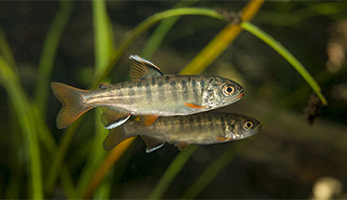
Wild Salmon Policy
We place the conservation of salmon and their habitat as the first priority for resource management
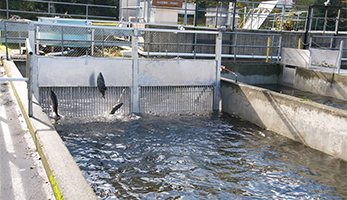
Salmonid Enhancement Program
We aim to rebuild vulnerable salmon stocks and improve fish habitat to sustain salmon populations
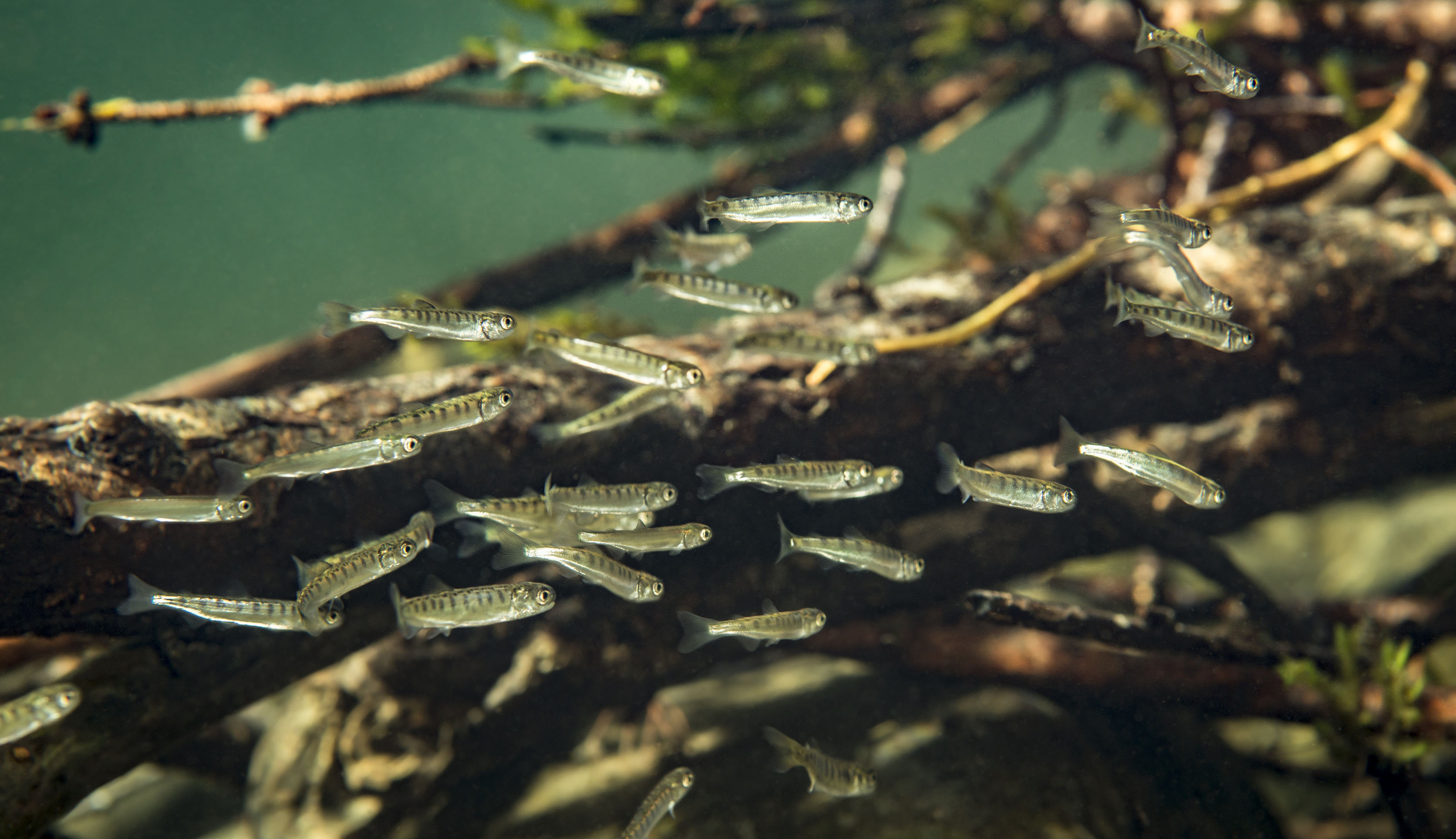
Protecting Pacific salmon
Through partnerships and action, we strive to ensure healthy, diverse salmon populations to sustain the needs of Canadians for generations to come
Contact us
Email: DFO.PACPSSInitiative-InitiativeSSPPAC.MPO@dfo-mpo.gc.ca
- Date modified: