
Focus on an invader and what you can do
Table of contents:
- Aquatic invaders
- Pathways of invasion
- Threats to the environment, the economy and society
- Focus on an invader
- What you can do
Aquatic invasive species in Quebec
- Crustaceans
- Molluscs
- Fish
Focus on an invader
The Zebra Mussel is an example of an invasive species that has caused significant impacts since its introduction in 1988 in Lake St. Clair, Ontario:
- with its high reproductive capacity and ability to attach to any solid surface, it has rapidly spread in the Great Lakes system and eastern North American rivers
- its predators are not sufficient to significantly reduce its populations
- by attaching to the shells of native molluscs, it interferes with their feeding, makes them more vulnerable to predators and leads to the decline of several species
- by filtering large quantities of water containing phytoplankton, it increases water clarity and light absorption, which in turn increases algae growth at greater depths
- by clogging the water intake pipes, it causes serious problems for various industries and public services (power plants, water treatment plants). The costs generated by this damage are in millions of dollars.
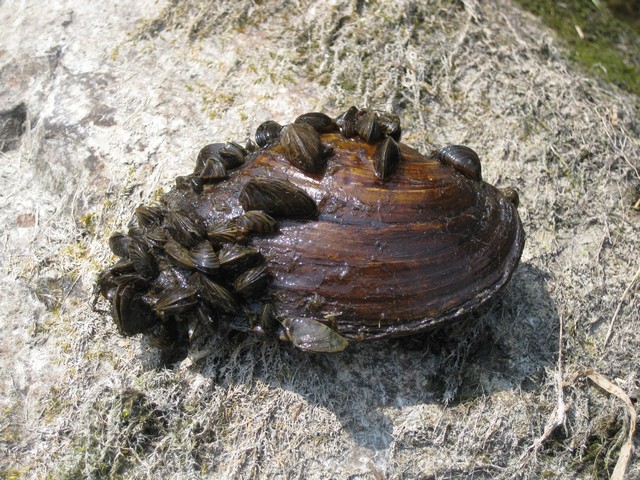
Photo credit: South Nation Conservation
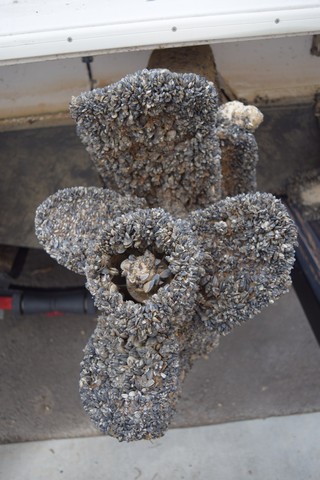
Photo credit: Colorado Parks and Wildlife
What you can do
How to stop the spread of aquatic invasive species?
To avoid the spread of AIS between different bodies of water, it is important to respect the following basic precautionary rules:
Watersports and recreational fishing
- Before leaving a body of water, empty all the water that is in your boat or your equipment (livewells, engine, hold, coolers).
- When exiting the water, inspect your boat, trailer and equipment used, completely remove any deposits or residues of aquatic plants, mud, and organisms visible to the naked eye and dispose of them in a garbage can or a place far away from the water.
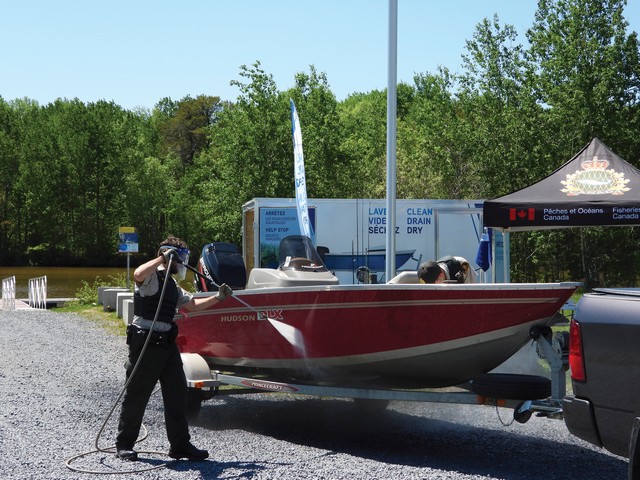
- At more than 30 m from any body of water, thoroughly wash and dry your boat, trailer and any equipment that has come into contact with water. When possible, use hot water under high pressure to maximize washing efficiency.

Aquarium and water garden animals and plants
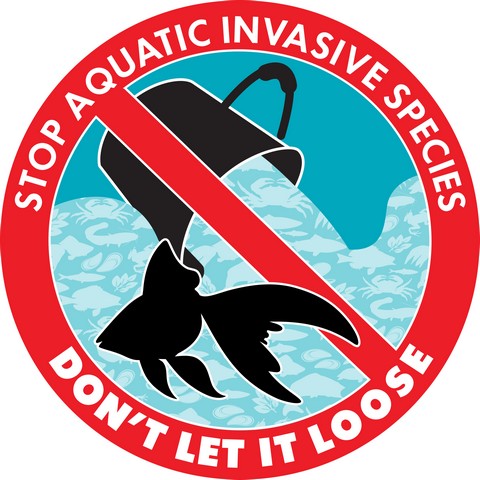
- Never release animals or empty the water from fish tanks and water gardens into streams, drains, ditches, or sewers. Empty it on dry land, away from any body of water.
- When you want to dispose of an aquatic animal or plant:
- donate them to a public institutions or organizations (pet shops, schools, museums, aquariums or zoological gardens), to other hobbyists or to aquarium clubs or associations
- If none of these solutions work, throw out the plant far away from any body of water or consider having the animal euthanized. Contact your veterinarian for more information.
Control of an invasive species in the wild
- Before attempting to control an AIS in the wild, get in touch with Fisheries and Oceans Canada. Use the contact information on the back cover of this booklet.
- Control measures vary depending on the species, so you must take precautions before attempting to control an AIS in order to avoid it spreading further.
- Date modified: