
St. Anns Bank Marine Protected Area Management Plan 2023

On this page
- Contact information
- Published by
- Executive summary
- Abbreviations
- Figures
- Tables
- 1.0 Introduction and background
- 1.1 MPA designation history
- 1.2 St. Anns Bank conservation values
- 1.3 Mi’kmaq and historical fisheries
- 1.4 Scientific and monitoring activities
- 1.5 Marine transportation
- 1.6 Assessment of ecosystem goods and services
- 2.0 MPA vision, goals and objectives
- 2.1 MPA vision
- 2.2 Mi’kmaq guiding principles
- 2.3 MPA guiding principles
- 2.4 MPA goals
- 2.5 Conservation objectives
- 2.6 Management and stewardship objectives
- 2.7 Research and monitoring objectives
- 3.0 Regulatory framework
- 3.1 MPA boundary and zones
- 3.2 General prohibitions
- 3.3 Activities allowed within the Adaptive Management Zones
- 3.4 Enforcement provisions
- 4.0 Administration of the MPA
- 4.1 Components of MPA management
- 4.2 Roles and responsibilities
- 4.3 Scientific research and monitoring
- 4.4 Activity plan assessments
- 4.5 Surveillance, compliance monitoring, and enforcement
- 4.6 Future fisheries
- 4.7 Promotion, outreach, and education
- 4.8 Management priorities
- 4.9 Management plan review
- 4.10 Reporting
- 5.0 Appendices
Contact information
General information
Marine Planning and Conservation
Fisheries and Oceans Canada
1 Challenger Drive, PO Box 1006
Dartmouth, NS B2Y 4A2
Email: SABMPA-BSAZPM@dfo-mpo.gc.ca
Conservation and Protection - enforcement
Fisheries and Oceans Canada
Tel: 800-565-1633
Joint Rescue Coordination Centre - search and rescue
National Defence Canada
Tel: 1-800-565-1582
Marine Accidents, Spills and Environmental Emergencies
Canadian Coast Guard/Environment and Climate Change Canada
Tel: 1-800-565-1633
Published by
Marine Planning and Conservation
Fisheries and Oceans Canada
Dartmouth, NS B2Y 4A2
© His Majesty the King in Right of Canada, as represented by the Minister of the Department of Fisheries and Oceans, 2023
Catalogue number: Fs23-709/2023E-PDF
ISBN 978-0-660-48769-4
Executive summary
The St. Anns Bank Marine Protected Area (MPA) is located to the east of Cape Breton, Nova Scotia, extending from the inner continental shelf to the outer slope of the Laurentian Channel. The MPA has many ecologically and biologically significant features including:
- unique habitats
- areas of high biodiversity and productivity
- sensitive species
The purpose of the MPA designation is to conserve and protect biodiversity, ecosystem function and special natural features by minimizing risks posed by anthropogenic activities. Mobile bottom-contacting fishing gears and oil and gas exploration are prohibited throughout the MPA. The MPA is largely off-limits to commercial extraction, however low-impact sustainable fisheries can continue in a portion of the MPA.
This management plan is intended to guide regulatory and non-regulatory management of the MPA. The plan presents an overview of the MPA including its:
- ecological features
- uses of the area
- history of the MPA
- regulatory measures
- governance of the site
Objectives related to management and stewardship, and research and monitoring are outlined along with strategies to achieve those objectives.
Management of the St. Anns Bank MPA is currently led by Fisheries and Oceans Canada (DFO) with input from:
- the Mi’kmaq
- the St. Anns Bank MPA Advisory Committee (SABAC)
- Federal and Provincial government departments
- Indigenous organizations
- marine industries
- environmental non-governmental organizations
- academic institutions
- local communities
DFO and the Mi’kmaq of Nova Scotia are working together to establish a partnership for future governance and management of the MPA. As this partnership develops this plan will be reviewed and updated to ensure that conservation, management, and governance objectives are being met. As this plan does not currently reflect co-governance, a separate document may be developed to capture a true co-governance approach as it is developed. Mi’kmaw content in this document and references to a future co-governance approach have been drafted in partnership with the Kwilmu’kw Maw-klusuaqn Negotiation Office and other Mi’kmaq Organizations.
Abbreviations
- AOI
- Area of Interest
- CSAS
- Canadian Science Advisory Secretariat
- C and P
- Conservation and Protection Branch
- CCG
- Canadian Coast Guard
- DFO
- Fisheries and Oceans Canada
- ECCC
- Environment and Climate Change Canada
- IPCA
- Indigenous Protected and Conserved Area
- MEKS
- Mi’kmaq Ecological Knowledge Study
- MPA
- Marine Protected Area
- SAB
- St. Anns Bank
- SABAC
- St. Anns Bank Marine Protected Area Advisory Committee
- SARA
- Species at Risk Act
- TC
- Transport Canada
- UNDRIP
- United Nations Declaration on the Rights of Indigenous Peoples
Figures
- Figure 1. Location of the St. Anns Bank MPA
- Figure 2. Timeline for designation of St. Anns Bank MPA
- Figure 3. Management Zones in the St. Anns Bank MPA
- Figure 4. Components of the MPA Management process
Tables
- Table 1. Management and stewardship objectives with strategies
- Table 2. Research and monitoring objectives with strategies
- Table 3. Regulatory allowance for fisheries permitted by zone
1.0 Introduction and background
Canada’s oceans and aquatic ecosystems are under growing pressures from human activities. One of the means by which these pressures can be addressed is through the creation of MPAs under Canada’s Oceans Act.Footnote 1 The Government of Canada has recognized the need to preserve the health of the country’s oceans, committing to protect 10% of Canada’s marine and coastal areas by 2020. In 2019, following the achievement of 10% protection, this goal was updated to conserving 25% of Canada’s oceans by 2025 and 30% by 2030.Footnote 2
DFO and partners have made significant efforts to advance a network of protected and conserved areas for the Scotian Shelf Bioregion, and work continues to develop a bioregional conservation network plan. Effective networks can enhance the contributions of individual MPAs to achieve greater ecological benefits that can also translate into economic, social and cultural benefits. As a core part of the bioregional network, the management plan for St. Anns Bank must consider multiple scales. The management of St. Anns Bank will inform contexts and priorities at the site level, as well as the MPA’s contribution to the bioregional network.
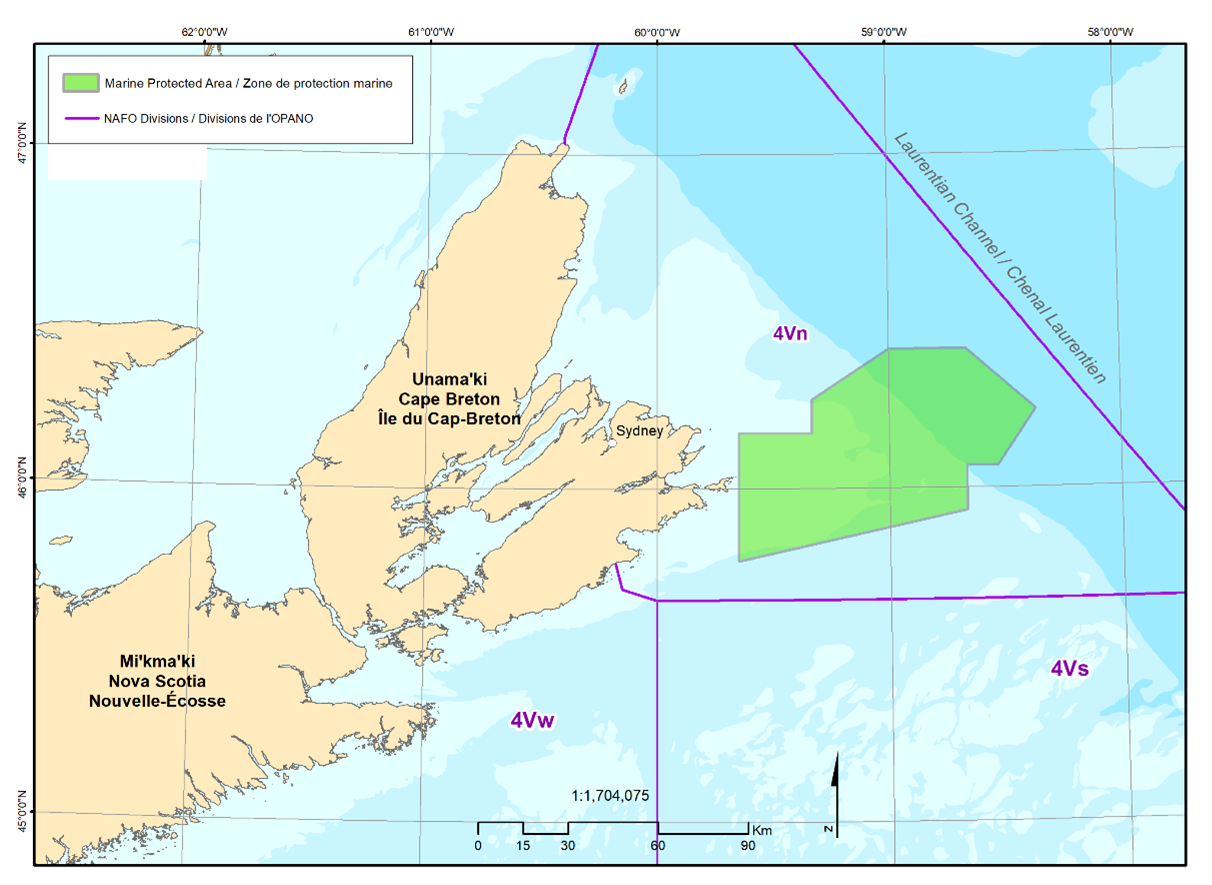
Figure 1. The St. Anns Bank MPA is located within a few kilometers off the east coast of Cape Breton Island. It includes most of St. Anns Bank, all of Scaterie Bank and portions of the western Laurentian Slope and Channel.
Long description
St. Anns Bank is located off the coast of Nova Scotia near Cape Breton. It is a geomorphically complex area, has the highest annual sea surface temperature range on the Scotian Shelf, and is rich in biodiversity. Noted for its diversity of habitats and associated marine biodiversity, St. Anns Bank became an MPA on June 14, 2017 when the site was designated by regulations created under the Oceans Act. This designation provides comprehensive long-term protection in a part of coastal Cape Breton where the sea has provided for the Mi’kmaq, local communities, and supported marine commerce for centuries. The MPA comes within a few kilometres of Cape Breton Island, includes most of St. Anns Bank, all of Scatarie Bank, and portions of the western Laurentian Slope and Channel to depths of 400 m (Figure 1). In total, the MPA covers 4,364 km2 of Northwest Atlantic waters. Nearby Scatarie Island is a provincial Wildlife Area established under the Nova Scotia Wildlife ActFootnote 3, as well as a Wilderness Area established under the Nova Scotia Wilderness Areas Protection Act.Footnote 4 St. Anns Bank supports sustainable fisheries and other livelihoods in three multiple-use zones.
The Government of Canada recognizes existing Aboriginal and treaty rights in sections 25 and 35 of the Constitution Act and affirms this recognition in section 2.1 of the Oceans Act. The United Nations Declaration on the Rights of Indigenous Peoples (UNDRIP), which was endorsed by the Government of Canada in 2016 and implemented in legislation in 2021,Footnote 5 provides a road map to advance lasting reconciliation with Indigenous peoples. Canada aims to advance reconciliation with Indigenous peoples by recognizing the relationships and ongoing management of their ancestral lands and waters.
For generations, the Mi’kmaq have harvested from the coast in all seasons, targeting a variety of fish, invertebrates and mammals. Unama’ki, or Cape Breton, including lands now submerged, is located in Mi’kma’ki, the ancestral and unceded territory of the Mi’kmaq people. The importance of St. Anns Bank to the Mi’kmaq also lies in its connection to other ecosystems, such as the Bras d’Or Lakes or the Gulf of St. Lawrence, forming the migration routes for culturally important species such as salmon, eels, mackerel, and striped bass. In the spirit of reconciliation, DFO and the Mi’kmaq of Nova Scotia are working together to establish a partnership for future governance and management of the MPA. This objective to co-develop a governance approach will be outlined in future documents.
The St. Anns Bank MPA Management plan, hereafter called the Plan, supports the MPA Regulations (see Appendix 1) and provides guidance to DFO, other regulators, marine users, and the public on the protection of this important ecosystem. Management of an Oceans Act MPA includes the measures outlined in the MPA Regulations, but also management actions that complement what is written in the Regulations. These “non-regulatory” measures can include activities such as:
- developing plans and strategies for managing access, threats and use in the MPA
- research and monitoring of the ecosystem
- surveillance and enforcement
- voluntary measures such as:
- best practice guidelines
- codes of conduct
- stewardship initiatives
The purpose of this document is for DFO, the Mi’kmaq, and partners to outline plans and strategies for managing activities in the St. Anns Bank MPA. The plan also includes a description of the MPA regulations, boundaries and zones, and specific actions to protect and conserve the area. The plan is divided into 4 chapters:
- The introduction and background chapter provides a brief history of the MPA, an ecological overview and descriptions of historical economic and scientific activities
- The vision, goals and objectives for the MPA are outlined in the second chapter
- The regulatory framework chapter gives an overview of the prohibitions, zones and the exceptions
- The final chapter on MPA administration describes site governance and priorities for implementation
The plan is the primary document guiding management in the MPA, however over time it will be accompanied by supporting documents that describe monitoring and other management priorities in more detail. For example, information on what might be included in a future monitoring plan can be found in the preliminary monitoring framework research document.Footnote 6 As additional documents are developed, they will be made available on the St. Anns Bank websiteFootnote 7 and key outcomes may be integrated as the plan is revised and updated over time.
1.1 MPA designation history
St. Anns Bank was selected from three candidate areas in DFO’s Maritimes Region identified through a regional network planning effort to address multiple bioregional conservation objectives. A public consultation period held over seven months in 2009 and 2010 helped to inform the decision to proceed with St. Anns Bank.Footnote 8 In June 2011, a 5,100 km2 area around St. Anns Bank was formally announced as an Area of Interest (AOI) for consideration as an Oceans Act MPA. St. Anns Bank has many ecologically significant features, including areas of high biodiversity, areas of high biological productivity, and both endangered and threatened marine species and their habitats. This area meets reasons (a), (b), (c), and (d) for MPA designation specified under subsection 35(1) of the Oceans Act.
Canada’s Oceans Act
Section 35(1): A marine protected area (MPA) is an area of the sea that forms part of the internal waters of Canada, the territorial sea of Canada or the exclusive economic zone of Canada and has been designated under this section or section 35.1 for special protection for one or more of the following reasons:
- the conservation and protection of commercial and non-commercial fishery resources, including marine mammals, and their habitats
- the conservation and protection of endangered or threatened marine species, and their habitats
- the conservation and protection of unique habitats
- the conservation and protection of marine areas of high biodiversity or biological productivity
- the conservation and protection of any other marine resource or habitat as is necessary to fulfil the mandate of the Minister
- the conservation and protection of marine areas for the purpose of maintaining ecological integrity
Following announcement as an Area of Interest (AOI), DFO advanced the site through the MPA establishment process.Footnote 9 This included:
- gathering information on ecological features and conservation priorities
- socio-economic data
- supporting a Mi’kmaq Traditional Use StudyFootnote 10
- conducting an ecological risk assessment
Additionally, an AOI Advisory Committee was formed in 2012 to review available information and help inform the design of the site. The advisory committee was comprised of representatives from:
- Mi’kmaq and Indigenous organizations
- marine industries
- academia
- environmental non-governmental organizations
- other provincial and federal government regulators
The advisory committee participated in the development of conservation objectives and the delineation of the MPA boundary and zones and provided advice on allowable activities. Throughout the design process bilateral consultations with the province of Nova Scotia and the Mi’kmaq occurred, including through a working group made up of a fishing industry representatives from several fleets and communities operating in the area.
The proposed MPA regulations were published in the Canada Gazette, Part I for public comment on December 17, 2016. Many comments received on the proposal expressed support for the designation, however there were some concerns surrounding impacts to Mi’kmaq communities, access to fisheries, and the economic impact of the MPA on fisheries being prohibited or restricted in the future. The feedback resulted in modifications to the Regulations, and on June 14th, 2017 the MPA was designated under Canada’s Oceans Act.Footnote 11
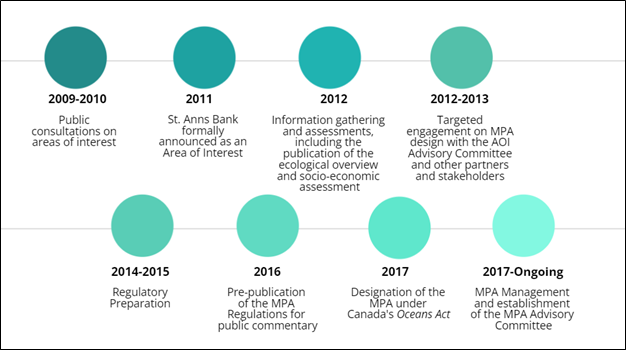
Figure 2. Timeline for designation of St. Anns Bank MPA
Long description
- From 2009 to 2010 public consultations on areas of interest were held
- In 2011, St. Anns Bank was formally announced as an Area of Interest
- In 2012, information gathering and assessments took place, including the publication of the ecological overview and socio-economic assessment
- From 2012 to 2013 a targeted engagement on MPA design occurred with the AOI Advisory Committee and other partners and stakeholders
- In 2014 and 2015, the site underwent regulatory preparation
- In 2016, pre-publication of the MPA Regulations were released for public consultations
- In 2017, the MPA was designated under Canada’s Oceans Act
- Since 2017 the MPA Advisory Committee was established and there has been ongoing MPA management
Mi’kmaq Ecological Knowledge studies
Mi’kmaq Ecological Knowledge is the collection of wisdom and experiences that the Mi’kmaq have with all components of the natural environment; the interrelationships that exist between all life forms from a historical, cultural, and spiritual perspective. In 2007 the Assembly of Nova Scotia Mi’kmaq Chiefs developed the Mi’kmaq Ecological Knowledge Study (MEKS) protocol for the purpose of providing guidance in the development of MEKS.Footnote 12
Indigenous Knowledge Studies, such as MEKS, are a key component of the information gathering and assessment phase of Oceans Act MPA establishment. MEKS can be used to help characterize the ecological, social, cultural, and economic importance of an area to the Mi’kmaq. A Mi’kmaq Traditional Use Study, which documented current and historical use of St. Anns Bank by the Mi’kmaq, was completed in 2013 as part of the information gathering and assessment stage of the St. Anns Bank MPA establishment process.
Since the St. Anns Bank Study was done, advice for applying MEKS for marine conservation initiatives has evolved. As such, the Mi’kmaq have requested that an updated MEKS for St. Anns Bank be developed to reflect current best practices. DFO supports updating the study and this has been included as an objective in Table 2, Section 2.7.
1.2 St. Anns Bank conservation values
The St. Anns Bank MPA is located on the inner Eastern Scotian Shelf and includes Scatarie Bank, most of St. Anns Bank, and a portion of the Laurentian Slope and Channel. The St. Anns Bank area is characterized by a wide range of water depths, current regimes, and varied geology and seabed topography. This diversity of habitat types is associated with a rich diversity of organisms and communities. An ecological overview of the St. Anns Bank ecosystem was conducted to summarize the physical, chemical, and biological oceanography of St. Anns Bank,Footnote 13 which informed the development of conservation objectives, conservation priorities, and management measures for the MPA.Footnote 14 A study on the use and value for the Mi’kmaq of Unama’ki (Cape Breton) was conducted and, like most coastal areas, the St. Anns Bank area holds significant spiritual, cultural and harvesting values for the Mi’kmaq. Long-term conservation of St. Anns Bank could provide benefits both ecologically, but also to traditional and ongoing human uses including sustainable fisheries.
Scatarie Bank revealed as a volcanic ridge with strong tidal currents
Scatarie Bank is the shallowest part of the MPA and one of its most distinctive features. The Geological Survey of Canada (GSC) analyzed geophysical data and rock samples to interpret the origins of this prominent geomorphic feature. The GSC study indicated that Scatarie bedrock is unique among offshore banks; a relatively young volcanic ridge, comprising several layers of thick, cooled lava flows fed by fissures that pushed up though softer sedimentary layers. The hard volcanic rocks resisted later erosive forces, mainly by glaciers, that carried away the consolidated sedimentary strata and left behind a steep-sided, rough-topped ridge flanked by young glacial sediments. Such a high-relief offshore feature at SCUBA-accessible depths attracted ecologists at Cape Breton University. Researchers partnered with fishing captains and local dive shops in 2017, 2018 and 2019 to collect samples, benthic video, and fish counts at the Scatarie Bank Experiential Research Site. Oceanographic profiles confirmed local knowledge that this is a very energetic location: waves heave up and tidal currents appear to strengthen and accelerate as they travel over Scatarie Bank. This localized phenomenon, familiar to fishers, is generally not well-resolved by circulation models. Potentially the unique, high energy environmental conditions are what underpins a dense aggregation of kelp and sponges that cover the bank top only 28 m below the surface. Continued collaborative monitoring and multi-disciplinary studies are sure to provide some answers – while generating more questions.
St. Anns Bank provides habitat for many commercial and non-commercial fishery resources, and it is part of a key migration corridor for marine mammals and fish that travel in and out of the Gulf of St. Lawrence ecosystem. The following section describes in more detail the ecological components of the MPA, as described in the site’s ecological overview.Footnote 13
Benthic communities, corals and sponges
The extent of the St. Anns Bank MPA spans a range of seafloor types, with sand pebble/cobble, boulders, and bedrock covering most of the shelf potion (<200 m depth), whereas mud and sand-based sediments dominate the deeper extent within the Laurentian Channel. Vegetation found within the MPA includes coralline algae, red algae, and kelp beds (Agaraceae) in the shallow areas of the MPA. Species that can be found in the MPA include:
- soft corals (Alcyonacea)
- gorgonian corals (Gorgonacea)
- sea pens (Pennatulacea)
- variety of sponge species including encrusting sponges
Seapens are fairly common in the deeper Laurentian Channel portion of the site, with a regionally significant concentration of seapens in the southeast corner of the site. Significant concentrations of sponges have also been identified along the banks of the channel.
Fish (Nme’juey)
About half of the fish species found on the Scotian Shelf in the research vessel (RV) survey have been found in St Anns Bank. An analysis conducted on fish diversity on the Eastern Scotian Shelf (ESS) found that the slope portion of the St. Anns Bank MPA is a fish diversity hot spot. The 5 most frequently caught fish species in St Anns Bank were:
- American plaice
- Atlantic cod (Peju)
- Witch flounder (Anakwe’j)
- Atlantic redfish (multiple species)
- Thorny skate
Atlantic cod can be found within the MPA year-round, and 25% of the preferred summer habitat for cod on the ESS is in St. Anns Bank. Other fish species common to St. Anns Bank include:
- Atlantic halibut (Msanuk)
- Atlantic wolffish
- Smooth skate (Kekunaluej)
- White hake (Ne’kɨpetlaw)
- capelin
- mackerel (Amalamek)
Invertebrates
Invertebrate densities in St. Anns bank are typical for the Eastern Scotian Shelf. Commercially exploited invertebrates that can be found in the MPA include:
- snow crab
- lobster (Footnote 15)
- whelk.
Other species commonly found in the MPA include:
- crabs (Nmjinikej)
- shrimp (Sata’siw)
- sea stars (Kakwet)
- sand dollars
- sea urchins
The MPA contains areas of highly suitable habitat for snow crab and contains representative areas of regionally high invertebrate richness (diversity hotspots).
Marine mammals
Information about cetacean use of the St. Anns Bank area is limited, but increasing through recent efforts, including through the use of Passive Acoustic Monitoring (PAM) instruments that provide for the assessment of year-round cetacean occurrence and ambient and anthropogenic noise. The MPA is part of an important migration route for baleen whales (Putup), including Blue whales, Fin whales, North Atlantic right whales, travelling through the Cabot Strait to and from the Gulf of St. Lawrence. Most cetaceans likely occur in the area seasonally or as transients. It is not known if there are resident populations of cetaceans that occur in the St Anns Bank area, but some species, particularly Pilot whales, may use the area throughout the year.
Grey, Harp and Harbour seals (Waspu) are likely to be found in the MPA. Harp seals may pup in the MPA in years of heavy ice cover and there is some evidence that this has occurred in the past decade. Grey seals from nearby Hay Island use the St Anns Bank area for foraging. Tagging indicates that Grey seals from the Gulf of St. Lawrence and from the Sable Island also forage in or travel through this area.
Sea turtles (Mikjikj)
The Leatherback turtle is listed as endangered under the Species at Risk ActFootnote 16 (SARA), and the western Atlantic population has been declining since the 1990s. Leatherbacks forage for jellyfish in Canadian waters each summer. St Anns Bank has been identified as part of an area of high use for Leatherbacks, with turtles likely using the area from July through October.
Sharks (Siklati)
The Laurentian Channel is part of the mating area for Porbeagle sharks. Other sharks that may be common here are:
- Blue sharks
- Basking sharks
- Shortfin mako
- Spiny dogfish (Sikɨlati)
Although, none are known to aggregate or undertake any critical life history processes in the area. Several Basking sharks were spotted here in an aerial survey in 2007, and they are known to aggregate on the west coast of Cape Breton. OCEARCH, a US-based organization conducting shark research in Nova Scotia caught and tagged several Great white sharks off Scatarie Island. One of the sharks tagged in 2019, named “Unama’ki” by the OCEARCH crew, was a mature female measuring 4.7 m.Footnote 17
Sea birds (Sisip)
Seabirds observed within and around St. Anns Bank include:
- Storm-petrels
- Great black-backed and Herring gulls
- Northern fulmars
- Great shearwaters
- Sooty shearwaters
- Northern gannets
For most of these species, concentrations are believed to be of migrating individuals, though gulls and Storm-petrels may include nesting birds foraging in the area. Species nesting on and near Scatarie Island include:
- more coastally-associated Common eider
- double-crested and Great cormorants
- Black guillemot
- Common and Arctic terns
- typically more pelagic Leach’s storm-petrel
- Black-legged kittiwake
1.3 Mi’kmaq and historical fisheries
The Mi’kmaq of Nova Scotia were the first people who inhabited and utilized what is now St. Anns Bank. Since time immemorial the Mi’kmaq have fished in the waters here and the area remains an economic and culturally important resource, including as an important source of food. Additionally, Mi’kmaq fishing activities in coastal Unama’ki generate important well-being and revenue for Mi’kmaq communities.Footnote 10 The St. Anns Bank area is in Unama’ki, which is part of the unceded ancestral territory of the Mi’kmaq. Over millennia of inhabitance, the Mi’kmaq have witnessed changes in landscapes and shorelines throughout Mi’kma’ki brought about by sea level rise, isostatic rebound, and climate change. The area around St. Anns Bank was at one point dry land and there is a significant likelihood that ancestors used the now submerged landscape.
Non-Indigenous commercial fisheries on and around St. Anns Bank have been occurring for centuries, starting in the 1500’s when Portuguese, Spanish, French and British fishing vessels visited for the summer season groundfish fishery, and subsequently established permanent fishing communities at Canso and elsewhere along the coast of Nova Scotia. Current commercial fisheries, reporting landings from 2000-present primarily include groundfish and snow crab,Footnote 18 and to a lesser extent species such as shrimp and herring. An ecological risk assessmentFootnote 19 found that bottom-trawling which had been active in this area for decades posed a high risk of negative impacts for many conservation priority species and their habitats within the MPA, therefore these fishing gears have been prohibited in the MPA. Several commercial fixed-gear fisheries that remained active off eastern Cape Breton at the time of MPA designation were allowed to continue in Zones 2, 3 and 4 (see section 3.2 for more detail).
Information sources are lacking regarding leisure, sport or dive fisheries on St. Anns Bank before and since the MPA was created. However, activity is expected to be low. Recreational fishing including sport fishing is permitted under the regulations (see section 3.3) and information and data related to recreational fishing in the area should be further investigated.
1.4 Scientific and monitoring activities
Government, industry, and academic researchers have studied St. Anns Bank and its surroundings for decades. Geophysical surveys, bathymetric mapping, and seabed photography have supported the production of surficial, sedimentary and bedrock geology publicationsFootnote 20 as well as benthic habitat classifications and a range of geospatial knowledge products.Footnote 21 Several long-term environmental monitoring programs in the region sample within the MPA and provide invaluable time series information.
Oceanographic sampling stations have also been occupied semi-annually in the MPA during spring and fall cruises of the Atlantic Zone Monitoring Program (AZMP), which has been leveraged for targeted and opportunistic science. For example, AZMP trips have supported fine-meshed net tows for floating microplastics and provided a platform for recovering acoustic recorders.
Supporting continued scientific research activities is key to the development of biophysical baselines, understanding key ecological processes, and monitoring for change. Research and monitoring projects, including the Cape Breton Fish Harvesters Association, Cape Breton University, and Ocean Tracking Network studies have been subject to ministerial approval since the MPA regulations were passed in June of 2017. Advisory committee members started reviewing proposals in 2019 to assess benefits and impacts to the MPA. Scientific programs are understood to provide essential information for decision making and effective management, but the risks must not outweigh the value of filling knowledge gains. When conducting science in St. Anns Bank researchers will use the lowest possible impact research methods.
Characterizing the diversity of bottom-dwelling organisms using cameras
Fish harvesters provided many biological insights as the St. Anns Bank knowledge base was being compiled and the MPA was being designed. Information on habitat and changes in the marine ecosystem of St. Anns Bank collected over generations of fishing have informed discussions on the ecological benefits of protection afforded by the MPA and how to best detect change associated with the establishment of the site. In 2015, the Cape Breton Fish Harvesters Association (CBFHA) responded to a novel research opportunity when developers at the Nova Scotia Community College went in search of a community partner with the capacity to test their baited remote underwater video (BRUV) prototype. Cameras fastened inside lobster traps were set in the MPA and configured to record all that swam or crawled near. Four years of trials conducted between 2015 and 2019 successfully produced footage of life in the MPA which is an indication that this set-up could be an effective method for monitoring diversity in the MPA. The project demonstrated potential applications of BRUV systems for monitoring alongside other community-based studies like the sentinel survey that employs fishing crews to sample and enumerate groundfish on St. Anns Bank.
1.5 Marine transportation
St. Anns Bank is situated between Nova Scotia and Newfoundland and Labrador, where a substantial volume of seagoing trade is conducted. Mariners bound to and from the St. Lawrence Seaway enter and exit through the Laurentian Channel and Cabot Strait. Many tankers, bulk carriers, container vessels and cruise ships transit the MPA, with Scatarie Island serving as a major waypoint for inbound and outbound traffic. Based on current knowledge, navigation and routine operations in compliance with Canadian and international shipping law are not expected to compromise the MPA conservation objectives, and are thus allowed to pass through the MPA. The impacts of shipping in the MPA will be monitored for impacts to ensure that appropriate management actions are taken.
1.6 Assessment of ecosystem goods and services
Ecosystem goods are the resources derived from the environment such as harvesting fish for food. Ecosystem services are the benefits that people derive from the environment, for example recreation, carbon sequestration, or nutrient cycling.Footnote 22 Some of the ecosystem goods and services identified in St. Anns Bank to date include commercial and recreational fisheries resources, the intrinsic value associated with the protection of diversity on the Eastern Scotian Shelf, and benefits for scientific and education-related activities as a result of increased opportunities to study or observe marine species and habitats in the MPA.Footnote 11 Identifying and cataloging a full spectrum of the ecosystem goods and services for St. Anns Bank will be part of the ongoing monitoring and reporting for this site. Monitoring in the MPA will evolve over time, continually seeking new ways to provide a comprehensive assessment of ecosystem goods and services provided by the MPA and to integrate with international best practices.
2.0 MPA vision, goals and objectives
2.1 MPA vision
The St. Anns Bank MPA was designated to conserve marine resources and protect the ecological integrity of the area including its habitat, biodiversity, and biological productivity. Engagement with the advisory committee has expanded several themes for the MPA vision statement including the following aims, in no particular order:
- Protect the marine ecosystem of St. Anns Bank for future generations
- Support actions and mechanisms for moving towards a Nation to Nation relationship with the Mi’kmaq
- Encourage collaboration with and among governments, stakeholders, and interested parties
- Foster local approaches to conservation, stewardship and monitoring
- Invest in Mi’kmaw knowledge generation and involvement in MPA research and monitoring
- Invest in scientific and local knowledge generation, particularly from local communities
- Provide opportunities for sustainable livelihoods, including commercial and recreational fishing, recreational boating, and tourism
- Monitor the impacts of a changing climate in the MPA, and determine how it contributes to resiliency in the face of anthropogenic pressures
Where possible, these themes and ambitions have been incorporated into the MPA vision, goals and objectives below. Based on this feedback, the vision statement for the St. Anns Bank is as follows:
The vision for the MPA is to conserve St. Anns Bank for future generations by providing effective programs for collaborative management, conservation, monitoring, and stewardship.
Etuaptmumk
Etuaptmumk, or a Two-Eyed Seeing approach is a balanced respect, appreciation, and consideration for Indigenous and Western knowledge. Two-Eyed seeing is learning to see from one eye with the strengths of Indigenous knowledge and ways of knowing, and from the other eye with the strengths of Western knowledge and ways of knowing… and learning to use both eyes together for the benefit of all.
Two-Eyed Seeing is the requisite for the new consciousness needed to enable Integrative Science work, as well as other integrative or transcultural or transdisciplinary or collaborative work. It adamantly, respectfully, and passionately asks that we bring together our different ways of knowing to motivate people, Indigenous or non-Indigenous alike, to use all our understandings so we can leave the world a better place without compromising the opportunities for our youth (in the sense of seven generations) through our own inactions or actions.
In practicality, Two-Eyed Seeing is about co-learning, co-production of knowledge, and implies collaboration between different knowledge systems. Indigenous knowledge systems in particular are driven by ethics as part of their value system. Governance is implied. The Mi’kma’ki language has the phrase Msit no’kmaq; literally translated, it means ‘all my relations’. It describes the Mi’kmaw relationship with the natural world, the living and non-living, in the temporal scales of past, present, and future. This underlying belief is associated with a specific set of values, which is used to judge what is important and how to develop a standard of behaviour.
Etuaptmumk is the first shared guiding principle for St. Anns Bank. As DFO and the Mi’kmaq strengthen their Nation-to-Nation relationship regarding St. Anns Bank, etuaptmumk will be better incorporated into all facets of management and governance of the MPA.
2.2 Mi’kmaq guiding principles
Guiding principles from the Mi’kmaq worldview, including Etuaptmumk, should be considered and incorporated into management of the St. Anns Bank MPA. The Mi’kmaq have provided the following definitions of traditional Mi’kmaw teachings and principles to reflect the meaning, common usage and application of the principles:
- Netukulimk
- Netukulimk is the use of the natural bounty provided by the Creator for the self-support and well-being of the individual and the community. Netukulimk is achieving standards of community nutrition and economic well-being without jeopardizing the integrity, diversity, or productivity of our environment.
- Sespite'tmnej
- To 'look after something in a meaningful way.'
- Toq'maliaptmu'k
- 'We will look after it together.
- Msit no'kmaq
- All my relations - all things are inter-related, and we must honour and respect all life as our kin.
2.3. MPA guiding principles
The St. Anns Bank MPA Management Plan and management actions are guided by the following principles:
- Ecosystem approach
- The ecosystem approach involves the management of human activities to maintain ecosystem components, functions, and properties over time. Ecosystem objectives are used to identify measurable indicators for monitoring and evaluation, and operational measures and actions to ensure that conditions are met and maintained.
- Collaboration and stewardship
- While DFO has the lead jurisdictional responsibility, the vision and objectives for St. Anns Bank can only be achieved through coordination, cooperation, and partnership among all organizations and interests. Management planning must be both inclusive and transparent, and supported, to the greatest extent possible, by all affected organizations and individuals. Stewardship refers to the wide range of actions that can be taken by individuals, groups, and communities to raise awareness of St. Anns Bank, and to monitor and conserve the ecosystem. DFO encourages and will actively pursue collaboration, partnership, and stewardship opportunities for St. Anns Bank.
- Precautionary approach
- The precautionary approach is an evaluation and decision-making process that focuses on being cautious when scientific knowledge or information is uncertain, and not using the lack of this information to postpone action, particularly when decisions are applied to the preservation of conservation objectives of the MPA. Not all human activities will be excluded from St. Anns Bank, but a precautionary approach will be applied in evaluating proposed activities. This will put the burden of proof on any individual, organization, or government agency conducting activities within or affecting the MPA to demonstrate that proposed activities will not damage the marine ecosystem.
- Integrated management
- Integrated management is the planning and management of human activities in a comprehensive manner with consideration for the full range of interests and environmental, social, cultural, economic, and institutional objectives for the broader management area.
- Knowledge-based decision-making
- Management actions will be based on the best available scientific information and Mi’kmaw ecological knowledge. Studies and research in and around the MPA will be encouraged to improve upon and add to existing information.
- Adaptive planning and management
- Pressures on the St. Anns Bank ecosystem may change over time as a result of shifting social, environmental, and economic conditions. At the same time, knowledge of the ecosystem will continue to improve. Planning and management must be adaptive to respond to these changes. The design, management, and effectiveness of the St. Anns Bank MPA will be monitored and conservation measures adapted as necessary to ensure the objectives for the site are being met.
2.4 MPA goals
The primary and overarching goal of the MPA is the conservation and protection of the area’s biodiversity, ecosystem function, and the special natural features of the St. Anns Bank MPA. Four secondary goals were established, two as the MPA was being assessed and designed, and two as the plan was developed:
- To conserve living marine resources in the MPA and ensure that any use of those resources is ecologically sustainable
- To help maintain ecosystem health and resilience, and support the ecologically sustainable use of living marine resources beyond the boundaries of the St. Anns Bank MPA
- To promote and support science partnerships for cooperative research and monitoring
- To embed climate change awareness in management, governance and indicator frameworks
In case of conflict, the primary goal of conservation takes precedence.
2.5 Conservation objectives
Conservation objectives for the MPA were developed through a peer-reviewed science advisory process and finalized using additional advice from an advisory committee in 2012. These conservation objectives focus on the important ecological processes within the MPA and the regulations applied to human activities that interact with them within the MPA. It is recognized that these objectives are aspirational, and that amendments to the objectives or the site design may be required as we learn more about St. Anns Bank.
- Habitat
- Conserve and protect
- All major benthic, demersal (i.e., close to the sea floor) and pelagic (i.e., in the water column) habitats within the MPA, along with their associated physical, chemical, geological and biological properties and processes
- Distinctive physical features and their associated ecological characteristics
- The structural habitat provided by sea pen and sponge concentrations
- Biodiversity
- Conserve and protect marine areas of high biodiversity at the community, species, population and genetic levels within the MPA, including:
- Priority species and their habitats
- leatherback turtle
- Atlantic wolffish
- Atlantic cod
- American plaice
- Biological productivity
- Conserve and protect biological productivity across all trophic levels so that they are able to fulfill their ecological role in the ecosystems of the MPA.
These conservation objectives may be achieved through the design of the MPA and the application of its regulations. Activities identified to date that are likely to impede the conservation objectives, including the use of mobile bottom-contacting fishing gears, substrate mining, hydrocarbon exploration and extraction are prohibited throughout the MPA. The regulations (see Appendix 1) establish 4 management zones, including a core protection zone of minimal human activity and three adaptive management zones where current, low-impact activities are permitted. Collectively, this zonation of activities and regulations applied within the MPA are expected to contribute to the conservation and protection of biological and habitat diversity, and help maintain the biological productivity within the St. Anns Bank area. Additional management measures may be required if the monitoring program indicates that ongoing or permitted activities are affecting the achievement of the conservation objectives for the MPA.
2.6 Management and stewardship objectives
Fostering a greater understanding of St. Anns Bank among users and the general public is an important part of managing the MPA. Management and stewardship objectives are aimed at promoting effective management by directing activities, often collaboratively, within and among governments, rights holders, users, and others with an interest in St. Anns Bank. This includes promoting compliance with the MPA Regulations and direct actions that advance management objectives and strategies. The table below outlines the management and stewardship objectives, strategies and associated lead responsibilities.
| Management objective | Strategy | Leads |
|---|---|---|
|
Ensure that human activities within the MPA are consistent with Regulations and the conservation objectives. |
|
DFO/TBDFootnote 23 |
|
Monitor and evaluate the design, management, and effectiveness of the MPA on a regular basis to ensure it is meeting defined objectives. |
|
DFO/TBDFootnote 23 |
|
Work towards a Nation to Nation approach to MPA management with the Mi’kmaq |
|
DFO |
|
Establish and maintain cooperative arrangements with responsible regulatory authorities, Indigenous groups and/ Mi’kmaq partners/ stakeholders to meet objectives for the MPA. |
|
DFO |
|
Engage users, regulators, Indigenous organizations, researchers, and other interested parties in the management of the MPA. |
|
DFO |
|
Support public outreach to raise awareness of the St. Anns Bank ecosystem and conservation efforts underway. |
|
DFO/SABAC |
2.7 Research and monitoring objectives
Research and monitoring activities are the foundation of MPA management. To support effective management, a wide variety of research and monitoring activities will be needed in the St. Anns Bank MPA, and can be organized into 3 broad themes:
- Research and monitoring on the effectiveness of management measures in addressing MPA objectives (supporting adaptive management)
- Research and monitoring on the health of populations and habitats of conservation priorities in the MPA (baseline and trends)
- Research and monitoring on ecosystem pressures (i.e., impacts from human activities occurring within or adjacent to the MPA and the effects of climate change)
| Research and monitoring objective | Strategy | Responsibility |
|---|---|---|
|
Increase our understanding of St. Anns Bank and the potential for human impacts on this ecosystem. |
|
DFO/SABAC/CCG/TC |
|
Increase communication and awareness of the St. Anns Bank MPA and its ecosystem among the Mi’kmaq, user groups, regulators, Indigenous organizations, researchers, and the public. |
|
DFO/Science/partners |
|
Provide managers with accurate and timely information on the state of the St. Anns Bank ecosystem and potential threats to conservation objectives. |
|
DFO/TBDFootnote 23 |
St. Anns Bank in a changing climate
Climate driven changes to marine ecosystems are now widely recognized throughout the world’s oceans and along it’s exposed coastlines. The northwest Atlantic, including St. Anns Bank MPA, have already experienced changing climatic and oceanographic conditions, and these changes are expected to continue. What do warming trends mean for St. Anns Bank and connected marine environments? It remains uncertain how warming will influence the St. Anns Bank ecosystem and how vulnerable the species, communities and habitats within the MPA are to ongoing and predicted environmental change. These changes will likely manifest into changing ecological states that may require stakeholders, scientists and regulators to take action.
Despite the uncertainty and inherent challenges that come with climate change, members of the SABAC have emphasized that climate change be made an explicit part of site management. The MPA managers wholeheartedly agree – climate change presents a pervasive and significant long-term challenge and therefore should be at the forefront of adaptive management within the MPA. Accordingly, this first edition SAB Management Plan sets out a commitment to build climate change into the MPA’s objectives, to implement climate-aware research and monitoring programs, to support climate-informed dialogue, and to adjust operational management when warranted by changing ecological states.
Climate monitoring programs (e.g., the Atlantic Zone Monitoring Program – AZMP) in the Atlantic region provide important information on how the marine environment is changing. Monitoring programs like these provide a template for how monitoring a core suite of physical, chemical and biological climatology indicators (e.g. temperature, oxygen, carbon dioxide, calcium, pH, chlorophyll) can be used to inform how climate change is influencing environmental conditions within the MPA and help to provide context observed ecological changes (see AZMP reportFootnote 26).
3.0 Regulatory framework
3.1 MPA boundary and zones
The MPA Regulations describe the St. Anns Bank MPA boundary and establish 4 management zones. Zoning provides varying levels of protection within the MPA, offering the strongest protection to Zone 1.
The management zones are:
- Core Protection Zone (CPZ) (Zone 1): This zone is strictly protected. Most human activities are limited in this zone in order to comprehensively protect habitat, biodiversity, and biological productivity. Zone 1 covers 3308 km2 and provides a refuge from human disruption. Maintaining ecological integrity, identified as a purpose under the Oceans Act to establish an MPA, is strongly linked to Zone 1. As outlined in the act, the term refers to a condition in which (a) the structure, composition and function of ecosystems are undisturbed by any human activity; (b) natural ecological processes are intact and self-sustaining; (c) ecosystems evolve naturally; and (d) an ecosystem’s capacity for self-renewal and its biodiversity are maintained.
- Adaptive Management Zones (AMZ) (Zones 2, 3 and 4): These zones are designed to accommodate certain activities that are considered compatible with the conservation objectives of the MPA (e.g. bottom longline and trap fishing). Zone 2 has an area of 720 km2, Zone 3 is 113 km2 and Zone 4 is 221 km2.
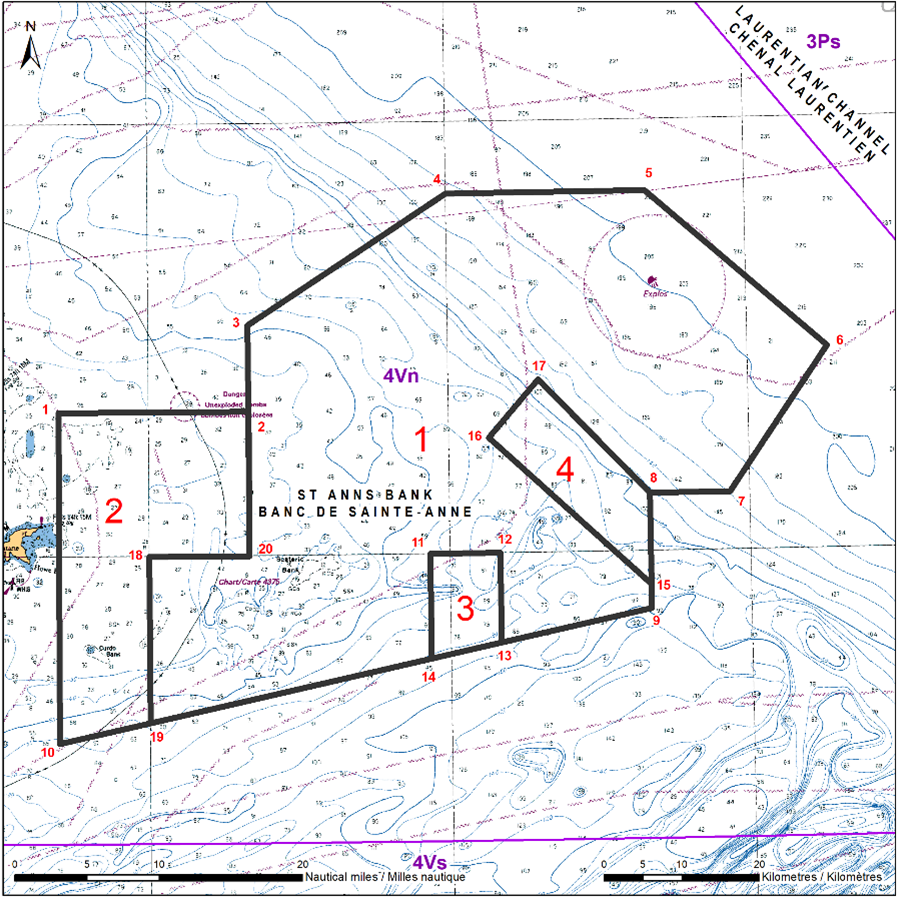
Figure 3. Management Zones in the St. Anns Bank MPA
Long description
The St. Anns Bank MPA consists of 4 management zones:
- Zone 1 has an area of 3,308 km2
- Zone 2 is 720 km2
- Zone 3 is 113 km2
- Zone 4 is 221 km2
| Point | Latitude North | Longitude West | Description |
|---|---|---|---|
|
1 |
46°10' |
59°39' |
North-western boundary of zone 2 |
|
2 |
46°10' |
59°20' |
North-eastern boundary of zone 2 |
|
3 |
46°16' |
59°20' |
Western boundary of zone 1 |
|
4 |
46°25' |
59°00' |
Northern boundary of zone 1 |
|
5 |
46°25' |
58°40' |
North-eastern boundary of zone 1 |
|
6 |
46°14' |
58°22' |
Eastern boundary of zone 1 |
|
7 |
46°04' |
58°32' |
Eastern boundary of zone 1 |
|
8 |
46°04' |
58°40' |
Eastern boundary of zone 1 and north-eastern boundary of zone 4 |
|
9 |
45°56' |
58°40' |
South-eastern boundary of zone 1 |
|
10 |
45°47' |
59°39' |
South-western boundary of zone 2 |
|
11 |
46°00' |
59°02' |
North-western boundary of zone 3 |
|
12 |
46°00' |
58°55' |
North-eastern boundary of zone 3 |
|
13 |
45°53'45.9'' |
58°55' |
South-eastern boundary of zone 3 |
|
14 |
45°52'42.5'' |
59°02' |
South-western boundary of zone 3 |
|
15 |
45°57'39'' |
58°40' |
South-eastern boundary of zone 4 |
|
16 |
46°08' |
58°56' |
North-western boundary of zone 4 |
|
17 |
46°12' |
58°51' |
Northern boundary of zone 4 |
|
18 |
46°00' |
59°30' |
Western boundary of zone 1 and eastern boundary of zone 2 |
|
19 |
45°48'24.5'' |
59°30' |
South-western boundary of zone 1 and south-eastern boundary of zone 2 |
|
20 |
46°00' |
59°20' |
Western boundary of zone 1 and eastern boundary of zone 2 |
3.2 General prohibitions
The MPA regulations (see Appendix 1) prohibit any activity that disturbs, damages, destroys or removes any living marine organism or any part of its habitat in the St. Anns Bank MPA. Certain exceptions to these prohibitions for specified activities (e.g. navigation, select fishing activities, scientific research approved by the Minister) are allowed. Consequently, the Regulations prohibit activities that could negatively impact this ecologically important marine area, including the use of mobile bottom-contacting fishing gears and oil and gas exploration and productionFootnote 27 throughout the MPA.
3.3 Activities allowed within the Adaptive Management Zones
Certain activities were assessed in an ecological risk assessment prior to MPA designation.Footnote 19 The following activities are allowed to continue to occur within defined zones within the MPA.
Fisheries
Several fisheries were found to pose acceptable levels of risk to the MPA’s conservation objectives. The regulatory exception for fisheries to occur within the MPA makes allowances for pot, trap, rod and reel, harpoon, bottom longline and handline in all 3 adaptive management zones (Zones 2, 3 and 4). The exception for Zone 2 makes further allowances for gillnet and dive fisheries. Allowed fisheries are summarized in Table 3.
| Fishery | Zone 1 | Zone 2 | Zone 3 | Zone 4 |
|---|---|---|---|---|
| Commercial fisheries | ||||
|
Seal harvest |
✓ |
✓ |
✓ |
✓ |
| Commercial or recreational fisheries | ||||
|
Pot |
✓ |
✓ |
✓ |
|
|
Trap |
✓ |
✓ |
✓ |
|
|
Rod and reel |
✓ |
✓ |
✓ |
|
|
Harpoon |
|
✓ |
✓ |
✓ |
|
Bottom longline |
|
✓ |
✓ |
✓ |
|
Handline |
|
✓ |
✓ |
✓ |
|
Gill net |
✓ |
|||
|
Diving |
✓ |
|||
| Indigenous food, social and ceremonial fisheries | ||||
|
Indigenous food, social and ceremonial |
✓ |
✓ |
✓ |
✓ |
Future fisheries
Section 5 of the St. Anns Bank MPA regulations was drafted to accommodate fisheries for additional species using the gear types allowed in the adaptive management zones. The intention to have proponents apply for permission to harvest in the adaptive management zones using comparable gear, but for species not being fished at the time of designation, was conveyed during consultation and documented in the Canada Gazette. Section 4.6 of the plan outlines the need for an assessment framework to deal with future fisheries proposals.
Navigation
Navigation and shipping-related activities may be conducted throughout the MPA. Vessels operating within the MPA must comply with all relevant legislation in Canada related to shipping. For example, provisions of the Canada Shipping ActFootnote 28 which address matters relating to safety of navigation and pollution prevention, and provisions of the Fisheries ActFootnote 29 relating to Marine Mammal Regulations. Specific guidance for navigation in MPAs is provided in the Canadian Coast Guard’s annual Notices to Mariners.Footnote 30
Safety or emergency
An activity may be carried out in the MPA if it is carried out for the purpose of public safety, national defence, national security, law enforcement or to respond to an emergency.
Scientific research or monitoring, commercial tourism, educational activities
Research and monitoring in the MPA are recognized as important activities that support management both within and around the MPA. Provided the activities contribute to the goals and objectives of the MPA, research and monitoring will be supported in the MPA. Activities for the purpose of scientific research or monitoring, commercial tourism, and/or educational activities require the approval of the Minister of Fisheries and Oceans. Proponents who wish to carry out such an activity must submit an activity plan. Submission requirements are outlined in section 9 of the Regulations and conditions for approval are prescribed by section 10 (see Appendix 1). Although approved activities are allowed within the MPA, these activities will continue to be subject to all other applicable legislative and regulatory requirements. Proponents are required to secure all other necessary authorizations (e.g. permits, licenses) in order to carry out their activities.
Scientific research and monitoring activities will be approved throughout the MPA if they are not likely to destroy the habitat of any living marine organism, and serve to either:
- increase knowledge of the biodiversity, the biological productivity, or the habitat of any living marine organism in the MPA, or
- assist in the management of the MPA
Educational and commercial marine tourism activities have slightly different approval conditions.
These activities will be approved throughout the MPA if they are not likely to damage, destroy, or remove any living marine organism or any part of its habitat in the MPA, and if they serve to increase public awareness of the MPA.
Additional detail on the Activity Plan submission, review, and approval process is described in section 4.3 of the Plan.
3.4 Enforcement provisions
Fishery officers in DFO’s Conservation and Protection sector are the lead for enforcement of regulations under the Oceans Act (see section 4.5 for more detail). Violation of the MPA regulations carries penalties up to $12,000,000 under section 39(6) of the Oceans Act.Footnote 1 Charges may also be laid under the Fisheries Act and other applicable legislation, such as the Canada Shipping ActFootnote 28 and Species At Risk Act.Footnote 16 Conviction under these other statutes or their subsidiary regulations may result in additional fines and/or imprisonment.
4.0 Administration of the MPA
This chapter provides an overview of core activities, roles and responsibilities related to the operational management and oversight of the MPA. Following a review of MPA management components and governance elements, the chapter discusses activity plan reviews, research and monitoring, future fisheries provisions, and surveillance and enforcement. The chapter concludes with implementation priorities and expectations for evaluation of the Plan.
4.1 Components of MPA management
Management of the St. Anns Bank MPA is guided by the objectives described in Sections 2.3-2.5. The plan gives direction to DFO, other regulators, the SABAC, and other partners and stakeholders conducting activities within the MPA to ensure the objectives of the site are being met. Research and monitoring, compliance and enforcement, public outreach and education, review and evaluation and the plan are all important components of the MPA management process and framework.

Figure 4. Components of the MPA Management process and framework
Long description
Several key components make up the MPA management process and framework including:
- The MPA Management plan
- MPA regulations
- Compliance and enforcement
- MPA monitoring
- The Advisory Committee
The MPA management plan is made up of:
- Further definitions of MPA goals and objectives
- Management priorities and actions
- Roles and responsibilities
- Topics like education and outreach
The MPA management plan is closely connected to compliance and enforcement and MPA regulations. The MPA regulations include:
- Boundaries/zones
- Prohibitions/exceptions
- Activity approvals
In addition to the MPA regulations and compliance and enforcement, the MPA management plan is closely tied to MPA monitoring. MPA monitoring feeds into the review and evaluation carried out by the Advisory Committee as well as the Government, Mi’kmaq, Community, and Industry. These groups are involved in all aspects of the MPA management process.
4.2 Roles and responsibilities
Management of St. Anns Bank is currently driven by DFO. However, DFO and the Mi’kmaq are building a Nation-to-Nation relationship to work toward co-governance of St. Anns Bank in a manner consistent with traditional and contemporary mechanisms of Mi’kmaw governance, as determined by the Mi’kmaq. Details of that relationship will be captured in a separate document as they develop.
While DFO currently takes a lead responsibility of most components of MPA management, effective management and governance requires the participation of many levels of government, relevant institutions, partners, stakeholders, local communities and other interested parties.
Government of Canada
DFO is the lead federal authority for the MPA. Within DFO, the MPA is managed primarily by the Marine Planning and Conservation Office based in Dartmouth with assistance from the Eastern Nova Scotia Area Office in Sydney. Other parts of DFO play critical support roles. Most notably, Science Branch contributes MPA research and monitoring expertise while the Fisheries Management Branch administers the fishery, conducts MPA surveillance, and undertakes enforcement actions when warranted. DFO oversight efforts are supplemented by other regulators and departments that have statutory authorities, policies and programs for sector-based oceans management and marine environmental protection (e.g. Transport Canada oversees navigation and ballast exchange,
Other Government Departments also play a role in the management of St. Anns Bank). The mandate of Environment and Climate Change Canada (ECCC) is closely linked to many aspects of MPA management, including overseeing the collection and modelling of climate change data. ECCC is also responsible for pollution and waste management, including disposal at sea, and the protection of migratory birds. The Department of National Defense (DND) is responsible for matters related to national defense, including any requirements in the MPA. St Anns Bank includes 2 legacy munitions dump sites that are defined on navigation charts. While dumping munitions at sea is no longer permitted in Canada, advice regarding mitigation or activities in these sites is directed by DND’s Unexploded Explosive Ordinance (UXO) and Legacy Sites Program.Footnote 31
Mi’kmaq governance and stewardship
The Kwilmu'kw Maw-klusuaqn Negotiation Office have played a significant role in the development of this management plan, providing the following perspective on its overall stewardship, management and ongoing governance:
The Mi’kmaq have never ceded their traditional lands and waters, including the land that is now known as Nova Scotia and the waters surrounding it. The Mi’kmaq are the rightful stewards of these lands and waters and have a direct responsibility in their management and protection.
Indigenous involvement and management in MPAs: growing experience
Managing and governing MPAs collaboratively with Indigenous peoples is a practice that is being explored and implemented around the world.Footnote 32 There are many different terms that can be used to describe these arrangements, such as cooperative agreements and projects, co-management and co-governance. The Government of Canada recognizes that these terms can have many definitions, and in practice these arrangements will differ from site to site based on the interests and objectives of Indigenous communities, and existing legal or governance frameworks. That being said, in general co-management refers to a management system in which the government shares aspects of decision making with resource users and collaborative governance (shared governance), in the context of Canada’s Oceans Act, refers to Nation-to-Nation, Government-to-Government structures and processes to reach agreement in relation to managing MPAs.Footnote 33 The Mi’kmaq of Nova Scotia have expressed a desire to establish a co-management structure for the St. Anns Bank MPA. This management plan demonstrates DFOs commitment to working with the Mi’kmaq to explore and evaluate the best collaboration model for this site.
One opportunity for co-management is through the establishment of advisory or management bodies with Indigenous organizations. For example, the Tarium Niryutait and Anguniaqvia Niqiqyuam MPAs in the Western Arctic are governed by the Western Arctic MPA Committee, a joint federal-Indigenous body. Cooperative governance structures can be formalized through a Memorandum of Understanding, like the one between the Government of Canada and the Council of the Haida Nation to establish a management board and joint management plan for the SG̱aan Ḵinghlas-Bowie Seamount MPA in British Columbia. In many areas, managing MPAs requires focused work to understand the cultural and ecological significance of the area. Indigenous governments and organizations have played an important role in conducting on the water projects to foster a working partnership between governments. For example, there is a collaboration agreement between DFO and the Mi’gmaq and Maliseet Fisheries Management Association (MMAFMA) to develop a 5-year monitoring plan to contribute to the scientific, ecological and community monitoring of the Banc-des-Américains MPA in the Quebec Region.Footnote 34
In some cases these new relationships and arrangements may evolve to take the form of an Indigenous Protected and Conserved Area (IPCA). An IPCA can be lands and/or waters where Indigenous governments have the primary role in protecting and conserving ecosystems through Indigenous laws, governance and knowledge systems.Footnote 35 The enhanced co-management measures afforded through an IPCA partnership can provide additional benefits and a more holistic and inclusive approach to meeting MPA conservation and stewardship objectives. The Mi’kmaq are advancing IPCA initiatives across Nova Scotia,Footnote 36 including work focused on the Bras D’or Lakes area by the Unama’ki Institute of Natural Resources (UINR).Footnote 37
This evolving area of MPA governance and management across Canada and globally provides the Mi’kmaq and the Government of Canada real world examples of the successes and challenges of putting in place more collaborative models. Learning from these efforts will be one of the more important steps in advancing the objectives under this management plan.
Advisory committee
The St. Anns Bank MPA Advisory Committee (SABAC) was established in 2018 as the primary engagement and information-sharing body for the MPA. A formation meeting was convened in February 2019 and subsequent gatherings were organized in the first year of operation to discuss science needs and to review submitted research plans. The SABAC is composed of representatives from federal and provincial governments, the Mi’kmaq, Indigenous organizations, commercial industries, conservation organizations, academic institutions, local interest groups, and area citizens. The committee provides direction and advice to DFO (and the Governments of Canada and Nova Scotia) with respect to the protection and management of the MPA. Members liaise with their organizations and are asked to actively participate in the development of plans and strategies for management of the MPA. Terms of Reference for the SABAC have been drafted to describe the committee mandate and operations. All members of the SABAC (except assigned DFO staff) participate voluntarily.
Other interests
Community members and local organizations, many of whom are connected to SABAC through a representative, will enrich and enhance St. Anns Bank MPA management. Engaging people that use, study or otherwise value the MPA is critical for achieving effective conservation outcomes. Immediate roles for users include information exchange and regulatory compliance. Ongoing research collaborations showcase the potential for collective fact-finding and enhanced ecological understanding, helping to address the gaps and ongoing requirements to support adaptive management.
4.3 Scientific research and monitoring
Chapter 1 profiles some of the science conducted on St. Anns Bank before and after the MPA was created. Since the area was identified as a candidate to become a protected area, significant progress has been made on understanding and describing the ecosystem. Projects on baseline-characterization include benthic classification maps,Footnote 38 biological descriptions of Scatarie Bank, and the movement of tagged animals.Footnote 39 Pre-existing oceanographic and biological surveys (e.g., AZMP, crab and groundfish surveys) also represent a rich knowledge base for establishing baselines. Targeted research has been launched to study ecological phenomena of particular interest to Cape Breton fishing organizations (see the animal tracking story below).
Chapter 2 provided the primary research and monitoring objectives for the MPA. The primary goal for the first decade of the MPA is joint investigation and learning to improve our description and understanding of the St. Anns Bank ecosystem. Two framework documents developed under auspices of CSAS underpin the beginnings of a systematic ecological monitoring program. Both CSAS processes emphasized several key strategies; for example: employing data collected by existing survey programs, enhanced sampling coincident with ongoing collection programs, and research alliances forged with local partners.
Research and monitoring have figured prominently in SABAC discussions as both a pathway to discovery and an activity subject to regulation. Members have recommended that other MPAs be examined for methods and lessons that might be applied to St. Anns Bank. Studying the whole ecosystem rather than discrete components has also been advised. Demonstrating how MPA fieldwork contributes to MPA outcomes remains a priority. To date, most of the research proposals reviewed by SABAC have the potential to contribute data for one or more indicators recommended by the monitoring framework. While it is not at all mandatory that research projects be tied to predetermined monitoring needs, scientific undertakings must contribute to MPA understanding and conservation.
The preliminary monitoring frameworkFootnote 6 proposed for St. Anns Bank includes several classes of indicators. Background indicators focus on assessing and monitoring baseline biological and environmental conditions within the MPA. Effectiveness indicators are more focused on specific priorities of the MPA, monitoring the status of benthic environments, fish and fishery resources, marine mammals, seabirds and marine reptiles. Anthropogenic pressure and impact indicators detail human impacts in the MPA, and finally socio-economic indicators are proposed to monitor the impacts and benefits of the MPA on local communities.
Archaeological research has not been a directed activity in this site to date. Moving forward, as a commitment to reconciliation, marine archaeology will be a research objective in St. Anns Bank. Underwater archaeological methodologies, including palaeoshoreline modelling, are well established and are among the Mi’kmaw research priorities for St. Anns Bank. Archaeological objectives will benefit from a multidisciplinary approach to data collection and interpretation. Information previously gathered through research and monitoring programmes can aid in the detection, investigation, and protection of submerged heritage resources.
Archaeological heritage is a regularly-cited source of evidence in the legal determination of aboriginal rights and title. It is critical to understand that any impact to Mi’kmaw archaeological heritage, including lack of detection, loss, or disturbance, has the potential to impact Mi’kmaw rights and title. Furthermore, prior negative impacts to submerged archaeological resources do not detract from the cultural significance of the area. Rather, there is an even greater need to protect whatever remains for current Mi’kmaw communities and seven generations to come.
Over millennia, the Mi’kmaq have witnessed immense changes to the landscapes and shorelines of Unama’ki. The area around St. Anns Bank was once dry land and likely used by the Mi’kmaq before the landmass was covered with water. This archaeological legacy demonstrates the area’s importance for traditional Mi’kmaw activities and cultural practices.
Climate change awareness and scientific interest have grown considerably in the decade since St. Anns Bank was first identified as a conservation priority area. Overarching climate change objectives are under development for Canada’s marine conservation networks;Footnote 40 that work is expected to generate practical domestic guidance in the near future. Meanwhile, climate change models and monitoring strategies developed for Atlantic Canada are being examined for application at sub-regional scales (e.g. Eastern Scotian Shelf) as part of a comprehensive approach to monitoring climate change across the bioregional conservation network. Further work to extend those efforts to SAB is anticipated when the MPA indicator framework undergoes a systematic review by CSAS. SABAC is expected to serve as a peer-to-peer venue for discussion and learning as the MPA is developed into a testbed for climate change monitoring and adaptation.
Building research and monitoring capacity for St. Anns Bank will be a critical undertaking. In-kind support from local collaborators has been exemplary and partnerships catalyzed by financial assistance from DFO are expected to continue. DFO’s Marine Planning and Conservation Grants and Contributions Program (G and C) has already supported several investigations by local partners, including the Cape Breton Fish Harvesters Association and Cape Breton University. Experience to date from recent efforts has demonstrated that cost-effective MPA research and monitoring can be undertaken quite safely and successfully from fishing and other inshore vessel platforms.
Tracking marine life in St. Anns Bank
Collaboration is often the key to successful ecological monitoring projects and many such research collaborations exist in the MPA. A great example of how sustained cooperation can lead to new knowledge has been the St. Anns Bank animal tracking project. Two years before the MPA was legally designated, members of the Area 23 Snow Crab Fishermen's Association teamed up with academia and government scientists to study crab movement patterns. Technical specialists with the Ocean Tracking Network (OTN) at Dalhousie University and fisheries scientists at the Bedford Institute of Oceanography rounded out a 3-way partnership that continues to this day. Acoustic transmitter tags engineered by the Nova Scotia firm Vemco (InnovaSea Marine Systems Canada Inc.) were affixed to snow crabs caught with commercial traps and were surgically implanted in groundfish captured using purpose-built fish traps designed to reduce handling stress and increase post-release survival. The transmitter tags emit sonic pulses that can be detected when tagged animals move near Vemco acoustic receivers. A network of 46 receivers were deployed near the seabed in 2 lines within the MPA. In collaboration with OTN, these lines were recently redesigned into one long line that traverses multiple habitats. Five years of data collection has helped begin to answer questions about the movement patterns of snow crab and demersal fish tagged in the MPA, and numerous species tagged by projects conducted elsewhere in the Atlantic that travelled to the MPA (28 external projects to date). Findings demonstrate the value of the MPA as a seasonal migratory corridor for many marine species, including:
- Leatherback turtles
- pelagic sharks
- American eel
- Bluefin tuna
- Atlantic halibut
- Atlantic cod
- Atlantic salmon
Animal detections alongside habitat data previously collected and bottom temperature measured by the receivers is helping to determine the potential impacts of ongoing climate change effects on ecosystem connectivity, biodiversity, and resilience.
4.4 Activity plan assessments
As described in the regulatory overview (chapter 3), individuals and organizations may be granted ministerial approval to conduct research, commercial tourism or educational activities in the MPA. Between 8 and 12 activity plans – all for scientific investigations – have been received and approved each year since the MPA was designated in 2017. Application review by MPA partners and stakeholders was introduced in 2019 after formation of the advisory committee. Webex sessions were facilitated by DFO to provide direct SABAC engagement with research proponents. Due to substantial interest by members of the committee for regular discussions and updates on monitoring in the MPA, a sub-committee on research and monitoring will be established to create a forum for these important discussions to continue.
Activity plans must be submitted to DFO at least 60 days prior to the start of the planned activity. An application template has been created to help proponents comply with the submission requirements. Contact information for obtaining an application form and the associated guidance can be found on the St. Anns Bank website.Footnote 7 Applicants are encouraged discuss their fieldwork with DFO prior to formal submission of an activity plan. MPA staff can provide general guidance, sample applications, reference materials, information on potential mitigation measures, and provide advice on other DFO authorizations that may be required, such as Species At Risk Act permits.
Once DFO has accepted the submission of a complete activity plan, the application is circulated to the SABAC and subject matter experts for advice and feedback. Reviewers assess the proposal against the regulatory requirements and approval conditions. A reviewer checklist was developed at the request of SABAC members (Appendix 2). Understanding the scale and scope of impacts and removals is central but it’s also important for reviewers to examine benefits and knowledge gains, particularly when invasive or lethal forms of research are proposed. Biological sampling and moderate levels of disturbance are permitted by the regulations and sanctioned by the monitoring framework.
Reviewer comments are compiled and MPA staff undertake a final evaluation before recommending an approval or denial to the Minister. The Minister will approve a plan within 60 days of receiving the completed submission if the activity meets the approval conditions. Proponent notification is provided in writing. A post-activity report must be submitted within 90 days of the activity taking place. This report helps to communicate the outcomes of activities and is used by MPA managers to learn more about the site, particularly in the case of scientific research. Required contents are outlined in the Regulations and a reporting template is provided to successful applicants with their notification letter.
4.5 Surveillance, compliance monitoring and enforcement
DFO’s Conservation and Protection Branch (C and P) has primary responsibilities for surveillance, compliance monitoring, and enforcement of MPA prohibitions. Fishery Officers are designated as Enforcement Officers under the Oceans Act and have the power to conduct inspections, initiate investigations, seize evidence, and initiate court action when required. Once MPAs are established they form an important part of surveillance activities conducted by C and P. These efforts encourage compliance with fishing area closures, gear restrictions and fishing licence conditions.
Compliance monitoring priorities and specific C and P operations for St. Anns Bank are included in annual MPA Enforcement Plans. Fishery Officers utilize patrol vessels, fixed wing aircraft, and technology to conduct dedicated surveillance operations. Additionally, routine general patrols conducted by C and P provide an enforcement presence in the MPA. Further information on fishing activities are provided by Vessel Monitoring Systems (VMS), at-sea observers, dockside inspections and logbook entries, etc. Reporting from C and P on enforcement and compliance activities in St. Anns Bank will occur on a regular basis, e.g. SABAC meetings.
Several other government authorities contribute to the surveillance, monitoring and enforcement of activities in Oceans Act MPAs, with each authority operating according to its mandate and capabilities. Key federal players involved with this inter-agency approach include the Canadian Coast Guard, Transport Canada, Environment and Climate Change Canada, Department of National Defence, and the Canada-Nova Scotia Offshore Petroleum Board.Footnote 41
4.6 Future fisheries
Fisheries matters figured prominently as the MPA proposal was being developed and discussed with stakeholders. Low-impact commercial fisheries that were active at the time of designation were allowed to continue in the adaptive management zones (see section 3.3). An agreement was also reached to consider post-designation proposals for additional low-impact fisheries unlikely to compromise the MPA conservation objectives or cause negative impacts. Different types of proposals for fisheries in Zone 2, 3 and 4 using the approved gear types (fixed gear, rod and reel, harpoon) were advocated by harvesters operating within the MPA and surrounding areas. Foremost were applications to re-open historical, but currently closed commercial fisheries that once operated in the MPA (e.g. cod). Potential requests for access for new emerging fisheries was also raised.
DFO recognizes the need for further dialogue and engagement to develop an application, review and approval process for MPAs administered by DFO Maritimes Region. The elaboration of scientific, policy and administrative requirements is anticipated during the life of this Plan. Basic steps will require operators to formulate a proposal, have it evaluated by DFO, and obtain ministerial consent prior to commencing any new operations. Application forms, submission guidelines and a decision-making framework are proposed to support thorough consideration of target species removals, bycatch impacts, entanglement risks, benthic habitat alteration and cumulative effects. The SABAC will be an important resource for informing this process.
4.7 Promotion, outreach and education
MPAs in Canada provide excellent opportunities to raise public awareness about Canadian marine ecosystems and appreciation for the role MPAs play in conserving them. To meet the management objectives described in Chapter 2.4, a dedicated effort to provide information to a variety of Canadians is required. For the MPA to be successfully managed, it is important that the general public, and affected user groups in particular, are aware of the MPA designation and regulations. For that reason, education and outreach is an important focus for MPA management. Outreach and education opportunities could include curriculum materials for schools in Nova Scotia and across Canada, generating materials for the general public, and promoting national and international awareness of the St. Anns Bank MPA. With the assistance of the SABAC, strategies and actions for promotion and education can be outlined in a future communications and outreach plan for the MPA.
4.8 Management priorities
DFO is committed to collaborative implementation of this plan to advance the goals and objectives outlined in Chapter 2. In 2020-21, several priorities for the first phase of MPA management were identified in discussions with the SABAC:
- Establish and support SABAC to secure the participation and advice of stakeholders
- Build Mi’kmaq and local capacity for activities covered by the plan
- Work with the Mi’kmaq, Indigenous organizations, fish harvesters, DFO Science, conservation and academic partners to identify science questions and conduct science and research in the MPA
- Foster partnerships to facilitate cost-effective surveys and field studies
- Investigate best practices and learn from other sites, including the Gully and Laurentian Channel MPAs
- Discuss planned outcomes from MPA management activities in greater detail and better define elements of success in order to move towards MPA effectiveness assessments
- Develop a communications and outreach plan to effectively communicate successes and challenges in regards to the management of St. Anns Bank with partners, stakeholders, and the general public
- Conduct a review of the MPA protection standards in relation to St. Anns Bank
- Assess climate vulnerabilities and research and monitoring needs across the MPA’s conservation priorities and outline those needs in the MPA Monitoring Plan
4.9 Management plan review
The Plan does not have a defined lifespan and to date MPA management plans in Canada have been fully updated on a 5-10 year cycle. A review of progress towards meeting plan objectives will be conducted regularly, with a dedicated review within 5 years. Changes to legislation or regulations and evolving priorities and commitments may trigger a review and public updates on particular management issues. These could take the form of companion documents to this plan or could necessitate a new version of the full plan. The St. Anns Bank websiteFootnote 7 will be kept up to date and serve as a resource for current information.
Management of St. Anns Bank is expected to be flexible and adaptive to comply with evolving national program and policy requirements. In 2019 the Government of Canada adopted protection standards for new federal MPAs in Canada.Footnote 42 Under these standards, the Government of Canada plans to prohibit:
- oil and gas exploration
- development and production
- mineral exploration and exploitation
- disposal at sea of waste and other matter
- dumping of fill
- deposit of deleterious drugs and pesticides
- bottom-trawl gear
While oil and gas, mining, and bottom trawling are already prohibited in St. Anns Bank, further guidance on applying the protection standard may have additional management implications. Under the protection standard, Transport Canada is working with partners and stakeholders to develop proposed enhanced restrictions on certain vessel discharges in MPAs. Adjustments for St. Anns Bank could be necessary if new measures are introduced nationally.
4.10 Reporting
Various types of progress reporting efforts that document accomplishments as they relate to the objectives and priorities identified in the plan will be pursued. Reports that provide the findings of ecosystem monitoring programs and management effectiveness will also be published as they are completed, and data will be made publicly available whenever possible. In addition to reporting on the biological and ecological assessments to inform MPA management, effort will be made to evaluate the related educational and social impacts. Reports, documents, and updates on the St. Anns Bank MPA will be published on the MPA website as they become available.
5.0 Appendices
Appendix 1: St. Anns Bank MPA Regulations
St. Anns Bank Marine Protected Area Regulations (SOR/2004-112)
Appendix 2: Checklist for Activity Plan Review by the MPA advisory committee
St. Anns Bank MPA Activity Plan evaluation and recommendation
Proponent’s name:
Project name:
Deadline for decision:
Reviewer’s name:
Date:
Recommendation:
- Permit the activity proposal as submitted
- Conditionally Permit the activity proposal pending revisions and clarifications specified
- Reject the activity proposal for the SAB-MPA with stated justifications
- Has the applicant clearly and specifically addressed the requirements of the application?
- N/A
- Yes
- No
- Comments (optional):
- Are there concerns that the proposed activity is likely to destroy the habitat of any living marine organism in the MPA?
- N/A
- Yes
- No
- Comments (optional):
- Will any scientific research or monitoring activities described in the proposed plan serve to increase knowledge of the MPA, or assist in the management of the MPA?
- N/A
- Yes
- No
- Comments (optional):
- Will any educational activities or commercial marine tourism activities described in the proposed plan serve to increase public awareness of the MPA?
- N/A
- Yes
- No
- Comments (optional):
- Are any educational activities or commercial marine tourism activities described in the proposed plan likely to damage, destroy, or remove any living marine organism or part of its habitat?
- N/A
- Yes
- No
- Comments (optional):
- Are reasonable mitigation measures proposed as a means to limit impacts to the MPA?
- N/A
- Yes
- No
- Comments (optional):
- Do you have any suggestions for how could the proposed activity be improved or enhanced?
- Do you have any comments or suggestions to be shared with the Proponent(s) (optional):
Certification:
I hereby certify that I respect the confidentiality of this Activity Plan submission, have no conflict of interest in the outcome of the outcome of the review process, and that the review I provided is the result of my own knowledge and opinion:
Reviewers signature
- Date modified: