
Coral and sponge research, Scotian Shelf-Bay of Fundy
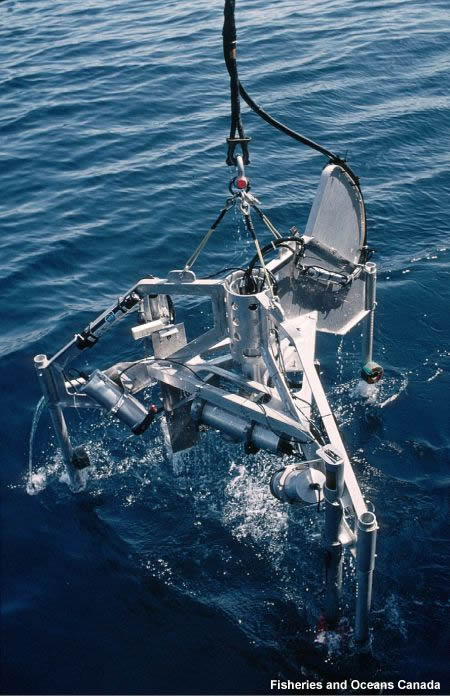
In order to properly manage these important and sensitive species and their habitats, detailed knowledge of their biology, distributions (particularly concentrations), biodiversity and ecological relationships with other species, such as fish, is urgently needed. Government and university scientists have conducted research on the cold-water corals in Atlantic Canada for the last two decades, including visual surveys of areas of the Scotian Shelf and Gulf of Maine. The knowledge of fishing communities was key in identifying priority areas for surveys.
Fisheries and Oceans Canada, in collaboration with universities, NGOs and industry partners, has been collecting information on corals since 1998. The Department initiated a full coral research program in 2000. Since 2000, DFO has conducted several surveys to characterize coral and sponge habitat. These surveys rely on video and photographs to document the distribution, abundance and condition of corals in these waters, their preferred habitats and some of their associated species.
Ongoing coral and sponge samples are also provided through the DFO multispecies research vessel surveys, the At-sea Observer Program and the Northern Shrimp Survey (DFO and industry collaboration). In 2021, 2022 and 2024, Remotely Operated Vehicle surveys and Automatic Underwater Vehicle surveys provided additional information on the distribution and health of corals throughout the Scotian Shelf-Bay of Fundy.
Research guidance and approvals
Continued research on corals and sponges, especially using non-invasive techniques, will be encouraged and supported to understand the diversity of coral and sponge communities found in the Scotian Shelf-Bay of Fundy and to provide adequate management advice. All research, whether directed at corals or sponges or as part of another type of bottom sampling activity, should be consistent with the objectives of each site. In particular, research activities involving direct sampling or incidental contact with corals and sponges in marine refuges or Marine Protected Areas should take special precautions. Researchers wishing to conduct research in the Coral or Sponge Marine Refuges are requested to contact Marine Planning and Conservation (DFO.MARRefuges.MPO@dfo-mpo.gc.ca).
- Date modified: