
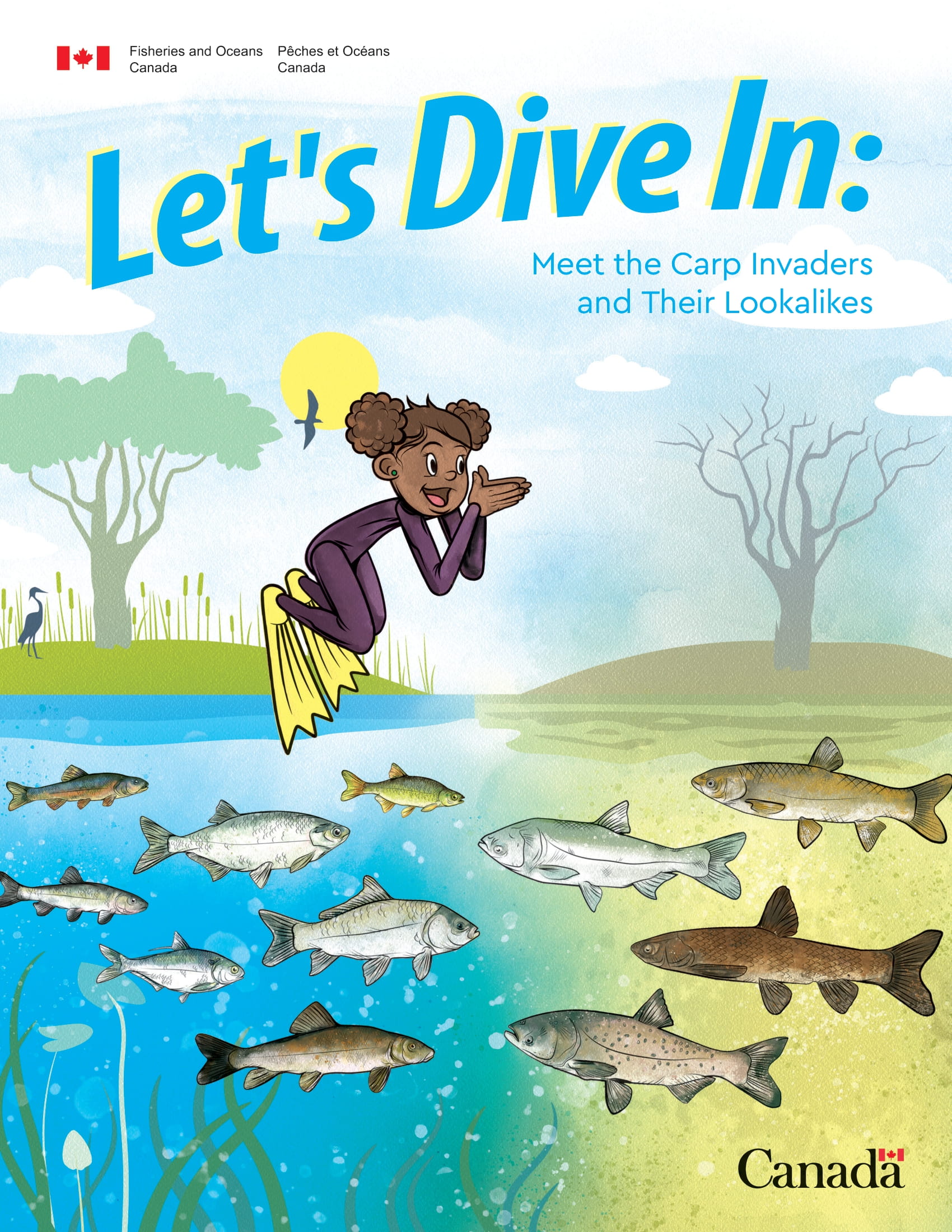
Let's dive in: Meet the Carp invaders and their lookalikes
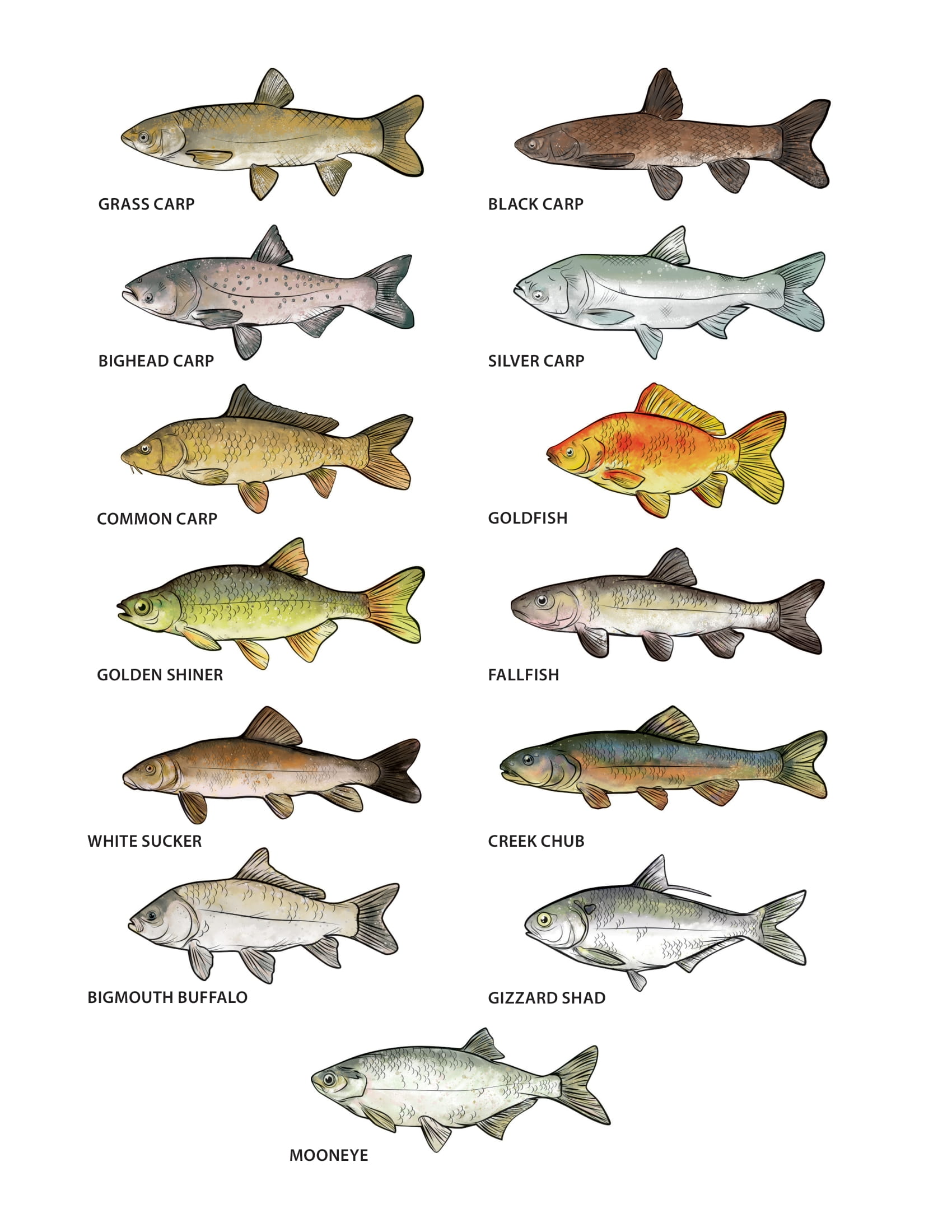
Illustrations of 12 aquatic species at risk featured in the colouring book including Grass Carp, Black Carp, Bighead Carp, Silver Carp, Common Carp, Goldfish, Golden Shiner, Fallfish, White Sucker, Creek Chub, Bigmouth Buffalo, Gizzard Shad, Mooneye.
Hello divers
Do you know what aquatic invasive species are? Aquatic invasive species (AIS) are animals and plants that are found in the water but are from somewhere else and that can harm other animals, the environment or people. AIS are often better at finding food and habitat compared to native species, making AIS fierce competitors as they take what our native fishes need to survive and thrive.
In this colouring book, we highlight 4 invasive fishes that threaten the Great Lakes: Grass Carp, Bighead Carp, Silver Carp and Black Carp, along with other fishes that look somewhat like them. These 4 carps were brought to the United States (U.S.) to control pests on fish farms and were able to escape because of flooding and are now making their way towards the Great Lakes! Of the 4 carps, Grass Carp are the closest to invading the Canadian Great Lakes. If we don't stop them, these fishes could take over the Great Lakes and leave little food or space for native fishes like Walleye, Largemouth Bass and Yellow Perch. We need everyone's help to keep them from getting into Canadian waters.
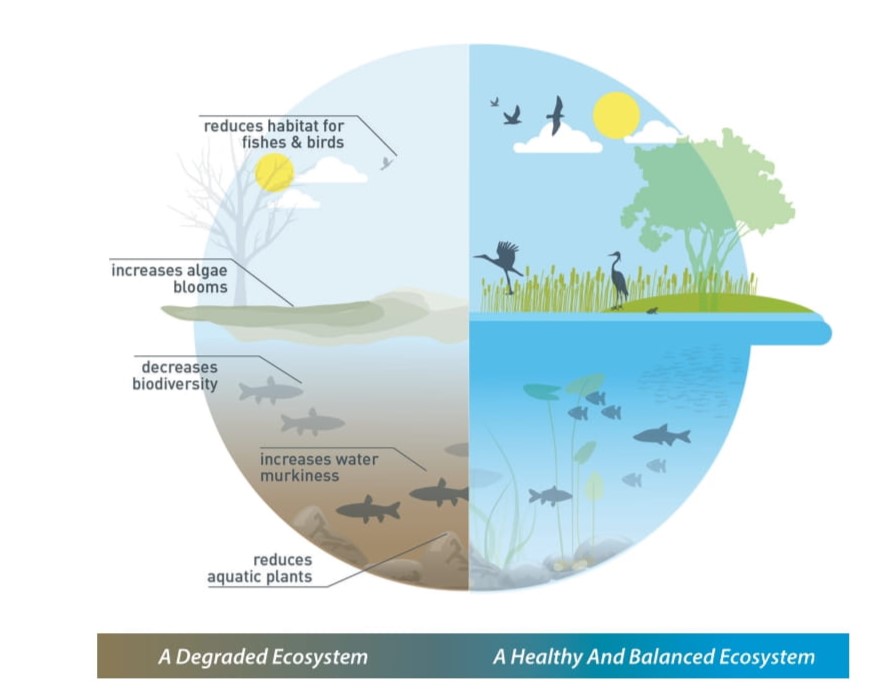
Long description:
A degraded ecosystem:
- Reduces habitat for fishes and birds
- Increases algae blooms
- Decreases biodiversity
- Increases water murkiness
- Reduces aquatic plants
A healthy and balanced ecosystem
This picture shows the effects Grass Carp would have on our ecosystems. The right side represents a healthy and balanced ecosystem – there are many different fishes, birds, amphibians and plants, and the water quality is good and clear. On the left side, Grass Carp have invaded and the ecosystem has suffered – there are fewer fishes and other animals and plants, there is less habitat for fishes and birds, and the water isn't healthy.
While you're out near or on the water, enjoying fishing, boating or paddling, make sure you watch out for these invaders! In the meantime, Fisheries and Oceans Canada will keep working hard to protect the Great Lakes ecosystem on behalf of all Canadians and their families. If you liked this colouring book or have questions, you can contact us through Fisheries and Oceans Canada's social media. Thanks in advance for helping us out!
X: FishOceansCAN
Facebook/YouTube: FisheriesOceansCanada
Instagram: FisheriesOceansCan
A QR code is also included for readers to scan that links to Aquatic species at risk page.
Table of contents
- Grass Carp
- Black Carp
- Bighead Carp
- Silver Carp
- Common Carp
- Goldfish
- Golden Shiner
- Fallfish
- White Sucker
- Creek Chub
- Bigmouth Buffalo
- Gizzard Shad
- Mooneye
- Word search
- Spot the difference
- Suspect you found a Grass Carp
- Catch the carp
- Draw your own
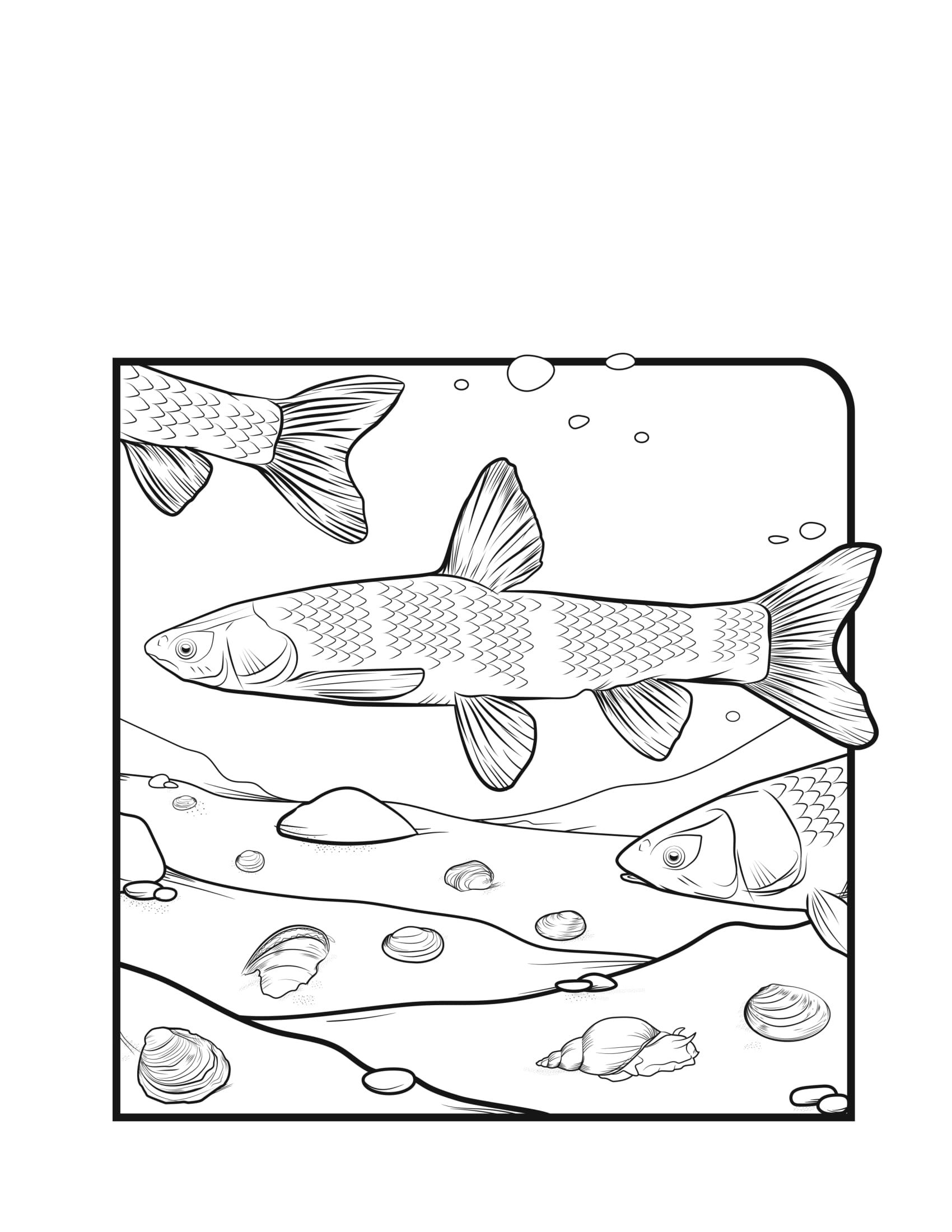
Grass carp
Grass Carp are at Canada's door step! They eat up to 40% of their body weight in aquatic plants every day – that's like you eating 40 pizzas or 180 burgers every day! This can harm native fishes because they need aquatic plants to reproduce, for nursery and cover habitat. Since Grass Carp eat so much, they also make a lot of waste which can cause harmful algae blooms and lower water quality. Help us keep watch to stop this fish from entering Canada's waters and taking over!
Grass Carp are often confused with Common Carp but unlike Common Carp, Grass Carp have a short dorsal fin and no barbels/whiskers.
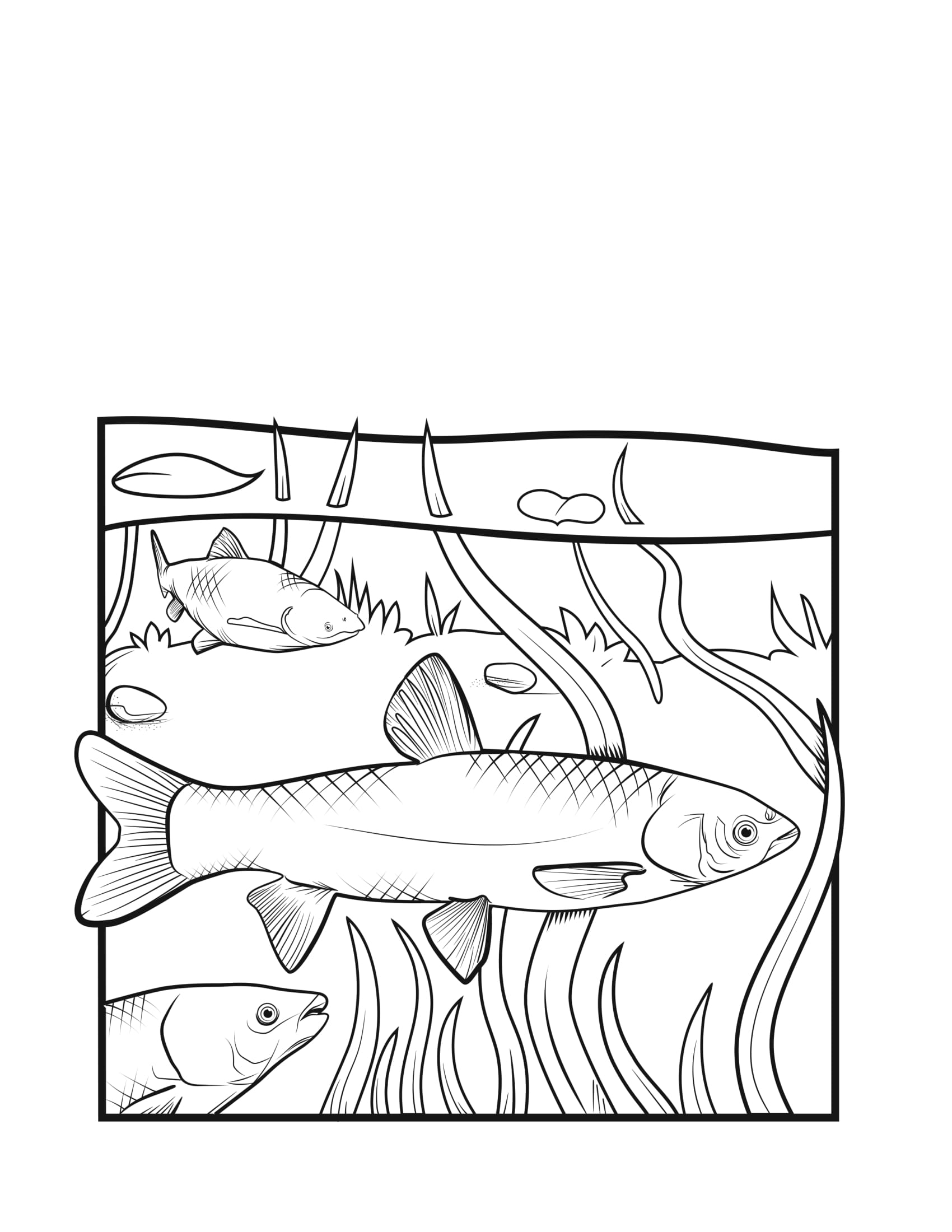
Grass carp. Click on image to print.
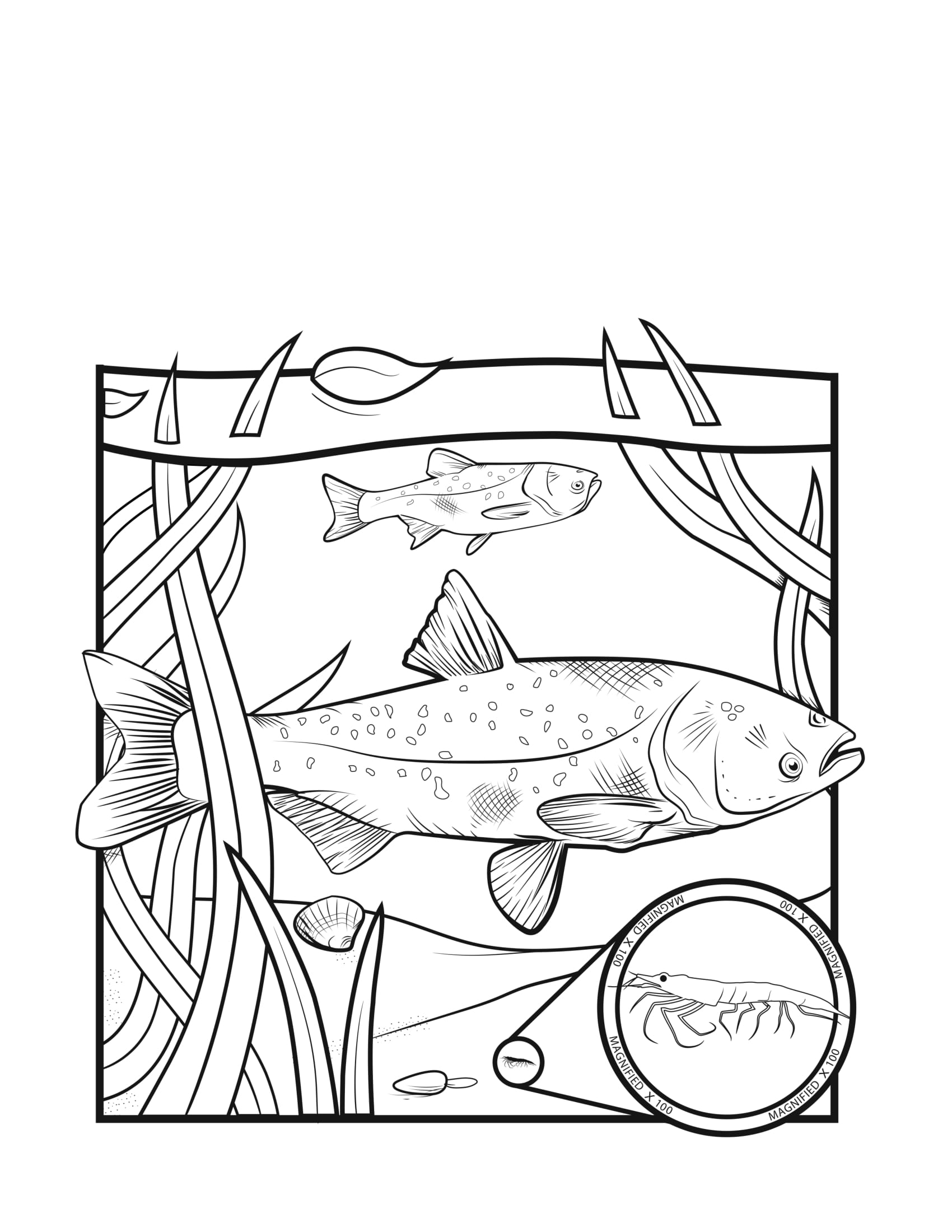
Black carp
Black Carp eat zooplankton (very tiny animals), mussels and snails. Black Carp have teeth in their throats that are used to crush shells, giving them the ability to wipe out native mussels and harm native fishes, turtles, birds and other animals since they are so good at finding food and habitat. Black Carp can grow to be as big as a human adult, measuring 6 feet in length and 200 pounds!
Help us keep watch to stop this fish from entering Canada's waters and taking over!
Black carp. Click on image to print.
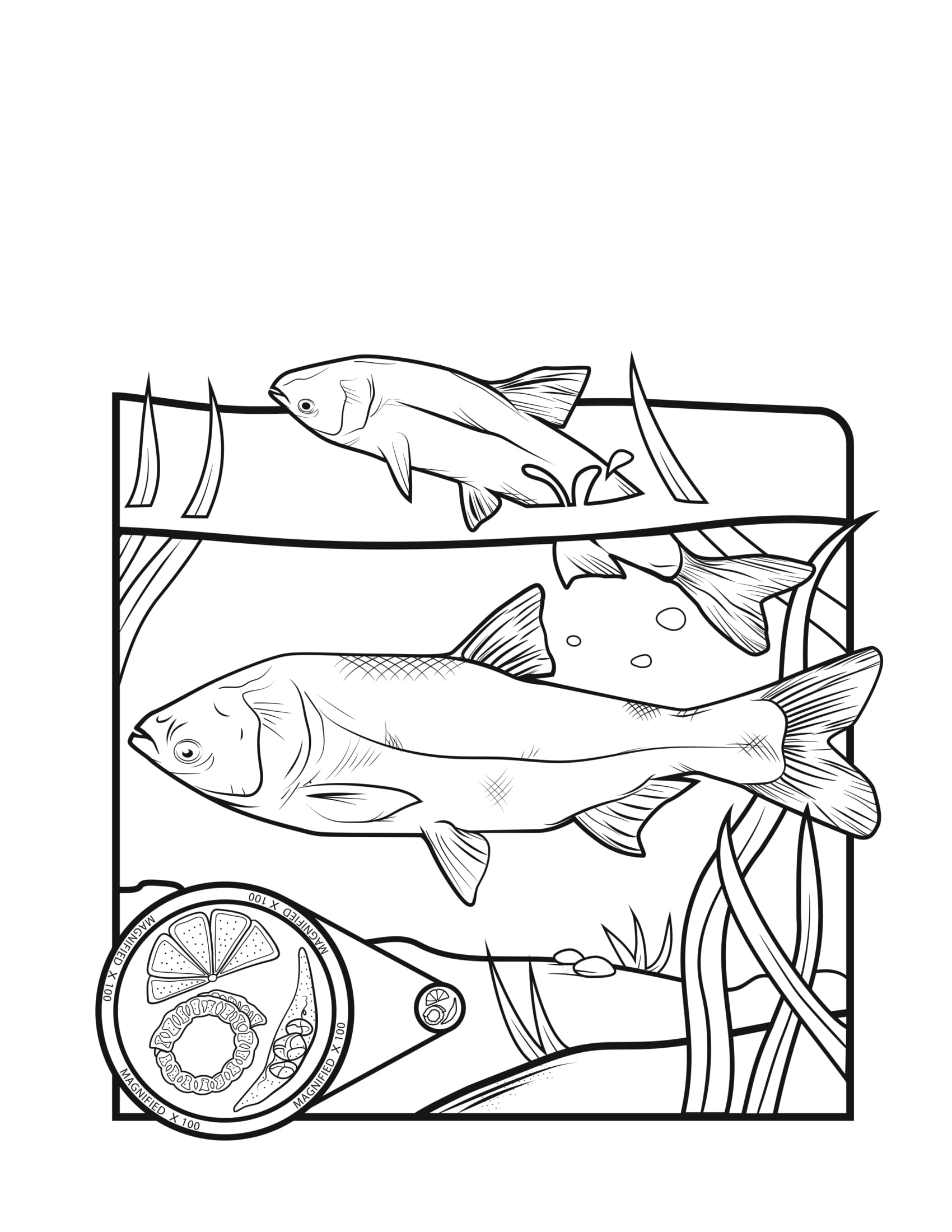
Bighead carp
Bighead Carp are uncontrollable eaters since they lack a true stomach, causing them to eat almost non-stop. They feed on zooplankton (very tiny animals) and would eat all the food our native fishes need to survive. Bighead Carp can grow to be 5 feet long and more than 80 pounds! Bighead Carp have eyes that are low on their heads, which makes them look like they are upside down.
Help us keep watch to stop this fish from entering Canada's waters and taking over!
Bighead Carp Click on image to print.
Silver carp
Silver Carp, like Bighead Carp, are uncontrollable eaters since they also lack a true stomach. They mostly eat phytoplankton (very tiny plants). When startled by the noise from boat engines, Silver Carp can jump up to 10 feet out of the water and will hit anything in their way – boaters or swimmers could be struck and hurt by these jumping Silver Carp! Just like Bighead Carp, Silver Carp also have eyes low on their heads, so they also look like they are upside down.
Help us keep watch to stop this fish from entering Canada's waters and taking over!
Silver Carp Click on image to print.
Common carp
Common Carp are an invasive species but have been present in parts of the Great Lakes for a long time.
I get confused with Grass Carp.
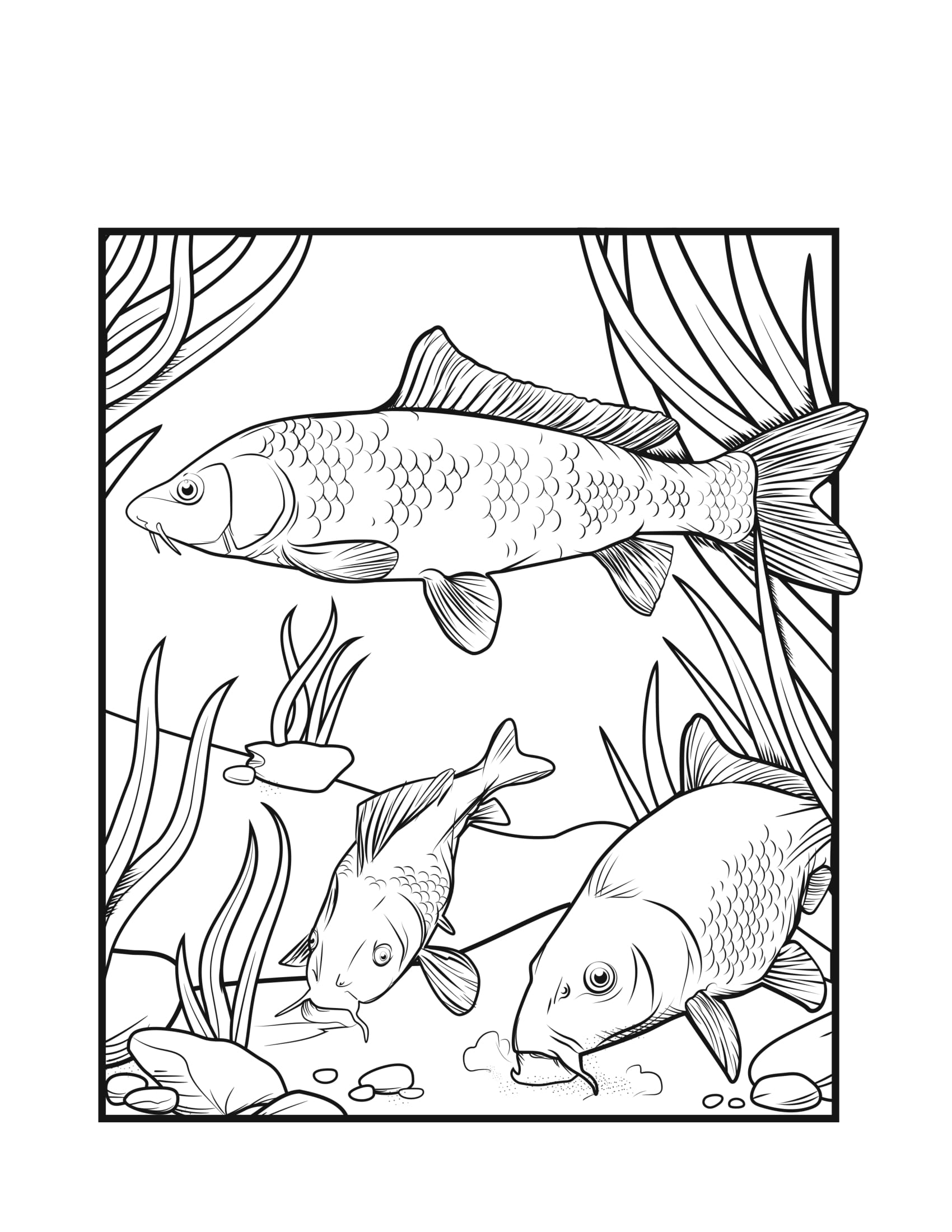
Common Carp Click on image to print.
Goldfish
To protect natural ecosystems in Canada, it is important not to release your aquarium pets, like Goldfish, into the wild – Goldfish is also invasive and can harm our native fishes. If you decide you no longer want to own your Goldfish, please find it another home, return it to the pet store, or give it to a local school.
I get confused with Grass Carp.
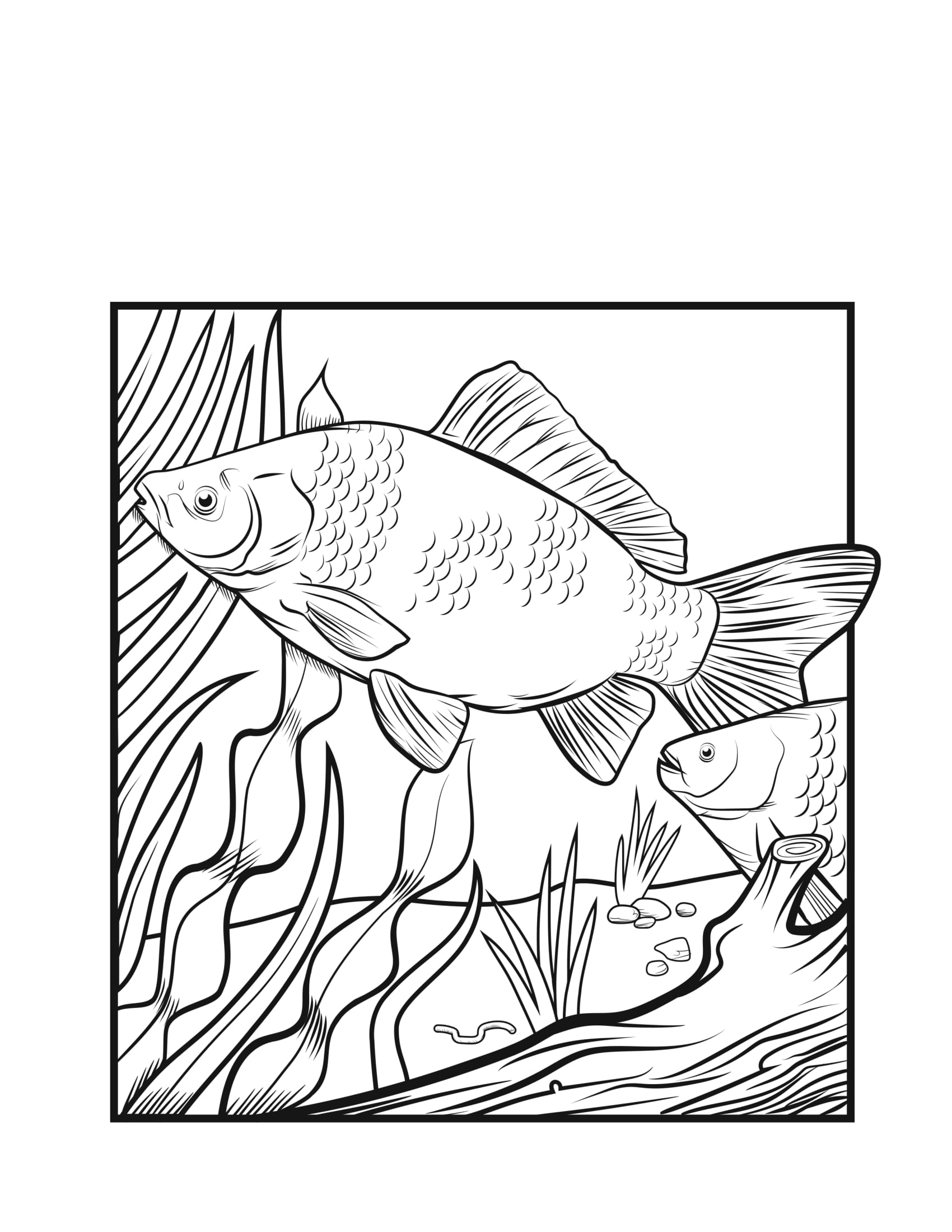
Goldfish Click on image to print.
Golden shiner
I get confused with Grass Carp.
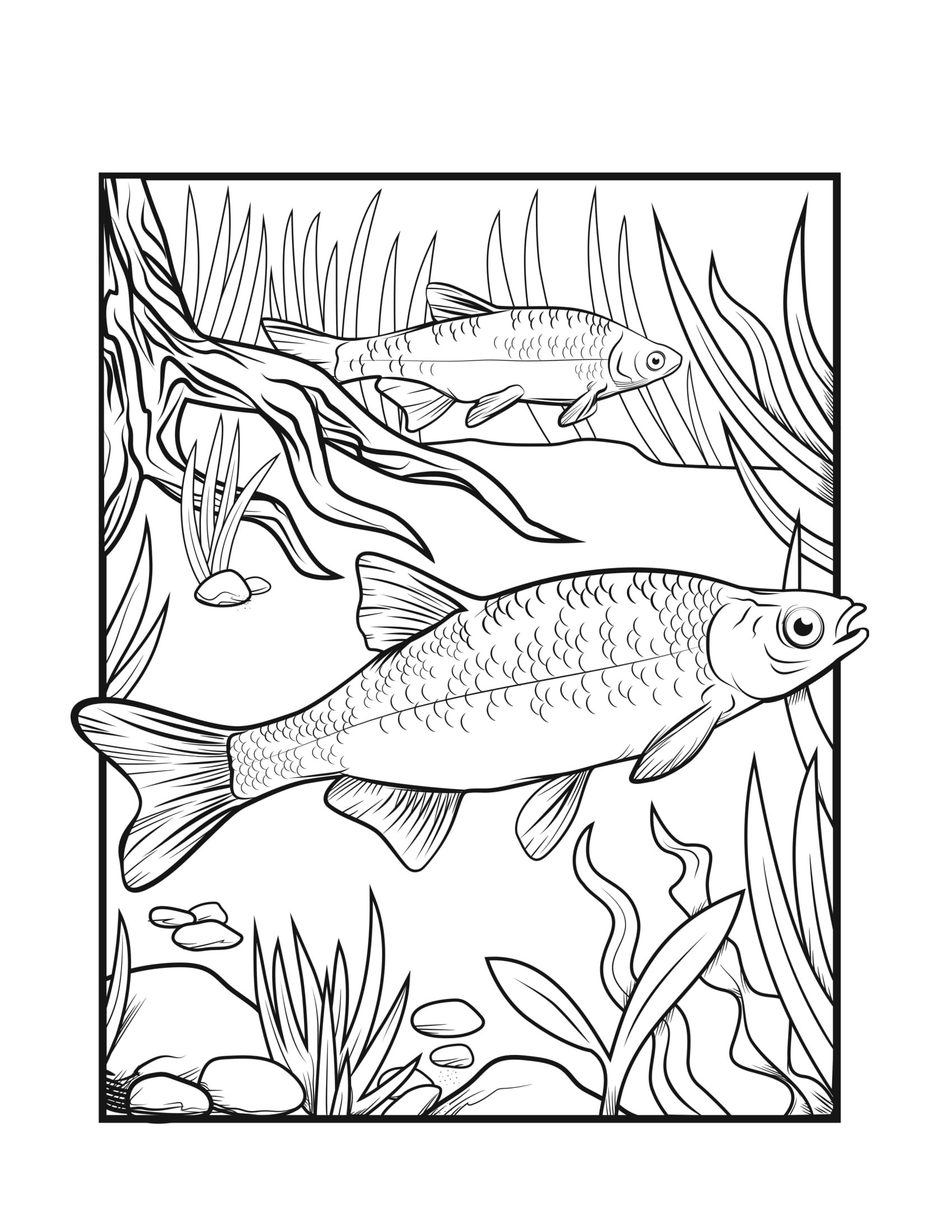
Golden Shiner Click on image to print.
Fallfish
I get confused with Grass Carp and Black Carp.
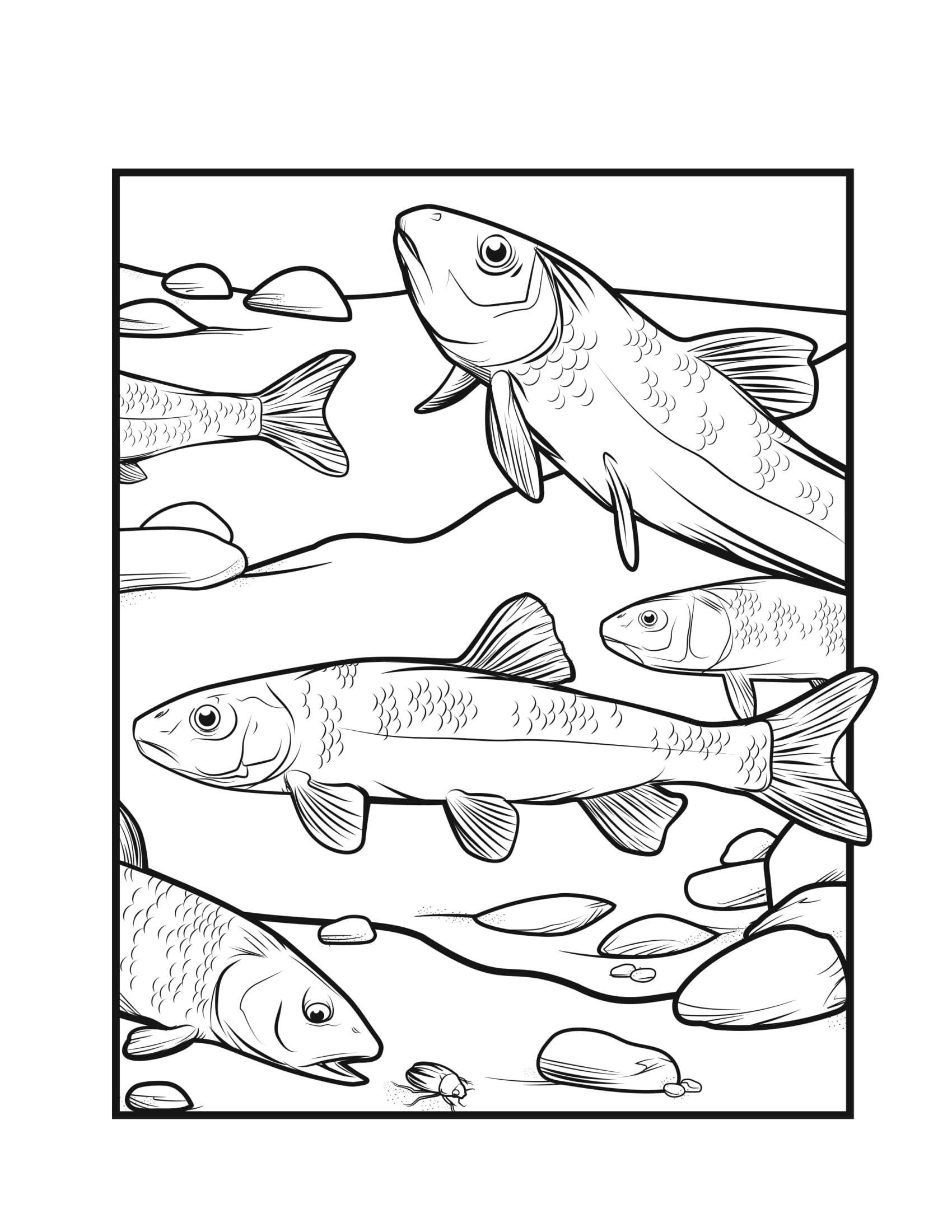
Fallfish Click on image to print.
White sucker
I get confused with Grass Carp and Black Carp.
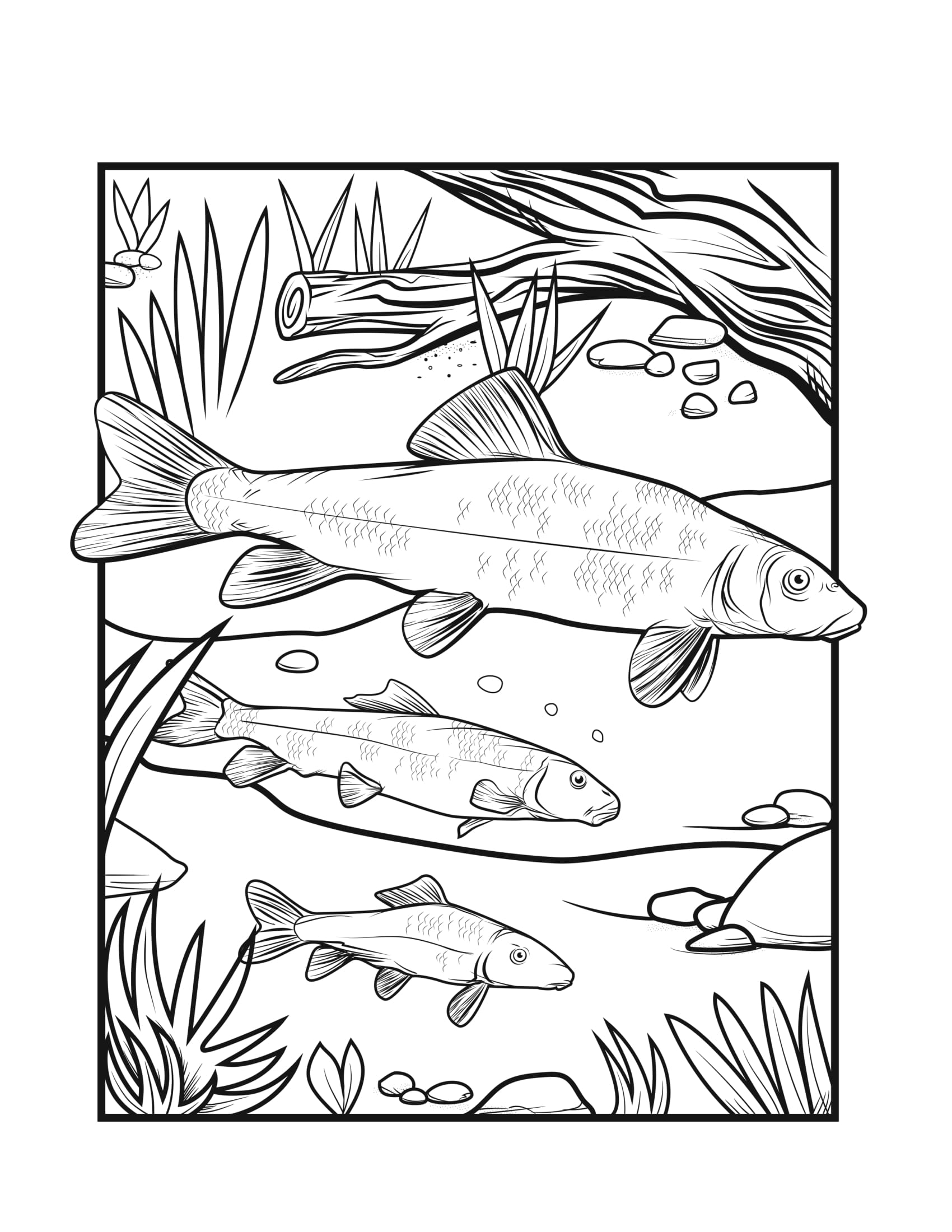
White Sucker Click on image to print.
Creek chub
I get confused with Grass Carp and Black Carp.
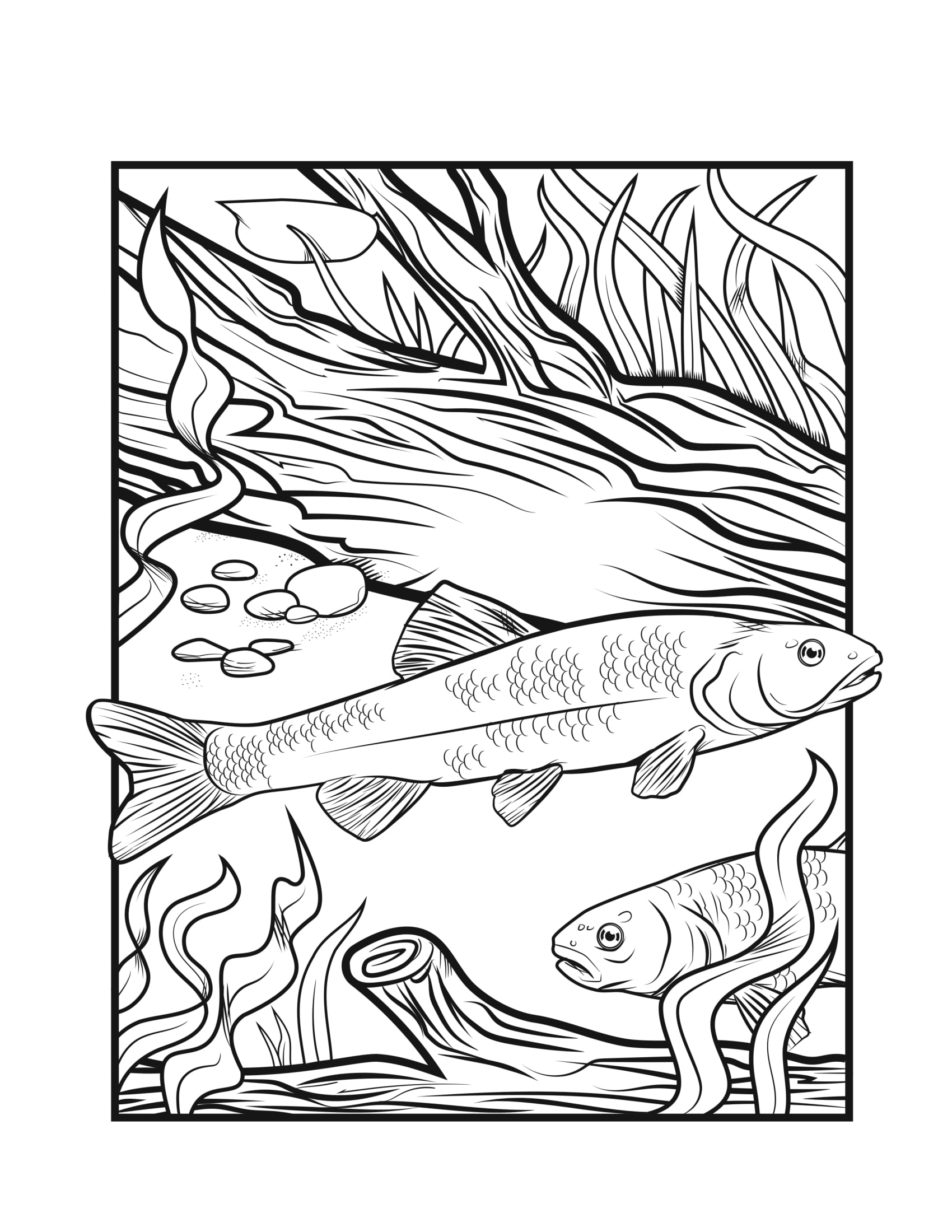
Creek Chub Click on image to print.
Bigmouth buffalo
I get confused with Bighead Carp.
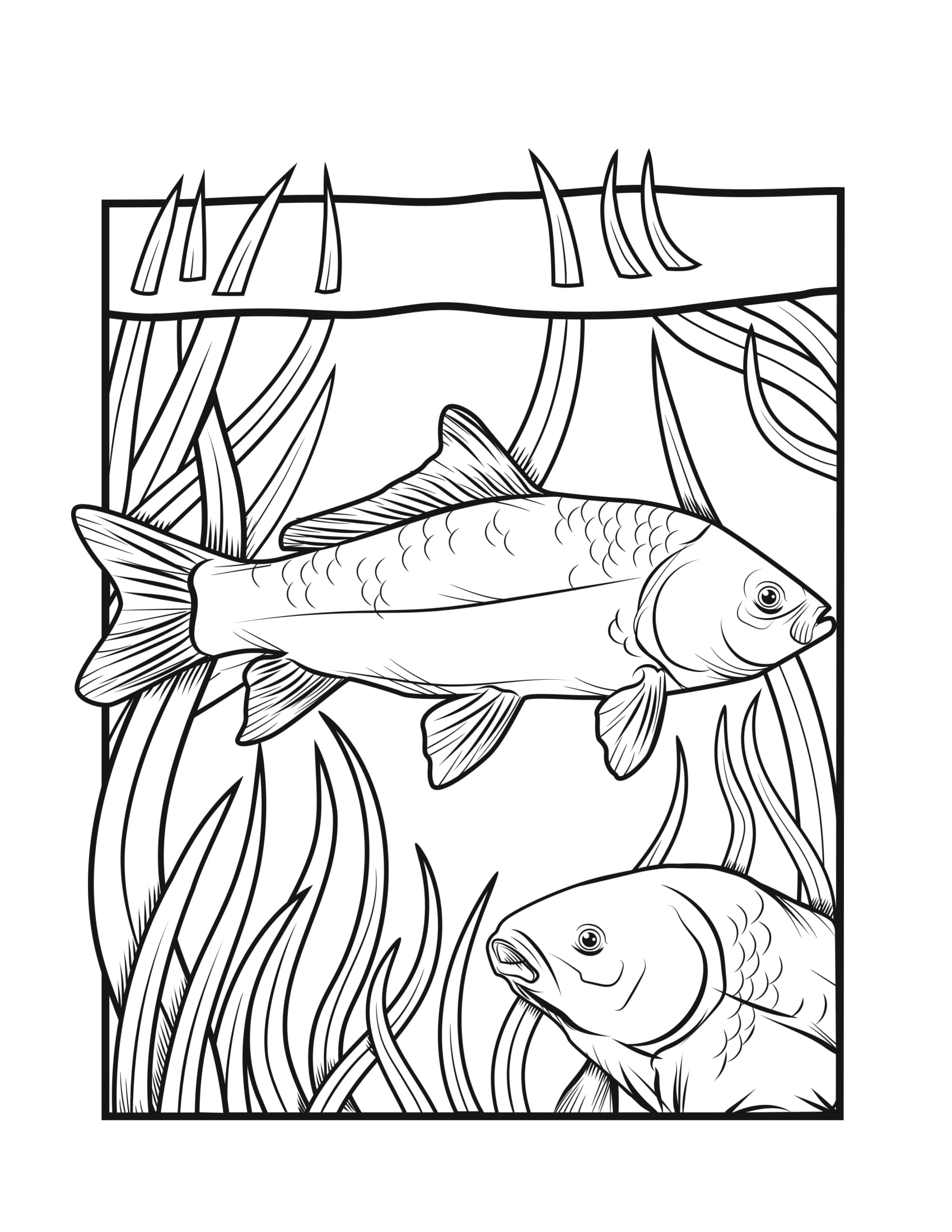
Bigmouth Buffalo Click on image to print.
Gizzard shad
I get confused with Silver Carp.
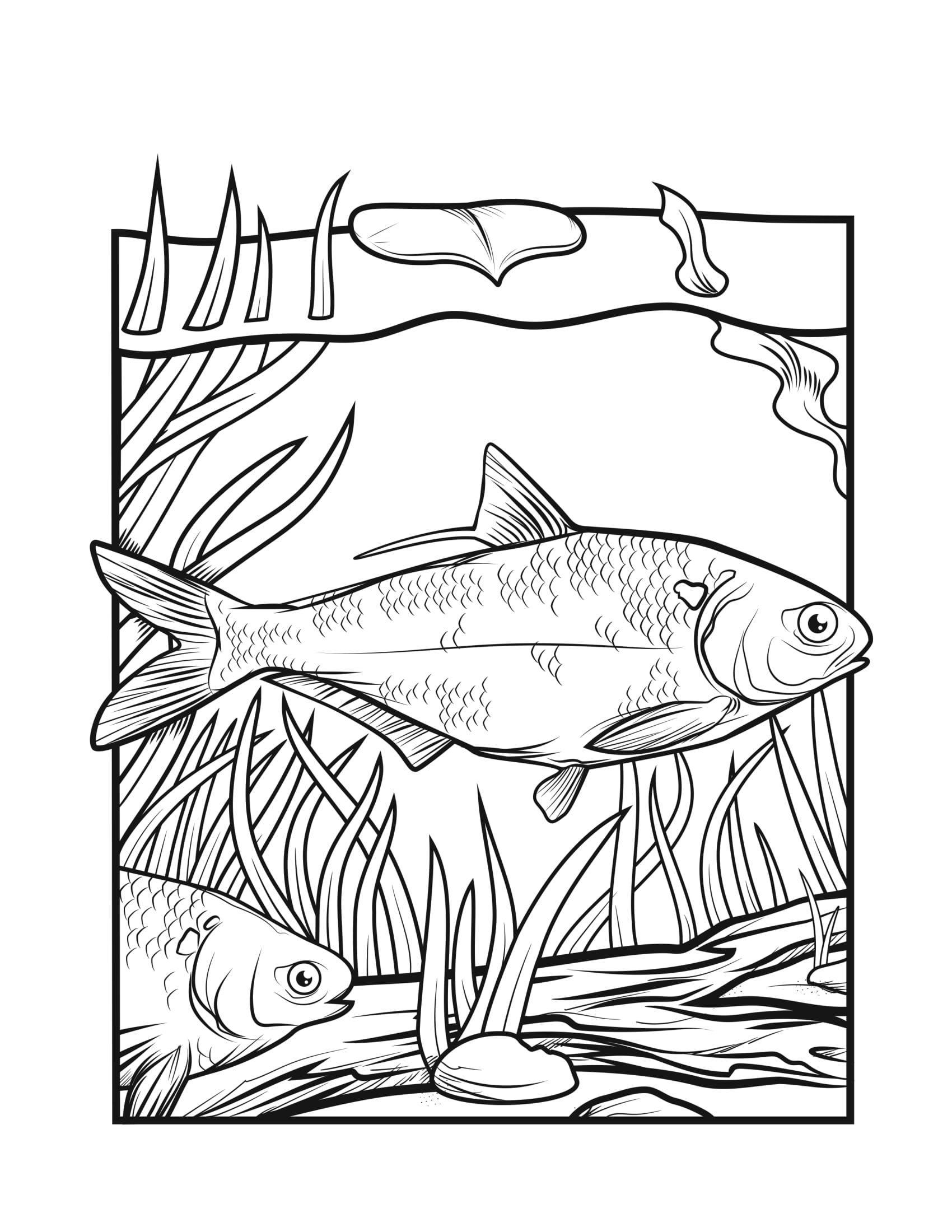
Gizzard Shad Click on image to print.
Mooneye
I get confused with Silver Carp.
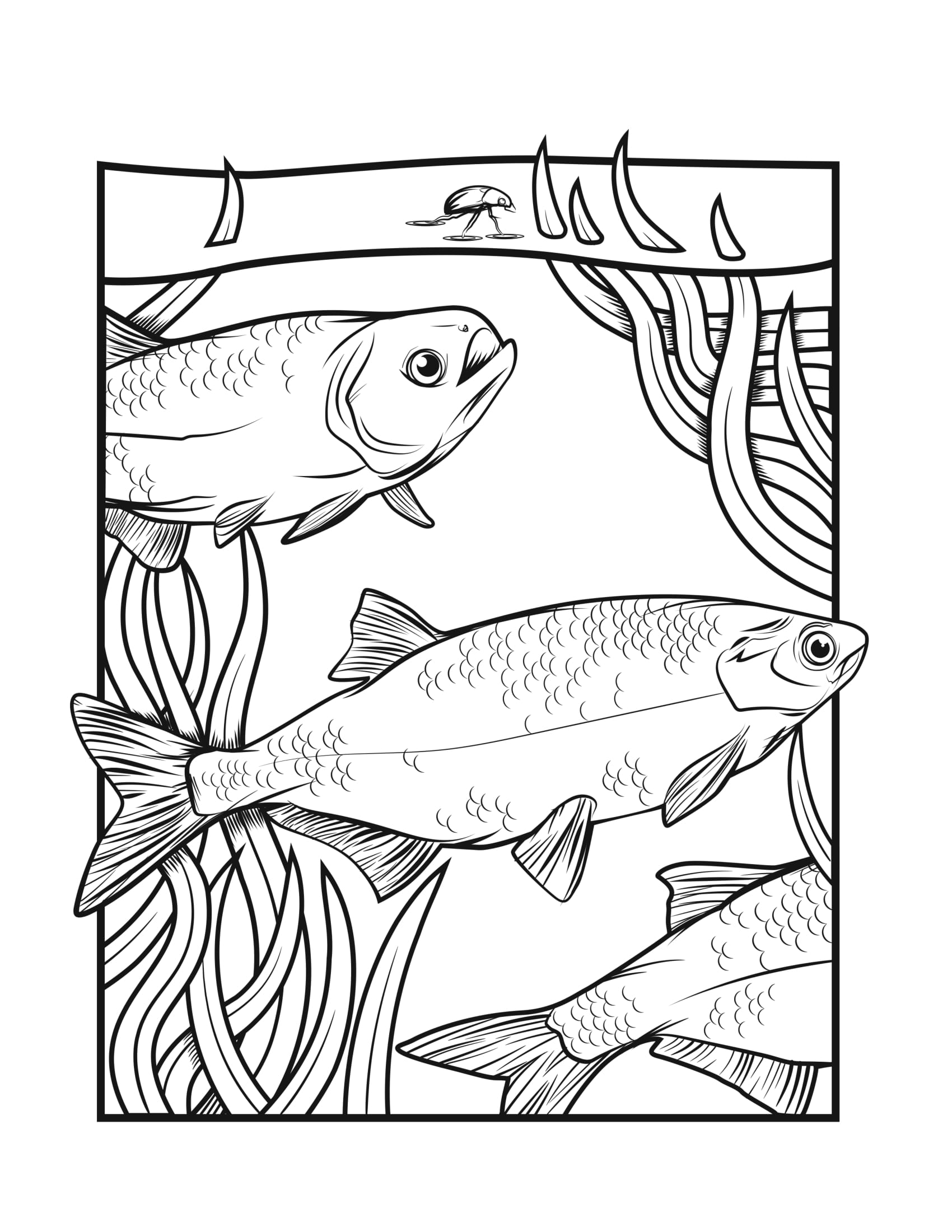
Mooneye Click on image to print.
Word search
Find the list of words in the puzzle and circle them! Remember they could be in any direction, even backwards!
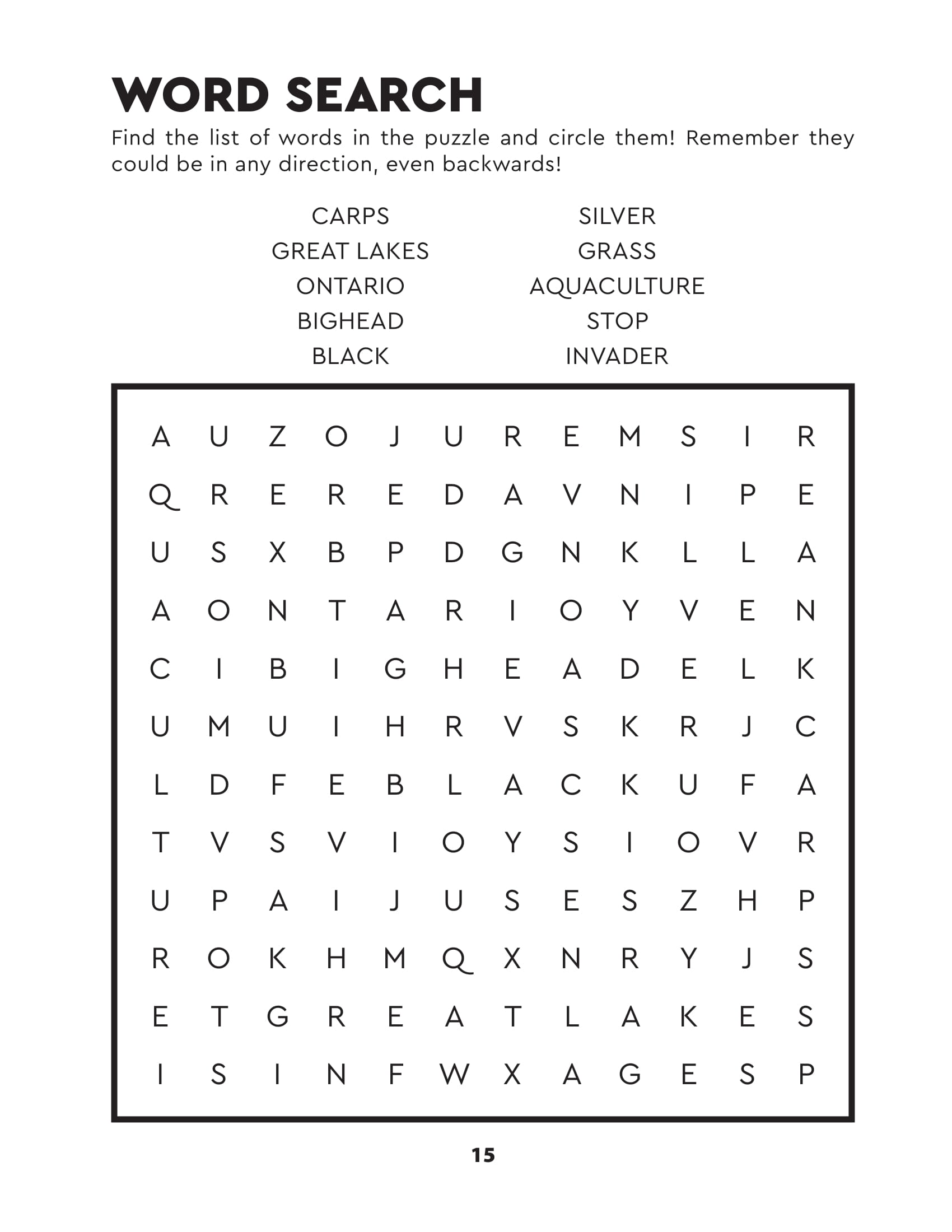
Word search Click on image to print.
Long description:
Black-bordered word search grid with letters arranged in rows and columns. Ten hidden words are listed above the grid:
- Carps
- Great Lakes
- Ontario
- Bighead
- Black
- Silver
- Grass
- Aquaculture
- Stop
- Invader
Words may appear sideways, diagonal, vertical, horizontal, or backwards.
Spot the difference
Grass Carp, Bighead Carp, Silver Carp and Black Carp do not belong in the Great Lakes. In the picture below, find the changes that could happen if these fishes invade our waters.
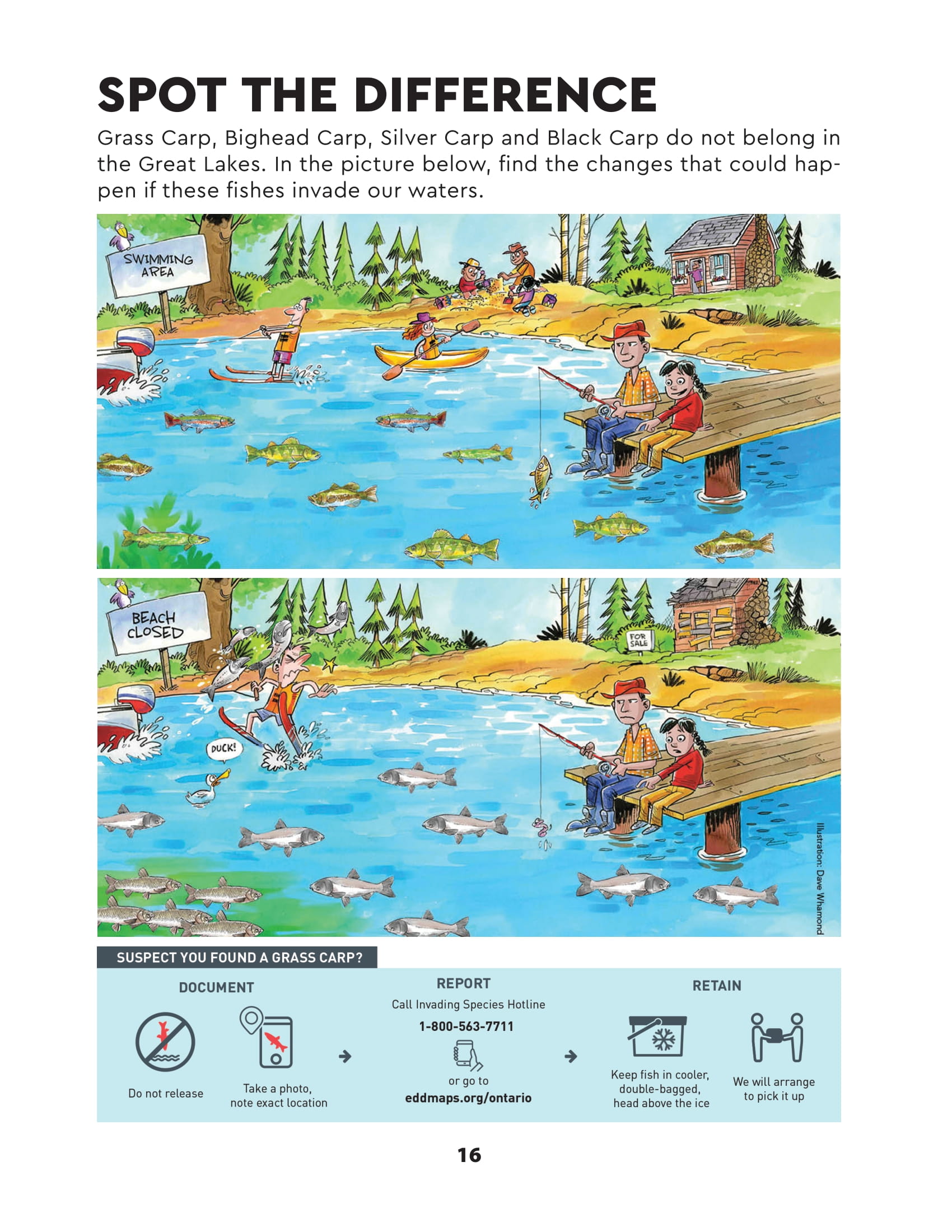
Spot the difference Click on image to print.
Long description:
Two similar shoreline scenes stacked vertically, each showing a sandy shoreline and blue water with green trees and grass behind. In the first image:
- green fish swim in the water
- a person water skis safely, another canoes
- people play on the beach
- a house stands by the shore
- people fishing from a dock have caught a fish
- A sign reads "swimming area"
In the second image:
- the fish are silver
- the water skier is being hit by jumping fish
- there is a duck in the water
- no one is canoeing
- the house is boarded up with a "for sale" sign
- the people fishing have a worm on their lure
- no one plays on the beach
- the sign reads "beach closed"
Suspect you found a Grass Carp?
- Document
- Do not release
- Take a photo, note exact location
- Report
- Call Invading species hotline
- 1-800-563-7711 or go to eddamps.org/Ontario
- Retain
- Keep fish in cooler, double-bagged, head above the ice
- We will arrange to pick it up
Catch the carp
We need YOUR help! Follow the maze to help catch all of the Grass Carp and then bring them back to the lab. Good luck!
Draw your own
Draw an image of your favourite or imagined fish or fishes that you want to help protect in the Great Lakes!
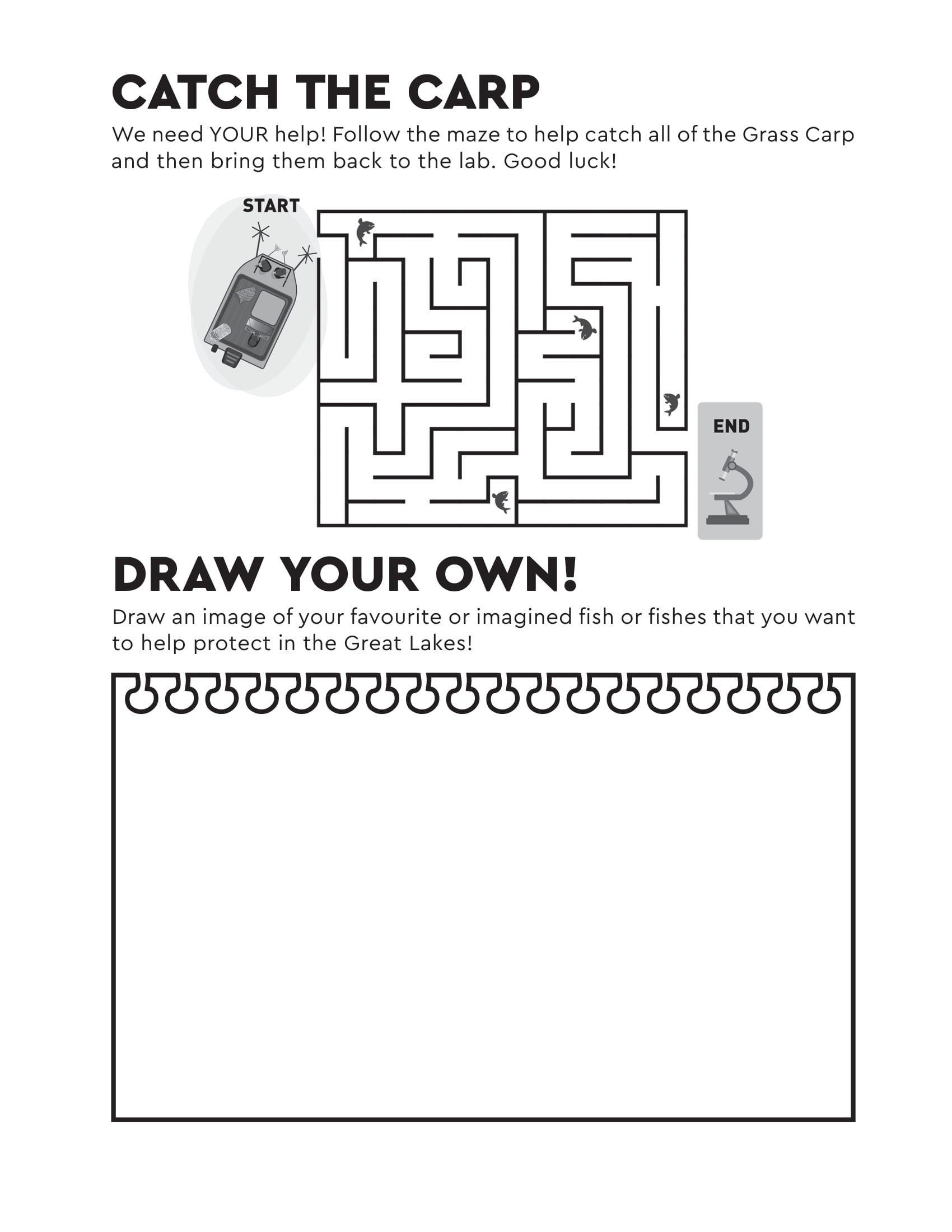
Maze and drawing page. Click on image to print.
- Date modified: