
Understanding aquatic climate change risks
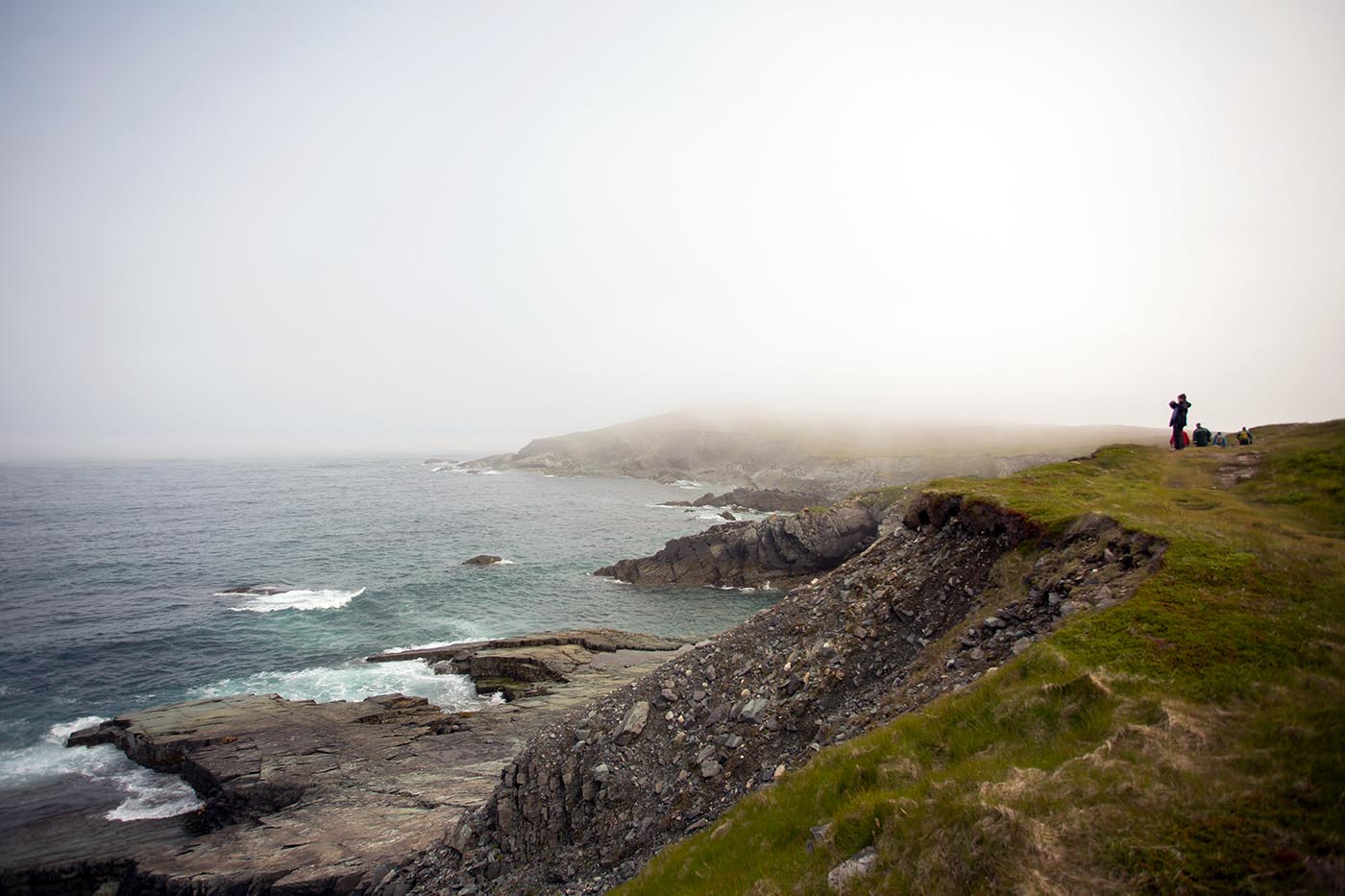
Rising sea levels can damage shorelines and coastal infrastructure. Photo credit: Denis Wong, C3.
Many regions of Canada will be affected by changes in coastal sea level, ocean temperature and chemistry, and ice conditions. It is very likely that climate change impacts will affect all regions to some extent. In the Arctic, dramatic reductions in Arctic sea ice cover are already evident and well documented.
We look at impacts of sea-level rise and more frequent storm surges on coasts and associated infrastructure, such as wharfs and dams. We study climate change and its impacts so that Canadians may adapt and continue to benefit from our oceans and inland waters.
Within Canada’s oceans and freshwater environments, climate change presents a range of risks, including:
- rising sea levels which can:
- damage shorelines and coastal infrastructure.
- harm coastal ecosystems.
- higher water temperatures and changing ocean chemistry which can:
- result in changing biological cycles or seasons and ecosystem biodiversity of the oceans.
- cause relatively rapid changes in marine and freshwater ecosystems.
- affect the amount, distribution, and quality of harvested fisheries and aquaculture stocks.
- less sea ice in both the Arctic and Eastern Canada which can:
- lead to changes to marine transportation and animal habitat.
We study the impacts of climate change on fisheries, ecosystems, and coastal infrastructure. This research provides both decision makers and Canadians with the information they need to plan and adapt to a changing climate.
Risks by region of Canada
In 2013 we completed four large aquatic basin risk assessments which include an analysis of climate trends and projections for the aquatic environment. This work helps managers make strategic, climate-sensitive decisions about government activities and assets which are at risk to a changing climate. Three streams of evidence with a bearing on the future were integrated into the risk assessments:
- a science-based climate change risk analysis of ecosystem impacts, vulnerabilities and opportunities and infrastructure impacts
- a socio-economic evaluation
- strategic policy concerns
The risk assessments looked at how climate change could impact four regions in terms of:
- government operations, such as our ability to manage and protect fish habitat
- coastal fisheries and aquaculture
In each assessment we looked at the impact and probability of the following climate change risks on a 10- and 50-year horizon:
- ecosystem and fisheries degradation and damage
- changes in biological resources
- species reorganization and displacement
- increased demand to provide emergency response
- infrastructure damage
- changes in access and navigability of waterways
The following summaries give the key findings from our assessments by region:
-
Arctic large aquatic basin assessment
Arctic large aquatic basin assessment
The greatest risk we face in the Arctic due to climate change relates to less sea ice and more human access to an area that previously was not accessible. Increased access plus limited resilience in ecosystems dependent on ice makes the region highly vulnerable.
10-year risk
- ecosystem and fisheries degradation and damage
- changes in biological resources
50-year risk
- ecosystem and fisheries degradation and damage
- changes in biological resources
- species reorganization and displacement
Get the complete Arctic report (CSAS ScR - 2012/042).
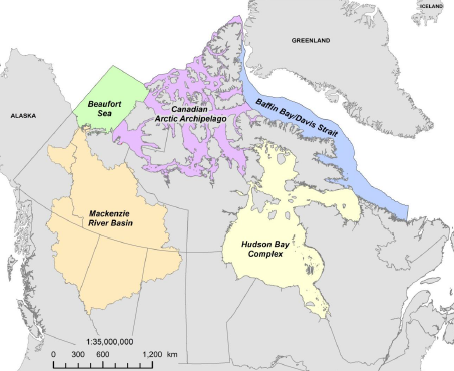
Arctic large aquatic basin assessment
-
Pacific large aquatic basin assessment
Pacific large aquatic basin assessment
The greatest risk we face in the Pacific due to climate change relates to ecosystem changes including migration and decline of certain species. These changes affect how we manage fish stocks, shellfish and marine mammals.
10-year risk
- changes in biological resources
- ecosystem and fisheries degradation and damage
50-year risk
- changes in biological resources
- ecosystem and fisheries degradation and damage
- species reorganization and displacement
Get the complete Pacific report (CSAS ScR - 2013/016).
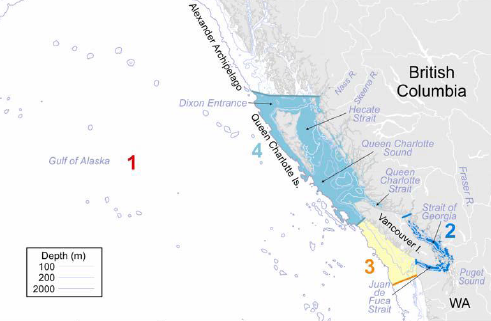
Pacific large aquatic basin assessment
-
Freshwater large aquatic basin assessment
Freshwater large aquatic basin assessment
The greatest risk we face in our freshwater due to climate change relates to the location and type of various species and loss of habitat for many species.
10-year risk
- ecosystem and fisheries degradation and damage
- changes in access and navigability of waterways
50-year risk
- ecosystem and fisheries degradation and damage
- changes in access and navigability of waterways
- species reorganization and displacement
- changes in biological resources
Get the complete Freshwater report (CSAS ScR - 2013/011).
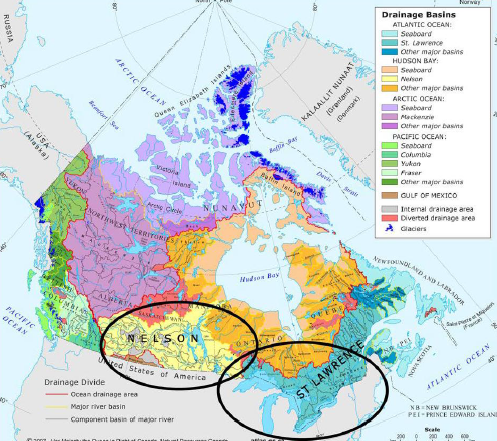
Freshwater large aquatic basin assessment
-
Atlantic large aquatic basin assessment
Atlantic large aquatic basin assessment
The greatest risk we face in the Atlantic due to climate change relates to damage to government vessels and small craft harbours. Damage can result from flooding and erosion in freshwater runoff.
10-year risk
- infrastructure damage
- species reorganization and displacement
50-year risk
- infrastructure damage
- species reorganization and displacement
Get the complete Atlantic report (CSAS ScR - 2012/044).

Atlantic large aquatic basin assessment
- Date modified: