
Laurentian Channel Marine Protected Area (MPA) annual report 2024
On this page
- At-a-glance
- Conservation objectives
- Management and governance
- Feature creatures
- Research and monitoring
- Collaboration and partnerships
- In the spotlight: benefits
- Surveillance and enforcement
- Outreach and engagement
At-a-glance
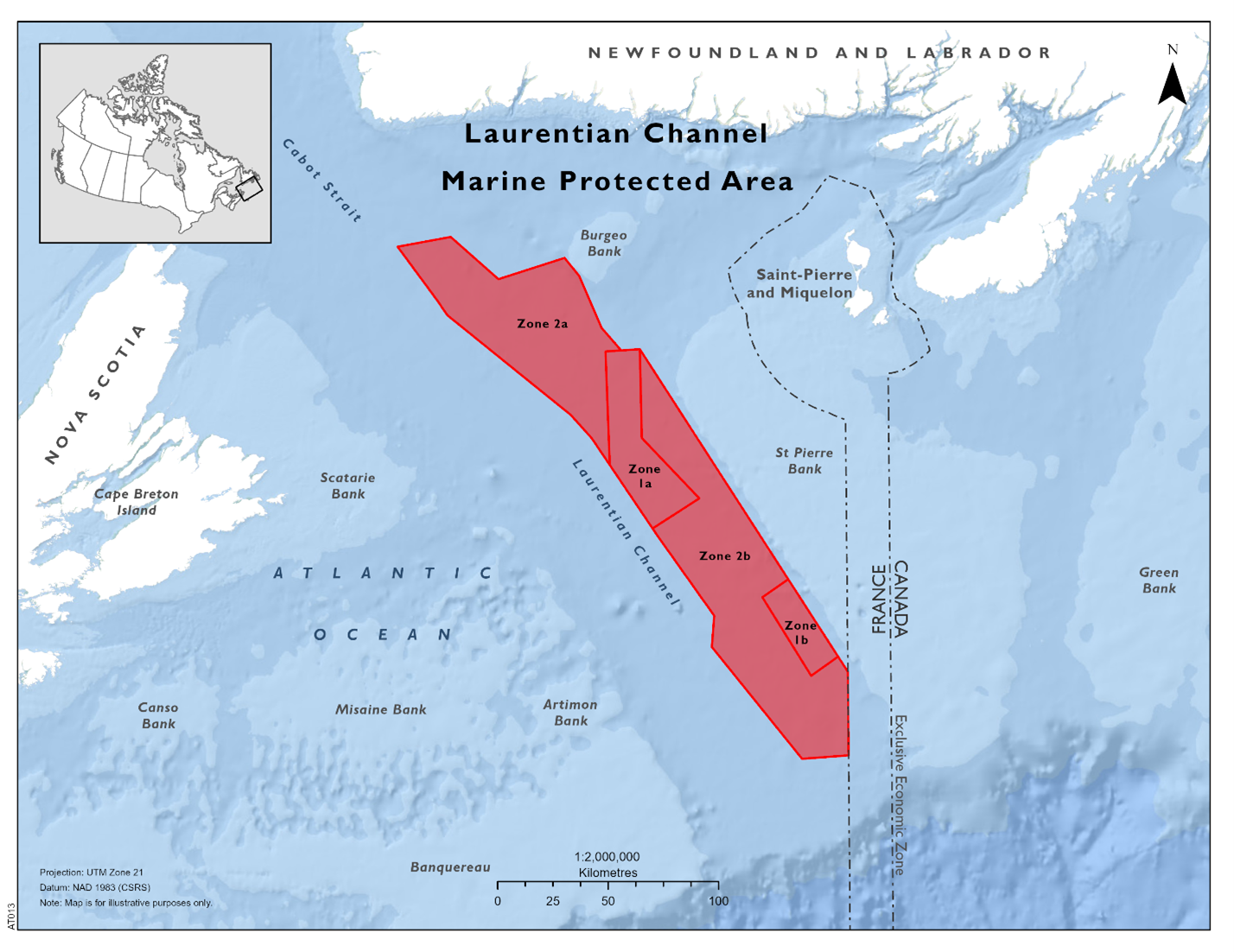
Map of Laurentian Channel Marine Protected Area.
Date of designation:
2019
Size:
11,580 km2
Contribution towards the marine conservation targets:
0.20%
Location:
This MPA is located in a deep submarine valley 50 km off the southwest coast of Newfoundland and Labrador (NL), in the NL Shelves Bioregion; Atlantic Ocean.
Managed by:
Fisheries and Oceans Canada (DFO)
Zones:
There are 2 management zones:
- Zone 1a (2,722 km2) and 1b (902 km2) are the core protection zones consisting of sensitive benthic areas where unique sea pen fields are located, which offers the highest level of protection within the MPA
- Zone 2a (3,941 km2) and 2b (4,343 km2) are the adaptive management zones, which accommodate activities compatible with the conservation objectives
Conservation objectives
- Protect corals, particularly significant concentrations of sea pens, from harm due to human activities
- Protect Black Dogfish, Porbeagle Sharks and Smooth Skate from human induced mortality
- Promote the survival and recovery of Northern Wolffish and Leatherback Sea Turtles by minimizing risk of harm from human activities
Management and governance
The on-going management of the Laurentian Channel MPA, since designation in 2019, largely includes the review and assessment of activity plan applications for proponents to carry out research and monitoring or educational activities in the MPA. In 2024, 4 activity plans were received and approved, after conditions and mitigations were agreed upon. Most of these scientific activities were carried out by DFO and, in some cases, DFO with an industry or academic partner. In addition, 1 multi-year activity plan beginning in 2024 with work continuing until 2029 was approved. The multi-year activity plan will undertake marine mammal emergency response activities within the MPA.
In 2024, work continued to draft the first management plan for the Laurentian Channel MPA, which will pertain to a 5-year implementation from 2025- 2030.
In addition, the process of establishing an advisory committee for the Laurentian Channel MPA continued in 2024. The committee will likely include representatives from:
- federal and provincial governments
- industry
- the Miawpukek First Nation
- environmental non-governmental organizations
- academia
Feature creatures
The MPA is unique due to its high numbers of corals including Pennatulaceans (sea pens), which are whip-like corals that are < 2m in height. The largest fields of sea pens in the bioregion are in the Laurentian Channel, with 6 species observed thus far. Corals such as sea pens have an important role in marine ecosystems as they support the cycling of organic matter, stabilize substrates and provide unique 3D structural habitats for fish and other species to use for:
- feeding
- reproducing
- avoiding predators
Areas of high coral diversity are positively correlated with high fish species richness, density and diversity.
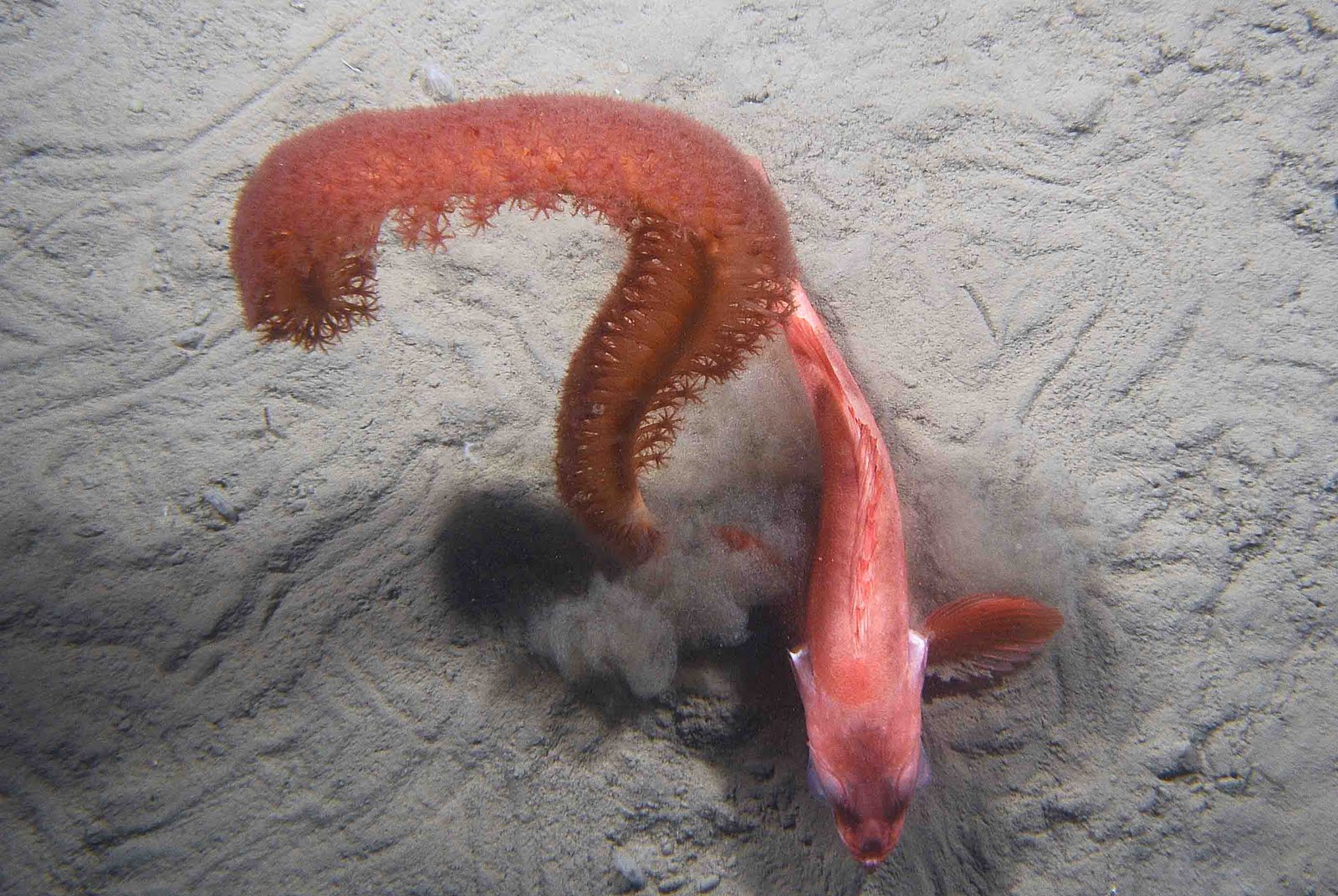
Sea pen and Redfish in the Laurentian Channel MPA. Photo credit: DFO-CCG.
Research and monitoring
In 2024, the Canadian Science Advisory Secretariat published a scientific monitoring approach for the Laurentian Channel MPA. This report identified reference sites and provided recommendations on ecological monitoring for the draft management plan and for the draft monitoring plan. Other scientific publications related to the Laurentian Channel MPA were released in 2024 include:
- Morris et al. (2024) which investigated the statistical power of the DFO multispecies trawl survey for assessing changes in some of the conservation objective species as well as seafloor imagery to assess sea pens
- Thayer et al. (2024) looked at climate change associated shifts in Atlantic cod habitat in marine conservation areas, including the Laurentian Channel MPA
- An in situ image guide to the fauna of the Laurentian Channel MPA was also published (Command et al. 2024) to facilitate species identification from imagery and to increase consistency in imagery analysis annotation, particularly for use in the monitoring of benthic communities in the MPA
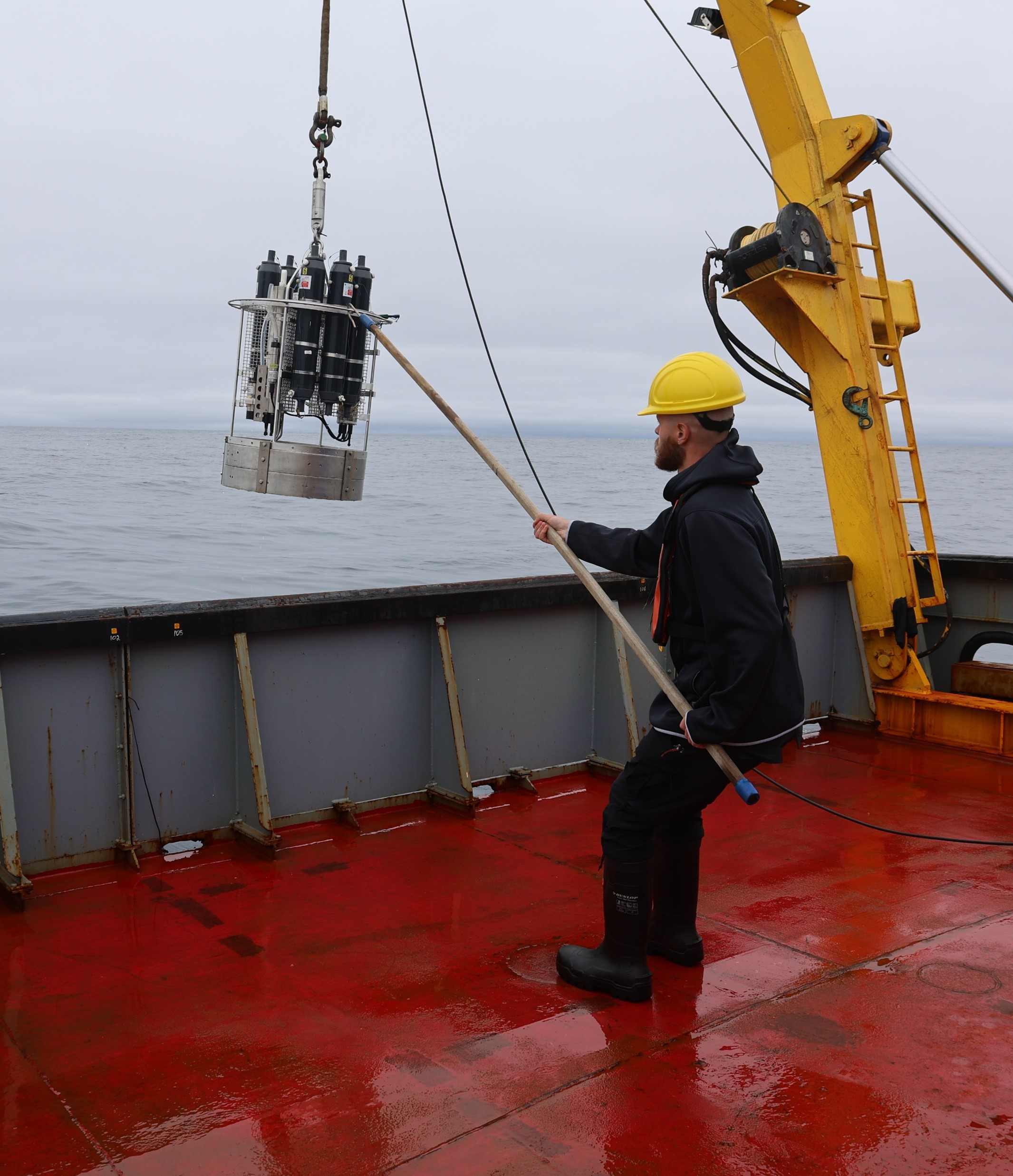
Deploying a Conductivity-Temperature-Depth (CTD) Rosette to monitor oceanographic conditions in the MPA. Photo credit: DFO.
While there were no directed monitoring studies in the MPA in 2024, 2 long-term scientific surveys conducted regular sampling activities in and around the MPA, including the:
- DFO spring multispecies survey
- Atlantic Zone Monitoring Program (oceanographic data collection)
Benthic Sampling with the Remotely Operated Vehicle for Ocean Sciences (ROPOS) arm. Photo credit: DFO.
In 2024, DFO continued to conduct research on marine mammals in and around the MPA. Aerial survey transects were conducted to identify marine mammals in the area. For the last decade, autonomous acoustic recorders have been deployed in and near the MPA to gather information on the area’s underwater soundscape.
Ecological monitoring is ongoing on status and trends of key species and assessing the feasibility of scientific monitoring approach in this MPA. Future research will focus on remaining knowledge gaps.
Collaboration and partnerships
Like last year, the contribution agreement with the Marine Institute of Memorial University (MI) that was signed in 2021 continued to support the monitoring of offshore marine conservation areas including the Laurentian Channel MPA in 2024. The MI continues to apply its research, training and technological capacities to advance methods for monitoring marine conservation areas in the NL Region in collaboration with DFO.
DFO co-chairs the monitoring Steering Committee with the MI to oversee project administration, select priority monitoring sites and identify mutual opportunities for marine research and more. This collaborative process is built on the expertise of both MI and DFO and is contributing to the development of a long-term sustainable ecological monitoring program. In 2024, this partnership continued to:
- build capacity for networking and monitoring (for example, sharing equipment)
- conduct outreach and promote ocean literacy through media engagement and public education (for example, social media and blog)
In the spotlight: benefits
Ecological
This MPA protects critical habitat for many marine species and it is one of the few areas in Canada that prohibits all commercial fishing activity, which supports positive biodiversity outcomes and may contribute to the recovery of Species-at-risk (for example, Northern Wolffish, Leatherback Sea turtle). From having the highest sea pen concentrations in the bioregion, to housing one of only 2 known porbeagle mating grounds, the MPA protects a wide range of species and habitats. Black dogfish and juvenile Smooth skate are present in high numbers throughout and at least 20 species of whales and dolphins use the area for critical feeding and migration.
Socio-cultural
Due to its remote location, this MPA faces a unique challenge to engage the public on a community level. While commercial fishing is not permitted in the MPA, Indigenous food, social and ceremonial fisheries activities are what can provide food security. In addition, scientific research and monitoring and educational activities are common and these collaborations foster ocean stewardship through sharing of knowledge. Public ocean literacy is also supported through annual Oceans Day events.
Economic
Historically, this area was fished extensively however, the sensitive biodiverse ecosystems in the MPA necessitates the prohibition of all fishing activities. This MPA contains nursery habitat and is a refuge for endangered and at-risk species. Protecting areas of high biodiversity may provide future economic benefits through spill-over (movement of commercially valuable fish from MPAs to open fishing areas) and increased tourism operations (that is, marine mammal watching).
Surveillance and enforcement
DFO’s Conservation & Protection (C&P) Officers conduct monitoring and surveillance of the MPA using aerial surveillance platforms by recording activity during regular patrols of Northwest Atlantic Fisheries Organization (NAFO) division 3Ps. C&P Officers also conduct one dedicated aerial patrol per month of the MPA. Given the remoteness of the MPA, the Dash-8 airplane is an effective platform to support real-time enforcement activities. This aerial surveillance aircraft has state-of-the-art surveillance equipment on board and is a long-range maritime patrol aircraft. Monitoring is also conducted during patrols by Mid Shore Patrol Vessels when transiting through NAFO division 3Ps enroute to and from the NL Region. C&P also conducts port inspections of fishing vessels licensed to fish in NAFO division 3PS who have fished in the vicinity of the MPA.
The Fisheries Monitoring Center (FMC) in the NL Region conducts daily monitoring of fishing vessel activity within the MPA using the Fisheries and Oceans Canadas Vessel Monitoring System and Automatic Identification System alerts are generated by the Marine Security and Operations Center. When potential fishing activity is detected, further follow-up is conducted within the FMC to identify if there was a potential non-compliance for referral to C&P Officers for investigation.
There were 3 potential violations in 2024, all of which involved fishing inside the MPA which is prohibited. In these 3 cases, 1 is currently before the court, another is under review and the last is an ongoing investigation.
Outreach and engagement
Opportunities within and outside of DFO for information sharing and collaboration on the management and monitoring of the Laurentian Channel MPA have been ongoing since its establishment in 2019. For example, the MPA ecological monitoring program led by DFO and its academic partner, the MI, supports students to learn hands-on about ocean sciences. The program enables university students to obtain necessary field work to complete their degrees and certifications. To highlight some of the program’s activities, the MI students created a blog to publicly share project details.
Other education and outreach activities that support marine conservation in NL have included highlights of this MPA’s management objectives. Educational and fun activities to promote learning about ocean conservation and the Laurentian Channel MPA occurred at the 2024 World Oceans Day event held in St. John’s, NL, which was open to members of the public.
In November 2024, DFO presented on both the MPA and Aquatic Invasive Species programs to students from the MI, after which they were given a laboratory tour of the Northwest Atlantic Fisheries Centre in St. John’s. This informative session provided students with a better understanding of marine conservation and related work in NL.
Related link
- Date modified: