
Eastport Marine Protected Areas (MPA) annual report 2024

On this page
- At-a-glance
- Conservation objectives
- Management and governance
- Feature creatures
- Research and monitoring
- Collaboration and partnerships
- In the spotlight: benefits
- Surveillance and enforcement
- Outreach and engagement
At-a-glance
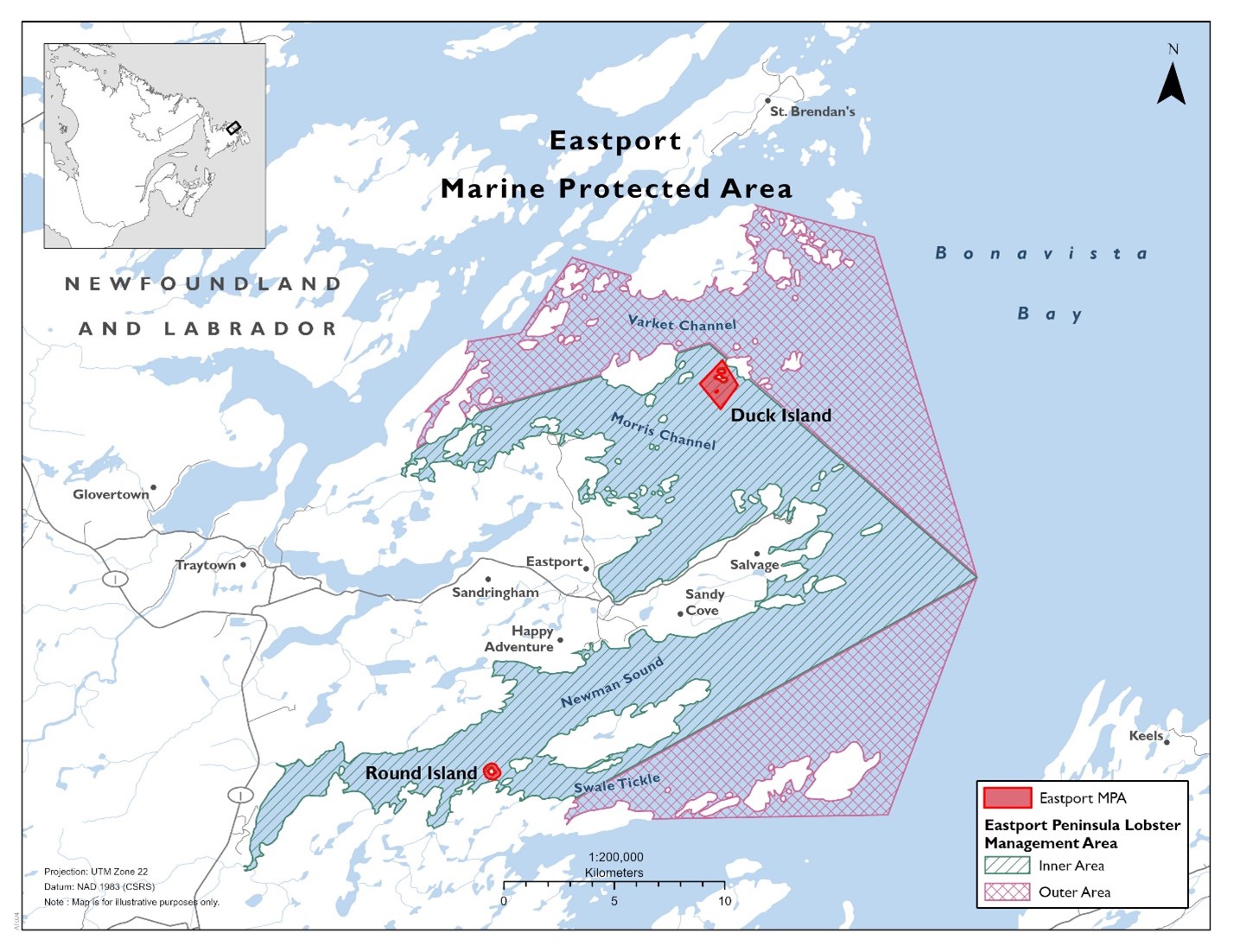
Map of Eastport Marine Protected Areas.
Date of designation:
2005
Size:
2.1 km2
Contribution towards the marine conservation targets:
< 0.01%
Location:
The Eastport MPAs are located on the northeast coast of Newfoundland, in the Newfoundland and Labrador (NL) Shelves Bioregion; Atlantic Ocean.
Managed by:
Fisheries and Oceans Canada (DFO)
Zones:
The Eastport MPAs are comprised of 2 geographically separate sites, which are both within the 400 km2 Eastport Peninsula Lobster Management Area (EPLMA):
- Duck Island Marine Protected Area
- Round Island Marine Protected Area
Conservation objectives
- Maintain a viable population of lobster through the conservation, protection and sustainable use of resources and habitats within the EPLMA.
- Ensure the conservation and protection of threatened or endangered species.
In addition, the MPAs have several non-regulatory conservation objectives pertaining to the overarching goals, including:
- to ensure participation of interested and affected stakeholders and the overall management of the resource
- to increase stewardship and public awareness of lobster, the ecosystem of the Eastport MPAs and marine conservation measures
- to promote scientific research to increase levels of understanding regarding the ecosystem and to help achieve the conservation objectives
- to ensure potential economic benefits resulting from conservation of the resource are centered in the local communities of the Eastport Peninsula
- to maintain and enhance the quality of the Eastport ecosystem
Management and governance
The Eastport MPA Management Plan for the period of 2023-2028 provides the most current management strategies. It was published in 2023 in print form and made available on the DFO website in 2024.
The Advisory Committee is co-chaired by the Eastport Peninsula Lobster Protection Committee and DFO. Other members include:
- local fish harvesters
- residents
- government representatives
- non-governmental organizations
- researchers
The Advisory Committee held their Annual General Meeting in March of 2024. Members were presented with a summary of the previous year’s monitoring program and provided an opportunity to discuss any new opportunities or concerns.
While there were no active contribution agreements in place in 2024, there were many activities that occurred in the MPAs with local industry and community members. A multi-year activity plan for 2023-2028 is in place to conduct the annual fall monitoring program inside the MPAs, during September to mid-October. Population distribution and demographics are recorded for all lobsters that are caught in various size traps and are then tagged and returned to the water. Monitoring is also conducted at several reference sites outside of the closed areas. The fall tagging program was carried out by 2 teams of experienced fish harvesters. In September 2024, 2 members of the Eastport MPA Management Team were able to join the harvesters to experience the program on the water.
Feature creatures
American Lobster (Homarus americanus) have a long-life span that starts as a larval stage before settling on the bottom as juvenile lobsters. They will keep growing as they age with no maximum size limit. During the fall monitoring program in 2024, the smallest juvenile lobster recorded inside the MPAs had a carapace length of 37cm, while the largest adult lobster recorded had a carapace length of 127 cm. The largest lobster ever recorded in the Eastport MPAs was 180 cm in 2020.
Research and monitoring
Two on-going annual monitoring programs occur in Eastport MPAs, the:
- spring at-sea sampling program
- fall tagging program
Both programs were successfully carried out in 2024. These monitoring efforts are carried out by local harvesters and/or members of the Eastport Advisory Committee and they contribute to regular stock assessment processes. In 2024, temperature sensors were also deployed with the spring and fall program (affixed to the lobster pots) to monitor the local water temperatures.
In addition to the above 2 ongoing monitoring programs, the new monitoring activities that were implemented in 2023 continued successfully through 2024. The 2-year Passive Acoustic Monitoring program was implemented to record the presence of marine mammals in coastal NL waters and to determine baseline noise levels. These acoustic monitoring devices were placed near both Duck Islands MPA and Round Island MPA, at depths of around 100 metres. The recorders were retrieved in the spring and fall of 2024 and redeployed for the final year of the program. Analysis of acoustic data in 2024 has verified that 3 out of 4 priority whale species (North Atlantic Right Whale, Sei Whale and Fin Whale) were confirmed to have been in the waters near the Eastport MPAs in 2023.
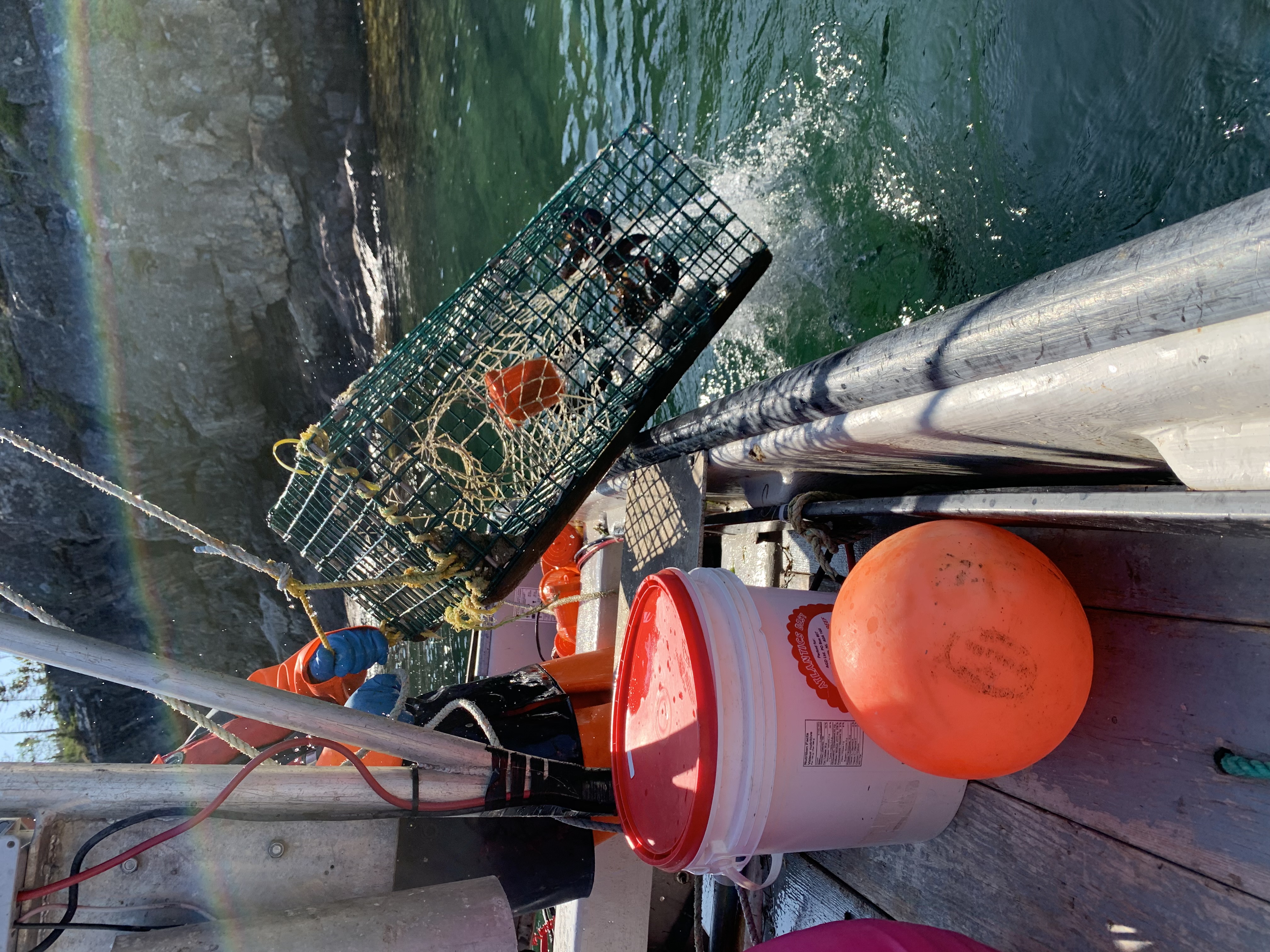
Monitoring lobster in Eastport MPA. Photo credit: Annamarie Buchheit.
Collaboration and partnerships
There is regular collaboration amongst the Eastport MPA Advisory Committee to increase stakeholder involvement in the development, management, monitoring, evaluation and surveillance of local fishery resources and supporting habitats to develop sustainable economic activities associated with the MPAs.
These MPAs have provided ongoing opportunities over the past 2 decades for fish harvesters, government, community youth, academics and scientists to work together and share information and knowledge for better management of the lobster fishery.
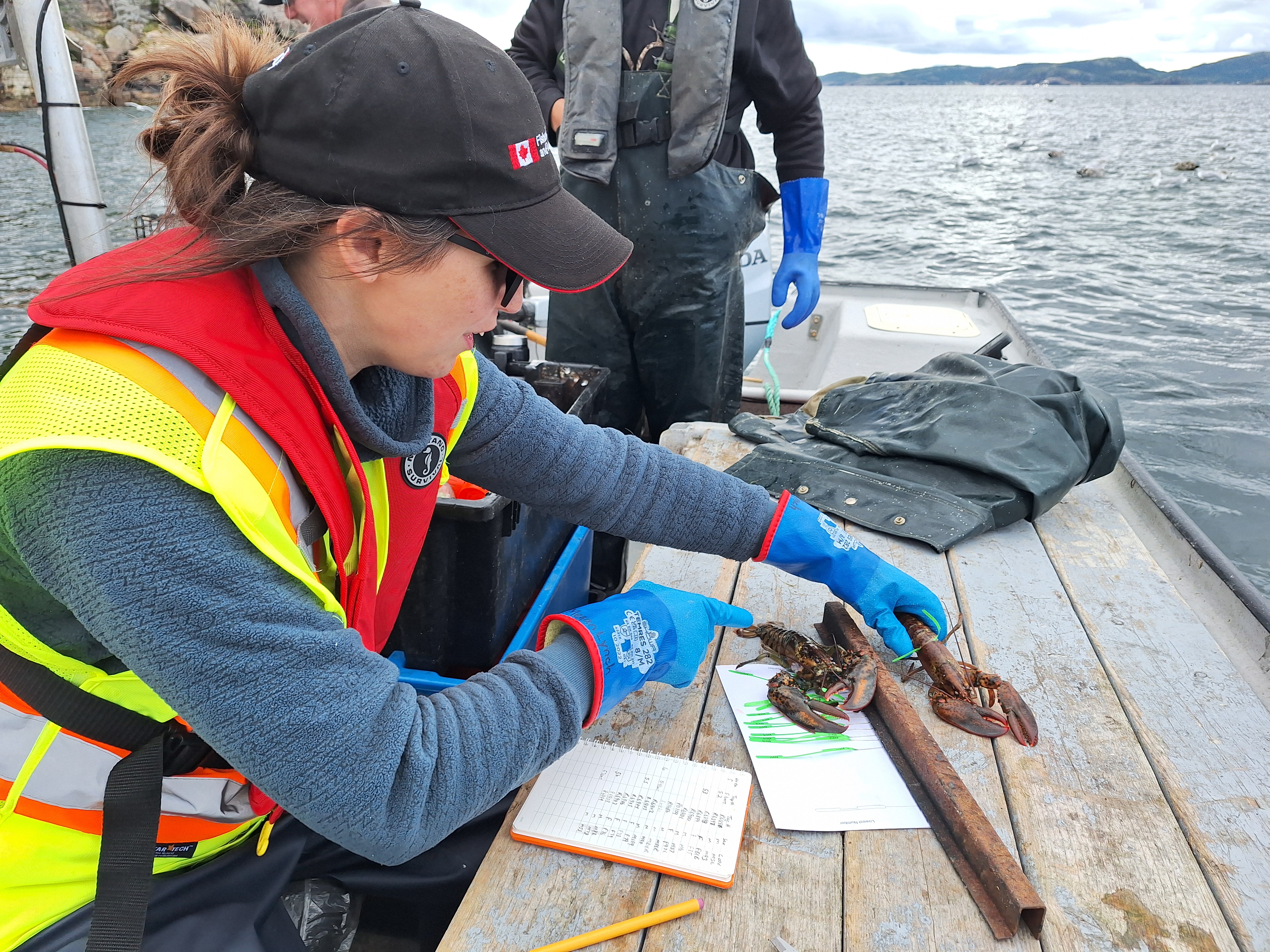
DFO staff working with local harvesters during the Eastport MPAs fall tagging program. Photo credit: Annamarie Buchheit.
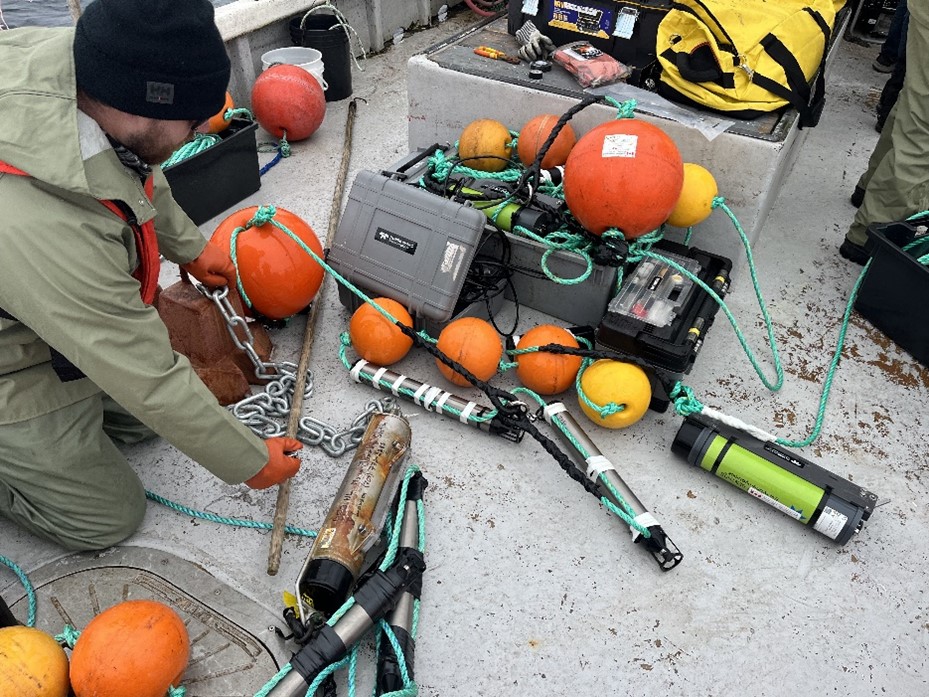
DFO Science and local harvester deploying sound-trap for acoustic monitoring. Photo Credit: Lee Sheppard.
In the spotlight: benefits
Ecological
The shallow waters around Duck Islands and Round Island are rich with plant and animal life. The rocky shores covered with marine plants such as eelgrass, Irish moss, kelp and seaweed, provide critical nursery habitat for many species including:
- lobster
- cod
- squid
- sea urchin
Threatened and endangered species like Wolffish and Atlantic Salmon may be found in deeper waters nearby. Seals and several species of whales frequent the waters. The no-take zones relieve fishing pressure and provide protection within the MPA boundaries.
Socio-cultural
Local residents and harvesters have supported MPA management and monitoring since 2005. Their ongoing engagement has nurtured ocean stewardship in the region that extends from voluntary v-notching programs to ocean conservation and protection. The local harvesters are passionate about contributing to the stewardship of the MPAs and sharing their knowledge and experience with harvesters around the Eastport Peninsula as well as with scientists from other programs.
Economic
Since early settlement the people of the Eastport Peninsula relied on fishing for their economic subsistence. Now that fishing effort in the area is restricted, the Eastport MPAs provide economic benefits to the local community by hiring experienced lobster harvesters to carry out annual monitoring programs. By training local harvesters in ecological sampling collection techniques, more employment opportunities exist after the regular harvesting season is complete. The additional scientific training provides harvesters with future opportunities associated with ongoing research activities in the area.
Surveillance and enforcement
In the Eastport MPAs, DFO’s Conservation and Protection (C&P) Fishery Officers carry out surveillance activities regularly, with added focus at peak times during the fishing season to ensure all harvesters are adhering to the MPA Regulations.
C&P’s Fishery Officers conduct patrols of the MPA via program vessel and utilize aerial surveillance platforms when available. Dedicated patrols take place during peak activity periods during commercial and recreational fishery activity. C&P also reports on the number of patrols, violations and the MPA-related education or outreach activities that are conducted during the year.
In 2024, C&P checked: 39 vessels, 38 persons and 9 sites. In addition, C&P also dedicated the following number of hours in 2024:
- 5 Fishery Officer patrol hours
- 111 program vessel hours
- 8 vehicle hours
- 4 aircraft hours
Having C&P presence in the MPA shows DFO’s commitment to protecting ocean areas and lobster habitat. It reinforces to the local fishing communities that DFO is committed to monitoring these habitats and it goes a long way towards building good rapport and partnerships with the lobster fishers. C&P representatives were also invited to attend the MPA Advisory Annual General Meeting in March 2024.
In 2024, there were no violations detected in the MPA during the regular patrols, which is likely a result of the increased patrols and monitoring activity of DFO. Fishery Officers strongly believe that this dedicated presence has deterred illegal activity in the MPA. It is common knowledge that Fishery Officers are regularly patrolling the area and this presence continues to be favorably received by most local residents.
Outreach and engagement
Outreach efforts in 2024 included a Tag Return initiative to encourage local harvesters to send back physical information about commercially caught tagged Lobster. Data collected from this Tag Return initiative aids the assessment of lobster movement patterns and extent within the broader EPLMA.
Information about the Tag Return Initiative and data collection sheets were sent to all harvesters in Lobster Fishing Area 5 prior to the start of commercial lobster fishery in May. A total of 9 submissions were received and a total of 897 tags were recorded from 84 unique areas, all within the EPLMA. While the 2024 tag return rate from Lobster Fishing Area (LFA) 5 was only 5%, the Advisory Committee will continue to highlight the initiative to increase participation.
In addition, C&P Officers take every opportunity to educate and promote compliance within the MPA when engaging with fishers and the general public. C&P Officers are on the front line in our communities and therefore provide a visual representation of DFO with a uniformed presence. One of the Pillars of the C&P mandate is “Public Education, Stakeholder Engagement and Shared Stewardship”. These types of activities can take place anywhere including informal dockside conversations to formal presentations at community events and schools to foster partnerships with stakeholders and communities for the collaborative management of the Eastport ecosystems.
Related link
- Date modified: