
Basin Head Marine Protected Area (MPA) annual report 2024
On this page
- At-a-glance
- Conservation objectives
- Management and governance
- Feature creatures
- Research and monitoring
- Collaboration and partnerships
- In the spotlight: benefits
- Surveillance and enforcement
- Outreach and engagement
At-a-glance
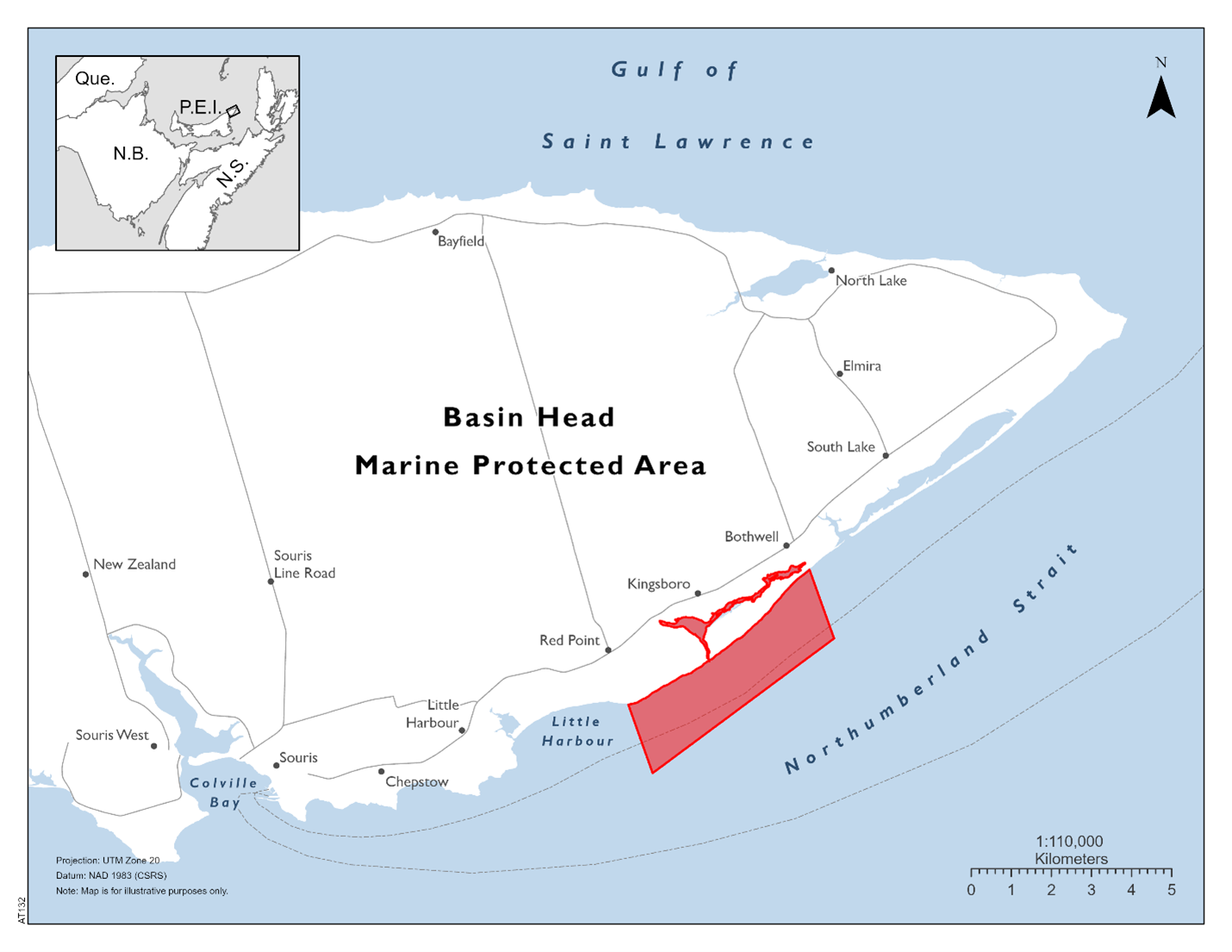
Map of Basin Head Marine Protected Area.
Date of designation:
September 26, 2005
Size:
9 km2
Contribution towards the marine conservation targets:
< 0.01%
Location:
The Basin Head MPA is located between Souris and East Point, Prince Edward Island (PEI) and borders a popular provincial park. The MPA is within the Estuary and Gulf of St. Lawrence bioregion; Atlantic Ocean.
Managed by:
Fisheries and Oceans Canada (DFO)
Acknowledgement:
The Basin Head MPA is located within the ancestral territory of the Epekwitnewaq Mi’kmaq.
Zones:
There are 3 management zones:
- Zone 1 – The Inner Channel. The highest level of protection and covers the only known giant Irish moss habitat
- Zone 2 - The Main Basin or lagoon. A buffer zone for the sensitive Zone 1
- Zone 3 – The Outer Coast. A buffer to protect the integrity of the dune structure
Conservation objectives
- Maintain the quality of the marine environment supporting the Basin Head Irish moss (Chondrus crispus).
- Maintain the physical structures of the ecosystem supporting the Basin Head Irish moss.
- Maintain the health (biomass and coverage) of the Basin Head Irish moss.
- Maintain the overall ecological integrity of the Basin Head lagoon and inner channel.
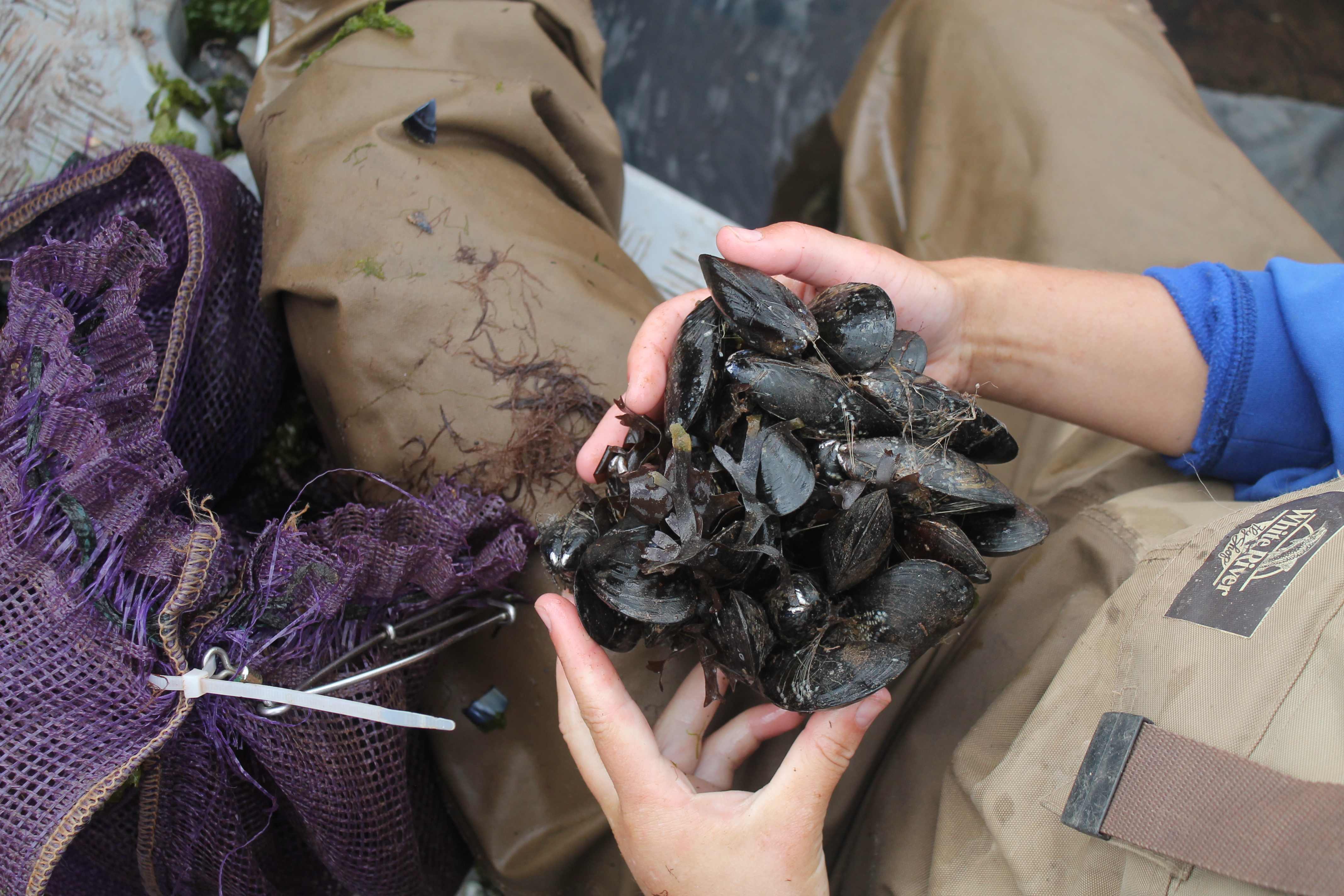
Clump of Irish moss and blue mussels. Photo Credit: Tessa MacKinnon.
Management and governance
The Basin Head MPA Operational Management Plan describes all of the activities that are both occurring and planned to occur in the MPA over the plan’s lifecycle. The management plan for Basin Head is in its third iteration and is scheduled to be updated in 2026.
The Basin Head MPA Advisory Committee held its annual meeting to discuss the activities that occurred in the MPA over the last year and provide recommendations to DFO on how to improve the operation and management of the MPA. This year, the annual committee meeting took place on November 27, 2024 with representatives from:
- provincial and municipal governments
- indigenous organization
- ENGOs
- academia
- local community
In 2024, a total of 7 activity plans were reviewed and approved to support both internal and external partners in carrying out activities such as:
- invasive species monitoring and removal
- the restoration of giant Irish moss and riparian zones
- the installation of scientific infrastructure for safer monitoring
Partners received funding through 4 contribution agreements to support education, outreach, research and monitoring activities within the MPA and surrounding area.
As part of an internal DFO evaluation of the marine conservation targets (MCT) initiative, Basin Head was chosen for a site visit by the evaluation team. Evaluators met with partners involved in the MPA to discuss how their work contributes towards MCT.
Work on the development of non-ecological indicators continues and when completed, will help us gain a better understanding of the overall effectiveness of this MPA.
Feature creatures
The Basin Head MPA protects a unique form of red seaweed known as the giant Irish moss. This giant Irish moss has not been found anywhere else in the world. Compared to the common Irish moss (“ju’sip” in Mi’kmaq), the giant Irish moss has larger, fleshier fronds, sustained coloration year-round, 7 times more carrageenan content and relies on a symbiotic relationship with blue mussels for anchorage due to not having a holdfast.
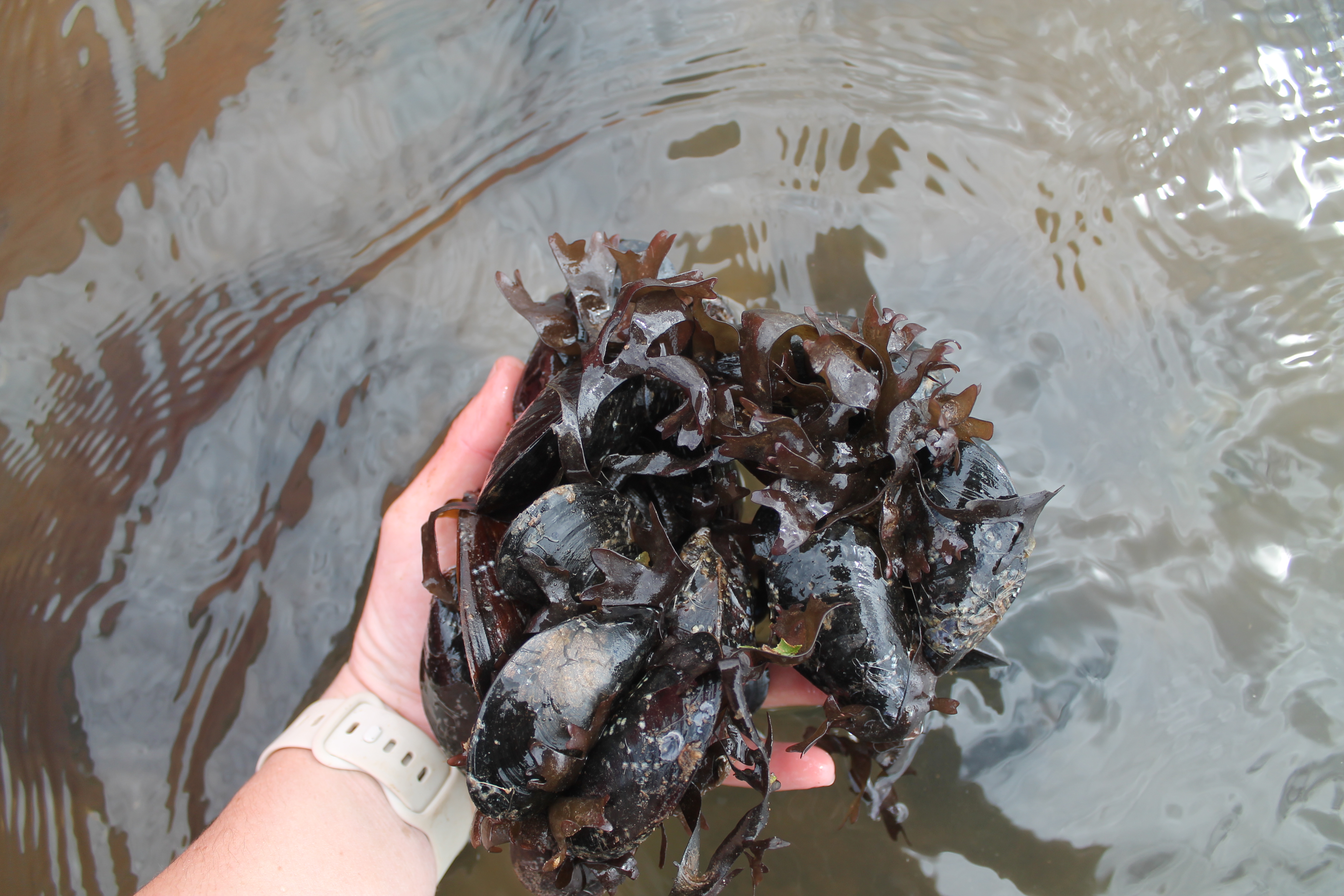
The giant Irish moss. Photo credit: Tessa MacKinnon.
Research and monitoring
Research and monitoring activities in the Basin Head MPA inform on the status the MPA’s conservation objectives, fill any knowledge gaps and contribute towards the development of an ecological monitoring plan. In 2024, DFO along with several academic institutions and ENGOs conducted research and monitoring in the Basin Head MPA.
The DFO Science sector continued collecting Irish moss samples from Basin Head and other areas. With these samples, they completed a genome extraction to test genetic diversity and the life history phases of the giant Irish moss. With the National Research Council, DFO began initial tests on moss health and behavior under different temperature conditions. An analysis of benthic nutrients was conducted to examine sedimentary organic matter, stable isotopes and elemental mass percentages. Once interpreted, the results will help to better understand the ecosystem health.
University of PEI researchers:
- investigated the association of Irish moss – blue mussel clumps and their impacts on biodiversity (Gibbons et al., 2024)
- studied the trophic interactions between predator, consumer and prey species and their habitat-mediated interactions by the Irish moss-blue mussel clumps (Vriends et al., 2024)
- explored how Irish moss health is impacted by local temperature conditions in the MPA (Gibbons et al., 2025)
Souris and Area Branch of the PEI Wildlife Federation:
- carried out the monitoring and removal of Green crab, a threat to the sustainability of giant Irish moss survival
- conducted monitoring and restoration of giant Irish moss clumps (an Irish moss and Blue mussel combination)
- planted native trees and shrubs in the surrounding riparian buffer zone to support the integrity of the physical environment
Dalhousie University PhD and Master’s students published research on:
- intertidal spring dynamics and coastal nutrient loading (Oliver et al., 2024)
- climate change and agricultural practice impact on nitrate loading (Oliver et al., 2024)
- spatiotemporal thermal variability (Smith et al., 2024) of the Basin Head lagoon
Collaboration and partnerships
Basin Head MPA is a highly collaborative area where managers, scientists, environmentalists and community members work together on coastal conservation.
DFO partnered with Ingenium, a Crown corporation dedicated to fostering scientific and technological literacy throughout Canada, to develop and update education and outreach materials for the Basin Head MPA. This effort aims to fully leverage our kiosk at the fisheries museum that is part of the Basin Head Provincial Park and attracts over 20,000 visitors annually. These materials include:
- information panels
- roll-up banners
- educational activity book
- graphic design of various species
- social media videos from interview footage with Indigenous and ENGO partners
In the spirit of collaboration, DFO and the PEI Museum and Heritage Foundation signed a Memorandum of Understanding (MoU) to support the development of an interpretive plan for the Basin Head Fisheries Museum. A kiosk is housed within the museum where visitors can find information about the MPA. One of the objective of a renewed interpretive plan is to modernize and upgrade this kiosk to share education and outreach materials on the benefits of marine conservation in general, alongside information on the Basin Head MPA.
In the spotlight: benefits
Ecological
The Basin Head watershed supports biodiversity through diverse habitats, including a salt marsh and sand dunes that act as a climate change buffer for the surrounding land. The giant Irish moss and blue mussel clump-like structures provide shelter for marine fauna and mediate interactions from non-indigenous predators. Through restoration of these clumps, the Basin Head MPA is improving the quantity and quality of benthic habitat and, by extension, the diversity of fauna in the area.
Socio-cultural
The Basin Head MPA was established through a community-driven process and its advisory committee members continue to work within the community to achieve its objectives. A highlight this year were events held at the nearby Fisheries Museum that served to celebrate and improve awareness of the Mi’kmaq culture in the Basin Head area.
Economic
Since the Basin Head MPA is a coastal site, its accessibility provides an opportunity to contribute to tourism and visitor experience in the area. Through financial agreements with the Province of PEI, DFO is supporting facility and exhibit upgrades at the Basin Head Fisheries Museum where information on the MPA is shared. Funding to external partners, through contribution agreements, helps support the local economy and community.
Surveillance and enforcement
- Oceans Act
- Management of Contaminated Fishery Regulations
- Basin Head MPA Regulations
- Atlantic Fishery Regulations
- Fishery (General) Regulations
- Fisheries Act
- Maritime Provinces Fishery Regulations
The enforcement plan for the Basin Head MPA was updated in 2024 and will be reviewed annually to ensure its relevance and effectiveness. Recent updates included the addition of drone-based surveillance.
Outreach and engagement
A greater emphasis was placed on the development of education and outreach materials.
In March 2024, senior undergraduate students in a biodiversity and conservation ecology class at the University of Prince Edward Island attended a DFO presentation on the Basin Head MPA. Approximately 30 students learned how MPAs support conservation efforts and how the Basin Head MPA helps protect giant Irish moss.
Supported by a contribution agreement with DFO, the Mi’kmaq Confederacy of PEI hosted a storytelling series along-side the Basin Head MPA in partnership with the PEI Museum and Heritage Foundation. Storyteller Julie Pellissier-Lush and the Mi’kmaq Heritage Actors shared Mi’kmaq culture to site visitors through interactive song, dance, drumming and stories. This series occurred, once or twice a week, from July to early September 2024. Because of its success, there are discussions to support this offering again in the future.
Related link
- Date modified: