
Joint northern Gulf of St. Lawrence marine protected area project
Note:
The maps, diagrams and coordinates on this website are provided for general information and are not to be used for fishing, navigation and other purposes. Please contact your regional DFO office for official coordinates.
The joint marine protected area (MPA) project for the northern Gulf of St. Lawrence is part of the implementation of the Entente de collaboration Canada-Québec pour l'établissement d'un réseau d'aires marines protégées au Québec (in French only). This agreement, which came into effect in March 2018, provides that all MPA projects in Quebec will be selected, planned and implemented jointly.
On this page
At-a-glance
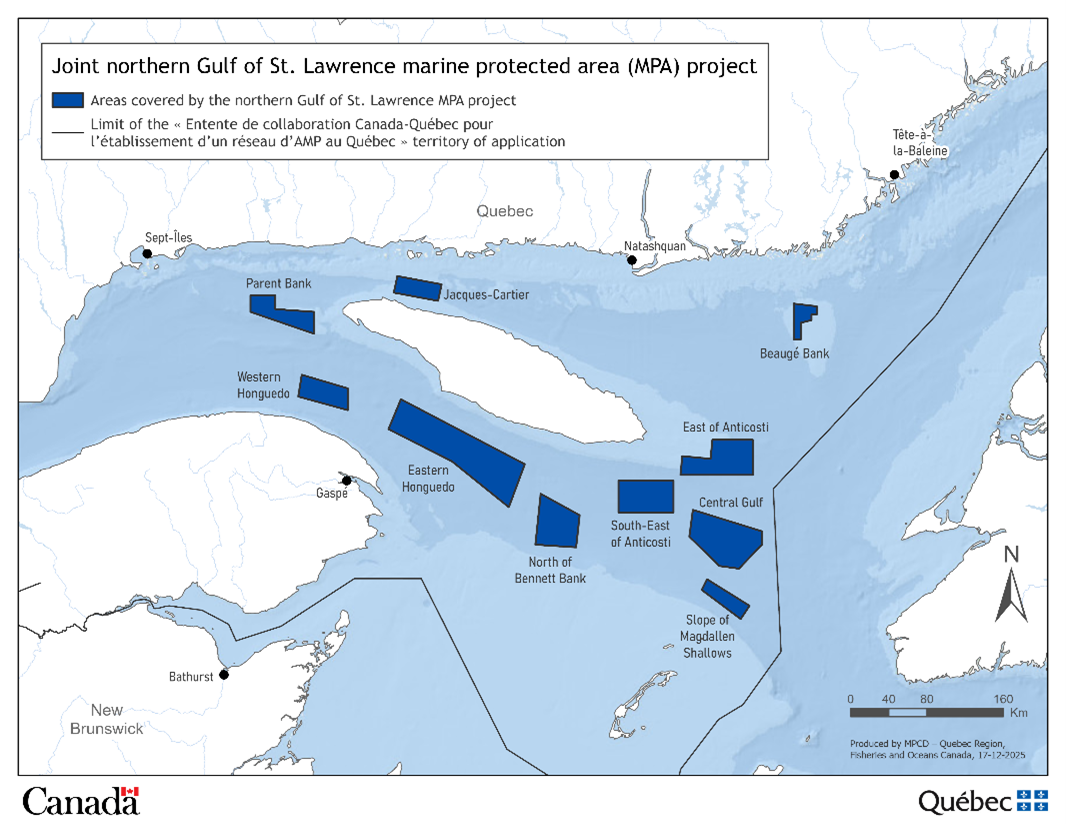
Map illustrating the targeted areas for the joint marine protected area (MPA) project in the northern Gulf of St. Lawrence and the boundaries of the Canada-Quebec collaboration agreement to establish an MPA network.
Location
The Northern Gulf of St.Lawrence marine protected area (MPA) project is being conducted jointly with the Government of Quebec and includes areas located in the Gulf of St.Lawrence, spread across the Laurentian Channel and near Anticosti Island. These areas range in size from 215 km2 to 2,338 km2 and occur at depths from 52 m to greater than 485 m.
Size (km2) contribution to Marine Conservation Targets
About 8,148 km2
% coverage contribution to Marine Conservation Targets
About 0.00%Footnote 1
Date identified
2018
Proposed overarching goal
To strengthen the protection of cold-water corals and sponges and the ecosystems that support them by regulating all activities that may have an impact on the seabed. The targeted areas correspond to certain of the 11 marine refuges established by Fisheries and Oceans Canada in December 2017 and to certain territorial reserves for protected area purposes (RTFAP) established by the Government of Quebec in 2020.
Environmental context
The areas under study have been identified as Significant Benthic Areas (CSAS SAR 2017/007) in the Estuary and Gulf of St. Lawrence bioregion. These areas contain high concentrations of corals, particularly sea pens and sponges, which create a habitat of complex three-dimensional structures that provide refuge, feeding and rearing areas for many marine species. Their presence thus promotes higher biodiversity.
Areas under study
Some marine refuges aimed at protecting corals and sponges have been selected as areas under study for the project.
| Sectors | Conservation priority | Area (km2) | % of Canada | Average depth (m) | Description |
|---|---|---|---|---|---|
| East of Anticosti | Sponges | 939 | 0.02 | 203 | Has high concentrations of sponges (Porifera spp.) and soft corals, such as flowery carnation coral, orb carnation coral and sea strawberry (Duva florida, Drifa glomerata and Gersemia rubiformis). Structure-forming sponges also occur here, including arched horny sponge and furrowed horny sponge (Hemigellius arcofer and Mycale lingua). |
| Bennett Bank | Corals | 821 | 0.01 | 433 | Has a high concentration of sea pens, including full-flowered sea pen (Anthoptilum grandiflorum). |
| Parent Bank | Sponges | 530 | 0.01 | 215 | Has high concentrations of sponges (Porifera spp.), thorny sea pen (Pennatula aculeata) and other soft corals, such as flowery carnation coral, orb carnation coral, sea strawberry and hedge carnation coral (Duva florida, Drifa glomerata, Gersemia rubiformis and Gersemia fruticosa). Structure-forming sponges also occur here, including arched horny sponge and furrowed horny sponge (Hemigellius arcofer and Mycale lingua). |
| Central Gulf | Corals | 1,284 | 0.02 | 441 | Has the highest known concentration of full-flowered sea pen (Anthoptilum grandiflorum) in the Gulf of St. Lawrence and is the only area where the presence of wild star sea pen (Kophobelemnon stelliferum) has been confirmed. The species found here include ivory stony coral (Flabellum (Ulocyathus) alabastrum), a hard coral with a very limited known range, soft corals such as flowery carnation coral (Duva florida) and sponges such as leafy glass sponge (Asconema foliatum). |
| Western Honguedo | Corals | 496 | 0.01 | 403 | Has high concentrations of three species of sea pens: thorny sea pen (Pennatula aculeata), greater sea pen (Ptilella grandis) and full-flowered sea pen (Anthoptilum grandiflorum). This area has the highest concentration of thorny sea pens in all the areas studied in the Estuary and Gulf of St. Lawrence for sponge and coral conservation purposes. |
| Eastern Honguedo | Corals and sponges | 2,338 | 0.04 | 407 | Has high concentrations of four species of sea pen: hammer-tipped sea pen (Balticina finmarchica), full-flowered sea pen (Anthoptilum grandiflorum), greater sea pen (Ptilella grandis) and thorny sea pen (Pennatula aculeata)—soft corals such as flowery carnation coral (Duva florida) and sponges (Porifera spp). Two large sponges are also present: leafy glass sponge (Asconema foliatum) and Suberitida. |
| Jacques-Cartier* | Sponges | 346 | 0.01 | 144 | Has the highest known concentration of sponges (Porifera spp.) in the Estuary and Gulf of St. Lawrence. Soft corals such as sea strawberry and orb carnation coral (Gersemia rubiformis and Drifa glomerata) also occur here, along with arched horny sponge (Hemigellius arcofer). |
| Slope of Magdalen Shallows | Corals | 335 | 0.01 | 425 | Has a very high concentration of sea pens, namely greater sea pen (Ptilella grandis) and full-flowered sea pen (Anthoptilum grandiflorum). |
| South-East of Anticosti | Sponges | 845 | 0.01 | 356 | Has high concentrations of sponges (Porifera spp.), soft corals such as flowery carnation coral (Duva florida), sea pens such as full-flowered sea pen (Anthoptilum grandiflorum) and sponges, namely leafy glass sponge (Asconema foliatum). |
| Beaugé Bank | Sponges | 215 | 0.01 | 87 | Has high concentrations of sponges (Porifera spp.) and soft corals, such as flowery carnation coral and sea strawberry (Duva florida and Gersemia rubiformis). Structure-forming sponges also occur here, including arched horny sponge and furrowed horny sponge (Hemigellius arcofer and Mycale lingua). |
* Marine refuge included in the preliminary study area for the proposed Anticosti-Mingan marine park
Ecological importance
Corals and sponges are found throughout eastern Canadian waters, at various depths and in different types of substrate and currents. The areas under study in the northern Gulf of St. Lawrence contain some of the highest concentrations of sea pens (soft corals) in eastern Canada, as well as large concentrations of sponges.
Corals and sponges have low mobility and n general, they have long lifespans and slow growth rates, which makes them particularly vulnerable to human activities, both directly (for example, bottom-contact fishing gear, installation of submarine pipelines) and indirectly (for example, climate change, ocean acidification). As these species grow, they create three-dimensional structures that provide refuge, feeding and rearing areas for many other marine species, thus promoting greater biodiversity. In deep, dark waters, corals and sponges may be the only features providing habitat on the sea floor.
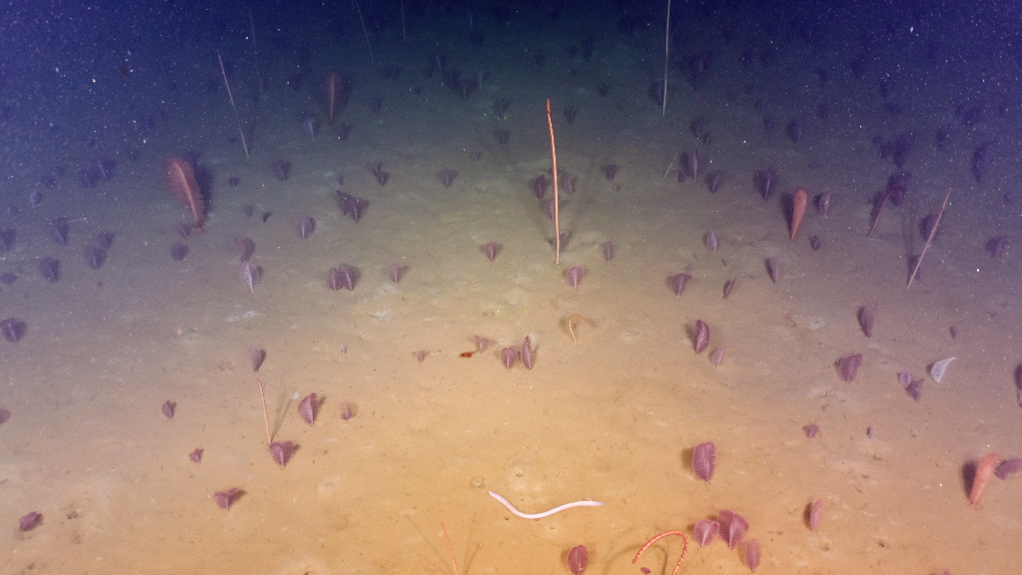
Sea pen field. Photo credit: CSSF/ROPOS, Oceana Canada and DFO/IML Team OCM
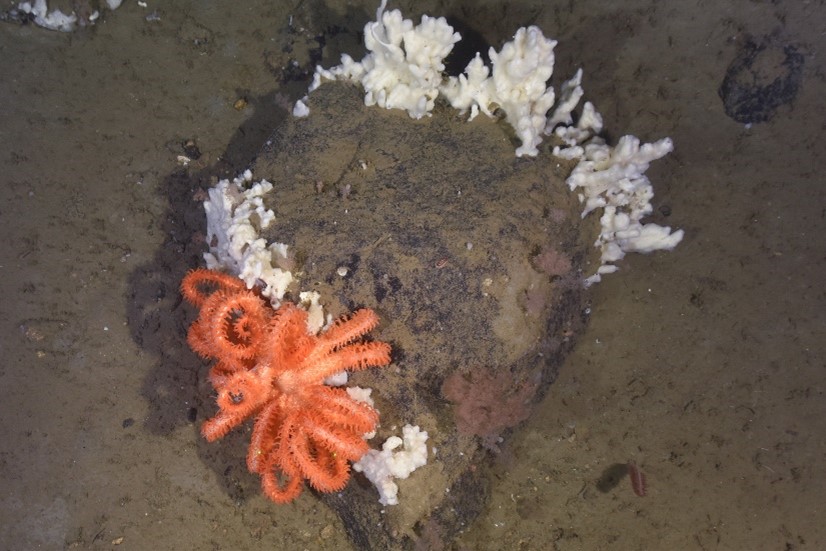
Presence of sponges on a rocky block. Photo credit: CSSF/ROPOS, Oceana Canada and DFO/IML Team OCM.
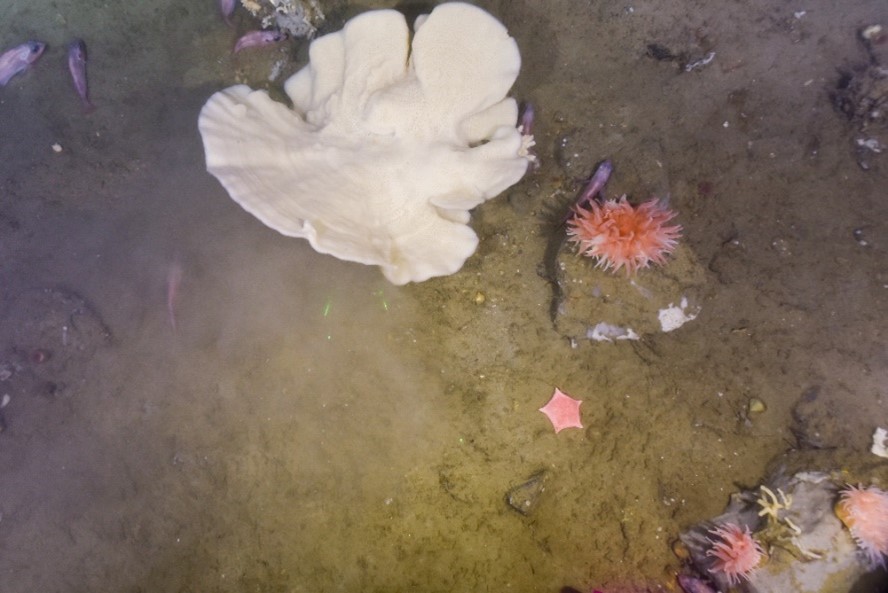
Marine refuge biodiversity: sponges, anemones, sea star and fish. Photo credit: DFO.
Conservation approach
History
2019 to 2020
The first engagement stages were completed (see table below).
December 2020
The Government of Quebec designated 10 RTFAPs that overlap with the Government of Canada’s marine refuges. (Approbation de la désignation de dix-sept nouvelles réserves de territoire aux fins d’aires protégées, situées dans l’estuaire et le golfe du Saint-Laurent (in French only, PDF, 104 KB)).
June 2019
The areas under study for the joint Canada–Quebec MPA project in the northern Gulf of St. Lawrence were presented at information sessions with the First Nations and stakeholders involved.
March 2018
The Canada–Quebec Collaborative Agreement to Establish a Network of Marine Protected Areas in Quebec (in French only, PDF, 2.2 MB) came into force. The governments of Canada and Quebec agreed to strengthen the protection of cold-water corals and sponges by working together to establish a MPA in some of the 11 marine refuges designated in 2017.
December 2017
Designation of 11 marine refuges for the conservation of corals and sponges – Closure of fisheries using bottom-contact gear (Variation Order 2017-Q-104) (PDF, 81 KB).
2015
Publication of the Coral & Sponge Conservation Strategy for Eastern Canada.
Engagement
Completed steps
| Date (YYYY-MM-DD) | Location | Method of communication |
|---|---|---|
| 2020-11-18 | Videoconference | Information session with Mi’gmawe’I Tplu’taqnn Inc. |
| 2019-11-28 | Bécancour, QC | Information session with the Navigation Coordination Committee (NCC) |
| 2019-11-04 | Quebec City, QC | Information session with Stratégies Saint-Laurent |
| 2019-10-30 | Videoconference | Table environnement Côte-Nord |
| 2019-09-19 | Les Escoumins, QC | Saguenay–St. Lawrence Marine Park Coordination Committee |
| 2019-08-08 | Not applicable | Information letter to Indigenous groups and relevant stakeholders in the Gulf Region and Newfoundland and Labrador Region |
| 2019-07-10 | Videoconference | Liaison Committee between Fisheries and Oceans Canada and the Quebec Harvesting Sector |
| 2019-06-19 | Quebec City, QC (and remotely by videoconference) | Stakeholder information session |
| 2019-06-17 | Quebec City, QC (and remotely by videoconference) | Information session with affected Indigenous groups |
Management of human activities
The areas under study for the Northern Gulf of St. Lawrence MPA project currently benefit from certain conservation measures thanks to the establishment of marine refuges and RTFAPs.
The impact of fishing activities on corals and sponges was examined in 2016 and 2017 based on the Ecological risk assessment framework for coldwater corals and sponge dominated communities (2013), which led to a ban on fishing using bottom-contact gear in marine refuges under the Fisheries Act, including:
- bottom trawls
- dredges
- bottom seines
- traps
- bottom longlines
- gillnets
Human activities other than fishing, such as scientific activities, infrastructure projects and habitat restoration projects, must be assessed through standard DFO processes. The team responsible for managing marine refuges collaborates in these assessments to ensure that the activities authorized are aligned with conservation objectives and that the risks have been effectively mitigated.
For information regarding activity applications, please contact the Marine Conservation and Planning Division of Fisheries and Oceans Canada at DFO.OceansQC-OceansQC.MPO@dfo-mpo.gc.ca
For more information on the prohibitions and the management of human activities in RTFAPs, please refer to the following website: Marine Protected Areas in Quebec.
Regulated activities following the establishment of the marine protected area
The ban on the use of bottom-contact fishing gear and the bans established with the RTFAPs will be maintained, as these measures are designed to protect corals and sponges and their habitats.
In addition, under the federal Marine Protected Areas (MPA) Protection Standard adopted by the Government of Canada in April 2019, other activities will be prohibited in the MPA, including:
- disposal at sea of waste and other matter
- dumping of fill
- deposit of deleterious drugs and pesticides
- enhanced restrictions on vessel discharges
Other human activities that could have an impact on corals and sponges, their habitats and benthic biodiversity will be assessed to determine whether they pose a risk to the achievement of the conservation targets. These activities include the installation and maintenance of bottom-contact structures affecting the seabed, as well as the anchoring of vessels.
Regulating these activities will help to protect the fragile structure of corals and sponges and the ecosystems that support them and may also contribute indirectly to protecting fish and invertebrate species that use this habitat.
Activities for scientific research or monitoring, habitat restoration, education and commercial marine tourism may be permitted in the MPA after analysis and authorization.
Publications
- Analyse des données d’imagerie optique captées par le véhicule sous-marin ROPOS dans des zones de coraux et d’éponges du chenal Laurentien (2022) (in French only)
- Éléments d’un cadre visant à soutenir les décisions liées à l’autorisation des relevés scientifiques avec des engins entrant en contact avec le fond dans des zones benthiques protégées ayant des objectifs de conservation définis (2020) (in French only)
- Atlas of Sponges from the Estuary and Northern Gulf of St. Lawrence Multidisciplinary Trawl Survey in 2006-2017 (2020)
- Sponges of the Gulf of St. Lawrence : field and laboratory guide (2020)
- Delineation of Significant Areas of Coldwater Corals and Sponge-Dominated Communities in Canada's Atlantic and Eastern Arctic Marine Waters and their Overlap with Fishing Activity (CSAS 2017/07)
- Coral & Sponge Conservation Strategy for Eastern Canada 2015
- Ecological Risk Assessment Framework for Coldwater Corals and Sponge Dominated Communities (2013)
- Delineating coral and sponge concentrations in the biogeographic regions of the east coast of Canada using spatial analyses (2010)
- Occurrence, susceptibility to fishing, and ecological function of corals, sponges, and hydrothermal vents in Canadian waters (CSAS – 2010/041)
- Impacts of trawl gears and scallop dredges on benthic habitats, populations and communities (CSAS – 2006/025)
Open data
- Sponge significant concentration areas in the Gulf of St. Lawrence
- Sea pens significant concentration areas in the Gulf of St. Lawrence
- Fishing Effort in Canada’s Atlantic and Eastern Arctic Waters
- Kernel Density Analyses of Coral and Sponge Catches from Research Vessel Survey Data (2016)
- Delineation of Coral and Sponge Significant Benthic Areas in Eastern Canada (2016)
Contact us
For more information, please contact us:
Email: DFO.OceansQC-OceansQC.MPO@dfo-mpo.gc.ca
Telephone: 1-877-775-0848
Page details
- Date modified: