
Fish and Fish Habitat Protection Program Engagement Framework
On this page
- Mandate
- Preface
- Purpose of engagement framework
- General engagement approach
- Indigenous engagement
- Engagement continuum
- Engaging at different product development stages
- Continual improvement
Mandate
On February 6, 2018, the Government of Canada introduced proposed amendments to restore lost protections and incorporate modern safeguards into the Fisheries Act. On June 21, 2019, amendments to the Fisheries Act received royal assent. The new provisions and stronger protections better support the sustainability of Canada’s aquatic resources for future generations.
On August 28, 2019, the modernized fish and fish habitat protection provisions of the Fisheries Act came into force. New regulations, policies and guidance are needed to support implementation of these modernized provisions. Fisheries and Oceans Canada (DFO) launched multi-year engagement with Indigenous Peoples, partners and interested parties on the development of products that support the implementation of these provisions and to reinforce DFO’s commitment to govern with openness, effectiveness and transparency.
DFO is committed to achieving reconciliation with Indigenous Peoples through a renewed nation-to-nation, government-to-government, and Inuit-Crown relationship based on recognition of rights, respect, co-operation and partnership as the foundations for transformative change.
Preface
To support the multi-year engagement plan, the Fish and Fish Habitat Protection Program (FFHPP) at DFO has drafted this engagement framework (the framework), which builds upon current modes of communication to formulate an approach to engage more meaningfully.
In Fall 2020, FFHPP distributed a survey in order to plan meaningful engagement activities. The questionnaire was distributed to Indigenous Peoples, partners and interested parties asking for feedback on:
- past engagement efforts
- level of interest by product
- capacity to engage due to COVID-19
- preferred methods of engagement
A total of 165 responses were received and considered in the development of the approach and initial concepts. At the time, COVID-19 was expected to impact peoples’ ability to participate in engagement:
- approximately half the respondents felt COVID-19 would impact their ability to engage
- 57% preferred to be engaged virtually
- 22% preferred to be engaged in person
The first engagement wave began in December 2020 and introduced proposed concepts that would be core to the framework. A questionnaire was used to gauge the effectiveness and appeal of the engagement approach and platform.
Participants evaluated the effectiveness of engagement materials and engagement activities in order to determine what works best. Participants preferred meetings and interactive sessions for both learning and providing input. However, they favoured traditional discussion papers and fact sheets to receive background information. Participants also shared insight suggesting the framework should take into account:
- relationship building, including one-on-one regional engagement and meetings
- the use of designated DFO regional liaison staff for Indigenous communities
The feedback received has been considered in the development of the framework and continues to improve the engagement approach.
Purpose of engagement framework
The FFHPP wants to engage in a way that is meaningful, consistent and predictable with parties interested in our activities, including Indigenous Peoples, partners and stakeholders. Engagement focuses on topics related to the FFHPP’s mandate and role. This engagement contributes to strong, inclusive and effective policies, regulations, guidance and associated actions that will, in turn, conserve and protect fish and fish habitat for future generations.
The framework builds upon existing engagement approaches, Indigenous engagement considerations, modern Treaty requirements, and the Government of Canada Engagement Principles and Guidelines. The framework has been developed to support better policy and product development through transparent engagement.
General engagement approach
Engagement is a term used to describe any process that involves meaningful dialogue with Indigenous Peoples, partners and interested parties, and can range from providing information to formal consultation. Engagement helps build the foundation of a positive, long-term relationship between the Government and external parties. It involves initiating and maintaining ongoing, open dialogue on issues of mutual interest enabling the sharing of information and development of mutual understanding. Engagement provides opportunities for others to communicate their priorities and interests to the Government.
Indigenous Consultation is generally a time-limited process to seek feedback from an Indigenous community on a proposed project, activity, decision or plan that could have an impact on the community, their rights or their interests. Consultation may be required to fulfill legal obligations, including the legal duty to consult, related to Aboriginal and treaty rights protected under section 35 of the Constitution Act, 1982. There are 3 elements required for the legal duty to consult to arise:
- contemplated Crown conduct
- potential or established Aboriginal or treaty rights
- potential adverse impact on these rights
Note: In some modern treaties, the Treaty itself may specifically require Consultation with specific elements (that is, specific topics and with whom to consult).
A general external engagement approach is necessary throughout various stages of the product development cycle (Figure 1), depending upon the engagement intensity (Table 1). Engagement has been organized into “Engagement waves”. In the context of this document, an Engagement wave is a collection of multiple policies, guidance or other products that are released in a given year on which FFHPP is seeking input from Indigenous Peoples, partners and other interested parties. This better organizes the engagement for multiple products.
Indigenous engagement
The Government of Canada has indicated that, “No relationship is more important to Canada than the relationship with Indigenous Peoples. Our Government is working together with Indigenous Peoples to build a nation-to-nation, Inuit-Crown, government-to-government relationship – one based on respect, partnership, and recognition of rightsFootnote 1.”
To support these relationships, FFHPP has identified as a key step to advance reconciliation with Indigenous Peoples to “Involve Indigenous groups in the development and implementation of new policy, program, and operational initiatives in relation to fish and fish habitat conservation and protectionFootnote 2”.
Irrespective of its Crown Consultation obligations, the FFHPP will undertake engagement activities with Indigenous Peoples on the conservation and protection of fish and fish habitat that run concurrent with general engagement activities, and undertake complementary approaches beyond those noted in the framework, as needed.
Engagement continuum
Engagement is designed and implemented according to the complexity, importance and timeline of the product. Based on these elements, each topic will fit into one of three engagement “intensities” (sharing, working together, entrusting) along an engagement “continuum” (Table 1). Engagement is focused on engaging with Indigenous Peoples, partners and stakeholders who are interested in:
- getting involved
- gaining a better understanding of the products under development
- sharing insights and comments with us
DFO recognizes its unique and special relationship with Indigenous Peoples and, as such, Indigenous considerations are core and guide complementary strategies and approaches that may be required.
| Engagement continuum | Sharing | Working together | Entrusting |
|---|---|---|---|
| When government is uniquely accountable | When there may be interrelated accountabilities | When parties have their own accountabilities | |
| Goal(s) | Share information and perspectives in a timely manner.
Actively listen on issues that matter to others. Strive for a mutual understanding of key issues and messages. |
Gather feedback and input throughout the process.
Understand and consider perspectives. Identify opportunities to collaborate. |
Enable and empower others to develop, shape and implement specific aspects of initiatives that support our collective priorities and achieve shared goals. |
| Objective(s) | Build trust;
Create awareness; and/or, Educate. |
Gather feedback;
Seek input; and/or, Collaborate |
Entrust (others to take on activities aligned with departmental objectives). |
| Commitments | Listen to issues that matter to you.
Keep you informed about our initiatives while striving for mutual understanding. |
Provide opportunities for input and to discuss or collaborate on aspects of our initiatives.
Provide feedback on how input influences our decisions. |
Provide opportunities, structure and /or support for others to lead on aspects of initiatives that support collective priorities. |
Engaging at different product development stages
There are 6 stages to a product’s development:
- planning
- shaping
- drafting
- reviewing
- finalizing
- implementing
Figure 1 outlines how we engage at different product development stages, depending on the engagement continuum. The engagement continuum intensity relates to predictable points of engagement throughout the product development cycle (indicated by the outlined text in Figure 1). This provides standardized yet customizable combinations of engagement tools and incorporates standard feedback or follow-up methods.
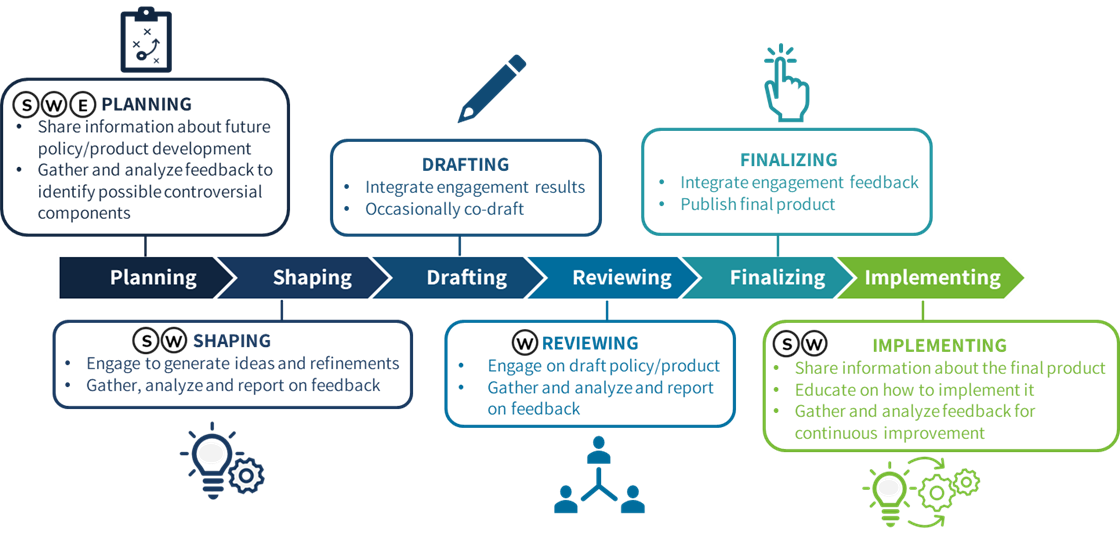
Figure 1. Engaging at different product development stages.
Long description
Diagram of the 6 product development stages and points where mobilisation can be used. Planning stage can use the sharing, working together and entrusting levels of engagement. Engagement activities include: sharing information about future policy or product development; gathering and analyzing feedback to identify possible controversial components. Shaping stage can use the sharing or working together levels of engagement. Engagement activities include: engaging to generate ideas and refinements; gathering, analyzing and reporting on feedback. Drafting stage is when you integrate engagement results and occasionally co-draft. Reviewing stage can use the working together level of engagement. Engagement activities include: Engaging on draft policy or product; gathering, analyzing and reporting on feedback. Finalizing stage includes integrating engagement feedback; publishing final product. Implementing stage can use the sharing or working together levels of engagement. Engagement activities include sharing information about the final product; educating on how to implement it; gathering and analyzing feedback for continuous improvement.
Continual improvement
DFO is committed to ongoing engagement with Indigenous Peoples, partners and interested parties, and strives for transparency and cooperation to build trusting, long-term relationships. To encourage a high quality and quantity of meaningful participation in engagement events, the engagement wave and individual events, we seek feedback on your engagement experience.
Page details
- Date modified: