
Banc-des Américains Marine Protected Area Management Plan
Status of the Government of Canada under the Oceans Act
2025 to 2030
On this page
- Preamble
- Summary
- Glossary
- Introduction
- Objectives of the management plan
- Background
- Description of the Banc-des-Américains sector
- Overview of the MPA regulations
- Acts and regulations
- Non regulatory measures
- Governance, stakeholders and roles and responsibilities
- Compliance promotion and enforcement
- Emergency response protocol
- Knowledge acquisition and ecological monitoring
- Awareness, education and communication
- Management process: regulatory life cycle
- Contact information
- References
- Annexes
Preamble
First, Fisheries and Oceans Canada (DFO) would like to acknowledge that the Banc-des-Américains Marine Protected Area is located on the unceded Indigenous territory of the Mig'maq First Nations of Gespe'gewa'gi, who play a critical role as stewards of the lands and waters of the territory. It is with respect for the links with the past, present and future that we value ongoing relationships with First Nations and other communities in Gaspésie-Îles-de-la-Madeleine.
DFO manages activities to deliver on its mandate of implementing the Banc-des-Américains Oceans Act Marine Protected Area (MPA) Regulations. The term Oceans Act MPA is thus used in this document as it refers to the Banc-des-Américains MPA Regulations under the Oceans Act. The common term Marine Protected Area (MPA) is used when referring to the MPA co-managed with the Government of Quebec and on which Canada and Quebec protection statuses are overlapped. The term MPA is therefore used in this document when it comes to joint actions with the Government of Quebec, including everything related to the Banc-des-Américains MPA management committee, among others.
Summary
The Banc-des-Américains Marine Protected Area RegulationsFootnote 1 under the Oceans Act were published on March 6, 2019. These regulations are the contribution of the Government of Canada to the first joint MPA project under the Canada-Quebec Collaborative Agreement for the Establishment of a Network of Marine Protected Areas in QuebecFootnote 2, signed on March 18, 2018. The Canada-Quebec joint project agreement regarding the Banc-des-Américains MPAFootnote 3 was subsequently signed on March 4, 2019. Then, on October 7, 2021, the Government of Quebec further granted the status of proposed aquatic reserve Footnote 4 under its Natural Heritage Conservation Act Footnote 5. A Management Committee for the Banc-des-Américains Marine Protected Area (MPA), made up of representatives from DFO as well as several Government of Quebec departments, manages the MPA.
The Banc-des-Américains Marine Protected Area Regulations apply to the entire area of the Banc-des-Américains MPA. The Banc-des-Américains MPA is located in the area extending from the tip of Forillon and covers approximately 1,000 km2. This MPA is an ecological hotspot, home to many species of commercially harvested fish, marine mammals and at-risk species, including some whale and wolffish species.
The Oceans Act MPA has the following conservation objectives:
- to conserve and protect benthic (seabed) habitat
- to conserve and protect pelagic (water column) habitats and forage species (prey)
- to promote the recovery of at-risk whales and wolffish
The MPA Regulations define 2 separate management zones. Zone 1 consists of the submarine bank known as “the American Bank,” which extends over nearly 127 km2 and peaks at 12 m below the water surface. It is considered to be the most biodiverse and fragile and it requires more restrictive management measures, especially for activities that impact the seabed. Zone 2 (Zones 2a and 2b) encompasses the plains adjacent to the bank. These zones cover an area of approximately 873 km2 and are considered to be more resilient, allowing a larger number of activities in line with the conservation objectives.
This Banc-des-Américains Oceans Act MPA Management Plan supports the federal regulations and encompasses the five-year period from 2025 to 2030. It is a key document offering further information on the Oceans Act MPA framework and management process. It includes measures for:
- management
- knowledge acquisition
- ecological and socio-economic monitoring
- collaborative governance
- compliance monitoring and promotion
- awareness and emergency response protocols
- communication as well as user and public education
Glossary
- Adaptive Management
- A management strategy that is gradually adjusted as new and relevant information becomes known to ensure that the conservation/management measures in place are adequate to achieve conservation objectives.
- Adaptive management zone
- Zones 2a and 2b of the Banc-des-Américains Oceans Act MPA are referred to as adaptive management zones, where activities in line with conservation objectives are allowed under certain conditions.
- Banc-des-Américains Marine Protected Area (MPA)
- Common name used for the Banc-des-Américains site to indicate dual federal and Quebec protection status. A clearly defined geographical space, recognized, dedicated and managed, by any effective means, legal or other, to ensure the long-term conservation of nature and associated ecosystem services and cultural values.
- Benthic
- Pertaining to the seabed. The benthos (or benthic organisms) refers to organisms living in (endobenthic/endobenthos), on (epibenthic/epibenthos) or near (suprabenthic/suprabenthos) the seabed.
- Demersal
- Organisms living near the seabed, located below the pelagic realm but above the benthic realm.
- Forage
- Organisms used for food, such as prey.
- Governance
- The institutions (laws and regulations), structures and processes that determine who makes decisions, how and for whom they are made and if so, what actions are taken by whom and for what purpose.
- Grey water
- Water from sinks, washing machines, bathtubs, showers and dishwashers.
- Oceans Act Marine Protected Area (Oceans Act MPA)
- Fisheries and Oceans Canada uses this term to designate a Marine Protected Area under the Oceans Act.
- Pelagic
- Pertaining to the water column, that is the volume of water between the bottom and the surface and therefore to open marine environments.
- Proposed aquatic reserve
- The Government of Quebec uses this status to designate a Marine Protected Area under the Natural Heritage Conservation Act, pending permanent marine reserve status.
- Sewage
- Water containing human waste or waste from live animals, from toilets and other containers intended to receive or contain human waste, from rooms reserved for medical care, from spaces used for the transport of live animals and other waste water or other waste when mixed with waste water.
- Vessel
- As defined in section 2 of the Canada Shipping Act, 2001, the term refers to a boat, ship or craft designed, used or capable of being used solely or partly for navigation in, on, through or immediately above water, without regard to method or lack of propulsion and includes such a vessel that is under construction
Introduction
The Government of Canada is committed to achieving its marine conservation objectives by developing a network of Marine Protected Areas (MPAs), including Oceans Act Marine Protected Areas and other effective area-based conservation measures (OECMs). Banc-des-Américains was designated as an Oceans Act MPA by regulation under the Oceans Act on March 6, 2019 and it aims to conserve and protect the biodiversity in this area from the harm caused by human activities.
This MPA is the first joint project under the Canada-Quebec Collaborative Agreement for the Establishment of a Network of Marine Protected Areas in Quebec Footnote 6 with dual protected status. A specific agreement, the Canada-Quebec joint project agreement regarding the Banc-des-Américains MPA Footnote 7, was also signed. Thus, in addition to federal Oceans Act MPA status, it was also awarded Proposed Aquatic Reserve Footnote 8 status by the Government of Quebec under its Natural Heritage Conservation Act in 2021.
The Banc-des-Américains MPA is located in the Gulf of St. Lawrence (Figure 1), near Cap Gaspé and Bonaventure Island. It covers approximately 1,000 km2 and extends 35 kilometers eastward, off the Gaspé Peninsula coast. This sector consists of a sharp submarine rocky ridge known as the Banc-des-Américains, peaking at 12 meters below the water surface, as well as 2 adjacent plains. The name of this formation dates back to the 18th and 19th centuries. At the time, the area was highly sought-after for fishing cod. American fishermen flocked there in the hundreds and could even get there easily with a single-sailed punt (boat) (Mimeault, 2002).
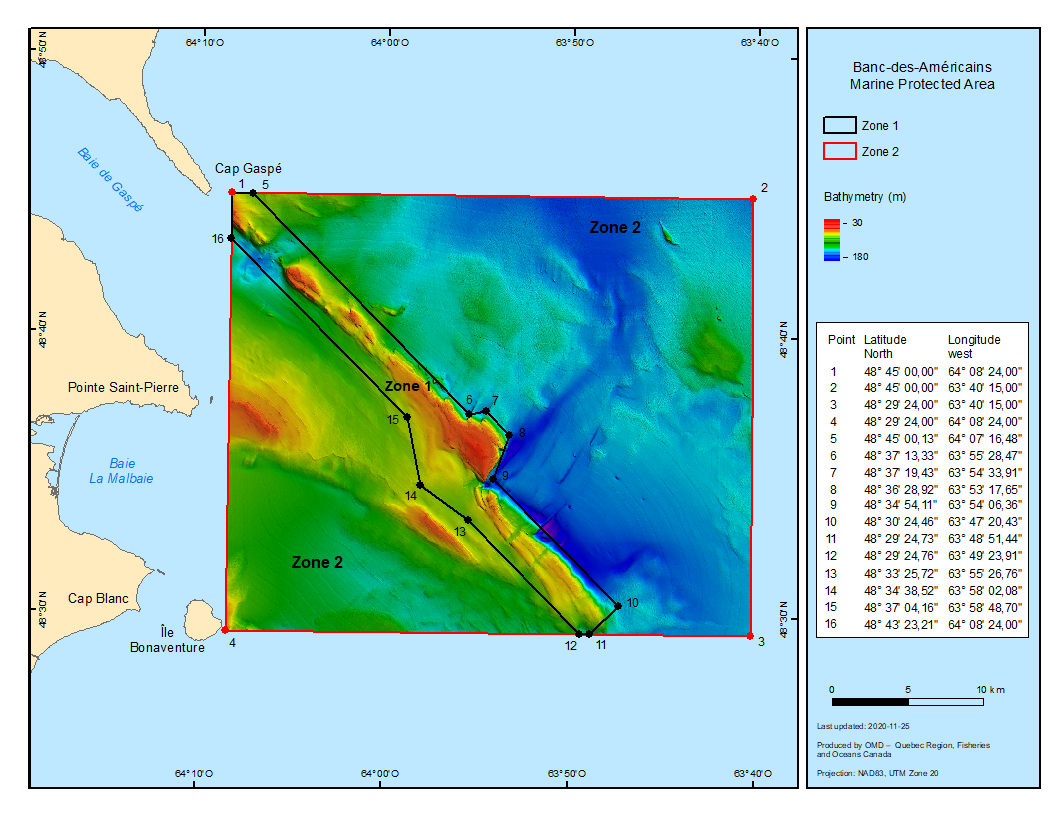
Figure 1. Location and geographic boundaries of the Banc-des-Américains Marine Protected Area.
Long Description
The Banc-des- Américains MPA is located off the eastern tip of the Gaspé Penisula in the St. Lawrence Estuary and Gulf bioregion. Covering an area of 1,000 km2, the MPA includes the entire underwater rocky ridge known as Banc des Américains (zone 1), as well as the adjacent plains (zones 2a and 2b).
Banc-des-Américains Oceans Act MPA was designated under subsection 35(1) of the Oceans Act for special protection based on 4 of the 6 designating criteria, namely:
- the conservation and protection of commercial and non-commercial fishery resources, including marine mammals and their habitats
- the conservation and protection of endangered or threatened marine species and their habitats
- the conservation and protection of unique habitats
- the conservation and protection of marine areas of high biodiversity or biological productivity
This MPA aims to promote the productivity and diversity of fisheries resources associated with the Banc-des-Américains and its adjacent plains and to promote the recovery of species at risk. This will be accomplished through the following conservation objectives:
- to conserve and protect benthic (seabed) habitats
- to conserve and protect pelagic (water column) habitats and forage species (prey)
- to promote the recovery of at-risk whales and wolffish
Objectives of the management plan
In keeping with the Banc-des-Américains MPA Regulations, designated under the Oceans Act, a management plan must be developed and its main objective is to describe the management process of the Banc-des-Américains Oceans Act MPA, that is governance, ecological and socio-economic monitoring, compliance, emergency response protocol and awareness.
- It should define the Oceans Act MPA conservation objectives and operational guidance for the overall management of human activities and how the condition of the Oceans Act MPA will be assessed.
- It should also provide an overview of the Banc-des-Américains Oceans Act MPA Regulations, including authorized and unauthorized activities.
- It should outline the process of submitting an activity plan for scientific research or monitoring, habitat restoration, education and commercial marine tourism in the Oceans Act MPA.
- Aside from regulatory measures, voluntary and best practice measures are recommended to improve overall Oceans Act MPA management. Interested parties can also give their opinion on the first draft of the management plan and its subsequent revisions.
The management plan for the Banc-des-Américains Oceans Act MPA is intended to be evergreen and may be reviewed at minimum every 5 years, based on published scientific reports and monitoring. The review will assess how successful strategies and actions were in achieving management and conservation objectives, as well as identify emerging priorities for the next iteration of the plan.
The extent to which the Oceans Act MPA management plan has been implemented could help decide whether progress has been made, that is, whether activities and actions in the Banc-des-Américains Oceans Act MPA have contributed to achieving management and conservation objectives. A section describing the results will then be integrated when the management plan is reviewed, after the Oceans Act MPA assessment.
Oceans Act MPA regulations follow a life cycle approach, which means that the focus is not only on developing the regulations, but also on implementing, monitoring, assessing and reviewing them. This life cycle will be harmonized as much as possible with the regulatory processes of the Government of Quebec in order to avoid duplication.
Objective 1: conserve and protect benthic (seabed) habitats.
Objective 2: conserve and protect pelagic habitats (water column) and forage species (prey).
Objective 3: promote the recovery of at-risk whales and wolffish.
Background
In 2006, a workshop was held for scientific experts from Fisheries and Oceans Canada (DFO) to identify 10 ecologically and biologically significant areas (EBSAs) for the Estuary and Gulf of St. Lawrence. Its purpose was to set out conservation objectives for the integrated management of oceans and the Gulf of St. Lawrence. Given the ecological and biological role these EBSAs play, attention needs to be paid to those activities that might affect them. Using an analytical approach, significant areas for each biological component below were also identified:
- primary production
- secondary production
- meroplankton
- benthic invertebrates
- pelagic fish
- demersal fish
- marine mammals
As a result of this process, the Banc-des-Américains area has been targeted (selected) in a portion of these EBSAs.
The process of selecting an area of interest dates back to 2009 and many internal multisectoral, regional and interregional consultations within DFO were held towards that end. Among the 4 areas proposed, the Banc-des-Américains was approved by everyone that was consulted and was officially announced as an area of interest in June 2011. In 2012, interested parties were able to take part in 2 DFO-led information sessions on the area of interest.
Public consultations
Information sessions were held in 2011 and 2012 with the 4 First Nations communities in the Lower St. Lawrence and the Gaspé Peninsula:
- the Mi'gmaq of:
- Gespeg
- Gesgapegiag
- Listuguj
- the Wolastoqiyik Wahsipekuk (formerly Maliseet Viger) First Nation
Between 2013 and 2015, four other consultation meetings were planned with the Mi'gmawei Mawiomi Secretariat along with the Mi'gmaq Wolastoqey Indigenous Fisheries Management Association (MWIFMA). Beginning in 2009, 6 meetings were also held to discuss matters with the 10 Gaspé fish harvesters' associations, which are the :
- Association des crabiers de la baie
- Regroupement des pêcheurs professionnels du sud de la Gaspésie
- Association des capitaines propriétaires de la Gaspésie
- Association des morutiers traditionnels de la Gaspésie
- Association des morutiers de Gaspé
- Association des crabiers gaspésiens
- Association des membres d'équipage gaspésiens
- Regroupement des pêcheurs professionnels du nord de la Gaspésie
- Association des pêcheurs de crevette de Matane
- Association des pêcheurs de la RCM de Pabok
In 2013, a consultation workbook with information on the ecosystem for the area of interest and a questionnaire on the area were sent to 55 marine stakeholders. They included:
- representatives of the:
- fishing
- aquaculture
- at-sea observation
- commercial shipping
- renewable (hydroelectricity)
- non-renewable (oil, gas, minerals) resource industries
- First Nations in Quebec and New Brunswick
- environmental, recreational boating and scuba diving organizations
- academic institutions
- regional county municipalities
They shared their ideas on how human activities had or could have, an impact on the 3 proposed conservation objectives for the area.
From all of these stakeholders, 15 agreed to serve on the Designation Advisory Committee.
To learn more about the public consultations with the different marine stakeholders, please refer to the Regulatory Impact Analysis Statement Footnote 9.
Designation Advisory Committee
In 2013, the Advisory Committee for establishing the Oceans Act MPA was formed. Made up of representatives of government departments, First Nations, primary marine users, environmental organizations and other interest groups, the committee identified the relevant conservation and management measures adapted to stakeholders' contexts to achieve the conservation objectives. The Designation Advisory Committee acted within its role to advise DFO on developing the Oceans Act MPA and was responsible for providing input and recommendations on regulatory and non-regulatory measures leading up to the MPA designation under the Oceans Act. More specifically, it:
- represented the different organizations and interests groups
- provided information while issuing advice and recommendations on:
- geographic boundaries
- conservation objectives
- socio-economic impact
- non regulatory measures
- regulatory intent
The Advisory Committee's terms of reference extended until the Oceans Act MPA was designated in 2019. For a list of the Advisory Committee members, please see Annex A.
Milestone
DFO's interest in the conservation of the Banc-des-Américains has grown considerably in recent years and important steps have been taken to recognize and protect this unique habitat as listed below (Table 1).
| December 5 to 7, 2006 | Area-wide workshop to identify and characterize ecologically and biologically significant areas for the Estuary and Gulf of St. Lawrence (DFO, 2007). |
| May 2009 | Process begins for selecting the Banc-des-Américains as an area of interest for its designation as a Marine Protected Area under the Oceans Act. |
| June 2010 | Intersectoral consultation workshop on the Banc-des-Américains area of interest for establishing it as a Marine Protected Area under the Oceans Act (Gauthier et al., 2013). |
| June 2011 | Selection of the Banc-des-Américains as an area of interest for designation as a Marine Protected Area under the Oceans Act. |
| 2011 to 2012 | Information sessions on the area of interest for interested parties. |
| 2012-2016 | Characterization of the Banc-des-Américains benthic habitat using underwater imaging (Savenkoff et al., 2017) Footnote 10 and description of the depth and type of seabed (Savenkoff et al., 2015) Footnote 11. |
| 2013 | Formation of the Advisory Committee for designating the Marine Protected Area under the Oceans Act. |
| 2013 to 2015 | Public consultations to gather feedback on the designation of the Oceans Act Marine Protected Area and proposed regulations. |
| August 2017 | Fisheries and Oceans Canada and Oceana Canada scientists' exploration of the Banc-des-Américains using ROPOS, an underwater, remotely operated robot (Faille et al., 2019). |
| March 19, 2018 | Signing of the Canada-Quebec Collaborative Agreement to Establish a Network of Marine Protected Areas in Quebec Footnote 12. |
| June 30, 2018 | Prepublication of the Banc-des-Américains Marine Protected Area Regulations in the Canada Gazette, Part I Footnote 13. |
| March 4, 2019 | Signing of the Canada-Quebec joint project agreement regarding the Banc-des-Américains MPA Footnote 14. |
| March 6, 2019 | Publication of the Banc-des-Américains Marine Protected Area Regulations Footnote 15 in the Canada Gazette, Part II, and of the Regulatory Impact Analysis Statement Footnote 16. |
| November 2019 | Formation of the Banc-des-Américains Marine Protected Area Management Committee. |
| September 22, 2021 | Publication of the Ministerial Order for awarding the status of Proposed Aquatic Reserve to the Banc-des-Américains in the Gazette officielle du Québec and of the conservation plan under the Natural Heritage Conservation Act of Quebec. |
| May 5, 2023 | Formation of the Banc-des-Américains Marine Protected Area Management Advisory Committee. |
Description of the Banc-des-Américains sector
Habitats
The particular rock formation (Figure 2) and the Gaspé current carrying essential nutrients for the productivity of the ecosystem are the primary reasons why there is such a wide variety of habitats and exceptional biodiversity. The area supports an extraordinary range of marine habitats and species, including an abundance of commercially harvested ones. There are also many forage species (prey), such as:
- capelin
- herring
- sand lance
- krill
The area has further significant potential as a feeding ground for various species of fish and marine mammals and represents an important habitat for groundfish populations.
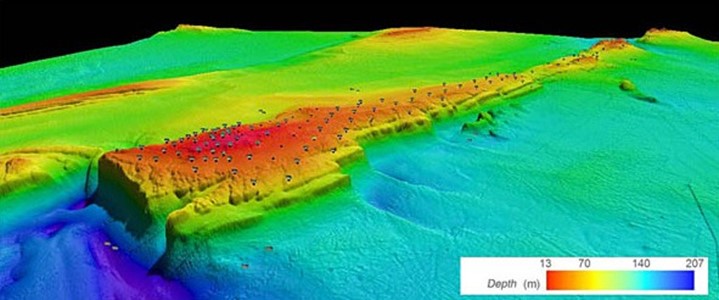
Figure 2. Three-dimensional representation of the 2012 ridge (central section) of the Americans Bank and sampling stations in benthic imaging
Species
The Banc-des-Américains sector is frequented by a number of commercially fished species and marine mammals, including species listed under the Species at Risk Act. A little less than a dozen cetacean species can be observed every year in the region, which is a feeding ground and an essential migration route to and from the Estuary and the Gulf of St. Lawrence. These species include:
- the Blue Whale, Atlantic population (Balaenoptera musculus [Linnaeus, 1758]; endangered species)
- the North Atlantic Right Whale (Eubalaena glacialis [Müller, 1776]; endangered species)
- the fin whale (Balaenoptera physalus physalus [Linnaeus, 1758]; species of special concern)
The area is currently home to the Atlantic Wolffish (Anarhichas lupus [Linnaeus, 1758]; species of special concern), which is particularly fond of the rocky cavities found in the rocky ridges of Zone 1. Spotted Wolffish (A. minor [Olafsen, 1772]; threatened species) and Northern Wolffish (A. denticulatus [Krøyer, 1845]; threatened species), both threatened species, have been captured in the area. The Leatherback Sea Turtle (Dermochelys coriacea [Vandelli, 1761]; endangered species), the largest reptile in Canada, has also been observed in the area.
Overview of human activities
Various human activities were carried out in the Banc-des-Américains area before it was designated an Oceans Act MPA. During the site assessment, fishing, navigation and tourism activities at sea were deemed to be the commercial activities most likely to alter the major ecological components of the area. An analysis of the ecological risks and impacts of these activities on the achievement of the conservation objectives pursued in the MPA was therefore conducted (Gendreau et al., 2018) Footnote 17. The results showed that some human activities were likely to compromise the achievement of the conservation objectives set for the area and therefore needed to be regulated.
The existing regulatory tools applicable to these activities independently were not sufficient to mitigate the risks. Some marine activities are regulated by various federal acts. However, without a unifying authority, such as an Oceans Act MPA designation, the species and habitats in the area were not adequately protected. The government therefore took additional action and enacted regulations designating the area an MPA under the Oceans Act. This designation serves to comprehensively manage activities and conserve and protect the Banc-des-Américains ecosystem over the long term, including by prohibiting those activities that pose a risk to the achievement of the conservation objectives pursued in the Oceans Act MPA.
Fishing
A fisheries analysis was conducted to determine the direct impacts of fisheries on the environment. As the risk level was identified independently of the concentration of fishing activities in the area under study, some activities rarely carried out in the Banc-des-Américains area were deemed to pose a potential risk because an increase in these activities could compromise the achievement of conservation objectives.
Bottom trawling is likely to destroy or change the composition of habitat and species on the seabed. This practice can capture non targeted species as incidental catches (Pusceddu et al. 2014), including Atlantic Wolffish listed in Schedule 1 of the Species at Risk Act species list with a status of special concern or Atlantic Cod (Laurentian South population), the latter whose status under Species at Risk Act is currently under review. Bottom trawling was therefore deemed an activity with a potentially very high risk of compromising the achievement of the conservation objectives pursued in the MPA, including the conservation of benthic and pelagic habitat, forage species and at risk whales and wolffish.
A study by Fuller et al., (2008) found that trap fishing indicated that these fishing gears disturb the seabed, particularly when placed on the seabed and during hauling. In shallow areas, waves and swells can displace traps and drag them along the seabed. This displacement alters the state of the substrate and can damage sessile species (Schweitzer et al., 2018). This type of gear also carries a risk of entanglement for marine mammals (DFO, 2010). From 1975 to 2016, the period of use of the sector by cetacean species, for which entanglements pose a threat to their recovery, did not coincide with the snow crab fishing season. Risks associated with this fishery were therefore deemed low and did not compromise the achievement of the conservation objectives pursued under the Oceans Act MPA. Therefore, the interactions with marine mammals were negligeable and so were disturbances to the seabed, considering the depth of the waters. However, since 2017, North Atlantic Right Whales have been appearing earlier in the season and in larger numbers in the Gulf of St. Lawrence, leading to riskier interactions with traps. According to scientists, it is too early to determine whether this situation is likely to last (DFO, 2018). To reduce entanglement risks, the Department has therefore implemented a dynamic closure protocol prohibiting several activities, including the use of traps, when North Atlantic Right Whales are observed in a fishing area in the Gulf of St. Lawrence. The Department will continue assessing the situation of right whales, particularly in the Oceans Act MPA. Additional steps may be taken to further reduce entanglement risks according to the principle of adaptive management, if necessary.
Gillnets and longline gear were used very little (< 1%) in the area, while other types of fishing gear (handline, Danish seine, traps, etc.) were almost never used (< 0.1%). However, gillnets can be harmful for the marine ecosystem (Fuller et al., 2008) because of the effects of seabed alteration combined with the very high risk of entanglement with several marine mammals, including marine mammals listed under the Species at Risk Act. Gillnet fishing may therefore have a very high risk of compromising the achievement of the conservation objectives pursued in the MPA.
Currently, the 2 main commercial fisheries carried out in the Oceans Act MPA are snow crab fishing using traps and fishing of groundfish, mainly Atlantic Halibut, using longline gear. Before the area was designated an Oceans Act MPA, Northern Shrimp trawling and several fishing activities using gillnets were carried out in the area. Since designation, these activities have been prohibited in all zones. As the fishing effort in the area was low before designation, this prohibition has had little impact on commercial fishing activities. However, it has the advantage of averting the potential negative consequences of these activities on conservation objectives.
Marine transportation
Marine transportation is also a potential source of risks associated with contamination from accidental spills, collisions between vessels and cetaceans and noise. Wastewater and grey water discharge can also contaminate the water column and marine sediments, which are important habitats for marine organisms in the sector. Several commercial vessels, including tankers, cargo ships, chemical tankers and cruise ships transporting up to 400 passengers, cross the sector on their way to Chaleur Bay or the Gaspé Bay. Transportation of petroleum and chemical products by tankers could compromise the achievement of conservation objectives in the event of a spill. Furthermore, passing vessels can disrupt the behaviour of marine mammals due to the noise they emit and the collision risk they pose. However, according to a site assessment conducted in 2014 and 2015, marine transportation was relatively low in the sector of the Banc-des-Américains and was therefore deemed unlikely to compromise the achievement of conservation objectives pursued in the MPA.
Tourism
Marine tourism activities in the sector are seasonal and mainly consist of marine mammal watching activities. The main threats associated with these activities are disturbances caused by proximity, noise from vessels and risk of collision with marine mammals. Few marine tourism activities take place in the sector, as it is far from the home ports of marine tourism operators, particularly operators using small vessels. In 2016, the Marine Mammal Observation Network (MMOM) conducted a consultation with stakeholders in the marine observation industry. Furthermore, an outreach kit was provided to vessel captains to encourage them to adopt best practices for approach and observation., Amendments have been made to the Marine Mammal Regulations (SOR/2018-126 Footnote 18) imposing minimum approach distances on vessels (including a minimum approach distance of 100 meters for cetaceans and a minimum approach distance of 200 meters for cetaceans resting or with their calf). This is reducing disturbances to cetaceans in the area. The risk of this activity compromising the achievement of conservation objectives has therefore been deemed low.
The natural resources and energy industries
During DFO's assessment of the Banc-des-Américains site, it was determined that natural resource exploration and development carry high risks for the achievement of the conservation objectives pursued in the Oceans Act MPA. The impacts of the associated chemical contaminants (for example, petroleum hydrocarbons and polycyclic aromatic hydrocarbons [Allaire-Verville et al., 2015]) and noise on the environment and aquatic organisms are known and fairly well documented. However, when the area was designated an Oceans Act MPA, there was no hydrocarbon or mineral exploration or development activity in the area and no such rights or permits had been issued for areas that are now part or all of the Oceans Act MPA. Furthermore, there was a moratorium on hydrocarbon exploration and development in the Gulf of St. Lawrence. At the time of designation, no turbine or other marine infrastructure projects were planned for the sector and there were no submarine cables in the area. Since the designation of the Oceans Act MPA, all oil, gas or mining activities are prohibited throughout the site. In addition, since August 23, 2022, the exploration and production of hydrocarbons is prohibited in Québec. The Act to put an end to the search for petroleum resources or underground reservoirs, the production of hydrocarbons and the exploitation of brine prohibits the following activities:
- the exploration and production of hydrocarbons
- the exploitation of brine
- the search for underground reservoirs when it is done with the intention of exploring, storing or exploiting hydrocarbons or brine
In addition, there were no submarine cables present in the sector. During the development of the Banc-des-Américains Marine Protected Area Regulations under the Oceans Act, no submarine cable installation was contemplated. However, during the public consultation period following the pre publication of the proposed regulations in the Canada Gazette, Part I, Hydro-Québec (the company responsible for producing, transporting and distributing electricity in Quebec) informed DFO that one of the routes being studied for a newly proposed submarine cable installation project linking the Magdalen Islands to the Gaspé Peninsula would cross part of the sector. The impacts of submarine cables could compromise the achievement of the conservation objective to protect benthic habitat (OSPAR, 2017). As of 2023, Hydro Québec's submarine cable project is still under analysis. However, no route options are being considered in this sector, considering that this activity is prohibited by the MPA Regulations.
In summary, the results of the assessment of the impacts of anthropogenic activities on the achievement of the conservation objectives pursued under the MPA demonstrated the need to implement additional regulatory safeguards. The Banc-des-Américains Marine Protected Area Regulations under the Oceans Act address this need to protect the Banc-des-Américains ecosystem and support appropriate management of these human activities to ensure the achievement of the conservation objectives pursued in the Oceans Act MPA.
Overview of the MPA regulations
Management zones
The Banc-des-Américains Marine Protected Area Regulations Footnote 19 are made under subsection 35(3) of the Oceans Act. The MPA covers an area of 1,000 km2, within which the Regulations establish 2 management areas (Figure 1). In each zone, activities that do not compromise the achievement of the Oceans Act MPA conservation objectives may be carried out. Stricter restrictions apply in the core protection zone (zone 1), which is the most sensitive zone. In the adaptive management zone (zones 2a and 2b), some activities are permitted under certain conditions. The management zones are as follows:
- Zone 1 (core protection zone): This zone, which covers an area of 127 km2, encompasses all of the rocky ridges associated with the Banc-des-Américains as well as their escarpments and the surrounding sea floor. It is the highest protection area and includes the part of the Oceans Act MPA that is richest in biodiversity and most sensitive to human activities.
- Zone 2a and 2b (adaptive management zone): These zones cover an area of 873 km2 and encompass nearly 90% of the Oceans Act MPA. They include the deep plains on either side of the Banc-des-Américains Zones 2a and 2b and are considered more resilient than Zone 1.
Prohibited and permitted activities
The Regulations prohibit any activity that disturbs, damages, destroys or removes from the Oceans Act MPA any living marine organism or any part of its habitat or is likely to do so. There are, however, certain exceptions that authorize specific activities within the Oceans Act MPA (see list of authorized activities) when these activities do not compromise the achievement of conservation objectives; these activities continue to be subject to all other applicable legislative and regulatory requirements. Some of these activities must first be authorized by Fisheries and Oceans under an approved activity plan. Proponents must obtain all necessary authorization (for example, permits and licences) under the applicable acts to carry out their activities in the area.
The following activities may be carried out under certain conditions
Fishing
Some fishing activities may be authorized in the Oceans Act MPA under the Fishery (General) Regulations made under the Fisheries Act. The following fishing activities are authorized in the Oceans Act MPA under the provisions of the Fisheries Act and the Coastal Fisheries Protection Act and their regulations.
Indigenous food, social and ceremonial fisheries
Indigenous food, social and ceremonial (FSC) fisheries are permitted throughout the Oceans Act MPA. These fisheries remain subject to the requirements under the Aboriginal Communal Fishing Licences Regulations. They are regulated by change orders and licence conditions issued under the Fisheries Act that specify the gear authorized, the periods during which fishing is permitted, the fishing areas, the species targeted and the allowed quotas.
Commercial and recreational fisheries
Like FSC fisheries, commercial and recreational fisheries are governed by variation orders and licence conditions under the Fisheries Act. In the Banc-des-Américains Oceans Act MPA, commercial and recreational fishing activities are restricted to specific zones and types of fishing gear:
- Zone 1: Indigenous and non Indigenous commercial fishing (including under the Aboriginal Communal Fishing Licences Regulations) and recreational fishing are not permitted.
- Zones 2a and 2b: Commercial fishing—for any species other than capelin, herring, mackerel, sand lace, krill or copepods—by means of a trap, longline or handline or by angling is permitted. Recreational fishing by means of a handline or by angling is also permitted in these zones.
Navigation
All activities related to navigation and marine transportation continue to be permitted within the Oceans Act MPA. However, anchoring of vessels is not permitted in Zone 1. In addition, discharge of sewage and release of grey water (as defined in the Vessel Pollution and Dangerous Chemicals Regulations) from vessels with a gross tonnage of 400 tonnes or more or certified to carry 15 or more passengers, are prohibited in the Oceans Act MPA.
Public safety and national security
Throughout the Oceans Act MPA, activities carried out for the purpose of public safety, national defence, national security, law enforcement or in response to an emergency (such as, marine search and rescue operations and incident responses involving the deposit of deleterious substances) are permitted to ensure the safety of Canadians.
Activities for scientific research and monitoring, habitat restoration, education and commercial marine tourism
Scientific research and monitoring, habitat restoration, educational and commercial marine tourism activities are permitted in the Banc-des-Américains Oceans Act MPA subject to approval of an activity plan. These activities remain subject to all other applicable legislative and regulatory requirements, including the obtention of specific permits or authorizations for the activity in question.
List of authorized activities (exceptions provided for in the regulations)
Zone Management 1 and 2:
- Indigenous fishing
- permitted if conducted for food, social and ceremonial purposes (FSC)
- safety or emergency
- permitted if the activities are conducted for the following purpose:
- emergency response
- public safety and national security
- national defence
- law enforcement
- permitted if the activities are conducted for the following purpose:
- scientific research or monitoring
- permitted if proponent submits an activity plan that meets the conditions set out in the Regulations and is approved by the Department
- habitat restoration
- permitted if proponent submits an activity plan that meets the conditions set out in the Regulations and is approved by the Department
- educational activity
- permitted if proponent submits an activity plan that meets the conditions set out in the Regulations and is approved by the Department
- commercial marine tourism activity
- permitted if proponent submits an activity plan that meets the conditions set out in the Regulations and is approved by the Department
- recreational and commercial navigation
- permitted if proponent submits an activity plan that meets the conditions set out in the Regulations and is approved by the Department
Only Zone 2:
- commercial fishing
- permitted if fishing by means of a trap, longline or handline or by angling is permitted EXCEPT for the following forage species:
- capelin
- herring
- mackerel
- sand lance
- krill
- copepods
- permitted if fishing by means of a trap, longline or handline or by angling is permitted EXCEPT for the following forage species:
- recreational fishing
- permitted is fishing by means of a handline or by angling
Activities plan for carrying out an activity in the Banc-des-Américains Oceans Act MPA
DFO must ensure that scientific research and monitoring, habitat restoration, educational and commercial marine tourism activities in the Oceans Act MPA do not compromise the achievement of conservation objectives. The Regulations therefore require that an activity plan containing specific information on each proposed activity be presented to DFO for review and approval before the activity in question can be carried out in the Oceans Act MPA. If the review of the activity plan shows that the proposed activity meets the conditions set out in the Regulations, the activity plan will be approved and the activity may be carried out in the Oceans Act MPA.
Activity plan applications can be denied in certain circumstances. Under the Regulations, an activity plan will be denied if:
- any substance that may be deposited during the proposed activity is a deleterious substance as defined in subsection 34(1) of the Fisheries Act, unless the deposit of the substance is authorized under subsection 36(4) of that Act
- the cumulative environmental effects of the proposed activity, in combination with those of any other past and current activities carried out in the Oceans Act MPA, are that the activity is likely to:
- destroy the habitat of any living marine organism in the Oceans Act MPA
- adversely affect the biodiversity or biological productivity of the Oceans Act MPA
- adversely affect the ecosystem structure and function of the Oceans Act MPA
- adversely affect whales or wolffish
Once the proponent has provided all the information required for their activity to be reviewed, DFO has up to 60 days to review and choose whether or not to approve the activity plan. If the proponent amends and resubmits the plan, DFO must make a decision within 60 days of receipt of the amended plan. To obtain an activity plan application form, please visit the Oceans Act MPA website Footnote 20 and contact the Oceans Act MPA management team (DFO.OceansQC-OceansQC.MPO@dfo-mpo.gc.ca).
If the activity plan is approved, the person who submitted it must provide an activity report within 90 days of the last day of the activity. This information is used to monitor pressure from human activities on the ecological components of the Oceans Act MPA and to continue monitoring the risks these activities could pose to the achievement of conservation objectives. Furthermore, when a report, study or other work is completed following an activity in the Oceans Act MPA, a copy of the document in question must be provided within 90 days of the completion of the activity. Cruise operators that use the Banc-des-Américains Oceans Act MPA for marine mammal watching receive a grid to fill out during the season. This grid is used to compile mandatory information for the activity report, as well as other information on marine mammals that, while optional, is important for the Department. Cruise passengers also have the option to report their sightings in the MMON Vigie Marine app. The data provided may be used for monitoring purposes as part of the management of the Oceans Act MPA.
Alignment
As of 2020, a multi-year activity plan may be approved for a 3 year period if it meets certain conditions (Annex B) established based on the type of activity.
Activities carried out in the Banc-des-Américains MPA may require authorizations under the provisions of federal and Quebec statutes. The Banc-des-Américains MPA Management Committee is currently developing a harmonization mechanism for the submission of authorization requests and the issuing of authorizations.
For some types of activities, applicants who submit an activity plan to DFO and receive the approval must also obtain a licence under section 52 of the Fishery (General) Regulations and/or Marine Mammal Regulations (Section 38) of the Fisheries Act. When the activity impacts a species at risk, a permit is required under Species at Risk Act (Table 2).
| Act | Regulations | Section | Approval type | Statutory deadline | Division responsible |
|---|---|---|---|---|---|
| Oceans Act | Banc-des-Américains Marine Protected Area Regulations Footnote 21 | Section 35 of the Act Section 9 of the Regulations | Activity plan | 60 days | Marine Planning and Conservation |
| Fisheries Act | Fishery Regulations Footnote 22 | Section 52 of the Regulations | Licence under the Fisheries Act permit | Service Standards: 30 days for a new application and 20 days for a renewal | Fisheries Management |
| Fisheries Act | Marine Mammal Regulations Footnote 23 | Section 38 of the Regulations | Licence under the Fisheries Act permit | Service Standards: 30 days for a new application and 20 days for a renewal | Fisheries Management |
| Species at Risk Act | Permits Authorizing an Activity Affecting Listed Wildlife Species Regulations Footnote 24 | Section 3 of the Regulations Section 73 of the Act | Licence under the Species at Risk Act |
When analyzing activity plans for scientific research involving species at risk, the Marine Planning and Conservation Division must therefore align itself with the Species at Risk Management Division and the Regional Fisheries Management Branch to ensure that the activity complies with the Department's acts and regulations. Interregional coordination may also be required in some cases.
Acts and regulations
The MPA is managed through federal and Quebec acts where applicable, as well as through other non regulatory measures, such as best practices, to ensure more complete protection of ecological components of interest. Below is a non exhaustive list of acts and regulations applicable to the area.
Oceans Act
The Oceans Act Footnote 25, adopted in 1996, leads and facilitates the development and implementation of plans for the integrated management of estuarine, coastal and marine ecosystems. Canada is committed to adopting a global approach to marine and coastal water protection and development through the wide application of the precautionary approach to the conservation, management and exploitation of marine resources. DFO designates MPAs under the Oceans Act.
Species at Risk Act
The federal Species at Risk Act Footnote 26 was adopted in December 2002 and came into force in June 2004. This act supports one of the Banc des-Américains Oceans Act MPA conservation objectives pursued: to promote the recovery of at-risk whales and wolffish. Species at Risk Act has 3 main objectives:
- prevent Canadian indigenous species, subspecies and distinct populations from becoming extirpated or extinct
- provide for the recovery of endangered or threatened species
- encourage the management of other species to prevent them from becoming at risk
Under Species at Risk Act, it is prohibited to capture and possess wildlife species that are listed as endangered or threatened, such as the Spotted Wolffish and Northern Wolffish.
However, the recovery strategy for the Spotted Wolffish and Northern Wolffish Footnote 27 provides an exemption that allows the incidental catch of these species for any person authorized to carry out a fishing activity. The exemption, however, requires that individuals caught incidentally be promptly returned to the water to limit mortality. Although Atlantic Wolffish is listed as a species of special concern under Species at Risk Act and the release requirement does not apply to this species, DFO recommend that incidental catches be released and reported to DFO for commercial fishers on a voluntary basis.
The Species at Risk Act also prohibits the killing, harm and harassment of an individual of a wildlife species that is listed as extirpated, endangered or threatened.
Fisheries Act
Since 1985, the Fisheries Act Footnote 28 has been one of the main tools for ensuring sustainable fisheries management. It aims to protect and conserve fish and fish habitat in the face of damage caused by human activities. In addition, the Fishery (General) Regulations require any person authorized to engage in a fishing activity to release any species accidentally caught whose possession is prohibited in a manner that minimizes adverse effects on individuals. In addition, commercial fish harvesters are required to report these bycatches to DFO in their logbooks.
The Fisheries Act also includes the Marine Mammal Regulations, which require maintaining a minimum distance of 100 meters from whales, porpoises and dolphins or 200 meters for when they are resting or with calves in the Gulf of St. Lawrence and therefore the Banc-des-Américains MPA.
Canada Shipping Act, 2001
The Canada Shipping Act, 2001 Footnote 29 is the main legislative tool regulating Canadian vessel activities in all waters and all foreign vessels in Canadian waters. Administered primarily by the Minister of Transport, it is the principal legislation governing safety of marine transportation and recreational boating, as well as protection of the marine environment. In the Banc-des-Américains MPA, this act regulates navigation activities, sewage discharge and management of ballast water.
Quebec's Natural Heritage Conservation Act
The Natural Heritage Conservation Act Footnote 30, assented to in 2002 and amended in March 2021, is the main legislative tool by which the Government of Quebec endeavours to adhere to its commitments to conserving natural environments, including through the establishment of protected areas. This Act governs the proposed Banc-des-Américains aquatic reserve.
Non regulatory measures
Best practices for navigation and marine mammal watching
Proximity to vessels can have negative effects on the ability of marine mammals to carry out their activities due to underwater noise and an increased risk of collision. These risks increase with increasing vessel speed. To ensure adoption of navigation best practices in the Banc-des-Américains MPA, DFO encourages users to limit their speed to 25 knots when travelling and 10 knots when in an observation area.
The observation area corresponds to a half nautical mile radius around marine mammal watching vessels, that is less than 400 meters of a whale in the Gulf of St. Lawrence. It is also important to avoid watching marine mammals at risk, whales at rest and whales already under observation and therefore close to an observation boat. During an observation, users must reduce their speed (to no more than 10 knots), adopt an oblique trajectory in relation to the trajectory of the whale and limit their watching time (to no more than 1 hour). These best practices were developed based on the code of ethics set out in the Responsible Observation Guide for the Marine Observation Industry Footnote 31 produced by the MMON.
Governance, stakeholders and roles and responsibilities
To support the achievement of conservation objectives, DFO works with the Government of Quebec through the federal–Quebec Management Committee, as well as various federal departments, First Nations, fish harvesters and numerous local organizations striving to ensure marine protection in the area. This co operation is chiefly facilitated through committees and working groups, accountability meetings and contribution agreements.
Federal departments
Fisheries and Oceans Canada (DFO)
DFO is responsible for the establishment and management of the Banc-des-Américains Oceans Act MPA. It coordinates Oceans Act MPA conservation and monitoring with various teams across different sectors within the Department. Mechanisms for operational coordination and management are also in place.
The roles and responsibilities of the Regional Ecosystems Management Branch – Marine Planning and Conservation Division (MPCD) include:
- coordinating Banc-des-Américains management activities with the Government of Quebec under the Canada–Quebec joint project agreement regarding the Banc-des-Américains MPA
- leading the development, approval and review of the Oceans Act MPA management plan
- leading the review, analysis and monitoring of activity plans according to the directives and models available nationally
- updating Notices to Mariners at the request of the Canadian Coast Guard (CCG)
- examining compliance promotion products
- developing the emergency response protocol with the CCG and incorporating it into the Oceans Act MPA management plan
- validating the Oceans Act MPA monitoring plan
- providing monitoring trends and an analysis of social, economic, cultural and governance indicators
- leading the Oceans Act MPA performance assessment
- overseeing Oceans Act MPA management
The roles and responsibilities of the Regional Science Branch include:
- with the help of an internal working group, providing support during the analysis of the impacts of a proposed activity based on an activity plan
- determining ecological monitoring indicators, protocols and strategies for the Oceans Act MPA
- contributing to the ecological monitoring section of the Oceans Act MPA management plan
- producing Oceans Act MPA monitoring reports
- supporting the MPCD or taking part in management or advisory committee meetings as necessary
- coordinating and participating in the DFO Scientific Committee for the Banc-des-Américains MPA monitoring
The roles and responsibilities of the Strategic Services Divisions include:
- identifying the relevant socio-economic indicators for the Oceans Act MPA
- taking part in the Oceans Act MPA performance evaluation
- supporting the MPCD by providing advice or taking part in meetings as necessary
The roles and responsibilities of the Regional Fisheries Management Branch – Conservation and Protection Division include:
- providing feedback on the compliance promotion and enforcement section of the Oceans Act MPA management plan
- enforce the Banc-des-Américains Marine Protected Area Regulations
- helping draft the emergency response protocol
- conducting monitoring activities (patrols) to ensure users comply with the regulations governing the Oceans Act MPA
- developing the monitoring plan
- taking part in the Oceans Act MPA performance evaluation
- supporting the MPCD by providing advice or taking part in meetings as necessary
The roles and responsibilities of the Regional Fisheries Management Branch – Resource Management, Aquaculture and Indigenous Affairs include:
- liaison, consult and engage with First Nations and the fishing industry
- provide expertise on Indigenous and non-Indigenous fisheries activities
- supporting the MPCD by providing advice or taking part in meetings as required
- supporting the MPCD in the analysis of activity plans
The roles and responsibilities of the Canadian Coast Guard include:
- developing and implementing the emergency response protocol
- conducting and monitoring activities
- ensuring marine safety and search and rescue activities
In addition to all the divisions of the department mentioned above, the MPCD has also relied on the Species at Risk Management Division, the Fish and Fish Habitat Protection Division, the sector offices and the communications department for the various stages of the implementation of the MPA and continues to do so to ensure sound management.
Other federal departments
Various federal departments work with DFO to provide timely support in the management of the Banc-des-Américains MPA. These include:
- Natural Resources Canada, Transport Canada or any other department deemed relevant may be invited to take part in and present relevant key results at meetings of the MPA management committee or management advisory committee.
- Environment and Climate Change Canada, Transport Canada and other relevant jurisdictions may take part in the development and application of the emergency response protocol and conduct monitoring, enforcement and compliance activities in the MPA.
Co-management between Canada and Quebec
As stated earlier, the Banc-des-Américains MPA is the first joint project under the Canada–Quebec Collaborative Agreement to Establish a Network of Marine Protected Areas in Quebec Footnote 32. It is the Bilateral Group on Marine Protected Areas (BGMPA) who has the mandate of implementing this Collaborative Agreement signed in 2018. The group is composed of the following:
- Quebec provincial departments:
- Ministère de l'Environnement, de la Lutte contre les changements climatiques, de la Faune et des Parcs (MELCCFP)
- Ministère de l'Agriculture, des Pêcheries et de l'Alimentation du Québec (MAPAQ)
- Ministère des Ressources naturelles et des Forêts (MRNF)
- federal departments:
- DFO
- Environment and Climate Change Canada
- Parks Canada Agency who are responsible for implementing MPAs in Quebec
The BGMPA is also responsible for overseeing the management of the Canada–Quebec joint project agreement regarding the Banc-des-Américains MPA. Thus, in addition to being designated as an MPA under the Oceans Act (2019) by the Government of Canada, the Government of Quebec has designated a Proposed Aquatic Reserve on the same territory under the Quebec's Natural Heritage Conservation Act (2021).
The objectives of the specific Canada–Quebec joint project agreement regarding the Banc-des-Américains MPA are as follows:
- identify conservation objectives
- identify management measures
- identify the terms of cooperation among the parties for the creation, management and monitoring of the Banc-des-Américains
The boundaries and zoning of the Oceans Act MPA and proposed aquatic reserve are identical and their respective plans are complementary and harmonized. Under the above-mentioned Agreement, the governments of Canada and Quebec have also created a joint Banc-des-Américains MPA Management Committee.
Banc-des-Américains Marine Protected Are Management Committee
Formed in November 2019, the Management Committee was established according to the Canada–Quebec joint project agreement regarding the Banc-des-Américains MPA. It is composed of DFO and representatives of 3 Quebec departments:
- MELCCFP
- MAPAQ
- MRNF
It is co-chaired by a representative of DFO and a representative of MELCCFP. To ensure harmonization between the 2 governments, the parties have committed to coordinating their actions and consulting each other when making decisions on the management of the Banc-des-Américains MPA. The parties bring their planned actions and decisions to the Management Committee to obtain advice and pool their ideas into a coherent whole. The mandate of the Management Committee includes:
- developing a harmonization mechanism for the submission of authorization requests and for the issuing of authorization
- developing an annual program of activities
- harmonizing the management plans developed by the parties
- liaising with the relevant government authorities
- working together during all consultation processes concerning the Banc-des-Américains MPA
A list of Banc-des-Américains MPA Management Committee members (as of October 2024) is provided in Annex C.
Collaboration with First Nations
Oceans Act MPAs are implemented and managed in such a way as to respect Aboriginal and treaty rights and support relations between First Nations and the Government of Canada. Recognizing these rights and the principles of respect and co operation fosters partnerships between the federal government and various First Nations jurisdictions, ensuring coordination with respect to the:
- planning
- development
- establishment
- conservation and promotion of Oceans Act MPAs in Canada
Governance and management decisions take into account traditional and local knowledge throughout the processes.
Contribution agreements
DFO has an oceans management contribution program that funds regional projects to improve governance and co management of marine spaces and increase marine conservation efforts.
In terms of co operation with Indigenous groups in the Banc-des-Américains area, DFO has worked with the Mi'gmaq Wolastoqey Indigenous Fisheries Management Association (MWIFMA) through this contribution program since 2014. The MWIFMA is a not for profit organization founded in 2012. Its members are from 3 communities:
- the Gespeg Mi'gmaq Nation
- the Micmacs of Gesgapegiag
- the Wolastoqiyik Wahsipekuk First Nation
The organization's mission is to promote sustainable management and conservation of aquatic and ocean ecosystems in the territories and areas of activity of these Nations, while promoting their interests and participation in co management and the diversification of their fishing and aquaculture activities.
Between 2014 and 2016, the MWIFMA carried out a project to document Mi'gmaq traditional and ecological knowledge on the Banc-des-Américains area of interest with Gespeg and Gesgapegiag members. In 2017 and 2018, a review of the knowledge on the site available from all sources was conducted to produce outreach materials for member communities, partners and the general public. In 2019 and 2020, the MWIFMA developed a 3 year monitoring plan to contribute to the scientific, ecological and community monitoring of the Banc-des-Américains MPA. Spanning from 2020 to 2026, the activities carried out by the WHAMFA will provide complementary information to the work of DFO biologists by contributing to the ecological and scientific monitoring of the Banc-des-Américains MPA. The agreement covers 3 more specific indicators in the vicinity of the MPA:
- a snapshot of recreational activities
- an enumeration of the Grey and Harbour Seal populations
- the monitoring of microplastics
Discussions are underway with the Mig'maq First Nations of Gespe'gewa'gi to determine how they would like to be involved in the management of the marine protected area.
Banc-des-Américains Marine Protected Area Management Advisory Committee
Appointed in May 5, 2023, members of the Advisory Committee assume an advisory role for the Banc-des-Américains MPA Management Committee. The Advisory Committee is co-chaired by a DFO representative and an MELCCFP representative and is responsible for:
- representing the various interest groups
- sharing their expertise and/or traditional knowledge and, if necessary, obtaining further advice from their own group
- issuing advice and recommendations on the management of the Banc-des-Américains MPA, including on:
- MPA management plans and related plain language documents
- monitoring and compliance
- MPA progress reports and promotion
- communication and outreach actions
The list of Advisory Committee members (as of October 2024) is provided in Annex D.
Compliance promotion and enforcement
As the federal authority for Oceans Act MPA establishment and management, DFO has the responsibility for ensuring compliance with and enforcement of the Regulations. DFO's role is undertaken through the Department's legislated enforcement mandate and responsibilities under the Oceans Act, the Fisheries Act, the Coastal Fisheries Protection Act and other pieces of legislation covering fisheries conservation and protection and marine safety. Enforcement officers appointed by the Minister pursuant to section 39 of the Oceans Act will enforce the Regulations in the Oceans Act MPA. Enforcement of the Regulations and any related offences are dealt with under section 39.6 of the Oceans Act Footnote 33.
DFO Conservation and Protection fishery officers conduct monitoring, compliance and enforcement activities to ensure adherence to fishing licence conditions and restrictions contained in the Banc-des-Américains Marine Protected Area Regulations under the Oceans Act. A monitoring plan is prepared annually by Conservation and Protection and submitted to the MPCD. Fishing activities can be monitored through various mechanisms, such as:
- the At-Sea Observer Program
- logbooks
- the list of licences issued and activity plans authorized in the area
Compliance verification is carried out through the Vessel Monitoring System (VMS) and field inspections, primarily through at-sea boardings and aerial and at-sea patrols, including mid-shore patrol vessels or program vessels from local Conservation and Protection detachments.
Under section 39.6 of the Oceans Act, any violation of the MPA Regulations is punishable by a fine ranging from $5,000 to $12,000,000 depending on the type of offence committed. Contravening the conditions of permits and licences, such as fishing licences, applicable to activities in the Oceans Act MPA may also lead to charges under other pieces of Canadian legislation, such as:
- the Fisheries Act
- the Coastal Fisheries Protection Act
- Species at Risk Act or other relevant acts and regulations
Conservation and Protection can also monitor authorized activities associated with an activity plan.
Emergency response protocol
Marine mammals
In the event of collision with a marine mammal or sea turtle, an entanglement or an observation of dead or distressed animals, it is essential to call the Quebec Marine Mammal Emergency Response Network (QMMERN) toll-free telephone line at 1-877-722-5346. If a whale, dead or alive, entangled in fishing gear is observed, it is important to contact the QMMERN before moving away. It is also possible to make an anonymous report by mentioning it when reporting so that no personal information is entered into the database.
Pollutant spills and other incidents
In the event of a marine environmental incident involving a polluting substance or any other type of incident (such as, sinking vessel, engine loss, drifting or fire), any person who owns, operates or is responsible for managing or controlling the substance should contact the CCG in a timely manner via the Alerting and Warning Network at 1-800-363-4735 and Environment and Climate Change Canada's National Environmental Emergency Centre at 1-866-283-2333. In addition, in Quebec, collaboration is carried out with the Government of Quebec to ensure a rapid, coordinated and adequate response to any maritime incident. To this end, it is also mandatory to contact the Quebec government's Environmental Emergency (Urgence-Environnement) response team at 1-866-694-5454. Finally, if you witness any incident or threat of marine pollution, it is your responsibility to promptly report the event to the Alerting and Warning Network.
An internal collaborative framework (Figure 3) was established by DFO (Quebec Region) and the Canadian Coast Guard – Maritime Environmental and Hazard Response (CCG-MEHR) (St. Lawrence Sector) to develop a common foundation based on the needs and capabilities of each of the organizations and stakeholders involved in managing marine pollution incidents. This collaborative framework is designed to:
- develop CCG and DFO mandates during environmental emergencies involving marine incidents that occur in Quebec
- establish the alerting system between the CCG's environmental response team and the various DFO branches during marine incidents
- identify the specific roles and responsibilities of CCG-MEHR and DFO branches in the event of marine incidents where there is a risk or presence of confirmed pollution
The CCG-MEHR responds during:
- the discharge or anticipated discharge of pollutants from:
- a vessel
- an oil handling facility
- vessel loading and unloading
- an unknown source in Canadian waters to prevent, respond to, repair or minimize pollution damage
Also, as part of an emergency response, the DFO Regional Ecosystems Management Branch (REMB) is primarily responsible for providing advice and guidance on a possible response when physical alterations to the habitat occur in order to ensure compliance with the Fishery Act and Species at Risk Act.
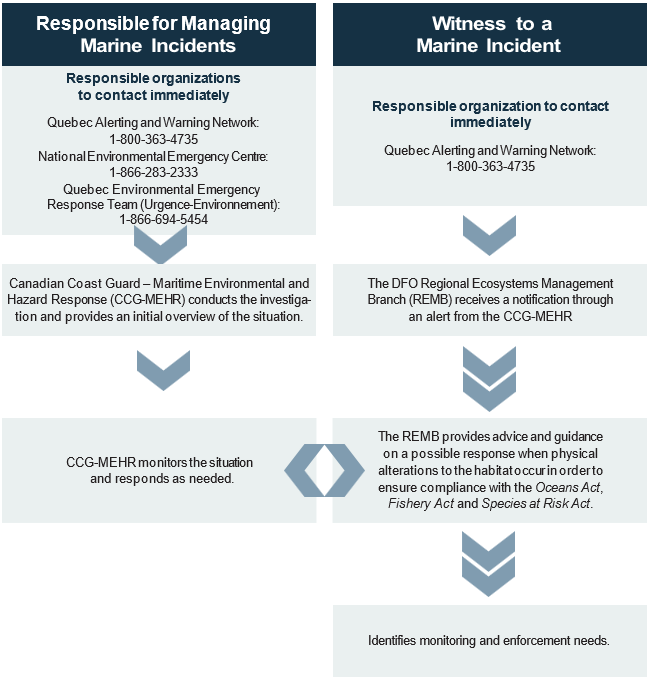
Figure 3. Internal procedure during an emergency response in the Banc-des-Américains Oceans Act Marine Protected Area.
Long description
Incident manager
Responsible organizations to be contacted as soon as possible:
- Quebec Warning and Alert Network: 1-800-363-4735
- National Environmental Emergencies Centre: 1-866-283-2333
- Environmental Emergency: 1-866-694-5454
The Canadian Coast Guard – Environmental Response Division (CCG-ERD) is conducting the investigation and compiling an initial overview of the situation.
The CCG-ERD monitors and intervenes as required by the situation.
The DFO Regional Ecosystem Management Directorate (REMD) provides advice and guidance on physical habitat modifications and possible interventions to ensure compliance with the Oceans Act, the Fisheries Act and the Species at Risk Act.
Determination of monitoring and enforcement needs.
Witness to an incident in the marine environment
Responsible organization to be contacted as soon as possible
- Quebec Warning and Alert Network: 1-800-363-4735
The DFO Regional Ecosystem Management Directorate (REMD) receives notification via an alert issued by the Canadian Coast Guard – Environmental Response Division (CCG-ERD).
The DFO Regional Ecosystem Management Directorate (REMD) provides advice and guidance during physical habitat modifications on possible intervention to ensure compliance with the Oceans Act, the Fisheries Act and the Species at Risk Act.
The CCG-ERD monitors and intervenes as required by the situation.
Determination of monitoring and enforcement needs.
Knowledge acquisition and ecological monitoring
To support the establishment and proper management of Oceans Act MPAs, DFO's Regional Science Branch develops and implements ecological monitoring plans. In order to develop a monitoring plan, conservation priorities, pressures and indicators must be defined based on the conservation objectives. Monitoring these indicators is essential to describe the environmental conditions influencing the ecosystem and attempt to explain the changes observed. Ecological monitoring must also provide the information necessary to assess the achievement of conservation objectives and enable adaptive management of the Oceans Act MPA.
DFO applies ecological monitoring of the Banc-des-Américains MPA. A consolidated monitoring plan with the Quebec government could be developed to ensure that all environmental components are accounted for. Three types of indicators have been identified by DFO: direct and indirect indicators linked to conservation priorities and pressure indicators. Indirect indicators are used to assess the overall status and trends of the MPA ecosystem, while direct indicators are used to assess the MPA's performance. Pressure indicators are used to monitor changes in the various pressures within the MPA that are likely to affect the achievement of conservation objectives. Direct and indirect indicators related to benthic habitats, pelagic habitats, forage species and at-risk species, including certain whale and wolffish species, have been identified (Table 3). In terms of pressures, indicators relating in particular to the list below have been selected:
- aquatic invasive species
- noise
- disturbance
- collisions
- entanglements
- climate change
- commercial fisheries
- competitors/predators
- ghost gear
- pollution (Table 4)
Note that a periodic review of the indicators will be conducted to ensure adequate monitoring.
To facilitate the implementation of an effective and sustainable monitoring plan, it is recommended to select indicators that can be measured by using existing DFO or partner monitoring programs, such as the Atlantic Zone Monitoring Program Footnote 34 and DFO's multidisciplinary surveys Footnote 35. Existing surveys also allow for greater efficiency and minimize cumulative environmental effects. However, new surveys will be needed to ensure adequate monitoring, such as underwater imagery surveys, to sample different types of benthic habitats and communities, while limiting negative environmental impacts. Additionally, there are plans to implement environmental DNA (eDNA) and scuba diving surveys for monitoring Atlantic Wolffish and benthic biodiversity.
The following steps have been taken to date for the development of ecological monitoring for the MPA:
May 2018
Peer review of indicators for ecological monitoring of the MPA. During this process, the proposed conservation priorities, pressures and indicators for ecological monitoring were reviewed. This resulted in the development of 2 documents: a Science Advisory Report entitled “Review of ecosystem features, indicators and surveys for ecological monitoring of the Banc-des-Américains Marine Protected Area” Footnote 36 (DFO, 2019) and a research document entitled “Review of the indicators and recommendations for an Ecological Monitoring Plan for the Banc-des-Américains Marine Protected Area” Footnote 37 (Faille et al., 2019).
January 2019
Establishment of DFO's Science Committee for the monitoring of the Banc-des-Américains MPA to assist in the implementation of the ecological monitoring of the MPA.
April 2021
Peer review of monitoring indicators for the MPA. This process made it possible to establish a state of knowledge and to specify and justify the choice of measures for each of the indicators, while providing details on data processing by presenting the available results and historical trends. This resulted in the development of 2 documents: a Science Advisory Report entitled “Review of the Monitoring Indicators for the Banc-des-Américains Marine Protected Area, Validation of the Choice of Measures and State of Knowledge” Footnote 38 (DFO, 2023) and a research document entitled Indicateurs de suivi du MPO pour l'aire marine protégée du Banc-des-Américains : révision, choix des mesures et état des connaissances Footnote 39 [DFO Monitoring Indicators for the Banc-des-Américains Marine Protected Area: Review, Choice of Measures and State of Knowledge] (Faille et al., 2023)
January 2024
Regional peer review of the interim ecological monitoring report for the Banc-des-Américains MPA based on the 2021 peer-reviewed methodology (DFO 2023). The results of the Science response held on January 31, 2024 relate to the update of the status of priority indicators (as of December 2022) for the ecological monitoring of the Banc-des-Américains MPA.
DFO Science Committee for the Monitoring of the Banc-des-Américains MPA
In January 2019, in support of ecological monitoring of the MPA, DFO's Science Committee for the monitoring of the Banc-des-Américains MPA was established. The Committee's main responsibilities include assisting in the development of the monitoring plan; contributing to its implementation, maintenance and revision; and producing monitoring reports. The Committee is also working to fill gaps in scientific surveys (development of new surveys) by guiding the modification and creation of new protocols.
Priority issues
The 3 conservation objectives for the Banc-des-Américains MPA were established to promote the productivity and diversity of fishery resources associated with the Banc-des-Américains and its adjacent plains and to promote the recovery of species at risk (SOR/2019-50) Footnote 40. Since these 3 objectives are very broad, priority issues were developed to better guide indicator assessment and MPA monitoring.
- Conserve and protect benthic habitats:
- ensure that the diversity and status of the various benthic habitat communities are maintained within the limits of natural variability or improved
- minimize the negative effect of human activities on the benthic habitat, associated communities and commercial resources
- Conserve and protect pelagic habitats and forage species:
- minimize the negative effect of human activities on pelagic habitats and forage species
- Promote the recovery of at-risk whales and wolffish:
- minimize the negative effects of human activities to main sustainable habitat for at-risk whales and wolffish species
Priority issues were selected to make the link between conservation objectives and the choice of pressures. The priority issues also help clarify the direction of the expected changes to assess the status of the indicators and measures, which is essential information to include in monitoring reports. Priority issues can be reassessed periodically during the review of the Oceans Act MPA management plan.
Table 3. Conservation priorities, number of indicators, type of indicators (D = direct or I = indirect) and the rationale behind the indicators for each conservation objective (N/A = not available).
| Conservation Priority | Number/Type of Indicators (D or I) | Rationale (Faille et al., 2019 Footnote 41, MPO 2023 Footnote 42) |
|---|---|---|
| Indicator species of benthic and demersal communities | 3 (I) | Species of cold- and warm-water stenothermal fishes and invertebrates are targeted since they are more sensitive to climate variability. The most abundant species, including Shrimp (Pandalus), American Plaice and Greenland Halibut, are monitored based on their dominance in the environment. |
| Epibenthic communities | 4 (D) | Four distinct communities/habitats have been identified in the MPA, including fixed, erect species (for example, sponges, soft corals, algae and anemones). These organisms are likely more vulnerable to pressures (such as, fishing) and play an important role for a variety of fish and invertebrate species (such as, shelter, structure and feeding). |
| Demersal communities | 2 (I) | This component is related to the overall objective of the MPA, which is to promote the biological productivity and diversity of fisheries resources (harvested species). A number of demersal fish species are dependent on benthos as a food source. Demersal fish communities are monitored on the ridge and the plains. |
| Benthic and demersal commercial species | 1 (D) and 1 (I) | The main species targeted by the commercial fishery in the Banc-des-Américains Oceans Act MPA are Snow Crab and groundfish (Atlantic Halibut and Atlantic Cod). Monitoring of these species makes it possible to assess the status of these populations. |
| Substrate characteristics | 1 (D) | Benthic communities are intimately linked to substrate types. Properly characterizing substrates and monitoring their changes tie into benthic monitoring and the broader conservation objective of conserving benthic habitats. |
| Endobenthic communities | N/A | The endobenthos is an integral part of the benthic communities and consists of a diversity of species which perform a variety of ecosystem functions. |
| Suprabenthic communities | N/A | The suprabenthos is considered an important part of the benthic communities and constitutes an important food source for a number of demersal fish species. Monitoring of the suprabenthos is considered necessary to provide a comprehensive overview of the MPA's benthic habitats. |
| Conservation Priority | Number/Type of Indicators (D or I) | Rationale (Faille et al., 2019, MPO 2023) |
|---|---|---|
| Nutrient | 1 (I) | This oceanographic property affects various processes related to organisms (such as, growth, metabolism), populations (such as, productivity) and habitats (overall health) present in the area. |
| Phytoplankton | 1 (I) | Phytoplankton are at the base of the food chain and therefore essential for understanding the entire pelagic ecosystem and even the benthic ecosystem (pelagic- benthic coupling). |
| Zooplankton | 1 (I) | Zooplankton are a primary part of the diet of a number of biotic components (herring, capelin, mackerel, whales, etc.) related to conservation objectives and are therefore an important element to monitor to explain all ecosystem variations. Their significant link with higher trophic levels could explain observed variations in many other indicators selected. |
| Krill | 1 (I) | Krill play an important role in the diet of many species of invertebrates, fishes, seabirds and marine mammals. This indicator provides information on the amount of energy directly available for a number of whale species. |
| Herring | 1 (I) | Herring, like other forage species plays an intermediate role in the food web by transferring energy from zooplankton communities to higher levels. |
| Capelin | N/A | Capelin is a very important species for ecosystem functioning. However, currently, no survey data is available for assessing capelin abundance and biomass. |
| Conservation Priority | Number/Type of Indicators (D or I) | Rationale (Faille et al., 2019, MPO 2023) |
|---|---|---|
| Atlantic Wolffish | 2 (D) | The Atlantic Wolffish is the only wolffish species whose presence in the MPA has been confirmed. Spotted Wolffish are likely present, but it is not known whether Northern Wolffish occur there. Therefore, monitoring activities will be directed solely at Atlantic Wolffish. |
| Whales | 3 (I) and 1 (D) | Three species of whales (Fin Whale, Blue Whale and Right Whale) that occur in the MPA are at-risk under the Species at Risk Act. The monitoring of these species is an indirect indicator to assess the changes in the use of this area over time. |
| Pressure | Number of Indicators | Rationale (Faille et al., 2019, MPO 2023) |
|---|---|---|
| Climate change | 4 | These key parameters are used to monitor the potential effects of climate change on ecosystem components (dissolved O2 threshold, pH and temperature). |
| Invasive species | 1 | Aquatic invasive species can harm biogenic species and native species that occur in the MPA. |
| Competitors/predators | 2 | Lobster is an important benthic predator and the increase in numbers of this species could have impacts on the benthic and demersal communities of the MPA, including competition with other species. Grey Seals impact demersal communities and forage species, such as herring, through predation. |
| Noise | 2 | Anthropogenic noise in the MPA represents a disturbance for at-risk whale species. Traffic intensity is used as an indicator to indirectly inform responders of potential noise disturbance. |
| Disturbance | 1 | Marine mammal disturbance is associated with marine mammal watching activities and recreational boating. Disturbance resulting from these activities may be caused by vessel noise or the proximity of vessels and human activities. |
| Collision | 2 | Collisions between ships and marine mammals pose a direct threat to at-risk whale species. Vessel speed monitoring is used as an indicator to inform responders of the risk of collision in the MPA. |
| Entanglement | 1 | Entanglement in active gear or ghost fishing gear can cause relatively severe injuries and even kill marine mammals. |
| Physical disturbance of substate | 4 | Monitoring the relative footprint of commercial fisheries and scientific activities makes it possible to conduct a spatial assessment of the proportion of the MPA affected by these activities. |
| Biomass sampling | 3 | Some commercial fisheries and scientific activities continue to operate within the MPA. All biomass removed from and fishing intensity within the Oceans Act MPA itself should be accounted for to properly characterize changes in this pressure. |
| New pressure | 1 | This pressure makes it possible to monitor and determine any new activities in the MPA that have the potential to interfere with conservation objectives (such as, Indigenous fishing and tourism). |
| Ghost gear | N/A | Ghost gear poses a threat to a number of species, including marine mammals and benthic and demersal species. Indicators for this pressure have not yet been defined. |
| Pollution | N/A | Pollution (in the sediments) has been identified as a pressure that should be monitored as it can alter MPA ecosystems. However, no indicators have been identified yet due to the lack of available data. |
Next steps for monitoring
The assessment of the status of the MPA has been under way for more than half of the indicators and will be completed in the coming years. To date, 27 indicators have a processed database and measures have been calculated for each indicator based on a selected reference period. With respect to 6 indicators whose data was reviewed, the status could not be assessed for a variety of reasons, including the lack of an assessment method, insufficient data available or a high degree of uncertainty about the data. A basic overview of these indicators will nevertheless be presented in the monitoring reports. Next steps will be prioritized by DFO's Science Committee for the monitoring of the Banc-des-Américains MPA for indicators that could not be presented during the 2021 peer review process. These next steps include the development of new scientific surveys and the addition of stations to existing surveys. The assessment of the performance of the MPA is expected to be conducted in the long term for the direct indicators.
Two types of ecological monitoring reports are being considered: a full report (every 6 to 8 years) and more frequent interim reports (every 3 years). The full report will present the status of all indicators for which data are available and, if possible, their trend since the establishment of the Oceans Act MPA. An interim report consisting of a few priority indicators will be prepared more frequently to support the adaptive management of the Oceans Act MPA. This will ensure that priority information is available and will enable DFO to quickly assess the need for management action in response to a significant change in any of the indicators. Priority indicators should be closely linked to pressure indicators and be highly informative about the status of the MPA. When selecting the indicators to be included in the interim reports, 3 criteria were considered:
- the ease of calculating measures (data accessible annually and simple analyses)
- their specificity to the MPA
- their ability to drive management action in response to a change observed in the short term
Discussions are underway with other interest groups that are involved in ecological monitoring or could be involved in these approaches in order to expand the capacity of governments to implement this type of monitoring.
Non ecological monitoring
The MPCD is also working with the Strategic Services Branch, the Regional Fisheries Management Branch, the Quebec government and wishes to work with Mi'gmaq First Nations to develop socio-economic, cultural and governance indicators to monitor the sector. Integrating these indicators using a socio-economic perspective is required to achieve more effective, equitable and robust policies and practices for MPAs (Précoma-de la Mora et al., 2021).
Socio-economic principles focus on, but are not limited to:
- integrating the social context and current and future human-environment activities
- considering economic and non-economic uses in the sector
- promoting an equitable distribution of costs and benefits
- maintaining cultural diversity (Précoma-de la Mora et al., 2021)
A better understanding of these environmental factors helps to ensure a net increase in positive impacts on local communities. Governance principles include implementing collaborative and adaptive management and promoting effective management. Integrating monitoring indicators for governance ensures adequate opportunities for opinions to be heard and taken into account for decision-making purposes. The non-ecological conditions surrounding an MPA are those that the government is likely to have a greater ability to modify and therefore adapt based on the results of the assessment.
Non-ecological monitoring can also improve communication of the direct and indirect positive impacts of an MPA in addition to ecological impacts. Consultations and workshops are under way to gather the information needed to identify the non-ecological monitoring indicators that will be selected. An update on the non-ecological indicators that will be selected will be made in the next management plan in 2031.
Awareness, education and communication
In accordance with the Canada-Quebec Collaborative Agreement to Establish a Network of Marine Protected Areas in Quebec, all communications regarding the Banc-des-Américains MPA must be consistent between the governments of Canada and Quebec. The parties present the Management Committee with communication ideas for discussion to ensure the consistency of messages and are notified of any in-year communication activities, as appropriate. The parties also work towards creating joint documents and preparing joint presentations at various events.
A dedicated Banc-des-Américains Oceans Act MPA webpage Footnote 43 is available on the DFO website to provide information to the general public and users, including its:
- location
- conservation objectives
- prohibitions
- environmental context
- ecosystem
- management and conservation
- activity requests
- related research and publications
Many presentations to promote the MPA and the Department's activities have also been given in recent years, as well as annual reports, highlighting important information and activities that contribute to the ongoing management of the area. Additionally, a regulatory sheet summarizing the context and regulations of the Oceans Act MPA was created for distribution by fishery officers to stakeholders who frequent the sector. A fact sheet on good practices for marine mammal watching will also be distributed to marine mammal watching companies that frequent the Banc des-Américains MPA. Other tools will also be developed and produced in the coming years in co-operation with our partners.
Information for mariners operating in the sector is provided in Section A2 – Marine Mammal Guidelines and Marine Protected Areas, Notice 5A – General Regulatory Requirements for all Oceans Act Marine Protected Areas in Annual Edition Notices to Mariners 1 to 46 Footnote 44, available online. The information contained in the notice to mariners includes:
- general prohibitions
- exceptions
- incident reports
- penalties
- contact information
- regulations and marine mammal protection for the Banc-des-Américains MPA
Management process: regulatory life cycle
Initial monitoring of the various indicators provides an important baseline for achieving the Oceans Act MPA's conservation objectives. Ongoing monitoring is used to identify trends in these indicators. Management of the Oceans Act MPA is cyclical, meaning that a sequence of steps could make it possible to adapt management actions to conservation priorities, which could be adjusted over time. This regulatory life cycle can be broken down as follows:
- The review of monitoring results in addition to the 5-year review cycle of the Oceans Act MPA management plan informs the assessment of the regulatory tool.
- The assessment plays an important role in the life cycle of the Oceans Act MPA Regulations, as does progress in achieving the Oceans Act MPA conservation objectives (that is whether the regulations are working as originally intended) and the effectiveness of the management measures.
- The assessment findings may indicate that the Oceans Act MPA conservation tool is addressing the problem as intended or that there is a need for adaptive management. Adaptive management is applied to regulatory and non-regulatory measures to better deal with the problem and achieve the Oceans Act MPA conservation objectives. If regulatory measures need to be modified, this will involve changing the Oceans Act MPA Regulations through the regulatory process.
As a result, the life cycle approach (Figure 4) improves the efficiency, accuracy and accountability of the regulatory system to support the government's commitment.
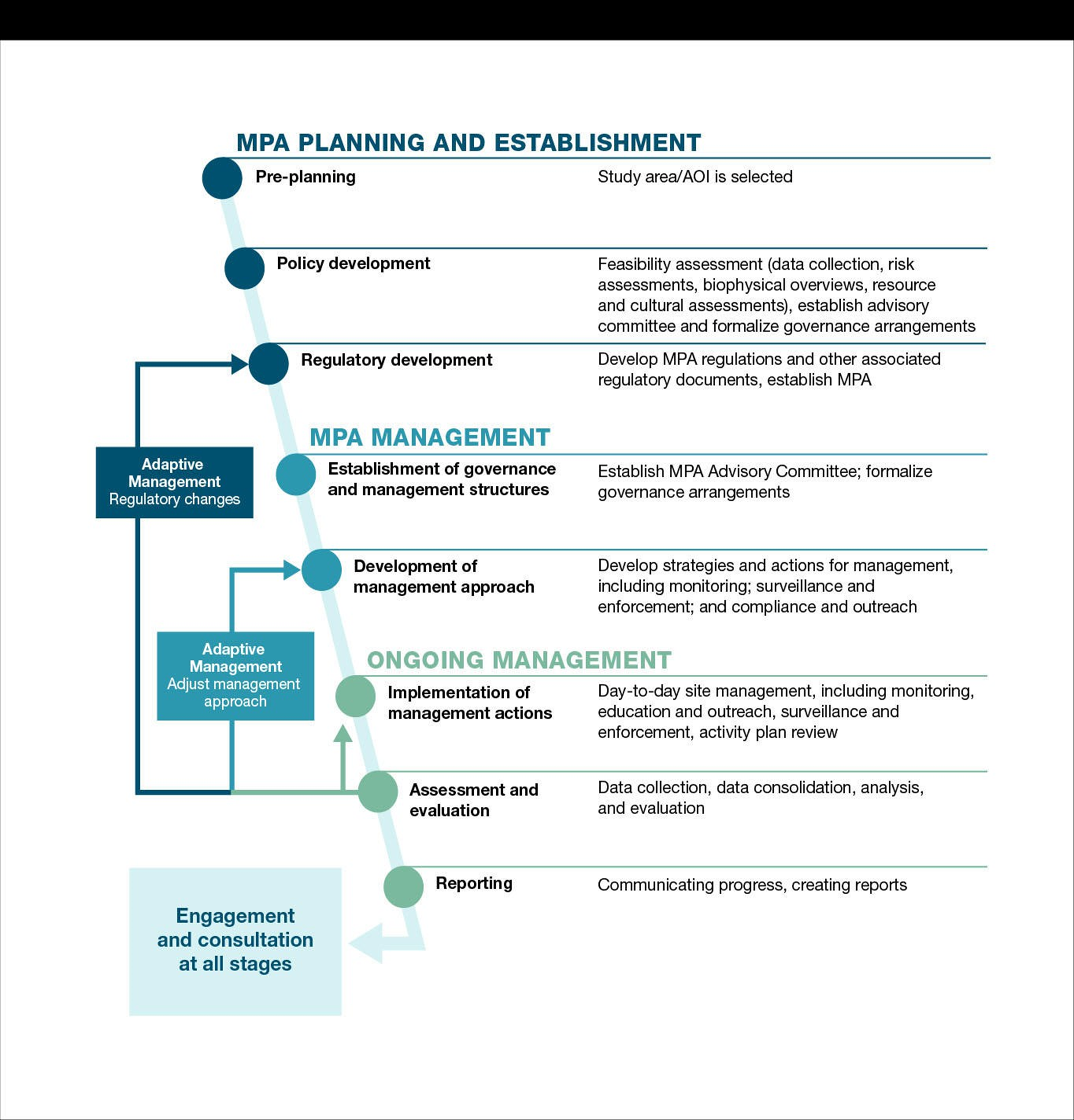
Figure 4. Oceans Act MPA management cycle Footnote 45, that can be adapted for the Banc-des-Américains MPA due to the Canada-Quebec joint management.
Long description
Planning and establishment of MPAs
Engagement and consultation at all stages.
Steps:
Preliminary planning:
- the study area or area of interest (AOI) is selected
Policy development:
- feasibility assessment (data collection, risk assessments, biophysical overviews, resource and cultural assessments)
- advisory committee established and governance arrangements formalized
Regulation development:
- MPA regulations and other related regulatory documents developed
Management of MPAs
Establish governance and management structures:
- establish an MPA advisory committee
- formalize governance agreements
Developing the management approach:
- develop management strategies and measures, particularly with regard to:
- monitoring
- surveillance and enforcement
- compliance
- awareness
Ongoing management
Implementation of management measures:
- day-to-day management of the site, including:
- monitoring
- education and awareness raising
- surveillance and enforcement
- review of the activity plan
Evaluation:
- collection
- aggregation
- analysis
- data assessment
Reporting:
- communicating progress
- managing reports
Adaptive management:
- regulatory changes
- modifying management methods
Adaptive Management
The management plan is developed in close collaboration with stakeholders and is based on adaptive management, one of the guiding principles of the National Oceans Act MPA Program. Adaptive management is an iterative process of decision-making whereby management strategies are progressively adjusted in response to new and relevant information. This means that new knowledge (scientific, industry-related, Indigenous knowledge, etc.) and the results from monitoring and reporting programs could enable management measures to be adjusted to ensure that they continue to meet the conservation objectives.
The application of adaptive management will be carried out in collaboration with the Management Committee and may result in:
- reviewing the Oceans Act MPA management plan to include recommended voluntary measures
- adjusting the scientific monitoring plan to better measure changes impacting the MPA
- amending the Oceans Act MPA Regulations where the need has been demonstrated
The Banc-des-Américains MPA will be subject to a periodic management cycle during which any new information will be reviewed and the ability of regulatory measures to meet conservation objectives will be reassessed. Therefore, adaptive management is the most appropriate approach to manage a dynamic ecosystem and emerging issues. It emphasizes the importance of monitoring and using the highest quality information available to guide the management of the MPA.
Issues that are likely to change (for example, increased vessel traffic to the Port of Gaspé) or emerging issues (for example, increased marine noise or climate change) can be addressed through the next adaptive management plan, which will be developed as required. Adaptive management, in collaboration with relevant stakeholders, will make it possible to carry out outreach activities or voluntary measures to address appropriate conservation issues and make amendments to the Oceans Act MPA Regulations, if deemed necessary.
With respect to the increase in marine noise and the potential impact on marine mammals, as well as the cumulative effects of activities or any other emerging issues, DFO intends to continue to document their consequences in order to assess what measures could be implemented moving forward. These issues could be addressed through adaptive management of the MPA as issues become better understood, which may include proposing voluntary measures or even amending the Regulations.
Contact information
Banc-des-Américains Oceans Act Marine Protected Area Management Team
Marine Planning and Conservation
Fisheries and Oceans Canada
PO Box 1000
Mont-Joli, Quebec G5H 3Z4
Telephone: 418-775-0848
Email: DFO.OceansQC-OceansQC.MPO@dfo-mpo.gc.ca
References
- Allaire-Verville, M. 2015. Revue de la documentation scientifique sur la toxicité et les critères de qualité relatifs aux hydro- carbures pétroliers dans les sédiments. 30 pages et annexes ISBN 978-2-550-73937-1
- Faille, G., Méthé, D., Thériault, M.-H., Thorne, M., Roy, V., Chiasson, M., Benjamin, R. and Rangeley, R. 2019. Cruise Report for the 2017 Fisheries and Oceans Canada and Oceana Canada Mission using the ROPOS in the Gulf of St. Lawrence. Can. Manuscr. Rep. Fish. Aquat. Sci. 3171: v + 22 p.
- Faille, G., Laurian, C., McQuinn, I., Roy, V., Galbraith, P., Savenkoff, C., Côté, G. and Benoît, H.P. 2019. Review of the indicators and recommendations for an Ecological Monitoring Plan for the Banc-des-Américains Marine Protected Area. DFO Can. Sci. Advis. Sec. Res. Doc. 2019/065. v + 53 p.
- Faille, G., Côté, G., Blais, M., Gagné, R., Chamberland, J.-M., Galbraith, P.S., Dazé Querry, N., Lehoux, C., Ricard, D. and Starr, M. 2023. DFO Monitoring Indicators for the Banc-desAméricains Marine Protected Area: Review, Choice of Measures and State of Knowledge. DFO Can. Sci. Advis. Sec. Res. Doc. 2023/067. xi + 147 p.
- Fuller SD, Picco C, Ford j, Tsao CF, Morgan LE, Hangaard D, Chuenpagdee R. 2008. How We Fish Matters: Addressing the Ecological Impacts of Canadian Fishing Gear. Ecology Action Centre, Living Oceans Society and Marine Conservation Biology Institute. Delta (B.C., Canada). 26 p.
- Gauthier P, Gauthier J, Bernier J. 2013. Rapport de l'atelier de consultation intersectorielle sur le site d'intérêt du Banc-des-Américains en vue de l'établissement d'une zone de protection marine. Rapp. manus. can. sci. halieut. aquat. 3021: iv + 85p.
- Gendreau, Y., Savenkoff, C., Albert, É., Trottier, J. et Lamarre, V. 2018. Réalisation de modèles de séquence des effets (SdE) appliqués au site d'intérêt du Banc-des-Américains. Rapp. tech. can. sci. halieut. aquat. 3264. ix + 106 p.
- Mimeault M. 2002. Les bancs de pêche. Chaire Fernand Dumont sur la culture, INRS. (En ligne) https://encyclobec.ca/region_projet.php?projetid=324 (consulté le 15 octobre 2021).
- MPO. 2007. Zones d'importance écologique et biologique (ZIEB) de l'estuaire et du golfe du Saint-Laurent: identification et caractérisation. Secr. can. de consult. sci. du MPO, Avis sci. 2007/016.
- MPO. 2010. Impacts potentiels des engins de pêche (à l'exception des engins mobiles entrant en contact avec le fond) sur les communautés et les habitats marins. Secr. can. de consult. sci. du MPO. Avis sci. 2010/003.
- MPO. 2018. Avis scientifique sur le calendrier relatif à la zone de ralentissement obligatoire de la navigation dans le golfe du Saint-Laurent visant à protéger la baleine noire de l'atlantique nord. Secr. can. de consult. sci. du MPO, Rép. des Sci. 2017/042.
- DFO. 2019. Review of ecosystem features, indicators and surveys for ecological monitoring of the Banc-des-Américains Marine Protected Area. DFO Can. Sci. Advis. Sec. Sci. Advis. Rep. 2019/033.
- MPO. 2023. Révision des indicateurs de suivi pour l'aire marine protégée du Banc-des-Américains, validation du choix des mesures et état des connaissances. Secr. can. des avis sci. du MPO. Avis sci. 2023/001.
- OSPAR. 2017. Lignes directrices sur la meilleure pratique environnementale (BEP) pour la pose et l'exploitation des câbles. – Numéro de référence : Accord 2012-02, 17 p. 2012 (Révision de 2017).
- Précoma-de la Mora M, Bennett NJ, Fulton S, Munguia-Vega A, Lasch-Thaler C, Walther-Mendoza M, Zepeda-Domínguez JA, Finkbeiner EM, Green AL, Suárez A, Weaver AH, Figueroa Carranza ALR, Vega Velázquez A, Zepeda C, Montes C, Fuentes Montalvo DA, Micheli F, Reyes-Bonilla H, Chollett I, Lopez-Ercilla I, Torres Origel JF, Vázquez-Vera L, García-Rivas MC, Mancha-Cisneros MM, Espinosa-Romero MJ, Martín Ruíz M, Arafeh-Dalmau N, González-Cuellar OT, Huchim O and Rodríguez Van Dyck S, 2021. Integrating Biophysical, Socio-Economic and Governance Principles Into Marine Reserve Design and Management in Mexico: From Theory to Practice. Front. Mar. Sci. 8:778980.doi: 10.3389/fmars.2021.778980
- Pusceddua A, Bianchelli S, Martín J, Puig P, Palanques A, Masqué P, Danovaro R. 2014. Chronic and intensive bottom trawling impairs deep-sea biodiversity and ecosystem functioning. Proceedings of the National Academy of Sciences. 111: 8861-8866.
- Schweitzer CC, Lipcius RN, Stevens BG. 2018. Impacts of a multi-trap line on benthic habitat containing emergent epi- fauna within the Mid-Atlantic Bight. – ICES Journal of Marine Science, 75: 2202–2212.
- Savenkoff, C., M.-N. Bourassa, R. Côté, É. Lebel, M. Thorne et L. Maltais. 2015. Intercalibration de données de rétrodiffusion acoustique et d'images benthiques pour caractériser la nature du fond du Banc-des-Américains. Rapp. manus. can. sci. halieut. aquat. 3075 : vii + 30 p.
- Savenkoff, C., M. Thorne et M.-N. Bourassa. 2017. Description des habitats et des communautés épibenthiques du Banc-des-Américains par imagerie optique. Rapp. tech. can. sci. halieut. aquat. 3243 : xii + 562 p
Annexes
Annex A
List of advisory Committee members involved in the designation of the Oceans Act MPA (2019 Oceans Act MPA status designation)
Interest groups: Fishing industry
Organizations:
- Association des crabiers de la Baie
- Member: Daniel Dubois
- Association des crabiers de la Gaspésie
- Member: Daniel Dubois
- Regroupement des pêcheurs professionnels du sud de la Gaspésie
- Member: Joël Berthelot
Interest groups: Marine mammal watching
Organization:
- Les bateaux de croisière J. Cloutier
- Member: Steve Cloutier
Interest group: Electricity, oil and gas industries
Organization:
- Hydro-Québec
- Member: Coraline Gravel
Interest group: Tourism industry
Organization:
- Route bleue de la Gaspésie
- Member: Michel Lacroix
Interest group: Environmental NGOs
Organizations:
- Marine Mammal Observation Network
- Member: Stéphanie-Carolle Pieddesaux
- Canadian Parks and Wilderness Society
- Member: Geneviève Morin-Dion
Interest group: Coordination committee
Organization:
- Baie des Chaleurs ZIP Committee
- Member: Geneviève Lemoyne
Interest groups: Recreational boating and scuba diving
Organization:
- Club nautique Jacques-Cartier
- Member: Michel Lacroix
Interest group: Education
Organization:
- Cégep de la Gaspésie et des Îles (École des pêches de Grande-Rivière)
- Member: Marie-Hélène Fournier
Interest group: Research
Organization:
- Merinov
- Member: Laurent Millot
Interest group: First Nations
Organization:
- Mi'gmawei Mawiomi Secretariat
- Member: Tanya Bamaby and Nicole Jeanotte
Interest group: Land manager
Organization:
- La Côte-de-Gaspé MRC
- Member: Pascal Savard
- Rocher-Percé MRC
- Member: Louis Babin
- SÉPAQ (Parc national de l'Île-Bonaventure-et-du-Rocher-Percé)
- Member: Rémi Ploudre
Interest group: Federal departments
Organization:
- Transport Canada
- Member: Lucie Pagé
- Forillon National Park of Canada
- Member: Mathieu Côté
- Natural Resources Canada
- Member: Sophie Tee
Annex B
Criteria for approval of three-year activity plan by type of activity (as of October 2024)
Activity type: Scientific monitoring
Criterion
- Recurrence
- Details: The activity must be planned on a recurring basis, that is annual monitoring over a number of year.
- Assessment of activity
- Details: The activity has undergone an assessment which demonstrates that is will not cause long-term harm and therefore will not jeopardize the achievement of the Oceans Act MPA conservation objectives. If it does not, an analysis will be required to approve the activity for three years.
Activity type: Commercial tourism
Criterion
- Experience
- The applicant has been established and conducting operations in the commercial tourism industry for a minimum of three years.
- Activity plan
- The applicant has submitted a minimum of two approved activity plans.
Activity type: Ecosystem restoration
Criterion and details: To be determined.
Activity type: Educational activity
Criterion and details: To be determined.
Annex C
List of Band-des-Américains Marine Protected Area Management Committee members (as of October 2024)
Government: Canada
- Department of Fisheries and Oceans Canada (DFO)
- Member:
- Alain Guitard, Director, Marine Planning and Conservation and Species at Risk Management Division
- Co-chair of the Banc-des-Américains MPA Management Committee
- Renée Gagné, Senior Biologist, Marine Planning and Conservation Division (Co-secretary)
- Member:
Government: Québec
- MELCCFP (Department of the Environment, the Fight Against Climate Change, Wildlife and Parks)
- Members:
- Catherine Bernier, Regional Director, Direction régionale de l'analyse et de l'expertise du Bas-Saint-Laurent et de la Gaspésie-Îles-de-la-Madeleine
- Co-chair of the Banc-des-Américains MPA Management Committee
- Justine Desmeules, Regional Director, Direction de la gestion de la faune de la Gaspésie-Îles-de-la-Madeleine
- Virginie Galindo, Project Manager, Marine Protected Areas, Direction générale de la conservation de la biodiversité (Co-secretary)
- Members:
- MRNF (Department of Natural Resources and Forests)
- Member:
- Alain Leblanc, Regional Director, Direction régionale de la Gaspésie-Île-de-la-Madeleine
- Member:
- MAPAQ (Department of Agriculture, Fisheries and Food)
- Member:
- Alexis Cadieux-Gagnon, Regional Director, Direction régionale de la Gaspésie du sous-ministériat aux pêches et à l'aquaculture commerciales
- Member:
Annex D
List of Banc-des-Américains Marine Protected Area Advisory Committee members (as of October 2024)
Interest group: First Nations
Organization:
- Vacancy
- Member: Vacant
Interest group: Indigenous fisher
Organization:
- Mi'gmaq Wolastoqey Indigenous Fisheries Management Association (MWIFMA)
- Member: Sandra Autef
Interest group: Fishing Industry
Organizations:
- Association des capitaines-propriétaires de la Gaspésie (ACPG)
- Member: Samantha Bois (Geneviève Myles as a substitute)
- Regroupement des pêcheurs professionales du sud de la Gaspésie (RPPSG)
- Member: Jimmy Lepage (Annie Chouinard as a substitute)
Interest group: Mammal watching
Organization:
- Croisières Baie de Gaspé
- Member: Guy Synnott
Interest group: Environmental and education NGOs
Organizations:
- ZIP Gaspésie
- Member: Antoine Bonhomme
- Marine Mammal Observation Network (MMON)
- Member: Mélissa Martel (Sonia Giroux as a substitute)
Interest group: Research
Organization:
- Vacancy
- Member: Vacant
Interest group: Tourism industry
Organizations:
- Ville de Gaspé
- Member: Marc Dupont
- Tourisme Gaspé
- Member: Jean-Philippe Chartrand
Page details
- Date modified: