
Using ultrasound scanning for effective salmon broodstock collection
Each year in the interior of British Columbia near Prince George, populations of Upper Fraser River Chinook salmon return to spawn in smaller rivers and streams. However, these stocks are of significant conservation concern, with low numbers that require ongoing efforts to support their recovery. First Nations and Community-operated hatcheries in the Upper Fraser River Area support these vulnerable salmon populations by collecting adult salmon for broodstock and raising their offspring to boost low population numbers.
In the summer of 2025, a challenge arose at a community-based salmon enhancement facility north of Williams Lake. The hatchery team at the Quesnel River Research Centre collected adult Upper Fraser River Chinook salmon but were concerned they did not have the correct ratio of male and female salmon broodstock for paired breeding. In the upper Fraser, remote locations and logistical constraints make it necessary to capture some salmon for broodstock before they have begun showing secondary, external sexual traits such as jaw, teeth, and colour changes. At this early stage, males and females have very similar physical appearances, making it difficult to distinguish between them.
Maintaining balanced sex ratios in hatchery broodstock reflects natural paired breeding patterns and helps preserve genetic diversity within a salmon population. Hatchery programs that retain higher levels of genetic diversity are better able to support long-term rebuilding objectives.
Innovation in action: Portable ultrasound scanner for salmon
To distinguish male from female fish before they show external changes, staff from the Salmon Enhancement Program have come up with an innovative solution. Regional Fish Health and Hatchery Support Biologists, Qi Liu and Lenora Turcotte, have developed the use of a portable ultrasound unit to image the internal organs of broodstock to determine the sex of fish and whether females are ready to spawn. Importantly, the use of ultrasound causes no harm to fish; the technology is non‑invasive and significantly reduces handling time compared to traditional methods. In addition, fish do not need to be held nor handled for extended periods, which lowers their stress and increases the likelihood of survival if returned to the river.
During the broodstock collection in Summer 2025, time was limited as the migration of the Upper Fraser River Chinook salmon was almost complete. Liu responded quickly to bring the portable ultrasound unit to the Quesnel River Research Centre from Vancouver. He scanned the salmon that were held for broodstock and quickly verified the staff’s concerns: the sex ratio was skewed.
Armed with that information, the hatchery team at the Quesnel River Research Centre returned to multiple spawning rivers and collected additional males or females for several stocks within the Upper Fraser Chinook population. The success of ultrasound technology to accurately identify the sex of salmon in broodstock collection has inspired community hatcheries in the Upper Fraser area to adopt the use of this technology, ensuring future broodstock collections are balanced, which supports cost-effective and sustainable hatchery production.
The use of ultrasound is completely non‑invasive, so we can get the information we need without harming the fish. It helps us make better decisions while respecting the fish we’re trying to protect.
Leveraging technology to support vulnerable salmon populations
The Salmon Enhancement Program (SEP) is expanding how we use ultrasound technology to help protect and rebuild salmon populations. Ultrasound scanning allows hatchery staff to look inside a fish without causing harm. This helps us confirm whether a salmon has male or female reproductive organs, check its stage of maturity, and make better decisions during broodstock collection and spawning. Ultrasound has also become a valuable research tool. In our labs, it is helping scientists monitor salmon spawning maturity and guide the use of treatments during experiments.
SEP has two mobile ultrasound units that travel frequently with trained staff to hatcheries across the province, and they’re already making a noticeable difference. For example, we have used it in North Vancouver at Capilano Hatchery to verify the sex of coho salmon during broodstock sorting and assist with administering antibiotic medication. Community hatcheries in northern B.C. and Vancouver Island are now using ultrasound to support more effective broodstock collection, especially when fish arrive in unpredictable numbers or at different stages of maturity. To help expand access even further, the Community Involvement Program recently purchased three additional low‑cost devices, and we are working with them to fine‑tune these units so more partners can benefit from this technology.
This work was made possible with funding from the Pacific Salmon Strategy Initiative, where we have invested in our Salmon Enhancement Program (SEP) to support the rebuilding and conservation of vulnerable Pacific salmon populations through hatchery enhancement, habitat restoration, research, and collaboration with Indigenous groups and local communities. Additional investments from the Pacific Salmon Strategy Initiative to support Pacific salmon for the long term are found on the Pacific Salmon Strategy Initiative featured stories website.
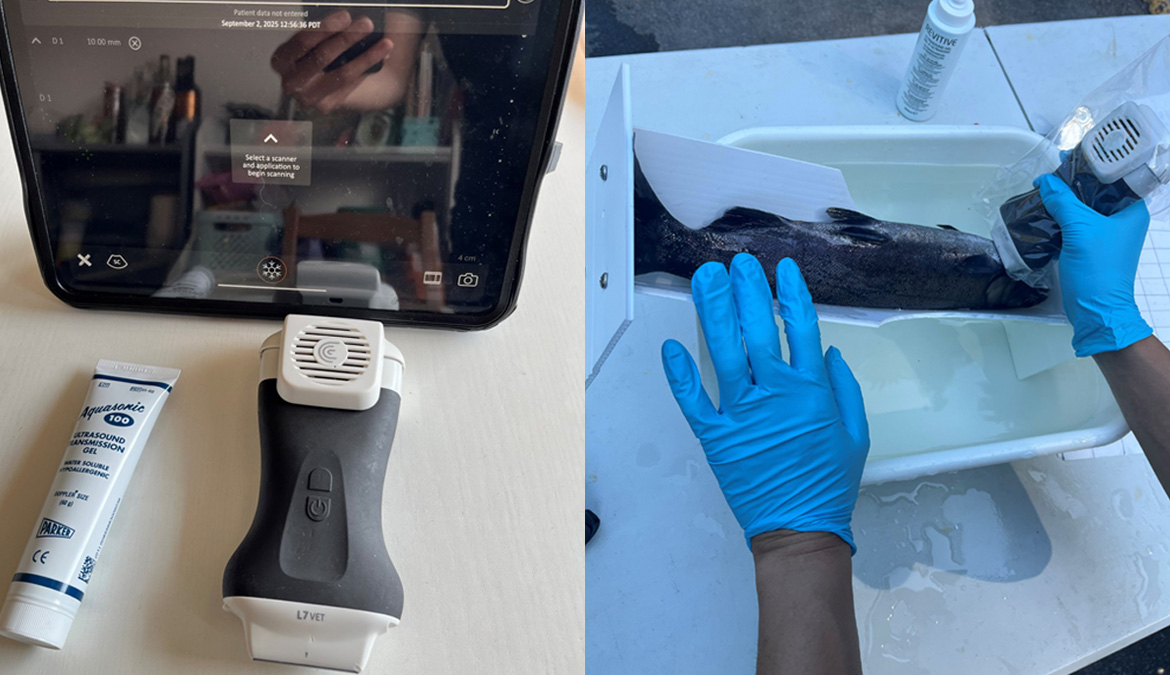
Portable ultrasound unit used to scan salmon unharmed to safely determine their sex and whether they are ready to spawn. Any incorrectly identified fish are returned to their natal rivers to spawn naturally. Collecting the right mix of male and female salmon broodstock is key to maintaining genetic diversity in vulnerable salmon populations.
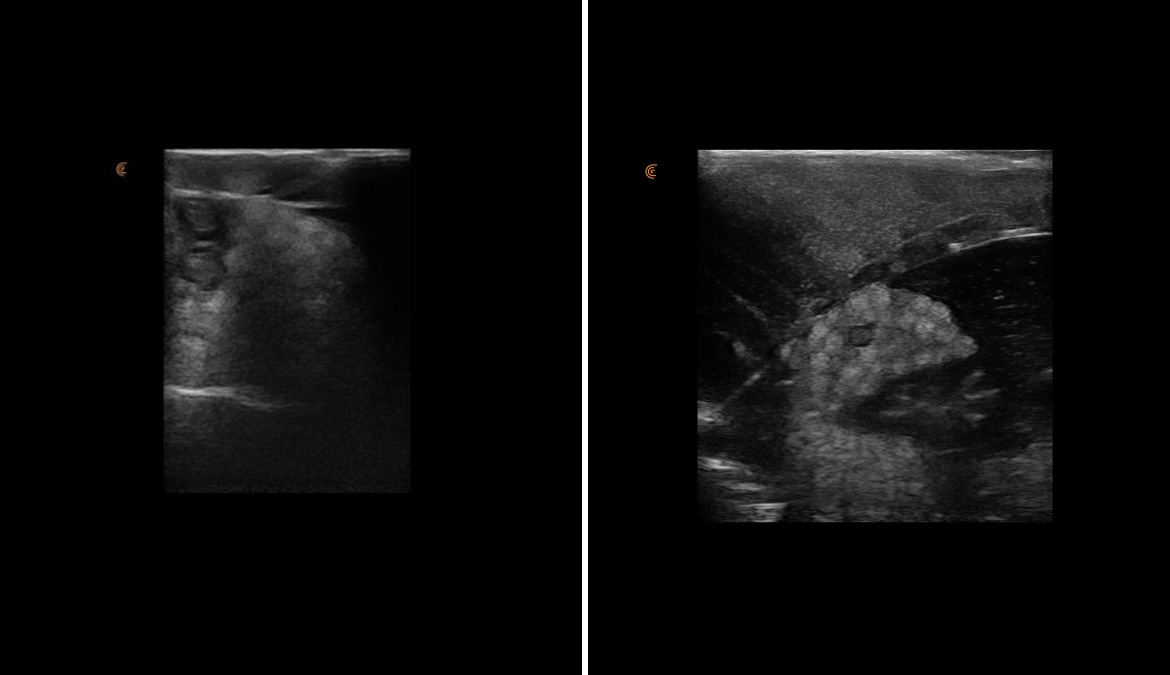
Examples of imagery from ultrasound scanning showing female salmon egg mass.
Related links
- Quesnel River Research Centre
- DFO Salmon Enhancement Program hatcheries and spawning channels
- How hatcheries are playing a crucial role in conserving Pacific salmon populations: Portage Creek Chinook
- Date modified: