
A collaborative effort to protect Chinook populations incidentally caught in the groundfish trawl fleet
Throughout the year, British Columbia’s groundfish trawl fleet sets out into the Pacific Ocean to harvest thousands of tons of fish. This trawl fishery, ranging from small owner-operated boats to large industrial ships, plays a vital role in supplying fish to domestic and international markets. While trawling is an efficient way to catch fish, it can also unintentionally intercept other fish swimming at similar ocean depths, in particular Chinook salmon when trawling for fish mid-water, such as Pacific Hake and Walleye Pollock. Since many populations of Chinook salmon in southern B.C. are of conservation concern, accurate monitoring and biological sampling of salmon bycatch has become a priority for First Nations, fishery managers, and stakeholders.
Recognizing the need for better bycatch data and stronger safeguards for Pacific salmon, we have been working with the trawl industry, environmental organizations and monitoring providers in B.C. since 2022 to launch a salmon-specific bycatch monitoring and sampling program, with support from the Pacific Salmon Strategy Initiative (PSSI). Prior to this, salmon bycatch was estimated and submitted by fishers and lacked information about the origin of the salmon. With the launch of this program, our goal was to accurately identify which Chinook salmon stocks were being caught as bycatch in the option A trawl fishery, and in what quantities, to better understand potential impacts on populations of conservation concern.
Since 2022, mandatory retention of salmon bycatch has been required for the trawl fishery, with independent dockside validation for each salmon caught, to ensure transparency and accuracy in the data collected. The bycatch monitoring program sampled more than 10,000 Chinook salmon in two years—roughly a quarter of the total salmon bycatch. Our scientists traced the origins of each salmon using coded wire tags and DNA samples containing genetic information, which allowed for accurate accounting of bycatch by species and stock. Results from the program, now published online, reveal that most Chinook bycatch came from U.S. stocks, while Canadian-origin fish were primarily fall-run, ocean-type Chinook from the Harrison and Chilliwack rivers. In the same period, there was an unexpected increase in Chinook bycatch, with annual Chinook catches exceeding levels seen in the previous 15 years. The increased Chinook bycatch provided a clear signal: action was needed.
In response to the findings, DFO implemented a salmon bycatch management plan in 2024 with the B.C. trawl fishing industry. The plan introduced a Chinook salmon bycatch cap of 9,500 pieces for the groundfish trawl fleet, along with individual vessel bycatch limits, daily reporting, and mandatory retention and monitoring of all salmon caught. The trawl industry also conducted studies on the effectiveness of catch reduction devices and gear modifications that provide an avenue for salmon to escape unharmed. Through the study, the fleet gained information about modified fishing practices that could help avoid incidental catch of salmon.
For those involved, this is more than just numbers and nets. This is a story of science in action, where collaboration and innovation are helping ensure salmon continue to thrive. By improving the way we monitor fisheries, our work through PSSI is supporting informed, evidence-based management of fisheries. In the example of the trawl fishery, this aligns fishery operations with a more sustainable and precautionary approach to conserve Pacific salmon for generations to come.
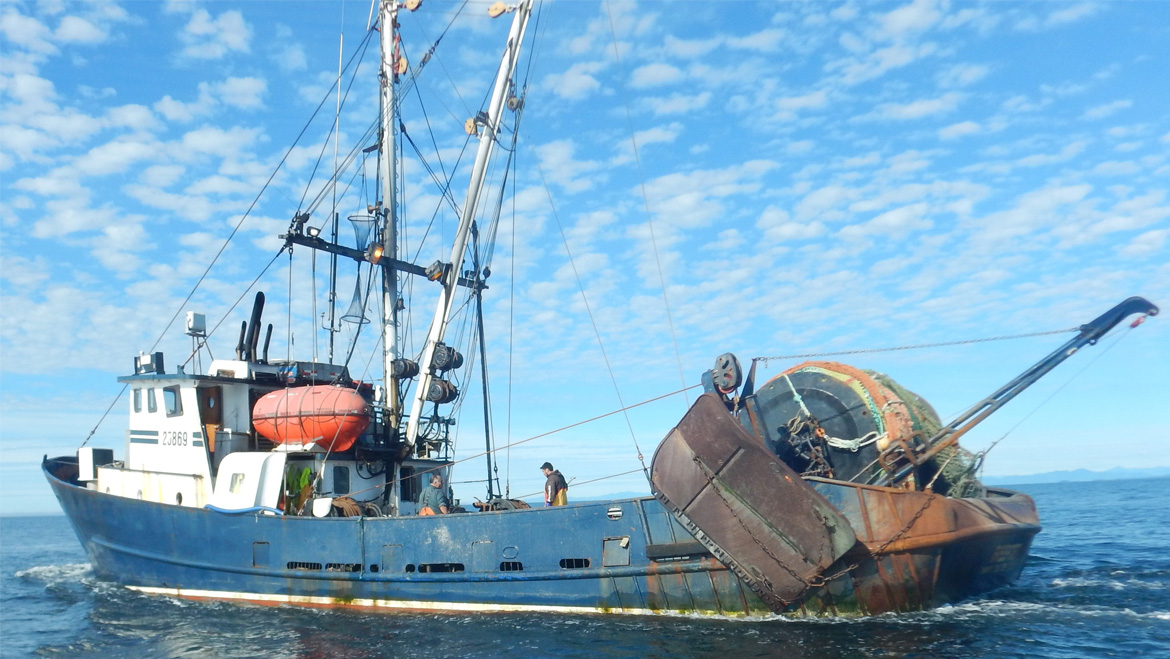
Pictured here is the Freeport Vessel, one in the fleet of approximately 35 groundfish trawling vessels in British Columbia.

The Pacific Legacy vessel took part in the pilot program for developing the new salmon bycatch sampling protocols.
- Date modified: