
Youth-led restoration at Sqwá:la (Hope Slough) by the Fraser River in British Columbia
The Pelólxw Tribe, which includes Xwchíyò:m (Cheam) First Nation and Sqwá (Skwah) First Nation, received a PSSI-funded Community Involvement Program (CIP) grant in 2024 to engage and train youth in their ongoing riparian restoration project at Sqwá:la (Hope Slough).
The Pelólxw peoples have been stewards of the area, near Chilliwack, British Columbia, on both sides of the Fraser River and the area around Mount Cheam/Agassiz area since time immemorial. The Pelólxw peoples hold profound relationships with the waters that connect them, based on countless generations upholding their responsibility to pass on their ancestors’ traditions and productive territories to future generations. Through decades of experience, Pelólxw stewardship and practices are carrying out terrestrial and watershed initiatives, exercising their leadership overseeing community engagement in habitat restoration, conservation, salmon enhancement, and habitat regeneration in the spirit of collaboration.
Hope Slough, known as Sqwá:la, and its surrounding watershed hold significant cultural and spiritual importance for the Pelólxw Tribe. Sloughs like Sqwá:la support biodiversity by providing critical habitat for both aquatic and terrestrial species, enhancing water quality through natural filtration, and maintaining essential connectivity to the larger Fraser River. Sqwá:la plays a vital role in the life cycle of salmon, providing key habitats for juvenile rearing and adult spawning. Historically, this area was an ancient side channel of the Fraser River and the site of multiple Indigenous villages, serving as a hub for fishing, transportation, and trade. However, over the past century, the habitat at Sqwá:la has been impacted by human-induced changes.
The Pelólxw peoples are guided by Snoweyelh: the guiding laws, values, virtues and principles which require protecting water as a sacred resource. These laws state that all beings, including the water, land, and fish hold a life force, shxweli, that must be protected. In the spirit of S’ólh, téméxw te íkw’elò Xyólhmet te mekw’ stám ít kwelat (This is our land, we have to take care of everything that belongs to us), the Pelólxw Tribe holds an inherent reciprocal responsibility to protect the watersheds in their territory. This includes the ancient laws of Xaxastexw te mekw’stam (Respect for all things) and Ewe chexw qelqelilt te mek’w stam loy qw’esli hokwex yexw lamexw ku:t: (Don’t ruin, waste, destroy everything, you just use what you take).
Restoring Sqwá:la (Hope Slough) with Indigenous youth
In the 1940s, the headwaters of Sqwá:la were disconnected from the Fraser River by the construction of roads, a railway, and a dyke, significantly diminishing its capacity to support fish populations and the Indigenous communities that rely on them. Since then, the slough has been impacted by pollution from agricultural runoff in the area, likely due to a lack of awareness about its ecological value and its role as an active salmon-bearing stream.
In response, the Xwchíyò:m (Cheam) and Sqwá (Skwah) First Nations launched a youth-driven riparian restoration initiative using the grant funded under PSSI. The restoration initiative emphasized the sacred responsibility to protect water and restore balance. Youth were employed through seasonal contracts and gained hands-on experience in riparian restoration, guided by Elders, environmental stewards, and restoration professionals. More than 200 native plants were also installed along a stretch of Sqwá:la (Hope Slough), improving bank stability and habitat quality for returning salmon and other wildlife.
Long-term impact of the restoration project
While the primary funding supported Indigenous youth engagement in stewardship and habitat restoration, the project has laid the foundation for long-term stewardship capacity-building within the Pelólxw Tribe. As youth participated in hands-on restoration activities, they gained valuable experience in riparian restoration while working alongside knowledge keepers and western science experts. The youth are emerging as future caretakers of the watershed and guardians of the land, and the community is revitalizing traditional knowledge and practices in caring for their territory. Furthermore, as the youth expanded their skills, their understanding of both traditional ecological knowledge and western science grew, and many were inspired to pursue further education and employment in environmental fields.
Restoration efforts along at Sqwá:la (Hope Slough) have also accomplished meaningful outcomes that go beyond improving the local ecosystem for salmon. Community engagement activities brought together youth and Elders to share the history of the land and traditional ecological knowledge. These events deepened cultural understanding and reinforced the principle of reciprocal care: taking only what is needed and giving back to the land. Their efforts have also raised the public’s awareness of the slough’s ecological and cultural significance. From the dedication of the Xwchíyò:m (Cheam) and Sqwá (Skwah) youth, the wisdom of their Elders, and the enduring values of the Pelólxw, they are bringing the slough back to life.

A Pelólxw youth observing a juvenile Coho salmon fry from Sqwá:la (Hope Slough).
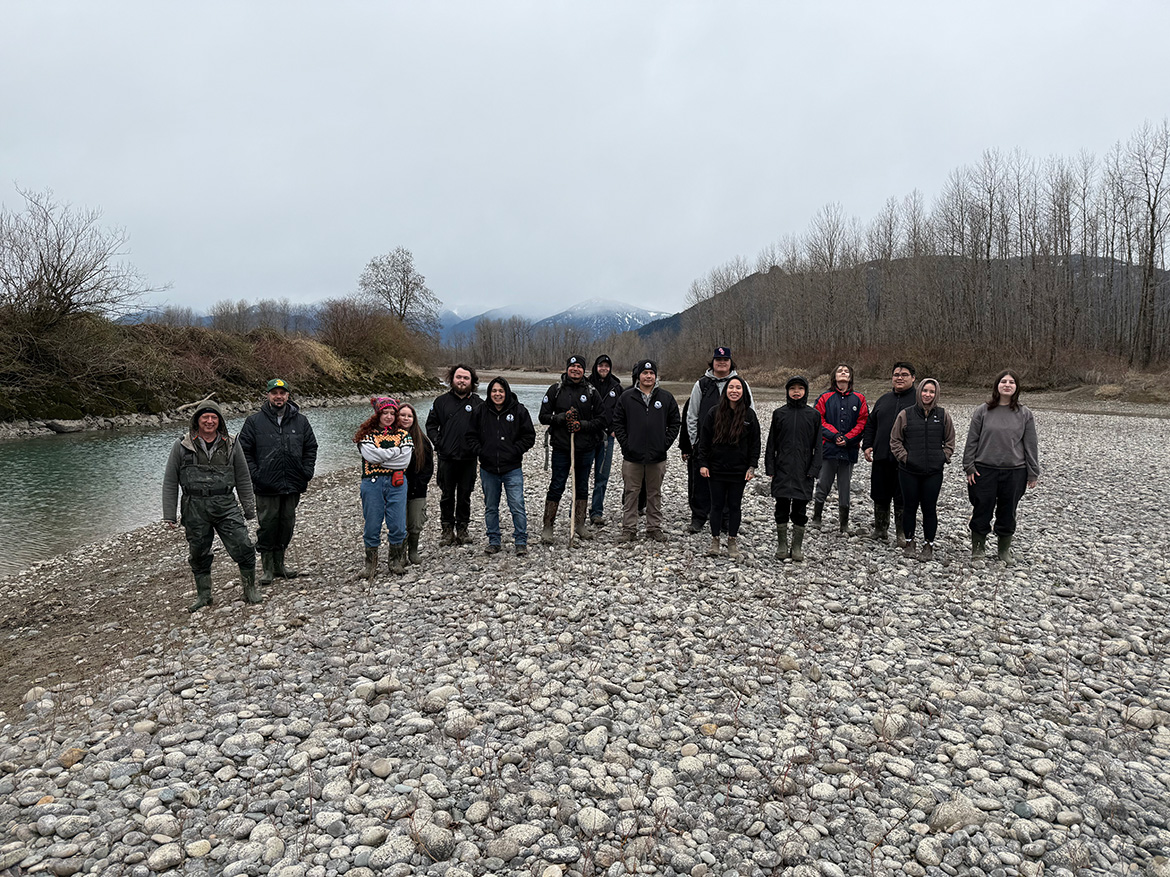
Pelólxw youth are pictured here on a side channel of the Fraser River during their Spring Break Youth on the Land training opportunity where they participated in salmon habitat observation and water quality monitoring with biologist, Mike Pearson, and Sto:lo Guardians and Knowledge Keepers.
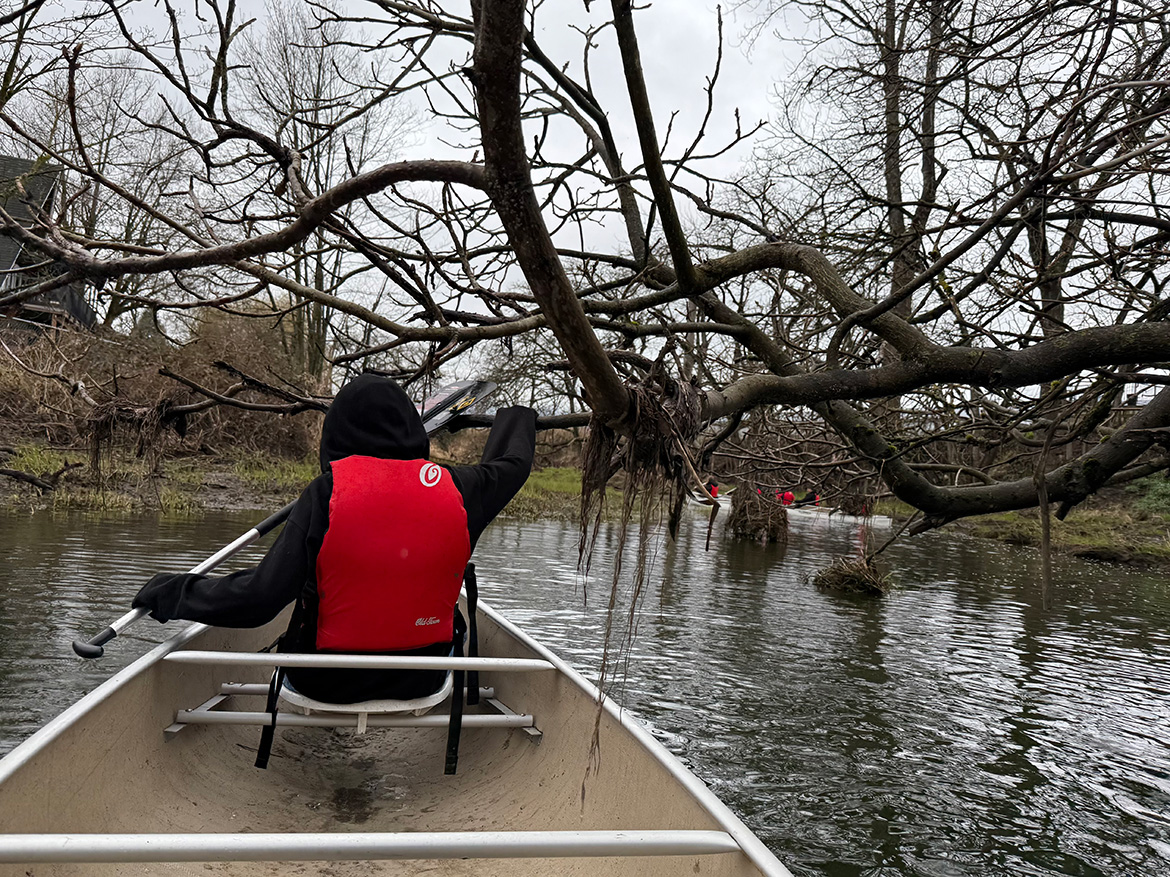
During the Spring Break Youth on the Land training, the Pelólxw youth took a canoe trip on Sqwá:la (Hope Slough). Pictured here, the youth are exploring salmon habitat, paddling through overhanging branches, and learning about the traditional uses of the waterway.

Overhead view of the tree planting site on Sqwá Reserve along a section of Sqwá:la (Hope Slough) to improve bank stability and habitat quality for returning salmon and other wildlife was funded by the Community Involvement Program (CIP) grant under PSSI. The slough, once a vital source of food for the community, has flowed through the Sqwá traditional territory since time immemorial.
- Date modified: