
Rebuilding the Deadman River Hatchery – upgrades and new infrastructure to support salmon conservation

Members of Skeetchestn Indian Band alongside DFO staff onsite at the Deadman River Hatchery where we are partnering to modernize hatchery infrastructure and enhancing climate resilience to support long-term salmon health in the Thompson Nicola region.
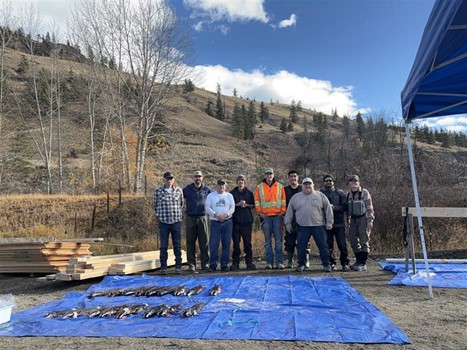
Hatchery staff from Skeetchestn and Simpcw of Secwepemc First Nation in fall 2025 after completing the first male and female Coho salmon collection from Deadman River in 11 years. The eggs will be reared in the newly upgraded facilities at Deadman River Hatchery.
Salmon stocks in the Fraser River have experienced population declines over several decades, resulting in a need for conservation measures for salmon in the Fraser River and beyond. In the Thompson-Nicola, several at-risk populations of Pacific salmon migrate up the Fraser River and into the Northern and Southern sections of the Thompson River. For over forty years, the Skeetchestn Indian Band (SIB) has operated the Deadman River Hatchery on the Deadman River, a tributary of the Thompson River, to support the conservation of Interior Fraser, Lower Thompson Coho and Chinook salmon populations.
However, like many other regions of British Columbia’s interior, the Thompson-Nicola area is vulnerable to extreme climactic events such as drought, floods and wildfires, that have increased in frequency and length due to climate change. Flooding has become an ongoing issue in the area due to the impacts of wildfires and in 2015, the facility experienced flood damage so severe that operations were discontinued. Today, with funding from the Pacific Salmon Strategy Initiative (PSSI), the Salmon Enhancement Program (SEP) is working with SIB to rebuild the hatchery so that it can once again help restore vulnerable salmon populations in the Thompson-Nicola area.
Hatchery modernization and climate-resilient infrastructure
The Deadman River Hatchery has undergone extensive upgrades, transforming the facility into a modern, climate-resilient facility for salmon conservation. The goal was not only to rebuild but to create a safer, more adaptable hatchery that can support multiple priority salmon stocks and withstand environmental challenges such as drought, fire, and flooding. More than a dozen critical systems were added or upgraded that help strengthen juvenile salmon development, increase their survival rates, and contribute to healthier returns of wild Pacific salmon to the Thompson River system.
Key hatchery improvements include:
- a complete renovation of the salmon incubation area along with new adult and juvenile rearing containers
- advanced water systems featuring an aeration tower, filtration technology to reduce freshwater use, and real-time monitoring equipment to improve water quality and reduce disease transmission
- dual water sources—groundwater and river—to provide flexibility in times of drought with low river levels and increased temperatures
- new power and backup systems, along with advanced alarm and water management controls
The result is a more reliable and energy-efficient facility designed to meet the challenges of a changing climate. By expanding capacity and improving resilience, the hatchery will play a vital role in ensuring the long-term survival and genetic diversity of Pacific salmon populations in the Thompson-Nicola region.
Partnership with Skeetchestn Indian Band
The hatchery rebuilding project is led by Skeetchestn Indian Band (SIB) who bring traditional knowledge, local expertise, and a long-standing commitment to salmon stewardship. Rebuilding and expanding the Deadman River Hatchery is an exceptional example of how salmon enhancement can be connected to community participation and development. This project is increasing local capacity and expertise as First Nations community members, including youth, are gaining valuable skills in hatchery construction, operations, and environmental monitoring. Our Salmonoid Enhancement Program supports SIB by coordinating among project partners, providing technical guidance, and ensuring that construction and water use are carried out in accordance with Pacific Aquaculture Regulations, including fish culture and fish health management. We also support initiatives led by SIB in the region, such as watershed restoration and cultural salmon programs. At the same time, collective efforts are being made to monitor the released fish, helping researchers and managers track results and improve future salmon enhancement outcomes.
Our nearly 40-year relationship with DFO has come full circle. With support from the British Columbia Salmon Restoration and Innovation Fund (BCSRIF) and PSSI, Skeetchestn has been able to rebuild the hatchery, a meaningful initiative that will enhance salmon stocks and provide education to many communities for years to come.
Working together to achieve better outcomes for Pacific salmon throughout B.C. and Yukon
The Deadman River Hatchery is one of over 90 community hatcheries supported by the SEP Community Involvement Program to ensure that hatcheries and enhancement partners have the tools and support they need to protect Pacific salmon for generations to come. A key component of our work under PSSI is investing in modernizing hatchery infrastructure and enhancing climate resilience to support long-term fish health and salmon conservation. This includes improving water security, upgrading systems for marking and monitoring hatchery fish, and implementing practices that promote sustainability. Many of these efforts are targeted at salmon stocks that are endangered, of special concern, or facing heightened climate-related risks.
Each year more than 45 million salmon are released by community-based hatcheries run by First Nations and local communities. This work is significant in our efforts to work together to conserve and restore vulnerable wild Pacific salmon populations that are important to Indigenous Peoples and unique to the rivers, streams and creeks across B.C. and Yukon. Hatchery-raised salmon also contribute to the health of ecosystems, support sustainable fishing opportunities, create local jobs, and encourage youth involvement. By taking part in salmon conservation, education, habitat restoration and hatchery operations, local communities are promoting long-term environmental stewardship throughout B.C. and Yukon.
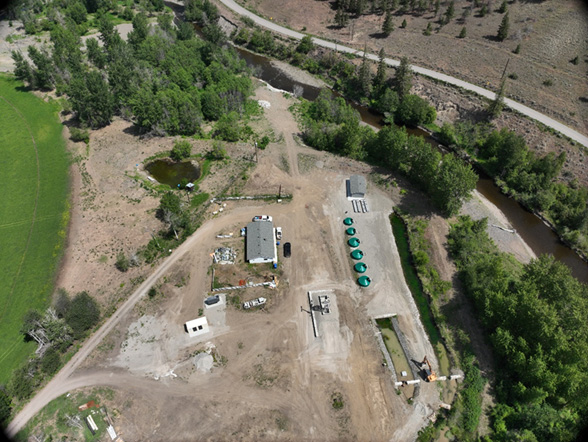
The Deadman River Hatchery is undergoing upgrades and expansion, making it more climate-resilient than ever before. Key upgrades include new water systems that improve water quality and reduce freshwater use. Additional upgrades have made the facility more energy efficient and resilient against flooding.
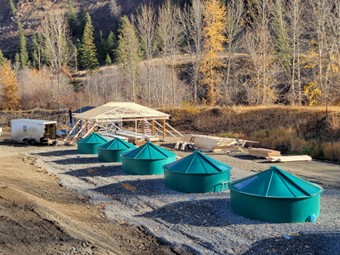
The upgraded facilities at Deadman River Hatchery will have the capacity to incubate and rear multiple salmon stocks with new tubs and troughs installed on site. Having the ability to raise multiple stocks will allow the hatchery to support more than one at-risk salmon stock and assist with the conservation of diverse salmon populations.
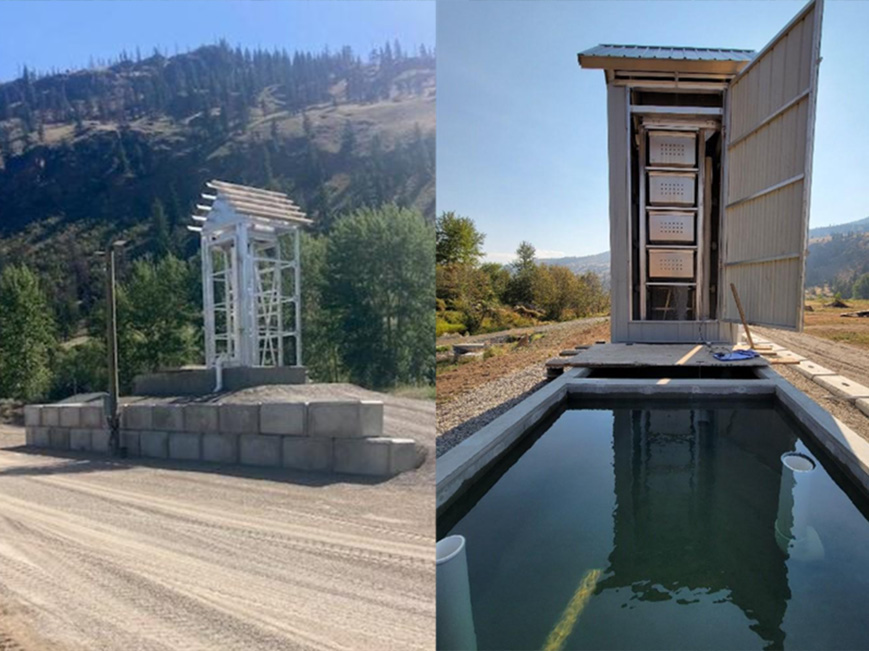
A new aeration tower installed at Deadman River Hatchery is an important, cost-effective infrastructure that uses gravity and natural air exchange to improve water quality for fish at the hatchery by increasing oxygen levels and removing harmful gases like carbon dioxide and ammonia.
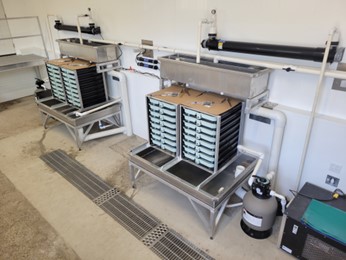
The salmon incubation area was completely renovated and includes a new partial recirculating water system that reduces freshwater use while maintaining optimal water quality.
Related links
- Date modified: