
Workplace Integrity Scan at Fisheries and Oceans Canada and the Canadian Coast Guard
On this page
- Message from the Interim Deputy Minister and Commissioner
- Introduction
- Addressing Integrity Issues in the Workplace
- 2024 Findings
- Measures Implemented to Increase Workplace Integrity at DFO and CCG
- Conclusion
- Annex A – Definitions
Message from the Interim Deputy Minister and Commissioner
Dear Colleagues,
We are pleased to present the inaugural publication of our Workplace Integrity Scan at Fisheries and Oceans Canada and the Canadian Coast Guard. This report signifies the Department’s ongoing commitment to upholding our values and ethics, and taking necessary steps to address instances of misconduct and wrongdoing.
Recent Public Service Employee Survey (PSES) results have highlighted a concern that many employees fear negative consequences when speaking up – an issue that is also reflected in the 2023 Ombuds report. DFO-CCG senior leadership fully support addressing this issue and are taking actions to implement the recommendations from the Deputy Ministers’ Task Team on Values and Ethics Report to the Clerk of the Privy Council, including the publication of this report.
Strategies and initiatives introduced in our Department in 2024, such as the Departmental Mental Health and Wellness Strategy, Employment Equity, Diversity and Inclusion Action Plan, Values and Ethics Strategic Vision and our Fear of Reprisal Campaign, reflect our dedication to creating a people-centered culture and a psychologically safe and healthy workplace.
By presenting data on behaviours and situations that occur in our Department which go against our values and ethics, explaining the investigative processes involved in addressing these issues, and how these situations are resolved, we aim to foster further trust within the Department at all levels. We recognize that eliminating all negative behaviours may be unachievable; however, there is zero tolerance for unacceptable behaviours in our workplace. All employees should feel empowered to report concerns without fear of reprisal and be confident that their concerns will be addressed promptly and effectively.
Each employee and leader plays a critical role in fostering a workplace that is healthy, respectful, safe, and free of harassment and discrimination.
We are all accountable for adhering to the Fisheries and Oceans Canada and the Canadian Coast Guard Code of Conduct, which outlines clear expectations regarding integrity, stewardship, and respect for others.
Kaili Levesque
Interim Deputy Minister, Fisheries and Oceans Canada
Mario Pelletier
Commissioner, Canadian Coast Guard
Introduction
In 2023, the Clerk of the Privy Council embarked on a journey to renew the dialogue on how to bring values and ethics to life in an increasingly complex and ever-changing world. Over the course of a year, various conversations took place across many departments, with great engagement from public servants at all levels. This valuable engagement demonstrated the importance of creating opportunities for having honest conversations on values and ethics and addressing challenges and setbacks with openness and transparency.
Initial self-assessment reports from departments to the Clerk shared best practices, showcased work underway and identified gaps that need to be addressed. Following this, the Clerk called on departments to further their efforts to advance values and ethics in their respective organizations, and requested departments produce a departmental disclosure of wrongdoing and misconduct report by spring 2025.
The intention of this first annual report, which is DFO-CCG's response to the Clerk’s call for a disclosure of misconduct and wrongdoing report, is to provide transparency around workplace integrity issues and illustrate to all employees that management addresses concerns that are brought forward, and how these situations are investigated and addressed. To that end, this report provides a high-level overview of the types of misconduct and wrongdoing cases that were addressed internally within the Department in 2024, along with the outcomes of investigations conducted by external bodies during the same period. It also consolidates information across various recourse mechanisms and provides details on conflict of interest declarations.
Addressing Integrity Issues in the Workplace
We all have a role to play in acting in accordance with our values and ethics and raising concerns if we experience or witness something that goes against these. That being said, managers play a vital role in being the first point of contact for employee concerns. They must address issues and guide employees to available recourse processes. Multiple recourse processes are available internally and externally to address both real and perceived misconduct or wrongdoing; employees can seek confidential and informal assistance to navigate these resource options from the Office of the Ombuds.
Allegations and cases of misconduct or wrongdoing are handled in alignment with departmental and Government of Canada policies and guidelines. This includes conducting prompt, fair, and objective investigations by reviewing the available facts and applying the standard of proof for administrative investigations. Procedural fairness, timeliness and privacy for all parties involved – including those initiating a formal recourse mechanism and those under investigation – is ensured throughout these processes.
For the purposes of this report, the term investigation is used in a general sense to refer to both formal administrative investigations and fact-finding exercises. Specificity between a formal administrative investigation or a fact-finding exercise is used where it is relevant to make such a distinction.
Managers are required to review all complaints and allegations to ensure appropriate resolution; however, not all lead to investigations. Some allegations may be unsubstantiated, or informal resolution mechanisms may be more suitable.
For misconduct cases, an investigative process is initiated when a determination cannot be made based on the information initially provided. This may take the form of a fact-finding exercise or a formal administrative investigation, case dependent.
For wrongdoing cases, the decision to launch an investigation or not is determined following an admissibility analysis of a submitted disclosure. Investigations are to be conducted as informally and expeditiously as possible and again may take the form of a fact-finding exercise or a formal administrative investigation.
Any employee who is directly or indirectly impacted by misconduct or wrongdoing is encouraged to report it to their supervisor or manager. All complaints must be taken seriously, thoroughly assessed and, if deemed founded, addressed with appropriate and timely administrative and/or disciplinary actions. No one should fear reprisal or punishment for coming forward with a concern.
2024 Findings
This report presents data on investigations into misconduct and wrongdoing from more than one program area, both internal and external to DFO-CCG.
Internal Investigations
Available data shows a total of 84 internal investigations initiated and/or concluded during the 2024 calendar year. Six (6) teams were identified as supporting management and working on investigations into misconduct or wrongdoing. As some of the six teams do not conduct investigations themselves, but use the information from those investigations (formal and fact-finding) in their analysis, advice, guidance and recommendations to management, the total number of investigations includes some that are recorded under more than one team.
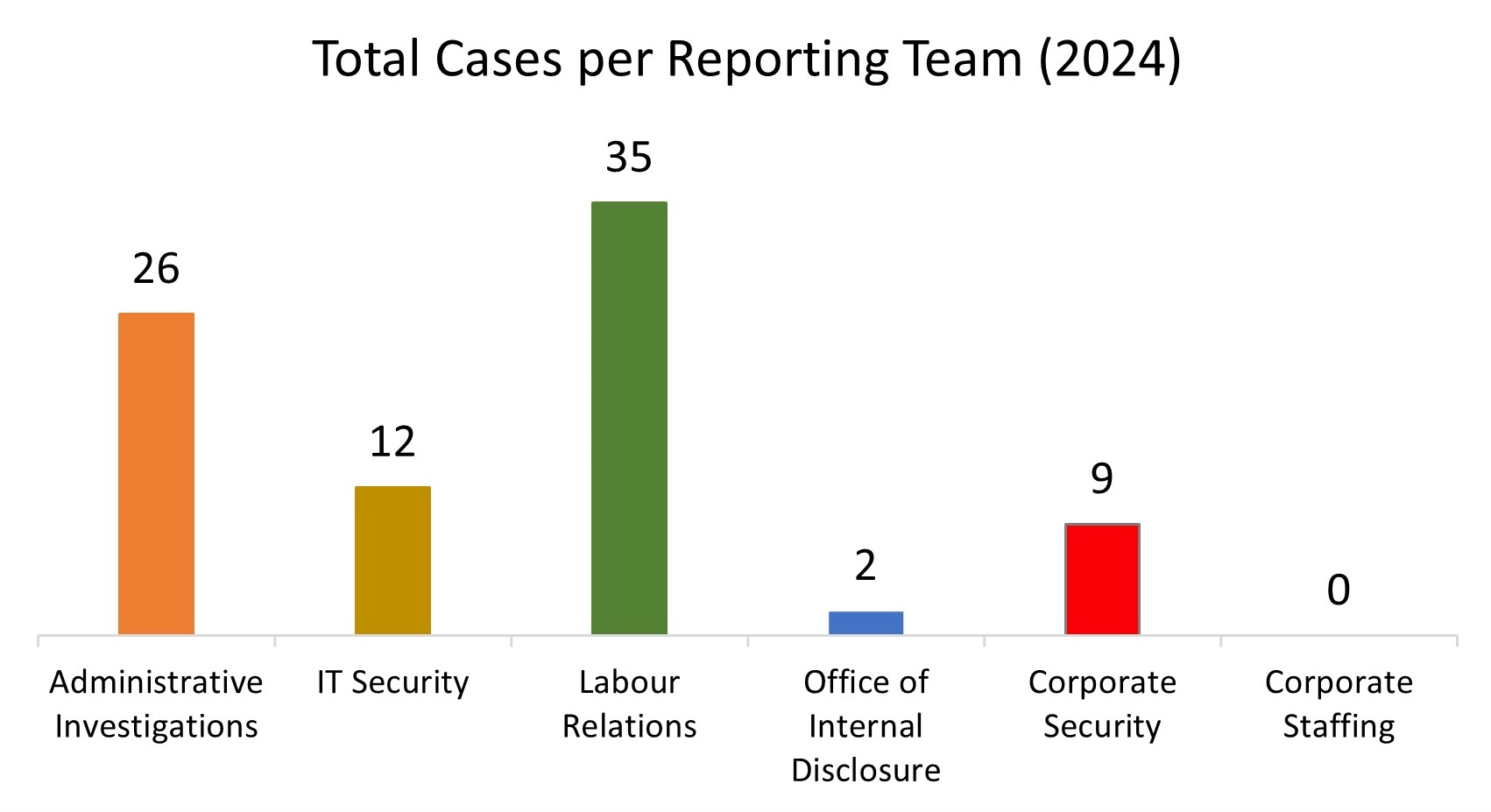
This graph identifies the number of investigations (formal administrative investigations and fact-finding exercises) the Department initiated and/or concluded during the reporting period.
Twenty-six (26) investigations were initiated by DFO-CCG’s Administrative Investigations team within People and Culture, 12 investigations were initiated by IT Security, Labour Relations investigations where misconduct was found and discipline rendered total 35, two (2) investigations were reported by the Office of Internal Disclosure, and nine (9) Reviews for Cause were initiated by Corporate Security.
Corporate Staffing reported zero investigations into errors, omissions, or improper conduct on an internal appointment process, respectively.
For most teams that reported initiating and/or conducting investigations, additional information on the types of cases investigated, the types of investigations used, and/or outcomes of these investigations can be found below.
Administrative Investigations
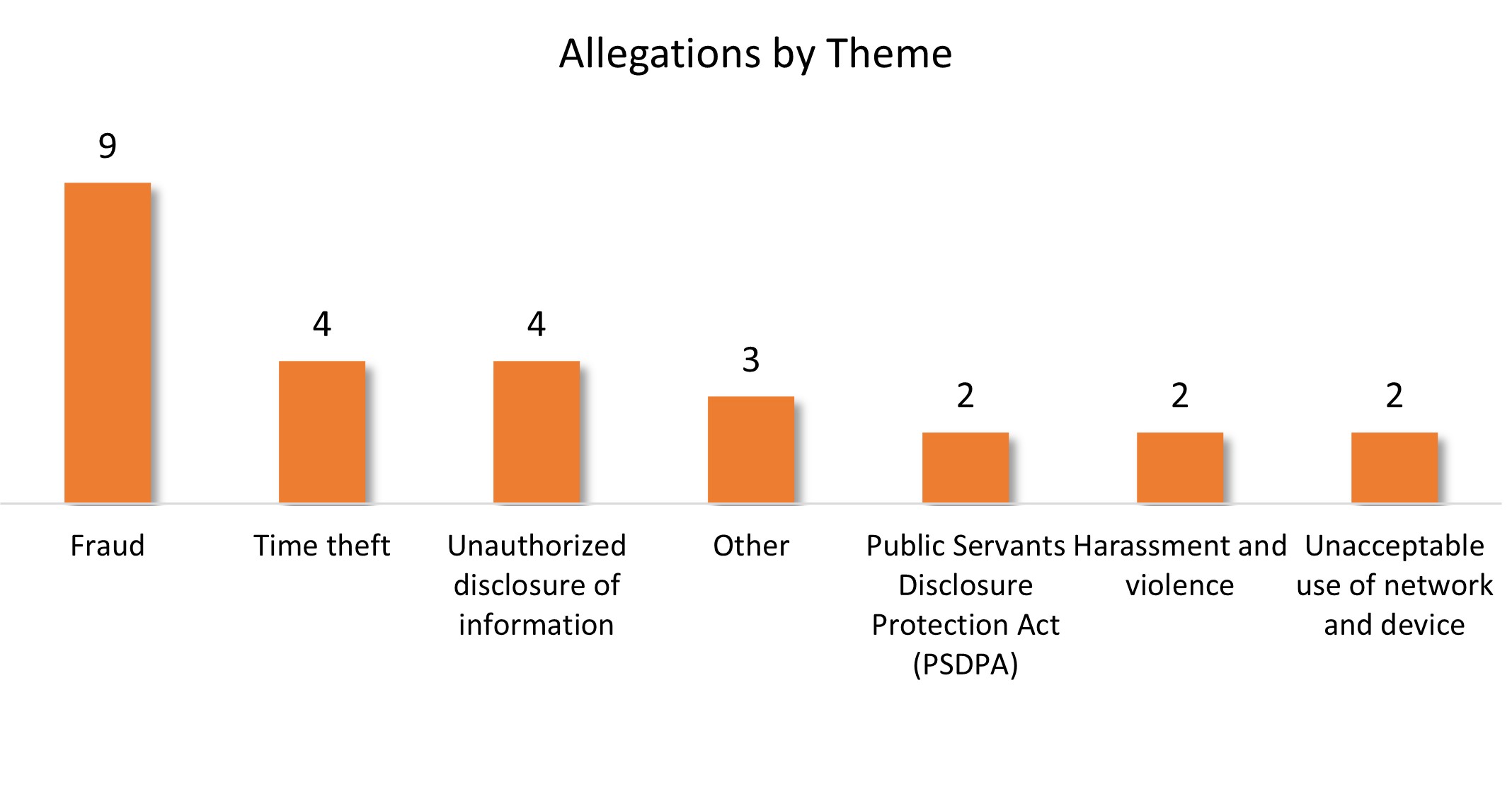
Administrative Investigations initiated 26 investigations in 2024. This graph categorizes the allegations investigated by Administrative Investigations by theme. Of the 26 investigations, nine (9) allegations related to fraud, four (4) allegations related to time theft, four (4) allegations related to unauthorized disclosure of sensitive information, two (2) allegations related to the Public Servants Disclosure Protection Act (PSDPA), three (3) allegations were categorized as Other (i.e. Unidentified firearm found, misuse of equipment, and an employee posting letters with false information), two (2) allegations related to harassment and violence, and two (2) allegations related to unacceptable use of network and device.
Of these 26 investigations, 21 were investigated using fact-finding and five (5) were investigated through a formal investigation.
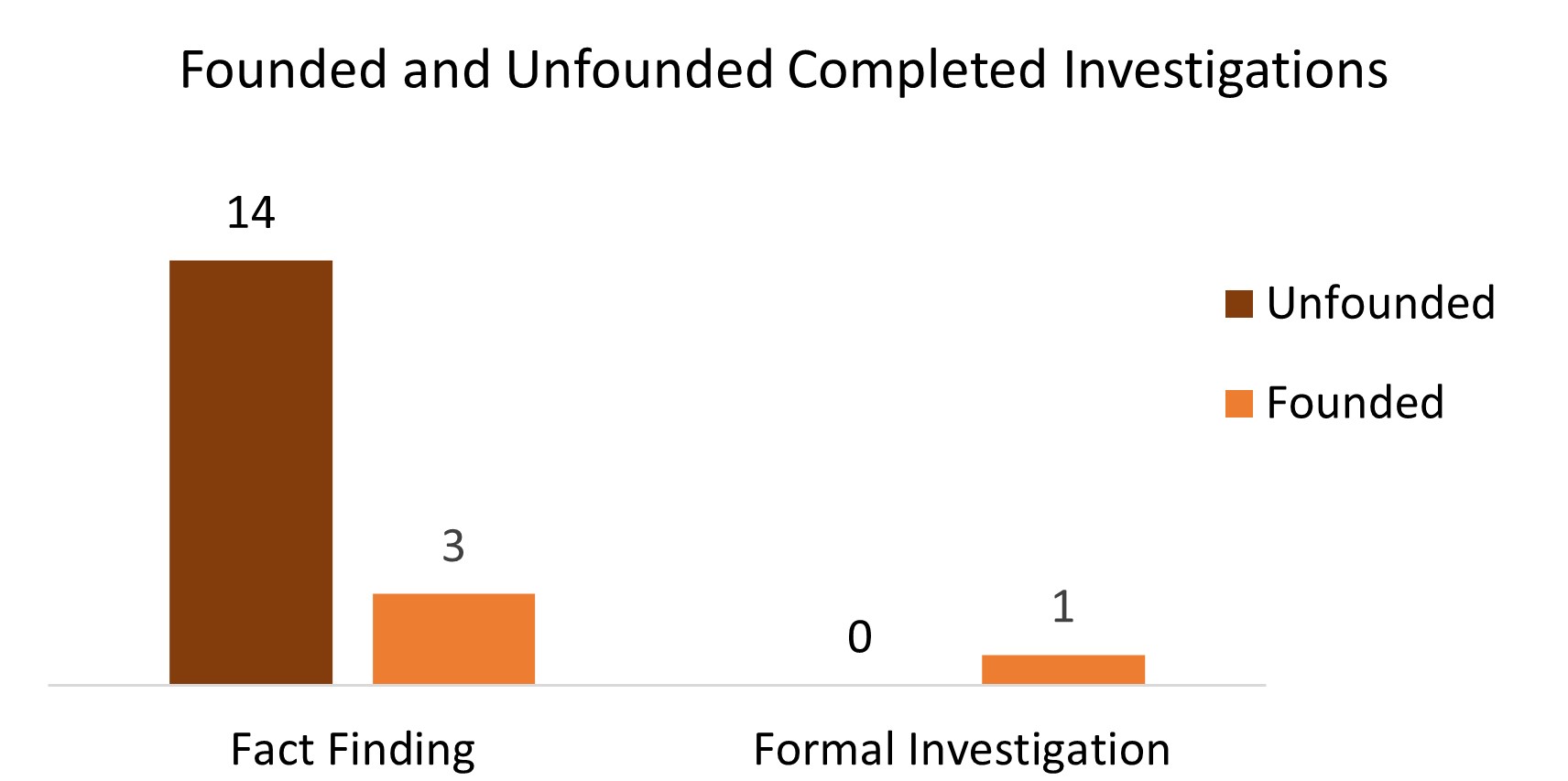
Out of the 26 investigations initiated in 2024, 18 were completed. This graph shows that of the 18 completed investigations, 14 fact-findings were deemed to be unfounded and three (3) founded, while and one (1) formal investigation was deemed to be founded.
IT Security
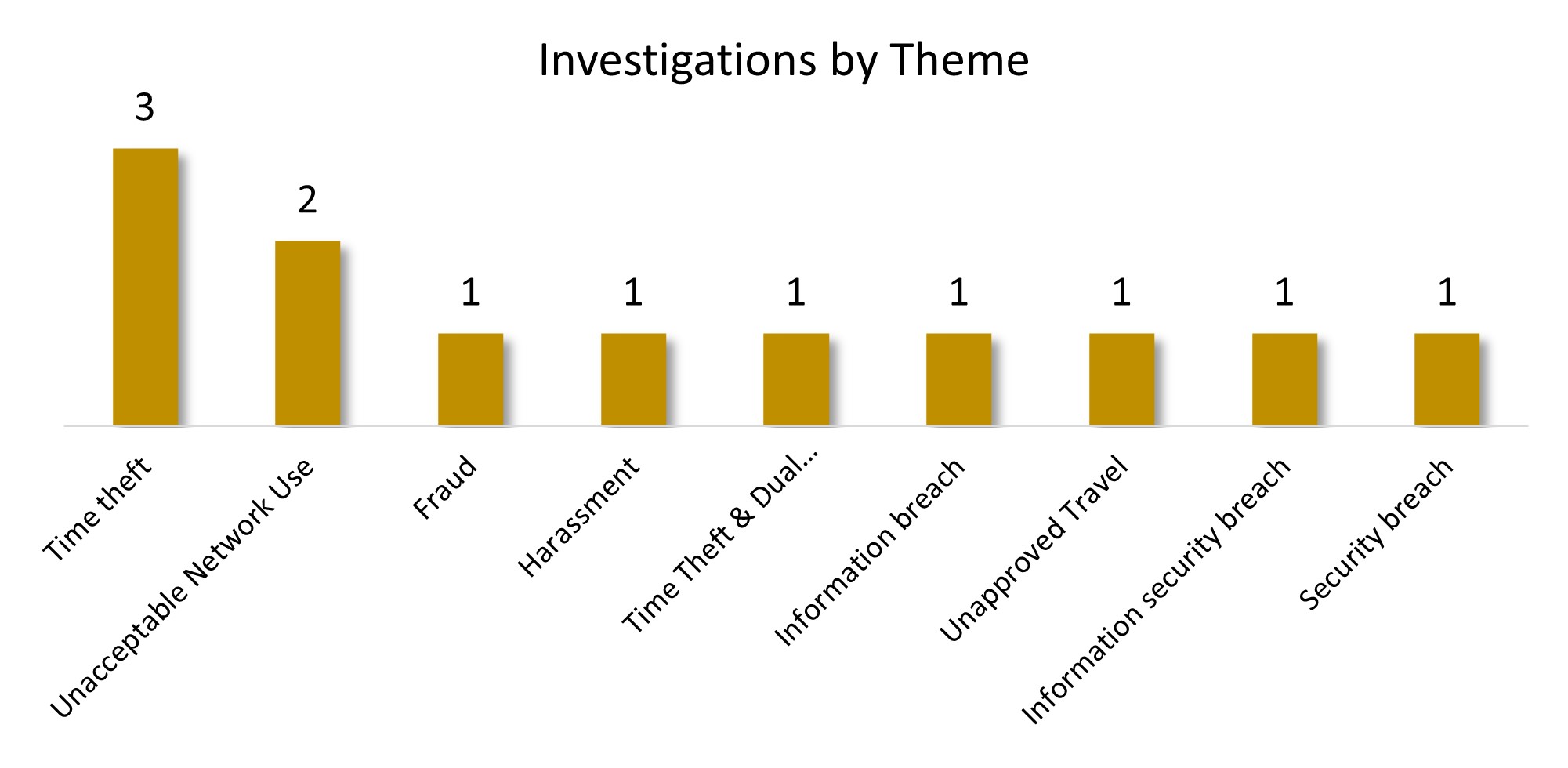
IT Security conducted 12 investigations in 2024. This graph categorizes the allegations investigated by IT Security by theme. There were three (3) allegations related to time theft, two (2) allegations related to unacceptable network use, and one (1) allegation related to each of the following: fraud, harassment, time theft and dual employment, information breach, unapproved travel, information security breach and security breach.
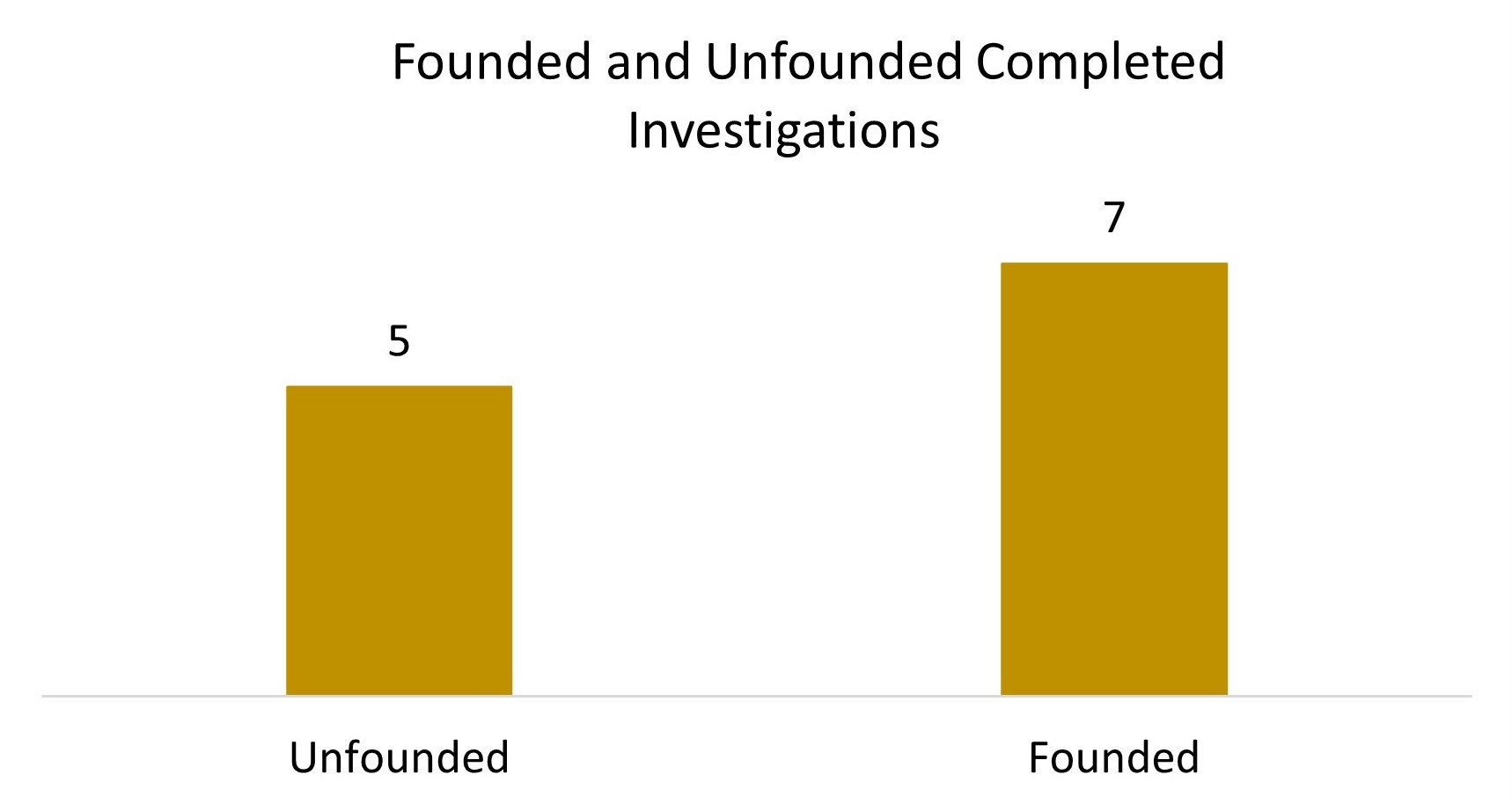
This graph shows that of the 12 investigations completed, five (5) were deemed to be unfounded and seven (7) were deemed to be founded.
Labour Relations
Labour Relations process dictates that all potential disciplinary measures be preceded by an investigation (formal administrative investigation or fact-finding exercise); data used in this report includes only those investigations where an allegation of misconduct was deemed founded and a disciplinary measure was rendered in 2024.
As Labour Relations does not conduct their own investigations but utilizes the information from investigations (formal and fact-finding) completed by other teams or management in their analysis, advice, guidance and recommendations to management, the total number presented here may include formal investigations recorded under other teams (e.g. Administrative Investigations, IT Security) as well as investigations initiated prior to 2024.
In 2024, there were 35 investigations where an allegation of misconduct was deemed founded and a disciplinary measure was rendered.
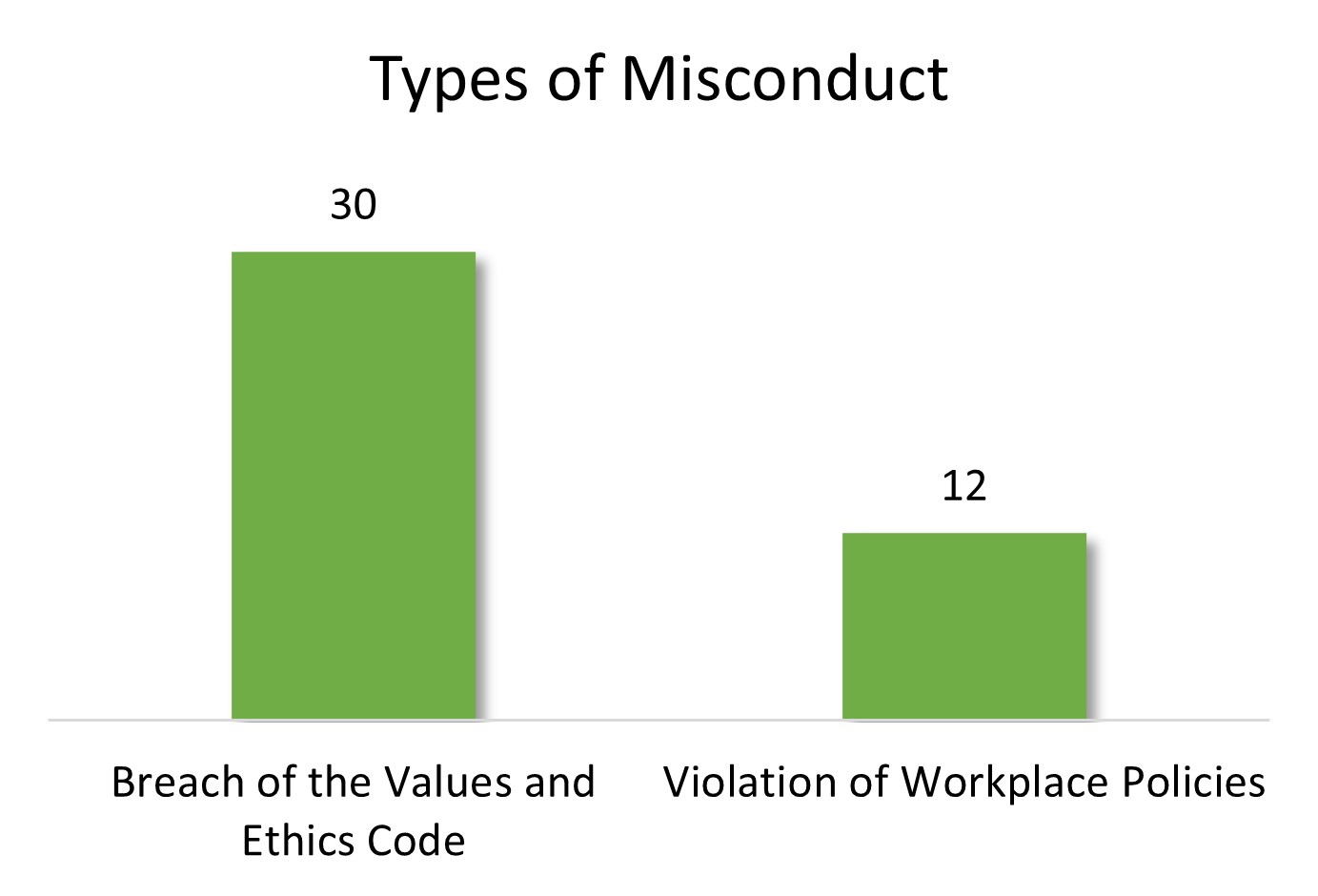
This graph identifies that of the 35 investigations where an allegation of misconduct was deemed founded and a disciplinary measure was rendered, there were 30 breaches of the Values and Ethics Code and 12 violations of various workplace policies.
Please note that seven (7) cases in which disciplinary measures were rendered were due to both breaches of the Values and Ethics Code and violations of workplace policies; as such, there are more types of misconduct recorded (42) than total number of investigations (35).
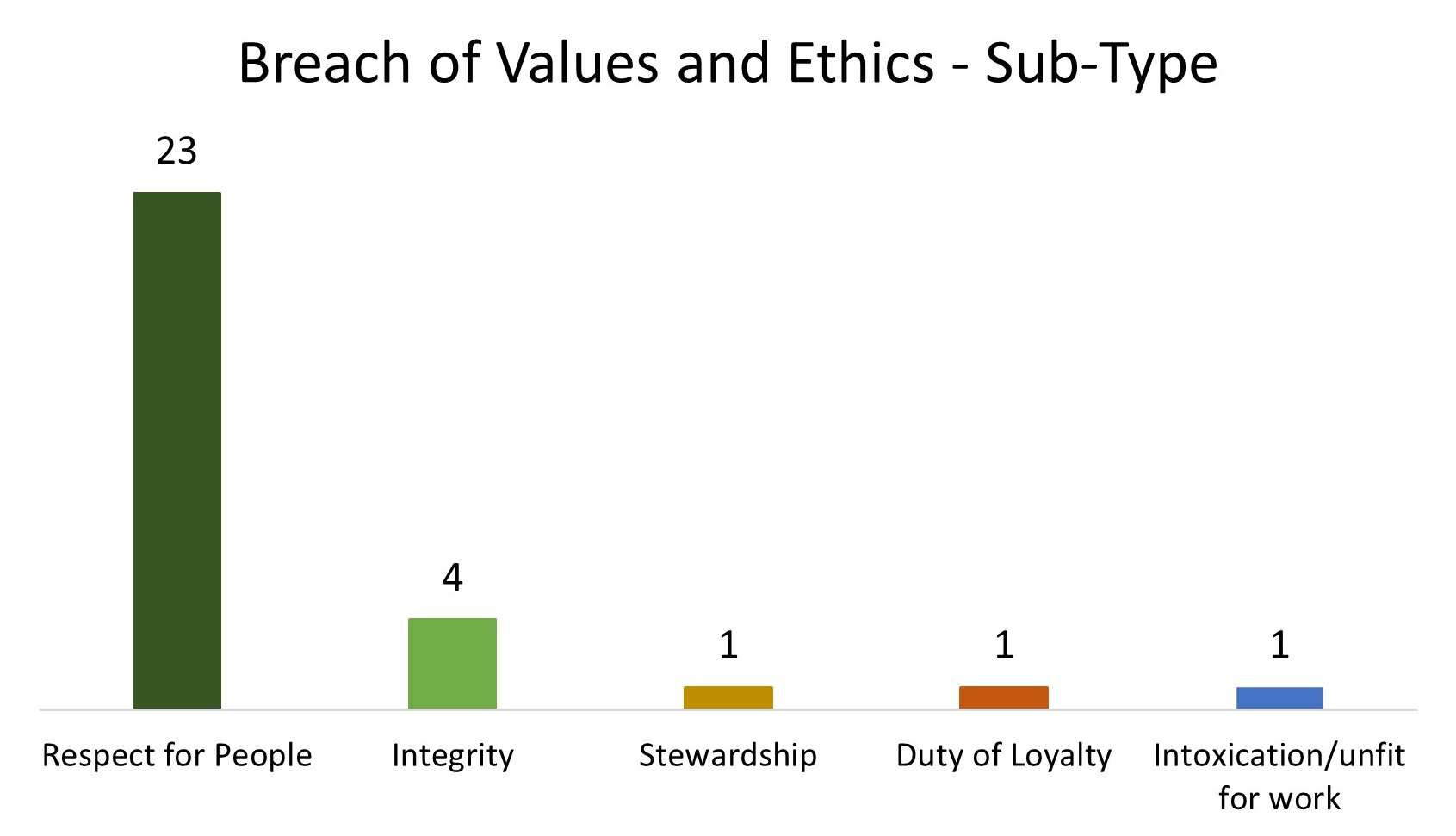
For misconduct identified as being a breach of the Values and Ethics Code, 23 files related to respect for people, four (4) related to integrity, and one (1) related to each of the following: stewardship, duty of loyalty, and intoxication or being unfit for work.
Behaviours that resulted in disciplinary measures related to respect for people included inappropriate comments, unprofessional behaviour, failure to adhere to expectations and management directions, threats of violence, and disrespectful communications and behaviour.
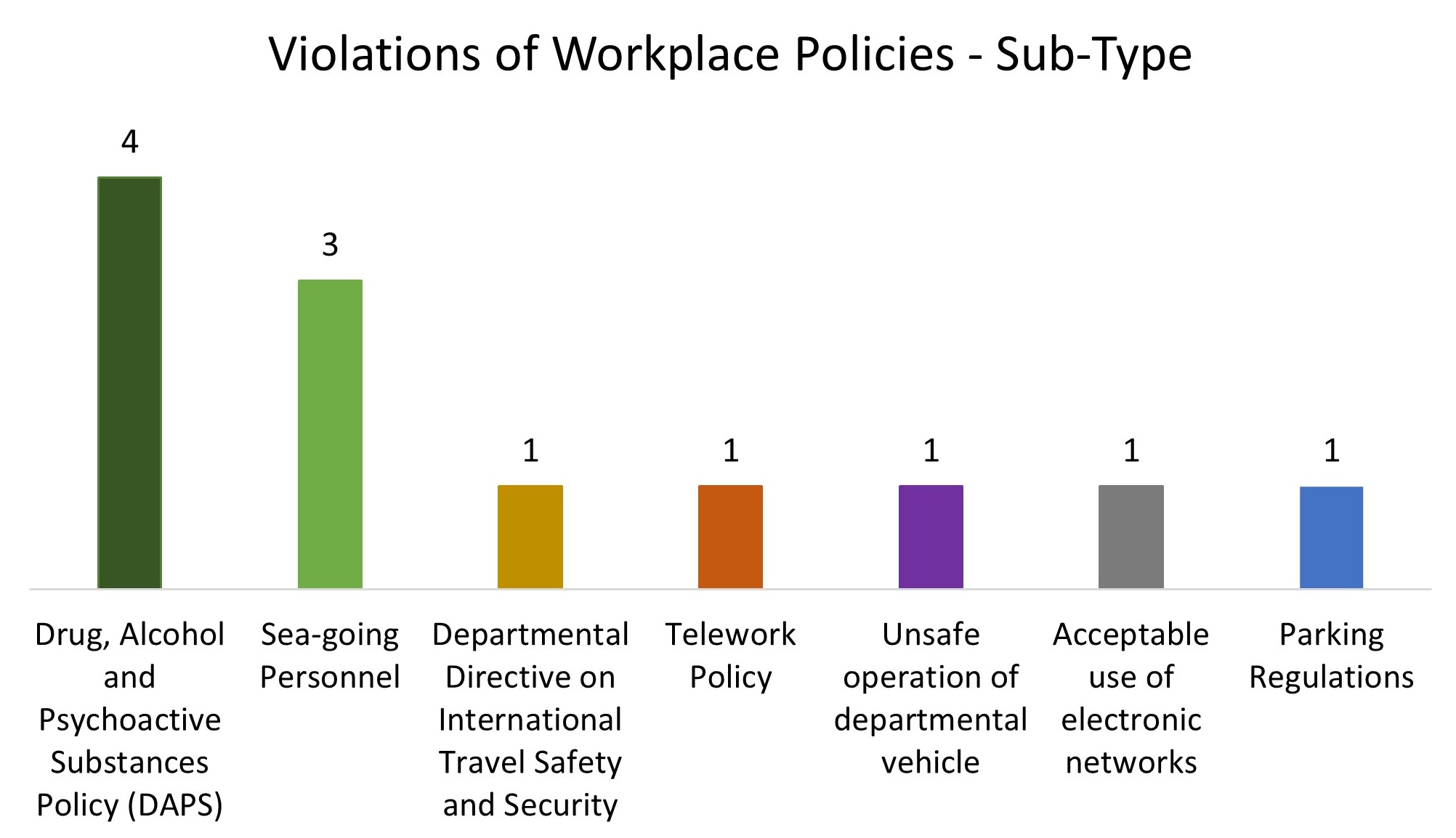
For misconduct identified as being a violation of a workplace policy, four (4) files related to the Drug, Alcohol and Psychoactive Substances Policy (DAPS), three (3) related to sea-going personnel (including Fleet Safety Manual and Commanding Officer Orders), one (1) related to the Departmental Directive on International Travel Safety and Security, one (1) related to the telework policy, one (1) related to the unsafe operation of a departmental vehicle, one (1) related to the acceptable use of electronic networks policy, and one (1) related to parking regulations.
Violations of workplace policies occurred in instances where employees failed to adhere to directives, policies and/or regulations. Examples included: using a departmental issued mobile electronic device during international travel without proper authorization, the use of the employer network to access inappropriate online content, failure to follow parking restrictions, failure to receive orders while onboard a vessel and failure to adhere to responsibilities as a sea-going employee.
Measures Taken in Founded Cases of Misconduct and Wrongdoing
As an employer, DFO-CCG is responsible for acting when misconduct or wrongdoing is determined to be founded. This may involve applying appropriate disciplinary measures, administrative measures, or in some cases, a combination of both to effectively address behaviours that are not conducive to maintaining a professional and respectful workplace.
- Disciplinary measures are formal corrective measures intended to correct inappropriate behaviour. The purpose is to motivate employees to accept rules and standards of conduct that are compatible and necessary in achieving the goals of the organization. The underlying philosophy is that disciplinary action is corrective rather than punitive. Discipline aims to correct employee behaviour through the progressive application of more severe disciplinary actions for successive acts of misconduct. However, in cases of serious misconduct, a more severe disciplinary action may be warranted even for a first offence. Managers must carefully evaluate all circumstances of the situation including aggravating and mitigating factors when determining if discipline is warranted and the appropriate disciplinary measure.
Disciplinary measures include verbal reprimand, written reprimand, financial penaltyFootnote 1 or temporary suspension without pay, temporary demotion and termination.
- Administrative measures are non-disciplinary actions taken to address specific circumstances and make necessary adjustments to a situation. In some cases, an administrative measure alone may be sufficient to resolve the issue, while other situations may require multiple measures.
Administrative measures can include issuing a letter of expectations, placing an employee on administrative leave without pay, temporarily removing human resources and/or financial delegations, or implementing other situation-specific adjustments.
Administrative measures may also focus on equipping employees with tools to prevent future misconduct such as developing an action plan for improving behaviour, providing coaching or training, or scheduling regular meetings with management.
Administrative measures that may have been implemented following a finding of misconduct are not recorded for the purposes of discipline and therefore not included in this report.
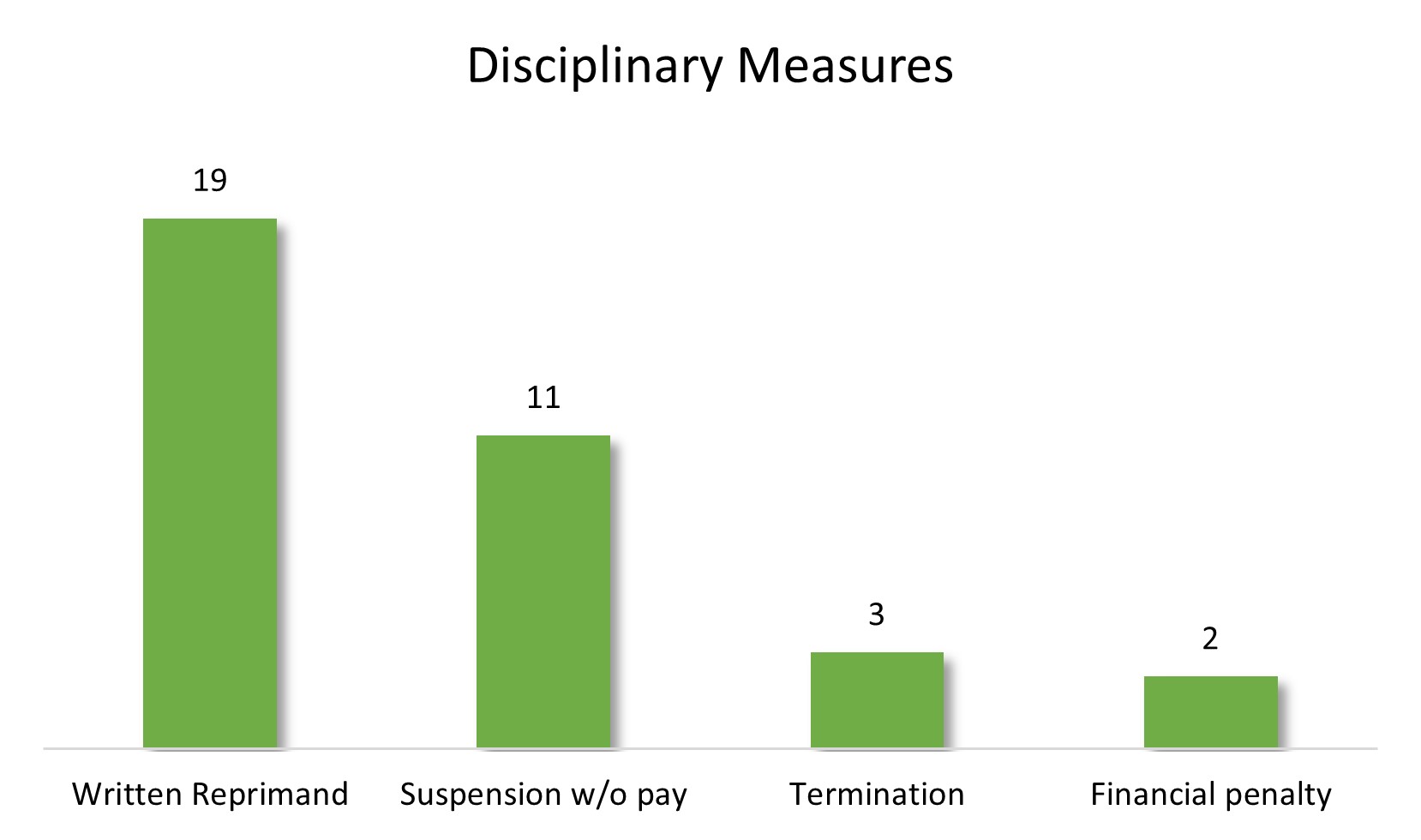
This graph breaks down the distribution of disciplinary measures rendered in 2024Footnote 2. Nineteen (19) written reprimands were issued, 11 suspensions without pay (ranging from one (1) to 10 days) were issued, three (3) terminations of employment were issued, and two (2) financial penalties were issued (a four (4) and five (5)-day equivalent).
Summaries of the three (3) cases that resulted in termination are as follows:
- An employee was terminated for culpable negligence in the performance of their duties.
- An employee was terminated following multiple founded allegations of misconduct and harassment.
- An employee was terminated following multiple founded allegations of misconduct.
Corporate Security
As part of its mandate, Corporate Security may conduct a review for cause of an employee’s eligibility to maintain a reliability status or security clearance following changes in their personal circumstances or behavior (e.g. change in criminal record status, involvement with law enforcement, indications of fraudulent activity, misuse of departmental information/assets or significant change in financial situation).
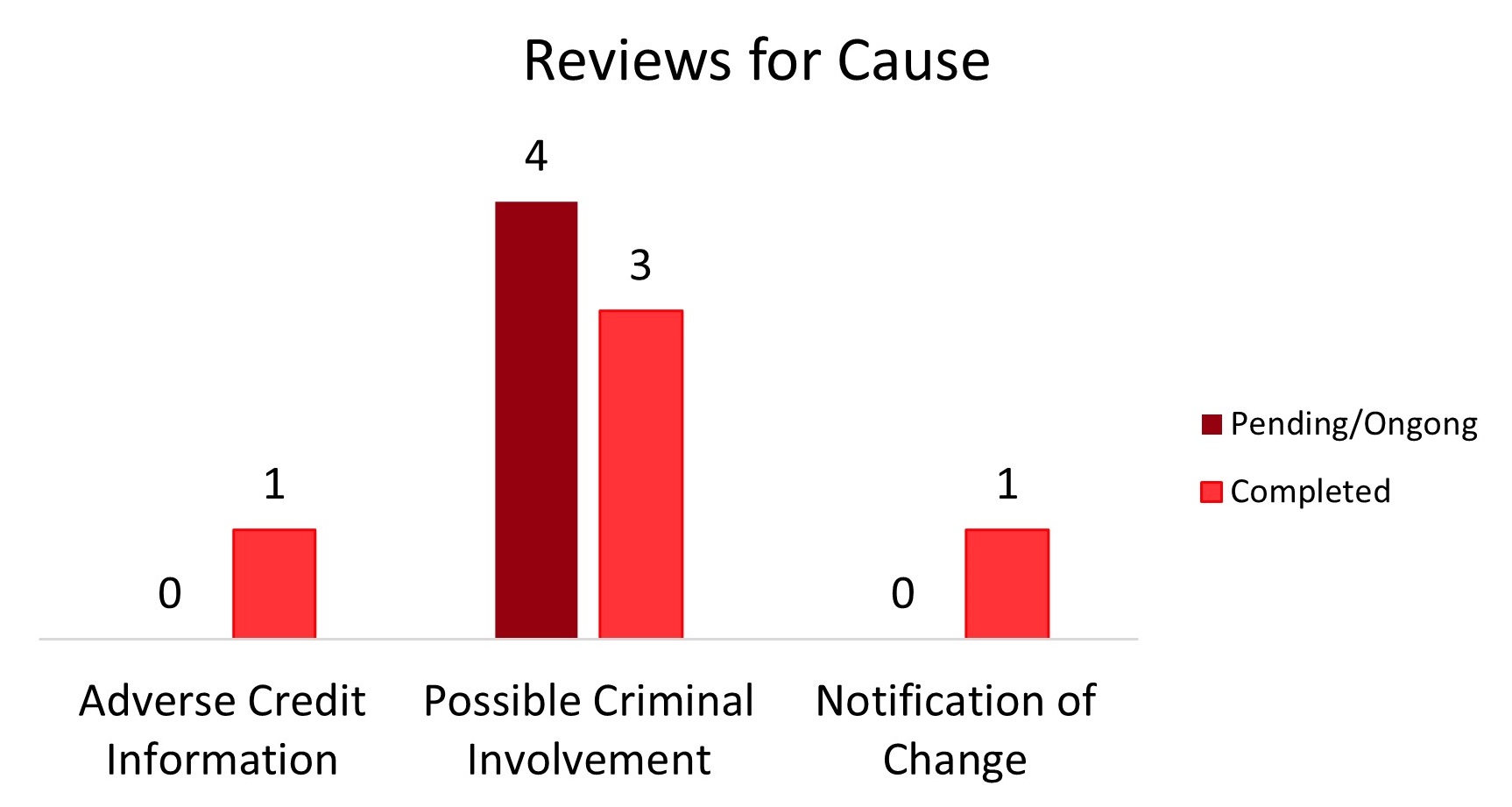
Corporate Security conducted nine (9) total reviews for cause in 2024. This graph shows that of the nine (9) reviews for cause, one (1) was related to adverse credit information and completed, seven (7) were related to possible criminal involvement with three (3) completed and four (4) pending at the time of this report, and one (1) was related to a notification of change and completed. All completed reviews resulted in no revocation of reliability status or security clearance.
Other Internal Processes
As the primary focus of this report is to provide a scan on workplace integrity issues, there are additional processes that are available within the Department to address concerns which aim to prevent workplace issues from arising. This report will discuss two (2) of these processes: harassment and violence complaints and declarations on conflicts of interest.
Harassment and Violence
The purpose of the harassment and violence complaint process is to identify systemic contributing factors (root causes) to harassment and violence occurrences and to eliminate or mitigate the risk of reoccurrence by implementing preventive measures in the workplace. This process is not intended to address any specific acts of misconduct committed by an individual or group of individuals for which a disciplinary measure would be applied. However, depending on the circumstance, a disciplinary process may be initiated in tandem with a harassment and violence complaint process.
In 2024, 49 harassment and violence notices of occurrence (complaints) were submitted.
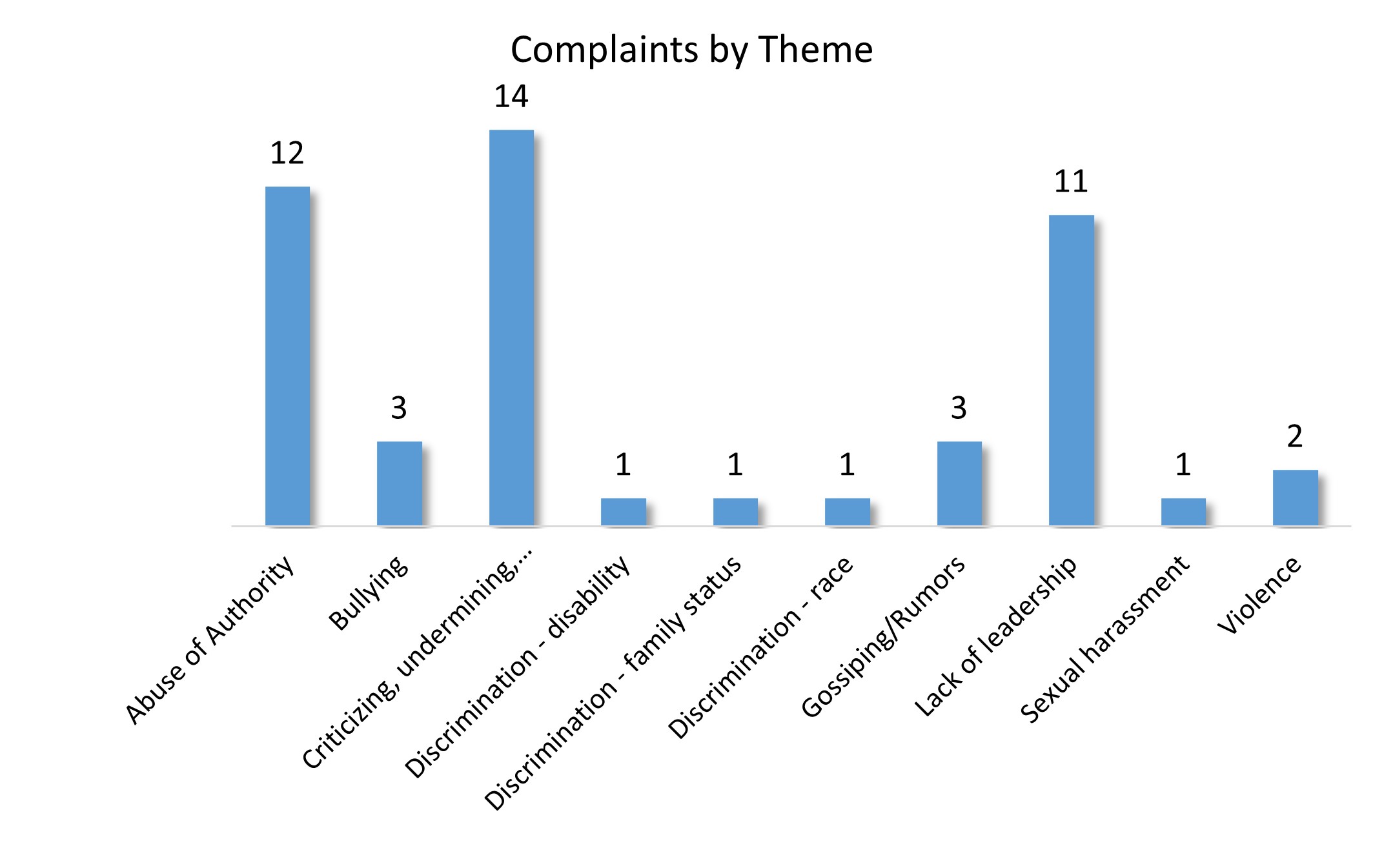
This graph identifies the number of harassment and violence complaints by theme. The most common type of harassment and violence complaint involved behaviours that can be categorized as criticizing, undermining or ridiculing someone (14). This was followed by behaviours that may be considered abuse of authority (12) and then lack of leadership (11). There were also instances of behaviours of bullying (3), gossiping and rumours (3), violence (2), sexual harassment (1), and discrimination based on disability (1), race (1), and family status (1).
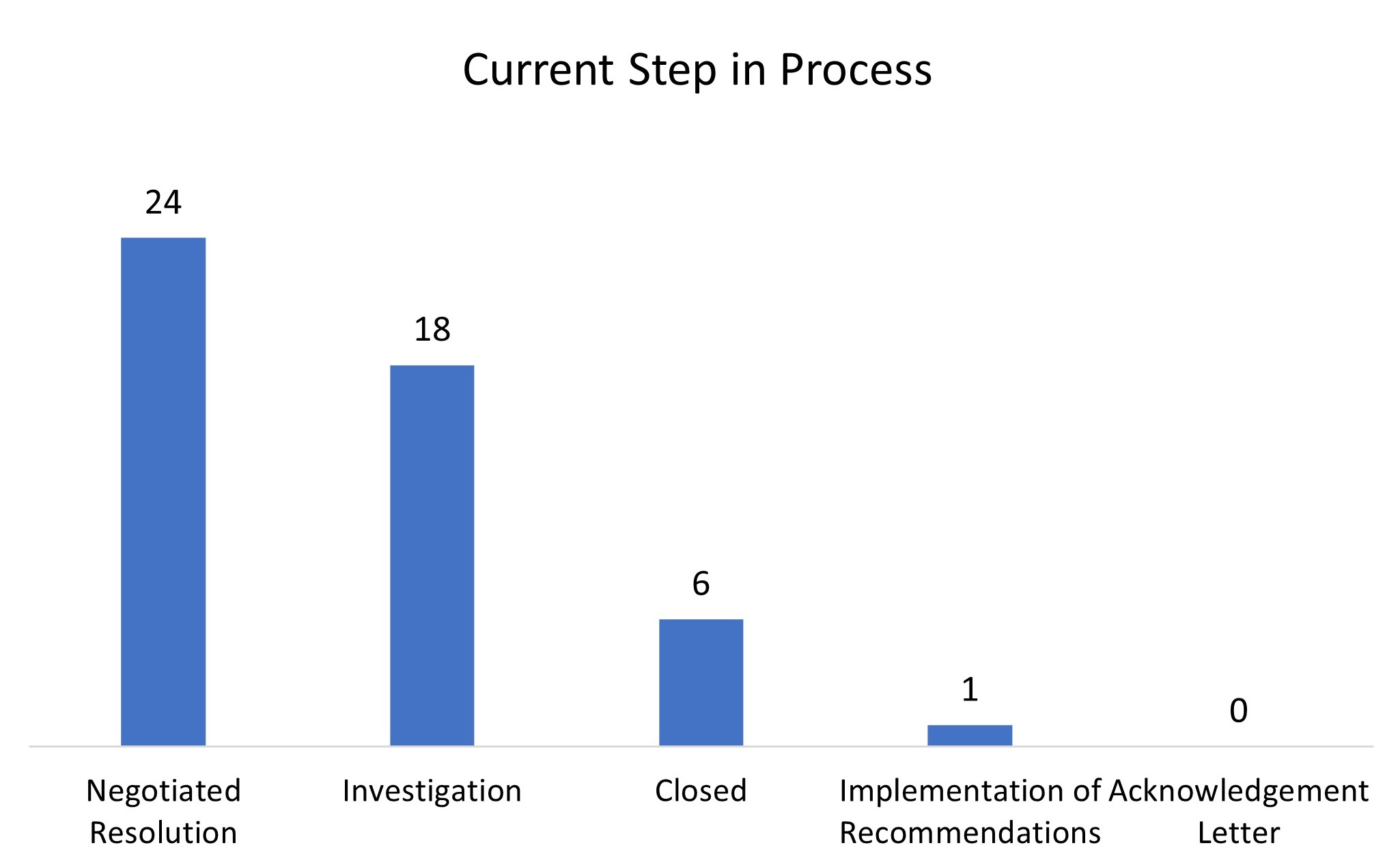
This graph shows the current step in the harassment resolution process as of the time of this report. Of the 49 harassment and violence complaints submitted, 24 complaints were at negotiated resolution, 18 were at investigation, six (6) were closed, one (1) was at implementation of recommendations. There were no complaints at the acknowledgement letter step.
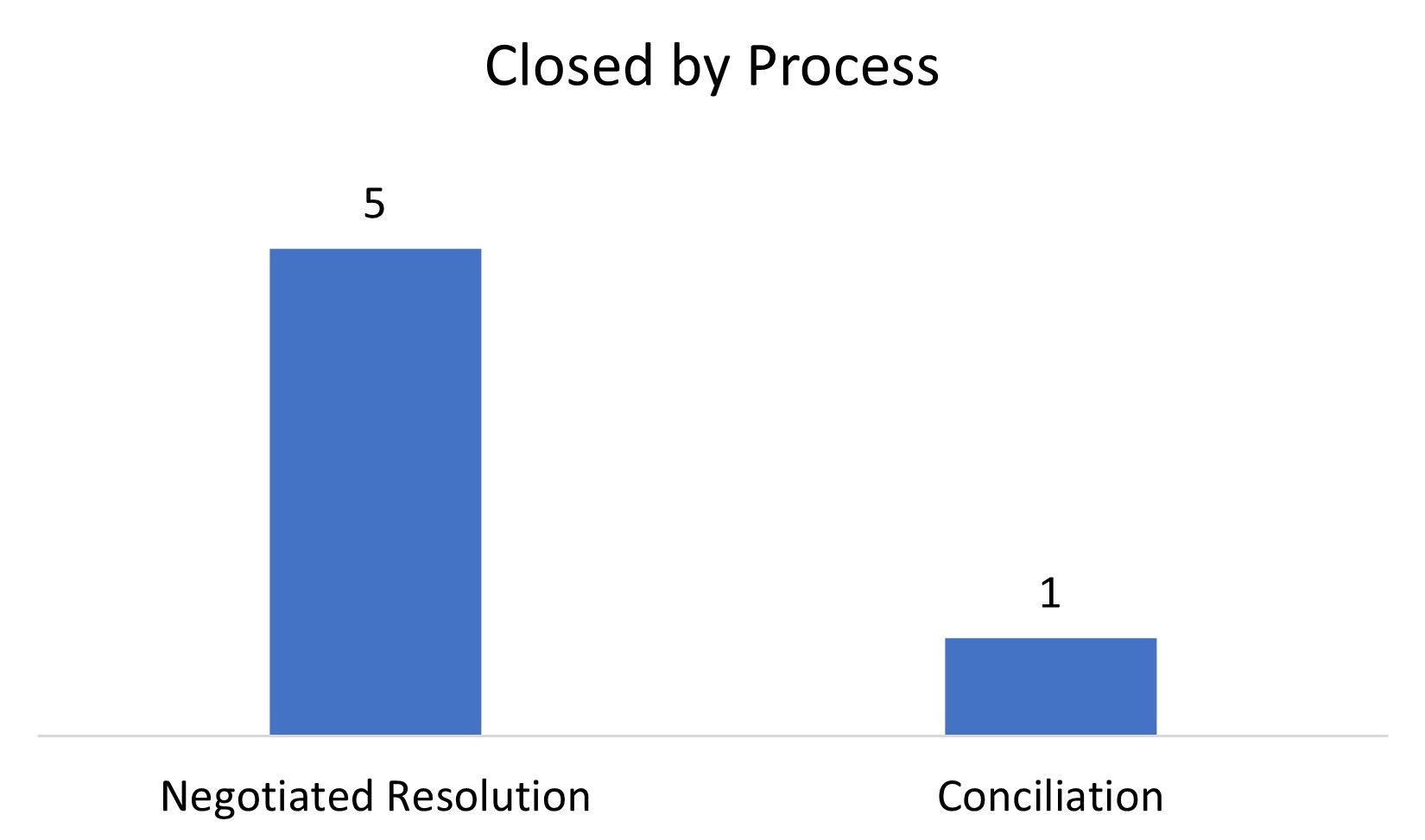
A harassment and violence complaint can be closed without going to a formal investigation, should the principal party (complainant) choose to pursue another resolution mechanism. This graph identifies that in 2024, no complaints that were closed went to an investigation as all six (6) closed complaints were pursued through negotiated resolution (5) or conciliation (1).
Values and Ethics
As part of this report, we are also including data on situations that may be, or be perceived as being, a conflict of interest (COI). A COI is a situation in which a public servant has private interests that could improperly influence the performance of their official duties and responsibilities or in which a public servant uses their office for personal gain. We are all responsible for declaring situations that could result in a real, apparent or potential conflict of interest with our official duties. This ensures such situations are properly managed in the public’s best interest.
For calendar year 2024, there were 318 COI declarations including:
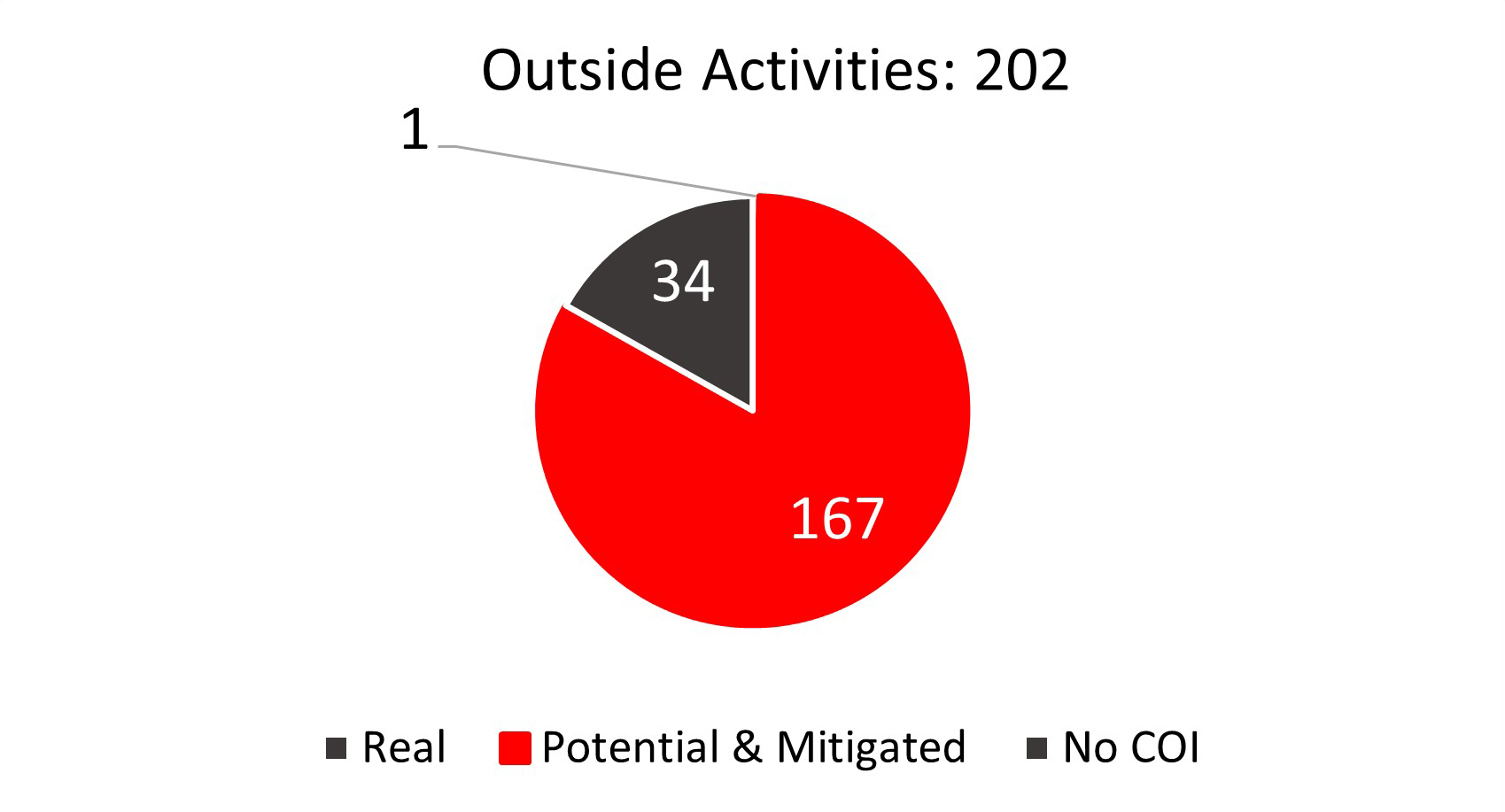
Two-hundred and two (202) outside activities declarations. One (1) was determined to be real and mitigated, 167 potential and mitigated, and 34 were determined as no COI. This includes possible conflicts related to an employee's outside activities related to a personal business, NGOs, private companies, academia, volunteer affiliations, scientist emeritus, and other miscellaneous situations.
For calendar year 2024, there were 318 COI declarations including:
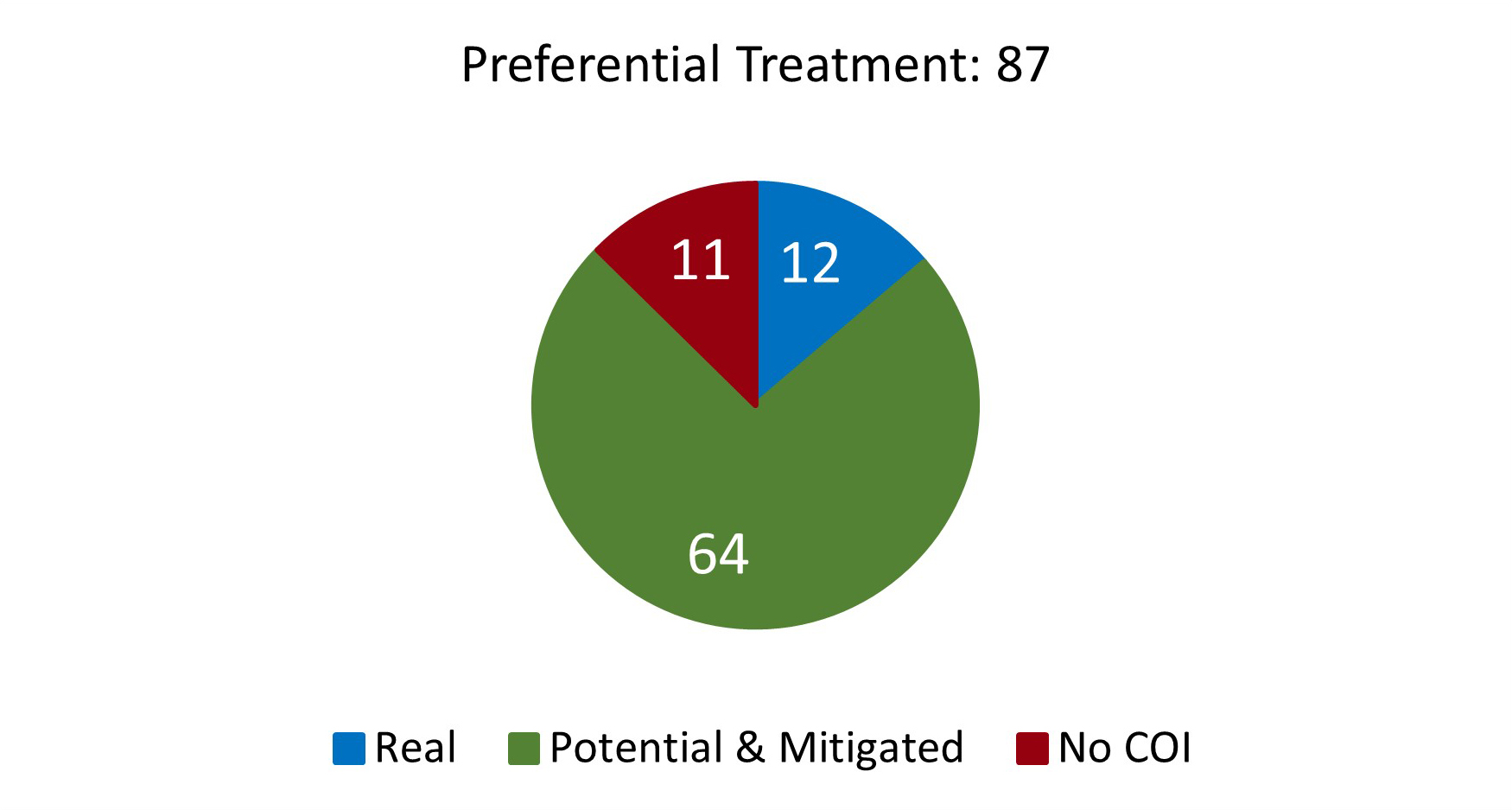
Eighty-seven (87) preferential treatment declarations. Twelve (12) were determined to be real and mitigated, 64 potential and mitigated, and 11 were determined as no COI. This includes possible conflicts related to preferential treatment in staffing processes, or due to a personal connection to an outside entity or external stakeholders.
For calendar year 2024, there were 318 COI declarations including:
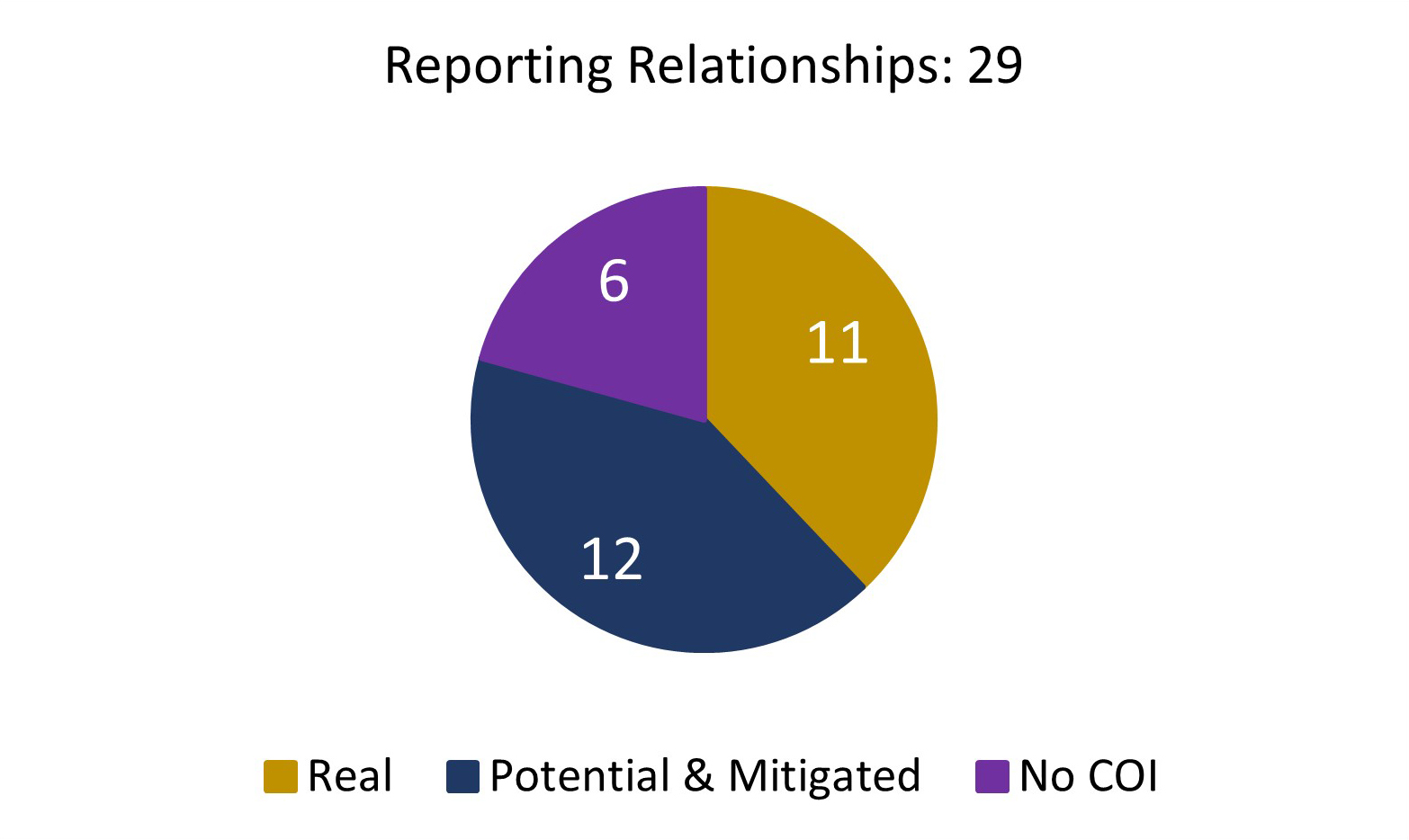
Twenty-nine (29) reporting relationship declarations. Eleven (11) were determined to be real and mitigated, 12 potential and mitigated, and six (6) were determined as no COI. This includes possible conflicts related to working with someone you have a close, personal relationship with and/or are supervising them.
To note, in 2024 the Department refined the procurement guidelines to strengthen the contracting procedures as it pertains to employees who work both in DFO-CCG and other government departments to ensure that any conflicts of interest risks are identified and mitigated before awarding contracts.
External Investigations
Included in this report are summaries of four (4) external governmental entities which undertake their own investigations into allegations of misconduct and wrongdoing as part of their mandate.
Public Sector Integrity Commissioner
The Public Sector Integrity Commissioner of Canada (PSIC) is an independent federal organization that was established to implement the Public Servants Disclosure Protection Act. The PSIC investigates wrongdoing in the federal public sector and helps protect those who make a protected disclosure of wrongdoing and those who participate in investigations from reprisal. Employees may make a protected disclosure to the designated Senior Officer for Internal Disclosure, their supervisor, or the Public Sector Integrity Commissioner.
The PSIC contributes to strengthening accountability and increases oversight of government operations by:
- providing an independent and confidential process for receiving and investigating disclosures of wrongdoing in, or relating to, the federal public sector from public servants and members of the public
- reporting founded cases of wrongdoing to Parliament and making recommendations to chief executives on corrective measures
- providing a mechanism for handling complaints of reprisal from public servants and former public servants for the purpose of coming to a resolution, including through conciliation and by referring cases to the Public Servants Disclosure Protection Tribunal
The PSIC initiated two (2) investigations into disclosures received naming DFO-CCG employees during 2024; no findings have been issued as of the time of this report.
Canadian Human Rights Commission (CHRC)
Under the Canadian Human Rights Act, an individual or group of individuals may submit a Canadian human rights complaint to the CHRC related to any action or decision for which they have reasonable grounds to believe resulted in the unfair or negative treatment of a person under a prohibited ground of discrimination, such as:
- race, national or ethnic origin, colour
- religion
- age
- sex
- sexual orientation, gender identity or expression
- marital status, family status
- genetic characteristics
- disability
- conviction for an offence for which a pardon has been granted or in respect of which a record suspension has been ordered
The CHRC reviews the discrimination complaints and, if necessary, gathers information from the parties to determine the next steps and determine if the complaint will be submitted to the Canadian Human Rights Tribunal (CHRT) to decide if there has been discrimination. Please consult the CHRC website for more information on their review process.
In 2024, DFO-CCG received notice that the CHRC accepted to review ten (10) complaints against the Department, of which two (2) have been closed.
The CHRT did not issue any decisions related to DFO-CCG during the same time-period.
Employment and Social Development Canada (ESDC)
ESDC investigations relate to the Department’s occupational health and safety program and the workplace. Investigations can be initiated under three (3) circumstances:
- in the event of a critical injury or a fatality
- after a complaint under the Canada Labour Code section 127.1 (Internal Complaint Resolution Process): an employee believes that there has been a contravention of Part II of the Code and that an accident, injury, or illness can or has occurred
- after a complaint under the Canada Labour Code section 128.1 (refusal to work if danger) if the employee is not satisfied with DFO-CCG’s decision and believes there is still a danger to their health
In these circumstances, ESDC can:
- issue an assurance of voluntary compliance (AVC). An AVC is the employer or employee’s written response to a health and safety officer indicating how a contravention of the Canada Labour Code will be corrected within a specified period
- issue a direction, which is a legal written notice ordering the employer/employee to take specific action to address a contravention of Part II of the Code within a specified period
The Department had 14 infractions under Part II of the Canada Labour Code in 2024. The Labour Program within ESDC issued five (5) AVCs that identified a combined total of 13 infractions; infractions highlighted needs to provide First Aid Attendant listings, equip rack units and shelves with safe load capacity labels, label switch controls in electrical panels, and ensure the maintenance and inspections of machinery and equipment.
The Labour Program also issued one (1) Direction pertaining to a single (1) infraction, which directed management to review and update equipment, training, and protocols used to address specific situations.
Public Service Commission (PSC)
As part of its mandate to oversee the integrity of the staffing system and the political impartiality of the federal public service, the PSC investigates concerns relating to appointment processes. They have sole authority to investigate cases of fraud, political influence and error, omissions or improper conduct of external appointments. Deputy heads have authority to investigate cases of error, omission and improper conduct into internal appointment processes, but could ask the PSC to investigate on their behalf. Note that Corporate Staffing within the People and Culture Sector is responsible for internal investigations for errors, omissions, or improper conduct on an internal appointment process.
The PSC initiated one (1) investigation on an appointment process during 2024; no findings have been issued as of the time of this report.
The PSC also investigates allegations of improper political activities for organizations that are subject to the Public Service Employment Act. This refers to performing the following political activities without proper permission: carrying on any activity in support of, within, or in opposition to a political party; carrying on any activity in support of, or in opposition to a candidate before or during an election period; and/or seeking nomination as, or being, a candidate in an election before or during the election period.
There were no investigations into allegations of improper political activities.
Measures Implemented to Increase Workplace Integrity at DFO and CCG
Over the last few years, the Department has made considerable efforts to establish policies, strategies, and frameworks aimed at bringing awareness to workplace integrity and providing actionable steps and tools to achieve this.
Since 2023, the Harassment and Violence Prevention and Resolution Centre has enhanced its training and awareness initiatives. This includes a comprehensive review and update of the departmental harassment and violence prevention training and regular sessions available to all staff scheduled, in addition to group sessions that can be arranged upon request. The departmental training sessions are promoted through various forums to ensure awareness and broad participation.
In 2024, the Department launched our Values and Ethics Strategic Vision and Values and Ethics Action Plan to ensure our values are actively practiced in every aspect of our work. This included a toolkit for Executives to hold important discussions on values and ethics with employees and the development of a comprehensive Ethical Leadership Guide to equip managers to lead ethically. General awareness sessions were regularly and routinely held on different values and ethics topics that brought awareness to important, current topics and reinvigorated the conversation on how to uphold our values in today’s working environment; these will continue in 2025.
A Fear of Reprisal campaign was launched to promote the tools and resources available to those who come forward with concerns and affirm the Department’s commitment to upholding a culture of transparency and integrity.
In early 2025 we launched our Departmental Mental Health and Wellness Strategy and Action Plan, marking our commitment to fostering a psychologically healthy and safe workplace. Alongside this strategy, we launched the comprehensive Workplace Assessment Tool that provides managers with the information and resources needed to create their own action plans to address psychological health and safety in their workplaces.
Our goal is that, through these efforts and others, issues related to misconduct, wrongdoing and other behaviours that contravene our values and ethics will occur less frequently. With greater emphasis placed on preventing and mitigating risks to psychological health and safety, we hope to create an organization where integrity is at the core of our actions and employees feel healthy, respected, safe, and free from harassment and discrimination.
Conclusion
This first annual Workplace Integrity Scan at Fisheries and Oceans Canada and the Canadian Coast Guard provides examples of how our Department works to uphold the Values and Ethics Code for the Public Service, and the Fisheries and Oceans Canada and the Canadian Coast Guard Code of Conduct.
We hope to have provided an overview of the types of integrity issues that were addressed following internal or external investigations and demonstrated how employee issues and concerns are responded to within our Department. We also expanded the focus of this report by including harassment and violence complaints and declarations on conflicts of interest, to show how preventative processes are utilized to address or avoid adverse impacts on employees.
Our goal is that this report also helps to empower employees to play an active role creating a respectful, healthy, and inclusive workplace by providing an overview of available resources and recourse mechanisms. Additionally, this report should signal to managers the importance and value of addressing inappropriate behaviour, whether it is raised by an employee or not, as part of their overall managerial responsibilities.
The scope of this report was primarily limited to situations in which an investigation (formal administrative investigation or fact-finding exercise) was initiated. As such, this report does not include data for situations that were addressed through informal, non-investigative mechanisms (e.g. Informal Conflict Management Services), or resolved between managers and employees through other means, such as a grievance.
With improvements to current data tracking methodology and requirements, future reports will have an expanded scope and be better able to present a more in-depth discussion on how integrity issues are addressed within the Department for the reporting year.
Moving forward, we hope to enable key partners to identify trends and refine our understanding of these issues to focus efforts to better respond to warning signs and systemic root causes. This will allow the Department to implement interventions where they are most needed through targeted prevention activities and ensuring appropriate resources are available to support employees in resolving workplace-related concerns.
Annex A – Definitions
- Administrative Investigation
- The gathering and analysis of information related to an incident of alleged misconduct to address any risk of harm and prevent future occurrences.
- Conflict of Interest
- Conflict of interest is any situation where public servants have private interests that could improperly influence the performance of their official duties and responsibilities or where public servants use their offices for personal gain.
A conflict of interest may be:
- Real: existing at the present time
- Apparent: perceived by a reasonable observer to exist, whether that is the case or not
- Potential: reasonably foreseen to exist in the future
- Disciplinary Process
- Is a structured process to address allegations of misconduct including the violation of departmental processes or policies. Governed by the principles of procedural fairness and natural justice, it is corrective in nature and involves a series of steps including ascertaining and evaluating the facts and circumstances related to the alleged misconduct when determining if discipline is warranted and the appropriate disciplinary measure. Disciplinary measures are formal corrective measures intended to correct inappropriate behaviour. Discipline aims to correct employee behaviour through the progressive application of more severe disciplinary actions for successive acts of misconduct. In cases of serious misconduct, a more severe disciplinary action may be warranted even for a first offence. Disciplinary measures include verbal reprimand, written reprimand, financial penalty or temporary suspension without pay, temporary demotion and termination.
Note: A verbal reprimand is used for minor acts of misconduct to give the employee an opportunity to correct their actions voluntarily before a record is placed on their file. - Discrimination
- Any action or decision that results in the unfair or negative treatment of a person under the prohibited grounds of discrimination, such as race, national or ethnic origin, colour, religion, age, sex, sexual orientation, gender identity or expression, marital status, family status, genetic characteristics, disability and conviction for an offence for which a pardon has been granted or in respect of which a record suspension has been ordered.
- Fact-Finding Exercise
- A limited scope assessment to identify the issue and clarify relevant facts. It involves gathering information including witness statements where applicable, before deciding whether to proceed with a full-scale investigation or if a determination of whether the alleged misconduct occurred can be made based on the information gathered in the fact-finding.
- Misconduct
- Any action whereby an individual willfully contravenes, notably, an act, a regulation, a rule, a departmental or Treasury Board policy instrument, an approved procedure, a departmental code of conduct, and/or the Values and Ethics Code for the Public Service. In short, when an employee contravenes any of the obligations they agree to abide by when becoming a public servant. Examples of misconduct include absence from work without authorization, culpable negligence in the performance of duties, intoxication in the workplace, harassment, threatening or physically harming another person, and insubordination.
- Wrongdoing
- The Public Servants Disclosure Protection Act (PSDPA) defines wrongdoing as one or more of the following:
- A contravention of any Act of Parliament or of the legislature of a province, or of any regulations made under any such Act, other than a contravention of section 19 of the PSDPA
- A misuse of public funds or a public asset
- A gross mismanagement in the public sector
- An act or omission that creates a substantial and specific danger to the life, health, or safety of persons, or to the environment, other than a danger that is inherent in the performance of the duties or functions of a public servant
- A serious breach of a code of conduct established under section 5 or 6 of the PSDPA; and
- Knowingly directing or counselling a person to commit a wrongdoing set out in any of paragraphs (a) to (e)
Page details
- Date modified: