
Aquatic Species at Risk, Rainbow Trout (Athabasca River populations) (Oncorhynchus mykiss)
Description: Aquatic Species at Risk, Rainbow Trout (Athabasca River populations) (Oncorhynchus mykiss)
Aquatic Species at Risk, Rainbow Trout (Athabasca River populations) (Oncorhynchus mykiss)
SARA Status: Endangered
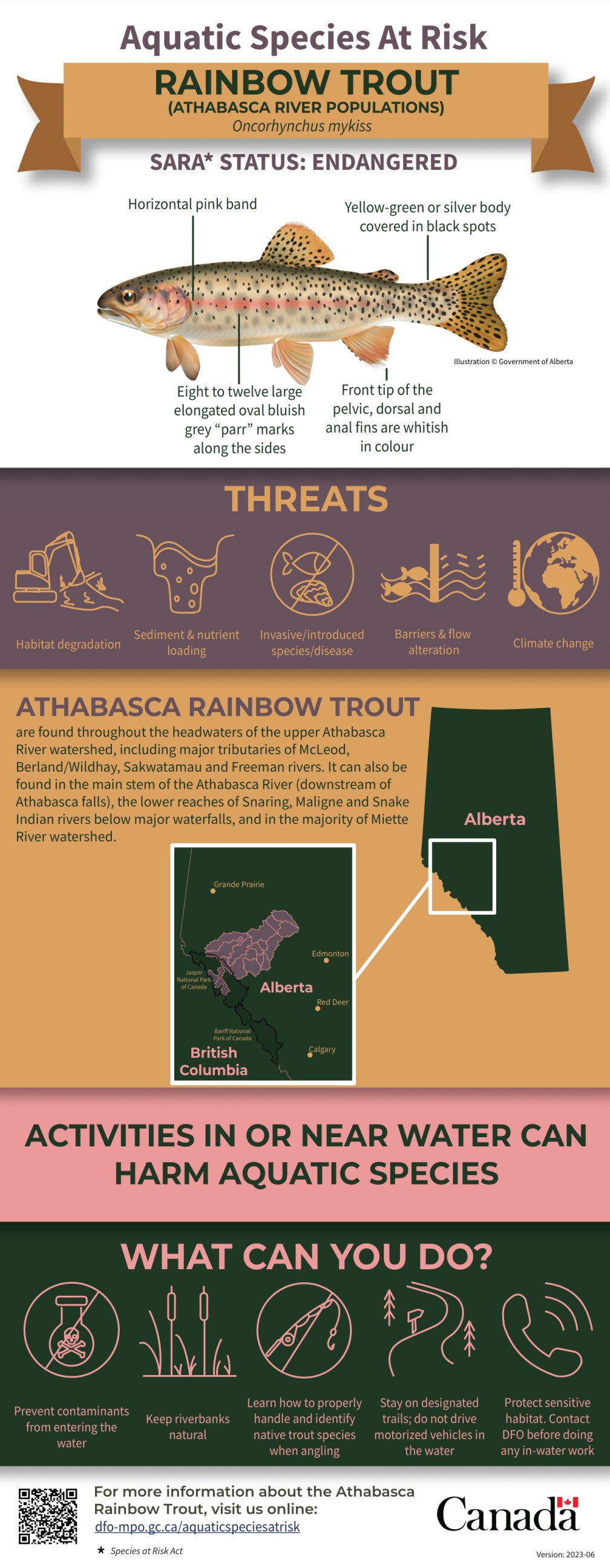
Several horizontal sections on this infographic show the following:
An illustration of the Athabasca Rainbow Trout showing the following aspects labelled:
- horizontal pink band
- yellow-green or silver body covered in black spots
- eight to twelve large elongated oval bluish grey "parr" marks along the sides
- front tip of the pelvic, dorsal and anal fins are whitish in colour
The next section lists threats, including:
- habitat degradation
- sediment and nutrient loading
- invasive/introduced species/disease
- barriers and flow alteration
- climate change
A further section notes that Athabasca Rainbow Trout are found throughout the headwaters of the upper Athabasca River watershed, including major tributaries of:
- McLeod River
- Berland/Wildhay River
- Sakwatamau River
- Freeman River
It can also be found in:
- the main stem of the Athabasca River (downstream of Athabasca falls)
- the lower reaches of Snaring, Maligne and Snake Indian rivers below major waterfalls
- in the majority of Miette River watershed
To the right of the infographic, a map of Alberta shows, by an overlaying rectangle, where the related population is found. Another map on the centre of the infographic shows a magnified view of where the population is found by use of watersheds outlined in pink and mauve colouring. The geographic borders of Jasper National Park of Canada and Banff National Park of Canada are marked with black hatched lines. The major cities of Grande Prairie, Edmonton, Red Deer, and Calgary are marked on the map with dots. The provincial borders of Alberta and British Columbia are highlighted in pink.
A final section on the infographic notes that activities in or near water can harm aquatic species, and lists what you can do:
- prevent contaminants from entering the water
- keep riverbanks natural
- learn how to properly handle and identify native trout species when angling
- stay on designated trails; do not drive motorized vehicles in the water
- protect sensitive habitat; contact DFO before doing any in-water work
Related link
- Date modified: