
Strengthening the Inshore Regulations - Introduction
 Strengthening the Inshore Regulations - Introduction
(PPTX, 6.5 MB)
Strengthening the Inshore Regulations – Engagement video series: Introduction
Context
- Today we will be discussing the “Inshore Regulations”
- The Inshore Regulations are rules that determine:
- Who can be issued a licence
- What is required of licence holders
- What is prohibited.
- They have been in full effect since April 1, 2021
- DFO is reviewing these rules to understand how they are working and if they can be improved
- DFO is asking for your feedback as part of this review
What are the Inshore Regulations
The Inshore Regulations put over 40 years of DFO policies into law:
- Fleet Separation Policy
- Owner Operator Policy
- Preserving the Independence of the Inshore Fleet in Canada’s Atlantic Fisheries (PIIFCAF)
- Issuing Licences to Companies Policy
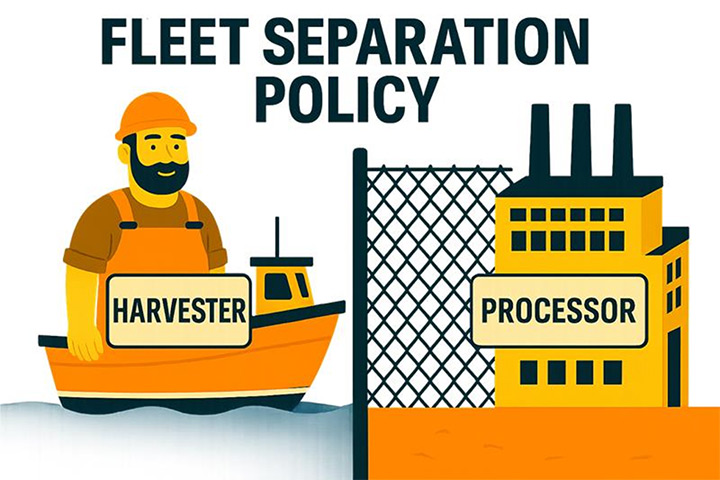
Image 1 - Text version
Illustrated graphic titled “Fleet Separation Policy.” On the left side, a fishing vessel sits on blue water with a stylized worker aboard wearing safety gear; a large label on the boat reads “Harvester.” On the right side, a yellow industrial building with smokestacks represents a processing facility and is labeled “Processor.” Between the boat and the building is a tall chain‑link fence, visually separating the two sides. The image emphasizes the division between harvesting and processing activities.
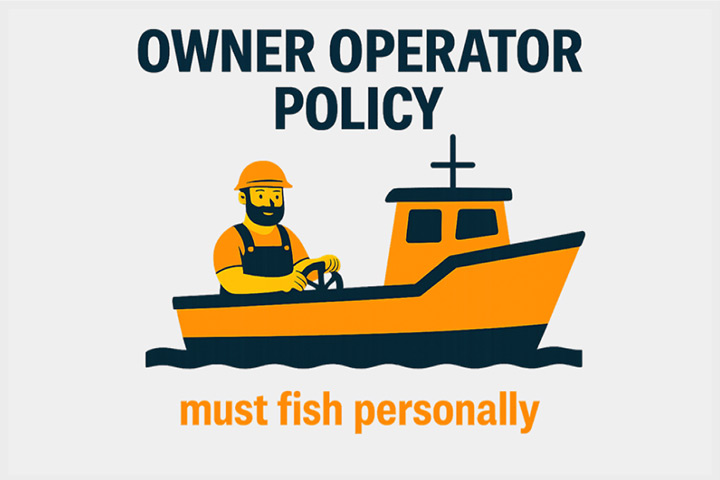
Image 2 - Text version
Stylized graphic showing a small fishing vessel on the water. A single owner-operator is seated at the helm, emphasizing personal operation. The title at the top reads “Owner Operator Policy,” and the text below the boat states “must fish personally,” conveying the policy requirement visually.
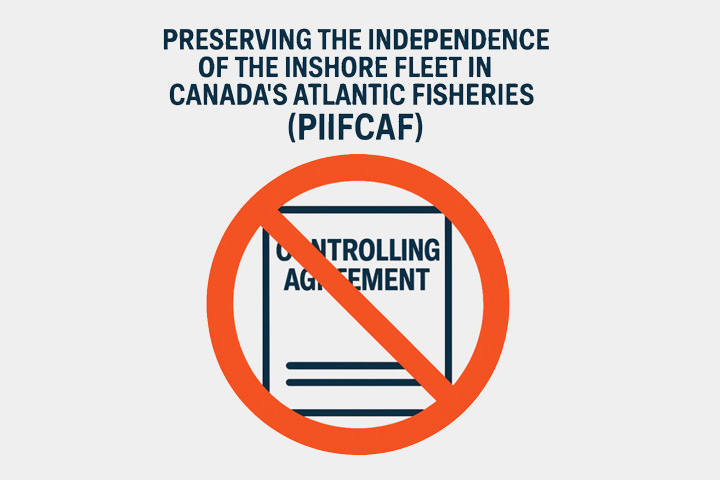
Image 3 - Text version
Stylized graphic with the title “Preserving the Independence of the Inshore Fleet in Canada’s Atlantic Fisheries (PIIFCAF)” at the top. Below the title is an icon of a document labeled “Controlling Agreement,” crossed out by a red circle with a diagonal line, visually representing a prohibition on controlling agreements.
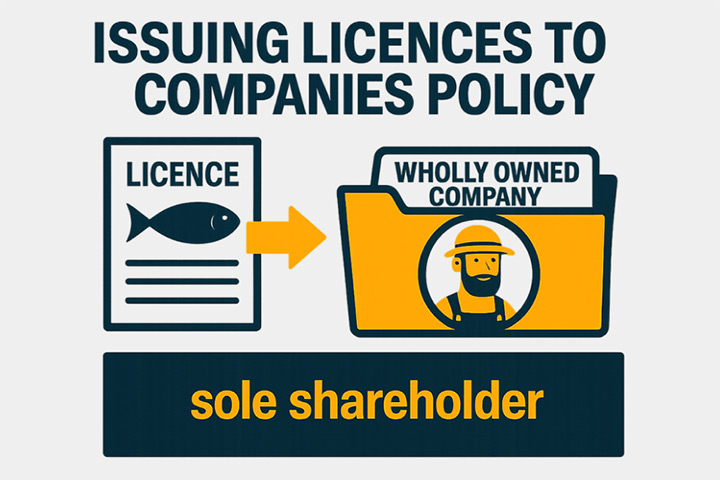
Image 4 - Text version
Stylized illustration showing a fishing licence icon on the left and a folder labeled “Wholly Owned Company” on the right, connected by an arrow. Inside the folder is a single fisher wearing a bucket hat, representing the licence holder. Text beneath the graphic reads “sole shareholder,” indicating that the licence is issued to a wholly owned company controlled by one individual.
What do the Inshore Regulations do
- They clarify who can hold a licence, who must do the fishing, and who controls fishing decisions.
- They were made to ensure licence holders own, operate, and control their enterprises.
- They prevent unauthorized control by others, support independent owner operators, and keep benefits in local communities.
How does DFO apply the regulations
- Once issued a licence, licence holders cannot transfer the use and control of the rights and privileges under the licence.
- But sometimes, agreements are put in place that can make it hard to see if a transfer has occurred.
- The most common types of agreements seen by DFO are:
- Loans
- Security and guarantee agreements (licence used as collateral)
- Supply (fish)
- Vessel leases (boats)
How does DFO apply the regulations
When an application to transfer a licence is submitted, the following steps are taken:
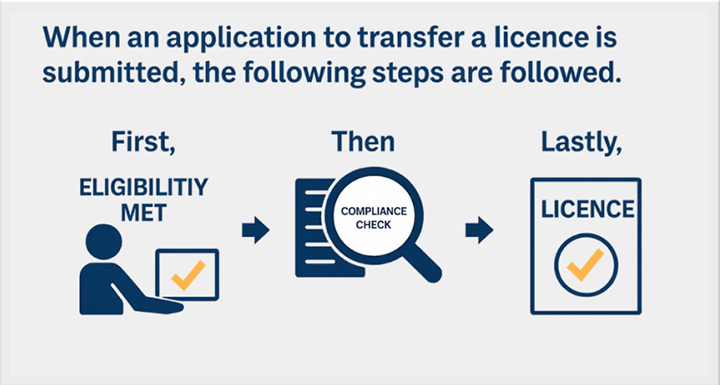
Image 5 - Text version
Stylized three‑panel process graphic. From left to right, the panels show: a person presenting documentation labeled “Eligibility met”; documents examined through a magnifying glass indicating compliance review; and a fishing licence with a checkmark representing approval and issuance. Arrows connect each step to show the sequence.
What is DFO looking for when reviewing the agreements
DFO looks for:
- Who makes the decisions
- Who controls the licence in practice
- Whether someone other than the licence holder has control or influence
- Whether independence is limited (through any written or unwritten agreements)
- Who receives the benefits
How does DFO enforce the regulations
When a transfer of rights and privileges requires follow up enforcement by DFO’s Conservation and Protection Program (C&P), the following steps are taken.
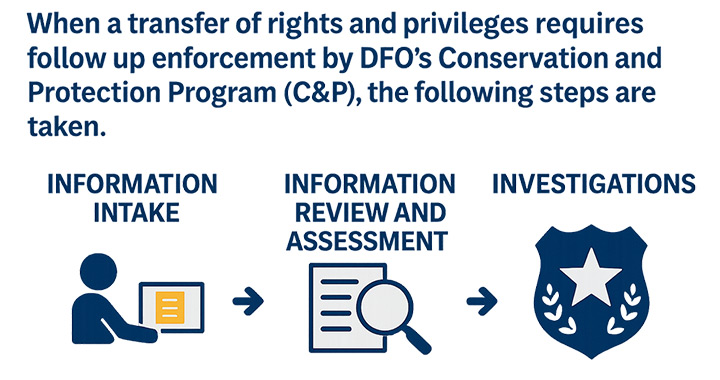
Image 6 - Text version
Graphic showing a three-step process for DFO’s Conservation and Protection Program enforcement follow-up: Information Intake (person using a computer), Information Review and Assessment (document with magnifying glass), and Investigations (shield with a star), connected by arrows from left to right.
How does DFO apply the regulations
Now that we’ve covered how the regulations can be applied by both Licensing and Conservation and Protection, it’s important to highlight that there are differences in the amount of complexity and effort it takes for the different functions to achieve results.
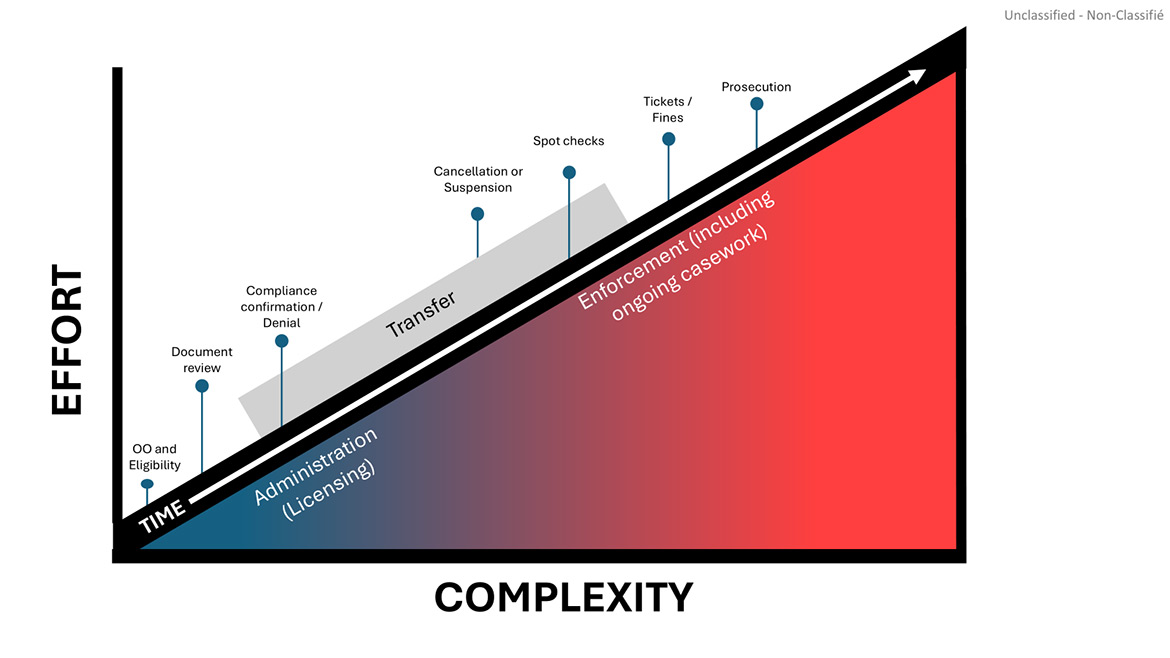
Image 7 - Text version
Triangular diagram with effort on the vertical axis and complexity on the horizontal axis, increasing over time. The process begins with administration (licensing), including eligibility and document review, moves through transfer steps such as compliance confirmation or denial and possible cancellation or suspension, and progresses to enforcement actions, including spot checks, tickets or fines, and prosecution.
What is the comprehensive review of the Inshore Regulations
The comprehensive review is evaluating the performance of the Inshore Regulations in meeting DFO’s objectives.
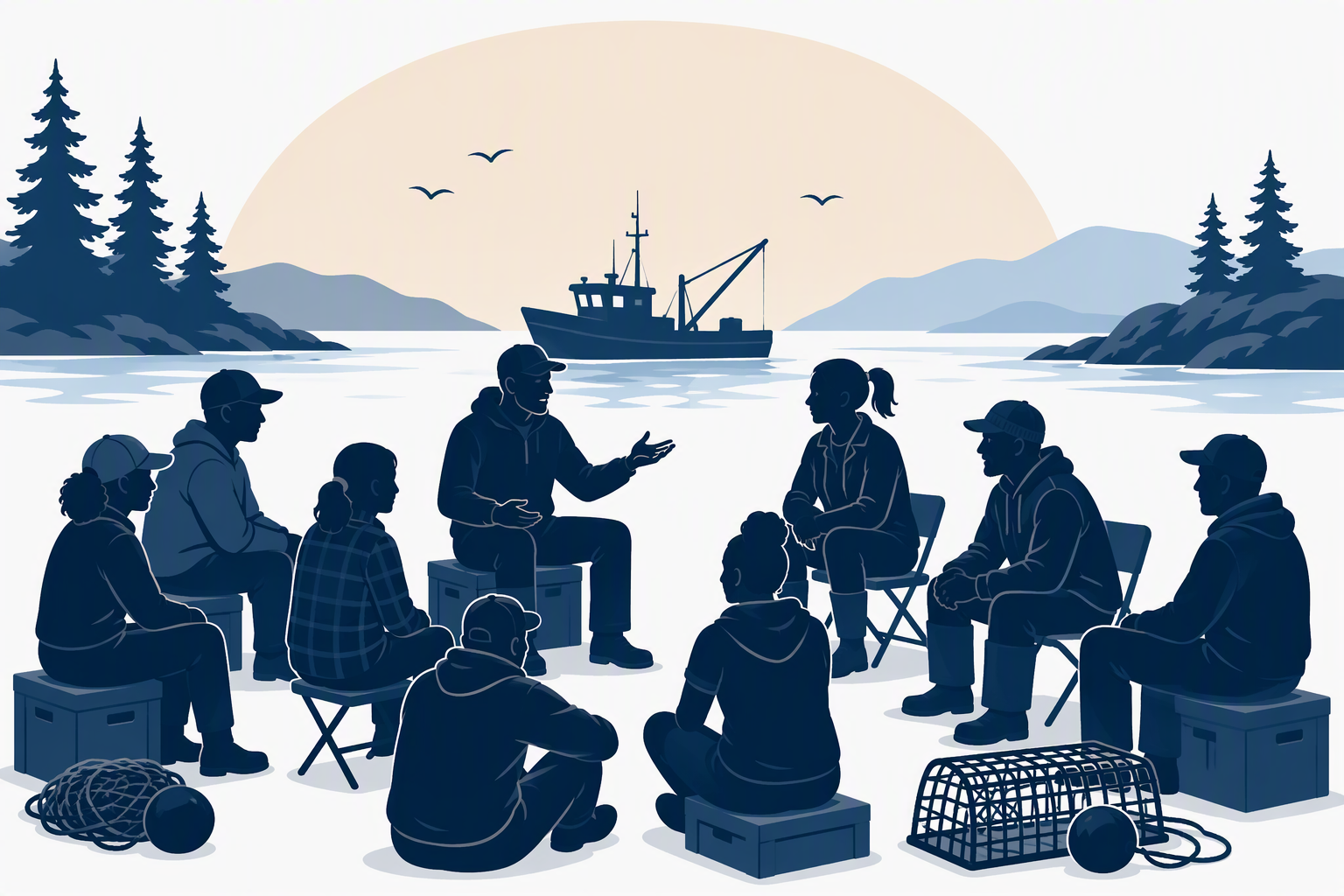
Image 8 - Text version
Icon-style illustration of fish harvesters seated in a circle near the water, participating in a group discussion. A fishing boat and coastal landscape appear in the background, with fishing gear visible in the foreground. The image represents engagement and information sharing within the fishing industry.
What has DFO heard so far
So far, four key topics have emerged:
- Understanding Use, Control, and Transfer
- Using Money to Control a Licence
- Intergenerational Transfers
- Licence Holder Education and Obligations
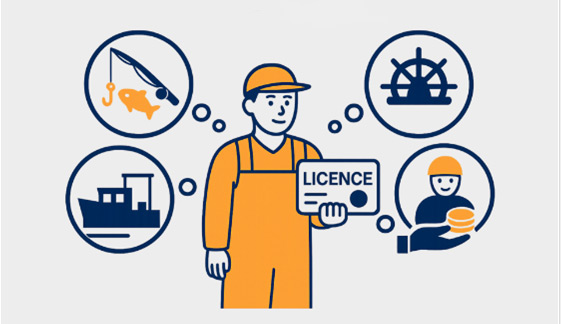
Image 9 - Text version
Illustration showing a person holding a licence card, surrounded by icons representing fishing activities and outcomes, including a fish on a line, a fishing vessel, a ship wheel, and an exchange of money, indicating the use of a licence to fish, operate a vessel, and generate income.
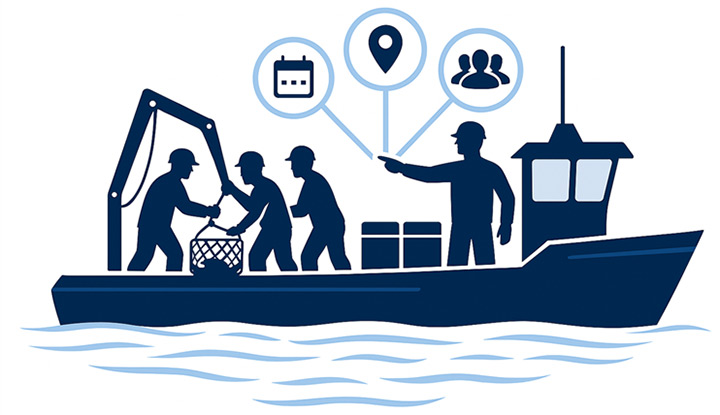
Image 10 - Text version
Blue-toned illustration of a fishing boat on open water with several crew members working together to hoist a net using deck machinery and stow containers, while another person points toward graphic icons above the deck representing scheduling, geographic location, and team coordination.
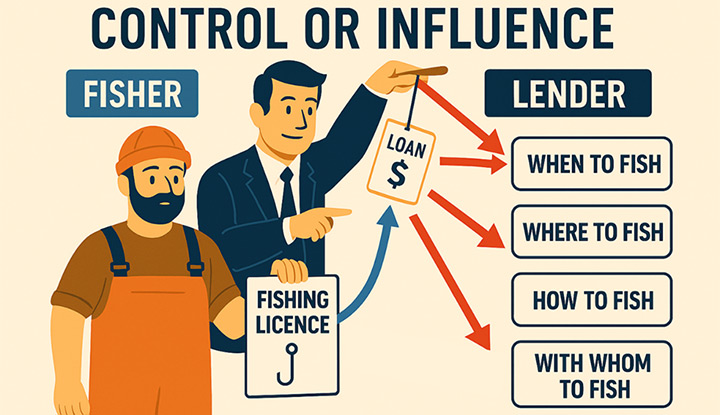
Image 11 - Text version
Illustration titled “Control or influence” showing a fisher holding a fishing licence beside a lender holding a loan agreement. Arrows from the loan point to decisions controlled by the lender, including when to fish, where to fish, how to fish, and with whom to fish, illustrating lender influence over fishing activities.
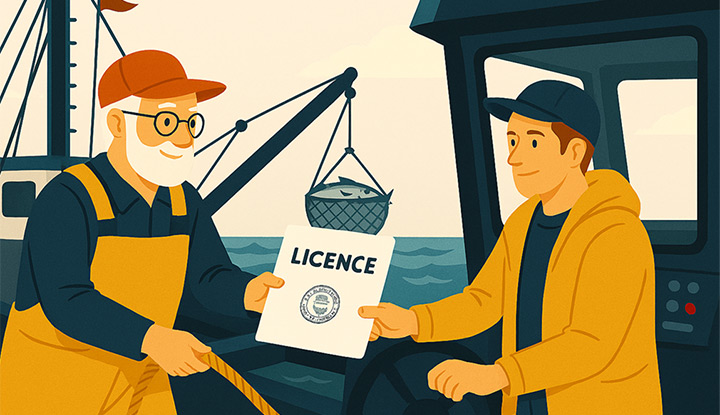
Image 12 - Text version
Illustration of two people on a fishing vessel transferring a licence document. One individual in fishing gear hands a “Licence” paper to another person (a new entrant) at the wheel of the boat, with fishing equipment and a catch of fish visible in the background, representing the transfer of a fishing licence from one generation to the next.
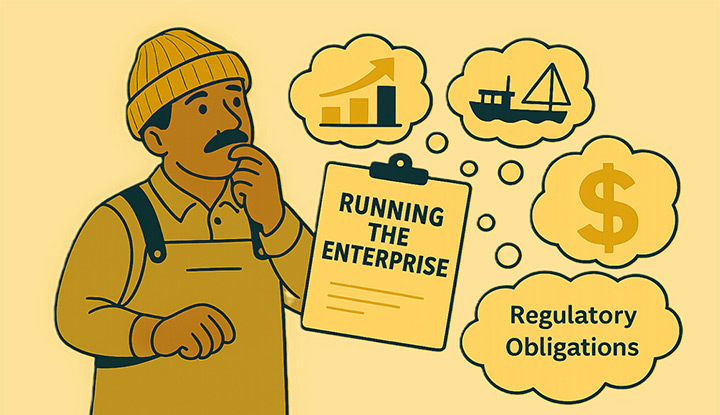
Image 13 - Text version
Illustration of a person in fishing attire considering how to run a fishing enterprise. The person is shown beside a clipboard labeled “Running the Enterprise,” with surrounding thought bubbles depicting key factors such as business growth, operating a vessel, financial considerations, and regulatory obligations.
Sharing other views
- We are interested in hearing your views
- We want to understand how the issues under each of the four key topics impact your day-to-day business
- The more views you can provide us with, the better positioned DFO will be in developing options that reflect industry perspectives
Page details
- Date modified: