
B11 - Climate Change Response
Climate Change Overview
Climate change is affecting Canada’s aquatic ecosystems and reshaping the context in which Fisheries and Oceans Canada (DFO) delivers its mandate.
Physical change:
- Warming ocean and freshwater temperatures, loss of sea ice, sea –level rise, and changes in ocean circulation are altering aquatic environments across all regions.
Biological response:
- Species distributions and migration patterns are shifting, seasonal timing is changing, and ecosystems are increasingly stressed by invasive species, disease, and low-oxygen conditions.
Ecosystem services and productivity:
- Climate-driven changes are affecting fisheries productivity, biodiversity, habitat and water quality, with implications for food systems, economic outcomes, and community well-being.
Compounding pressures:
- Multiple stressors, including warming, acidification, extreme events, and land -based pressures, are acting simultaneously, increasing uncertainty and accelerating ecosystem change.
Policy Context
- DFO is working to align with federal commitments, including:
- Net-Zero national emissions targets (2030, 2035, net-zero 2050).
- National Adaptation Strategy commitments to reduce climate change risk to ecosystems and communities.
- 2030 Nature Strategy commitments on ocean management, climate change and biodiversity, ecosystem resilience, and protected areas.
- Greening Government Strategy requirements to integrate climate change risk considerations into federal operations and decision-making.
- Federal Sustainable Development Strategy commitments to manage climate-related risks and support sustainable program and service delivery.
- United Nations Declaration on the Rights of Indigenous Peoples Act (UNDA) obligations to work in consultation and collaboration with Indigenous Peoples.
Impacts to DFO’s Mandate
Fisheries and Aquaculture:
- Changes in wild fish stocks (abundance, distribution, migration, mortality) affect fish availability and prices, while aquaculture faces increased risks, while aquaculture faces increased risks from diseases and storm damage.
Conservation and Protection:
- Shifting ecosystem baselines and accelerating biodiversity loss challenge the ability to anticipate future conditions and set durable, effective conservation measures across regions.
Ecosystem and Biodiversity Management:
- Climate change disrupts ecosystems, affects seasonal activities, alters aquatic life distribution, and increases risks from invasive species and disease.
Coastal Communities and Infrastructure:
- Rising sea levels and more frequent severe storms damage coastal areas, ecosystems and infrastructure.
Carbon Management and GHG Reduction:
- Increasing pressure on DFO to assess ocean based carbon management approaches and reduce greenhouse gas emissions from operations and infrastructure.
Mandate-wide Foundation:
- Indigenous Knowledge and Stewardship: Weaving Indigenous knowledge and values, along with Indigenous-led conservation, supports climate change action and policy, contributing to positive outcomes.
Current Activities
Climate change impacts are evident across DFO’s core mandate areas and are managed through existing programs and tools, with opportunities to build on this work to better mitigate future impacts.
Aquatic Ecosystems
- Protecting and restoring aquatic ecosystems.
- Conserving biodiversity and fish habitat.
- Preventing and managing invasive species and emerging ecosystem pressures.
- Working in partnership with Indigenous Peoples on shared stewardship.
Fisheries & Aquaculture:
- Managing fisheries sustainably using stock assessments, regulatory and policy tools (e.g., Fisheries Act, Sustainable Fisheries Framework, Fish Stocks Provisions, Integrated Fisheries Management Plans).
- Overseeing licensing, bycatch controls, monitoring and ecosystem-based measures.
- Supporting sustainable aquaculture.
- Designing, maintaining, and operating small craft harbours.
Enabling Functions
- Science
- Research and monitoring help us understand climate impacts.
- Science advice guides risk assessment and decisions.
- Workforce
- Staff expertise helps integrate climate considerations.
- Resilience planning supports uninterrupted operations
- Collaboration
- Indigenous and stakeholder partnerships build trust.
- National and international collaboration aligns data and policy.
Adaptation and Mitigation Measures
- Nature-based climate solutions are a practical, cost-effective way to reduce climate change risk while also delivering co-benefits for ecosystems and Communities.
- Reduce disaster risk in coastal areas to protect coasts against storms and inundation.
- Protect marine and coastal areas to maintain nature infrastructure that enables carbon sequestration and natural defenses.
- Restore coastal ecosystems to reduce flooding risks, limit erosion, and store carbon.
- Manage oceans in an integrated way to support sustainable use of ocean spaces.
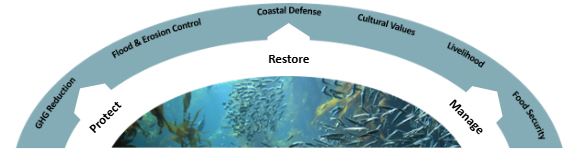
Text version
- Protect, Restore, Manage
- GHG Reduction, Flood and Erosion Control, Coastal Defense, Cultural Values, Livelihoods, Food Security
Nature-based solutions are: “actions to protect, sustainably manage and restore natural or modified ecosystems, that address societal challenges (e.g. climate change, food and water security or natural disasters) effectively and adaptively, simultaneously providing human wellbeing and biodiversity benefits” – IUCN, 2016
Opportunities
- Advance decision-ready climate science: Strengthen science and practical tools to anticipate and respond to change.
- Mainstream climate across business lines: Adapt policies, programs and management to remain effective under a changing climate.
- Amplify impact with partnerships and innovation: Develop collaborative solutions, share knowledge and scale innovations that deliver multiple benefits.
Emerging considerations
- Food security and demand pressures on fisheries and other ocean resources.
- Arctic access, sovereignty, and expanded operational needs.
- Increasing competition for ocean space and use.
- Freshwater-related impacts to ecosystems and communities.
- Emergence of new technologies (e.g., automation and artificial intelligence to support monitoring).
Page details
- Date modified: