
Fisheries and Oceans Canada Artificial Intelligence Strategy

On this page
- Introduction
- Context
- AI Strategy
- Governance and Leadership
- Transparency and accountability
- Culture and People
- AI Adoption and Innovation
- Roadmap and implementation
- References: Government of Canada strategy and policy framework
- Annex
Introduction
The Fisheries and Oceans Canada (DFO) Artificial Intelligence (AI) Strategy is a forward-looking plan designed to responsibly harness AI technologies to drive innovation, improve operational efficiency, and enhance service delivery. This strategy outlines DFO’s vision for harnessing AI’s potential, addressing the challenges and opportunities specific to its application by the Department. The Strategy focuses on four priority areas: Governance and Leadership, ensuring AI supports departmental core responsibilities and delivers results for the Canadian public; Transparency and Accountability, building trust among public servants and the public; Culture and People, providing employees with the necessary training and skills; and AI Adoption and Innovation, ensuring AI use is agile, safe, and cost-effective.
The AI Strategy will evolve with the maturity of the technology and the Department’s maturity in its application. The success of the Strategy depends on the contributions of people across the Department. By fostering a culture of innovation, investing in talent, and leveraging AI’s potential, DFO is ready to use these tools to enhance fisheries management, protect aquatic ecosystems, improve marine navigation, and strengthen marine operations and response, ensuring effective public service delivery for Canadians.
Context
Opportunity
Leveraging Artificial Intelligence (AI) presents a transformative opportunity for Fisheries and Oceans Canada (DFO) to deliver enhanced results for Canadians. By integrating AI technologies into its operations, DFO can significantly improve service delivery and achieve better outcomes in fulfilling its core responsibilities.
Core responsibility: Fisheries
Manage Canada’s fisheries, Indigenous fisheries programs, aquaculture activities, and support commercial fishing harbours while applying relevant legislation.
Enhanced fisheries management. AI can significantly improve the accuracy and efficiency of fish stock assessments by analyzing large datasets to identify patterns and predict population dynamics, enabling more informed decisions about quotas and sustainable fishing practices.
Real-time monitoring and enforcement. AI-powered tools can monitor fishing activities in real-time, using satellite data and machine learning algorithms to detect illegal, unreported, and unregulated (IUU) fishing, and enhance the ability to enforce regulations and protect marine resources.
Species identification and bycatch reduction. AI technologies, such as computer vision, can enhance on-vessel electronic monitoring by automating the identification of fish species and sizes. Improved monitoring results can reduce bycatch and ensure compliance with regulations, leading to more sustainable fishing practices and better conservation of marine biodiversity.
Core responsibility: Aquatic ecosystems
Conserve and protect Canada’s oceans and other aquatic ecosystems and species from human impact and invasive species.
Predictive analytics for climate adaptation. AI can analyze environmental data to predict changes in ocean conditions, such as temperature and acidity, helping DFO to develop strategies for climate change adaptation to ensure the resilience of marine ecosystems and the communities that depend on them.
Invasive species detection. Machine learning algorithms can detect and track invasive species, enabling timely intervention to protect native ecosystems.
Habitat mapping. AI can process satellite imagery to map and monitor changes in aquatic habitats, identifying areas at risk from pollution or climate change.
Core responsibility: Marine navigation
Provide information and services to facilitate navigation in Canadian waters.
Route optimization. AI can optimize shipping routes based on weather, sea conditions, and traffic, improving safety and efficiency.
Collision avoidance systems. AI-powered systems can predict and prevent collisions by analyzing vessel movements and environmental conditions.
Hydrographic surveying. AI can enhance the accuracy and efficiency of hydrographic surveys, ensuring up-to-date navigation charts.
AI in action: Canadian Extended Continental Shelf Initiative
AI plays a crucial role in helping to chart Canada’s key navigation corridors, particularly in remote areas that are challenging to survey with traditional ship-based methods. The Canadian Hydrographic Service (CHS) utilizes AI to process and analyze vast amounts of data collected from satellites, bathymetric surveys and tide stations. AI algorithms help to rapidly identify shoals, shoreline and other features critical to navigation. The resulting data is compiled with other sources of information to produce nautical charts, products and services to support safe navigation in Canadian waters.
Core responsibility: Marine operations and response
Provide marine response services and operate Canada’s civilian maritime fleet.
Search and rescue operations. AI can analyze data from multiple sources, such as satellite imagery, weather patterns, and historical search-and-rescue cases, to predict the most likely locations of missing persons or vessels, enhancing efficiency and accuracy of search efforts, and significantly improving response times.
Environmental emergency response. AI can model the spread of pollutants in the water, using real-time data and predictive analytics to plan effective containment and cleanup strategies, helping to mitigating environmental damage and ensuring a swift response to emergencies.
Fleet management. AI can optimize the deployment and maintenance schedules of Coast Guard vessels by analyzing data on engine diagnostics, fuel consumption, and wear patterns. Predictive maintenance systems powered by AI can forecast potential failures, reducing downtime and maintenance costs. Additionally, AI-driven route optimization improves operational efficiency and reduces fuel consumption.
Challenges
To fully realize the opportunity and potential of AI, the Department will need to tackle a range of challenges and gaps. By addressing challenges systematically through this Strategy, the Department can ensure that AI adoption is both responsible and aligned with organizational goals.
Data stewardship. Access to quality data is crucial for AI adoption. The Department has been implementing a Data Strategy to strengthen data stewardship, improving data availability, sharing and quality. Further actions will be needed to ensure data readiness for AI applications, including addressing data privacy and security concerns.
AI literacy and competencies. Developing new competencies and skills is essential for safe and responsible use of AI. AI training will empower employees to effectively use new AI tools for work tasks. Recruitment and skill development programs are needed to address critical gaps in AI expertise.
Culture. A culture of innovation and continuous learning is vital for successful AI adoption. Creating a supportive environment that encourages openness to change and collaboration will help employees adapt to evolving technologies. Effective change management strategies will be essential to support the effective adoption of AI best practices in line with Government of Canada and departmental guidance.
Ethical and regulatory compliance. Using AI systems ethically and in compliance with Canadian and international regulations and laws builds trust with employees and the public. Proactive measures are necessary to address issues such as bias, transparency, accountability, and adherence to privacy laws, ensuring equitable outcomes are achieved.
Infrastructure and Investment. AI development requires investment in advanced infrastructure, including computing power and storage. Strategic investment planning will optimize AI investments, enhancing technological capabilities and driving innovation across all areas. Balancing the costs associated with AI development with potential benefits of AI adoption will need to be managed.
Coordination. Enhancing coordination on AI activities within the Department will boost efficiency and innovation in AI development. By prioritizing use cases and establishing enterprise oversight, the Department can maximize the value and scalability of AI, ensuring optimal resource use and impactful solutions.
Integration and scaling. Integrating AI solutions into operations involves a transition from proof-of-concepts to full-scale implementations. A comprehensive approach to the AI lifecycle will enable the Department to deploy and scale AI initiatives effectively, ensuring they deliver maximum value and impact across operations.
AI Strategy
The Fisheries and Oceans Canada AI Strategy is built on a robust logic model, featuring concrete actions and measurable outcomes. A three-year roadmap (2025-2028) and annual implementation plans will outline specific timelines, milestones and outputs to ensure effective delivery of the AI Strategy.
The strategy addresses organizational needs across four priority areas:
- Governance and leadership. Ensuring AI supports departmental core responsibilities and delivers results for Canadians;
- Transparency and accountability. Strengthening public trust in the Department’s use of AI;
- Culture and people. Providing employees with the necessary training and skills to responsibly use AI; and,
- AI Adoption and innovation. Ensuring AI use is agile, safe and cost-effective.
AI in action. AI Talent and Training in the Federal Public Service
The departmental priority area for Culture and People is designed to support the federal AI Strategy Priority Talent and Training, ensuring that departmental employees possess the necessary technical and non-technical skills to adopt AI responsibly.
The DFO AI Strategy builds on the departmental Data Strategy. The DFO Data Strategy identifies actions and outputs that are needed for improving the departmental stewardship and use of data as a strategic asset. Actions addressing data quality, discoverability, availability, interoperability, and ethics, security and privacy are being advanced under the Data Strategy to ensure data is fit-for-purpose for AI applications.
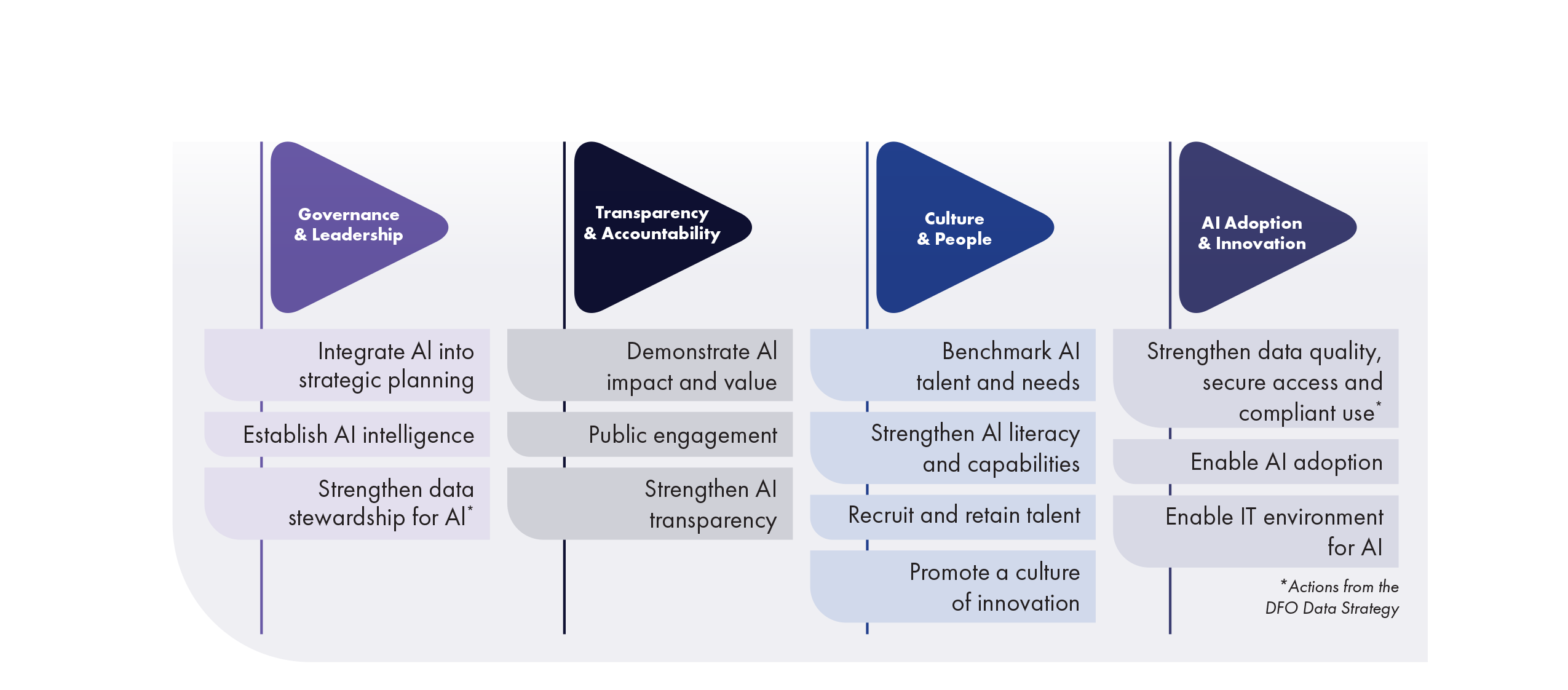
Figure 1. DFO AI Strategy: Priority areas and actions
Long description
Governance and leadership
- Integrate AI into strategic planning
- Establish AI governance
- Strengthen data stewardship for AI*
Transparency and accountability
- Demonstrate AI impact and value
- Public engagement
- Strengthen AI transparency
Culture and people
- Benchmark AI talent and needs
- Strengthen AI literacy and capabilities
- Recruit and retain talent
- Promote a culture of innovation
AI adoption and innovation
- Strengthen data quality, secure access and compliant use*
- Enable AI adoption
- Enable IT environment for AI
*Actions from the DFO Data Strategy
Vision and principles
The vision and principles of the DFO AI Strategy provide clear direction and foundational values to guide decision-making when implementing actions. Vision and principles have been closely aligned with the Government of Canada AI Strategy for the Federal Public Service.
Vision statement
By responsibly adopting AI, Fisheries and Oceans Canada fulfills Government of Canada commitments to deliver world class services, safeguard the public and national interests, foster a more innovative and efficient workplace, and accelerate scientific discovery for the benefit of all.
Principles
Human centred
The Department focuses on the needs of the Canadian public and the dedicated employees who serve the public in deciding where to adopt AI and how to integrate it into its work.
Collaborative
The Department works together on AI adoption with Indigenous and Canadian partners, other Canadian and international jurisdictions, and other public service colleagues.
Ready
The Department has the data, infrastructure, tools, culture, talent, skills and policy that are needed for responsible, safe, secure, value-driven and successful AI adoption.
Responsible
The Department informs the public and employees when and how AI is used, fostering trust that the use of AI respects privacy and is justified, responsible, fair, safe, and secure.
Governance and leadership
The Department operates in a rapidly evolving AI landscape, with advancements in machine learning, data analytics, and generative AI transforming the public sector. Effective governance and strong leadership are essential to leverage these technologies for better decision-making, increased efficiency, and protection of critical infrastructure. As AI continues to advance, clear direction is needed to ensure data privacy and to manage ethical concerns. Generative AI introduces new considerations, including the need for robust policies to prevent misuse, the importance of transparency in AI-generated content, and the potential for reshaping workforce roles and skills. Departmental leadership and clear rules and processes will help the organization navigate complexities and maximize the benefits of AI for the workforce and the Canadian public.
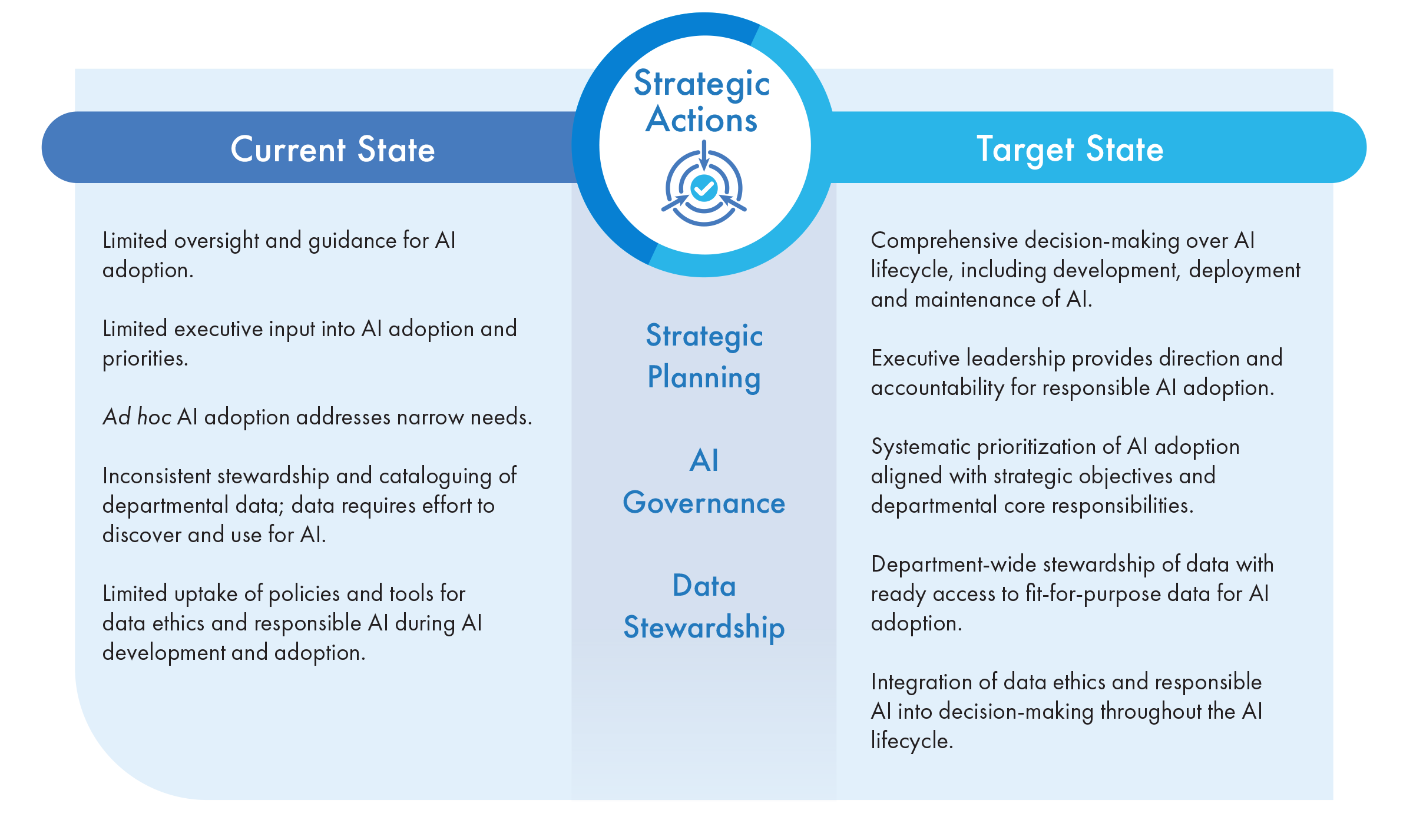
Figure 2. Current and target states for governance and leadership
Long description
Strategic actions
- Strategic planning
- AI governance
- Data stewardship
Current state
- Limited oversight and guidance for AI adoption
- Limited executive input into AI adoption priorities
- Ad hoc AI adoption addresses narrow needs
- Inconsistent stewardship and cataloguing of departmental data; data identification requires effort to discover and use for AI
- Limited uptake of policies and tools for data ethics and responsible AI during AI development and adoption
Target state
- Comprehensive decision-making over AI lifecycle, including development, deployment and maintenance of AI
- Executive leadership provides direction and accountability for responsible AI adoption
- Systematic prioritization of AI adoption aligned with strategic objectives and departmental core responsibilities
- Department-wide stewardship of data with ready access to fit-for-purpose data for AI adoption
- Integration of data ethics and responsible AI into decision-making throughout the AI lifecycle
Action: Integrate AI Adoption into strategic planning
The Department will embed AI adoption into its strategic planning to enhance core responsibilities and priorities. Regular AI maturity assessments will identify existing AI capabilities and critical gaps for action. A three-year roadmap will sequence key activities based on their importance and dependencies for achieving results. Annual implementation plans will align resources and timelines to achieve key milestones and deliverables. AI strategies will provide the structured approach for integrating AI into the Department’s operations and decision-making.
Action: Establish AI governance
Governance and oversight will ensure AI initiatives align with Canadian values and laws. An AI lifecycle operating model will set the rules for AI adoption, from problem identification to ongoing monitoring and improvement. An AI governance framework will establish policies, practices and guidance, and assign accountabilities for responsible AI adoption. The Data Ethics and Responsible AI Framework will ensure ethical, transparent, and accountable AI adoption. A Centre of Expertise for Responsible AI will provide guidance and support, reviewing and stewarding assessments of ethical risks throughout the AI lifecycle.
AI in action. Non-invasive governance
Accelerating responsible AI adoption requires agile governance practices. Fisheries and Oceans Canada is committed to agile, non-invasive governance models that seamless integrate governance practices into existing processes and committees, avoiding disruption and unnecessary layers of decision-making. (See also Robert Seiner, Non-Invasive Data Governance: The Path of Least Resistance and Greatest Success, 2021).
Action: Strengthen data stewardship for AI
Under the DFO Data Strategy, the Department is enhancing data governance and stewardship to ensure departmental data is relevant and reliable for AI applications. The Data Stewardship Program and Data Quality Program are working with data holders to improve the availability, quality and data lifecycle management of data assets, ensuring data suitability for AI applications. The Data Governance Framework is enhancing policies, oversight, and decision-making so that data is suitable for AI applications.
AI in action. Indigenous data sovereignty
Indigenous Data Sovereignty is the right of Indigenous Peoples to govern data about them and their communities, environments and culture. Responsible AI needs to incorporate Indigenous Data Sovereignty to respect Indigenous rights and autonomy. Fisheries and Oceans Canada has been co-developing principles and guidelines with First Nations organizations and communities on respectful use of Indigenous data, including for AI purposes. Considering Indigenous Data Sovereignty when adopting AI enhances cultural sensitivity and prevents harm by safeguarding against misuse and historical injustices.
Transparency and accountability
Fisheries and Oceans Canada is exploring AI to enhance efficiency and service delivery. To maintain public trust, the Department must ensure transparency and accountability for any use of AI, clearly explaining how decisions are made when applying AI tools. Communicating to employees and the public how the Department is adopting and using AI can help to address concerns and ensure responsible use.
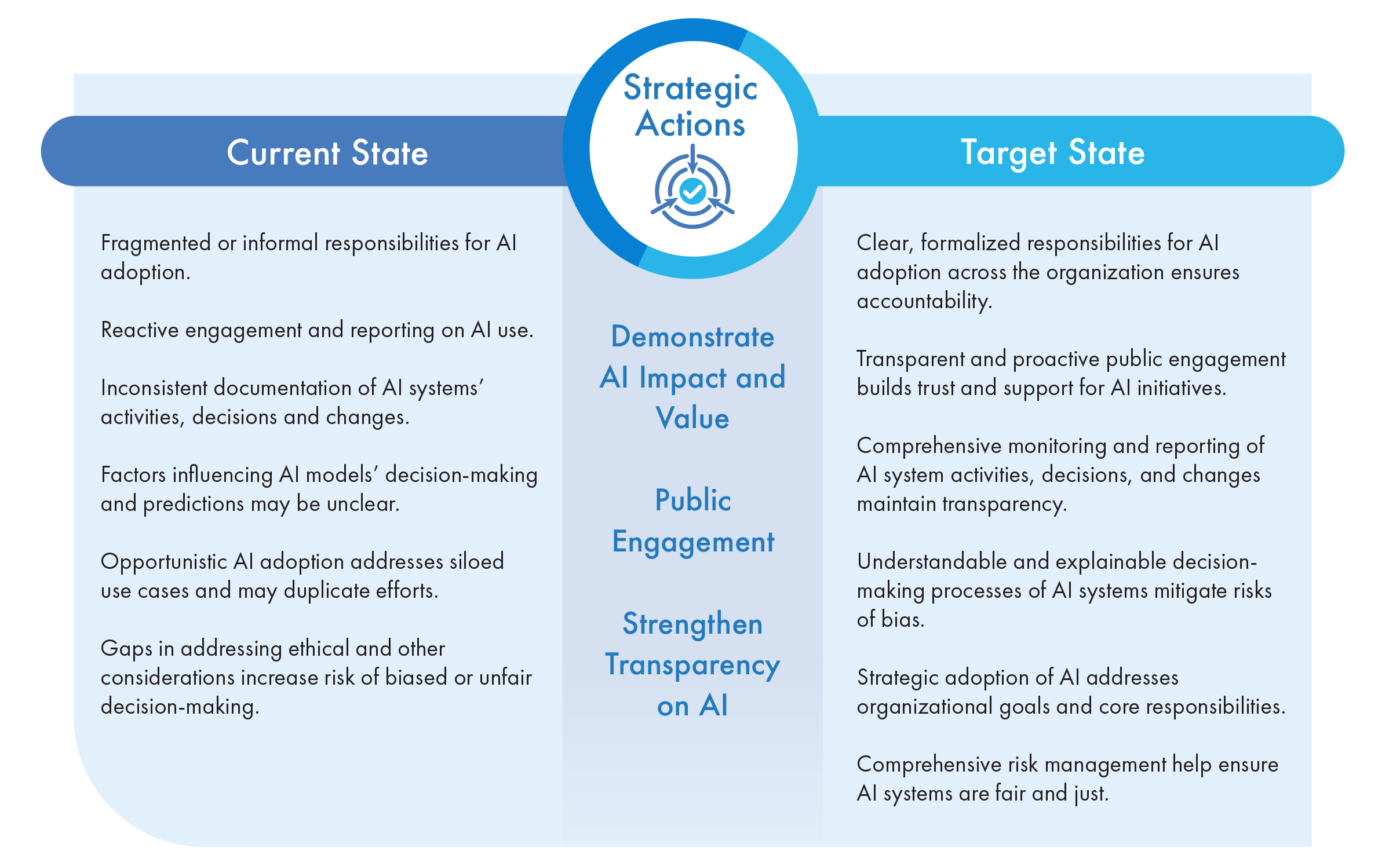
Figure 3. Current and target states for transparency and accountability
Long description
Strategic actions
- Demonstrate AI impact and value
- Public engagement
- Strengthen transparency on AI
Current state
- Fragmented or informal responsibilities for AI adoption
- Reactive engagement and reporting on AI use
- Inconsistent documentation of AI systems’ activities, decisions and changes
- Factors influencing AI models’ decision-making and predictions may be unclear
- Opportunistic AI adoption addresses siloed use cases and may duplicate efforts
- Gaps in addressing ethical and other considerations increase risk of biased or unfair decision-making
Target state
- Clear, formalized responsibilities for AI adoption across the organization ensures accountability
- Transparent and proactive public engagement builds trust and support for AI initiatives
- Comprehensive monitoring and reporting of AI system activities, decisions, and changes maintain transparency
- Understandable and explainable decision-making processes of AI systems mitigate risks of bias
- Strategic adoption of AI addresses organizational goals and core responsibilities
- Comprehensive risk management help ensure AI systems are fair and just
Action: Demonstrate AI impact and value
The Department will take measures to demonstrate the impact and value of AI to build public trust of responsible AI adoption. Clear objectives and key performance indicators (KPIs) will measure the effectiveness of AI initiatives. Regular value assessments will quantify benefits such as cost savings, productivity improvements, and enhanced decision-making capabilities. A robust tracking and reporting system will ensure transparency and accountability, monitoring metrics, such as the number of AI-driven solutions deployed, user satisfaction rates, and AI integration into existing processes. Ongoing reporting of impacts will refine AI strategies and demonstrate tangible value to the public.
Action: Public engagement
The Department will engage the public on AI adoption, incorporating diverse perspectives and sharing information about AI’s benefits and challenges. Outreach will include key partners, including Indigenous Peoples, coastal communities, provincial and territorial governments, marine industry sectors, environmental non-governmental organizations, and the Canadian public. Tailored engagement plans will ensure meaningful interactions and feedback, through engagement mechanisms such as public forums, surveys, workshops, and online platforms. Transparency and accountability will be maintained through public reporting on engagement activities and outcomes, using metrics, such as participant numbers, representation and diversity, and impact of stakeholder feedback on AI adoption. Committed public engagement will foster trust, inclusivity, and a shared understanding of AI’s role and benefits.
Action: Strengthen transparency on AI
The Department will enhance transparency on AI adoption by tracking and sharing information on use of AI. AI impact and risk assessments will evaluate the effectiveness and potential harms of AI systems. Explainability assessments will ensure AI outputs and processes are transparent and understandable. Comprehensive audit records of AI decision-making will be maintained, ensuring AI systems are operating as intended. An AI registry will detail the purposes, functionalities, and performance metrics of all systems and models. The detailed information will contribute to a public registry on AI adoption in the federal public service and Fisheries and Oceans Canada.
AI in action. Sustainable AI
The growing use of AI presents significant environmental challenges. Increased computational power and cooling needs are consuming more energy and water, leading to higher carbon emissions and stressing local ecosystems. Implementing sustainable AI practices to mitigate environmental impacts will be essential, such as using energy-efficient data centers, renewable energy sources, and water recycling.
Culture and people
Successful adoption of AI hinges on departmental employees. Their expertise and insights are crucial for identifying AI opportunities, driving innovation and enhancing AI systems. Developing new skills will be important for effectively using and managing AI technologies. Openness to change is vital for adapting to new AI-driven workflows Employee engagement and collaboration are key to integrating AI smoothly and maximizing its benefits. New roles and responsibilities will emerge to support AI development, necessitating talent development, recruitment and retention.
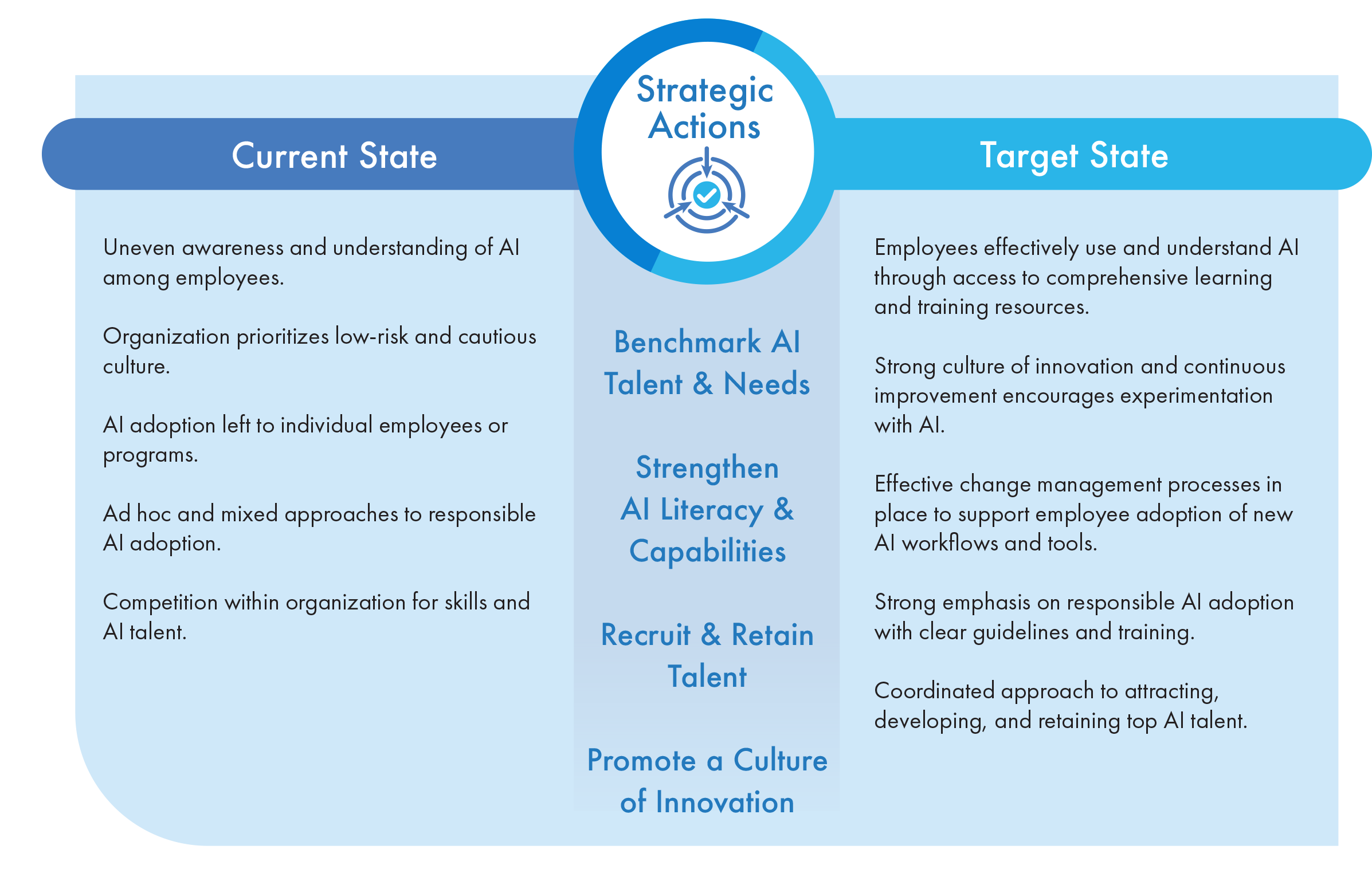
Figure 4. Current and target states for culture and people
Long description
Strategic action
- Benchmark AI talent and needs
- Strengthen AI literacy and capabilities
- Recruit and retain talent
- Promote a culture of innovation
Current state
- Uneven awareness and understanding of AI among employees
- Organization prioritizes low-risk and cautious culture
- AI adoption left to individual employees or programs
- Ad hoc and mixed approaches to responsible AI adoption
- Competition within organization for AI skills and talent
Target state
- Employees effectively use and understand AI through access to comprehensive learning and training resources
- Strong culture of innovation and continuous improvement encourages experimentation with AI
- Effective change management processes in place to support employee adoption of new AI workflows and tools
- Strong emphasis on responsible AI adoption with clear guidelines and training
- Coordinated approach to attracting, developing, and retaining top AI talent
Action: Benchmark AI talent and needs
The Department will identify essential AI skills and knowledge for various roles and responsibilities across the Department, baselining existing capabilities to tailor training, development and recruiting plans. An AI competency framework, aligned with the Government of Canada Data Competency Framework, will support the development of AI job models and AI competency standards. Regular AI literacy assessments on employees’ AI skills and knowledge will identify critical gaps and training needs. Systematic benchmarking will inform human resource plans to effectively leverage and integrate AI technologies into workflows and operations.
Action: Strengthen AI literacy and capabilities
The Department will enhance AI literacy and competencies of employees. Developing AI skills internally is cost effective, leverages organizational knowledge, and promotes continuous learning. Expanded and curated and learning courses and learning paths will strengthen AI knowledge, training, and upskilling for various roles and responsibilities. Workshops and seminars will provide hands-on experience and foster a collaborative learning environment. Leadership training will equip managers and executives with the skills to drive responsible AI adoption. By tracking participation rates, course completion, and the application of AI skills in the workplace, the Department will ensure continuous improvement.
AI in action. Year in data and AI 2025
The Department is actively enhancing AI literacy within the public service.
In collaboration with the Canada School of Public Service, DFO co-sponsored the Government of Canada Data Conference 2025, marking the first time a science-based Department has co-hosted the event. Through its active participation in setting the agenda, participating in events, and delivering workshops, DFO helped to advance data stewardship, ethical AI practices and data-driven decision-making across the federal public service.
The “Year in Data and AI 2025” at Fisheries and Oceans Canada is focusing on strengthening data literacy and AI competencies within the Department through various events, workshops and learning opportunities. The campaign is empowering employees with the necessary skills to effectively use data and AI, and is fostering a culture of innovation and responsible AI adoption.
Action: Recruit and retain talent
The Department will proactively recruit and retain AI talent to build a robust workforce capable of driving innovation. An AI talent recruitment program will include targeted outreach and partnerships with academic institutions and student co-op programs. Offering professional opportunities and a supportive work environment, along with mentorship programs, continuous learning, and career progression paths, will help retain existing AI talent. Metrics such as hires, retention rates, and talent diversity will be tracked to ensure measurable outcomes.
AI in action. Think AI
The Government of Canada’s “think AI” approach aims to responsibly and effectively embed AI into policies, programs, and services. Within DFO, think AI will challenge the organization and employees to identify opportunities for transforming work and services through responsible AI adoption.
Action: Promote a culture of innovation
The Department will promote a culture of innovation to encourage continuous improvement and AI adoption. Comprehensive change management plans will transition the Department to a “think AI” mindset, in alignment with the AI Strategy for the Federal Public Service. Competitions and events will encourage creative thinking and exploring use of AI to solve operational challenges. The departmental AI Community of Practice will provide a forum for sharing knowledge, best practices, and innovative ideas, and be integrated into efforts to identify opportunities for responsible AI adoption. An ideation framework will structure the generation and development of ideas that leverage AI solutions. Participation rates, idea generation, and implementation of AI solutions will be tracked to ensure success.
AI in action. Government of Canada Public Service Challenge
The Government of Canada’s Public Service Data/AI Challenge invites federal employees to propose innovative ideas for enhancing data and AI use in public services. Since 2022, teams have been collaborating to develop and implement top ideas, honing skills in project management, digital technologies, and teamwork to improve public services and support career growth for public servants.
AI adoption and innovation
Fisheries and Oceans Canada is embracing AI adoption and innovation to enhance operations and services for the Canadian public. By automating repetitive tasks, AI can improve the productivity of employees and allow more time for strategic activities. AI also boosts decision-making with rapid, accurate data analysis, leading to improved outcomes for core responsibilities. Furthermore, AI can optimize existing processes, achieving significant cost savings while maintaining service levels and fulfilling departmental mandates.
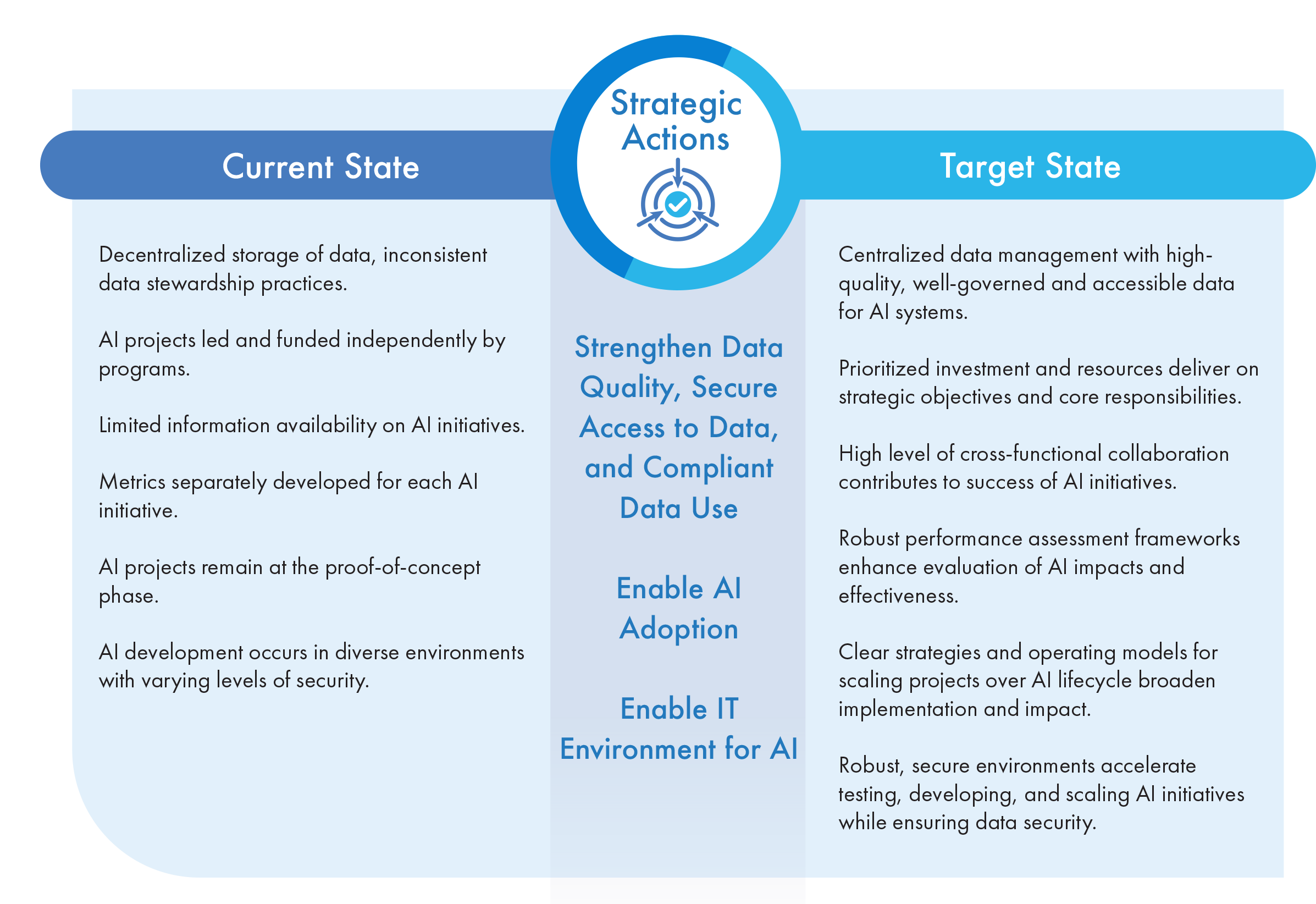
Figure 5. Current and Target States for AI Adoption and Innovation
Long description
Strategic actions
- Strengthen data quality
- Secure access to data
- Compliant data use
- Enable AI adoption
- Enable it environment for AI
Current state
- Decentralized storage of data, inconsistent data stewardship practices
- AI projects led and funded independently by programs
- Limited information availability on AI initiatives
- Metrics separately developed for each AI initiative
- AI projects remain at the proof-of-concept phase
- AI development occurs in diverse environments with varying levels of security
Target state
- Centralized data management with high-quality, well-governed and accessible data for AI systems
- Prioritized investment and resources deliver on strategic objectives and core responsibilities
- High level of cross-functional collaboration contributes to success of AI initiatives
- Robust performance assessment frameworks enhance evaluation of AI impacts and effectiveness
- Clear strategies and operating models for scaling projects over AI lifecycle broaden implementation and impact
- Robust, secure environments accelerate testing, developing, and scaling AI initiatives while ensuring data security
Figure 5. Current and Target States for AI Adoption and Innovation
Actions: Strengthen data quality, secure access to data and compliant data use
The Department is implementing a Data Strategy to ensure data is available, standardized, secure, and compliant with legal and ethical requirements, supporting successful and sustainable AI adoption. Data stewardship tools, including playbooks, guidance and training, are being developed to support data lifecycle management, improving data availability and quality, and ensuring data privacy and security rules are enforced. Adopting and expanding on data standards will enhance data consistency, quality and integration across different systems, improving AI training and results. Evaluations of ethical use of data are helping to identify, mitigate and report on risks associated with data sharing and use for AI. The Enterprise Data Hub is providing tools for cataloguing, storing and managing data, so that data is discoverable, available and well-managed for AI adoption. Metrics for evaluating data quality and availability, as well as compliance with Canadian legal and ethical requirements, will help assess data readiness for AI.
AI in action. DFO Enterprise Data Hub
The Enterprise Data Hub (EDH) is a platform that allows employees at Fisheries and Oceans Canada to discover, share, and use digital assets. The EDH streamlines data management by providing a unified view of digital assets, reducing duplication, and facilitating both internal and external data publication. For employees, the EDH enhances access to a wealth of digital assets, improves analytics capabilities, and supports efficient data-driven decision-making.
Action: Enable AI adoption
The Department will facilitate and accelerate responsible AI adoption to realize efficiencies and improvements in services and operations, and support commitments to Refocusing Governance Spending. Comprehensive needs assessments will identify areas where AI adds the most value. Use case pipelines and prioritization frameworks will allow for continuous identification, evaluation and prioritization of AI opportunities. An AI model repository will store and manage AI models for discovery and reuse. Participation in Government of Canada “lighthouse” projects will help scale AI initiatives to meet enterprise-wide needs. Leveraging AI initiatives from other government departments will accelerate AI innovation, reduce duplication, and maximize impact through shared expertise, resources, and infrastructure. Performance metrics will include the number of AI use cases identified, models developed and deployed, and collaborative efforts with other organizations.
AI in action. "Lighthouse" projects
The Government of Canada’s AI Strategy for the Federal Public Service includes “lighthouse” projects to showcase AI’s transformative potential. These initiatives will address broad needs and highlight AI’s benefits, aiming to enhance efficiency, productivity, and delivery across the public service. A notable lighthouse project by Public Services and Procurement Canada (PSPC) is focusing on scaling a self-serve language hub pilot across the Government of Canada, reducing costs while maintaining translation quality.
Action: Enable IT environment for AI
The Department will provide the necessary information technology (IT) environment to facilitate innovation and AI model development. An AI sandbox will offer a safe testing environment for employees to experiment with AI tools without affecting departmental IT systems. AI development tools for data annotation, machine learning, computer vision, and natural language processing will support diverse AI applications. Specialized tools and platforms, along with robust AI support services, will streamline AI deployment and optimization. Low-code tools will empower employees with varying technical skills to develop AI solutions to improve their workflows. AI governance tools will ensure compliance and ethical use of AI technologies. Tracking the utilization and effectiveness of AI tools and services will ensure a supportive and scalable IT environment for responsible AI adoption.
AI in action. Low-code tools
Low-code tools enable users to build applications with minimal coding through intuitive visual interfaces and drag-and-drop features. These tools empower employees of all technical levels to quickly develop solutions, boosting productivity and fostering innovation. Low-code tools can cut development time and costs, streamline processes, and improve agility in utilizing AI to strengthen operations.
Roadmap and implementation
The Department has developed a three-year roadmap for the AI Strategy, sequencing delivery of necessary outputs to accelerate responsible AI adoption. Performance outcomes are identified, with immediate outcomes aligned with early actions and outputs, and intermediate outcomes expected over the course of the roadmap. The roadmap will be updated annually, maintaining a rolling three-year horizon for the AI Strategy, enabling agile and responsive adaption to emerging priorities and new technologies.
Annual implementation plans will be crafted to coordinate AI Strategy actions. Plans will specify required resources, detailed timelines and milestones, and responsibilities across the Department.
Comprehensive metrics and key performance indicators will allow for ongoing reporting on departmental progress in AI Strategy implementation, strengthening results for accelerating responsible AI adoption.
Outcomes
This strategy is designed to achieve a range of outcomes that enhance departmental core responsibilities through responsible AI adoption. Efforts underway focus on improving data governance, transparency, skill development, and AI innovation, by enhancing data lifecycle management, providing targeted training, and exploring proof of concepts to address program and operational challenges.
Immediate and intermediate outcomes of the AI Strategy implementation define incremental progress towards accelerating responsible AI adoption. These outcomes serve as crucial milestones that guide the strategy’s progress and ensure continued alignment with objectives. Outcomes provide measurable benchmarks to track progress, identify areas for improvement, and keep strategy implementation on the right path.
Ultimately, Fisheries and Oceans Canada aims to integrate AI into operations to improve the delivery of core responsibilities. Strategy implementation will lead to better management of fisheries and ocean resources, safer navigation, effective marine operations and services, and robust environmental protection for the benefit of current and future generations.
The AI Strategy Logic Model provides detailed information on expected outcomes and performance metrics, ensuring that progress is measurable and impactful.
References: Government of Canada strategy and policy framework
The DFO AI Strategy outlines actions for accelerating responsible AI adoption within the Department. Implementation of the Strategy is guided by the Government of Canada broader framework of strategies and policies. The framework informs standards for ethical, transparent, and accountable AI practices, while emphasizing the protection of privacy and security, safeguarding personal data, and defending against cyber threats. By adhering to these directives and guidelines, the Department will build trust and transparency in its AI initiatives on behalf of the Government, ensuring responsible use of AI to benefit Canadian society while mitigating potential risks.
Strategies
AI Strategy for the Federal Public Service 2025-2027
Establishes a whole-of-government vision and approach for responsible adoption of AI to deliver world-class services for clients, protect national interests, achieve a more innovative and efficient workforce, and accelerate scientific discovery for the benefit of all.
2023-2026 Data Strategy for the Federal Public Service
Developing and implementing common data stewardship practices, using the Government’s data holdings to derive insights for decision making, and building both specialist capacity and data literacy within the public service through access to tools and training. Given the dependence of AI on quality data, the implementation of the Data Strategy will be a critical enabler for the success of the AI Strategy.
Foresees the use of AI as part of the goal of delivering modern services with a digital mindset. It identifies the need for responsible AI, fairness and transparency to allow Canada to benefit from efficiency gains while countering potential harms from ungoverned AI. It also identifies the importance of transparency and preserving privacy in the handling of personal data to maintain the trust of Canadians.
Explains how the Government of Canada will optimize its use of cloud to maximize business value, reduce technical debt, and continue to evolve its service-focused culture.
Canadian Sovereign AI Compute Strategy
Invests in public and commercial computing infrastructure to support the Canadian AI ecosystem and safeguard Canadian data and intellectual property.
Enterprise Cyber Security Strategy
Sets out a risk-based, whole-of-government approach to ensure that the Government can quickly and effectively combat cyber threats and address vulnerabilities. It aims to help safeguard government systems, protect Canadians’ information and strengthen the resilience of digital government to ensure the continued delivery of secure and reliable digital services. foster the right skills, knowledge, and culture to support cyber security.
Policies
The AI Strategy should also be read in the context of relevant laws and policies:
- Policy on Service and Digital
- Directive on Automated Decision Making
- Values and Ethics Code for the Public Sector
- Guide on the use of generative artificial intelligence
- Government of Canada Enterprise Architecture Framework
- Directive on Digital Talent
- Digital Standards Playbook
- Policy on Government Security
- Policy on Privacy Protection
- Directive on Open Government
- Accessible Canada Act
- United Nations Declaration on the Rights of Indigenous Peoples Act Action Plan 2023-2028
Annex
Logic Model for AI Strategy
AI Strategy priority area: Governance and leadership
Actions:
- Integrate AI adoption into strategic planning
- Establish AI governance
- Strengthen data stewardship for AI*
Outcomes:
- Immediate
- AI governance accelerates responsible AI adoption
- Value assessments help prioritize resource allocation to high-impact AI initiatives
- Intermediate
- Improved AI maturity enhances ability to leverage AI in operations
- Integrated AI governance improves performance
- Data available as needed to enable AI adoption
AI Strategy priority area: Transparency and accountability
Actions:
- Demonstrate AI impact & value
- Public engagement
- Strengthen transparency on AI use
Outcomes:
- Immediate
- Metrics and reporting provide insights on AI impacts
- Risk assessments inform mitigations of potential AI system harms
- AI registry provides transparency on AI use
- Intermediate
- Auditable AI decision-making fosters trust and transparency
- Public reporting on AI impacts builds public confidence
AI Strategy priority area: Culture and people
Actions:
- Benchmark AI talent needs
- Strengthen AI literacy and capabilities
- Recruit and retain talent
- Promote a culture of innovation
Outcomes:
- Immediate
- Integration of AI in competency frameworks clarify job requirements
- AI competency definitions inform learning paths for various jobs and roles
- Assessments baseline capabilities and gaps for training and recruitment
- Intermediate
- Employees’ AI competencies enhance performance
- Supportive work environment helps retain AI talent
- Culture of innovation drives collaboration and continuous improvement
AI Strategy priority area: AI adoption and innovation
Actions:
- Strengthen data quality, security & compliance*
- Enable AI Adoption
- Enable IT environment for AI
Outcomes:
- Immediate
- Structured approach to use case identification accelerates AI initiatives
- Secure IT environment enables experimentation with proof of concepts and agile development
- Intermediate
- Data is fit-for-purpose for AI initiatives
- AI lifecycle management improves AI performance
- Scalable AI solutions enhances organizational capabilities
Ultimate outcome
Enhanced sustainability and resilience of marine ecosystems and improved maritime safety and security through data-driven decision-making and innovative AI solutions, leading to better management of fisheries and ocean resources, safer navigation, effective search and rescue operations, and robust environmental protection for the benefit of current and future generations.
* DFO data strategy actions
Outputs and descriptions
Priority area: governance and leadership
Integrate AI adoption into Strategic Planning
- Maturity assessments. Evaluations of capabilities and needed improvements to effectively develop, deploy, and manage AI initiatives.
- AI strategies. Comprehensive plans to integrate AI into operations to achieve core responsibilities and mandates
- Roadmap and implementation plans. Ordering of priorities and detailed steps to execute AI Strategy actions
Establish AI Governance
- AI Governance Framework. Guidelines, processes and standards to ensure responsible, transparent and accountable development and use of AI
- AI risk and compliance frameworks. Guidelines, processes and standards to identify, assess, and manage risks so that AI systems operate securely, fairly, and within legal boundaries; part of the AI Governance Framework
- Data Ethics and Responsible AI Framework. Principles, guidelines and standards so that data is stewarded ethically and AI systems are developed and used responsibly; part of the AI Governance Framework
Strengthen data stewardship for AI
- Data Strategy actions and outputs
Priority area: transparency and accountability
Demonstrate AI impact and value
- Impact assessments. Metrics to evaluate cost savings, return on investment, operational efficiencies, service delivery and results performance, employee productivity, etc.
- AI adoption assessments. Metrics for evaluating AI adoption performance, including AI deployment, collaboration, innovation, scaling, user adoption and investments in enabling data, infrastructure, stewards and training
- Outcomes assessments. Metrics for measuring public value of responsible AI adoption, including immediate, intermediate and ultimate outcomes
Public engagement
- Engagement mechanisms. Engagement channels for collaborative public interaction, including digital engagement, existing public consultations and forums, advisory panels, etc.
- Communication plans. Plans to engage specific populations and groups, including those with greater risks or barriers resulting from AI adoption, or requiring specific consideration such as Indigenous Peoples, to address concerns and foster trust
- Public reporting. Incorporate organizational AI plans, adoption, risks and impacts in public reports, including the annual Departmental Plan and the Departmental Results Report
Strengthen transparency on AI
- Decision record repository. Centralized system storing and managing decision records of AI systems, including rationale, context, influencing factors and outcomes of decisions taken, ensuring transparency and traceability
- AI registry. Internal and public databases of AI algorithms and systems, including details about data used, the algorithms’ logic, impact and risk assessments, and governance and mitigation measures
Priority area: culture and people
Benchmark AI Talent and Needs
- AI competency framework. Common definitions and job models of skills and knowledge required by different roles to effectively understand and use AI technologies
- AI literacy assessments. Tools such as surveys and evaluations to baseline understanding and proficiency in AI, including understanding of risks and biases
Strengthen AI literacy and capabilities
- Learning courses and paths. On-demand courses and structured training plans for acquiring knowledge and skills for AI competencies, aligned with job requirements and upskilling needs
- Workshops and seminars. Interactive training sessions and knowledge sharing to strengthen AI capabilities
- Leadership training. Leadership training to foster a “think AI” culture and build knowledge of technologies, risks, and ethical and legal considerations
Recruit and retain talent
- AI talent recruitment programs. Hiring programs to address obstacles to recruitment and retention, including through interchanges, co-op programs, academic job fairs and relationship-building with graduate programs
- Retention and professional opportunities. Opportunities to enhance job satisfaction, including flexible assignments, conferences, career development, awards and recognition initiatives, positive work environments and job empowerment
Promote a culture of innovation
- Change management plans. Organizational plans to facilitate the integration of AI technologies in the workplace, including ongoing communication and dialogue, providing training, and demonstrating impacts and value of change
- Competitions and events. Events and initiatives designed to encourage cross-functional collaboration and drive AI innovation and adoption to enhance operations, productivity and organizational outcomes
- AI Community of Practice. Community for fostering collaboration and knowledge sharing on AI-related topics and initiatives to strengthen AI capabilities, best practices and adoption
- Ideation platform. A platform (e.g. portal) for submitting ideas and use cases for AI development
Priority area: AI adoption and innovation
Strengthen data quality, secure access to data, and compliant data use
- Data Strategy actions and outputs
Enable AI adoption
- AI lifecycle operating model. Processes, technologies, roles, and organizational design for efficiently developing, deploying, and managing AI systems
- AI model repository. Central location with information about AI assets, enabling collaboration, sharing and scaling of AI models and tracking of performance, improvements and maintenance
- Ideation framework. Structured approach to help identify operational needs and use cases for AI adoption
- Use case pipeline. Intake and backlogging AI use cases for development of AI solutions
- Prioritization framework. Structured approach to prioritizing use cases, based on business value, feasibility, strategic alignment, risk factors, resource availability, scalability, etc.
- Centres of Expertise. Organizational units to support AI adoption, including requirements gathering, responsible AI considerations and evaluations, and experimentation, development and deployment support
- AI initiatives. Use cases and initiatives to enhance organizational operations and support core responsibilities
Provide IT environment for AI
- Platforms and environments. Provide secure environments for AI development, including a “sandbox” for safe experimentation, development platforms for testing and development, and production platforms for deploying and running AI solutions
- Low-code tools. Tools to enable AI model development by non-technical users with minimal coding and without extensive programming skills
- AI support services. Well-defined service support, procedures and standards to enable AI adoption, including for cloud computing, data management, cybersecurity, networking and other technical support
Outcomes
Ongoing outcomes
Ongoing activities within the Department have been strengthening responsible AI adoption
Governance and leadership
The Department has established a data governance framework that enables decision-making on data policies, standards, and guidelines, thereby strengthening stewardship and availability of data assets. Through the Data Stewardship Program, roles and responsibilities are being defined to ensure more data assets are discoverable and available for AI model training and development. Additionally, the Data Ethics and Responsible AI framework provides tools and guidance to assess the ethical risks of AI initiatives, ensuring responsible and transparent AI adoption.
Transparency and accountability
Large volumes of science data have been identified, stewarded, catalogued, and made available as Open Data, enhancing transparency and accessibility. The Data Quality Program has onboarded numerous data assets, documenting their quality and issues to assess their suitability for AI purposes. Adoption of data standards are improving data quality and consistency, ensuring reliable and transparent data practices that support AI initiatives.
People and culture
The Department is leveraging learning tools to provide access to courses and learning paths that support data and AI competencies training. This initiative aims to build the necessary skills and knowledge for effective AI and data use within the organization, fostering a culture of continuous learning and development.
AI adoption and innovation
The Enterprise Data Hub provisions analytic spaces and approved tools to support AI experimentation and model development. The Department has identified several AI use cases to address program and operational needs and is developing proof of concepts to assess and demonstrate AI value. These efforts are promoting innovation and practical application of AI, driving the successful implementation of AI initiatives.
Immediate outcomes
AI Strategy Roadmap is expected to deliver on immediate outcomes in Year One.
Governance and leadership
Establishing AI governance ensures leadership and informed decision-making so that AI adoption provides value and is aligned with strategic objectives. Tools for assessing AI value and return on investment help prioritize use cases for development, ensuring that resources are allocated effectively to high-impact projects.
Transparency and accountability
Clear objectives and key performance indicators (KPIs) help evaluate the effectiveness of AI initiatives, providing measurable insights into cost savings, productivity improvements, and enhanced decision-making capabilities. AI impact and risk assessments ensure thorough evaluations of all AI systems and models to determine their effectiveness and potential harm. Explainability assessments make AI decision-making processes transparent and understandable to all stakeholders. An AI model registry documents AI development within the Department at various stages of the AI lifecycle, supporting detailed reporting on AI exploration and adoption.
Culture and people
Leveraging existing data competencies frameworks identifies AI competencies necessary for responsible AI adoption. These competencies support the development of specialist AI job models and new learning paths for various AI roles. AI maturity assessments and data literacy surveys measure current AI capabilities and identify gaps for targeted action, ensuring that employees are equipped with the skills needed to leverage AI effectively.
AI adoption and innovation
The use case pipeline and backlog facilitate the identification of opportunities and challenges for AI adoption, streamlining the process of integrating AI solutions. Provision of a sandbox environment allows for more experimentation and testing of proof of concepts, fostering innovation and continuous improvement in AI initiatives. Establishing an operating model for the AI lifecycle accelerates responsible AI adoption, facilitating the development and deployment of promising proof of concepts.
Intermediate outcomes
Ongoing implementation of the AI Strategy and Roadmap will strengthen responsible AI adoption and deliver on intermediate outcomes
Governance and leadership
Strengthening AI maturity enhances the Department’s ability to leverage AI in operations. Well-established AI governance improves performance, decision-making, and accountability. Departmental data is readily available in appropriate formats to enable AI adoption.
Transparency and accountability
The Department increases public accountability for AI decision-making by maintaining accessible audit records, fostering trust and transparency. Regular public reporting on AI adoption provides clear insights into AI’s impact and effectiveness, building public confidence.
Culture and people
Targeted training strengthens employees’ ability to use AI in decision-making, leading to more informed decisions. Improved retention of AI talent results from a supportive work environment. Promoting a culture of innovation drives collaboration and continuous improvement.
AI adoption and innovation
Ensuring data is fit-for-purpose enhances its quality and relevance for AI projects. Increased capability for data integration enables seamless AI innovation. Strengthened oversight ensures effective AI performance. Adoption of scalable AI solutions enhances organizational capabilities. Safe and responsible use of data ensures compliance and ethical standards.
Ultimate Outcome
Enhanced sustainability and resilience of marine ecosystems and improved maritime safety and security through data-driven decision-making and innovative AI solutions, leading to better management of fisheries and ocean resources, safer navigation, effective search and rescue operations, and robust environmental protection for the benefit of current and future generations.
Page details
- Date modified: